LED Slipfitter Mount Flood Lights
- Slides over pole tenons for adjustable outdoor aiming
- Models available with DLC listing for rebate eligibility
- USA-based support for fixture and mounting selection



Get Your Custom Lighting Plan With Product Recommendations
- Fixture placement and aiming planned for pole-mounted coverage of target areas
- Beam angle and optics matched to mounting height and intended throw distance
- LED options can reduce energy use and extend maintenance intervals versus legacy fixtures


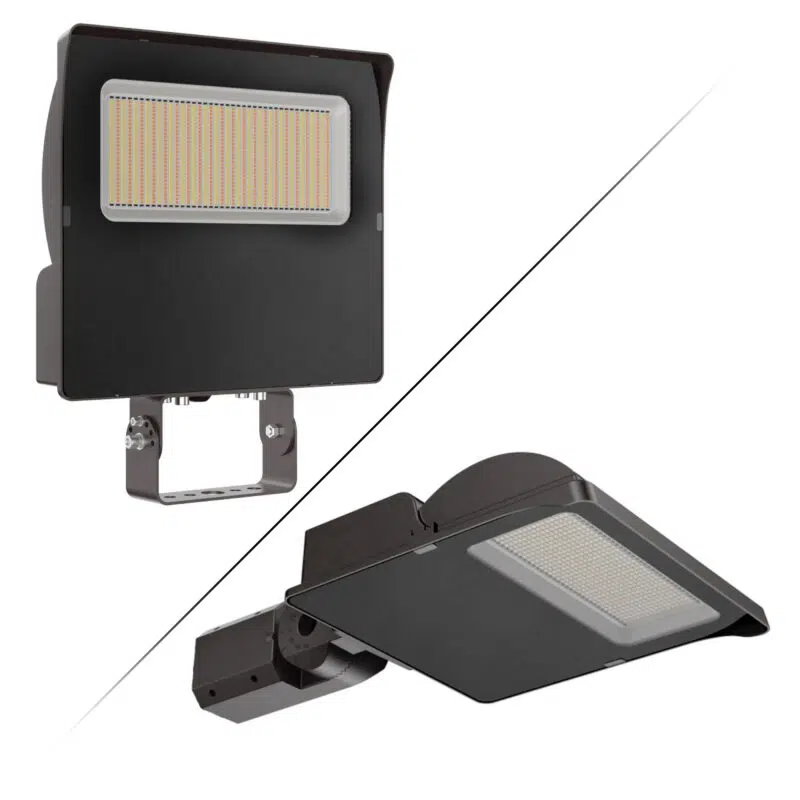
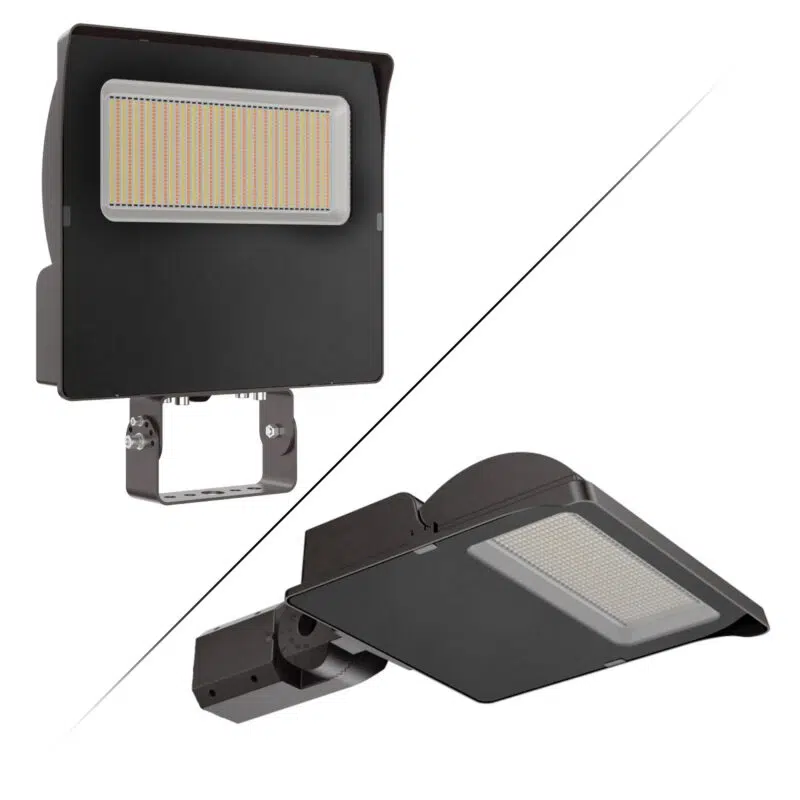
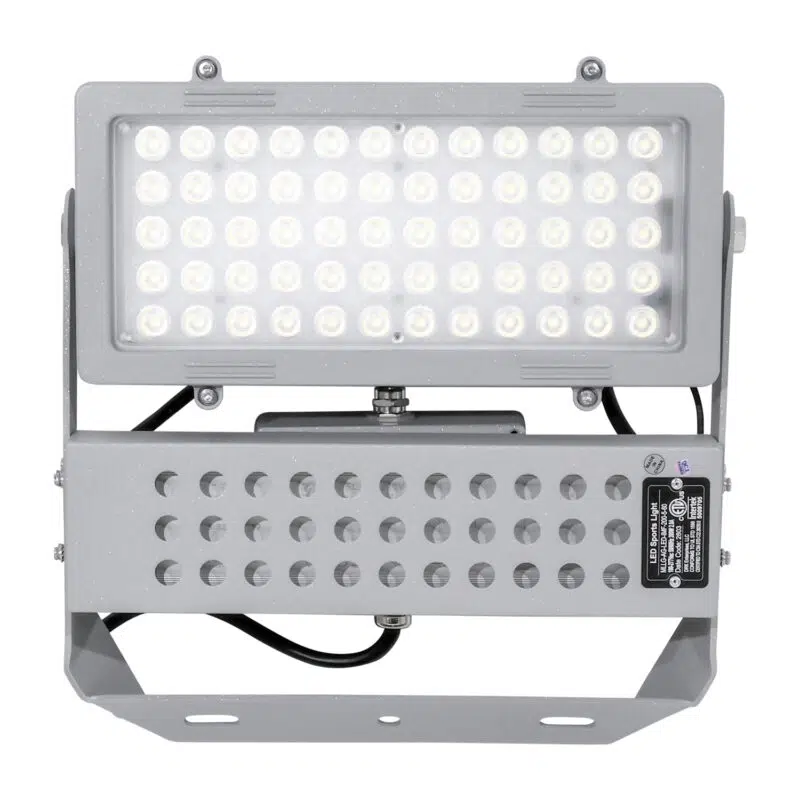
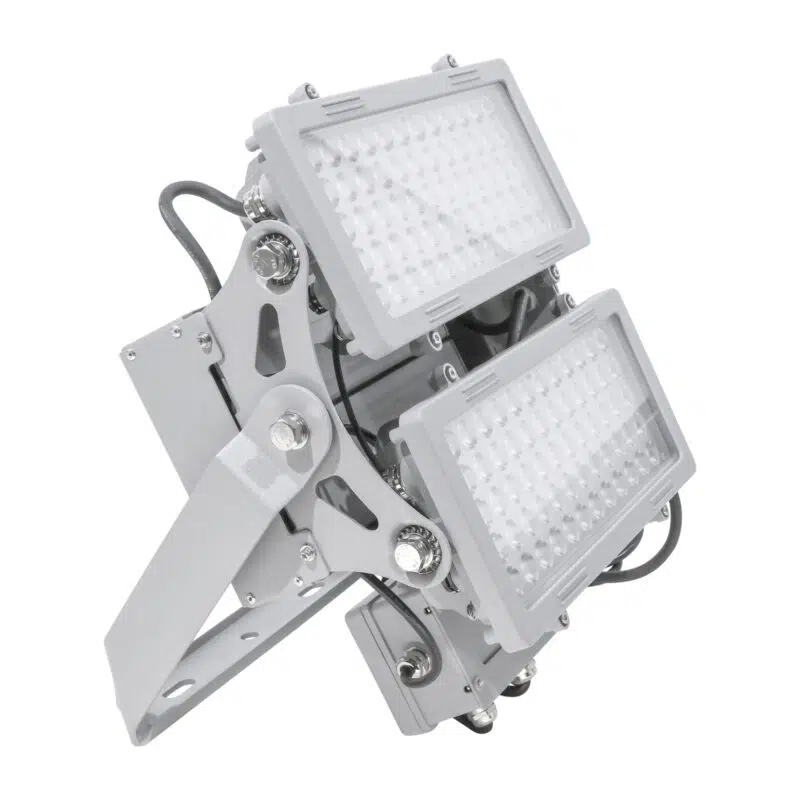
Our Slipfitter Mount LED Flood Lights include pole-mounted fixtures for tenons, pole-top adapters, bullhorns, and compatible round mounting arms. Available models vary by wattage, lumen output, beam angle, voltage, dimming, photocell compatibility, motion sensor compatibility, and slipfitter size. Fixtures can be aimed after mounting.
These flood lights are used for commercial parking areas, drive lanes, building exteriors, service areas, equipment zones, loading docks, storage yards, material areas, signs, display lots, and recreational or outdoor activity spaces.


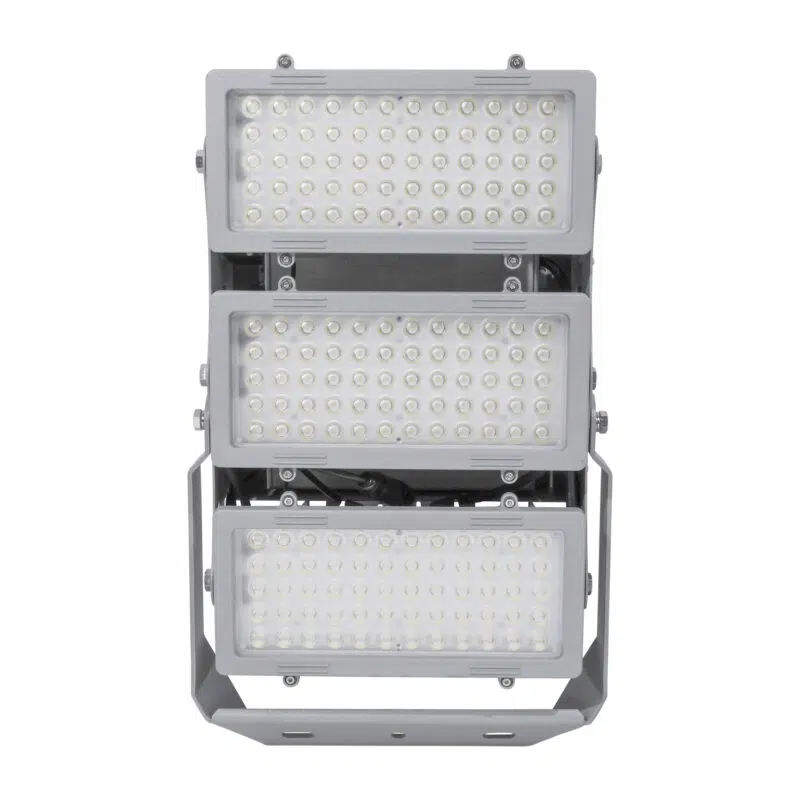
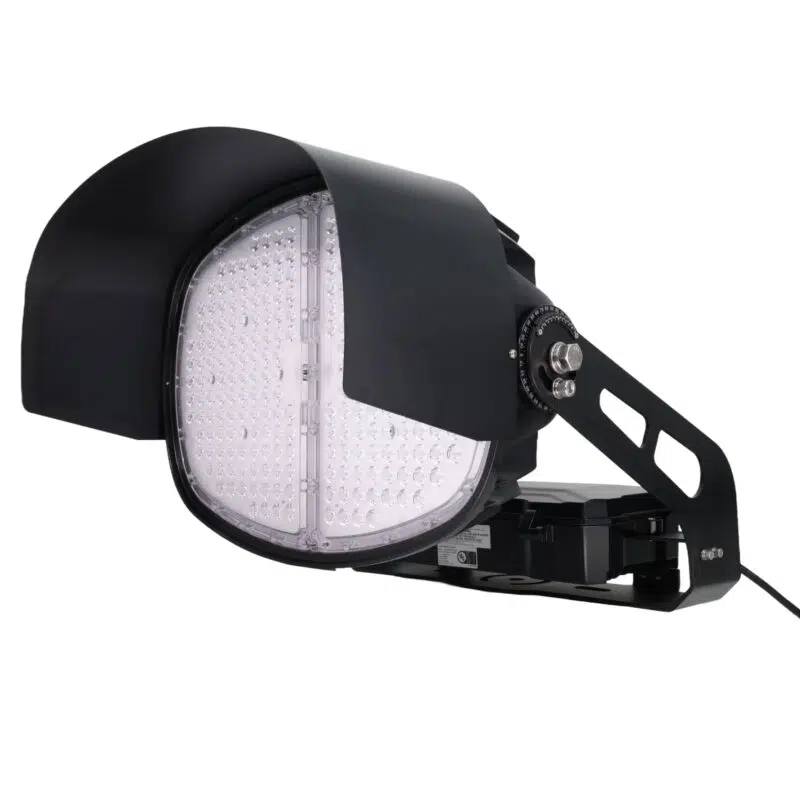


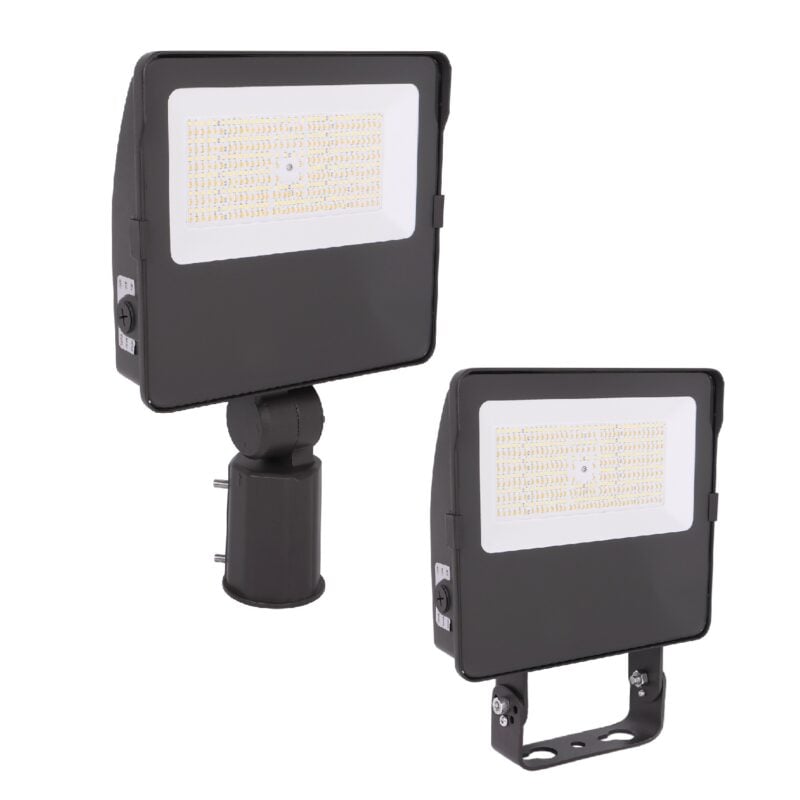
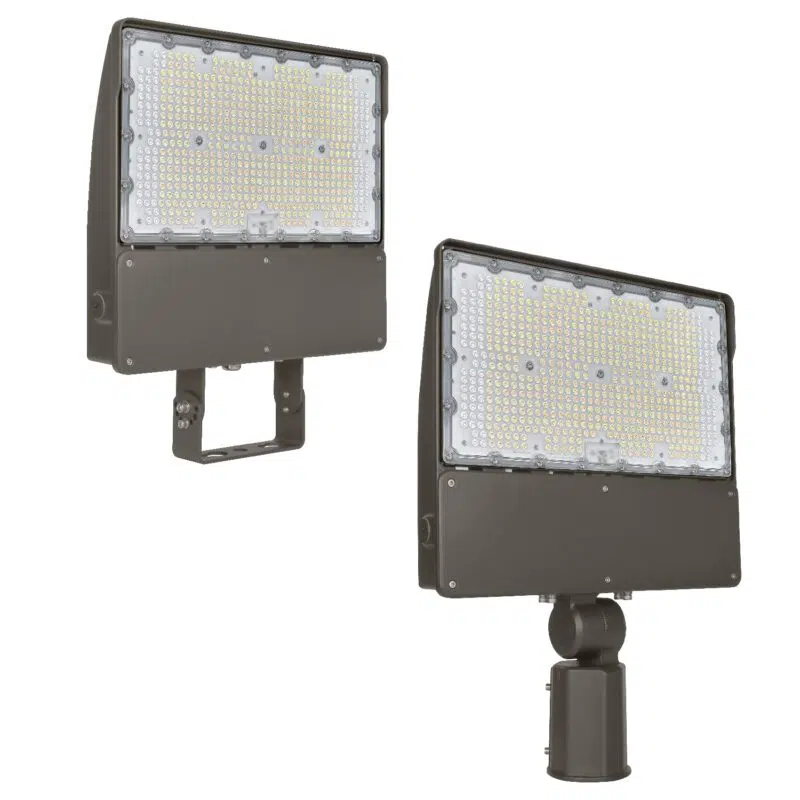
What Is a Slipfitter Mount LED Flood Light?
A slipfitter mount LED flood light is an outdoor flood light designed to mount onto a pole tenon, pole-top adapter, bullhorn, or compatible round mounting arm. The slipfitter slides over the tenon and is secured with set screws or locking hardware, allowing the fixture to be aimed after installation.
This mounting style is commonly used when a flood light needs to be installed on a pole instead of directly to a wall, ceiling, or flat surface. Slipfitter flood lights are often used for commercial exteriors, parking areas, drive lanes, yards, signs, equipment areas, loading areas, and general outdoor site lighting where pole-mounted aiming is preferred.
Selection and Installation Note: Before ordering, confirm that the slipfitter fits the pole tenon or mounting arm and that the pole, arm, tenon, and hardware support the fixture weight and wind exposure. Then review beam angle and aiming, followed by voltage, dimming, controls, photocell compatibility, mounting hardware, wet-location rating, IP rating, certifications, and warranty coverage. Product specifications vary by model. For pole-mounted flood lights, outdoor electrical work, high mounting heights, wind exposure, or code-sensitive applications, verify requirements with the facility team, local inspector, project specifier, pole supplier, or a licensed electrical professional.
How Slipfitter Mount Flood Lights Differ from Other Flood Lights
The main difference is the mounting method. A slipfitter mount is made for pole or tenon mounting. Other flood light mounts may be better for walls, beams, ceilings, ground mounts, or compact fixture locations.
| Mount Type | Best Fit |
|---|---|
| Slipfitter mount | Best for pole-top, tenon, bullhorn, or round-arm mounting where the fixture needs to slide over a compatible round mount. |
| Yoke / trunnion mount | Best for walls, beams, brackets, equipment pads, and flat surfaces where a yoke mount flood light is preferred. |
| Knuckle mount | Best for smaller flood lights, signs, landscapes, and compact mounting points. Explore knuckle mount flood lights for these installations. |
| Direct wall mount | Best when the fixture attaches directly to a wall or junction box and does not need pole-top mounting. |
Where Slipfitter Mount LED Flood Lights Are Used
Slipfitter mount LED flood lights are used when the fixture needs to be elevated and aimed from a pole or tenon. They are useful for broad outdoor coverage or targeted light placement, depending on the fixture output and beam angle.
- Commercial parking areas: Pole-mounted flood lights can help illuminate vehicle areas, drive lanes, and site circulation when properly aimed.
- Building exteriors: Slipfitter fixtures can be mounted from poles or arms to light exterior walls, service areas, equipment zones, and access points.
- Loading and storage yards: Useful for outdoor work zones, docks, material areas, and equipment yards.
- Signs and display areas: Pole-mounted flood lights can aim light toward signs, banners, display lots, and building features.
- Recreational and open areas: Can be used for small recreational areas or general outdoor activity spaces when the selected fixture and mounting height are appropriate.
How to Choose a Slipfitter Mount LED Flood Light
Start by confirming the mounting point: the slipfitter must fit the pole tenon or mounting arm, and the pole, arm, tenon, and hardware must support the fixture weight and wind exposure. Then select the beam angle and aiming range for the target area, followed by the required voltage, controls, and outdoor rating.
| Selection Factor | What to Confirm |
|---|---|
| Tenon size | Confirm the outside diameter of the pole tenon, bullhorn, or mounting arm. Do not assume every slipfitter fits every pole. |
| Mounting orientation | Confirm whether the fixture will mount vertically, horizontally, on a bullhorn, on a pole-top adapter, or on a side arm. |
| Aiming range | Review the fixture tilt and rotation range. Slipfitters allow aiming, but adjustment limits vary by model. |
| Fixture weight | Confirm the pole, arm, tenon, and hardware can support the selected fixture weight and wind exposure. |
| Beam angle | Use narrower beams for longer throws and more focused targets. Use wider beams for broader coverage at shorter distances. |
| Voltage and controls | Confirm voltage range, dimming compatibility, photocell compatibility, motion sensor compatibility, and control wiring before ordering. For applicable projects, compare models in the 480-volt LED flood light category. |
| Outdoor rating | Confirm wet-location rating, IP rating, operating temperature, corrosion exposure, and surge protection requirements. |
Slipfitter Size and Pole Compatibility
Slipfitter compatibility depends on the fixture and the pole or adapter. Many commercial slipfitters are designed for common round tenon sizes, but the accepted diameter range varies by model. Measure the existing tenon or confirm the pole adapter specification before ordering.
If the existing pole does not have a compatible tenon, a pole-top or tenon adapter, bullhorn, side-arm bracket, or different mount may be needed. For retrofit projects, confirm the current fixture mount, pole condition, wiring access, and available space before selecting a replacement.
Installation and Aiming Considerations
Slipfitter mount flood lights should be installed by a qualified electrician. Installation should follow the selected fixture instructions, local electrical requirements, pole or bracket requirements, and site conditions. When a new pole is required, review light poles for flood lights and verify structural and project requirements with the pole supplier.
- Disconnect and verify power before installation.
- Confirm the tenon or mounting arm diameter matches the selected slipfitter.
- Inspect the pole, arm, adapter, and hardware for structural suitability.
- Slide the slipfitter onto the tenon or compatible round mount and secure it according to the fixture instructions.
- Aim the fixture toward the target area before final tightening.
- Confirm wiring, grounding, voltage, controls, and weatherproof connections.
- Test the fixture and make final aiming adjustments to reduce glare and light spill.
Common Slipfitter Flood Light Mistakes
- Ordering before measuring the tenon: Slipfitter size must match the pole or adapter.
- Using a slipfitter where a yoke mount is better: Slipfitters are best for pole or tenon mounting, not flat walls or beams.
- Ignoring wind load and fixture weight: Larger flood lights require proper pole, tenon, arm, and hardware support.
- Choosing wattage before beam angle: Beam angle and aiming often matter more than wattage alone.
- Creating glare: Poor aiming can direct light toward drivers, pedestrians, neighbors, cameras, or adjacent properties.
- Assuming all models dim: Confirm 0-10V dimming, sensors, photocell compatibility, and control wiring by model.
- Skipping surge protection review: Outdoor pole-mounted fixtures may need a compatible surge protector for LED lights based on site and electrical conditions.
Slipfitter Mount LED Flood Light Certifications and Warranty Support
Slipfitter mount LED flood lights from LED Lighting Supply carry a safety listing such as UL, ETL, or CSA, depending on product. Many models are DLC or DLC Premium listed for utility rebate support where available. Most slipfitter mount LED flood lights include a 5-year warranty unless otherwise specified, with USA-based warranty support.
Before ordering, confirm the selected fixture’s certifications, DLC status, voltage, controls compatibility, mounting method, wet-location rating, IP rating, and whether the fixture is right for the site layout and surrounding conditions.
Contact us about slipfitter mount LED flood lights, and our Product Specialists can help review tenon size, mounting method, beam angle, controls, voltage, and product specifications.
LED Slipfitter Mount Flood Lights FAQs
How Do I Confirm A Slipfitter Flood Light Will Fit My Pole?
Measure the outside diameter of the existing pole tenon, bullhorn, or mounting arm and confirm it matches the selected fixture's accepted slipfitter diameter range. Do not assume every slipfitter fits every pole, because compatibility varies by fixture and adapter.
When Is A Slipfitter Mount The Right Choice Instead Of A Yoke Mount?
A slipfitter mount is best for pole-top, tenon, bullhorn, or round-arm mounting where the fixture slides over a compatible round mount. A yoke mount is best for walls, beams, brackets, equipment pads, and flat surfaces.
What Should I Choose First: Mounting Compatibility Or Wattage?
Confirm the mounting point first, because the fixture must fit the pole tenon or mounting arm before wattage, beam angle, or controls are finalized. Also confirm the mounting orientation, aiming range, fixture weight, and wind exposure support requirements.
How Should I Choose A Beam Angle For A Slipfitter Flood Light?
Use narrower beams for longer throws and more focused targets, and use wider beams for broader coverage at shorter distances. Beam angle and aiming often matter more than wattage alone.
What Should I Check Before Replacing An Existing Pole-Mounted Flood Light?
For a retrofit project, confirm the current fixture mount, tenon size, pole condition, wiring access, and available space before selecting a replacement. If the pole does not have a compatible tenon, a pole-top or tenon adapter, bullhorn, side-arm bracket, or different mount may be needed.
Can Slipfitter Mount Flood Lights Be Aimed After Installation?
Yes, the slipfitter allows the fixture to be aimed after installation, but tilt and rotation adjustment limits vary by model. Aim the fixture toward the target area before final tightening and make final adjustments to reduce glare and light spill.
What Electrical And Control Details Should Be Confirmed Before Ordering?
Confirm the selected model's voltage range, dimming compatibility, photocell compatibility, motion sensor compatibility, and control wiring before ordering. Wet-location rating, IP rating, operating temperature, corrosion exposure, and surge protection requirements should also be confirmed for the project.
What Warranty And Listing Information Is Available For Slipfitter Flood Lights?
Slipfitter mount LED flood lights from LED Lighting Supply carry a safety listing such as UL, ETL, or CSA, depending on the product. Many models are DLC or DLC Premium listed for utility rebate support where available, and most include a 5-year warranty unless otherwise specified.