LED Railroad Yard Lighting
- Fixture options for classification yards, inspection tracks, and service areas
- High mast, floodlight, and area light options available
- Lighting plans help evaluate coverage and fixture placement


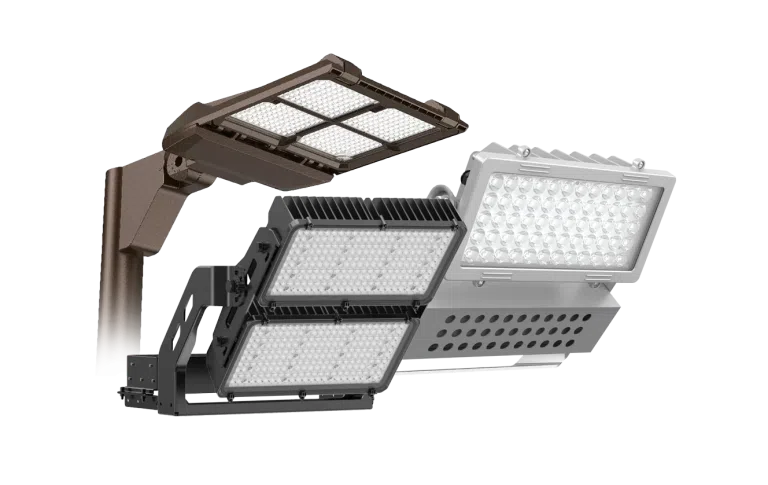
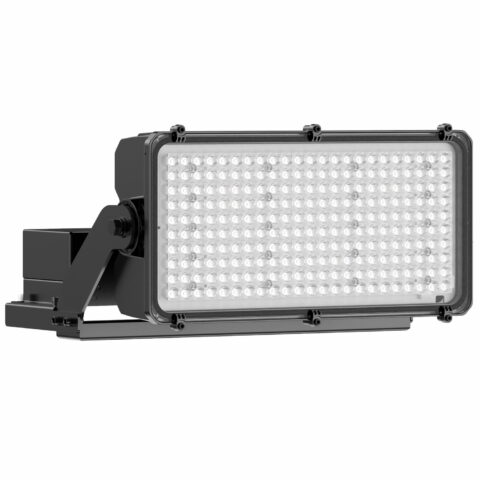
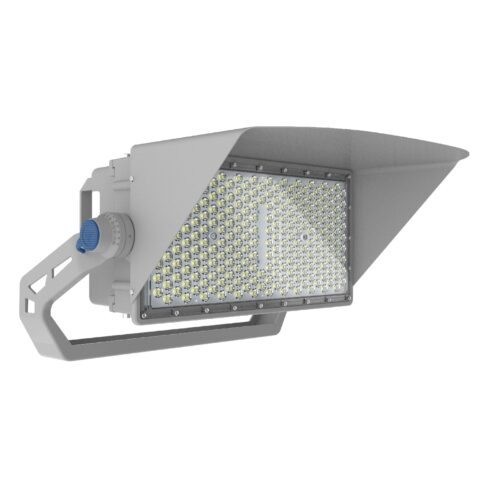
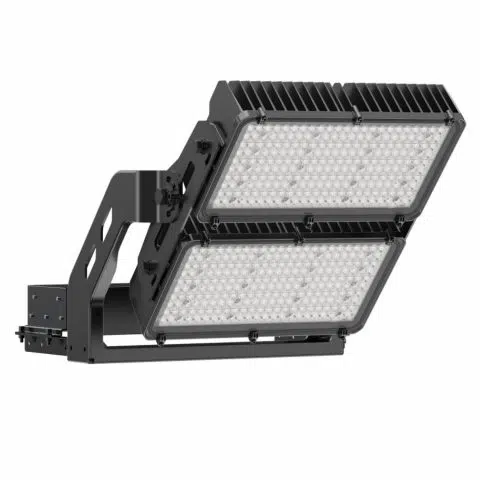
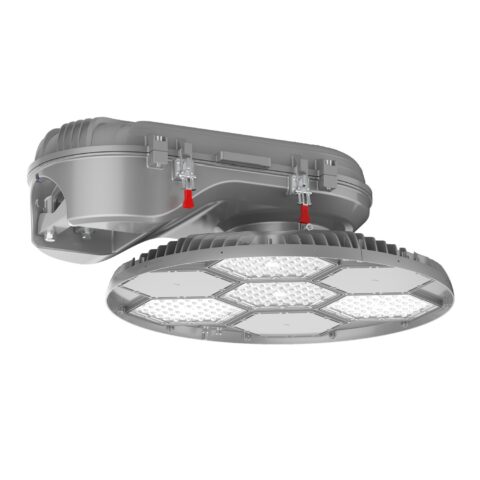
Our LED Railroad Yard Lighting for Freight and Rail Facilities includes high mast lights, long-throw LED lights, floodlights, area lights, industrial high bays, linear fixtures, vapor-tight fixtures, and task lighting. Available products include narrow, medium, asymmetric, and area distributions, with options for pole-mounted, building-mounted, and indoor maintenance applications.
These products are used in classification and switching yards, arrival and departure tracks, railcar inspection areas, locomotive service pads, freight loading areas, intermodal transfer zones, service roads, crossings, security gates, maintenance shops, and covered service bays.
-
 Starting At $697.50






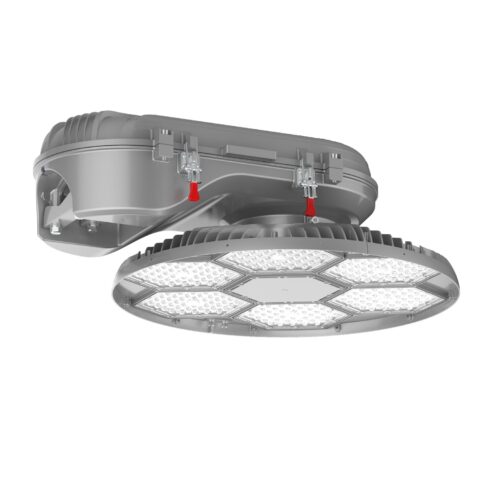
LED Railroad Yard Lighting for Freight and Rail Facilities
LED railroad yard lighting supports switching, railcar inspection, locomotive servicing, freight handling, employee movement, security, and general nighttime operations. Properly selected LED railroad yard lights can serve classification tracks, freight yards, service roads, maintenance buildings, loading areas, crossings, and access gates. A railroad yard should not be treated like a standard parking lot.
Railcars and locomotives can block light and create deep shadows between tracks. Employees may also need to see switches, couplers, wheels, brakes, identification markings, walking surfaces, equipment, and other workers from several directions.
Freight rail yard lighting should first be planned by work area, including general tracks, inspection zones, service areas, loading operations, roads, crossings, and gates. Then select the fixture and mounting approach based on track layout, mounting height, railcar dimensions, pole locations, required throw distance, glare, nearby properties, electrical service, and maintenance access. High mast lights, long-throw floodlights, area lights, industrial high bays, and task lighting may all be used within the same railroad facility.
Selection and Installation Note: Fixture listings, voltage, optics, environmental ratings, controls, mounting hardware, surge protection, hazardous-location suitability, certifications, and warranty coverage vary by product. Confirm the selected fixture specification before ordering. Railroad yards, fueling areas, high mast systems, and other safety-sensitive locations should be reviewed by the appropriate facility professionals, project engineers, structural professionals, inspectors, and licensed electrical contractors.
Lighting Different Areas of a Railroad Yard
Railroad facility lighting should be planned around the activity taking place in each part of the property. General storage tracks may need broad area visibility, while inspection tracks, service areas, loading zones, and maintenance shops need higher task illumination.
| Railroad Area | Lighting Priorities |
|---|---|
| Rail classification and switching yards | Rail classification yard lighting should provide broad coverage across multiple tracks with visibility around switches, moving railcars, locomotives, and ground crews. |
| Arrival and departure tracks | General visibility for railcar identification, brake checks, train preparation, and employee movement. |
| Railcar inspection tracks | Higher task visibility around wheels, brakes, couplers, hoses, doors, placards, identification markings, and railcar sides. |
| Locomotive service areas | Lighting for sanding, fluid checks, cleaning, inspections, service platforms, and routine maintenance. |
| Freight loading areas | Freight yard lighting may need to cover railcar positioning, loading platforms, forklifts, cranes, loaders, truck lanes, and pedestrians. |
| Intermodal transfer areas | Visibility around railcars, trailers, containers, handling equipment, transfer lanes, and inspection points. |
| Track crossings and walkways | Clear visibility of rails, walking surfaces, steps, obstacles, and interaction with moving equipment. |
| Security gates and perimeters | Vertical illumination for people, vehicles, railcars, identification points, fence lines, and security cameras. |
| Maintenance shops | Higher light levels for repair work, tools, pits, lifts, parts handling, overhead cranes, and detailed inspection. |
Recommended Foot-Candles for Railroad Yard Lighting
Railroad light levels should be selected for the specific work area. Classification yards, inspection tracks, locomotive service zones, crossings, loading areas, gates, and maintenance buildings should not all use the same target. Foot-candle ranges provide a starting point, but they do not determine pole height, fixture quantity, uniformity, vertical visibility, glare, or coverage between railcars.
A photometric plan should evaluate the complete layout before fixtures and poles are ordered.
Choosing LED Lights for Railroad Yards
The right LED lights for railroad yards depend on the size and shape of the area, required throw distance, work performed, mounting locations, railcar height, environmental exposure, and maintenance access. Large track areas may need high mast lighting, while inspection, service, road, parking, and indoor maintenance areas often require different fixture types.
| Fixture Type | Common Applications and Selection Considerations |
|---|---|
| LED high mast lights | Used for classification yards, arrival and departure tracks, freight terminals, and other large open areas where broad coverage is needed from fewer poles. Mounting height, optics, aiming, fixture load, wind exposure, and maintenance access should be reviewed together. |
| Long-throw LED lights | Used for inspection tracks, switching zones, locomotive service pads, loading areas, and distant tracks. Narrow optics can reach farther, while medium or asymmetric distributions can follow the length of a work area or improve visibility along railcar sides. |
| Heavy-duty LED floodlights | Used for defined work zones, building exteriors, loading areas, smaller service pads, and directional coverage where a full high mast system is not needed. |
| LED area lights | Best suited to service roads, employee parking, smaller yards, gates, equipment storage, truck lanes, and perimeter areas where controlled area coverage is more important than long throw. |
| Industrial high bays and linear fixtures | Used in locomotive shops, railcar repair buildings, warehouses, covered service bays, and maintenance areas. Vapor-tight fixtures and supplemental task lighting may also be needed in damp, dirty, or inspection-focused spaces. |
| Hazardous-location fixtures | Required only in areas with documented fuel, vapor, chemical, battery, coating, or combustible-dust classifications. The fixture must match the applicable class, division or zone, group, temperature code, and ambient conditions. |
Railcar Shadows, Glare, and Vertical Visibility
Ground-level foot-candles do not tell the entire story in a railroad yard. Boxcars, tank cars, autoracks, locomotives, double-stack cars, and maintenance equipment can block light and leave dark areas between tracks. Vertical illumination helps employees see railcar numbers, placards, doors, ladders, handholds, couplers, people, and equipment. It can also improve camera visibility at gates, inspection areas, and perimeter fencing. Fixture aiming should be reviewed from the viewpoints of locomotive engineers, ground crews, truck drivers, equipment operators, and nearby road traffic. Excessive glare can reduce contrast and make switches, workers, signs, and darker areas more difficult to see.
Railroad Yard Light Poles and Mounting Height
Pole height affects coverage, fixture output, glare, aiming, wind loading, and maintenance. Taller light poles can illuminate wider areas, but they require carefully selected optics and sufficient output. Lower poles may improve local visibility but can increase glare, fixture quantity, and the number of foundations installed near active tracks. New pole locations should be reviewed against:
- Track spacing and operating clearances
- Railcar and equipment height
- Signals, switches, drainage, and underground utilities
- Service roads and maintenance access
- Fixture weight and effective projected area
- Foundation and wind-load requirements
- Potential future track or facility expansion
A photometric layout should confirm whether high mast lights, perimeter poles, building-mounted fixtures, or a combination of mounting locations provides the best coverage.
Using Existing Railroad Yard Light Poles
Many railroad facilities have older metal halide or high-pressure sodium fixtures mounted on existing poles or towers. These structures may be reusable, but they should be inspected before new LED fixtures are installed. Review the pole and foundation condition, mounting brackets, crossarms, wiring, grounding, voltage, fixture weight, projected wind area, surge protection, and maintenance access. A one-for-one LED retrofit can reduce energy and maintenance requirements, but it may not correct poor pole spacing, low mounting heights, glare, or dark areas between railcars.
Lighting Inspection, Locomotive Service, and Maintenance Areas
Locomotive service yard lighting and railcar inspection lighting usually require more task visibility than general yard tracks. Employees may need to examine wheels, brakes, bearings, hoses, couplers, doors, undercarriages, identification markings, and mechanical components.
These areas may use pole-mounted floodlights, linear fixtures, high bays, service-platform lights, or supplemental task lighting. Fixture placement should reduce shadows around equipment without producing direct glare at common working heights.
Railroad maintenance yard lighting may also need to account for service pits, washdown areas, fueling zones, and spaces exposed to oils, chemicals, moisture, vapors, or dust. Confirm wet-location ratings, corrosion resistance, impact protection, emergency lighting, and hazardous-location requirements where applicable.
Controls, Electrical Protection, and Maintenance
Large railroad facilities can be divided into operating zones so classification tracks, inspection areas, loading zones, service pads, parking, gates, and support buildings can be controlled separately. Depending on the selected fixtures and control system, options may include photocells, scheduling, 0-10V dimming, reduced-output modes, occupancy control in selected areas, and networked monitoring.
Controls should not reduce lighting in active or safety-sensitive areas without an operational review. Outdoor pole-mounted systems should also be reviewed for voltage, grounding, lightning exposure, and surge protection. Maintenance planning is especially important where servicing a fixture requires a lift, track closure, specialized equipment, or access between active tracks.
Common Railroad Yard Lighting Mistakes
- Treating the yard like a parking lot: Railcars, switching, inspection work, and moving equipment create different visibility requirements.
- Reviewing only average foot-candles: Average values can hide dark tracks, poor uniformity, and inadequate vertical illumination.
- Ignoring railcar shadows: Tall or closely spaced cars can block light from one side of the yard.
- Using one optic everywhere: Wide yards, long tracks, roads, loading zones, and inspection areas may require different distributions.
- Creating glare for operators: Aiming should be reviewed from locomotive, truck, equipment, and ground-crew sightlines.
- Overlooking task areas: General yard lighting may not be sufficient for detailed inspection or mechanical work.
- Using non-rated fixtures in classified areas: Fuel, vapor, chemical, battery, or dust areas may require properly certified fixtures.
- Assuming a direct retrofit will correct the layout: New LED fixtures cannot compensate for every problem caused by poor pole placement or mounting height.
- Ignoring service access: Fixture location and pole height can significantly affect long-term maintenance costs.
- Skipping the photometric plan: Large railroad yards should be modeled before fixtures and poles are selected.
Benefits of LED Railroad Yard Lighting
- Improved visibility: A properly planned system can improve visibility around tracks, railcars, switches, roads, crossings, loading areas, and work zones.
- Better optical control: Narrow, medium, asymmetric, and area distributions can place light where it is needed.
- Instant-on operation: LED fixtures do not require the warm-up or restrike time associated with many older HID systems.
- Reduced maintenance: Longer service life can reduce lamp and ballast replacement on tall or difficult-to-access poles.
- Flexible controls: Scheduling, dimming, and zoning can support changing yard operations.
- Energy efficiency: LED systems can reduce energy use compared with older HID lighting, depending on wattage, operating hours, controls, and existing conditions.
Certifications, Rebates, and Warranty Support
LED railroad yard fixtures from LED Lighting Supply carry safety listings such as UL, ETL, or CSA, depending on the product. Many models are DLC or DLC Premium listed and may qualify for utility rebates where available. Most fixtures include a 5-year warranty unless otherwise specified, with USA-based warranty support. Confirm the selected product's safety listing, DLC status, voltage, surge protection, environmental rating, controls compatibility, mounting hardware, wind-load suitability, hazardous-location rating where required, and warranty terms before ordering.
Request a Railroad Yard Lighting Plan
A railroad yard lighting plan can help determine fixture quantity, pole height, pole placement, beam angles, aiming, foot-candle levels, uniformity, vertical illumination, glare, spill light, and coverage between railcars. Request a railroad yard or railroad facility lighting plan, and our Product Specialists can help review the track layout, railcar types, switching areas, inspection zones, locomotive service areas, loading operations, existing poles, voltage, controls, nearby properties, maintenance access, and fixture specifications.
LED Railroad Yard Lighting FAQs
How Should Railroad Yard Lighting Be Planned?
Railroad yard lighting should be planned around the work performed, track layout, mounting height, railcar dimensions, pole locations, glare, nearby properties, electrical service, and maintenance access. A photometric plan should evaluate the complete layout before fixtures and poles are ordered.
Why Are Foot-Candle Levels Alone Not Enough For A Railroad Yard?
Foot-candle ranges are a starting point, but they do not determine pole height, fixture quantity, uniformity, vertical visibility, glare, or coverage between railcars. Railcars, locomotives, and maintenance equipment can block light and leave dark areas between tracks.
What Lighting Should Be Used For Inspection And Locomotive Service Areas?
Inspection and locomotive service areas usually require more task visibility than general yard tracks because employees may need to examine wheels, brakes, bearings, hoses, couplers, doors, undercarriages, identification markings, and mechanical components. These areas may use pole-mounted floodlights, linear fixtures, high bays, service-platform lights, or supplemental task lighting.
When Are High Mast Lights Used In Railroad Yards?
LED high mast lights are used for classification yards, arrival and departure tracks, freight terminals, and other large open areas where broad coverage is needed from fewer poles. Mounting height, optics, aiming, fixture load, wind exposure, and maintenance access should be reviewed together.
How Can A Railroad Yard Lighting Layout Address Railcar Shadows And Glare?
A railroad yard lighting layout should evaluate vertical illumination, fixture aiming, and coverage between railcars because railcars and locomotives can create deep shadows. Fixture aiming should be reviewed from the viewpoints of locomotive engineers, ground crews, truck drivers, equipment operators, and nearby road traffic, since excessive glare can reduce contrast.
Can Existing Railroad Yard Poles Be Reused For LED Fixtures?
Existing poles or towers may be reusable, but they should be inspected before new LED fixtures are installed. Review the pole and foundation condition, mounting brackets, crossarms, wiring, grounding, voltage, fixture weight, projected wind area, surge protection, and maintenance access.
Will A One-For-One LED Retrofit Correct Railroad Yard Lighting Problems?
A one-for-one LED retrofit can reduce energy and maintenance requirements, but it may not correct poor pole spacing, low mounting heights, glare, or dark areas between railcars. New LED fixtures cannot compensate for every problem caused by poor pole placement or mounting height.
What Controls May Be Available For Railroad Yard Lighting?
Depending on the selected fixtures and control system, railroad yard lighting options may include photocells, scheduling, 0-10V dimming, reduced-output modes, occupancy control in selected areas, and networked monitoring. Large facilities can also be divided into operating zones so different areas can be controlled separately.