Military Base LED Lighting Solutions
- Fixture options for hangars, perimeters, checkpoints, and hazardous locations
- Marine-grade and corrosion-resistant options for coastal facilities
- Application support with photometric layouts and procurement documentation


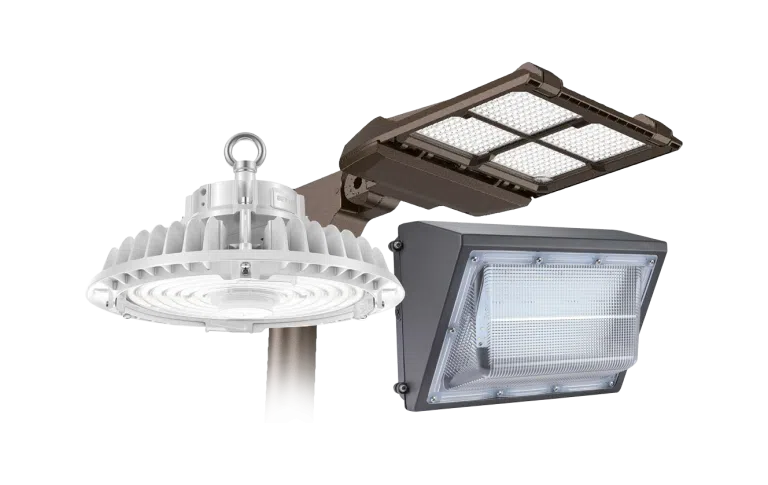
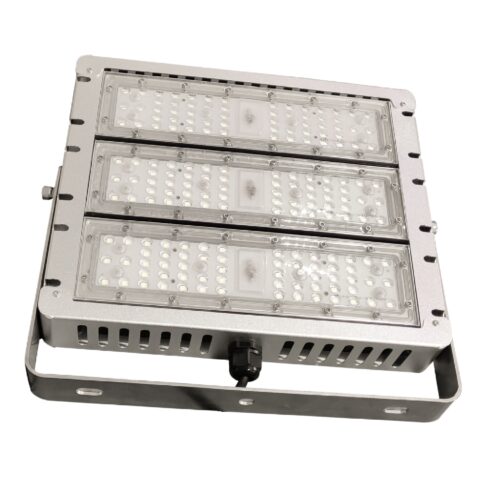
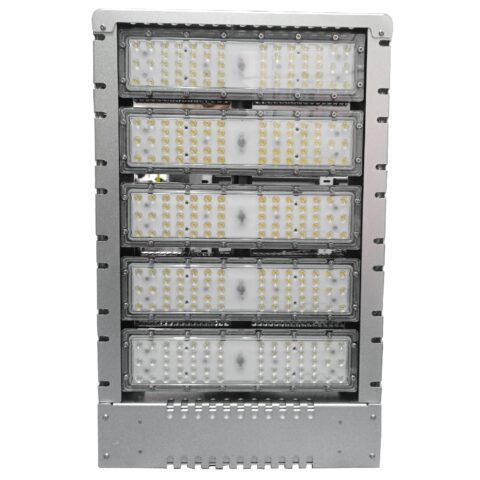
Our LED Military Base Lighting Solutions include high mast, flood, area, high bay, low bay, canopy, vapor tight, explosion proof, and marine-grade LED fixtures for defense and government facilities. Available products cover interior, exterior, industrial, aviation, marine, security, maintenance, storage, and hazardous-location lighting applications.
These fixtures are used in administrative offices, barracks, classrooms, motor pools, aircraft hangars, warehouses, armories, fuel areas, perimeter roads, checkpoints, parking lots, airfield support areas, docks, piers, and emergency response spaces.




Selecting LED Lighting for Military Bases
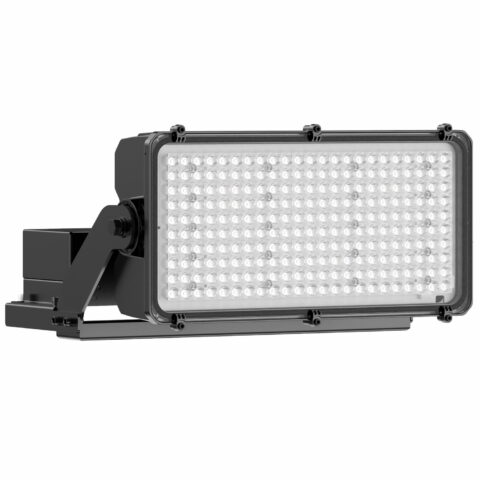
Military and government facilities may require rugged industrial LED lighting across offices, barracks, hangars, motor pools, warehouses, perimeter areas, airfield support spaces, docks, and other specialized environments. Select fixtures by application, mounting height, required light levels, security needs, environmental exposure, voltage, controls, ratings, and installation conditions.

Air Force base hangar after installation of LED high bay lights.
Selection and Installation Note: Product specifications, ratings, controls, certifications, environmental suitability, hazardous-location suitability, photometric performance, and warranty coverage vary by model. Confirm the selected product specification before ordering. For code-sensitive, electrical, military, government, aviation, marine, emergency, security, hazardous-location, ordnance, fuel, or safety-critical applications, verify requirements with your local inspector, project authority, base engineering team, or a licensed electrical professional.
Choose Military Base Lighting by Application Area
Military bases are mixed-use environments. The best fixture type depends on whether the lighting supports administration, living quarters, training, vehicle maintenance, aircraft maintenance, warehousing, security, hazardous materials, airfield support, marine operations, or emergency response.
| Military Base Area | Best Fixture Starting Point |
|---|---|
| Administrative Offices and Command Spaces | LED panels, troffers, and linear fixtures are often used for offices and command spaces, briefing rooms, planning rooms, and general indoor work areas. |
| Barracks and Living Areas | LED panels, troffers, strip lights, and general interior fixtures may be used where visual comfort, reliability, controls, and emergency egress matter. |
| Training Rooms and Classrooms | LED panels, troffers, and linear fixtures can support classrooms, training areas, simulation rooms, and briefing spaces. Confirm dimming and screen glare needs. |
| Maintenance Shops and Workshops | LED high bays, linear high bays, low bays, and task lighting are common for vehicle repair, equipment maintenance, fabrication, and shop work. |
| Motor Pools and Vehicle Bays | LED high bays, linear high bays, vapor tight fixtures, and task lighting may be used for covered vehicle bays, service areas, equipment bays, and fleet maintenance facilities. |
| Aircraft Hangars and Aviation Maintenance | High-output LED high bays, linear high bays, and task lighting are commonly used for aircraft hangars, aviation maintenance, MRO work, and inspection zones. |
| Warehouses and Supply Storage | LED high bays and linear high bays are often used for supply warehouses, depot storage, logistics spaces, and inventory areas. |
| Armories and Secure Storage | LED linear fixtures, vapor tight fixtures, impact-resistant fixtures, and hazardous-location fixtures may be needed depending on stored materials, environmental exposure, and the documented area classification. |
| Fuel, Ordnance, and Hazardous Material Areas | Where an area is classified, the fixture certification must match the documented Class, Division or Zone, Group, temperature code, and ambient conditions. Explosionproof construction is one protection method and is not required for every hazardous location. Review the exact installation area and facility classification documentation before selecting fixtures for hazardous material storage. |
| Perimeter Security Zones | LED flood lights, area lights, high mast lights, and pole-mounted security fixtures may be used for perimeter security lighting, fence lines, patrol roads, surveillance zones, and secure perimeters. |
| Gates, Checkpoints, and Entry Control Points | LED area lights, canopy lights, flood lights, and checkpoint lighting should support vehicle lanes, guard stations, ID verification, and vertical illumination. |
| Parking Lots, Roadways, and Exterior Circulation | LED shoebox lights, area lights, and roadway fixtures may be used for parking, roads, pedestrian paths, and general exterior circulation. |
| Airfields, Aprons, and Ramp Support Areas | LED high mast lights, flood lights, and area lights may support ramps, aircraft apron areas, service zones, and other airport lighting applications where glare and coverage must be reviewed carefully. |
| Naval, Marine, Dock, and Pier Areas | Marine-grade LED flood lights, area lights, vapor tight fixtures, and corrosion-resistant fixtures may be appropriate for saltwater, dock, pier, shipyard, and coastal environments. Verify materials, coatings, seals, and hardware for the actual exposure. |
| Emergency Response and Rescue Areas | LED high bays, area lights, task lighting, emergency backup fixtures, and continuously available lighting may be required for fire, rescue, readiness, and emergency vehicle areas. |
Recommended Foot-Candles for Military Base Lighting
Military base lighting levels vary by application. A command office, barracks room, maintenance shop, aircraft hangar, armory, fuel area, perimeter fence, checkpoint, parking lot, airfield ramp, and emergency response bay each have different visibility needs. Use the tool below for application-based starting points.
Foot-candle guidance helps estimate illuminance needs, but it does not determine final compliance, fixture count, pole spacing, uniformity, glare control, camera visibility, emergency lighting, hazardous-location requirements, aviation requirements, marine exposure, or security coverage. For military and government facilities, a photometric plan is recommended before ordering.
Planning Checklist for Military Base Lighting Projects
Military base lighting projects should be reviewed by application area, not just fixture wattage. The same base may need high mast lights, high bays, hazardous-location fixtures, corrosion-resistant lights, canopy lights, vapor tight fixtures, interior panels, and task lighting.
| Planning Factor | What to Confirm |
|---|---|
| Application area | Confirm whether the project involves offices, barracks, training rooms, motor pools, shops, hangars, warehouses, armories, perimeter zones, checkpoints, roads, airfields, marine areas, or emergency response spaces. |
| Required light levels | Confirm foot-candle targets by task and location. Indoor work, aircraft maintenance, security checkpoints, perimeter lighting, and emergency response areas do not use the same lighting criteria. |
| Photometric layout | Confirm fixture placement, pole spacing, mounting height, beam distribution, uniformity, glare, spill light, and coverage before ordering. |
| Security requirements | Review camera visibility, identification requirements, vehicle lanes, patrol routes, fence lines, blind spots, access-control points, and secure-area requirements. |
| Hazardous-location review | Confirm the documented Class, Division or Zone, Group, temperature code, and ambient-temperature requirements where applicable. Fuel, chemicals, gases or vapors may involve Class I locations; combustible dust may involve Class II; and ignitible fibers or flyings may involve Class III. LED Lighting Supply can help match products to an established classification but does not establish the classification. |
| Aviation requirements | For hangars, ramps, aprons, and airfield support areas, confirm glare, pilot visibility, aircraft clearance, obstruction concerns, pole locations, and base-specific requirements. |
| Marine and corrosion exposure | For Navy, Coast Guard, dock, pier, shipyard, or coastal facilities, confirm salt exposure, corrosion resistance, IP rating, hardware, coatings, seals, and glare on water. IP ratings address ingress protection and do not by themselves establish corrosion resistance. |
| Environmental exposure | Confirm desert heat, cold weather, wind, rain, salt spray, dust, vibration, impact risk, washdown, chemical exposure, and continuous operation. |
| Voltage and power | Confirm 120-277V, 347-480V, generator compatibility, emergency power, UPS needs, surge protection, control wiring, and electrical infrastructure. |
| Controls | Review dimming, photocells, occupancy sensors, timers, emergency override, lighting zones, building automation, and security control integration. |
| Fixture construction | Confirm housing, lens, gasket, mounting hardware, impact rating, IP rating, temperature rating, and corrosion resistance by application. |
| Procurement documentation | Confirm product specifications, cutsheets, photometric files, warranty details, fixture quantities, CAGE code information, and any project-specific documentation required for purchasing. |
Military Base Lighting Applications and Fixture Types
Military installations often require a combination of interior, exterior, industrial, aviation, marine, and hazardous-location lighting. Product selection should be based on the application and environment, not on a general “military-grade” label.
| Fixture Type | Best Used For |
|---|---|
| High Mast Lights | Large exterior zones, security areas, airfield support, ports, yards, equipment areas, and wide-area coverage where tall mounting heights are required. |
| Flood Lights | Perimeters, checkpoints, vehicle yards, training areas, equipment zones, building exteriors, and targeted outdoor coverage. |
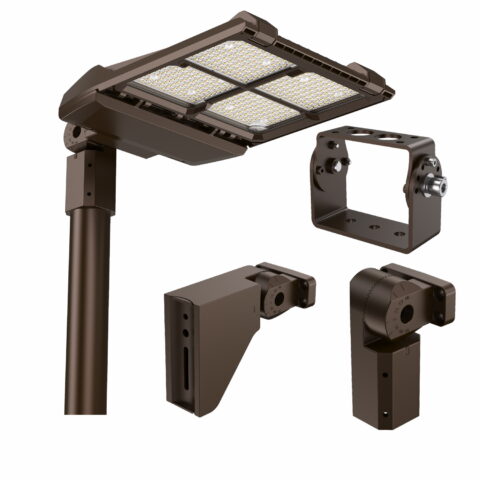
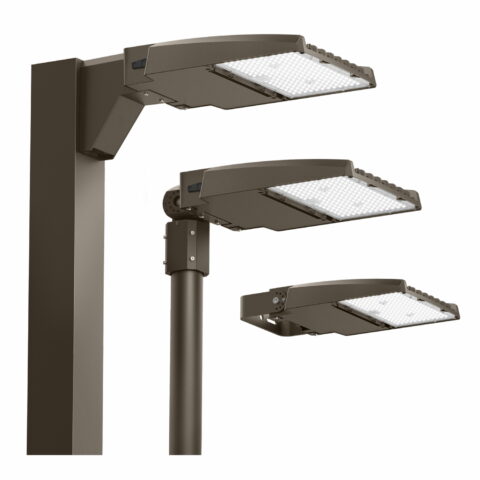
| Area and Shoebox Lights | Parking lots, base roads, pedestrian circulation, outdoor storage, fleet areas, and general exterior lighting. |
| High Bay Lights | Aircraft hangars, motor pools, warehouses, maintenance shops, depots, gymnasiums, and high-ceiling interior facilities. |
| Low Bay Lights | Lower-ceiling shelters, service buildings, shops, equipment rooms, and covered support areas. |
| Canopy Lights | Checkpoints, covered entrances, fueling canopies, vehicle inspection points, and covered exterior areas. |
| Vapor Tight Fixtures | Washdown, damp, dusty, humid, vehicle maintenance, marine-adjacent, or harsh indoor areas where the selected model's environmental ratings are appropriate. |
| High Temperature Lights | Desert environments, hot mechanical areas, high-temperature shops, or process areas where elevated ambient temperature must be confirmed by fixture rating. |
| Explosion Proof Lights | Classified fuel storage, ordnance handling, chemical areas, and other hazardous locations where the fixture's hazardous-location certification matches the documented classification. |
| Marine Grade LED Fixtures | Docks, piers, naval facilities, shipyards, saltwater environments, and corrosion-prone exterior spaces where construction and environmental documentation match the exposure. |
Military Customers and Procurement Information
LED Lighting Supply supports lighting projects for military, defense, government, and industrial facilities. Project support may include fixture recommendations, photometric layouts, product specifications, cutsheets, lighting plans, warranty information, and procurement documentation.
Our CAGE Code Is: 6JP16
For military and government projects, confirm fixture requirements, procurement requirements, delivery expectations, documentation needs, and project-specific specifications before ordering.
Military Base Lighting Project Examples
Military base lighting projects vary by branch, facility type, security level, environment, mounting height, and application. A lighting plan helps confirm whether high mast lights, area lights, high bays, canopy fixtures, vapor tight fixtures, marine-grade fixtures, or hazardous-location fixtures are the right fit.

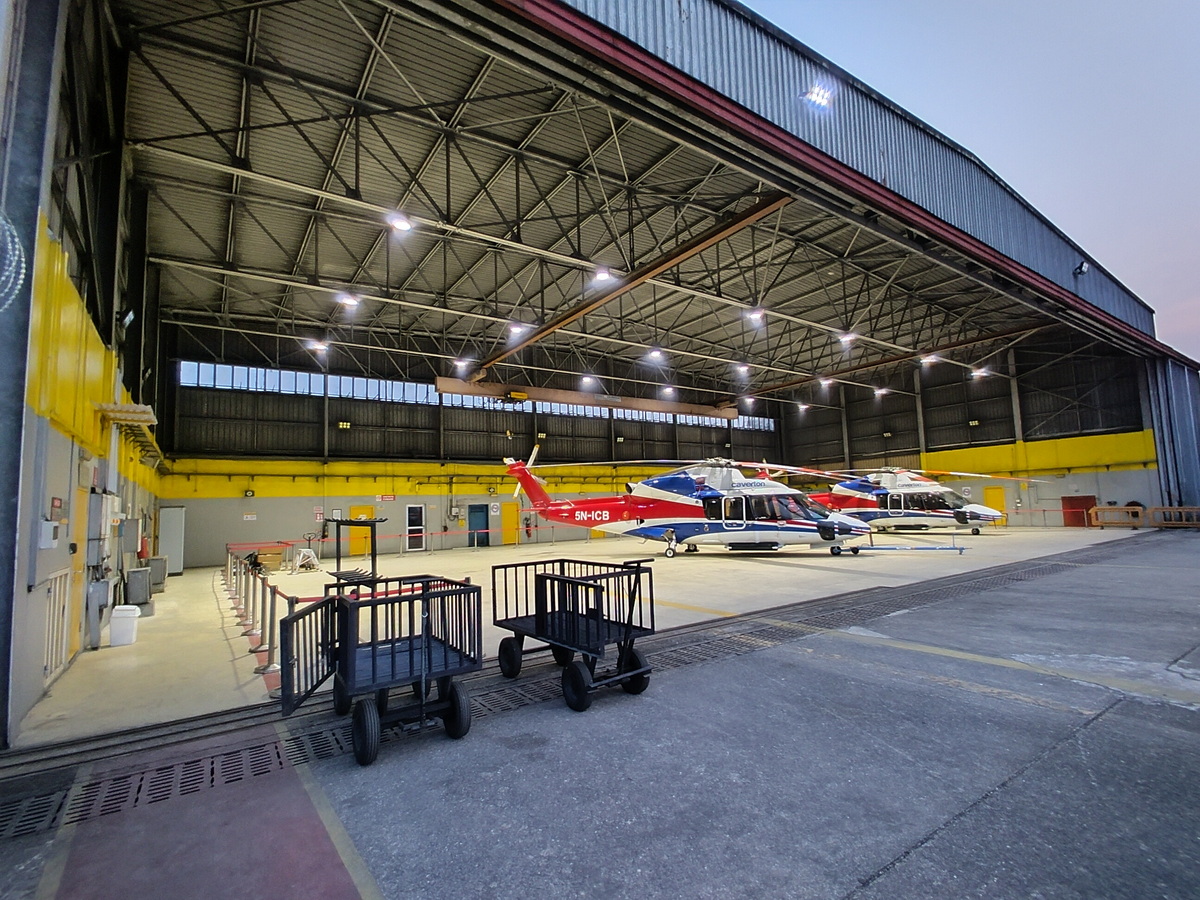
Case Study: Replacement of 1500 Watt Metal Halide Lighting with 480 Watt LED UFO High Bays in Lagos, Nigeria
| After: 480 Watt LED UFO High Bay Light | 76800 Lumens |
 |
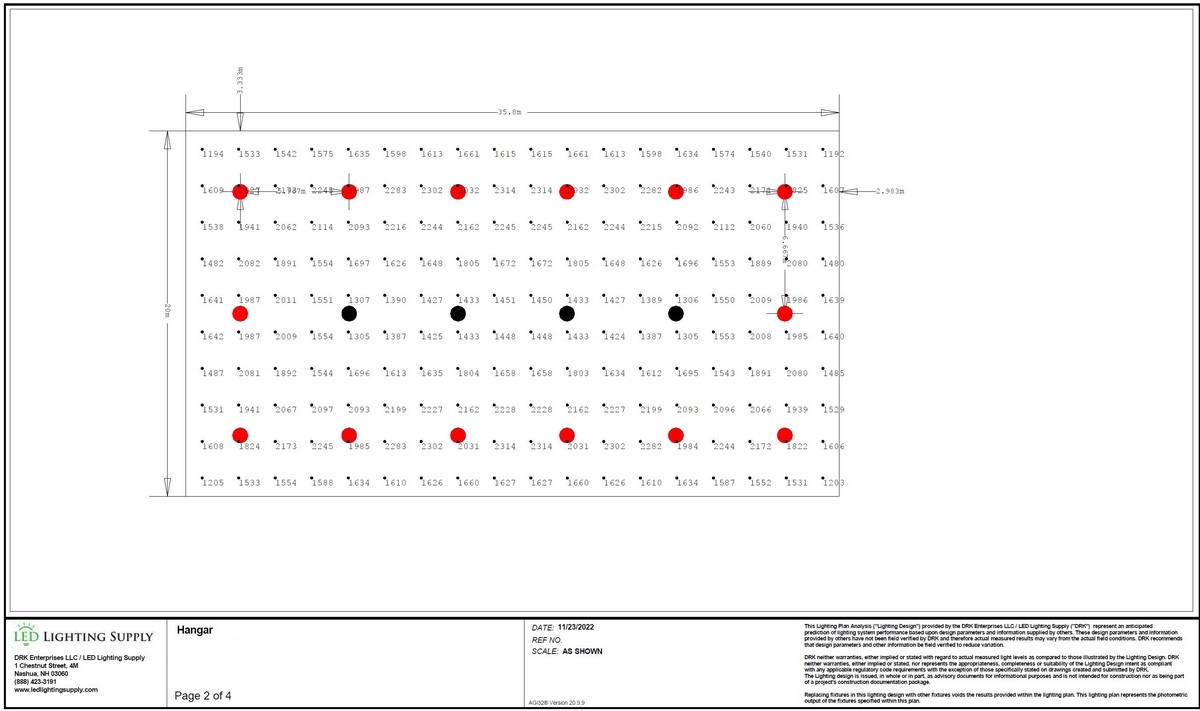
Lighting Plan We Created for the Customer
|
Lighting Plan |
Heat Map |
 |
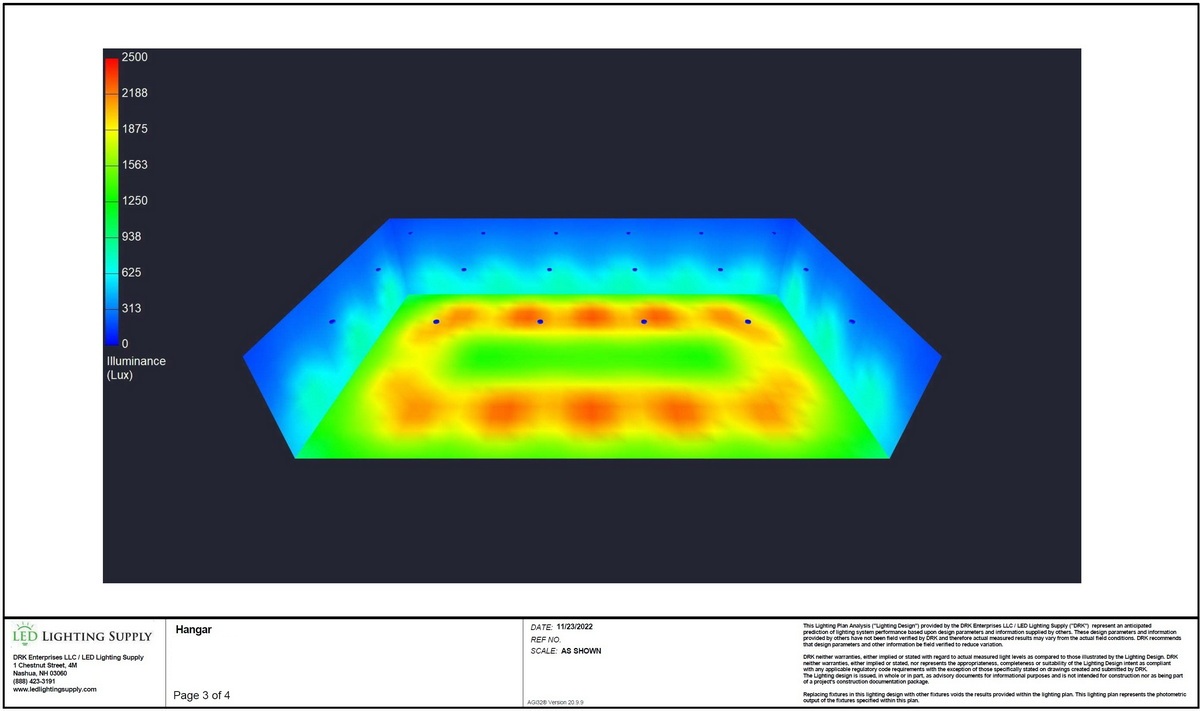 |
Aircraft Hangar Lighting Installation Plan Metrics
- Mounting height: 35 ft ft
- Fixtures Used: MLLG-LED-HB5-480-5-60: 480 Watt LED UFO High Bay | 76800 Lumens | 5000K | 100-277V
- FC achieved: 167 FC average
- Uniformity (Avg/Min): 1.51
Military Lighting Certifications, Rebates, and Warranty Support
Selected LED military lighting products from LED Lighting Supply carry a safety listing or certification from a recognized testing organization, such as UL, ETL, or CSA, depending on product and intended market. Many models are DLC or DLC Premium listed for utility rebate support where available. DLC qualification is a performance program, not an electrical safety certification. Rebate requirements vary by utility, region, and product listing, so confirm eligibility on the selected product specification before ordering.
Warranty terms vary by product, with many fixtures offering a 5-year warranty unless otherwise specified. Before purchase, confirm certifications, DLC status, voltage, controls compatibility, mounting method, environmental ratings, warranty terms, and whether the fixture is right for the site layout and surrounding conditions.
Common Military Base Lighting Mistakes
Military base lighting projects can fail when they are treated like standard commercial lighting projects. Application type, security requirements, environmental exposure, hazardous-location classification, aviation concerns, marine exposure, emergency power, and photometric performance should be reviewed before fixtures are ordered.
- Using commercial-grade fixtures in harsh environments: Desert heat, salt air, dust, moisture, vibration, and impact risk may require harsh-environment lighting, corrosion-resistant, high-temperature, or sealed fixtures.
- Skipping hazardous-location review: Fuel, ordnance, chemical, and other potentially classified areas require review of the documented classification. Select a fixture whose hazardous-location certification matches that classification where required.
- Creating perimeter blind spots: Perimeter and checkpoint lighting should be reviewed for uniformity, camera visibility, glare, and coverage gaps.
- Ignoring glare in aviation areas: Hangars, ramps, aprons, and airfield support areas need careful fixture placement and optic selection to reduce glare and avoid visibility problems.
- Choosing fixtures by wattage alone: Lumens, optics, mounting height, distribution, uniformity, voltage, and application rating matter more than wattage by itself.
- Mixing color temperatures in security zones: Inconsistent color temperature can reduce visual consistency across adjacent exterior areas and should be reviewed with camera and security-system requirements.
- Forgetting emergency and backup power requirements: Confirm generator, UPS, emergency lighting backup, and control compatibility before ordering.
- Using one fixture type for every base application: Offices, motor pools, hangars, perimeter zones, checkpoints, marine areas, and hazardous spaces usually require different fixture types.
- Skipping corrosion review in naval or coastal areas: Saltwater, humidity, and marine exposure can shorten fixture life if coatings, hardware, gaskets, and seals are not selected correctly.
- Skipping a photometric plan: Large exterior areas, high mast projects, hangars, parking lots, security perimeters, and airfield support zones should be modeled before ordering.
Request a military base lighting plan, and our Product Specialists can help review application area, mounting height, light levels, voltage, controls, environmental exposure, security requirements, fixture ratings, certifications, and product specifications for your project.
Military Base LED Lighting Solutions FAQs
How Should I Choose Lighting For Different Military Base Areas?
Choose military base lighting by the specific application area, environment, mounting height, security requirements, voltage, controls, required light levels, fixture ratings, and installation conditions. Offices, hangars, motor pools, perimeter zones, airfield support areas, marine facilities, and hazardous locations should not be treated as the same lighting project.
Why Is A Photometric Plan Recommended Before Ordering Military Base Lighting?
A photometric plan is recommended because foot-candle guidance alone does not determine fixture count, pole spacing, uniformity, glare control, camera visibility, security coverage, or other project requirements. The layout should confirm fixture placement, mounting height, beam distribution, glare, spill light, and coverage before ordering.
What Should Be Confirmed For Fuel, Ordnance, And Hazardous Material Areas?
Fuel, ordnance, and hazardous material areas require fixture selection based on the exact installation area and documented facility classification. Confirm Class, Division, Zone, Group, and temperature code requirements where flammable gases, vapors, dust, fibers, chemicals, or classified conditions may be present.
What Lighting Considerations Apply To Hangars, Ramps, And Airfield Support Areas?
Hangars, ramps, aprons, and airfield support areas should be reviewed for glare, pilot visibility, aircraft clearance, obstruction concerns, pole locations, and base-specific requirements. High mast lights, flood lights, area lights, high bays, linear high bays, and task lighting may be used depending on the application area.
How Should Marine And Coastal Military Lighting Projects Be Evaluated?
Marine and coastal projects should confirm salt exposure, corrosion resistance, IP rating, hardware, coatings, and glare on water. Marine-grade LED flood lights, area lights, vapor tight fixtures, and corrosion-resistant fixtures may be required for docks, piers, shipyards, saltwater, and coastal environments.
What Should Be Verified Before Ordering Military Base LED Fixtures?
Confirm the selected product specifications, certifications, voltage, controls compatibility, mounting method, environmental ratings, warranty coverage, procurement requirements, and project-specific documentation before ordering. Product specifications, ratings, controls, certifications, environmental suitability, hazardous-location suitability, photometric performance, and warranty coverage vary by model.
Are Military Base LED Fixtures Eligible For Utility Rebates?
Many models are DLC or DLC Premium listed for utility rebate support where available. Rebate requirements vary by utility, region, and product listing, so eligibility should be confirmed on the selected product specification before ordering.
What Warranty Is Included With Military Base LED Lighting Fixtures?
Most LED military lighting fixtures include a 5-year warranty unless otherwise specified, with USA-based warranty support. Warranty coverage varies by model, so confirm the selected product specification before purchase.