


Class 1 Division 1 LED Lights
- Options available for Class I Division 1 gas Groups A–D
- T-rating and ambient range vary by model for proper selection
- USA-based support helps match fixtures to documented classifications


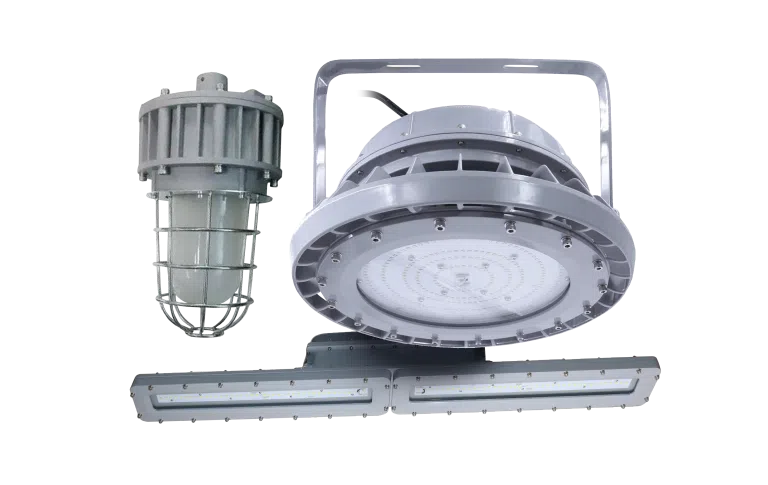

Our Class I Division 1 LED Lighting for Hazardous Locations includes explosion-proof fixtures for classified areas with flammable gases or vapors. Available fixture configurations address documented Class I Division 1 requirements, including gas Group, T-rating, ambient range, voltage, and mounting method. These fixtures are used in oil and gas operations, refineries, oil fields, offshore oil rigs, pipeline facilities, chemical plants, paint booths, distilleries, hydrogen facilities, biofuel facilities, water and wastewater treatment plants, ship engine rooms, and power generation facilities.


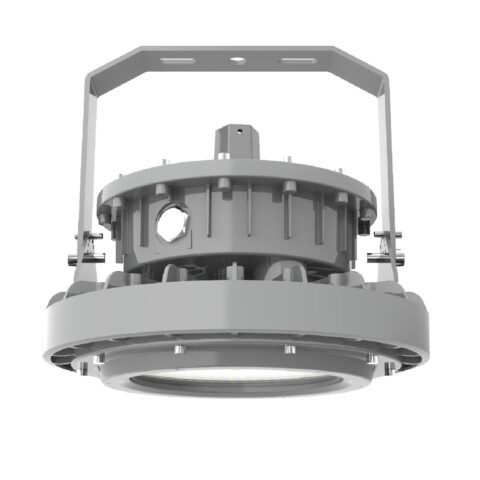

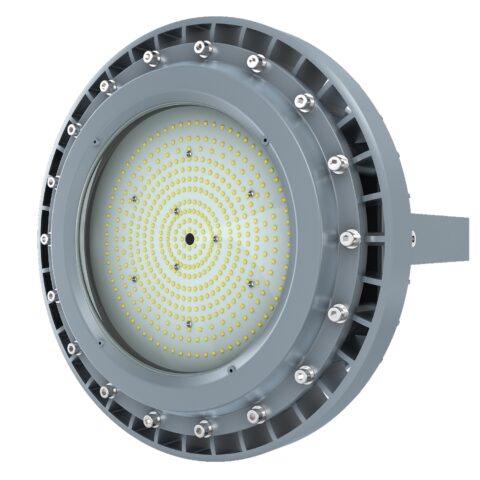

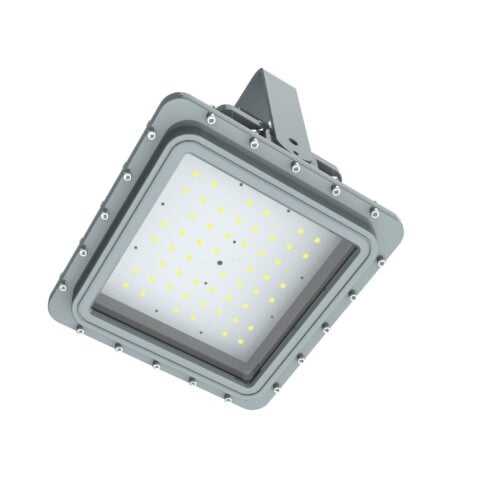

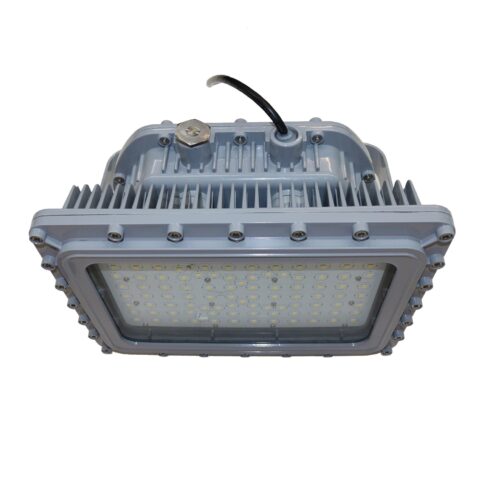


Class I Division 1 LED Lighting for Hazardous Locations
Class I Division 1, often shortened to Class 1 Div 1 or C1D1, applies to hazardous locations involving flammable gases or vapors where ignitable concentrations may exist during normal operating conditions, may occur frequently because of repair, maintenance, or leakage, or may be released under other conditions that meet the Division 1 classification requirements. Lighting for these areas must be suitable for the documented classification. The Division is only part of the specification; the gas Group, temperature rating, ambient range, environmental exposure, voltage, and installation method can also determine whether a fixture is appropriate.
Explosion-proof Class I equipment is designed so that if gas or vapor enters the enclosure and an internal ignition occurs, the enclosure contains the ignition and prevents it from propagating to the surrounding atmosphere when the equipment is properly selected, installed, and maintained. Area classification should come from facility documentation, classification drawings, engineering documents, project specifications, the authority having jurisdiction (AHJ), or another qualified source. LED Lighting Supply can help match those established requirements to available fixtures and lighting-performance needs.
Choosing a Class 1 Division 1 Fixture
Start with the documented Class I Division 1 classification and gas Group, then verify the fixture's T-rating and ambient range. After confirming hazardous-location suitability, match environmental protection, voltage, wiring and mounting requirements, and the lighting layout needed for the installation area.
| Selection Factor | What It Affects |
|---|---|
| Classification and gas Group | Determines which hazardous-location markings the fixture must carry. |
| T-rating and ambient range | Determines whether fixture surface temperatures and operating conditions are suitable for the material present. |
| Environment | Moisture, washdown, corrosion, chemicals, vibration, impact, salt air, and outdoor exposure may require additional protection. |
| Electrical and mounting requirements | Voltage, wiring system, entry method, and pendant, wall, ceiling, surface, or yoke mounting must fit the project. Projects requiring 480V explosion-proof lighting should confirm that the exact fixture configuration carries the required hazardous-location ratings. |
| Lighting performance | Lumens, optics, mounting height, spacing, foot-candles, and uniformity determine the final lighting layout. |
Gas Groups A, B, C, and D
Class I locations are divided into gas Groups based on the characteristics of the material present. The fixture must carry markings suitable for the Group identified for the installation area.
| Gas Group | Common Examples |
|---|---|
| Group A | Acetylene |
| Group B | Hydrogen and gases or vapors of equivalent classification |
| Group C | Ethylene and gases or vapors of equivalent classification |
| Group D | Propane, methane, gasoline vapors, benzene, certain alcohol vapors, and similar materials depending on classification |
Do not treat these Groups as a simple ranking of overall facility risk, and do not assume every C1D1 fixture is approved for every Class I gas Group.
T-Rating and Ambient Temperature
A Class I Division 1 fixture must also have a temperature rating suitable for the gas or vapor present. The T-rating identifies the maximum surface temperature associated with the equipment under the conditions covered by its listing. The fixture's permitted maximum surface temperature must be below the ignition temperature of the hazardous gas or vapor present. A fixture can therefore have the correct Class, Division, and Group markings and still be unsuitable if its temperature rating allows a surface temperature that is too high for the material.
| T-Rating | Maximum Surface Temperature |
|---|---|
| T1 | 450°C / 842°F |
| T2 | 300°C / 572°F |
| T3 | 200°C / 392°F |
| T4 | 135°C / 275°F |
| T5 | 100°C / 212°F |
| T6 | 85°C / 185°F |
A higher T-number represents a lower maximum permitted surface temperature. For example, T6 equipment has a lower maximum surface temperature than T4 equipment. This does not mean T6 is automatically required or that a higher T-number alone makes one fixture better for every application. The required temperature classification depends on the gas or vapor present and the requirements established for the installation.
The fixture's marked ambient-temperature range must also be considered. Hazardous-location ratings and temperature classifications apply under the conditions covered by the product listing, so confirm that the fixture is approved for the actual ambient temperatures expected at the installation. Exact product markings may also include more specific temperature classifications. Verify the required T-rating from the project classification, hazardous-material information, engineering documentation, fixture listing, and applicable electrical requirements rather than selecting a luminaire based on Class and Division alone.
Toyota Motor Manufacturing Indiana Upgrades to Explosion-Proof LED Lighting Case Study
The Backstory of Toyota Indiana's Relationship With LED Lighting Supply
The project began when Toyota Motor Manufacturing Indiana's (TMMI) Environmental Engineer, Lisa Harmon, reached out to LED Lighting Supply. Lisa needed support in upgrading the company’s Princeton, Indiana auto assembly plant paint booth lights. A contractor working on a separate project at the plant had previously installed our explosion proof fixtures. Their team wanted to order additional replacement fixtures for an area outside of the paint booth. As the project progressed, the purchasing process was handled through Toyota’s distributor, C & E Advanced Technologies. The purchasing channel transferred from Toyota directly to the distributor, while we continued our role as the lighting supplier for the project.
The Challenge of the Hazardous Location Project
The TMMI plant paints vehicle materials, builds automotive bodies, welds panels, and assembles entire vehicles. Heavy-duty work like this creates an environment where flammable vapors may be present during normal operations. Every light fixture in a hazardous area is subject to classification. The legacy fluorescent lighting serving those spaces had reached the end of its useful life and was producing uneven light levels across the work area. The lighting solution needed to raise illumination levels while meeting the safety requirements for high-level assembly work.
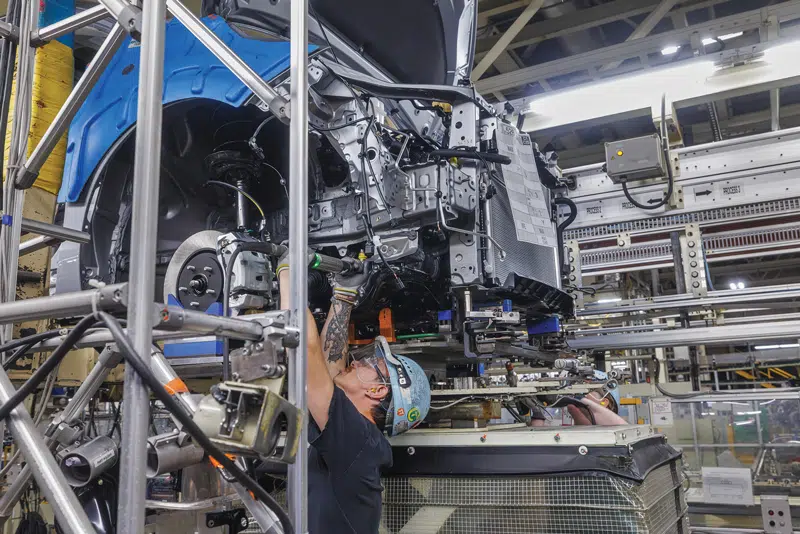
Lighting plan metrics:
- Product(s) Used: MLLG-E-LED-EXPLC-150-50-[V]-C1D1
Barrette Outdoor Living’s Explosion Proof Lighting Case Study
The Backstory
Barrette Outdoor Living, an Oldcastle APG brand, struggled to properly illuminate an existing paint booth with inadequate, exposed fluorescent lighting, leading to a remodel. The Operations Manager, Brandon Hiller, sought LED Lighting Supply's Product Specialist, Joe Hawkins, for expert guidance on the LED lighting upgrade.
The Customer Challenge
The customer needed support in selecting the proper lighting solution for their demanding environment. Barrette Outdoor Living required fixtures for an area that frequently contains flammable paint chemicals and sprays such as lacquers and gelcoat. Additionally, the customer was renovating parts of the booth, including pulling down the ceiling, reframing the walls, and rewiring, while leaving the sprinkler system in place. Due to the intended use of the property, the flammable paint chemical exposure in the environment was not only a concern but also required specialized lighting specifications to comply with local standards. Our team understood that upgrading lighting in hazardous locations involves more complex planning than traditional spaces. The goal was to achieve brighter, safer lighting with minimal shadowing.
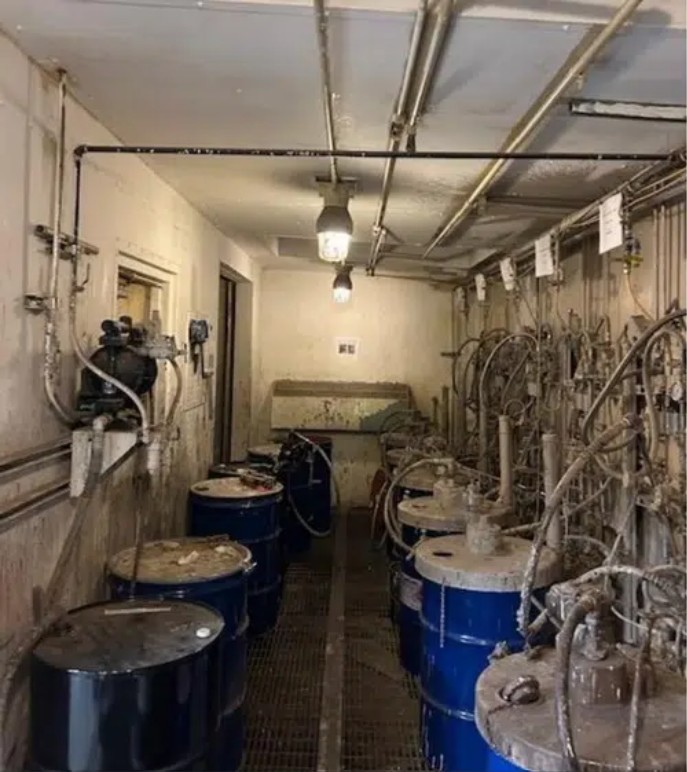
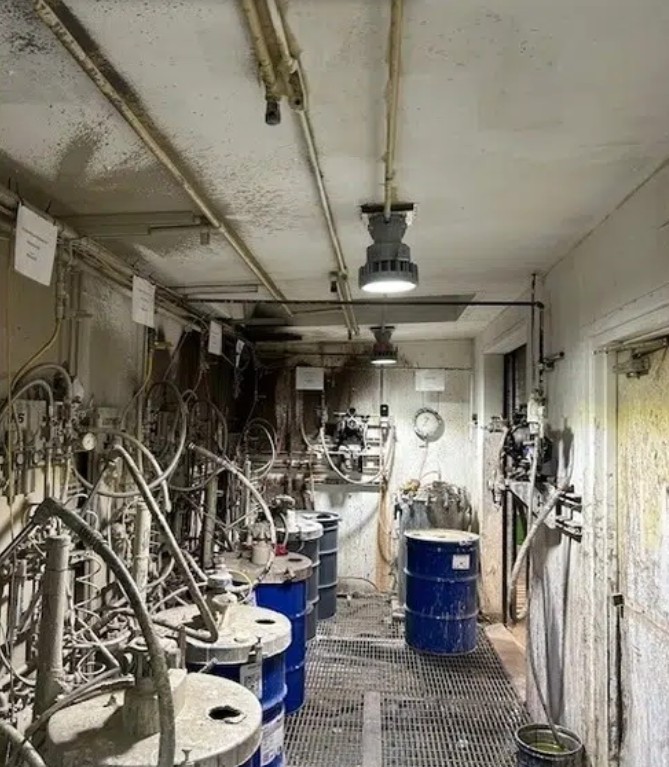
Lighting Plan We Created for the Customer
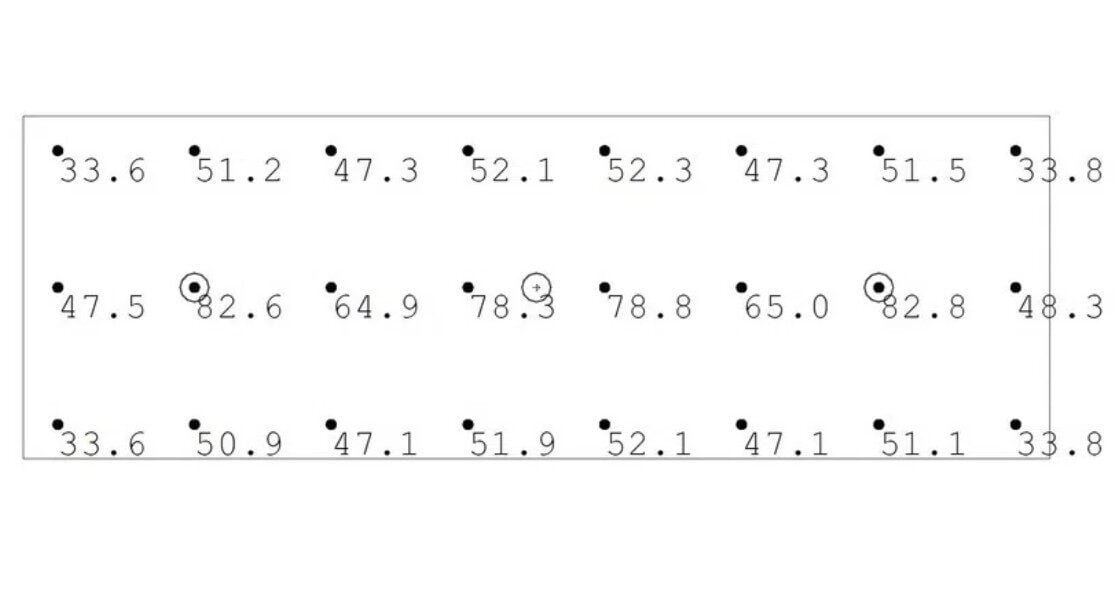

Lighting Plan Metrics:
- Mounting Height: 10 ft
- Fixture Used: 50 Watt Round Explosion Proof LED Light
- Average Foot Candles Achieved: 53
- Product(s) Used: MLLG-E-EXPLS2-150-50-C1D1
Common Class I Division 1 Lighting Applications
Class I Division 1 lighting is used in specific areas where flammable gases or vapors may be present under conditions that require Division 1 equipment. A facility can contain Division 1, Division 2, and unclassified areas, so use the documented classification for the exact fixture location rather than the industry name alone.
- Oil, gas, and fuel operations: C1D1 areas may occur around drilling, production, processing, storage, transfer, and related equipment. See application-specific guidance for oil and gas facilities, refineries, oil fields, offshore oil rigs, and pipeline facilities.
- Chemical and flammable-vapor processes: Classified locations may also occur in chemical plants, paint booths and finishing areas, distilleries, hydrogen facilities, biofuel facilities, and hazardous material storage areas.
- Utilities, marine, and process facilities: Certain areas within water and wastewater treatment plants, ship engine rooms, and power generation facilities may also require Class I Division 1 lighting where the established classification calls for it.
For any of these applications, confirm the required gas Group, T-rating, ambient range, environmental conditions, voltage, mounting, and fixture listing for the specific installation area.
Installation, Listings, and Certifications
A hazardous-location luminaire is only one part of the electrical system. Wiring methods, conduit or approved cable systems, boxes, fittings, seals where required, switches, grounding, bonding, and other components must also be suitable for the classified area. Installation should be performed by qualified electrical professionals experienced with hazardous locations and in accordance with applicable codes, product listings, manufacturer instructions, and local requirements. Listed equipment should not be altered by drilling unapproved openings, modifying flame paths, or substituting unauthorized components.
Safety and Performance Certifications: Certifications and markings are model-specific. Depending on the product and project, fixtures may carry UL, ETL, CSA, or other applicable listings. Review the exact model for its Class, Division, Group, T-rating, ambient range, voltage, environmental ratings, mounting, and controls.
Warranty and Lighting Support
Many Class I Division 1 LED fixtures include a 5-year warranty unless otherwise specified, with warranty support based in the USA. Check the warranty terms for the exact product selected. LED Lighting Supply can help match an established hazardous-area classification to fixture options and provide a hazardous-area lighting design for fixture placement, quantity, foot-candles, and uniformity. If the documented area is Division 2 rather than Division 1, see our Class I Division 2 LED Lighting options.
This Content on explosion proof Class I Division 1 lighting guidance, hazardous location considerations, and fixture selection content Was Professionally Reviewed By:

Jamie Popp, Professional Electrical Engineer (PE)
Multi-State Licensed Professional Engineer
Master of Science in Engineering
Master of Science in Project Management
Jamie has spent over 15 years working directly with industrial energy systems and facility operations. In his engineering design work, he focuses on comprehensive lighting designs, complex power distribution engineering, technical hazardous area classifications, and design-level construction support.
He applies these specialized design skills across demanding environments, including petrochemical, nuclear, mining, pulp and paper, and manufacturing facilities.
This content was reviewed for technical accuracy, engineering relevance, real-world application, and clarity for the stated lighting topic.
Class 1 Division 1 LED Lights FAQs
What Does Class I Division 1 Mean For LED Lighting?
Class I Division 1 applies to hazardous locations involving flammable gases or vapors where ignitable concentrations may exist during normal operating conditions, occur frequently because of repair, maintenance, or leakage, or be released under other conditions meeting Division 1 requirements.
What Information Is Needed To Choose A Class I Division 1 LED Fixture?
Choose a fixture using the documented Class I Division 1 classification and gas Group, then verify its T-rating, ambient range, environmental protection, voltage, wiring, mounting requirements, and lighting layout for the installation area.
Does Every Class I Division 1 Fixture Work For Every Gas Group?
No, the fixture must carry markings suitable for the gas Group identified for the installation area. Do not assume every C1D1 fixture is approved for every Class I gas Group.
Why Must T-Rating Be Verified For Class I Division 1 Lighting?
The fixture's T-rating must be suitable for the gas or vapor present because its permitted maximum surface temperature must be below that material's ignition temperature. A fixture can have the correct Class, Division, and Group markings but still be unsuitable if its temperature rating allows too high a surface temperature.
Does A Higher T-Number Always Mean A Better Fixture?
No, a higher T-number represents a lower maximum permitted surface temperature, but it does not automatically make a fixture better for every application. The required temperature classification depends on the gas or vapor present and the requirements established for the installation.
How Should Ambient Temperature Affect Fixture Selection?
The fixture's marked ambient-temperature range must be approved for the actual ambient temperatures expected at the installation. Hazardous-location ratings and temperature classifications apply under the conditions covered by the product listing.
Can A Facility Have Both Division 1 And Division 2 Areas?
Yes, a facility can contain Division 1, Division 2, and unclassified areas. Use the documented classification for the exact fixture location rather than the industry name alone.
What Should Be Verified Before Purchasing A Class I Division 1 LED Light?
Verify the exact model's Class, Division, Group, T-rating, ambient range, voltage, environmental ratings, mounting, controls, and applicable listings. Certifications and markings are model-specific, and many fixtures include a 5-year warranty unless otherwise specified.
