LED Oil Pipeline Facility Lighting
- Class I, Division 1 and Division 2 fixture options available
- Area, flood, linear, and compact styles for varied applications
- Product specialists help match fixtures to classified locations



Get Your Custom Lighting Plan With Product Recommendations
- Tell us about the pump or compressor station you're lighting, and a product specialist can help you decide which fixtures to use, how many you need, and where to place them.


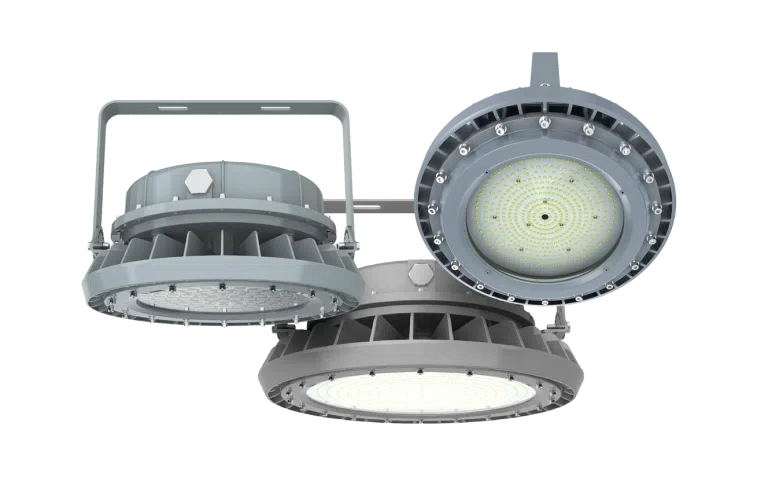
Our LED Oil Pipeline Lighting for Pump and Compressor Stations includes explosion-proof area, flood, linear, and compact fixtures for classified and non-classified facility locations. Available products include Class I, Division 1 and Class I, Division 2 configurations, along with low-temperature, high-temperature, corrosion-resistant, standard industrial, and outdoor LED lights. These fixtures are used at pump stations, compressor stations, valve sites, metering stations, pig launching and receiving facilities, transfer terminals, tank areas, control buildings, maintenance yards, access roads, parking areas, and security perimeters.
LED Oil Pipeline Facility Lighting
Oil pipeline lighting is primarily used at the facilities that move, control, measure, inspect, and store petroleum products. These locations include pump stations, compressor stations, valve sites, metering stations, pig launching and receiving facilities, transfer terminals, tank areas, control buildings, maintenance yards, access roads, and security perimeters. The pipeline right-of-way itself generally does not require continuous fixed lighting. Most lighting is installed at operating stations and access points where employees inspect equipment, operate valves, read instruments, connect transfer systems, perform maintenance, and respond to abnormal conditions.
Areas near pumps, compressors, valves, seals, vents, meters, drains, pig traps, tanks, and transfer connections may require luminaires listed and marked for Class I, Division 1 or Class I, Division 2 hazardous locations. Offices, electrical rooms, parking areas, access roads, and perimeter locations may use standard industrial or outdoor fixtures when the facility’s electrical drawings show that the mounting location is outside the hazardous zone. Start by confirming the hazard classification at each fixture location, then select the fixture type and light distribution needed for the equipment, platforms, access paths, gauges, valves, and work areas being illuminated.
Also verify gas group, temperature code, ambient-temperature range, voltage, controls, vibration, corrosion exposure, installation system, and maintenance access before ordering.
Pipeline Facility Safety Note: Do not treat an entire pump, compressor, metering, or transfer station as one hazard classification. Confirm the class, division, gas group, temperature code, ambient-temperature range, wiring method, and required product listing for the exact fixture location.
Where Oil Pipeline Facility Lighting Is Used
| Pipeline Facility Area | Lighting and Hazard Considerations |
|---|---|
| Pump stations | Pumps, seals, valves, manifolds, and enclosed equipment areas may require hazardous-location luminaires with suitable vibration, temperature, and mounting ratings. |
| Compressor stations | Gas-handling equipment, machinery vibration, ventilation, noise, heat, platforms, and maintenance access affect both fixture selection and hazardous classification. |
| Metering and regulation stations | Lighting should support instrument reading, inspection, valve operation, sampling, and maintenance while matching the classification around process equipment. |
| Valve sites and manifolds | Compact area, flood, or linear fixtures can illuminate valves, actuators, controls, access paths, and service points without creating excessive glare. |
| Pig launchers and receivers | Opening, venting, draining, and servicing pigging equipment can affect classification. Lighting should provide clear visibility around closures, valves, gauges, drains, and work platforms. |
| Transfer terminals and loading areas | Connections, hoses, loading arms, manifolds, tanks, and vehicle movement may require classified-location lighting with useful horizontal and vertical illumination. |
| Tank and storage facilities | Hazardous zones may exist near vents, valves, drains, sampling points, hatches, and transfer equipment, while roads and general perimeter areas may be non-classified. |
| Control buildings and electrical rooms | Standard indoor fixtures may be used when the building design and facility drawings show that the room is outside the hazardous zone. |
| Access roads, parking, and perimeter areas | Parking lot lights, flood lights, wall-mounted fixtures, and security lights may be used in non-classified locations with suitable weather and environmental ratings. |
Should Pipeline Facilities Use C1D1 or C1D2 Rated Lights?
Both Class I, Division 1 and Class I, Division 2 locations may be present at pump, compressor, metering, valve, pigging, storage, and transfer facilities. The correct luminaire must be listed and marked as suitable for the classification assigned to the exact fixture location, including the applicable gas group, temperature code, and ambient-temperature range.
| Classification | Where It May Apply |
|---|---|
| Class I, Division 1 | Locations where ignitable concentrations of flammable gases or vapors may exist under normal operating conditions, or where routine venting, draining, sampling, pigging, loading, transfer, or maintenance can release them. |
| Class I, Division 2 | Locations where flammable gases or vapors are normally confined within closed piping or equipment and could be released through accidental rupture, breakdown, abnormal operation, or ventilation failure. |
| Non-Classified | Control rooms, offices, electrical rooms, parking areas, access roads, and perimeter locations outside the hazardous boundaries shown on the facility’s electrical drawings. |
Class I, Division 2 locations may be common around closed pipeline systems where petroleum products are normally contained. However, release points and routine operating procedures can create Class I, Division 1 locations. The facility’s documented area classification should determine which listing and marking are required. C1D1 and C1D2 describe location classifications, not fixture shapes or universal fixture approvals. Area lights, flood lights, linear fixtures, and compact lights may each be available with different hazardous-location listings and markings.
Recommended Types of Oil Pipeline Facility Lights
| Fixture Type | Where It Works Best |
|---|---|
| Explosion-Proof LED Area Lights | Pump pads, compressor areas, manifolds, valve sites, transfer terminals, meter stations, and classified general-work zones when the fixture listing and marking match the established location classification. |
| Explosion-Proof LED Flood Lights | Equipment skids, tanks, structures, loading areas, pigging facilities, elevated equipment, and outdoor work zones that need directional light. |
| Explosion-Proof Linear LED Lights | Compressor buildings, pump enclosures, pipe galleries, platforms, walkways, equipment rooms, and long work areas where elongated distribution provides more even coverage. |
| Compact Explosion-Proof Lights | Metering points, instruments, valve stations, pig traps, doors, stairs, landings, and smaller service areas where a large fixture is unnecessary. |
| Low-Temperature Hazardous-Location Lights | Remote stations and northern pipeline facilities where low temperatures can affect fixture startup, drivers, gaskets, and service life. |
| High-Temperature Hazardous-Location Lights | Compressor areas, enclosed machinery spaces, and locations near hot piping, engines, or process equipment where standard ambient-temperature ratings are insufficient. |
| Corrosion-Resistant Hazardous-Location Lights | Coastal terminals, wet sites, chemical-exposure areas, marine facilities, and locations exposed to salt, moisture, or corrosive vapors. |
| Standard Industrial and Outdoor LED Lights | Control buildings, offices, parking areas, access roads, electrical rooms, security perimeters, and support areas outside the hazardous zones. |
Fixture Selection Note: Fixture style alone does not determine whether a light is suitable for a hazardous area. Confirm the required class, division or zone, gas group, temperature code, ambient-temperature range, and product listing and marking for the exact mounting location. Explosionproof construction is one protection method and is not required for every hazardous location.
Oil Pipeline Facility Lighting Selection Guidelines
| Selection Factor | What to Confirm |
|---|---|
| Hazard classification | Confirm whether the mounting location is Class I, Division 1, Class I, Division 2, Zone-classified, or non-classified. |
| Potential release sources | Review pumps, seals, compressors, valves, vents, drains, meters, pig traps, loading connections, and transfer equipment. |
| Operating procedures | Consider venting, draining, sampling, pigging, loading, unloading, maintenance, and other activities that can release gases or vapors. |
| Gas group | Match the fixture listing and marking to the gases or vapors identified in the established area classification. |
| Temperature code | Verify that the fixture’s maximum surface temperature is suitable for the materials that may be present. |
| Ambient temperature | Check the minimum and maximum expected temperatures, including severe outdoor cold and heat near compressors, engines, and process equipment. |
| Ventilation | Enclosed pump or compressor buildings may have different classifications and temperature conditions from outdoor equipment. |
| Vibration | Review vibration from pumps, compressors, engines, and structural movement. Fixtures, brackets, conduit, and wiring connections must be suitable for those conditions. |
| Fixture distribution | Use area lights for broad coverage, flood lights for directional targets, linear fixtures for platforms and buildings, and compact lights for localized service points. |
| Vertical illumination | Provide enough light on gauges, labels, valves, actuators, controls, closures, and equipment faces - not only on floors and walking surfaces. |
| Weather and corrosion | Review rain, snow, ice, dust, salt, chemicals, moisture, wind, washdown, and corrosion exposure separately from the hazardous-location rating. |
| Voltage and controls | Confirm supply voltage, emergency operation, dimming, photocells, sensors, and whether all controls and accessories are approved for the location. |
| Installation system | Conduit, seals, fittings, cable entries, grounding, junction boxes and lighting controls, and wiring methods must also be suitable for the classified location. |
| Maintenance access | Consider fixture weight, mounting hardware, service clearances, lifts, shutdown requirements, travel time, and the cost of servicing remote sites. |
How LED Lighting Addresses Common Pipeline Facility Conditions
| Site Condition | Lighting Response |
|---|---|
| Flammable gases and vapors | Luminaires listed and marked for the established Class I location, gas group, temperature code, and ambient conditions can be used when installed in accordance with their listing and applicable electrical requirements. |
| Continuous vibration | Heavy-duty fixtures and suitable mounting systems help reduce problems near pumps, compressors, engines, and rotating equipment. |
| Extreme outdoor temperatures | Fixtures with appropriate operating-temperature ranges support reliable startup and performance at remote stations exposed to severe heat or cold. |
| Salt, chemicals, and moisture | Corrosion-resistant coatings, housings, hardware, and sealed construction help protect fixtures at coastal terminals, wet sites, and chemically aggressive locations. Verify environmental suitability separately from the hazardous-location listing. |
| Shadows from equipment | A combination of area, flood, linear, and compact fixtures can position light around skids, tanks, manifolds, valves, platforms, and piping. |
| Poor visibility of instruments | Directional and localized lighting can improve vertical illumination on gauges, labels, controls, valves, actuators, and pig-trap closures. |
| Remote maintenance access | Long-life LED fixtures can reduce lamp and ballast replacement work at sites that require long travel times, special access, or shutdown coordination. |
| Security and emergency response | Instant-on LED output provides immediate illumination and can support approved security, emergency, or backup-lighting systems where required. |
Photometric Planning for Pipeline Facilities
Pumps, compressors, tanks, equipment skids, manifolds, piping, platforms, and buildings can block light and create shadows. A photometric plan can help evaluate fixture quantity, mounting height, beam distribution, aiming, average and minimum foot-candles, uniformity, vertical illumination, glare, and dark areas before installation. The hazardous-area classification should be established before the final lighting layout is completed. Provide the station plan, equipment locations, mounting heights, hazardous boundaries, voltage, and required work areas so appropriately listed and marked fixtures can be used at each location.
Common Oil Pipeline Facility Lighting Mistakes
- Ordering from a category name rather than the fixture marking: “Explosion-proof” and “C1D” product descriptions do not confirm suitability by themselves. Review the manufacturer’s exact listing, marking, gas-group coverage, temperature code, ambient range, voltage, and mounting instructions for the selected model.
- Using a preliminary classification drawing as the final installation document: Verify the current approved electrical drawings and area-classification documentation before procurement, especially after equipment, vent locations, operating procedures, or building ventilation have changed.
- Leaving mounting locations off the lighting plan: A fixture may be suitable at one elevation or side of a skid but not another. Identify each proposed mounting point relative to hazardous boundaries, equipment, platforms, and access routes.
- Specifying fixtures without reviewing the complete assembly: Pendant stems, brackets, adapters, cable glands, junction boxes, controls, conduit entries, and seals may affect whether the completed installation is suitable for the location.
- Applying an IP rating as proof of chemical or hazardous-location suitability: IP ratings address ingress protection. They do not establish hazardous-location approval, corrosion resistance, chemical compatibility, or resistance to salt spray and process vapors.
- Designing only for average horizontal light levels: Gauges, labels, valve indicators, control panels, stairs, and pig-trap closures require useful vertical illumination and careful aiming, not only light measured on the ground or platform.
- Copying fixture spacing from another station: Tank geometry, pipe racks, skids, mounting heights, fixture optics, and required task areas vary by site. Use fixture-specific IES photometric data to evaluate coverage, shadows, glare, and uniformity.
- Adding controls without confirming their location rating: Photocells, occupancy sensors, dimming devices, emergency drivers, and control enclosures must be compatible with the electrical system and suitable for the environment and classification where installed.
- Underestimating access and service constraints: Remote stations may require lifts, shutdown coordination, travel time, or special permits. Select fixtures and mounting methods that allow safe inspection and service under site conditions.
- Assuming LED lighting replaces required emergency systems: LED fixtures can provide instant light output, but emergency and egress lighting requirements depend on the facility design, applicable codes, and the authority having jurisdiction.
Need Help Choosing Oil Pipeline Facility Lights?
Contact us about LED oil pipeline facility lighting, and our Product Specialists can help review the classification assigned to each fixture location, compare listed and marked explosion-proof area, flood, linear, and compact fixture options, and review temperature range, vibration, corrosion exposure, mounting, voltage, controls, and photometric planning requirements.
LED Oil Pipeline Facility Lighting FAQs
How Do I Determine Whether A Pipeline Facility Location Needs C1D1, C1D2, Or Non-Classified Lighting?
The required rating depends on the likelihood of flammable gases or vapors being present at the exact fixture location. Facility electrical drawings should identify hazardous boundaries, while normal venting, draining, sampling, pigging, loading, transfer, maintenance, leaks, ruptures, equipment failures, and ventilation problems can affect the classification.
Can One Hazard Classification Be Used For An Entire Pump, Compressor, Metering, Or Transfer Station?
No, an entire station should not be treated as one hazard classification. Confirm the class, division, gas group, temperature code, ambient-temperature range, wiring method, and product listing assigned to each exact fixture location.
When Can Standard Industrial Or Outdoor Fixtures Be Used At A Pipeline Facility?
Standard industrial or outdoor fixtures may be used in locations outside hazardous zones shown on the facility's electrical drawings. These locations may include control buildings, offices, electrical rooms, parking areas, access roads, security perimeters, and other support areas.
Which Fixture Types Fit Different Pipeline Facility Lighting Needs?
Area lights provide broad illumination in classified general-work zones, flood lights serve directional targets, linear fixtures provide more even coverage in long work areas, and compact fixtures suit localized service points. The fixture style does not determine hazardous-area suitability, so its approval must match the exact mounting location.
What Should Be Reviewed Beyond Hazard Classification When Selecting A Fixture?
Fixture selection should also confirm gas group, temperature code, ambient-temperature range, voltage, controls, weather and corrosion exposure, vibration, mounting, maintenance access, and the suitability of the installation system. Conduit, seals, fittings, cable entries, grounding, junction boxes, controls, and wiring methods must also be suitable for the classified location.
Why Is Vertical Illumination Important At Oil Pipeline Facilities?
Vertical illumination is needed on gauges, labels, valves, actuators, controls, closures, and equipment faces, not only on floors and walking surfaces. Directional and localized lighting can improve visibility at instruments, valves, controls, and pig-trap closures.
What Information Is Needed For A Pipeline Facility Photometric Plan?
A photometric plan needs the station plan, equipment locations, mounting heights, hazardous boundaries, voltage, and required work areas. The plan can evaluate fixture quantity, beam distribution, aiming, foot-candles, uniformity, vertical illumination, glare, and dark areas before installation.
Why Should Pipeline Lighting Not Be Chosen By Wattage Alone?
Pipeline facility lighting should not be chosen by wattage alone because lumens, optics, mounting height, classification, voltage, beam distribution, and photometric performance also matter. Equipment skids, tanks, piping, platforms, and structures can block light and create shadows that require layout planning.