LED Security Lighting
- Wall pack, flood, area, and pole-mounted options available
- Select models support photocells, motion sensors, or dimming
- USA-based product selection and warranty support


Get Your Custom Lighting Plan With Product Recommendations
- Strategic Coverage Design for Perimeters, Parking Areas, Gates & Camera-Supported Zones
- Fixture Type, Mounting Height, Distribution & Glare Control Specifications for Each Security Zone
- Enhanced Nighttime Visibility with Reduced Energy Costs & Camera-Compatible Lighting Performance


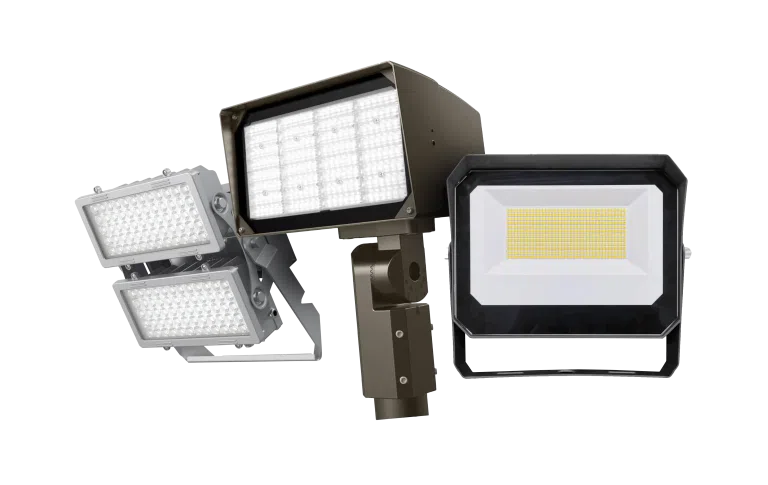
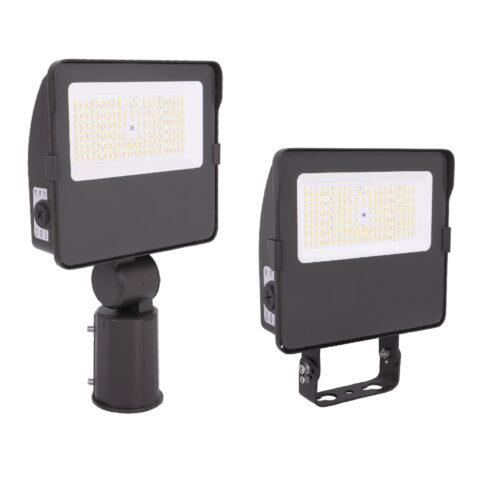
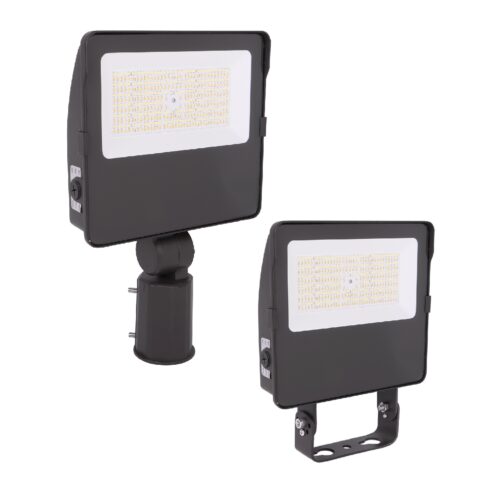
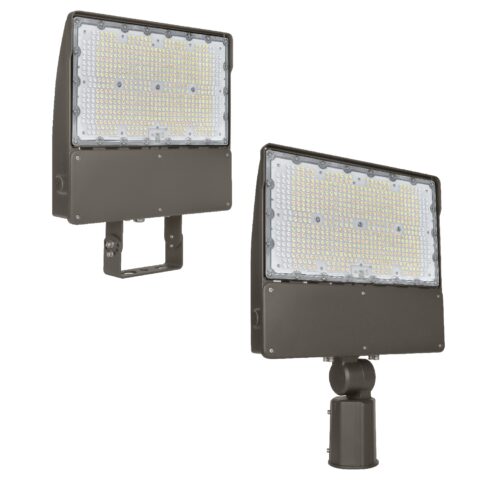
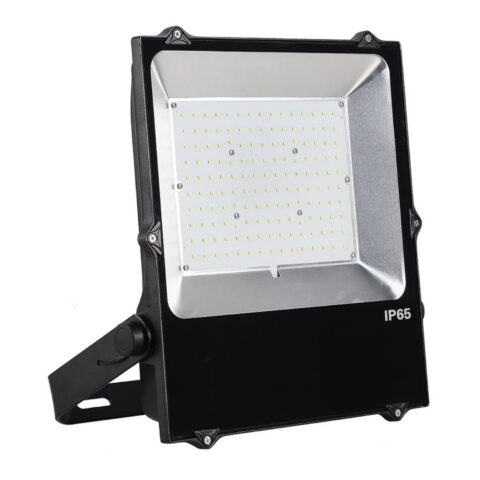
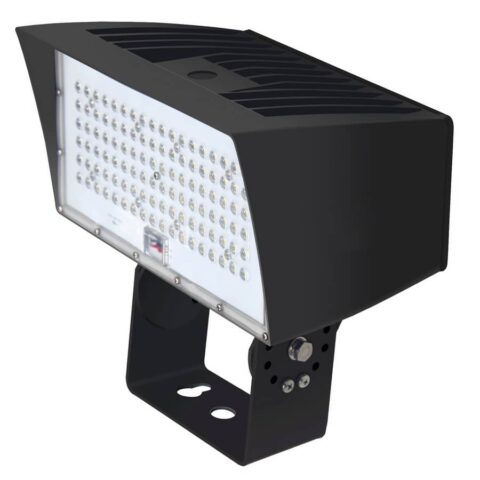
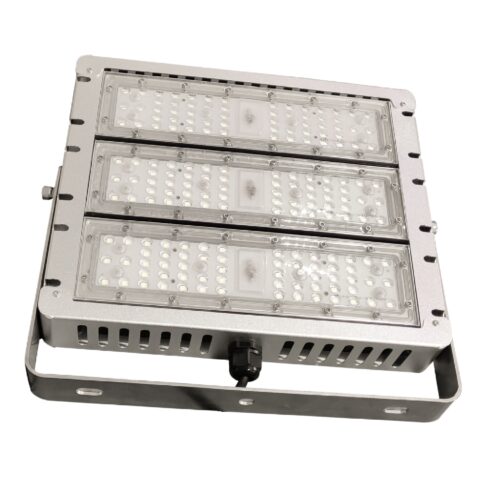
Our LED Security Lights include wall packs, flood lights, shoebox lights, high mast lights, post top lights, solar area lights, and motion-activated fixtures for exterior security lighting. Available models vary by fixture style, output, optics, voltage, dimming, photocells, motion sensors, and wall, pole, bracket, or high-mast mounting configurations.
These fixtures are commonly used around building perimeters, parking lots, drive lanes, loading docks, service yards, fence lines, gates, industrial yards, pathways, campuses, and remote or off-grid areas.
-
 Starting At $201.92
-
Starting At $71.43




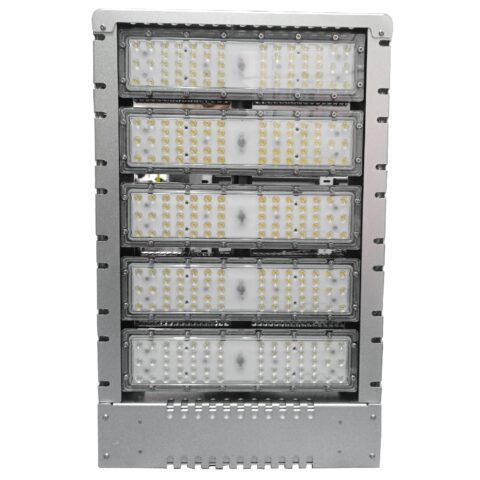
What Are LED Commercial Security Lights?
LED commercial security lights are outdoor fixtures used to improve visibility around buildings, parking areas, walkways, entrances, yards, perimeters, gates, loading areas, and other exterior spaces. They are commonly used on commercial, industrial, institutional, municipal, and multi-building properties where dependable outdoor lighting is needed after dark.
Choose security lighting by first identifying the area and mounting location, then selecting the fixture type that fits the coverage needed. Confirm the fixture height, optics or distribution, controls, camera considerations, surrounding properties, and local lighting requirements before ordering. Security lighting can include wall-mounted fixtures, flood lights, area lights, shoebox lights, high mast lights, solar area lights, post top lights, and motion-activated fixtures. Detailed selection guidance appears later on this page.
Selection and Installation Note: Product specifications, wattage, lumen output, optics, distribution type, color temperature, voltage, dimming, motion sensor compatibility, photocell compatibility, mounting method, wet-location rating, IP rating, certifications, and warranty coverage vary by model. Confirm the selected product specification before ordering. For security lighting, exterior electrical work, pole-mounted fixtures, cameras, neighboring properties, glare-sensitive areas, or code-sensitive applications, verify requirements with your facility team, local inspector, project specifier, security consultant, or a licensed electrical professional.

Where LED Security Lighting Is Used
LED security lighting is used anywhere a property needs better nighttime visibility, access control support, camera visibility, or general exterior illumination. It should be selected by area type, not just by fixture wattage.
| Application | Common Lighting Priorities |
|---|---|
| Building perimeters | Exterior doors, corners, walkways, service doors, and wall-mounted visibility around the building. |
| Parking lots and drive lanes | Vehicle movement, pedestrian routes, entrances, exits, and general area coverage. |
| Loading docks and service yards | Work visibility, truck movement, equipment areas, doors, and after-hours activity zones. |
| Fence lines and gates | Perimeter visibility, access points, gate controls, and camera-supported areas. |
| Industrial yards | Large-area coverage, pole mounting, equipment visibility, and durable outdoor fixture construction. |
| Remote or off-grid areas | Solar lighting, self-contained controls, pathways, gates, storage areas, or locations without easy electrical access. |
Types of LED Security Lights
Security lighting can use several fixture styles. Each fixture type solves a different problem, so the best option depends on mounting location, coverage area, and how the space is used.
| Fixture Type | Best Fit |
|---|---|
| LED wall packs | Building perimeters, doors, exterior walls, walkways, service areas, and loading areas. |
| LED flood lights | Targeted security zones, equipment yards, signs, corners, gates, and focused outdoor coverage. |
| LED shoebox lights | Parking lots, drive lanes, commercial campuses, vehicle areas, and pole-mounted area lighting. |
| LED high mast lights | Large yards, ports, terminals, correctional facilities, industrial sites, and high-mount coverage areas. |
| LED post top lights | Pedestrian areas, pathways, campuses, plazas, courtyards, and decorative commercial security lighting. |
| LED solar area lights | Remote areas, gates, pathways, storage areas, and off-grid locations where utility power is limited or expensive to extend. |
| Motion-activated security lights | Doors, alleys, service areas, building corners, small yards, and areas where light should increase when movement is detected. |
How to Choose LED Security Lighting
Start with the area you need to light and the mounting location, including the available mounting height. Then match the fixture type and distribution to the coverage needed, and confirm controls, camera visibility, glare, and outdoor site conditions before ordering. A wall pack may work well for a doorway, but a parking lot, fence line, or industrial yard may require a different fixture type and mounting height.
| Selection Factor | What to Confirm |
|---|---|
| Coverage area | Confirm whether the light is for a doorway, wall, parking area, yard, gate, perimeter, or remote location. |
| Mounting location | Review wall, pole, tenon, bracket, canopy, surface, or high-mast mounting requirements before selecting a fixture. |
| Fixture distribution | Choose optics and distribution based on the area. Broad coverage, targeted flood lighting, and wall-mounted lighting require different patterns. |
| Glare and light spill | Review nearby roads, windows, neighboring properties, cameras, walkways, and security staff sightlines. |
| Controls | Confirm whether the fixture needs a photocell, motion sensor, timer, dimming, scheduling, or building control compatibility. |
| Camera visibility | Review camera placement, color temperature, glare, shadows, and whether the lighting supports useful video capture. |
| Outdoor rating | Confirm wet-location rating, IP rating, operating temperature, corrosion exposure, impact resistance, and surge protection requirements. |
Security Lighting and Camera Visibility
Many commercial properties use security lighting with cameras. In these projects, brighter is not always better. Poorly aimed fixtures can create glare, lens flare, deep shadows, or washed-out images. Useful camera lighting should support the camera view without pointing excessive light directly into the lens.
When lighting is used around cameras, review fixture location, aiming, shadows, color temperature, camera angle, mounting height, and nearby reflective surfaces. Color temperature should be selected with the camera system, site conditions, and desired appearance in mind; test or review the camera image where practical.
Motion Sensors, Photocells, and Controls
Controls can make security lighting more efficient and more useful. Some areas need dusk-to-dawn operation, while others benefit from motion activation or scheduled dimming. Controls should match how the property is used after dark.
- Photocells: Turn lights on at dusk and off at dawn for simple automatic operation.
- Motion sensors: Increase or activate light when movement is detected, depending on fixture and control configuration.
- Dimming: Allows lower output during low-activity periods when the fixture and control system support it.
- Timers and schedules: Useful for sites with predictable operating hours.
- Networked controls: Useful for larger campuses, industrial sites, or multi-zone exterior lighting systems.
LED Security Lighting for Commercial Properties
Commercial properties often use a mix of wall packs, area lights, flood lights, and controls. Retail centers, offices, schools, hospitals, warehouses, apartment communities, and business parks may need lighting for pedestrian routes, parking, entrances, delivery areas, and exterior walls.
The goal is to improve visibility while avoiding unnecessary glare, light trespass, and over-lighting. Fixture selection should also account for maintenance access, appearance, controls, and building electrical infrastructure.
LED Security Lighting for Industrial Sites
Industrial sites may need higher-output fixtures, wider coverage, and more durable construction. Warehouses, manufacturing facilities, power plants, utility yards, mining sites, storage yards, and equipment areas often require pole-mounted area lights, flood lights, or high mast fixtures.
Industrial security lighting should be reviewed for wet-location exposure, dust, vibration, impact risk, electrical conditions, mounting height, surge protection, controls, and long-term service access.
Specialized Security Lighting Applications
Some sites require more careful security lighting review because of access control, visibility needs, perimeter lighting, or operational requirements. These may include correctional facilities, military bases, data centers, airports, ports, bus terminals, utilities, and other controlled-access properties.
Specialized applications may require tamper-resistant construction, high mast fixtures, perimeter-specific layouts, camera coordination, backup power, controls integration, or additional project review. The selected fixture should match the documented site requirements rather than relying on a generic security light.

When LED Security Lighting Is the Right Choice
LED security lighting is a practical choice when a property needs dependable exterior illumination and the existing system is outdated, difficult to maintain, poorly controlled, or does not provide the required coverage. It can be particularly suitable for HID or metal-halide replacement projects when fixture-specific photometrics confirm that the new layout provides appropriate illuminance, uniformity, and glare control.
- Choose wall-mounted lighting when doors, building faces, service areas, and pedestrian routes need localized coverage.
- Choose pole-mounted area lighting when parking, drive lanes, yards, or open exterior areas need broad distribution.
- Choose flood lighting when gates, signs, equipment, corners, or defined perimeter zones need targeted light.
- Choose solar lighting when extending utility power is impractical and the available solar resource, battery capacity, operating schedule, and seasonal conditions support the application.
- Choose controls when operating schedules, occupancy patterns, or energy-management goals call for dusk-to-dawn operation, motion response, dimming, or scheduling.
For larger sites, pole layouts, high-mast applications, and camera-sensitive areas, use fixture-specific photometric data rather than relying on wattage, lumen output, or fixture count alone. Lumens describe light output, while optics, mounting height, aiming, and spacing determine where the light reaches the site.

Installation and Mounting Considerations
Security lighting installation depends on the fixture type and location. Wall packs mount to exterior walls, flood lights can mount to poles or brackets, shoebox lights usually mount to poles, and high mast fixtures require specialized structures and service access.
- Confirm mounting surface, light pole, tenon, bracket, or arm compatibility.
- Verify voltage, circuit capacity, grounding, controls wiring, and surge protection requirements.
- Review fixture aiming to reduce glare and light spill, particularly near cameras, roads, windows, and adjacent properties.
- Confirm wet-location rating, IP rating, operating temperature, and corrosion exposure. IP ratings address solids and water ingress and do not by themselves establish corrosion, chemical, or hazardous-location suitability.
- Coordinate lighting with cameras, access control, pedestrian routes, and vehicle areas.
- Plan safe access for inspection, cleaning, repairs, driver replacement where applicable, and fixture replacement. Pole-mounted, high-mast, and difficult-to-reach fixtures may require lift equipment or specialized service procedures.
- For pole-mounted fixtures, verify pole, bracket, fixture weight, effective projected area (EPA), mounting geometry, wind criteria, and foundation or embedment requirements with the applicable manufacturer data and qualified project authority.
- Use qualified electrical professionals for installation and code-sensitive work.
Security Lighting Certifications, Rebates, and Warranty Support
Available LED security-lighting models may carry a safety certification or listing from a Nationally Recognized Testing Laboratory, such as UL, ETL, or CSA, depending on the product and application. Selected models may be DLC or DLC Premium listed and may qualify for utility incentives where available. DLC qualification is an efficiency and performance program, not an electrical safety certification. Rebate requirements vary by utility, region, project, and product listing, so confirm eligibility on the selected product specification before ordering.
Warranty coverage varies by product; many LED security-lighting models include a 5-year warranty, while other terms may apply. Before purchase, confirm certifications, DLC status, warranty coverage, voltage, controls compatibility, mounting method, environmental rating, and whether the fixture is right for the site layout and surrounding conditions.
Contact us about LED security lighting, and our Product Specialists can help review fixture type, mounting method, controls, voltage, camera visibility, glare concerns, and published product specifications.
LED Security Lighting FAQs
How Do I Choose The Right LED Security Light Fixture Type?
Choose the fixture type based on the area, mounting location, coverage needs, and how the space is used. Wall packs fit building perimeters and doors, flood lights fit targeted zones such as gates and corners, shoebox lights fit parking and vehicle areas, and high mast fixtures fit large high-mount coverage areas.
What Should I Review Before Selecting Security Lighting For Cameras?
Review fixture location, aiming, shadows, color temperature, camera angle, mounting height, and nearby reflective surfaces. Poorly aimed fixtures can create glare, lens flare, deep shadows, or washed-out images, while useful camera lighting supports the camera view without excessive light directed into the lens.
Which Controls Can Be Used With LED Security Lighting?
LED security lighting may support photocells, motion sensors, timers, dimming, scheduling, or networked controls depending on the selected model. Photocells provide dusk-to-dawn operation, motion sensors can increase or activate light when movement is detected, and timers or schedules can suit predictable operating hours.
What Should Be Confirmed For Outdoor Security Lighting?
Confirm the selected fixture's wet-location rating, IP rating, operating temperature, corrosion exposure, impact resistance, and surge protection requirements. These specifications vary by model and should match the site conditions.
How Should Mounting Be Considered When Choosing Security Lighting?
Confirm the mounting location and compatibility with the wall, pole, tenon, bracket, canopy, surface, or high-mast structure before selecting a fixture. Wall packs mount to exterior walls, flood lights can mount to poles or brackets, shoebox lights usually mount to poles, and high mast fixtures require specialized structures and service access.
Can LED Security Lighting Help Reduce Maintenance Compared With Older Outdoor Lighting?
LED fixtures eliminate routine lamp and ballast replacement common with older outdoor lighting systems. Maintenance access should still be considered for pole-mounted, high mast, and hard-to-reach fixtures.
Are LED Security Lights Eligible For Utility Rebates?
Many LED security light models are DLC or DLC Premium listed for utility rebate support where available. Eligibility varies by utility, region, and product listing, so confirm rebate eligibility on the selected product specification before ordering.