LED Solar Area Lighting
- Off-grid option for remote lots, pathways, and perimeters
- Motion sensing and dimming controls available on select models
- Application support for solar exposure and fixture placement


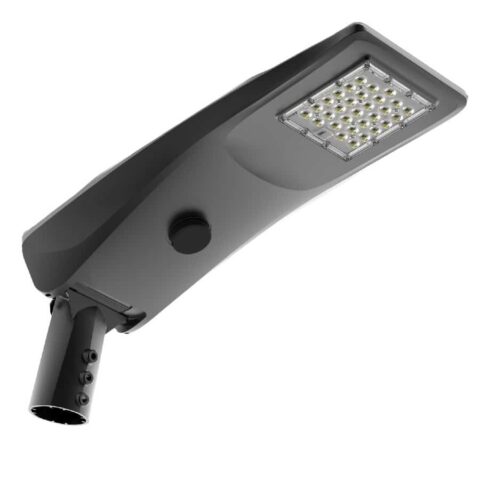
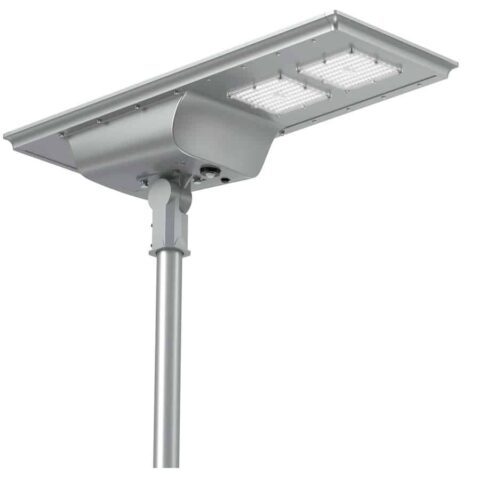
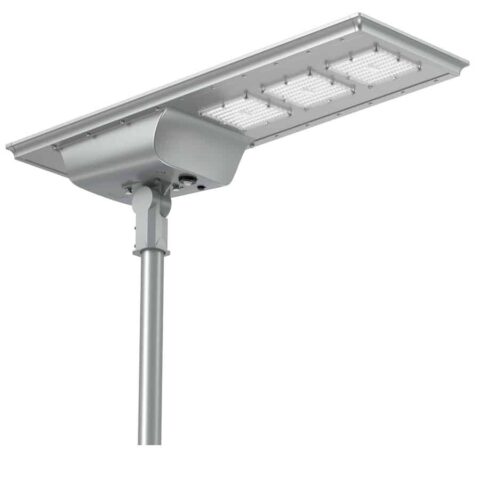
Our LED Solar Area Lights include self-contained solar lighting systems and hybrid models with LED fixtures, solar panels, battery storage, charge controllers, and mounting hardware. Available models vary by fixture output, solar panel and battery capacity, controls, motion settings, dimming, scheduling, and dusk-to-dawn operation.
These products are used in parking areas, pathways, walkways, building perimeters, remote lots, storage yards, gates, access points, parks, and recreation areas.

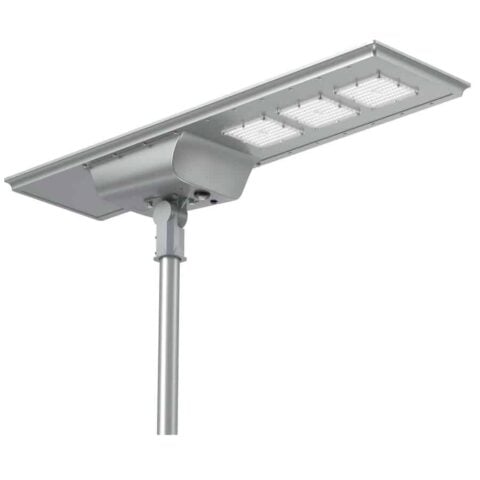
What Are LED Solar Area Lights?
LED solar area lights are outdoor lighting systems that combine an LED fixture, solar panel, battery storage, charge controller, and mounting hardware into a self-contained lighting solution. They are used to provide light in parking areas, pathways, building perimeters, remote lots, storage yards, access points, parks, and other open outdoor spaces where trenching or grid power may be costly or impractical.
Unlike standard wired area lights, solar area lights depend on available sunlight, battery capacity, fixture output, motion settings, and nightly operating schedule. The right system depends on the site layout, mounting height, pole spacing, solar exposure, shading, required light level, climate, controls, and whether the area needs full-output operation or motion-based dimming.
Solar area lighting works best when the project is planned around the actual site conditions. Open areas with strong sun exposure, clear panel placement, and realistic light-level targets are better candidates than heavily shaded locations or applications that require high output all night.

Selection and Installation Note: Product specifications, solar panel wattage, battery capacity, fixture wattage, lumen output, optics, pole height, mounting hardware, controls, motion settings, autonomy, environmental rating, certifications, and warranty coverage vary by model. Confirm the selected product specification before ordering. For solar area lighting, parking areas, pathways, security perimeters, remote lots, public spaces, code-sensitive applications, or safety-critical areas, verify requirements with the facility team, project specifier, local inspector, or a licensed electrical professional.
How to Choose LED Solar Area Lights
Choose solar area lighting by confirming solar exposure and the required light level first, then matching the system’s battery capacity, operating schedule, controls, mounting height, and fixture spacing to the site. Review whether the area needs full-output operation all night or whether motion-based dimming is acceptable.
Choosing solar area lighting starts with the site, not the fixture wattage. Solar exposure, shade, battery capacity, pole height, motion settings, and nightly operating hours all affect performance.
| Selection Factor | What to Confirm |
|---|---|
| Solar exposure | Confirm that the panel can receive enough direct sun throughout the year. Review trees, buildings, seasonal shade, snow, and panel orientation. |
| Required light level | Confirm the target foot-candle range for the area and whether full output is needed all night or only during activity. |
| Battery autonomy | Review how many nights the fixture can operate with limited charging, based on output setting, battery size, climate, and controls. |
| Motion settings | Confirm whether the fixture dims during idle periods, brightens on motion, or operates at a fixed output. |
| Mounting height | Review light pole height, fixture spacing, beam spread, mounting hardware, wind exposure, and maintenance access. |
| Panel and fixture placement | Confirm that the panel can be aimed for solar charging while the fixture directs light where it is needed. |
| Environmental conditions | Review temperature, wind, dust, moisture, corrosion exposure, snow, and vandal risk before selecting a fixture. |
| Code or safety requirements | Confirm local requirements, emergency lighting needs, minimum light levels, and inspection requirements before relying on solar-only lighting. |
Recommended Foot-Candles for Solar Area Lighting
Solar area lighting levels vary by application, pedestrian activity, vehicle movement, security needs, pole height, fixture spacing, battery capacity, motion settings, and available solar exposure. Use the widget below for early planning ranges. Final fixture count, placement, controls, and performance should be verified for the specific site.
Where Solar Area Lights Are Used
Solar area lights are best suited for outdoor areas where grid power is unavailable, electrical trenching is costly, or the site only needs controlled lighting during certain hours or when motion is detected. They can also be useful for projects where the property owner wants to reduce dependence on utility-powered exterior lighting.
| Application | What to Review |
|---|---|
| Parking areas | Review pole spacing, vehicle movement, pedestrian routes, required light levels, camera visibility, and whether motion-based dimming is acceptable. |
| Pathways and walkways | Review pedestrian activity, mounting height, fixture spacing, glare, nearby windows, and nighttime operating schedule. |
| Building perimeters | Review camera needs, sensor coverage, fixture aiming, shadows, mounting structure, and available sunlight near the building. |
| Remote lots and storage yards | Review solar exposure, battery autonomy, vehicle access, security needs, fixture spacing, and whether hybrid backup is required. |
| Gates and access points | Review entry activity, sensor response, fixture aiming, camera visibility, and mounting options. |
| Parks and recreation areas | Review park hours, pedestrian routes, vandal exposure, glare, local dark-sky requirements, and the expected nightly run time. |
When Solar Area Lighting Is a Good Fit
Solar area lights are often a good fit when the site has strong sun exposure and the cost or complexity of grid power is a concern. They are especially useful for remote outdoor areas, temporary or phased site improvements, parking areas without existing wiring, and locations where trenching would disrupt pavement, landscaping, utilities, or operations.
| Good Fit | Review Carefully |
|---|---|
| Open sites with good sun exposure | Heavily shaded sites, north-facing obstructions, trees, tall buildings, or seasonal shade can reduce charging performance. |
| Remote parking or storage areas | High-output, all-night lighting may require larger battery capacity, different controls, or a wired system. |
| Pathways, gates, and access points | Motion sensors must be placed so they detect activity in the correct direction and distance. |
| Sites where trenching is expensive | Existing electrical infrastructure may still be a better choice when reliable full-output lighting is required every night. |
| Low-to-moderate light-level areas | Applications with strict minimum light levels should be reviewed with a photometric plan and product-specific autonomy data. |
Hybrid Solar LED Area Lights
Hybrid solar LED area lights use solar power as the primary source and grid power as a backup. This can be useful for areas where solar operation is preferred but the lighting still needs a backup source during extended cloudy weather, high-use periods, or low-battery conditions.
Hybrid systems should be reviewed for wiring, voltage, controls, battery capacity, solar charging, and how the fixture switches between solar and line power. They may be useful for gates, primary pedestrian routes, security-sensitive areas, or locations where an outage or low battery would create an operational problem.
Why a Solar Area Lighting Plan Helps
A solar area lighting plan helps review fixture placement, pole spacing, target light levels, motion settings, and coverage before products are ordered. For solar projects, the plan should also account for where the fixture and solar panel can be located so the system can charge properly and direct light where it is needed.
| Lighting Plan Review | Why It Matters for Solar Area Lighting |
|---|---|
| Fixture placement | Helps compare coverage, dark zones, pedestrian routes, vehicle areas, and nearby obstructions. |
| Solar panel exposure | Helps identify locations where the panel has a better chance of receiving consistent sunlight. |
| Foot-candle targets | Helps review whether the planned fixture output is realistic for the area and operating schedule. |
| Motion controls | Helps determine whether dimming, motion activation, or fixed-output operation is appropriate. |
| Nearby obstructions | Helps review trees, structures, signs, parked vehicles, and other objects that may block light or shade panels. |
Request a solar area lighting plan
Benefits of LED Solar Area Lighting
- Reduced trenching and wiring: Solar area lights can reduce or avoid trenching, conduit, and utility coordination where grid power is difficult or expensive to reach.
- Lower utility energy use: Solar-powered operation can reduce utility-powered lighting demand, depending on fixture settings, battery capacity, controls, and site conditions.
- Useful for remote areas: Solar area lights can provide light at remote lots, gates, pathways, storage areas, and perimeter zones where wired lighting may be impractical.
- Controls flexibility: Many solar area lights include motion sensing, dimming, scheduling, or dusk-to-dawn operation depending on the model.
- Fast installation in suitable locations: Some solar fixtures can be installed faster than wired systems when pole locations, foundations, and solar exposure are straightforward.
- Reduced maintenance compared with older HID systems: LED fixtures eliminate routine lamp and ballast replacement, while solar panels and batteries still require periodic inspection and cleaning.
- Hybrid options: Some systems can use solar as the primary source with line-voltage backup for applications that need added reliability.
Common Solar Area Lighting Mistakes
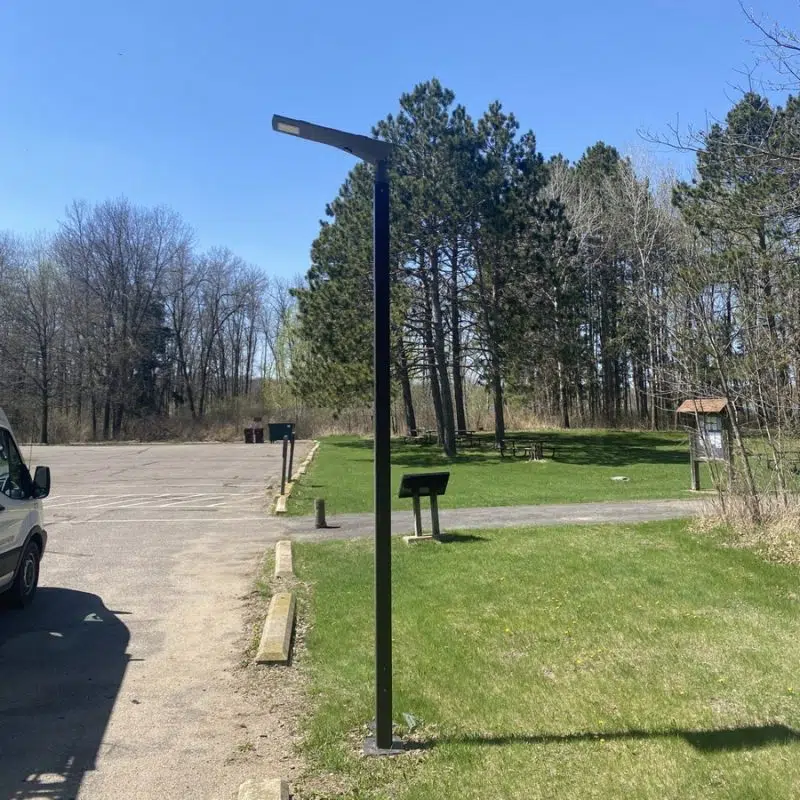
- Ignoring shade: Trees, buildings, signs, parked vehicles, and seasonal sun angle can reduce solar charging.
- Assuming solar lights run at full output all night: Many systems use dimming or motion-based operation to conserve battery life.
- Choosing by wattage alone: Review lumen output, optics, pole height, fixture spacing, solar panel size, battery capacity, and controls.
- Skipping autonomy review: Confirm how long the system can operate during cloudy weather or limited charging conditions.
- Using solar-only lighting where minimum light levels are mandatory: Code-sensitive or safety-critical areas may require additional review, hybrid backup, or wired lighting.
- Placing panels where they are difficult to maintain: Solar panels may need cleaning and should be accessible enough for periodic inspection.
- Overlighting low-activity areas: Excessive output can shorten battery runtime, increase glare, and reduce operating reliability.
- Forgetting wind and pole requirements: Solar panels add surface area and should be reviewed for wind exposure, pole selection, and mounting hardware.
Solar Area Light Certifications and Warranty Support
LED solar area lights from LED Lighting Supply carry safety listings such as UL, ETL, or CSA, depending on the model. Many models are DLC or DLC Premium listed for utility rebate support where applicable. Most LED solar area lights include a 5-year warranty unless otherwise specified, with USA-based warranty support.
Before ordering, confirm the selected product’s certifications, DLC status, voltage, solar configuration, lumen output, battery capacity, panel wattage, controls, environmental rating, mounting method, and whether the fixture is right for the site layout and surrounding conditions.
Contact us about LED solar area lighting, and our Product Specialists can help review solar exposure, fixture placement, pole height, foot-candle targets, battery autonomy, controls, hybrid backup needs, and product specifications.
LED Solar Area Lighting FAQs
When Is Solar Area Lighting A Good Fit?
Solar area lighting is often a good fit for outdoor sites with strong sun exposure where grid power is unavailable or trenching is costly or disruptive. It can be useful for remote areas, temporary or phased improvements, parking areas without existing wiring, pathways, gates, access points, and storage areas.
What Should I Review Before Choosing Solar Area Lights?
Review solar exposure, shade, required light level, battery autonomy, motion settings, mounting height, fixture spacing, panel placement, and nightly operating hours before choosing solar area lights. Environmental conditions, mounting hardware, wind exposure, and site requirements should also be confirmed.
Can Solar Area Lights Operate At Full Output All Night?
Full-output, all-night operation depends on available sunlight, battery capacity, fixture output, motion settings, and the nightly operating schedule. Many systems use dimming or motion-based operation to conserve battery life, and high-output all-night lighting may require larger battery capacity, different controls, or a wired system.
How Does Shade Affect Solar Area Lighting?
Shade can reduce solar charging performance, so the panel should receive enough direct sun throughout the year. Trees, buildings, signs, parked vehicles, seasonal shade, snow, and panel orientation should be reviewed before selecting panel locations.
When Should I Consider Hybrid Solar LED Area Lights?
Hybrid solar LED area lights can be useful when solar operation is preferred but a backup source is needed during extended cloudy weather, high-use periods, or low-battery conditions. They may be useful for gates, primary pedestrian routes, security-sensitive areas, or locations where an outage or low battery would create an operational problem.
Why Is A Solar Area Lighting Plan Helpful?
A solar area lighting plan helps review fixture placement, pole spacing, target light levels, motion settings, and coverage before products are ordered. It can also help identify panel locations with more consistent sunlight and review obstructions that may block light or shade panels.
How Should Motion Settings Be Evaluated For Solar Area Lights?
Motion settings should be evaluated based on whether the fixture dims during idle periods, brightens on motion, or operates at a fixed output. Sensor placement should also be reviewed so activity is detected in the correct direction and distance.
What Certifications And Warranty Coverage Are Available For Solar Area Lights?
LED solar area lights from LED Lighting Supply carry safety listings such as UL, ETL, or CSA, depending on the model. Many models are DLC or DLC Premium listed for utility rebate support where applicable, and most include a 5-year warranty unless otherwise specified.