


Street Light Poles
- Steel, aluminum, and fiberglass composite options available
- Straight, tapered, decorative, and high-mast configurations offered
- Product specialists provide pole selection and application support



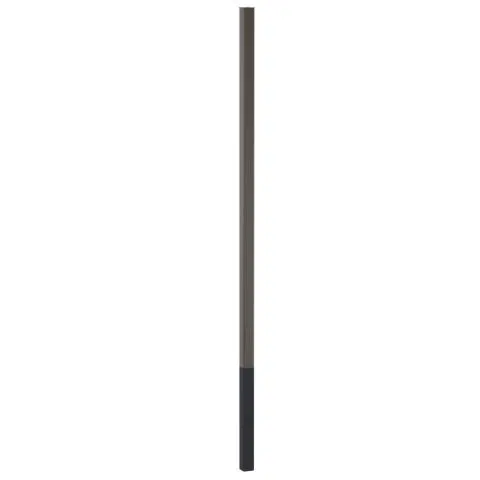
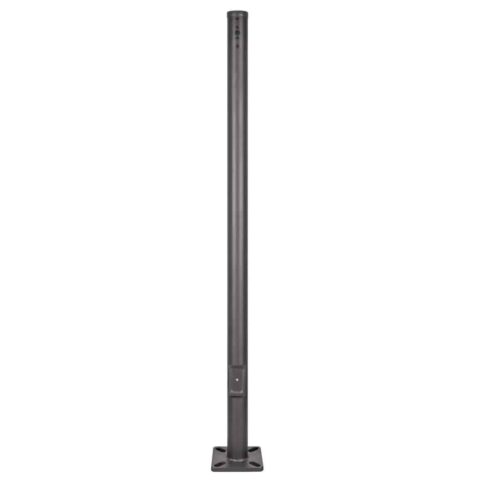
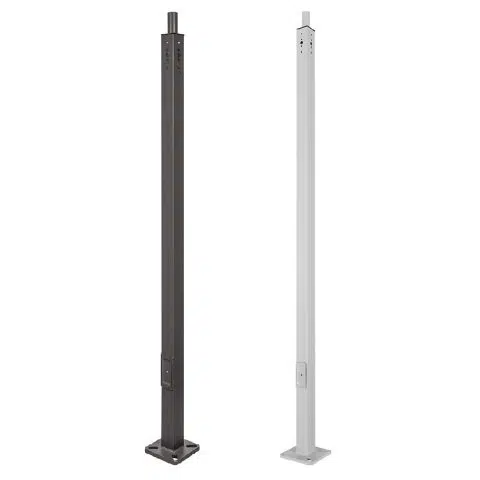
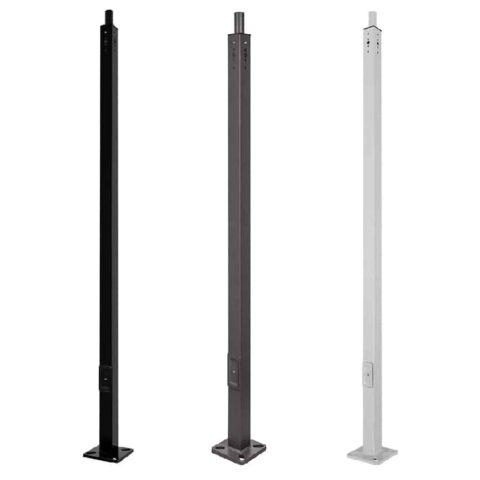
Our Street Light Poles include straight, tapered, decorative, and high-mast configurations in steel, aluminum, composite, and fiberglass materials. Available models include standard 15 to 30 foot poles and high-mast poles from 50 to 150 feet, with multiple diameters, finishes, and mounting hardware options.
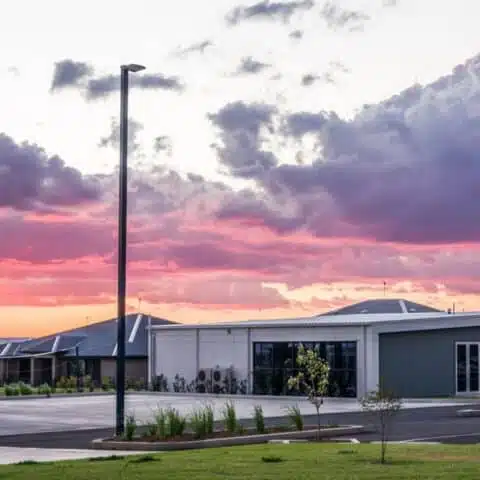
These poles are used for roadways, parking lots, pathways, residential streets, commercial areas, downtowns, shopping districts, residential developments, highway interchanges, airports, and industrial areas with airborne contaminants or chemicals.
-
 Starting At $1,399.00
-
Starting At $1,482.69
-
Starting At $1,299.35
-
Starting At $1,370.21
-
Starting At $1,593.00
-
 Starting At $2,920.00
 -
Starting At $2,920.00








Transform Your Outdoor Lighting with Professional-Grade Street Light Poles
Street light poles support roadway lighting, pedestrian lighting, parking-area lighting, and other outdoor applications. Start by selecting a pole configuration and material appropriate for the application and environment, then coordinate pole height, fixture type, mounting geometry, and pole placement with the roadway or site lighting design.
Street-light pole selection should also account for fixture and accessory loading, effective projected area (EPA), site wind criteria, foundation or embedment requirements, soil conditions, electrical infrastructure, roadway geometry, photometric performance, and applicable local or agency requirements.
LED Lighting Supply can help with pole and fixture selection, photometric planning, and available manufacturer specifications. Final roadway layout, structural capacity, foundation design, and jurisdictional requirements should be verified by the appropriate project professionals and approving authority.
Understanding Street Light Pole Fundamentals
Street light poles position luminaires at mounting heights and locations that support the intended roadway, parking, pedestrian, or site-lighting design. The correct pole depends on much more than height alone.
Important factors can include:
- Roadway or site geometry
- Road classification and traffic conditions
- Fixture photometric distribution
- Mounting height
- Mast-arm length, setback, and overhang
- Pole spacing and arrangement
- Target luminance or illuminance
- Uniformity requirements
- Glare or veiling-luminance criteria where applicable
- Intersections, curves, crosswalks, sidewalks, and conflict areas
- Fixture and accessory EPA and weight
- Wind and environmental loading
- Foundation or embedment requirements
- Agency, utility, municipality, DOT, or project specifications
Foundation requirements and structural loading should be verified for the complete pole, fixture, arm, accessory, and site configuration. LED Lighting Supply can provide available product data and help coordinate pole and luminaire information, but final structural and foundation requirements should come from the pole manufacturer, project engineer, or other qualified professional where required.
Street Light Pole Configurations for Different Applications
Street light poles are available in multiple configurations for municipal streets, commercial roads, parking areas, pedestrian zones, industrial sites, and other outdoor applications.
Straight Pole Designs
Straight poles are used in many roadway, parking, and site-lighting applications. Available heights, shaft dimensions, wall thicknesses, materials, and structural capacities vary by manufacturer and pole family.
Do not select a straight pole only from nominal height. Confirm fixture and accessory loading, EPA, wind criteria, mounting hardware, arm configuration, and foundation or embedment requirements for the exact pole model.
Tapered Pole Configurations
Tapered poles use a shaft that changes dimension from the base toward the top. Tapering can affect structural behavior, weight, appearance, and aerodynamics, but it should not be assumed to provide a fixed percentage increase in wind capacity compared with every straight pole.
For demanding wind environments, compare the exact manufacturer ratings for the proposed configuration. Explore high-wind-rated light poles for projects with elevated structural requirements.
Decorative Street Poles
Decorative poles combine roadway or pedestrian lighting with architectural design. They are commonly used in downtown districts, streetscapes, campuses, shopping areas, parks, and residential developments where appearance is an important project consideration.
Decorative elements should still be included in the structural and photometric review. Arms, finials, banners, signs, receptacles, and other attachments can change wind loading and pole capacity.
High-Mast Lighting Poles
High-mast lighting systems are used for large areas such as highway interchanges, transportation facilities, ports, airports, and large parking or industrial areas. Heights vary by system and project.
These installations require project-specific structural, foundation, lowering-system or maintenance-access, and photometric design. Suitable high-mast lighting fixtures should be selected according to mounting height, optics, aiming, fixture quantity, maintenance requirements, and target lighting performance.
Material Selection for Long-Term Performance
Street light pole material should be selected from the project environment, structural requirements, maintenance strategy, mounting configuration, and manufacturer specifications rather than from a single material ranking.
Steel Street Light Poles
Steel street poles are widely used in roadway, parking, commercial, industrial, and municipal applications. They are available with different shaft shapes, wall thicknesses, finishes, heights, and mounting configurations.
Galvanizing, powder coating, paint systems, or other finishes may be used depending on the product and environment. High-wind suitability depends on the exact pole model, fixture and accessory loading, EPA, mounting geometry, and applicable wind criteria rather than steel material alone.
Aluminum Pole Solutions
Aluminum poles provide lower weight than comparable steel designs and offer resistance to certain corrosion mechanisms. They are used for roadway, parking, coastal, pedestrian, and other applications depending on the exact pole design.
Confirm alloy, finish, structural capacity, galvanic compatibility, environmental exposure, base or embedment configuration, and manufacturer requirements for the specific application.
Composite and Fiberglass Options
Composite and fiberglass street poles can be useful where low weight, electrical properties, or resistance to certain forms of corrosion are important.
Composite construction varies by manufacturer. Confirm UV performance, fire characteristics, chemical compatibility, impact resistance, deflection, wind capacity, temperature range, finish, and environmental suitability from the exact product data rather than assuming every composite pole performs the same way.
Street Light Pole Pricing and Project Costs
Street light pole pricing varies with material, height, shaft size, wall thickness, mounting configuration, finish, structural requirements, anchor-base or direct-burial construction, quantity, freight, and current manufacturer pricing.
Foundation, anchor bolts, trenching, wiring, controls, labor, traffic control, permitting, engineering, and installation can also contribute substantially to total project cost.
Rather than relying on a universal installed-cost range, request pricing for the exact pole, fixture, mounting configuration, quantity, and project requirements.
How to Select Street Light Pole Height
Street light pole height affects fixture distribution, roadway coverage, glare, spacing, maintenance access, structural loading, and visual scale. There is no single pole height that is appropriate for every residential, collector, arterial, commercial, or highway application.
Mounting height should be determined together with:
- Roadway width and geometry
- Number of lanes
- Medians and shoulders
- Sidewalks and pedestrian areas
- Fixture photometric distribution
- Mast-arm length and overhang
- Pole setback
- Target lighting criteria
- Uniformity
- Glare and veiling-luminance considerations where applicable
- Intersection or conflict-area requirements
- Local or agency standards
Lower mounting heights are not automatically more glaring, and taller poles are not automatically better. Glare depends on the complete luminaire and roadway geometry, including fixture intensity distribution, aiming or tilt, observer position, mounting height, setback, and surrounding conditions.
Do not use a universal 15-foot minimum pole height as a glare-control rule. The appropriate mounting height should come from the project lighting design and governing jurisdictional requirements.
Street Light Pole Spacing and Placement
Street light pole spacing should be determined from photometric calculations and the roadway geometry rather than a fixed multiple of mounting height.
A spacing-to-mounting-height ratio can sometimes be useful as a very early conceptual reference for specific luminaires, but it should not be treated as a universal roadway design rule. Different optical distributions can produce substantially different results at the same mounting height and spacing.
Final spacing should consider:
- Actual fixture IES photometric data
- Mounting height
- Mast-arm length and overhang
- Pole setback
- Roadway width
- Lane count and geometry
- Median configuration
- Curves and grades
- Intersections and crosswalks
- Target average and minimum lighting values
- Uniformity
- Glare or veiling-luminance criteria where required
- Sidewalks and pedestrian areas
- Local or agency standards
Do not assume that street light poles should always be spaced at 2.5 to 3 times mounting height. That relationship may work as a preliminary rule of thumb for some fixture/layout combinations, but it is not a substitute for a roadway photometric design.
Single-Side, Staggered, and Opposite-Side Street Light Layouts
Street lights can be arranged on one side of a roadway, staggered between sides, placed opposite one another, located in a median, or configured in other patterns. The best arrangement depends on roadway geometry, luminaire distribution, target lighting performance, right-of-way constraints, intersections, sidewalks, utilities, and agency requirements.
Roadway width alone should not determine the arrangement.
| Layout Type | What to Evaluate |
|---|---|
| Single-side layout | May work for selected roadway geometries when the luminaire distribution, mounting height, setback, and performance criteria produce acceptable coverage and uniformity. |
| Staggered layout | Can be useful where alternating pole positions provide the required roadway coverage, but suitability should be confirmed photometrically. |
| Opposite-side layout | May be appropriate for wider roads or projects requiring coverage from both sides, but roadway width by itself does not establish when this arrangement is required. |
| Median layout | Can serve divided roadways where median geometry, fixture optics, maintenance access, and roadway performance support the arrangement. |
Rules such as “under 50 feet = single side,” “51-65 feet = staggered,” or “over 65 feet = both sides” should not be presented as universal street-lighting design requirements.
Why a Roadway Photometric Plan Matters
A roadway lighting plan uses the actual luminaire photometric data and project geometry to evaluate performance before poles and fixtures are ordered.
Depending on the project requirements, the analysis may review:
- Pole locations
- Mounting heights
- Mast-arm length
- Fixture orientation or tilt
- Fixture spacing
- Average, minimum, and maximum illuminance
- Luminance where required
- Uniformity ratios
- Glare or veiling luminance where applicable
- Sidewalk and pedestrian lighting
- Intersections and conflict areas
- Spill light to adjacent property
- Fixture wattage and quantity
LED Lighting Supply can prepare photometric calculations using the proposed fixtures and project information. Final roadway-design acceptance should be based on the criteria established by the municipality, DOT, utility, engineer, owner, or other authority responsible for the project.
Professional Installation and Foundation Considerations
Street light pole installation requires coordination of the pole, fixture, mounting hardware, electrical system, and foundation or embedment design.
Foundation requirements can depend on:
- Pole height and shaft configuration
- Fixture and accessory weight
- Fixture and accessory EPA
- Site design wind criteria
- Anchor-bolt pattern
- Soil properties
- Groundwater
- Frost conditions where applicable
- Concrete and reinforcement design
- Local engineering requirements
LED Lighting Supply can provide available pole reactions, anchor-bolt information, fixture specifications, EPA information, and manufacturer installation data. Final foundation design should be verified by the pole manufacturer, project engineer, structural professional, or other qualified party where required.
Street Light Pole Maintenance
Inspection and maintenance requirements depend on pole material, finish, environment, age, attachments, traffic exposure, and owner or agency maintenance practices.
Periodic inspections may include:
- Corrosion or coating deterioration
- Impact damage
- Cracks, deformation, or section loss
- Base plate and anchor-bolt condition
- Handhole and cover condition
- Fixture and arm attachment
- Loose or damaged hardware
- Electrical connections and grounding
- Fixture cleanliness and aiming
- Changes to signs, banners, cameras, or other attachments
Follow the pole manufacturer, fixture manufacturer, owner, and jurisdictional maintenance requirements applicable to the project.
Street Light Pole Project Support
Successful roadway lighting projects require coordination between photometric design, pole selection, structural requirements, electrical design, foundation conditions, and jurisdictional criteria.
LED Lighting Supply can help with:
- Street-light fixture selection
- Pole options and manufacturer specifications
- Fixture weight and EPA data
- Mounting configuration
- Photometric lighting plans
- Calculated fixture spacing and pole locations based on the proposed design
- Available anchor-bolt and pole-reaction information
- Product and project quotations
LED Lighting Supply does not replace the roadway engineer, structural engineer, geotechnical professional, electrical engineer, municipality, DOT, utility, or authority having jurisdiction. Final roadway-lighting criteria, pole placement, structural capacity, foundation design, electrical installation, and project approval should be verified by the appropriate project authority.
Ready to specify street light poles for your project? Our Product Specialists can help review the roadway or site layout, proposed fixture, mounting height, pole configuration, photometric requirements, and available pole specifications.
Street Light Poles FAQs
What Should Be Considered When Selecting A Street Light Pole?
Select a street light pole by coordinating the pole configuration and material with the application, environment, fixture type, mounting geometry, pole placement, structural loading, foundation or embedment requirements, and lighting design. Fixture and accessory EPA, site wind criteria, soil conditions, electrical infrastructure, roadway geometry, photometric performance, and applicable local or agency requirements should also be considered.
How Should Street Light Pole Height Be Chosen?
Street light pole height should be determined with the project lighting design and governing jurisdictional requirements. Roadway width, lanes, medians, sidewalks, fixture photometric distribution, mast-arm length, overhang, setback, target lighting criteria, uniformity, glare considerations, and intersection requirements can all affect the appropriate mounting height.
How Should Street Light Pole Spacing Be Determined?
Street light pole spacing should be determined from photometric calculations and roadway geometry rather than a fixed multiple of mounting height. Final spacing should consider actual fixture IES photometric data, mounting height, mast-arm geometry, setback, roadway width, lane geometry, intersections, target lighting values, uniformity, and applicable local or agency standards.
Which Street Light Layout Should Be Used For A Roadway?
The appropriate street light layout depends on roadway geometry, luminaire distribution, target lighting performance, right-of-way constraints, intersections, sidewalks, utilities, and agency requirements. Single-side, staggered, opposite-side, median, and other arrangements may be used, but roadway width alone should not determine the layout.
Why Is A Roadway Photometric Plan Important Before Ordering Poles And Fixtures?
A roadway photometric plan uses actual luminaire photometric data and project geometry to evaluate performance before poles and fixtures are ordered. The analysis may review pole locations, mounting heights, mast-arm length, fixture orientation, spacing, lighting values, uniformity, glare, pedestrian areas, intersections, spill light, fixture wattage, and quantity.
What Affects The Total Cost Of A Street Light Pole Project?
Street light pole pricing varies with material, height, shaft size, wall thickness, mounting configuration, finish, structural requirements, anchor-base or direct-burial construction, quantity, freight, and current manufacturer pricing. Foundation, anchor bolts, trenching, wiring, controls, labor, traffic control, permitting, engineering, and installation can also contribute substantially to total project cost.
What Must Be Verified For Street Light Pole Foundations?
Foundation requirements and structural loading should be verified for the complete pole, fixture, arm, accessory, and site configuration. Pole height, shaft configuration, fixture and accessory weight and EPA, wind criteria, anchor-bolt pattern, soil properties, groundwater, frost conditions, and local engineering requirements can affect foundation design.
How Do Steel, Aluminum, And Composite Street Light Poles Differ?
Material selection should be based on the project environment, structural requirements, maintenance strategy, mounting configuration, and manufacturer specifications rather than a single material ranking. Steel poles are widely used in roadway, parking, commercial, industrial, and municipal applications; aluminum poles provide lower weight than comparable steel designs; and composite or fiberglass poles can be useful where low weight, electrical properties, or resistance to certain forms of corrosion are important.
