


LED Canopy Lights
- Achieve 60-75% energy savings with 50,000+ hour lifespans
- IP65 weatherproof protection withstands harsh outdoor conditions
- 15+ years commercial lighting expertise ensures proper application


-
 Professional Layout Optimized for Your Canopy Dimensions & Weather Protection Requirements
-
Precise Fixture Count, Spacing & Light Distribution Analysis for Safety Standards
-
Maximize Energy Savings & Enhance Security While Reducing Vandalism-Prone Maintenance


LED canopy lights are ceiling-mounted fixtures commonly found in covered outdoor spaces such as parking garages, gas station canopies, and drive-thru lanes. These lights are typically installed on or recessed into overhead structures at lower mounting heights, creating broad, even illumination across open floors and vehicle lanes. Surface, recessed, and pendant-mounted form factors are available to match a variety of ceiling types and architectural layouts.
This category features Commercial & Industrial Lighting Solutions suited for environments like above-ground and underground parking facilities, automotive service bays, workshops, and self-storage corridors. LED canopy lights are also frequently installed along covered walkways, loading docks, and car washes, where weather-resistant construction and adaptable mounting options are essential. Their placement and design make them a practical choice for facilities seeking durable lighting in sheltered, high-traffic areas.


Showing all 12 results
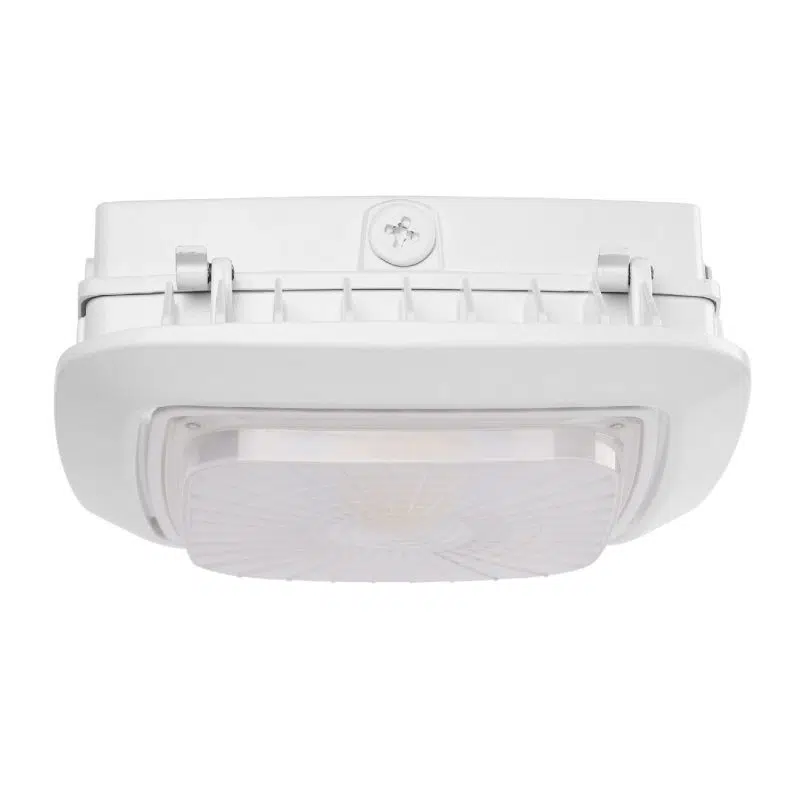
 SKU:LLS-X-CPS-63A-CC-[C] | Web ID:2478Bronze:466 In StockShips 3-5 DaysWhite:901 In StockShips 3-5 Days
- Watts: 30 | 45 | 63
- Lumens: 4000 | 6000 | 8500
- Lumens/Watt: 135
- Replaces: 250 Watt Metal Halide
- Color Temp: 4000K | 5000K
- CRI: 80+
- IP Rating: IP65
- Voltage: 100V-277V
- Operating Temp: -40°F to 113°F
- Rated Life: 50,000 (L70) hours
- Dimmable: No
- Beam Angle (Std): 140°
- Optics: Polycarbonate Lens
- Housing: Die-Cast Aluminum
- Fixture Color: Bronze | White
- Mount: Pendant | Surface
- Dimensions (in): 9.5 L X 9.5 W X 3.5 H
- Weight (lbs): 3.7
- Warranty: 5 years
Starting At$104.20


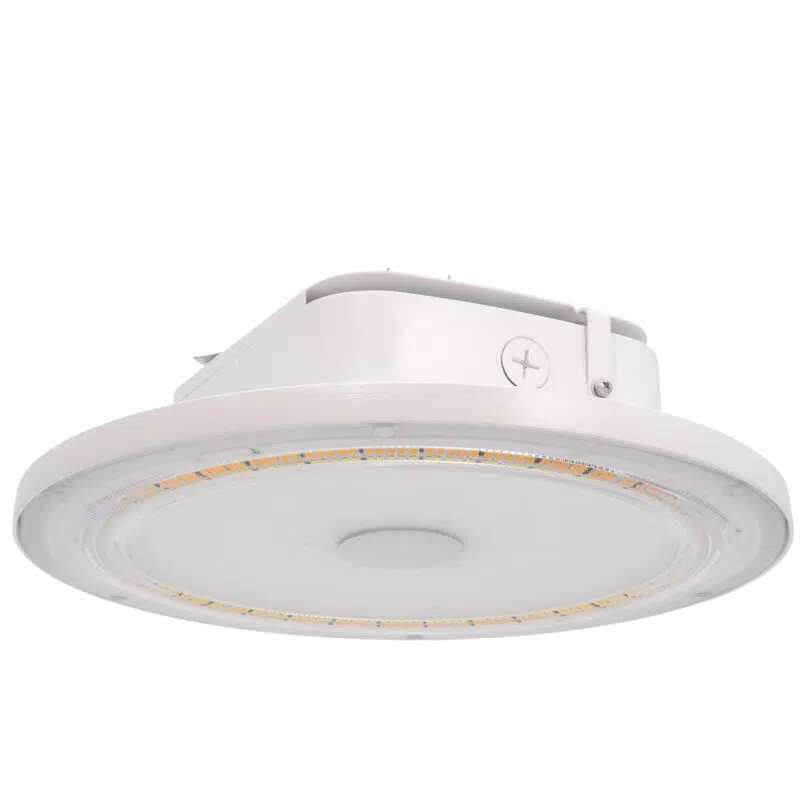 SKU:MLLG-LED-CANLBR-100-CC | Web ID:2121Availability: 267 In Stock Ships 2-3 Days
- Watts: 30 | 50 | 75 | 100
- Lumens: 4200 | 7000 | 10500 | 14000
- Lumens/Watt: 140
- Replaces: 250 | 400 Watt Metal Halide
- Color Temp: 3000K | 4000K | 5000K
- CRI: 70+
- IP Rating: IP65
- IK Rating: IK08
- Voltage: 100V-277V
- Surge Protection: 10kV
- Operating Temp: -22°F to 113°F
- Rated Life: 100,000 (L70) hours
- Dimmable: No
- Beam Angle (Std): 120°
- Beam Angle: 1400 lumens up light
- Optics: Polycarbonate Lens
- Fixture Color: White
- Mount: Pendant | Surface
- Dimensions (in): 12.7 W X 3.5 H
- Weight (lbs): 6
- Warranty: 5 years
Starting At$140.56

 SKU:LLS-YA-CANLB-70-50 | Web ID:2656Availability: 273 In Stock Ships 3-5 Days
- Watts: 70
- Lumens: 9100
- Lumens/Watt: 130
- Replaces: 250 Watt Metal Halide
- Color Temp: 5000K
- CRI: 70+
- IP Rating: IP65
- Voltage: 100V-277V
- Operating Temp: -40°F to 113°F
- Rated Life: 50,000 hours - driver
- Dimmable: 0-10V
- Beam Angle (Std): 140°
- Optics: Polycarbonate Lens
- Housing: Die-Cast Aluminum
- Fixture Color: White
- Mount: Pendant | Surface
- Dimensions (in): 9.1 L X 9.1 W X 3.9 H
- Weight (lbs): 6.25
- Warranty: 5 years
Starting At$118.00- SKU:LLS-YA-CANLB-100-50 | Web ID:2653Availability: 82 In Stock Ships 3-5 Days
- Watts: 100
- Lumens: 13100
- Lumens/Watt: 131
- Replaces: 250 Watt Metal Halide
- Color Temp: 5000K
- CRI: 70+
- IP Rating: IP65
- Voltage: 100V-277V
- Operating Temp: -40°F to 113°F
- Rated Life: 50,000 hours - driver
- Dimmable: 0-10V
- Beam Angle (Std): 140°
- Optics: Polycarbonate Lens
- Fixture Color: White
- Mount: Pendant | Surface
- Dimensions (in): 10.8 L X 10.8 W X 4.3 H
- Weight (lbs): 7.2
- Warranty: 5 years
Starting At$140.00  SKU:MLLG-LN-LED-CANS-55A-CC | Web ID:1473Availability: 136 In Stock Ships 3-5 Days
- Watts: 30 | 40 | 55
- Lumens: 3900 | 5200 | 7150
- Lumens/Watt: 130
- Replaces: 250 Watt Metal Halide
- Color Temp: 3500K | 4000K | 5000K
- CRI: 75+
- IP Rating: IP65
- Voltage: 100V-277V
- Operating Temp: -4°F to 113°F
- Rated Life: 50,000 (L70) hours
- Dimmable: No
- Beam Angle (Std): 140°
- Optics: Polycarbonate Lens
- Fixture Color: White
- Mount: Pendant | Surface
- Dimensions (in): 9 L X 9 W X 4.5 H
- Cord Length: None
- Weight (lbs): 5
- Warranty: 5 years
Starting At$110.00 SKU:MLLG-LN-LED-CANR-60-50-[MS] | Web ID:1563No Motion Sensor:531 In StockShips 3-5 DaysMotion Sensor:Ships 3-5 Days
- Watts: 30 | 40 | 60
- Lumens: 3900 | 5200 | 7800
- Lumens/Watt: 130
- Replaces: 250 Watt Metal Halide
- Color Temp: 5000K
- CRI: 70+
- IP Rating: IP65
- Voltage: 100V-277V
- Operating Temp: -40°F to 113°F
- Rated Life: 50,000 (L70) hours
- Dimmable: No
- Beam Angle (Std): 140°
- Fixture Color: White
- Mount: Pendant | Surface
- Dimensions (in): 12.2 W X 5.5 H
- Weight (lbs): 6.5
- Warranty: 5 years
Starting At$120.00 SKU:MLLG-AL-LED-CAN-45-CC | Web ID:2152Availability: 459 In Stock Ships 2-3 Days
- Watts: 45
- Lumens: 6900
- Lumens/Watt: 153
- Replaces: 250 Watt Metal Halide
- Color Temp: 3000K | 4000K | 5000K
- CRI: 70+
- IP Rating: IP65
- Voltage: 100V-277V
- Surge Protection: 6kV
- Operating Temp: -4°F to 122°F
- Rated Life: 150,000 (L70) hours
- Dimmable: 1-10V
- Beam Angle (Std): 90°
- Optics: Polycarbonate Lens
- Fixture Color: Black
- Mount: Pendant | Surface
- Dimensions (in): 10 L X 10 W X 3 H
- Weight (lbs): 5
- Warranty: 5 years
Starting At$123.20- SKU:MLLG-AL-LED-CAN-70-CC | Web ID:2151Availability: 1599 In Stock Ships 2-3 Days
- Watts: 70
- Lumens: 9330
- Lumens/Watt: 133
- Replaces: 250 Watt Metal Halide
- Color Temp: 3000K | 4000K | 5000K
- CRI: 70+
- IP Rating: IP65
- Voltage: 100V-277V
- Surge Protection: 6kV
- Operating Temp: -4°F to 122°F
- Rated Life: 150,000 (L70) hours
- Dimmable: 1-10V
- Beam Angle (Std): 90°
- Optics: Polycarbonate Lens
- Fixture Color: Black
- Mount: Pendant | Surface
- Dimensions (in): 10 L X 10 W X 3 H
- Weight (lbs): 5
- Warranty: 5 years
Starting At$135.20 - SKU:MLLG-AL-LED-CAN-45-CC-EMB | Web ID:2153Availability: 436 In Stock Ships 2-3 Days
- Watts: 45
- Lumens: 6900
- Lumens/Watt: 153
- Replaces: 250 Watt Metal Halide
- Color Temp: 3000K | 4000K | 5000K
- CRI: 70+
- IP Rating: IP65
- Voltage: 100V-277V
- Surge Protection: 6kV
- Operating Temp: -4°F to 122°F
- Rated Life: 150,000 (L70) hours
- Dimmable: 1-10V
- Beam Angle (Std): 90°
- Optics: Polycarbonate Lens
- Fixture Color: Black
- Mount: Pendant | Surface
- Dimensions (in): 10 L X 10 W X 3 H
- Weight (lbs): 6
- Warranty: 5 years
Starting At$245.68  SKU:MLLG-LN-LED-CAN-150-50 | Web ID:1560Availability: 1872 In Stock Ships 3-5 Days
- Watts: 150
- Lumens: 19500
- Lumens/Watt: 130
- Replaces: 400 Watt Metal Halide
- Color Temp: 5000K
- CRI: 80+
- IP Rating: IP65
- Voltage: 100V-277V
- Operating Temp: -4°F to 113°F
- Rated Life: 50,000 (L70) hours
- Dimmable: No
- Beam Angle (Std): 120°
- Fixture Color: White
- Mount: Pendant | Recessed
- Dimensions (in): 15 L X 15 W X 3 H
- Weight (lbs): 14
- Warranty: 5 years
Starting At$167.31 SKU:MLLG-WD-LED-CANG-95-50 | Web ID:1971Availability: 299 In Stock Ships 3-5 Days
- Watts: 95
- Lumens: 12721
- Lumens/Watt: 134
- Replaces: 250 Watt Metal Halide
- Color Temp: 5000K
- CRI: 70+
- IP Rating: IP65
- Voltage: 100V-277V
- Operating Temp: -22°F to 113°F
- Rated Life: 50,000 (L70) hours
- Dimmable: 1-10V
- Beam Angle (Std): 110°
- Fixture Color: White
- Mount: Surface
- Dimensions (in): 17.1 L X 17.1 W X x 4.1 H
- Weight (lbs): 9
- Warranty: 5 years
Starting At$216.00- SKU:MLLG-WD-LED-CANG-120-50 | Web ID:1972Availability: 73 In Stock Ships 3-5 Days
- Watts: 120
- Lumens: 16086
- Lumens/Watt: 134
- Replaces: 400 Watt Metal Halide
- Color Temp: 5000K
- CRI: 70+
- IP Rating: IP65
- Voltage: 100V-277V
- Operating Temp: -22°F to 113°F
- Rated Life: 50,000 (L70) hours
- Dimmable: 1-10V
- Beam Angle (Std): 110°
- Fixture Color: White
- Mount: Surface
- Dimensions (in): 17.1 L X 17.1 W X x 4.1 H
- Weight (lbs): 9
- Warranty: 5 years
Starting At$230.00
What Are LED Canopy Lights
LED canopy lights are ceiling-mounted commercial fixtures used in covered outdoor areas, parking garages, gas station canopies, drive-thrus, workshops, loading dock canopies, covered walkways, self-storage facilities, and low-ceiling commercial spaces. They are designed to provide broad, even light from lower mounting heights where high bay fixtures, wall packs, or flood lights may not be the right fit.
Unlike high bay lights, canopy lights are usually selected for lower mounting heights, wide beam distribution, surface or recessed mounting, wet-location performance, and compatibility with controls such as motion sensors, photocells, dimming, or emergency backup. Many projects involve replacing metal halide, fluorescent, or high-pressure sodium fixtures with LED canopy lights for better efficiency, instant-on operation, and reduced maintenance.
Common canopy lighting decisions include mounting style, fixture spacing, lumen output, color temperature, IP rating, voltage, controls, emergency backup, and whether the installation is exposed to weather, moisture, vehicle traffic, or code-sensitive conditions.
Selection and Installation Note: Product specifications, ratings, controls, certifications, and warranty coverage vary by model. Confirm the selected product specification before ordering. For code-sensitive, electrical, emergency, wet-location, fuel canopy, hazardous-location, or safety-critical applications, verify requirements with your local inspector or a licensed electrical professional.
Choose LED Canopy Lights by Mounting Style, Controls, or Application
The best LED canopy light depends on the ceiling structure, mounting height, coverage area, control requirements, wet-location exposure, and whether the project involves a retrofit or new installation. Use the table below to start with the right canopy light category before comparing individual fixtures.
| Canopy Light Type | Best Used For |
|---|---|
| Recessed Mount LED Canopy Lights | Gas station canopies, covered parking areas, and retrofit projects where a flush-mounted fixture is preferred or an existing recessed box must be matched. |
| Surface Mount LED Canopy Lights | Parking garages, workshops, loading canopies, covered walkways, low-ceiling commercial spaces, and ceilings where the fixture mounts directly to the surface. |
| Pendant Mount LED Canopy Lights | Covered spaces where the fixture must be suspended lower from the ceiling structure to improve coverage or align with existing mounting conditions. |
| LED Canopy Lights with Motion Sensors | Parking garages, storage facilities, low-traffic covered areas, and service zones where light output can increase when activity is detected and reduce when the area is inactive. |
| Color Adjustable LED Canopy Lights | Retrofit projects where 3000K, 4000K, or 5000K color temperature selection is useful after installation or where fixture appearance must match nearby lighting. |
| Wattage Adjustable LED Canopy Lights | Projects where field-adjustable lumen output helps fine-tune brightness after installation or where existing light levels are uncertain. |
| LED Canopy Lights with Emergency Backup | Code-sensitive egress areas, parking structures, covered walkways, and commercial spaces where backup illumination may be required during power loss. |
| Gas Station Canopy Lights | Fuel pump islands and customer fueling areas where uniform illumination, wet-location suitability, recessed mounting, emergency backup, and local code requirements may need review. |
| Parking Garage Canopy Lights | Covered parking structures, drive lanes, ramps, pedestrian routes, and parking bays where broad low-ceiling lighting and sensor controls may improve visibility and efficiency. |
When LED Canopy Lights Are the Right Fit
LED canopy lights are a good fit when a covered area needs broad, even illumination from lower ceiling heights. They are not always the best choice for high ceilings, open parking lots, hazardous locations, or applications that require precise directional aiming.
| Use LED Canopy Lights When | Do Not Use Standard Canopy Lights When |
|---|---|
| You need uniform lighting in covered areas, including parking garages, gas station canopies, workshops, drive-thrus, loading canopies, and covered walkways. | The ceiling height or layout requires high bay lighting. High ceilings may need high bay or low bay fixtures rather than canopy lights. |
| Mounting heights are typically 8-20 feet and wide light distribution is needed for even coverage. | The application requires precise directional aiming, such as signs, open yards, long-throw coverage, or exterior area lighting. Use flood lights or area lights instead. |
| Wet-location or weather resistance is required for outdoor or partially exposed installations. | The installation is fully exposed to weather and only damp-location-rated fixtures are available. Use properly rated wet-location fixtures. |
| Motion sensors, dimming, photocells, or emergency backup are needed for safety, security, energy control, or code-sensitive areas. | Hazardous-location ratings are required. Standard canopy lights are not substitutes for properly certified hazardous-location fixtures. |
| You are replacing metal halide, fluorescent, or HPS fixtures and need lower maintenance, instant-on operation, and better control compatibility. | Precise light levels or code compliance are critical and no photometric plan or lighting layout has been reviewed. |
Choosing LED Canopy Lights by Mounting Height, Beam Spread, IP Rating, Voltage, Controls, and Emergency Backup
Canopy lights should not be selected by wattage alone. The right fixture depends on mounting height, fixture spacing, beam spread, lumen output, ceiling type, wet-location exposure, voltage, color temperature, controls, and emergency lighting requirements.
A photometric plan is recommended for parking garages, gas station canopies, commercial drive-thrus, large covered areas, code-sensitive spaces, or any project where fixture spacing, light levels, uniformity, glare, or emergency egress lighting must be confirmed before ordering.
Fuel Canopy Note: Some fueling areas may have classified-location requirements depending on fixture location, fuel dispensing layout, and local code interpretation. Confirm whether standard canopy fixtures are allowed before ordering.
Planning Checklist
| Planning Factor | What to Confirm |
|---|---|
| Application | Gas station canopies, parking garages, drive-thrus, workshops, covered walkways, car wash bays, loading dock canopies, and low-ceiling commercial areas all have different light-level and fixture requirements. |
| Mounting height | Canopy lights are commonly used at lower mounting heights, often around 8-20 feet. Confirm the actual height before selecting lumen output or spacing. |
| Beam spread and distribution | Canopy fixtures typically use wide distributions for broad coverage from lower ceilings. Avoid narrow-beam fixtures that can create hot spots, shadows, or uneven lighting in canopy applications. |
| Mounting style | Confirm whether the project requires recessed, surface, or pendant mounting. Measure existing recessed boxes, junction boxes, ceiling openings, and mounting surfaces before ordering retrofit fixtures. |
| Lumen output and wattage adjustability | Compare lumens, mounting height, fixture spacing, and photometric performance instead of selecting by wattage alone. Wattage-adjustable fixtures can help fine-tune light output after installation. |
| Color temperature | 5000K is common for metal halide replacement and crisp visibility. 4000K may be preferred for fluorescent replacement or a slightly warmer commercial appearance. Color-adjustable models can simplify retrofit decisions. |
| Wet-location and IP rating | Confirm IP rating and wet-location suitability for outdoor canopies, parking structures, car washes, loading areas, and partially exposed installations. Damp-location-only fixtures should not be used where direct weather exposure is present. |
| Voltage | Confirm 120-277V, 347V, 480V, or other site voltage requirements before ordering, especially in commercial parking structures, industrial sites, and retrofit applications. |
| Motion sensors and dimming | Motion sensors and dimming can reduce energy use in low-traffic areas, depending on fixture compatibility, occupancy patterns, sensor settings, and local requirements. |
| Photocells | Photocells may be useful for outdoor or dusk-to-dawn applications. Confirm whether the site already has photocell, timer, or building automation controls to avoid control conflicts. |
| Emergency backup | Confirm whether emergency backup is required for egress routes, parking garages, covered walkways, or code-sensitive spaces. Battery backup options vary by model. |
| Hazardous-location requirements | Fueling areas, industrial sites, or specialty facilities may have hazardous-location requirements. Confirm whether a standard canopy fixture is allowed or whether a certified hazardous-location fixture is required. |
Recommended Foot-Candles for LED Canopy Lighting
Use the tool below for general starting foot-candle ranges by canopy lighting application. It includes gas station canopies, parking garages, covered parking areas, drive-thrus, covered walkways, loading dock canopies, workshops, automotive service bays, self-storage facilities, car wash bays, low-ceiling commercial areas, and covered outdoor work areas.
Foot-candle guidance helps with light-level planning, but it does not determine fixture count, fixture spacing, mounting style, beam spread, IP rating, voltage, controls, emergency backup, glare control, or installation requirements. For larger or code-sensitive canopy lighting projects, request a lighting plan before ordering.
LED Canopy Lights Compared with High Bays, Wall Packs, Flood Lights, and Parking Garage Lights
LED canopy lights are often compared with high bay lights, wall packs, flood lights, and parking garage lights. The right choice depends on mounting height, ceiling structure, coverage area, fixture direction, and whether the space is covered, open, wall-mounted, or overhead.
| Lighting Type | Best Used For |
|---|---|
| LED Canopy Light | Ceiling-mounted lighting for covered parking areas, gas station canopies, workshops, drive-thrus, loading canopies, and low-ceiling commercial spaces. |
| LED High Bay Light | Higher ceiling applications such as warehouses, manufacturing floors, gymnasiums, aircraft hangars, and large indoor spaces where mounting heights are usually higher. |
| LED Wall Pack | Building-mounted exterior lighting for entrances, walkways, loading docks, service doors, perimeter walls, and building security. |
| LED Flood Light | Adjustable directional lighting for signs, yards, building facades, sports courts, poles, equipment areas, and targeted outdoor illumination. |
| LED Parking Garage Light | Garage-specific lighting for parking structures, drive lanes, ramps, pedestrian areas, and covered parking layouts where code, glare, and uniformity may need review. |
| Metal Halide or Fluorescent Fixture | Older lighting technology with higher maintenance, warm-up time or lamp replacement, ballast service, higher energy use, and lumen depreciation over time. |
Canopy Lighting Project Examples
Completed canopy lighting projects help show how mounting height, fixture spacing, beam spread, color temperature, and controls affect visibility in covered areas. These examples also show why canopy lighting should be reviewed for ceiling height, fixture layout, wet-location exposure, and retrofit compatibility before fixtures are ordered.
Lighting Case Study: Improving Energy Savings by Over $20K at Boston-Logan International Airport Enterprise Rent-A-Car Return Lanes
The Backstory:
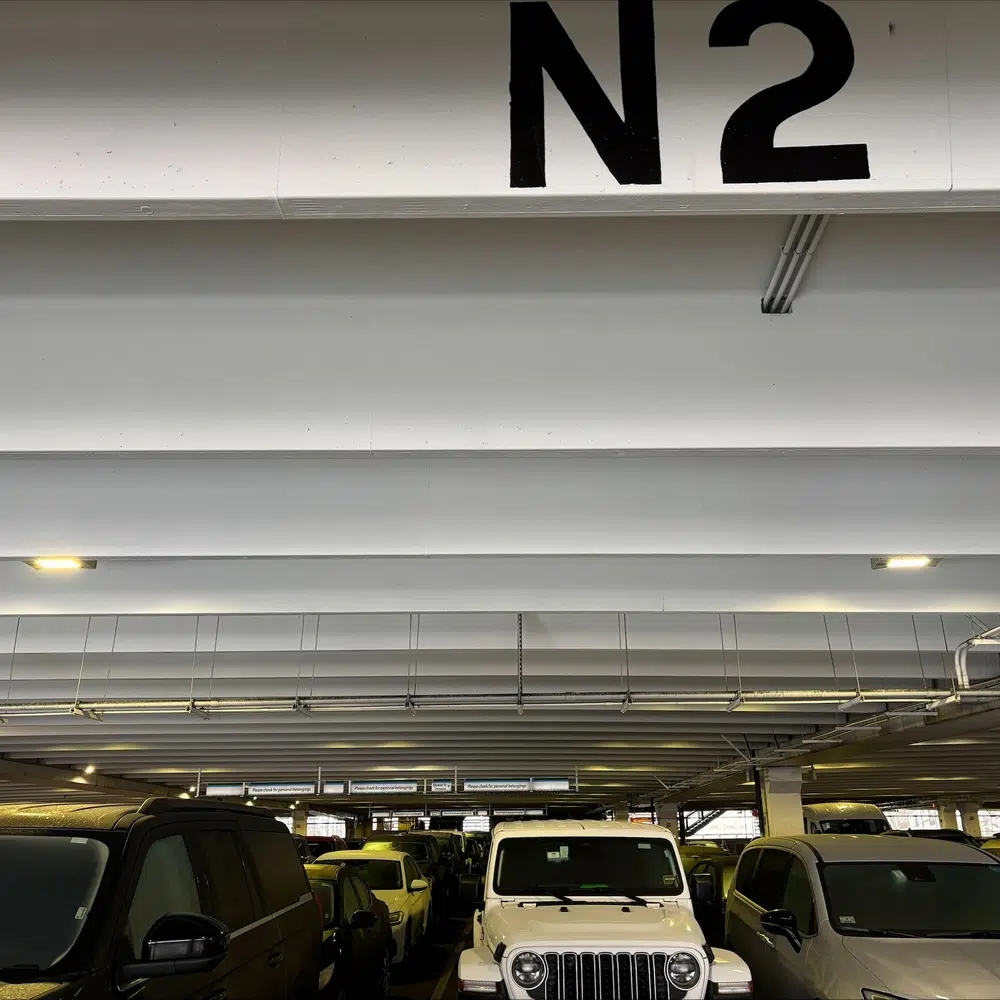
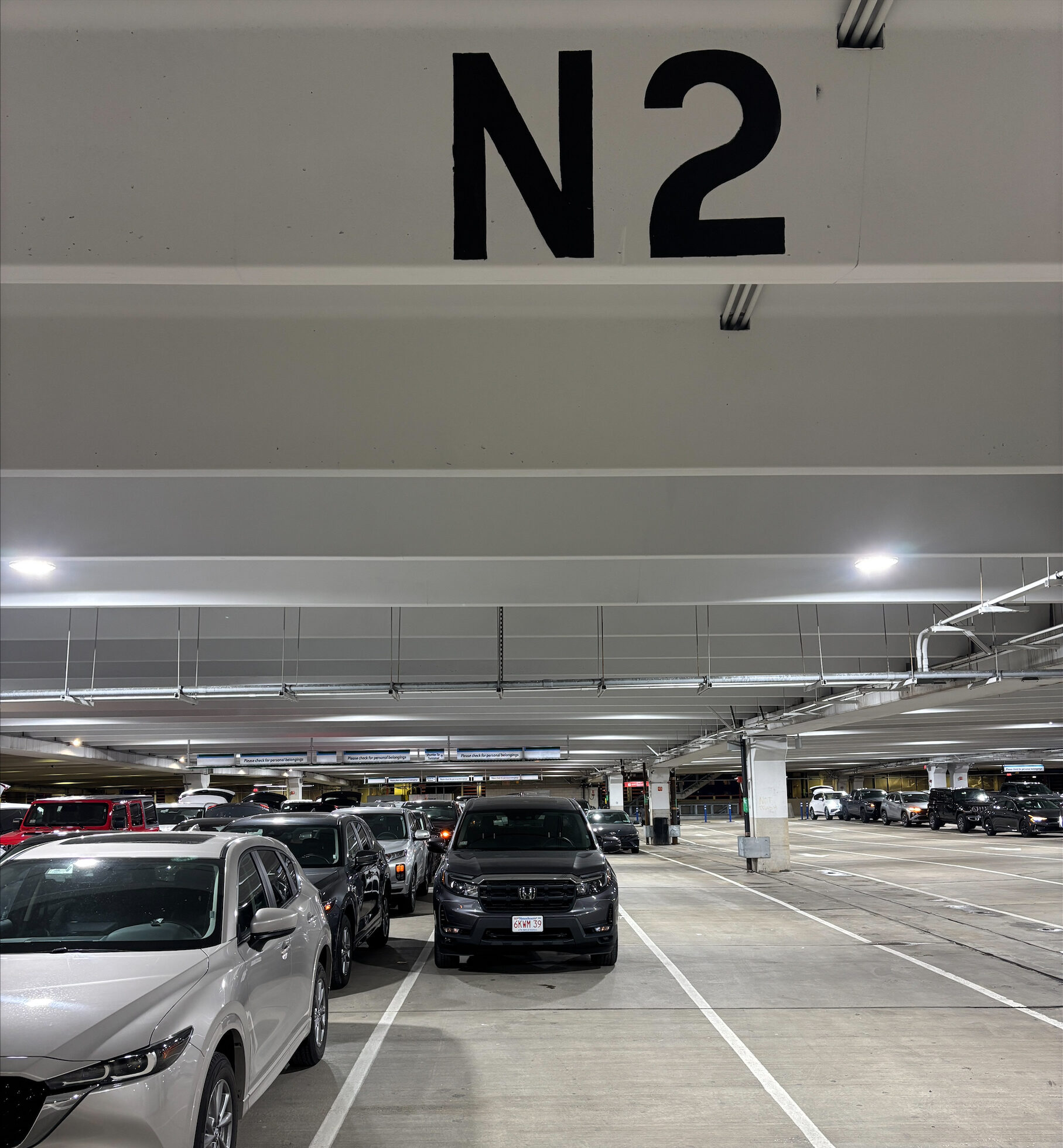
Enterprise Rent-a-Car, located at Logan Airport in Boston, Massachusetts, reached out to LED Lighting Supply seeking assistance with a lighting upgrade for its parking garage rental car return lanes across two areas. The sections of the garage where the return lanes are located were operating with aged canopy light fixtures, delivering low brightness across the space. Inconsistent, dim light levels create dark spots, among other security threats, in a high-traffic parking garage.
The Customer's Challenge:
The areas lacked overall brightness across all return lanes, making it difficult to support accurate vehicle inspections and ensure safety for both employees and customers. The return lane areas fell below recommended illumination levels for parking structures, hardly reaching 5 foot-candles (fc) with the existing lighting system. Depending on the size, the recommended numerical calculation of light levels in a parking garage is typically between 5 and 10 fc.
Lighting Plan We Created for the Customer
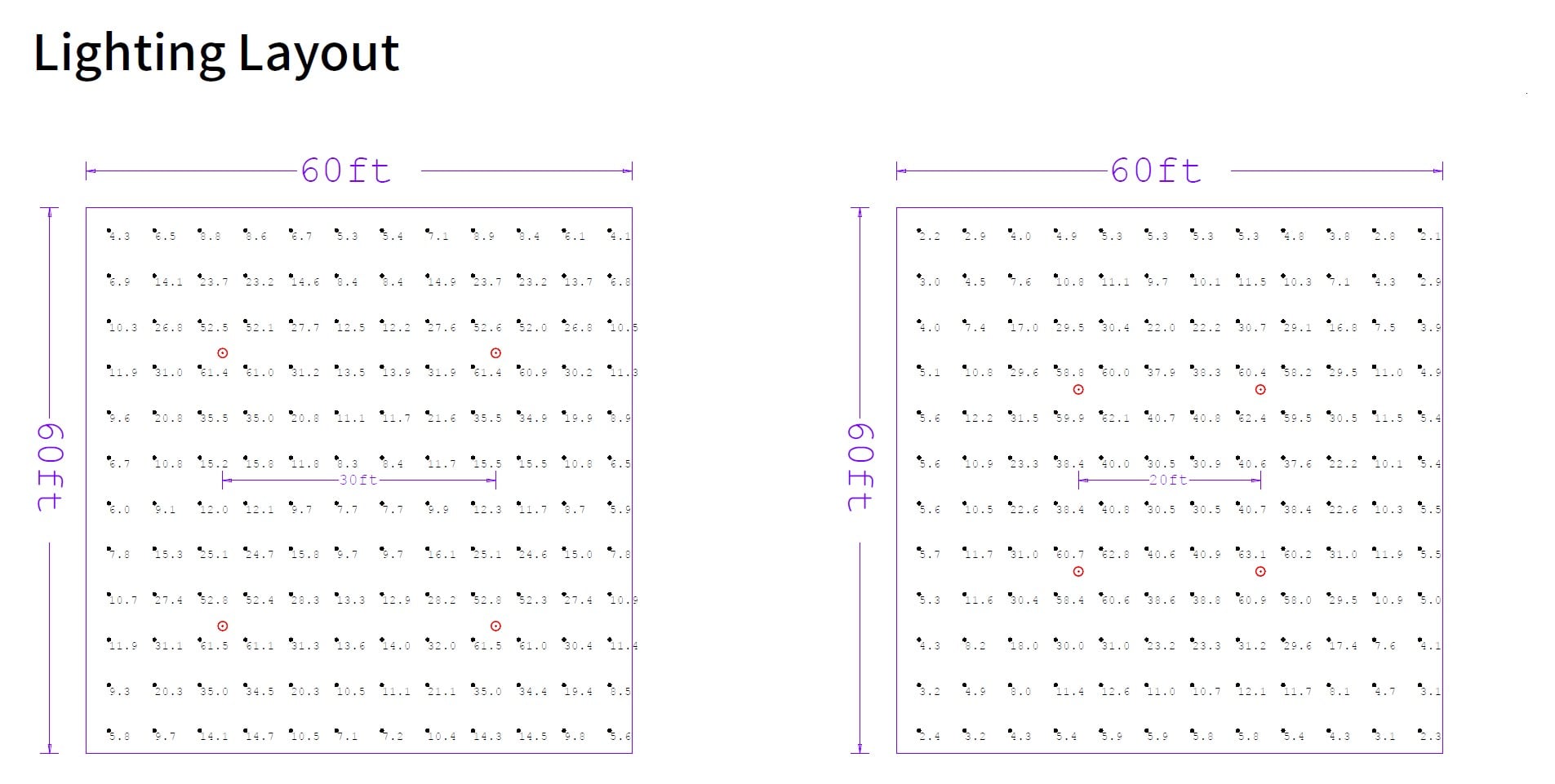
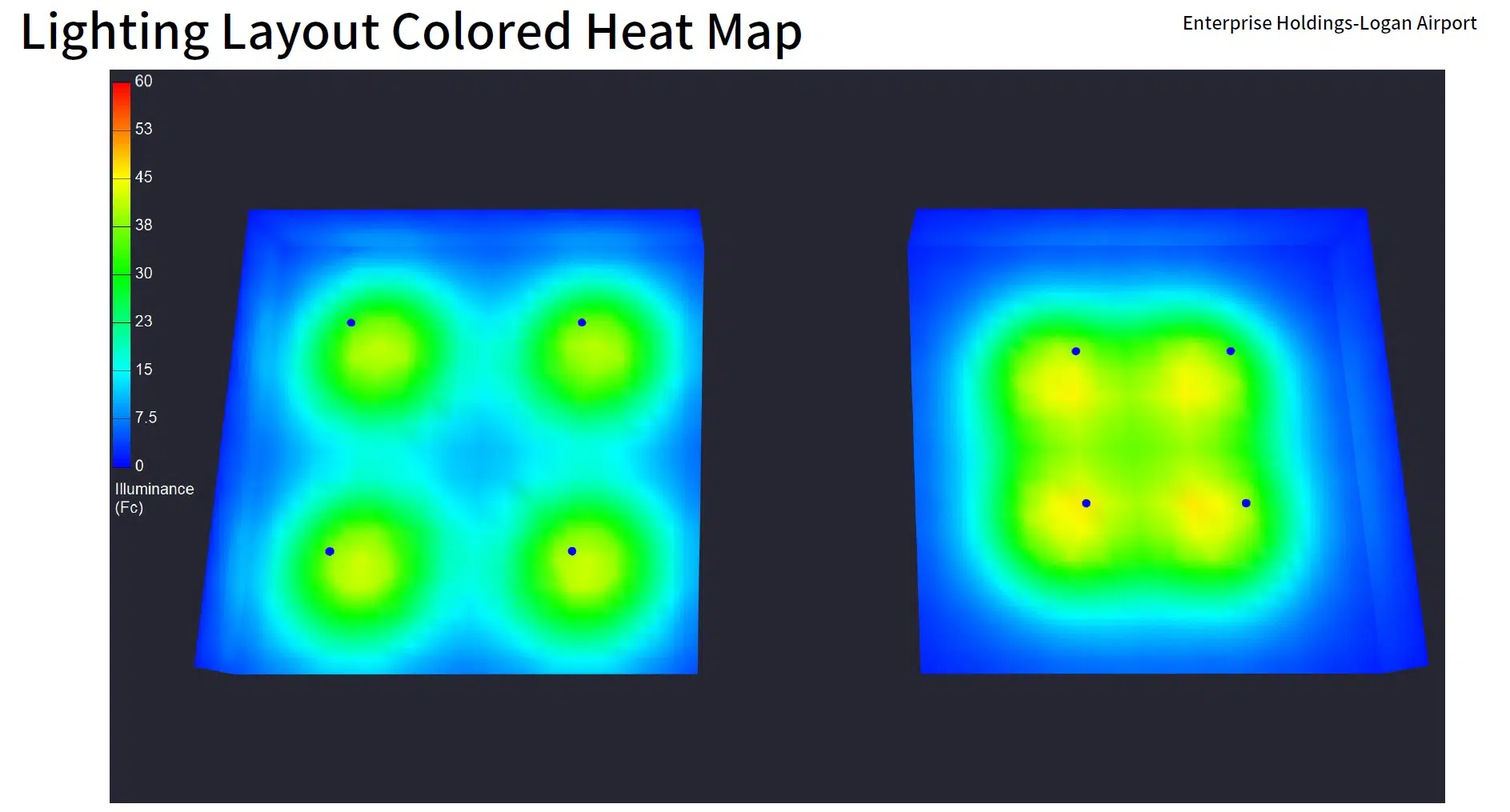
Lighting Plan Metrics:
- Mounting height: 12 ft
- Fixture Used: LLS-HB-200A-CC-B
- FC Achieved: 15 FC average
- Uniformity (Avg/Min): 3.71 FC
- Product(s) Used: LLS-HB-200A-CC-[C]

Canopy lights are a strong option for low bay applications. This workshop was lit with our 30 / 50 / 75 / 100 Watt Adjustable LED Canopy Light | 4200 to 14000 Lumens.
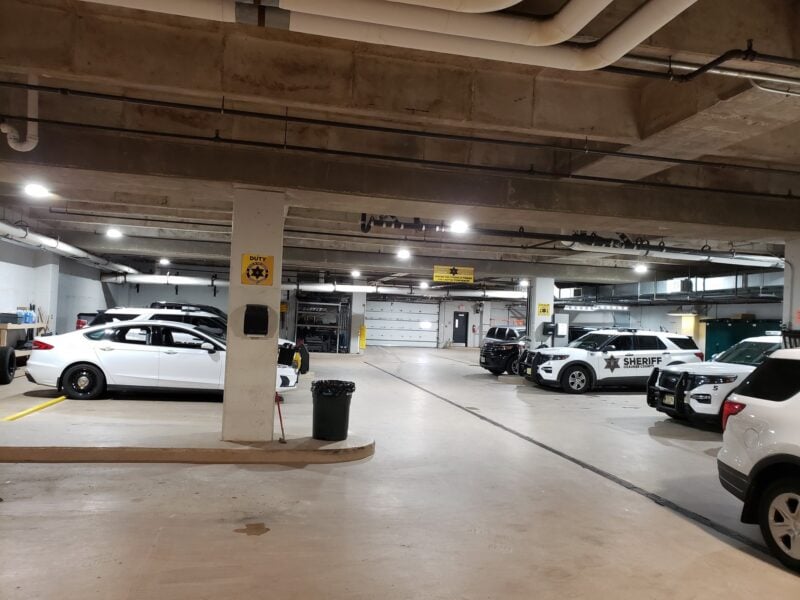
This parking garage was converted from high pressure sodium lighting to LED canopy lighting for better visibility and reduced maintenance.
Safety and Performance Certifications
Available certifications and ratings vary by model and may include UL Listed, ETL Listed, DLC, DLC Premium, wet-location ratings, IP ratings, impact ratings, motion sensor compatibility, dimming compatibility, photocell compatibility, and emergency backup options. Confirm the required listing, rating, and rebate eligibility on the selected product specification before ordering.
Canopy lights should also be selected for the environment where they will be installed. Confirm wet-location suitability, IP rating, mounting method, voltage, controls compatibility, emergency backup requirements, impact exposure, corrosion exposure, and whether the project has local requirements for light levels, egress, glare, or hazardous-location classification.


Warranty and Warranty Support
Warranty coverage varies by model. Many LED canopy lights include a 5-year warranty, with warranty support based in the USA. Confirm warranty coverage, installation requirements, voltage, surge protection, controls compatibility, mounting conditions, environmental exposure, emergency backup requirements, and application restrictions on the selected product specification before ordering. If an issue occurs, our support team can help review the product, application, and warranty claim process.
Common LED Canopy Light Mistakes
Canopy lighting projects go wrong when fixtures are selected without confirming mounting height, beam spread, wet-location rating, controls, voltage, or retrofit dimensions. These issues can create hot spots, shadows, glare, code problems, or installation delays.
- Using narrow-beam fixtures in canopy applications: Narrow beams can create hot spots and shadows at typical canopy mounting heights.
- Using damp-location fixtures in exposed outdoor canopies: Confirm wet-location rating and IP rating where rain, wind-driven moisture, or direct exposure is possible.
- Selecting by wattage alone: Compare lumens, beam spread, fixture spacing, mounting height, and photometric performance.
- Mixing color temperatures: Mixing 4000K and 5000K fixtures in the same space can look inconsistent and may affect camera visibility.
- Setting motion sensors incorrectly: Poor sensor settings can cause false triggering, missed detection, or occupant complaints.
- Ordering recessed fixtures without measuring existing boxes: Measure ceiling openings, recessed housings, mounting boxes, and conduit locations before ordering.
- Spacing fixtures like high bays: Canopy layouts require fixture spacing based on lower mounting heights and wide distribution, not high-bay spacing assumptions.
- Ignoring emergency lighting requirements: Parking garages, covered walkways, and egress routes may require emergency backup or separate emergency lighting.
- Overlooking hazardous-location requirements: Some fuel canopy or specialty areas may require certified fixtures. Standard canopy lights should not be assumed suitable.
- Skipping a lighting plan for large or code-sensitive projects: Parking garages, gas station canopies, drive-thrus, and commercial covered areas should be reviewed for light levels, spacing, uniformity, and controls.
Request a canopy lighting plan and our Product Specialists can help review fixture type, mounting height, spacing, beam spread, wet-location rating, voltage, controls, emergency backup, light levels, and product specifications for your LED canopy lighting project.
This Content Was Professionally Reviewed By:

Dwayne Kula
Founder, President & CTO
LED Lighting Supply
- 17+ years in LED lighting systems
- B.Sc. in Software Engineering
- Specializes in industrial & commercial lighting
This content was reviewed for technical accuracy, real-world application, and clarity based on over 17 years of experience working with LED lighting systems.
LED Canopy Lights Frequently Asked Questions
What Are the Key Considerations When Selecting LED Canopy Lights
When choosing LED canopy lights, consider the mounting height and beam angle to ensure even coverage. Verify the IP rating for weather resistance, especially for outdoor installations. Ensure compatibility with existing ceiling structures and check for features like motion sensors and dimming options for energy efficiency.
How Do I Determine the Right Color Temperature for My Application
Select 5000K for metal halide replacements, 4000K for fluorescent replacements, and 3000K for specific applications. Consider color-adjustable models for flexibility. The choice depends on the desired ambiance and application requirements.
What Mounting Options Are Available for LED Canopy Lights
LED canopy lights offer surface, recessed, and pendant mounting options. Choose based on your existing ceiling or canopy structure. Ensure compatibility with your installation environment to avoid additional modifications.
Why Is IP65 Rating Important for LED Canopy Lights
An IP65 rating ensures the fixture is dust-tight and water-resistant, making it suitable for outdoor and wet locations. Avoid "damp location" rated models for fully exposed installations to prevent moisture-related failures.
How Can Motion Sensors and Dimming Options Benefit My Installation
Motion sensors and dimming options can provide 30-50% energy savings in low-traffic areas by adjusting light levels based on occupancy. This feature enhances energy efficiency and extends the lifespan of the fixtures.
What Are the Benefits of Wattage-Adjustable LED Canopy Lights
Wattage-adjustable fixtures allow you to fine-tune light output after installation, providing flexibility for retrofits or uncertain coverage needs. This adaptability helps optimize lighting performance and energy use.
What Certifications Should I Look for in LED Canopy Lights
Look for UL, ETL, and DLC certifications to ensure safety, performance, and eligibility for utility rebates. These certifications confirm compliance with North American safety standards and energy efficiency requirements.
How Do I Ensure Proper Light Levels and Coverage
Request a photometric plan to verify fixture placement and spacing for uniform coverage. This plan predicts light levels and helps avoid dark spots, ensuring compliance with safety and operational standards.
What Are Common Mistakes to Avoid When Installing LED Canopy Lights
Avoid using narrow beam fixtures at low heights, which can create hot spots. Ensure fixtures are rated for outdoor use to prevent moisture damage. Verify mounting compatibility and avoid mixing color temperatures for a professional appearance.