


LED Parking Lot Lights
- 50%+ energy savings with UL Listed fixtures and 5-year warranties
- 100,000+ hour lifespan eliminates frequent maintenance and replacement costs
- DLC Premium certification qualifies for 50-70% utility rebate coverage


-
 Strategic Pole Layout Design for Maximum Coverage & Security Illumination
-
Precise Photometric Calculations for Footcandle Requirements & Light Uniformity Ratios
-
Optimize Safety Compliance While Reducing Energy Costs & Nighttime Maintenance


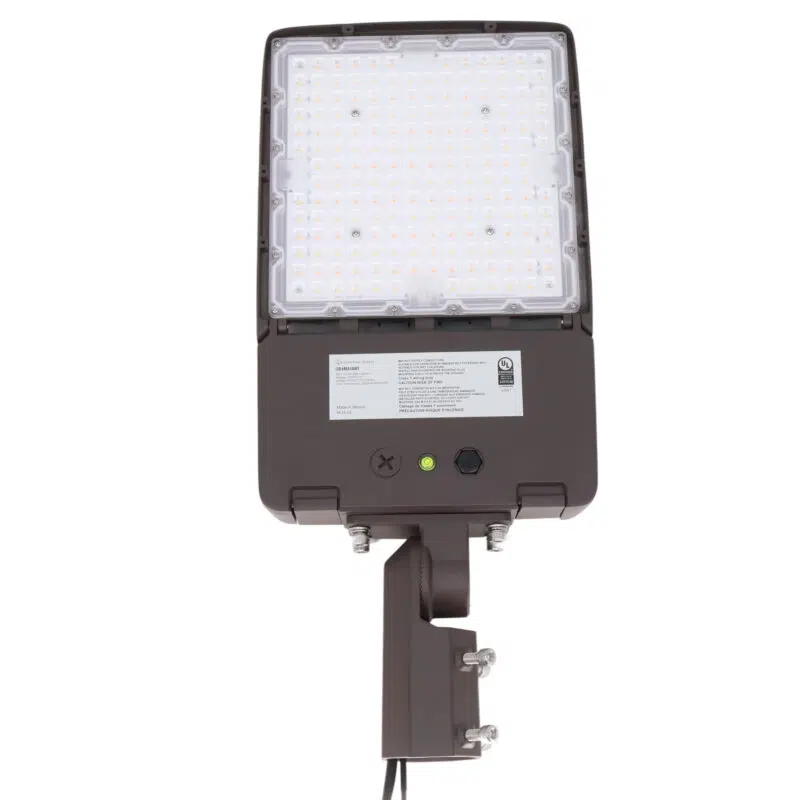
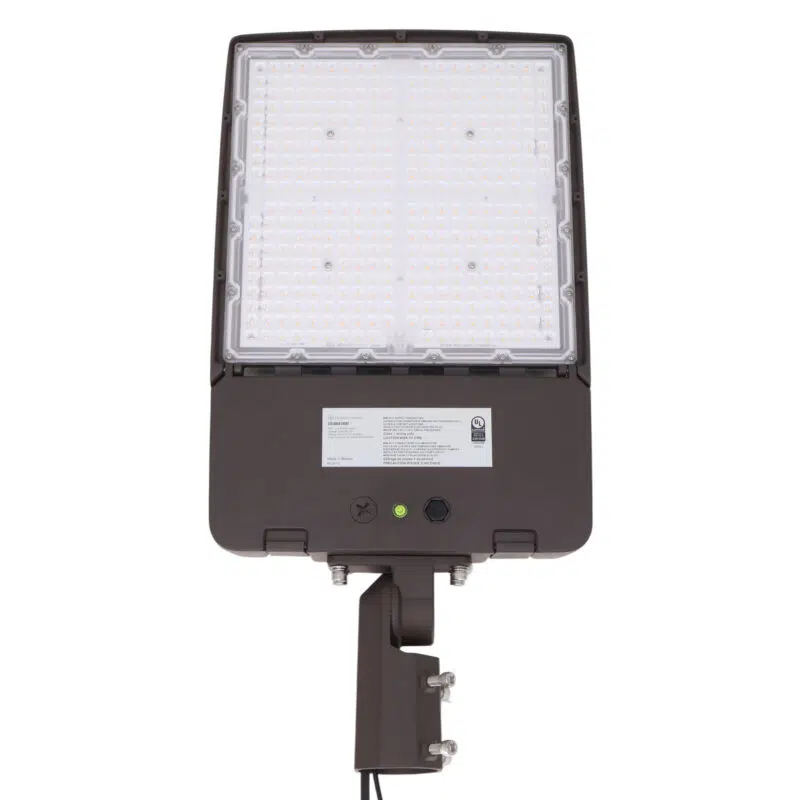
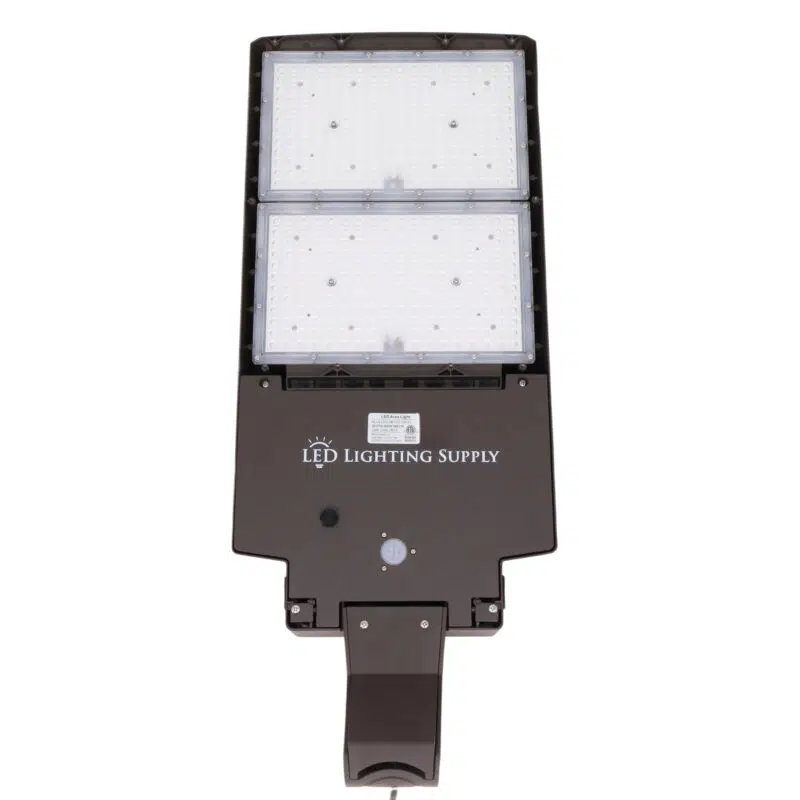
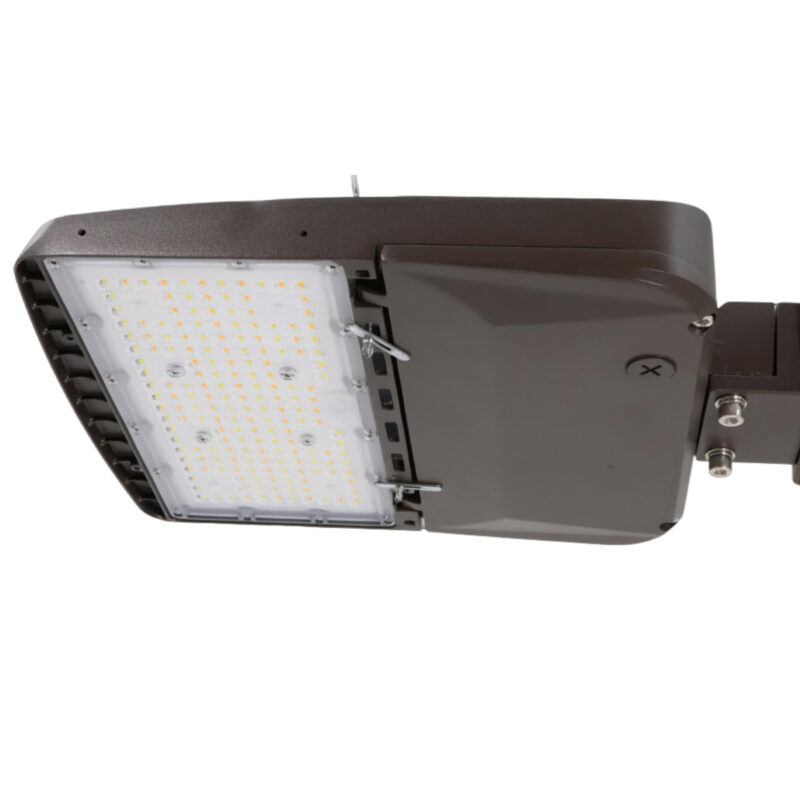
LED parking lot lights are outdoor fixtures typically mounted on poles or building exteriors around open parking areas, drive lanes, and perimeter walkways. Most commonly found in commercial parking lots, car dealerships, retail centers, and service facility lots, these lights feature a rectangular or shoebox form factor designed for broad area coverage. Installation often follows the layout of parking spaces and traffic lanes, with fixtures positioned along site boundaries, at entry points, or throughout large open lots.
This category includes a range of mounting options, such as slip fitters, yoke mounts, and arm brackets, compatible with standard light poles and structural supports. Commercial & Industrial Lighting Solutions are offered for environments like shopping center parking fields, municipal lots, school campuses, and exterior zones surrounding warehouses or office complexes. These fixtures are suited for outdoor site layouts where consistent, reliable illumination is needed across expansive paved areas.


Showing 1–12 of 32 results
 SKU:LLS-M-SB6-150A-CC | Web ID:2675Availability: 324 In Stock Ships 2-3 Days
- Watts: 80 | 100 | 150
- Lumens: 10400 | 13000 | 19500
- Lumens/Watt: 130
- Replaces: 250 | 400 Watt Metal Halide
- Color Temp: 3000K | 4000K | 5000K
- CRI: 80+
- IP Rating: IP65
- Voltage: 120V-277V
- Surge Protection: 6kV
- Operating Temp: -22°F to 113°F
- Rated Life: 50,000 hours
- Dimmable: 0-10V
- Beam Angle (Std): Type 3
- Optics: Polycarbonate Lens
- Fixture Color: Bronze
- Mount: Arm | Slip Fitter
- Dimensions (in): 15.55 L X 9.88 W X 2.6 H
- Weight (lbs): 7
- Warranty: 5 years
Starting At$167.47


- SKU:LLS-M-SB6-300A-CC | Web ID:2676Availability: 249 In Stock Ships 2-3 Days
- Watts: 200 | 240 | 300
- Lumens: 26000 | 31200 | 39000
- Lumens/Watt: 130
- Replaces: 400 | 1000 Watt Metal Halide
- Color Temp: 3000K | 4000K | 5000K
- CRI: 80+
- IP Rating: IP65
- Voltage: 120V-277V
- Surge Protection: 6kV
- Operating Temp: -22°F to 113°F
- Rated Life: 50,000 hours
- Dimmable: 0-10V
- Beam Angle (Std): Type 3
- Optics: Polycarbonate Lens
- Fixture Color: Bronze
- Mount: Arm | Slip Fitter
- Dimensions (in): 18.74 L x 12.68 W x 2.76 H
- Weight (lbs): 11
- Warranty: 5 years
Starting At$225.84 - SKU:LLS-SBHO4-90/120/150-CC | Web ID:2287Availability: 186 In Stock Ships 2-3 Days
- Watts: 90 | 120 | 150
- Lumens: 13950 | 18600 | 23250
- Lumens/Watt: 155
- Replaces: 400 Watt Metal Halide
- Color Temp: 3000K | 4000K | 5000K
- CRI: 70+
- IP Rating: IP65
- IK Rating: IK08
- Voltage: 100V-277V
- Surge Protection: 10kV line-earth
- Operating Temp: -22°F to 122°F
- Rated Life: 100,000 (L70) hours
- Dimmable: No
- Beam Angle (Std): Type 3
- Beam Angle (Opt): Type 4 | Type 5
- Optics: Polycarbonate Lens
- Housing: Die-Cast Aluminum
- Fixture Color: Bronze
- Mount: Arm | Slip Fitter
- EPA Rating: 1.52
- Dimensions (in): 18.31 L X 13.15 W X 2.64 H
- Weight (lbs): 10
- Warranty: 5 years
Starting At$159.52
- SKU:MLLG-LED-SBHO2-150-50 | Web ID:1762Availability: 321 In Stock Ships 2-3 Days
- Watts: 150
- Lumens: 24000
- Lumens/Watt: 160
- Replaces: 400 | 1000 Watt Metal Halide
- Color Temp: 4000K | 5000K
- CRI: 70+
- IP Rating: IP65
- IK Rating: IK08
- Voltage: 100V-277V | 277V-480V Optional
- Surge Protection: 6kV line-line, 10kV line-earth
- Operating Temp: -22°F to 113°F
- Rated Life: 244,000 (L70) hours
- Dimmable: No
- Beam Angle (Std): Type 3
- Beam Angle (Opt): Type 4 | Type 5
- Optics: Polycarbonate Lens
- Housing: Die-Cast Aluminum
- Fixture Color: Bronze
- Mount: Yoke | Arm | Slip Fitter
- EPA Rating: 1.5
- Dimensions (in): 15.63 X 11.25 X 3.22
- Cord Length: 5 Feet
- Weight (lbs): 9.5
- Warranty: 10 years (100-277V) - 5 years (277-480V)
Starting At$235.08 - SKU:MLLG-LED-SBHO2-300-50 | Web ID:1763Availability: 264 In Stock Ships 2-3 Days
- Watts: 300
- Lumens: 48000
- Lumens/Watt: 160
- Replaces: 1000 Watt Metal Halide
- Color Temp: 4000K | 5000K
- CRI: 70+
- IP Rating: IP65
- IK Rating: IK08
- Voltage: 100V-277V | 277V-480V Optional
- Surge Protection: 6kV line-line, 10kV line-earth
- Operating Temp: -22°F to 113°F
- Rated Life: 244,000 (L70) hours
- Dimmable: No
- Beam Angle (Std): Type 5
- Beam Angle (Opt): Type 3
- Optics: Polycarbonate Lens
- Housing: Die-Cast Aluminum
- Fixture Color: Bronze
- Mount: Yoke | Arm | Slip Fitter
- EPA Rating: 2
- Dimensions (in): 24.61 L X 11.93 W X 3.22 H
- Cord Length: 5 Feet
- Weight (lbs): 17
- Warranty: 10 years (100-277V) - 5 years (277-480V)
Starting At$380.63 - SKU:LLS-X-SB4-150/120/100/80-CC-[V] | Web ID:2041100V-277V:1206 In StockShips 2-3 Days277V-480V:197 In StockShips 3-5 Days
- Watts: 80 | 100 | 120 | 150
- Lumens: 12240 | 15300 | 18360 | 22950
- Lumens/Watt: 153
- Replaces: 400 Watt Metal Halide
- Color Temp: 3000K | 4000K | 5000K
- CRI: 70+
- IP Rating: IP65
- Voltage: 100V-277V | 277V-480V
- Surge Protection: 10kV
- Operating Temp: -40°F to 113°F
- Rated Life: 100,000 (L70) hours
- Dimmable: No
- Beam Angle (Std): Type 3
- Optics: Polycarbonate Lens
- Housing: Die-Cast Aluminum
- Fixture Color: Bronze
- Mount: Wall | Yoke | Arm | Slip Fitter
- EPA Rating: 1.35
- Dimensions (in): 13.3 L X 11.8 W X 3 H
- Weight (lbs): 7.2
- Warranty: 5 years
Starting At$175.00 - SKU:LLS-X-SB4-150/120/100/80-CC-[BK/W] | Web ID:2354Black:231 In StockShips 3-5 DaysWhite:4 In StockShips 3-5 Days
- Watts: 80 | 100 | 120 | 150
- Lumens: 12240 | 15300 | 18360 | 22950
- Lumens/Watt: 153
- Replaces: 400 Watt Metal Halide
- Color Temp: 3000K | 4000K | 5000K
- CRI: 70+
- IP Rating: IP65
- Voltage: 100V-277V
- Surge Protection: 10kV
- Operating Temp: -40°F to 113°F
- Rated Life: 100,000 (L70) hours
- Dimmable: No
- Beam Angle (Std): Type 3
- Optics: Polycarbonate Lens
- Housing: Die-Cast Aluminum
- Fixture Color: Black | White
- Mount (Opt): Yoke | Arm | Slip Fitter
- EPA Rating: 1.35
- Dimensions (in): 14 L X 11.8 W X 3 H
- Weight (lbs): 7.2
- Warranty: 5 years
Starting At$185.80 - SKU:LLS-X-SB4-240/220/200/170-CC | Web ID:2280Availability: 474 In Stock Ships 2-3 Days
- Watts: 170 | 200 | 220 | 240
- Lumens: 26000 | 30600 | 33660 |36720
- Lumens/Watt: 153
- Replaces: 400 | 1000 Watt Metal Halide
- Color Temp: 3000K | 4000K | 5000K
- CRI: 70+
- IP Rating: IP65
- Voltage: 100V-277V
- Surge Protection: 10kV
- Operating Temp: -40°F to 113°F
- Rated Life: 100,000 (L70) hours
- Dimmable: No
- Beam Angle (Std): Type 3
- Optics: Polycarbonate Lens
- Housing: Die-Cast Aluminum
- Fixture Color: Bronze
- Mount (Opt): Yoke | Arm | Slip Fitter
- EPA Rating: 1.4
- Dimensions (in): 16 X 11.8 X 3
- Weight (lbs): 9.1
- Warranty: 5 years
Starting At$203.08 - SKU:LLS-X-SB4-240/220/200/170-CC-W | Web ID:2360Availability: 268 In Stock Ships 2-3 Days
- Watts: 170 | 200 | 220 | 240
- Lumens: 26000 | 30600 | 33660 | 36720
- Lumens/Watt: 153
- Replaces: 400 | 1000 Watt Metal Halide
- Color Temp: 3000K | 4000K | 5000K
- CRI: 70+
- IP Rating: IP65
- Voltage: 100V-277V
- Surge Protection: 10kV
- Operating Temp: -40°F to 113°F
- Rated Life: 100,000 (L70) hours
- Dimmable: No
- Beam Angle (Std): Type 3
- Optics: Polycarbonate Lens
- Housing: Die-Cast Aluminum
- Fixture Color: White
- Mount (Opt): Yoke | Arm | Slip Fitter
- EPA Rating: 1.4
- Dimensions (in): 16 L X 11.8 W X 3 H
- Weight (lbs): 9.1
- Warranty: 5 years
Starting At$220.20 - SKU:LLS-X-SB4-310/280/260/240-CC-[V] | Web ID:2042100V-277V:16 In StockBack in Stock 7/15277V-480V:308 In StockShips 3-5 Days
- Watts: 240 | 260 | 280 | 310
- Lumens: 36720 | 39780 | 42840 | 47430
- Lumens/Watt: 153
- Replaces: 1000 Watt Metal Halide
- Color Temp: 3000K | 4000K | 5000K
- CRI: 70+
- IP Rating: IP65
- Voltage: 100V-277V | 277V-480V
- Surge Protection: 10kV
- Operating Temp: -40°F to 113°F
- Rated Life: 100,000 (L70) hours
- Dimmable: No
- Beam Angle (Std): Type 3
- Optics: Polycarbonate Lens
- Housing: Die-Cast Aluminum
- Fixture Color: Bronze
- Mount (Opt): Wall | Yoke | Arm | Slip Fitter
- EPA Rating: 1.7
- Dimensions (in): 22 H X 11.8 W X 3 D
- Weight (lbs): 11.3
- Warranty: 5 years
Starting At$239.40 - SKU:LLS-X-SB4-310/280/260/240-CC-[BK/W] | Web ID:2355Black:3 In StockShips 3-5 DaysWhite:45 In StockShips 3-5 Days
- Watts: 240 | 260 | 280 | 310
- Lumens: 36720 | 39780 | 42840 | 47430
- Lumens/Watt: 153
- Replaces: 1000 Watt Metal Halide
- Color Temp: 3000K | 4000K | 5000K
- CRI: 70+
- IP Rating: IP65
- Voltage: 100V-277V
- Surge Protection: 10kV
- Operating Temp: -40°F to 113°F
- Rated Life: 100,000 (L70) hours
- Dimmable: No
- Beam Angle (Std): Type 3
- Optics: Polycarbonate Lens
- Housing: Die-Cast Aluminum
- Fixture Color: Black | White
- Mount (Opt): Yoke | Arm | Slip Fitter
- EPA Rating: 1.7
- Dimensions (in): 22 H X 11.8 W X 3 D
- Weight (lbs): 11.3
- Warranty: 5 years
Starting At$245.60 - SKU:LLS-X-SB4-310-5-HV | Web ID:2667Availability: 336 In Stock Ships 2-3 Days
- Watts: 310
- Lumens: 47430
- Lumens/Watt: 153
- Replaces: 1000 Watt Metal Halide
- Color Temp: 5000K
- CRI: 70+
- IP Rating: IP65
- Voltage: 277V-480V
- Surge Protection: 10kV
- Operating Temp: -40°F to 113°F
- Rated Life: 100,000 (L70) hours
- Dimmable: No
- Beam Angle (Std): Type 3
- Optics: Polycarbonate Lens
- Housing: Die-Cast Aluminum
- Fixture Color: Bronze
- Mount (Opt): Wall | Yoke | Arm | Slip Fitter
- EPA Rating: 1.7
- Dimensions (in): 22 H X 11.8 W X 3 D
- Weight (lbs): 11.3
- Warranty: 5 years
Starting At$309.00





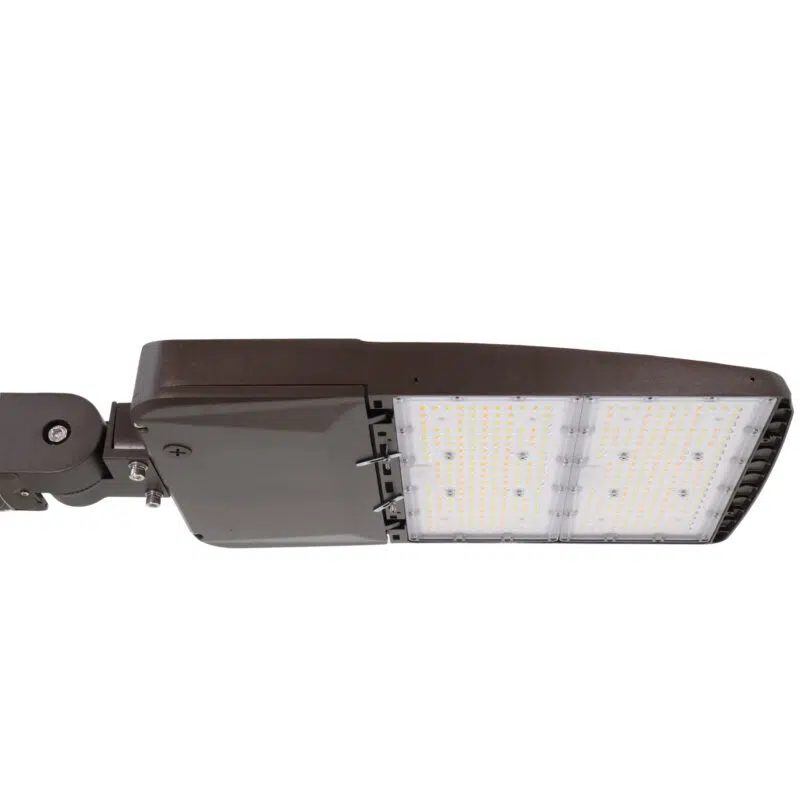


Choosing LED Parking Lot Lights
Choosing the right LED parking lot lights starts with the site layout, pole height, pole spacing, mounting method, target light levels, voltage, optic distribution, and whether the project is a retrofit or new installation. The goal is to provide safe, uniform visibility across parking spaces, drive lanes, entrances, pedestrian areas, loading zones, and perimeter areas without creating excessive glare, light trespass, or wasted energy.
Most parking lot lighting projects use pole-mounted LED shoebox lights or LED area lights. Parking lot lighting is commonly used for retail lots, schools, churches, dealerships, apartment complexes, municipal lots, industrial yards, and commercial properties where vehicle and pedestrian visibility are important. The right fixture depends on pole height, pole spacing, mounting hardware, light levels, voltage, controls, optic distribution, wind exposure, and site conditions.
LED parking lot lights can reduce energy use compared to older metal halide, high-pressure sodium, and HID lighting systems when properly specified. Actual savings depend on the existing fixture wattage, operating hours, control strategy, fixture count, and utility rate. Many models are control-ready and can be equipped with photocells for dusk-to-dawn operation or motion sensors for dimming during low-activity periods.
With over 15 years of commercial and industrial lighting experience, LED Lighting Supply's Product Specialists can help confirm fixture count, pole spacing, mounting height, optic distribution, expected light levels, and energy savings before you order. For larger parking lots or safety-critical sites, a photometric lighting plan is the best way to avoid dark spots, overlighting, glare, and light trespass.
Selection and Installation Note: Product specifications, ratings, controls, certifications, and warranty coverage vary by model. Confirm the selected product specification before ordering. For code-sensitive, electrical, exterior, pole-mounted, emergency, wind-load, light-trespass, or safety-critical applications, verify requirements with your local inspector or a licensed electrical professional.
LED Parking Lot Light Selector
Use the selector below as a starting point to narrow parking lot lighting options by application, beam type, mounting method, and voltage. Final fixture selection should be confirmed against pole height, pole spacing, target foot-candles, optic distribution, voltage, mounting hardware, local requirements, and site conditions.
LED Lighting Supply Shoebox Product Selector

Our customer upgraded their parking lot in New England with our high-power LED shoebox lights.
When LED Parking Lot Lights Are the Right Fit
LED parking lot lights are usually the best starting point when a commercial site needs to replace older HID fixtures, improve visibility, reduce maintenance, add controls, or create a more efficient outdoor lighting system. They are not a one-size-fits-all product. Existing pole condition, mounting height, fixture weight, wind exposure, voltage, optic type, and local lighting requirements should be reviewed before ordering.
| Use LED Parking Lot Lights When | Consider Another Solution When |
|---|---|
| You are replacing metal halide, high-pressure sodium, or other HID parking lot fixtures and want instant-on performance, reduced maintenance, and improved efficiency. | The existing pole, arm, tenon, or foundation is damaged and cannot safely support the selected fixture, bracket, or wind load. |
| The site needs wide-area outdoor coverage for parking spaces, drive lanes, truck courts, entrances, pedestrian routes, or exterior circulation areas. | The area requires narrow task lighting or building-mounted security lighting where a flood light, wall pack, canopy light, or dock light may be a better fit. |
| The project requires controlled light distribution to reduce glare, uplight, dark spots, or light trespass. | The project has strict dark-sky, municipal, neighbor-impact, or light-trespass requirements that have not been checked against the selected optic and layout. |
| The site needs controls, such as photocells, motion sensors, dimming, or scheduled operation. | The electrical system, voltage, circuit capacity, surge protection, or control method has not been confirmed for the selected fixture. |
| You need commercial-grade outdoor fixtures with proper listings, environmental ratings, surge protection, and long-term warranty support. | Hazardous-location requirements apply and the selected fixture is not specifically rated for the required classified-location conditions. |
Choosing Parking Lot Lights by Pole Height, Optics, Layout, Mounting, and Light Levels
A successful parking lot lighting project starts with the site layout, not just fixture wattage. The same LED parking lot light can perform very differently depending on pole height, pole spacing, optic type, fixture tilt, mounting location, surrounding buildings, landscaping, traffic patterns, nearby property lines, and the fixture or mounting type selected.
For retrofit projects, review the existing poles, fixtures, voltage, mounting hardware, and light levels. For new construction, the layout should be designed around target illumination levels, uniformity, pole placement, glare control, and local requirements. In both cases, a photometric plan can confirm fixture count, mounting height, optic selection, expected foot-candles, and light spill before the project is installed.
| Selection Factor | Why It Matters |
|---|---|
| LED shoebox / area lights | Used for most commercial parking lots, industrial yards, drive lanes, campuses, dealerships, and exterior open areas where pole-mounted lighting is required. |
| Post top lights | Used for decorative parking areas, pedestrian zones, campuses, parks, apartment complexes, and commercial properties where appearance matters as much as light output. |
| Solar parking lot lights | Used where trenching, wiring, or grid power is difficult or expensive. Solar lighting should be matched to local sun exposure, runtime requirements, pole height, and battery capacity. |
| Parking lot retrofit kits | Used to upgrade existing HID parking lot fixtures while retaining the existing fixture housing where appropriate. Retrofit suitability depends on housing condition, thermal performance, voltage, and installation requirements. |
| Parking lot light poles | Used for new parking lot lighting projects or pole replacement. Pole height, wind rating, foundation, bolt pattern, and fixture EPA should be verified before installation. |
| Wall-mounted area lights | Used for building-mounted perimeter lighting, entrances, loading docks, drive lanes near structures, and smaller parking areas where poles are not practical. |
| Bollard and walkway lights | Used for pedestrian routes, walkways, building entrances, parks, campuses, and areas where lower-level pathway lighting is needed alongside parking lot fixtures. |
| Lot size and shape | Large rectangular lots, narrow drive lanes, irregular layouts, and corner lots may require different fixture placements, optics, and pole locations. |
| Pole height | Higher poles can cover more area but require the correct lumen package and optic. Lower poles may need lower output, tighter spacing, or glare control. |
| Pole spacing | Wide spacing can create dark zones if fixture output or optic is not matched correctly. Tight spacing can overlight the site if wattage is too high. |
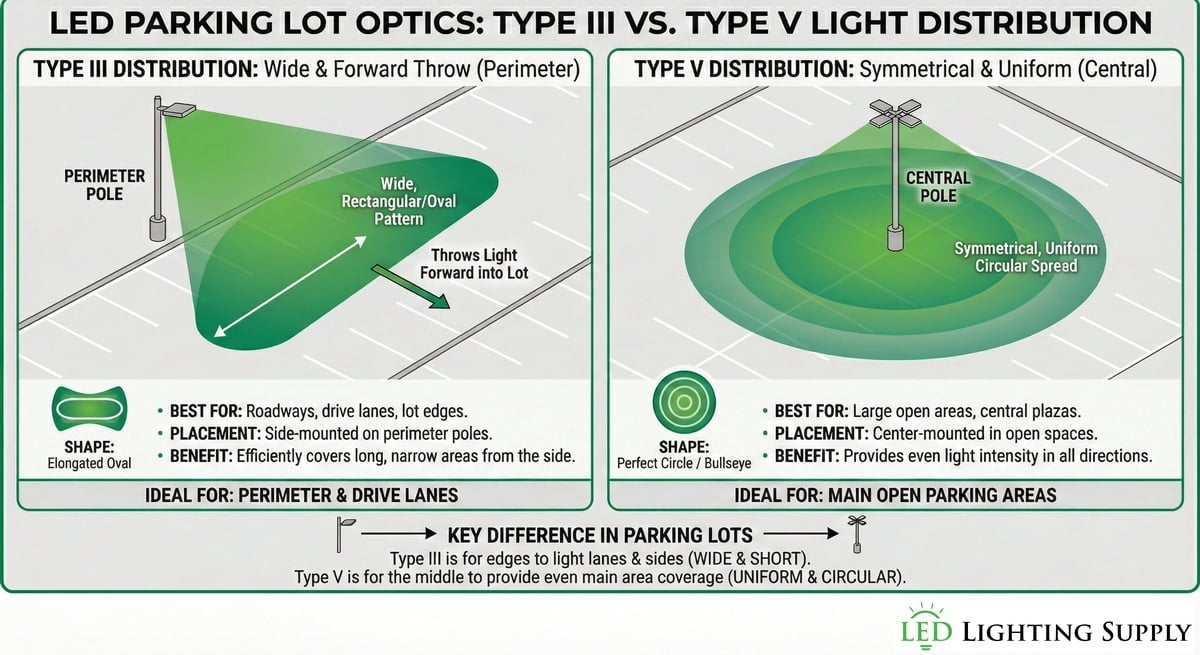
| Perimeter vs center poles | Perimeter poles often need forward-throw optics, while center poles may use symmetrical optics to spread light in multiple directions. |
| Optics / beam distribution | Type III optics are commonly used for perimeter and building-mounted fixtures, while Type V optics are commonly used for interior pole locations. Final optic selection should be based on the site layout. |
| Target foot-candles | Light levels should match the use of the lot, traffic level, security needs, pedestrian activity, and applicable project requirements. |
| Uniformity | Uniformity helps reduce dark spots and overly bright patches. A lot can have enough average light but still feel unsafe if coverage is uneven. |
| Glare and light trespass | Improper aiming, excessive wattage, or the wrong optic can create glare for drivers and pedestrians or spill light onto neighboring properties. |
| Voltage compatibility | Standard 100-277V and high-voltage 277-480V options are available. Verify existing circuit voltage before ordering. |
| Mounting method | Slip fitter, arm mount, yoke/trunnion mount, direct arm mount, wall mount, and retrofit brackets are available. Existing hardware should be verified before purchase. |
| Controls | Photocells, motion sensors, dimming, and scheduled operation may be available depending on fixture model, mounting height, detection pattern, and site activity. |
| Surge protection | Outdoor pole-mounted fixtures are exposed to electrical disturbances, so fixture-level and site-level surge protection should be reviewed before ordering. |
| Adjustable output | Selectable wattage and selectable color temperature may be useful when the site needs field adjustment after installation. Available options vary by model. |
| Pole and foundation condition | Confirm pole condition, foundation condition, fixture weight, EPA, tenon size, and local wind-load requirements before replacing existing fixtures. |
Tip: Do not match HID wattage directly to LED wattage. LED replacement should be based on lumen output, optic distribution, mounting height, pole spacing, and target foot-candle levels.
Recommended Foot-Candles for Parking Lot Lighting
Use the tool below to find general starting foot-candle ranges for parking lots, drive lanes, pedestrian areas, loading areas, and other outdoor site lighting applications. Average foot-candles tell you how much light is present overall, while uniformity tells you how evenly the light is distributed. Final fixture count, pole spacing, optics, mounting height, glare control, and uniformity should be verified with a photometric plan.

Our customer used our LED parking lot lights to upgrade from high-pressure sodium fixtures.
Replacing Metal Halide Parking Lot Lights with LED
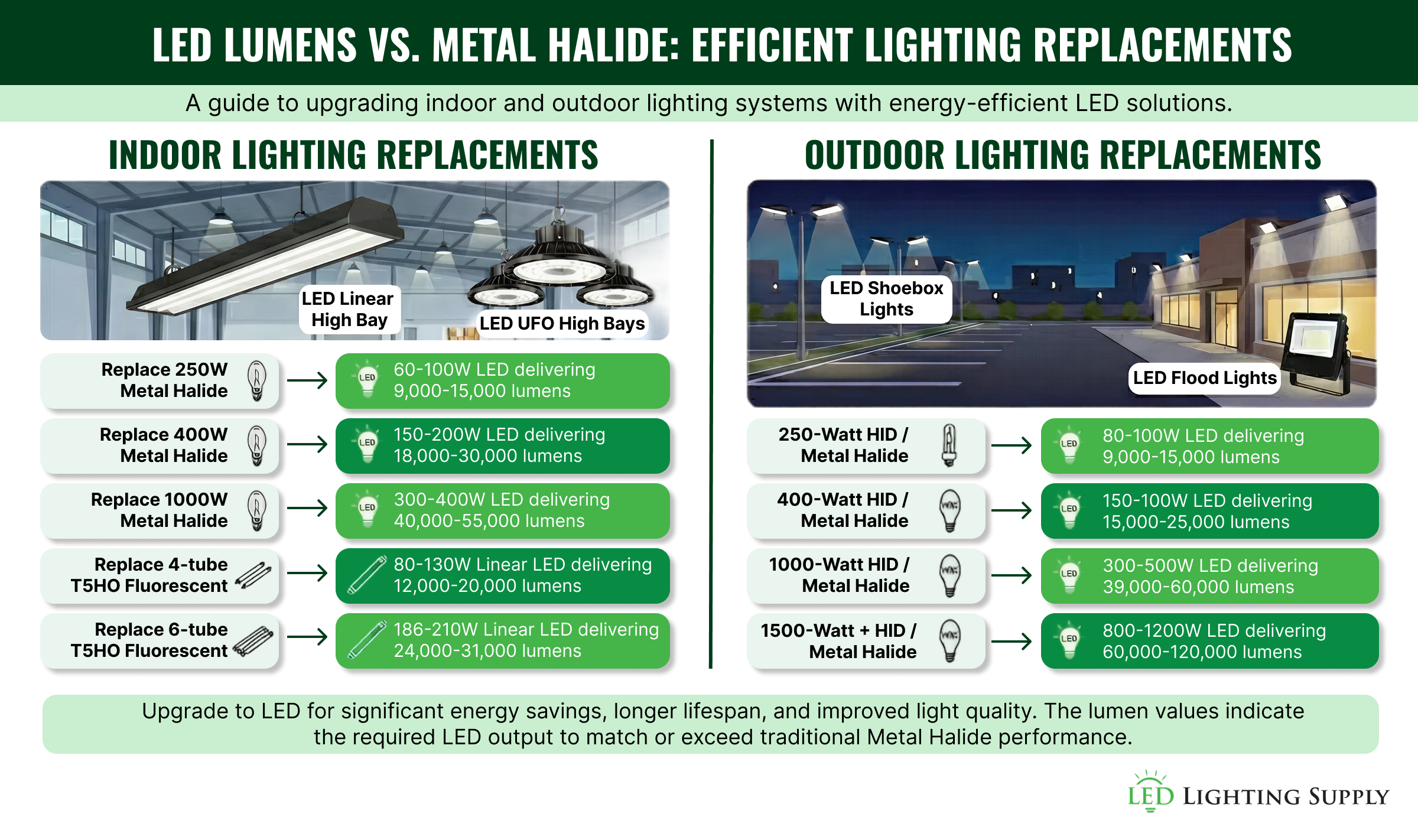
Many parking lot lighting projects involve replacing older metal halide, high-pressure sodium, or other HID fixtures with LED shoebox or area lights. LED parking lot lights can replace HID fixtures with lower wattage, instant-on performance, improved control compatibility, and reduced long-term maintenance. The right replacement depends on more than the old fixture wattage. Pole height, pole spacing, lumen output, optic distribution, color temperature, fixture tilt, and target foot-candle levels all affect the result.
The ranges below are general starting points. Final replacement should be based on delivered lumens, optic distribution, pole height, spacing, target foot-candle levels, voltage, mounting method, and photometric results.
| Existing HID Fixture | General LED Parking Lot Starting Point |
|---|---|
| 250W metal halide or HPS | Often replaced with approximately 10,000 to 15,000 LED lumens, depending on pole height, spacing, optic type, and target light levels. |
| 400W metal halide or HPS | Often replaced with approximately 15,000 to 30,000 LED lumens, depending on pole height, spacing, optic type, and target light levels. |
| 1000W metal halide or HPS | Often replaced with approximately 40,000 to 60,000+ LED lumens, depending on mounting height, site layout, fixture spacing, and project requirements. |
- Reduced maintenance: LED fixtures eliminate lamps and ballasts associated with many HID systems.
- Instant on and instant off: LED fixtures reach full output immediately, unlike many HID systems that require warm-up time.
- Control compatibility: Many LED parking lot fixtures support photocells, motion sensors, dimming, and scheduled operation.
- Directional light control: LED optics can help direct light toward parking areas, drive lanes, and pedestrian zones instead of wasting light where it is not needed.
- Light pollution control: Proper optics, back shields, fixture placement, and aiming can help reduce glare, uplight, and light trespass.
- Adjustable output: Selectable wattage and selectable color temperature options may be available depending on model and site needs.

We were asked to recommend a parking lot fixture to replace 400 Watt high-pressure sodium fixtures. The customer said our lights made the area brighter and safer.
Safety and Performance Certifications
Certifications and reliable product documentation help facility managers confirm that selected parking lot lights are suitable for the application before ordering. Selected fixtures may be available with UL Listed or ETL Listed safety approvals, and many models are also DLC Listed or DLC Premium qualified for energy efficiency and rebate eligibility.
Certifications should always be verified on the exact fixture datasheet and product listing before ordering. Utility rebate programs may require specific DLC listings, pre-approval, or project documentation before installation begins.
- UL or ETL listing: Available safety certifications vary by model and should be confirmed on the selected product specification.
- DLC or DLC Premium: Listed models may qualify for utility rebates where available. Rebate requirements vary by utility, region, and product listing.
- Outdoor ratings: Confirm whether the selected fixture is suitable for wet locations, dust, moisture, temperature exposure, and outdoor operating conditions.
- Surge protection: Confirm integrated surge protection and review whether additional site-level protection is needed.
- Controls compatibility: Confirm photocell, dimming, motion sensor, or wireless control compatibility before ordering.
- Dark-sky or local ordinance requirements: Confirm shielding, color temperature, light trespass, glare, and uplight requirements where they apply.


The Design Lights Consortium (DLC) Qualified Products List helps identify LED fixtures that meet performance criteria for energy efficiency, photometric performance, and reliability. Many utility rebate programs reference DLC listings, but requirements vary by program, region, and application.
Warranty and Warranty Support
Many LED parking lot lights include a 5-year warranty backed by US-based support. Warranty terms, coverage, and claim requirements vary by model, so confirm the selected product specification before ordering. Our support team can help with documentation, warranty questions, and replacement support if an issue occurs.
Common Parking Lot Lighting Mistakes and How to Avoid Them
Parking lot lighting problems usually come from poor planning, not the LED fixture itself. The most common issues involve wattage matching, wrong optics, missed mounting details, unverified voltage, and skipping the lighting layout before ordering.
- Using residential-grade fixtures for parking lot applications: Commercial lots need outdoor-rated fixtures with appropriate certifications, IP ratings, surge protection, and long-term support.
- Matching HID wattage directly to LED wattage: LED replacement should be based on lumens, optics, mounting height, pole spacing, and target foot-candle levels.
- Ordering the wrong mounting hardware: Slip fitter, yoke, arm, wall mount, and trunnion mounts are not interchangeable without confirming compatibility.
- Selecting the wrong optic: Type V optics may waste light or increase light trespass on perimeter poles, while Type III optics may be better for edge or building-mounted locations.
- Ignoring pole height and spacing: Fixture output should be matched to mounting height using photometric calculations for larger or safety-sensitive projects.
- Skipping pole and wind-load review: Fixture weight and EPA should be checked against pole condition, foundation condition, and local wind requirements.
- Choosing fixed-output fixtures when adjustment may be needed: Selectable wattage and selectable color temperature fixtures can provide more flexibility where appropriate.
- Forgetting to verify voltage: Many parking lots use 277V or 480V circuits, not standard 120V.
- Skipping photocell or control planning: Adding controls later may require additional wiring, service calls, or fixture changes.
- Ignoring surge protection: Outdoor pole-mounted fixtures are exposed to electrical disturbances, so surge protection should be reviewed before installation.
Request a free parking lot lighting plan and our Product Specialists can help match fixture output, pole spacing, optics, mounting hardware, voltage, controls, and light levels to your site.
This Content Was Professionally Reviewed By:

Dwayne Kula
Founder, President & CTO
LED Lighting Supply
- 17+ years in LED lighting systems
- B.Sc. in Software Engineering
- Specializes in industrial & commercial lighting
This content was reviewed for technical accuracy, real-world application, and clarity based on over 17 years of experience working with LED lighting systems.
LED Parking Lot Lights Frequently Asked Questions
What Are the Key Benefits of Using LED Parking Lot Lights
LED parking lot lights offer significant energy savings, reducing costs by 50% or more compared to traditional HID lighting. They provide instant-on capability, eliminating warm-up times and enhancing security. Additionally, they require minimal maintenance, with a lifespan exceeding 50,000 hours, reducing labor and material costs over time.
How Do I Choose the Right LED Parking Lot Light Fixture
Consider factors such as desired light levels, mounting height, and voltage requirements. Verify compatibility with existing poles and select the appropriate optics for your layout. Ensure the fixture supports controls integration like photocells or motion sensors for added energy efficiency.
What Mounting Options Are Available for LED Parking Lot Lights
LED parking lot lights offer various mounting options, including pole mounts, slip fitters, and yoke mounts. Choose based on your specific installation needs and ensure compatibility with existing structures to achieve optimal light distribution and coverage.
Why Is It Important to Verify Voltage Before Ordering LED Fixtures
Verifying voltage is crucial because parking lots may operate on 277V or 480V circuits, not standard 120V. Ensuring the correct voltage compatibility prevents installation issues and ensures the fixture operates efficiently.
What Certifications Should I Look for in LED Parking Lot Lights
Look for fixtures that are UL or ETL Listed for safety compliance and DLC Listed for energy efficiency. These certifications confirm that the fixtures meet industry standards and may qualify for utility rebates.
How Can I Ensure Proper Light Distribution in My Parking Lot
Use a photometric plan to determine the best optics and fixture spacing. Type III optics are ideal for perimeter mounting, while Type V suits interior poles. Proper planning ensures uniform illumination and minimizes light trespass.
What Are Common Mistakes to Avoid When Selecting LED Parking Lot Lights
Avoid using residential-grade fixtures, directly matching HID wattage to LED wattage, and ordering incorrect mounting hardware. Ensure voltage compatibility and consider adjustable fixtures for flexibility in light output and color temperature.