Parking Lot LED Solar Lights
- Off-grid lighting option for remote or overflow parking areas
- Integrated controls with dimming and motion options by model
- USA-based product selection and warranty support available


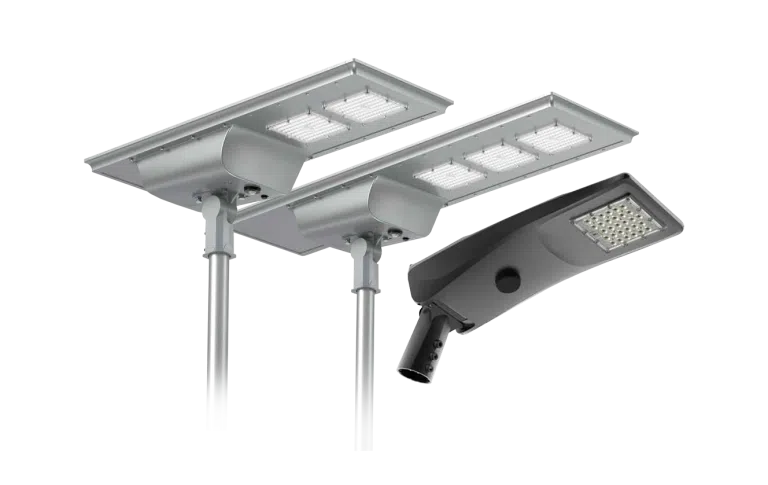
Our Solar Parking Lot Lights include complete off-grid systems with LED area lights, solar panels, batteries, charge controllers, poles, and lighting controls. Available models vary by fixture output, solar panel size, battery capacity, dimming schedules, motion settings, pole height, and mounting method.
These products are used in remote parking lots, overflow lots, private roads, drive lanes, entrances, pedestrian walkways, storage yards, perimeter areas, parks, campuses, gates, and service access areas.

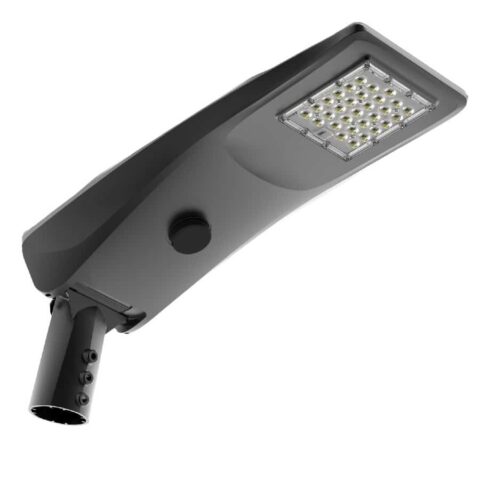
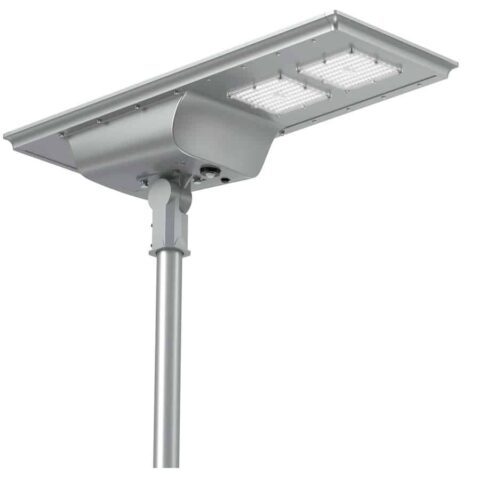
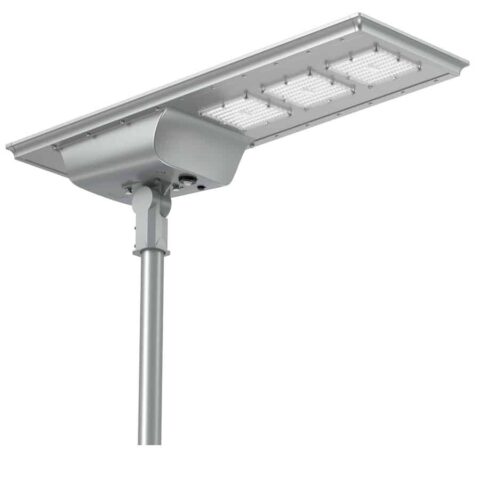
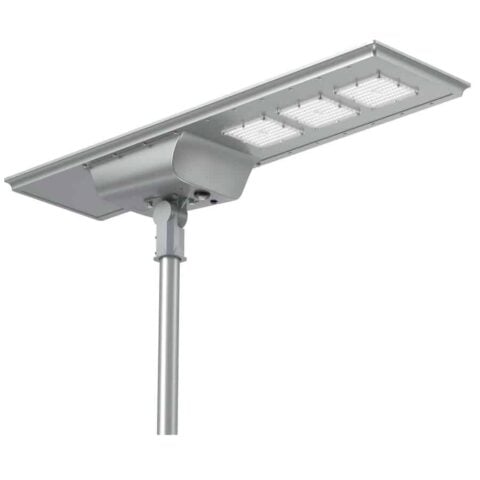
Solar LED Parking Lot Lights for Commercial Parking Areas
Solar LED parking lot lights are off-grid lighting systems that combine an LED area light, solar panel, battery, charge controller, pole, and lighting controls. During the day, the solar panel charges the battery. At night, the stored energy powers the LED fixture according to the selected control profile, dimming schedule, or motion setting.
Commercial solar parking lot lights are best suited for sites where trenching, conduit, grid extension, or utility coordination would be expensive or impractical. Before choosing solar, confirm that the site has adequate year-round sun exposure, practical pole locations, runtime and light-level needs the panel and battery system can support, and a control profile that fits the application. They can be a good fit for remote parking lots, overflow lots, private roads, storage yards, perimeter areas, parks, campuses, and facilities that want lighting without a new grid connection. Grid-tied lighting may be a better option where power is already available, shading is heavy, or high output is needed all night.
Selection and Installation Note: Product specifications, wattage, lumen output, solar panel size, battery capacity, battery chemistry, charge controller, runtime, autonomy, dimming profile, motion sensor behavior, pole height, mounting method, wind rating, IP rating, operating temperature, certifications, and warranty coverage vary by model. Confirm the selected product specification before ordering. For solar parking lot lights, remote parking areas, commercial lots, security areas, winter-climate installations, windy sites, or code-sensitive applications, verify requirements with the facility team, local inspector, project specifier, solar lighting specialist, pole/structural professional where needed, or a licensed electrical professional.
Recommended Foot-Candles for Solar Parking Lot Lighting
Solar parking lot light levels vary by site use, pole height, fixture output, sun exposure, battery runtime, dimming schedule, security needs, pedestrian routes, and local requirements. The ranges below are general planning values. Final fixture selection should also consider solar exposure, shading, battery autonomy, winter daylight, fixture controls, and the selected product specifications.
When Solar Parking Lot Lights Make Sense
Solar parking lot lights are a strong option when the cost or difficulty of bringing power to the site is high. They are most useful when the project has good sun exposure, practical pole locations, appropriate runtime needs, and a lighting level that can be supported by the solar panel and battery system.
| Good Solar Fit | Why It Works |
|---|---|
| Remote parking lots | Solar can avoid long trenching runs, utility extension, conduit, and electrical service upgrades. |
| Overflow parking | Useful where lighting is needed seasonally, during events, or in lower-traffic lots. |
| Campus and park lots | Can provide standalone lighting where grid power is limited or where trenching would disrupt landscaping or paved areas. |
| Private roads and access areas | Solar lights can support visibility for drive lanes, gates, and access points away from buildings. |
| Security-sensitive areas | Motion-based or scheduled dimming can help provide light where cameras, gates, or equipment areas need nighttime visibility. |
When Grid-Tied LED Parking Lot Lights May Be Better
Solar lighting is not always the best solution. Grid-tied LED parking lot lights may be better when the site needs high output all night, has heavy shading, has limited panel orientation, has very high security-lighting requirements, or already has usable electrical infrastructure.
| Challenge | Why It Matters |
|---|---|
| Heavy shade | Trees, buildings, signs, hills, or nearby structures can reduce solar charging and shorten runtime. |
| High all-night output | Higher light levels for long nightly runtimes require larger panels and batteries, increasing cost and pole loading. |
| Northern or winter-heavy climates | Short winter days, snow cover, and cloudy periods can affect charging and autonomy. |
| Existing power is nearby | If electrical service, conduit, and poles already exist, grid-tied LED may be more cost-effective. |
| Theft or vandalism risk | Solar panels and batteries may need additional placement, security, or tamper-resistant design considerations. |
How Solar Parking Lot Lights Work
A commercial solar parking lot light uses a photovoltaic panel to charge a battery during the day. The battery powers the LED fixture at night. The controller manages charging, dusk-to-dawn operation, dimming schedules, motion response, and low-battery protection depending on the model.
Runtime depends on solar exposure, panel size, battery capacity, fixture wattage, control profile, climate, temperature, and how many cloudy days the system is designed to support. A fixture that performs well in one region may need a larger panel or battery in another region.
How to Choose Solar LED Parking Lot Lights
Solar parking lot lighting should be selected as a complete system, not just a fixture. The pole, solar panel, battery, fixture, controller, runtime, dimming profile, and site exposure all need to work together.
| Selection Factor | What to Confirm |
|---|---|
| Sun exposure | Confirm whether the panel will receive enough direct sun throughout the year. Review trees, buildings, rooflines, signs, and seasonal shadows. |
| Runtime requirement | Confirm whether the site needs dusk-to-dawn light, reduced output after hours, motion-based boost, or a fixed nightly schedule. |
| Battery autonomy | Confirm how many cloudy or low-sun days the system is expected to support before output is reduced. |
| Pole height and spacing | Confirm mounting height, fixture output, pole spacing, wind exposure, and whether the solar panel adds wind load to the pole. Use fixture-specific photometric data to evaluate coverage and illuminance. |
| Fixture output | Confirm lumen output, wattage, optics, distribution pattern, and whether the light level can be sustained with the selected battery and controls. |
| Controls profile | Many solar systems use dimming or motion profiles to conserve battery energy. Confirm the default schedule and whether it fits the site. |
| Climate | Cold temperatures, heat, snow, coastal exposure, dust, and storms can affect battery performance, panel cleaning, fixture housing, and pole selection. |
| Security and access | Confirm tamper resistance, battery location, panel placement, pole access, and maintenance access if theft or vandalism is a concern. |
Solar Parking Lot Lighting by Area
Different parts of a parking site may need different light levels. Drive lanes, pedestrian paths, entrances, remote lots, and security-sensitive areas should not all be treated the same.
| Parking Area | Lighting Priorities |
|---|---|
| General parking areas | Visibility for parked vehicles, pedestrians, stalls, aisles, and circulation without oversizing the solar system. |
| Drive lanes | Consistent light for vehicle movement, turns, crossings, and pedestrian visibility. |
| Entrances and exits | Higher visibility for gates, signage, pedestrians, traffic transitions, and after-hours access. |
| Pedestrian walkways | Comfortable light for sidewalks, paths, entrances, and routes between parking and buildings. |
| Security-sensitive areas | Lighting for cameras, gates, equipment, storage zones, and after-hours movement. Confirm the control schedule supports security needs. |
| Remote and overflow lots | Solar is often a strong fit where trenching or utility extension would be costly. Confirm seasonal use, runtime, and maintenance access. |
| Loading and service access | Visibility for trucks, service vehicles, doors, equipment, and staff movement. |
For coordinated lighting in adjacent paths, gates, and service areas, commercial solar area lighting is also available in configurations suited to different outdoor applications.
Solar vs. Grid-Tied LED Parking Lot Lights: Buyer Considerations
The choice between solar and grid-tied lighting is not only about whether utility power is available. Compare the full installed system, expected lighting schedule, site conditions, and long-term maintenance needs before selecting an approach.
| Decision Factor | What to Consider |
|---|---|
| Upfront site work | Solar may reduce electrical trenching and utility-extension work, but still requires appropriate pole foundations, installation access, and structural review. Grid-tied systems may be economical where service and conduit are already in place. |
| Nightly lighting profile | Solar systems are commonly designed around scheduled dimming or motion-based output to manage stored energy. Grid-tied systems can generally support a more consistent all-night output when properly designed. |
| Solar resource | Solar performance depends on panel orientation, direct sunlight, seasonal weather, snow cover, and shading. Grid-tied fixtures are not dependent on daily solar charging. |
| Maintenance planning | Solar systems require planning for battery service or replacement, panel cleaning, vegetation control, and controller inspection. Grid-tied systems do not use on-pole solar batteries but still require normal fixture, pole, and electrical maintenance. |
| Site expansion | Solar can be useful for adding standalone lighting in distant areas without extending circuits. Grid-tied systems may be easier to integrate with centralized controls where electrical infrastructure is available. |
| Mixed-site strategy | A hybrid approach can be practical: grid-tied lighting for high-demand areas near buildings and solar lighting for remote, overflow, perimeter, or lower-traffic locations. |
Cost and Maintenance Considerations
Solar parking lot lights typically cost more per fixture than grid-tied LED fixtures because the system includes a solar panel, battery, controller, pole considerations, and integrated controls. However, solar may reduce or avoid trenching, conduit, utility connection, and electrical infrastructure costs depending on the site.
Long-term maintenance should include panel cleaning, battery replacement planning, controller review, fixture inspection, pole inspection, and vegetation or snow management around the solar panel. Battery life, replacement schedule, and warranty coverage vary by model and environment.
Information to Gather Before Ordering Solar Parking Lot Lights
Providing complete site information early helps match the solar lighting system to the expected runtime, light levels, pole configuration, and local conditions. It also helps identify when a grid-tied or mixed-site approach may be more practical.
- Site plan or layout: Include parking stalls, drive lanes, pedestrian routes, entrances, gates, buildings, existing poles, and proposed fixture locations.
- Photos and sun-obstruction information: Identify nearby trees, buildings, signs, hills, rooflines, and other features that may shade panels at different times of year.
- Operating schedule: State whether the site needs dusk-to-dawn lighting, scheduled dimming, motion-based boost, or higher output during specific hours.
- Lighting priorities: Identify areas needing stronger visibility, such as entrances, pedestrian crossings, camera locations, gates, loading access, or equipment areas.
- Project location: City, state, and site conditions help evaluate seasonal daylight, weather exposure, snow, temperature, and wind considerations.
- Pole and foundation information: For existing poles, provide manufacturer data and current condition information where available. For new poles, confirm that the complete pole, solar assembly, fixtures, mounting geometry, wind criteria, and foundation or embedment are reviewed by the appropriate qualified professional.
- Maintenance and security access: Identify panel-cleaning access, battery service access, vegetation management needs, and any theft or vandalism concerns.
Solar Parking Lot Light Certifications and Warranty Support
Safety listings, DLC qualification, and warranty coverage vary by product. Selected solar parking lot light models may carry a UL or ETL safety listing, and selected models may be DLC or DLC Premium qualified where applicable. DLC qualification addresses energy-efficiency and performance criteria; it is not an electrical safety certification. Verify the exact product listing, DLC status, and warranty before ordering.
Before ordering, confirm the selected product's certifications, DLC status, solar panel size, battery capacity, charge controller, fixture wattage, lumen output, optics, color temperature, controls profile, environmental rating, mounting method, pole compatibility, and whether the fixture is right for the parking lot layout and site conditions.
Contact us about solar parking lot lights, and our Product Specialists can help review parking lot size, sun exposure, pole height, runtime, battery autonomy, controls, security needs, and product specifications.
Parking Lot LED Solar Lights FAQs
When Do Solar Parking Lot Lights Make Sense?
Solar parking lot lights are a strong option when trenching, utility extension, conduit, or service upgrades would be costly or impractical and the site has good solar exposure. They can fit remote lots, overflow lots, private roads, storage yards, perimeter areas, parks, campuses, and other locations without a practical new grid connection.
When May Grid-Tied LED Parking Lot Lights Be A Better Choice?
Grid-tied LED parking lot lights may be better when power is already available, high output is needed all night, or the site has heavy shading, winter solar limits, or very high security-lighting requirements. Existing electrical service, conduit, and poles can also make grid-tied lighting more cost-effective.
What Should Be Confirmed Before Choosing A Solar Parking Lot Lighting System?
Confirm sun exposure, runtime needs, battery autonomy, pole height and spacing, fixture output, controls profile, climate, and security or access considerations. Solar parking lot lighting should be selected as a complete system in which the pole, panel, battery, fixture, controller, runtime, dimming profile, and site exposure work together.
How Do Shade And Winter Conditions Affect Solar Parking Lot Lights?
Shade and winter conditions can reduce charging and affect battery autonomy and runtime. Trees, buildings, signs, hills, nearby structures, short winter days, snow cover, cloudy periods, and cold temperatures should be considered during planning.
Can Solar Parking Lot Lights Provide Full Output All Night?
Not all solar parking lot light systems provide full output all night, because many use dimming or motion profiles to preserve battery power. Confirm the default control schedule and whether the selected system's runtime, battery capacity, panel size, and output fit site needs.
What Maintenance Should Be Planned For Solar Parking Lot Lights?
Long-term solar parking lot light maintenance should include panel cleaning, battery replacement planning, controller review, fixture inspection, pole inspection, and vegetation or snow management around the solar panel. Battery life, replacement schedule, and warranty coverage vary by model and environment.
What Should Be Verified Before Ordering Solar Parking Lot Lights?
Before ordering, confirm the selected product's certifications, DLC status, voltage, solar panel size, battery capacity, charge controller, fixture wattage, lumen output, optics, color temperature, controls profile, environmental rating, mounting method, pole compatibility, and fit for the parking lot layout and site conditions. Product specifications and warranty coverage vary by model.