


Commercial Outdoor LED Lighting
- Fixture options for parking lots, walkways, and building exteriors
- Selection support for mounting height, distribution, and controls
- DLC-listed options available for utility rebate eligibility



Get Your Custom Lighting Plan With Product Recommendations
- Tell us where you're installing commercial outdoor LED lighting, such as a parking lot, building exterior, or walkway, and a product specialist can help you decide which fixtures to use, how many you need, and where to place them.


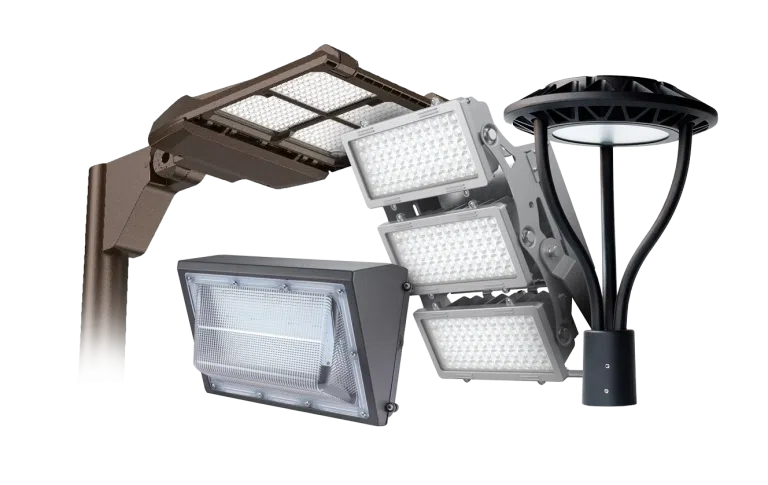
Our Commercial Outdoor LED Lighting includes shoebox lights, area lights, wall packs, canopy lights, flood lights, street lights, sports lights, post top lights, bollards, sign lights, and dock lights. Available models vary by output, voltage, color temperature, optics, controls, beam angle, and mounting configuration.
These fixtures are commonly used for commercial buildings, parking lots, walkways, drive lanes, entrances, loading areas, building exteriors, signs, security perimeters, public spaces, sports fields, and recreation areas.
LED Outdoor Lighting for Commercial Buildings, Parking Areas, Walkways, and Exterior Spaces
LED outdoor lights are used around commercial buildings, parking lots, walkways, drive lanes, entrances, loading areas, building exteriors, signs, security perimeters, public spaces, sports and recreation areas, and other exterior applications. The right fixture depends on the area being lit, mounting height, pole spacing, beam pattern, light distribution, glare control, voltage, controls, and local requirements.
Start by matching the fixture family to the area being lit, then select output, distribution, mounting, and controls for the site. A parking lot, wall-mounted perimeter, building entrance, sign, walkway, sports field, loading dock, and private drive all need different fixture types and light levels. The goal is to place light where it improves visibility without creating unnecessary glare, light trespass, sky glow, or wasted energy.
Selection and Installation Note: Product specifications, wattage, lumen output, optics, distribution pattern, beam angle, color temperature, voltage, dimming, controls, mounting method, certifications, environmental rating, surge protection, and warranty coverage vary by model. Confirm the selected product specification before ordering. For outdoor lighting, parking lots, roadway areas, pole-mounted fixtures, wall-mounted fixtures, sports lighting, security lighting, electrical upgrades, or code-sensitive exterior applications, verify requirements with your facility team, project specifier, local inspector, utility provider, or a licensed electrical professional.
Outdoor LED Lighting by Application
The best outdoor fixture depends on what the light needs to do. A wall pack used beside a service door is different from a shoebox fixture used in a parking lot, a flood light used for signage, or a sports light used for a field or court.
| Outdoor Area | Common Fixture Options |
|---|---|
| Parking lots and large paved areas | LED shoebox lights, area lights, or pole-mounted fixtures selected by mounting height, distribution pattern, pole spacing, and target light levels. |
| Building exteriors and security perimeters | LED wall packs, full cutoff wall packs, forward throw wall packs, or flood lights selected for wall mounting, glare control, and coverage area. |
| Gas station canopies and covered outdoor areas | LED canopy lights selected by mounting height, ceiling type, fixture spacing, wet-location rating, and light level target. |
| Floodlighting, signs, facades, and accent areas | LED flood lights, wall washers, or sign lights selected by beam angle, aiming, distance, and spill-light control. |
| Private roads and drive lanes | LED street lights, cobra heads, or area lights using roadway-style optics when needed. |
| Sports fields and courts | LED sports lights selected for sport, pole height, aiming, uniformity, glare, spill control, and level of play. |
| Walkways, plazas, and public spaces | Post top lights, bollards, wall packs, or area lights selected for pedestrian comfort, wayfinding, glare, and light trespass. |
| Loading docks and receiving areas | Wall packs, flood lights, dock lights, or pole lights selected for doors, trucks, forklifts, wet-location exposure, and after-hours work. |
Kroger’s Grocery Store Parking Lot Upgrades to LED Area Lighting Case Study
The Backstory:
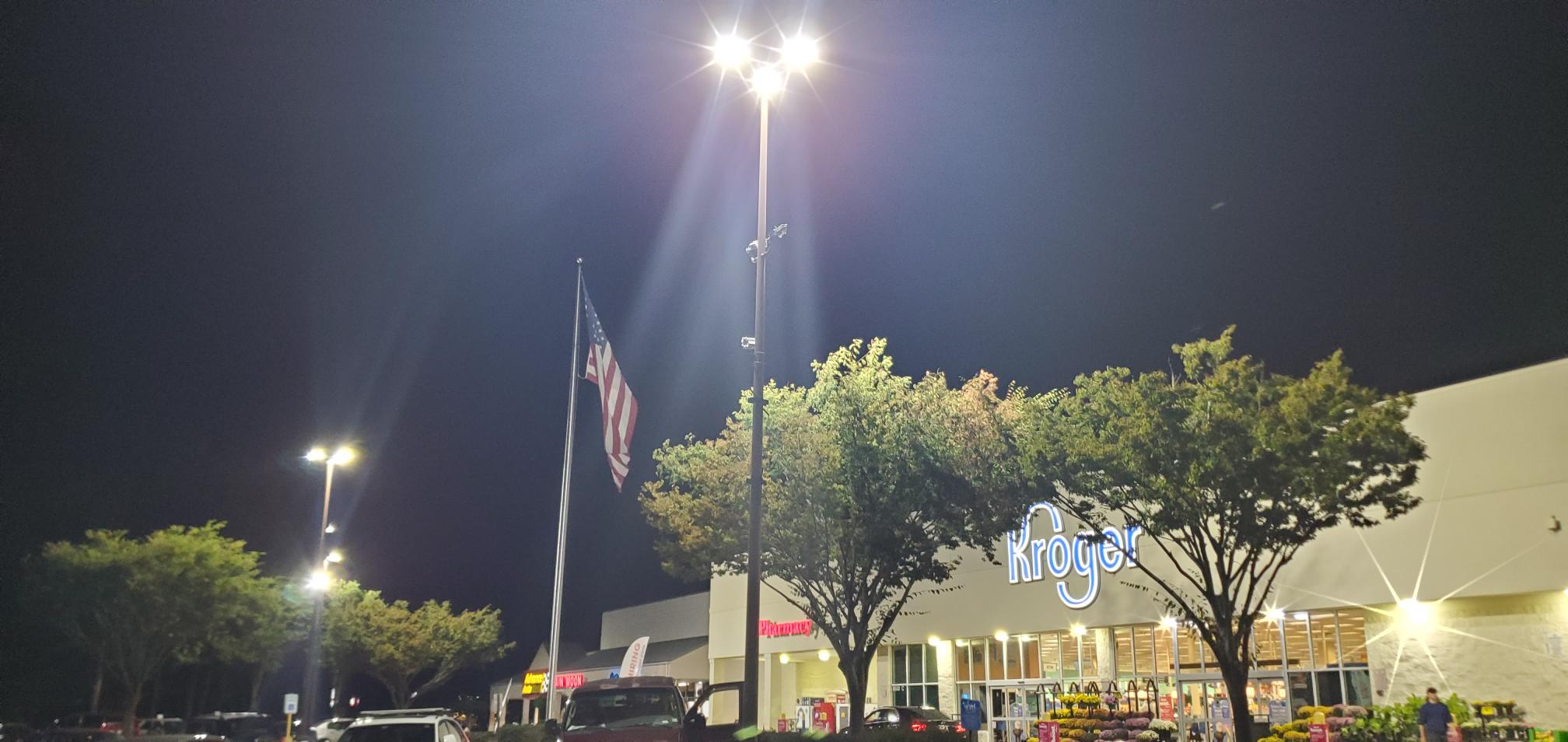
A Kroger grocery store in Maryville, Tennessee, struggled to consistently illuminate its parking lot due to the aging 1,000-watt metal-halide lights it used. The general contractor leading the job, Pat Walsh, President at Walsh Electric, reached out to LED Lighting Supply to assist in selecting the ideal light fixture replacement solution.
Pat previously worked with our Product Specialist, Jeff Cesenaro, on numerous lighting projects. Given their pre-existing relationship, there was no question which company could help get the job done.
The Challenge of Kroger’s Aging Metal Halide Lights:
A parking lot is one of the most safety-sensitive spaces a retailer manages. Consistent parking lot lighting is essential for a high-traffic location like Kroger, where customer safety and visibility directly impact the shopping experience. The metal halide fixtures on site couldn't deliver the consistency needed and were becoming an ongoing cost. Additionally, the building exterior needed perimeter lighting that extends light coverage to the parking area for safety.
Any solution had to be consistent with the existing pole infrastructure to avoid the cost and disruption aspects of new construction. The contractor was seeking a consultative partner to supply the lights and help streamline the replacement project, and they found that with LED Lighting Supply.
Lighting plan metrics:
Boston Logan Airport’s Enterprise Rent-A-Car Lanes Upgrade To High Bay Lights Case STudy
The Backstory:
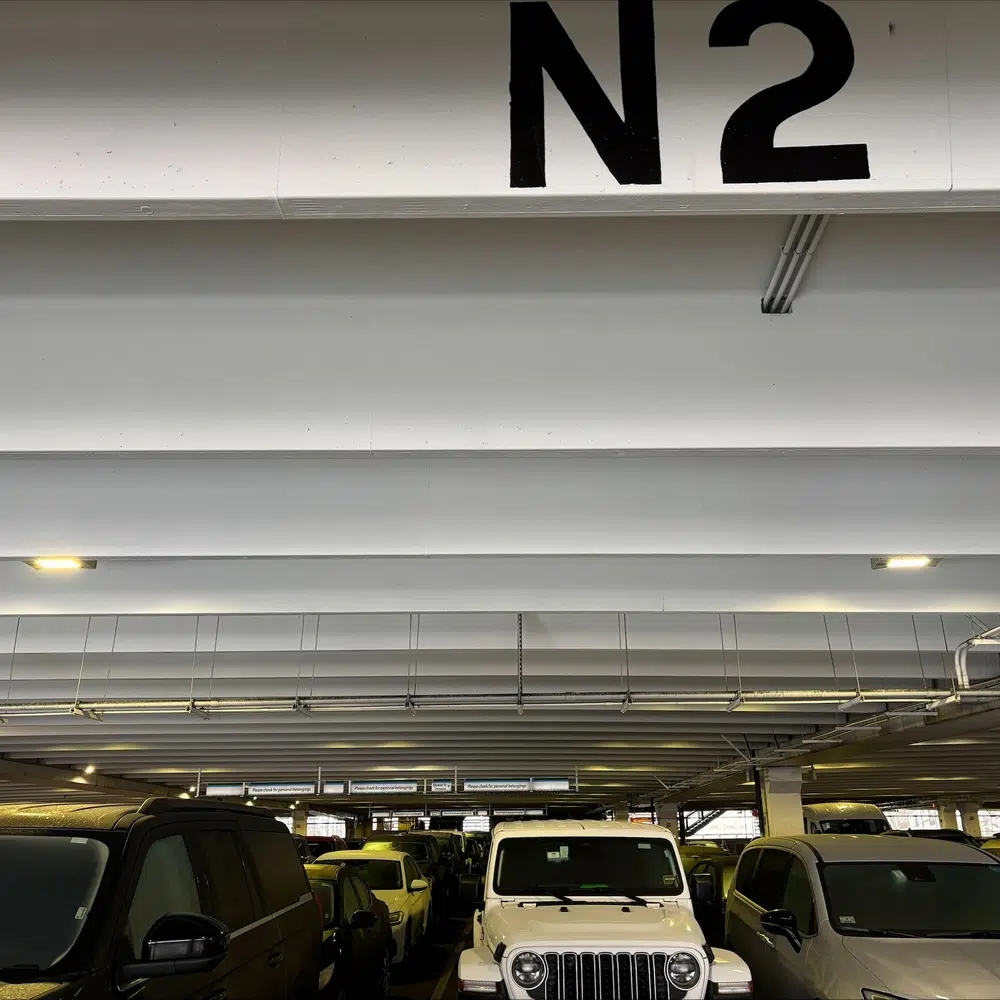
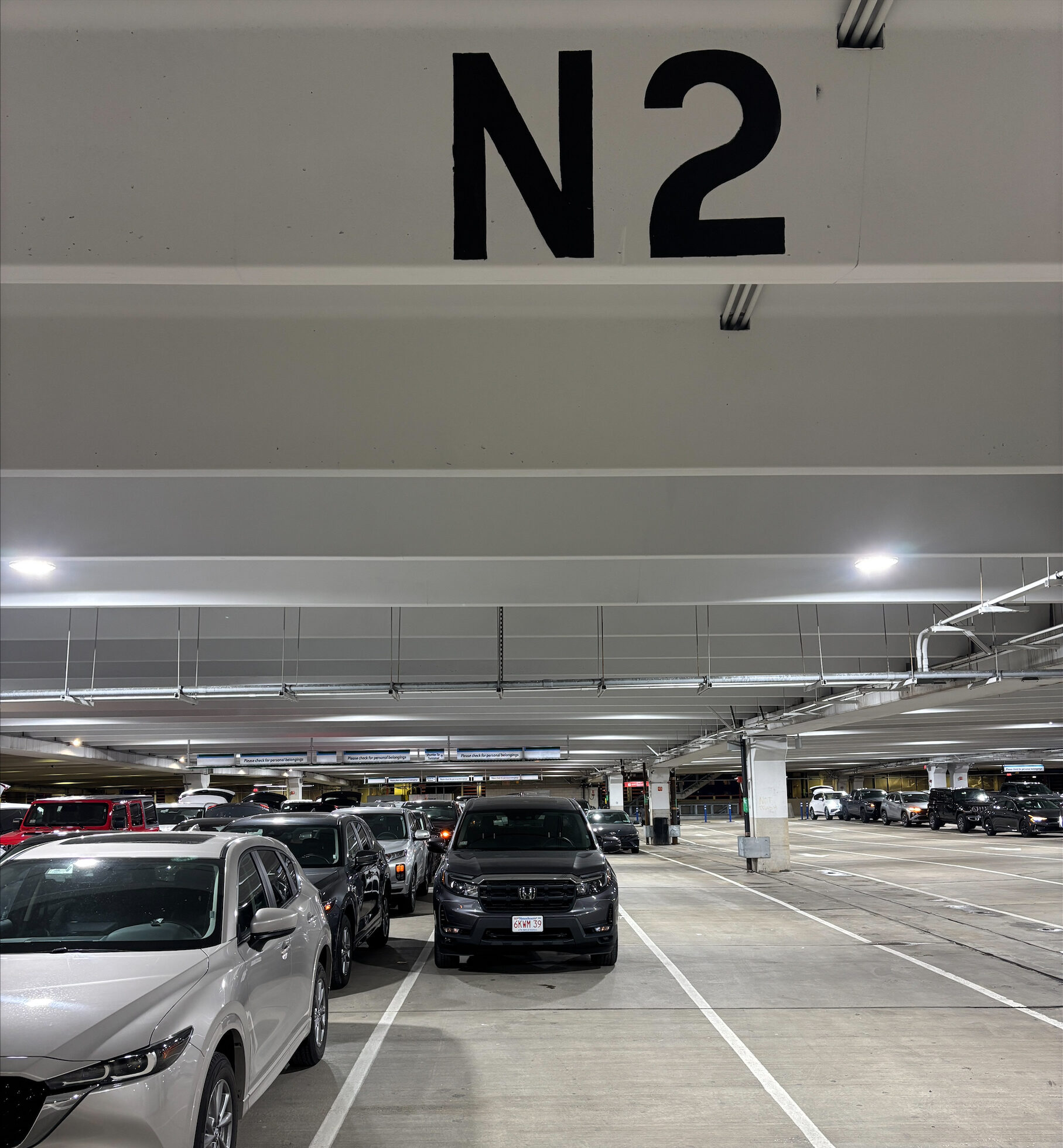
Enterprise Rent-a-Car, located at Logan Airport in Boston, Massachusetts, reached out to LED Lighting Supply seeking assistance with a lighting upgrade for its parking garage rental car return lanes across two areas. The sections of the garage where the return lanes are located were operating with aged canopy light fixtures, delivering low brightness across the space. Inconsistent, dim light levels create dark spots, among other security threats, in a high-traffic parking garage.
The Customer's Challenge:
The areas lacked overall brightness across all return lanes, making it difficult to support accurate vehicle inspections and ensure safety for both employees and customers. The return lane areas fell below recommended illumination levels for parking structures, hardly reaching 5 foot-candles (fc) with the existing lighting system. Depending on the size, the recommended numerical calculation of light levels in a parking garage is typically between 5 and 10 fc.
Lighting Plan We Created for the Customer
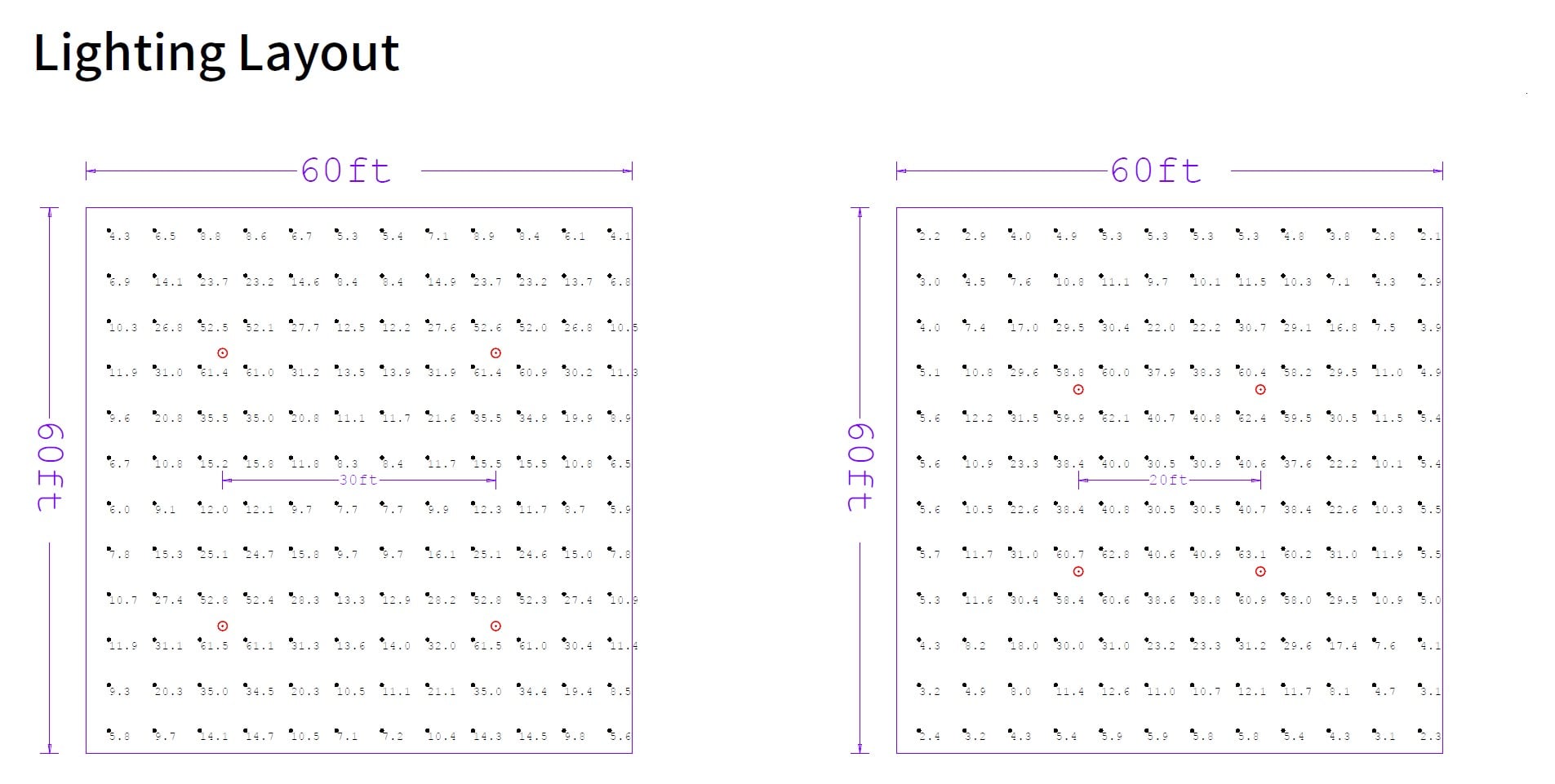
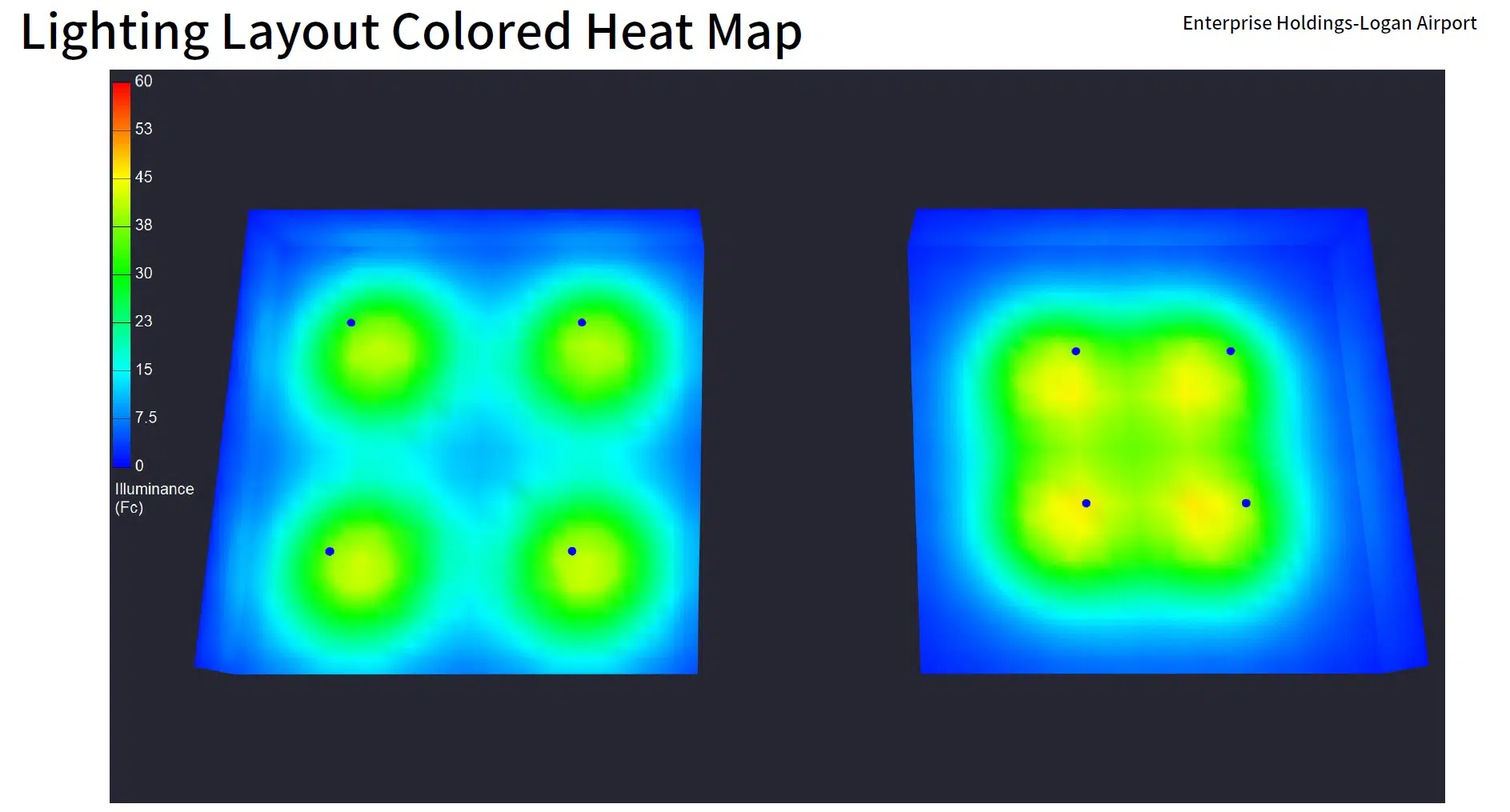
Lighting Plan Metrics:
- Mounting height: 12 ft
- Fixture Used: LLS-HB-200A-CC-B
- FC Achieved: 15 FC average
- Uniformity (Avg/Min): 3.71 FC
- Product(s) Used: LLS-HB-200A-CC-[C]
Recommended Foot-Candles for Outdoor Lighting
Outdoor light levels vary by application, traffic, pedestrian activity, security needs, mounting height, fixture distribution, uniformity, glare, light trespass, and local requirements. The ranges below are broad planning values for common outdoor areas. For application-specific projects such as parking lots, sports fields, roadway lighting, hazardous areas, or security-sensitive sites, use the more specific guidance for that application when available.

When an Outdoor Lighting Plan Helps
A lighting plan is most useful when the project involves parking lots, sports fields, large exterior sites, new poles, pole spacing changes, safety-sensitive areas, strict uniformity targets, spill-light concerns, or local approval requirements. Smaller fixture replacements, wall packs, sign lights, and simple entrance lighting may only need product selection support.
If a lighting plan is needed, the key inputs are site dimensions, mounting height, pole locations, fixture quantity, target light levels, surrounding buildings, glare concerns, and the application being lit. For parent-category outdoor lighting, start with the right fixture family first, then decide whether a formal layout is necessary.
Benefits of LED Outdoor Lighting
LED outdoor lighting can improve visibility, reduce maintenance, and give facilities better control over exterior lighting when fixtures are selected for the application, mounting height, optics, and site conditions.
| Benefit | Why It Matters Outdoors |
|---|---|
| Improved visibility | Properly selected fixtures can improve visibility around parking areas, entrances, walkways, building exteriors, loading areas, and security perimeters. |
| Energy efficiency | LED fixtures can reduce energy use compared with older HID systems, with actual savings depending on fixture wattage, operating hours, controls, and utility rates. |
| Reduced maintenance | LED systems eliminate routine lamp and ballast replacement common with metal halide and high-pressure sodium lighting. |
| Instant-on operation | LED fixtures reach usable output quickly without the warm-up delay associated with many HID systems. |
| Controls compatibility | Many outdoor LED fixtures can support photocells, motion sensors, dimming, schedules, or networked controls depending on model and driver selection. |
| Better optical control | Distribution patterns, shielding, and aiming can help reduce glare, light trespass, and wasted light. |
| Application-specific fixture choices | Parking lot lights, wall packs, flood lights, canopy lights, street lights, and sports lights can each be matched to the area they serve. |
Common Outdoor Lighting Mistakes
- Choosing by wattage alone: Wattage does not confirm light output, distribution, uniformity, glare control, or fixture spacing.
- Using the wrong light distribution: Parking lots, roads, wall-mounted areas, signs, and sports fields need different optics and beam patterns.
- Ignoring mounting height: Fixture output and distribution should match pole height, wall height, setback, and coverage area.
- Overlooking glare and light trespass: Outdoor fixtures should be aimed and shielded to reduce glare toward drivers, pedestrians, neighbors, windows, and roadways.
- Using indoor fixtures outside: Outdoor projects require fixtures with appropriate wet-location ratings, IP ratings, operating temperature ranges, and environmental protection.
- Forgetting surge protection: Pole-mounted and exterior fixtures may need surge protection depending on site conditions and local electrical exposure.
- Mixing color temperatures: Inconsistent CCT across a property can make the site look uneven and may affect visibility or camera appearance.
- Skipping controls review: Photocells, motion sensors, timers, dimming, and networked controls should be confirmed for compatibility with the selected fixture.
- Assuming one fixture type fits every outdoor area: A building entrance, parking lot, loading dock, private drive, sports court, and sign face usually need different fixture choices.
LED Outdoor Lighting Certifications, Rebates, and Warranty Support
LED outdoor lights from LED Lighting Supply carry a safety listing such as UL, ETL, or CSA, depending on product. Many models are DLC or DLC Premium listed for utility rebate support where available. Rebate requirements vary by utility, region, and product listing, so confirm eligibility on the selected product specification before ordering.
Most LED outdoor lights include a 5-year warranty unless otherwise specified, with USA-based warranty support. Before purchase, confirm rebate eligibility, voltage, controls compatibility, mounting method, wet-location or environmental rating, surge protection, and whether the fixture is right for the site layout and surrounding conditions.
Commercial Outdoor LED Lighting FAQs
How Should I Choose Commercial Outdoor LED Lighting?
Choose commercial outdoor LED lighting based on the area being lit, mounting height, pole spacing, beam pattern, light distribution, glare control, voltage, controls, and local requirements. A parking lot, entrance, sign, walkway, loading area, and sports field can require different fixture types and light levels.
Why Is Wattage Alone Not Enough To Select An Outdoor Fixture?
Wattage alone does not confirm light output, distribution, uniformity, glare control, or fixture spacing. Fixture output and distribution should also match the mounting height, setback, and coverage area.
Which Outdoor Fixture Types Are Used For Different Areas?
Common fixture choices include shoebox lights or area lights for parking lots, wall packs or flood lights for building exteriors and security perimeters, canopy lights for covered outdoor areas, and flood lights or sign lights for signs and facades. Street lights, post top lights, bollards, dock lights, and sports lights are also used for their respective exterior applications.
When Does A Commercial Outdoor Lighting Project Need A Lighting Plan?
A lighting plan is most useful for parking lots, sports fields, large exterior sites, new poles, pole spacing changes, safety-sensitive areas, strict uniformity targets, spill-light concerns, or local approval requirements. Smaller fixture replacements, wall packs, sign lights, and simple entrance lighting may only need product selection support.
What Information Is Needed For An Outdoor Lighting Plan?
An outdoor lighting plan uses site dimensions, mounting height, pole locations, fixture quantity, target light levels, surrounding buildings, glare concerns, and the application being lit. For general outdoor lighting projects, start by selecting the right fixture family before deciding whether a formal layout is necessary.
How Can Outdoor Lighting Help Reduce Glare And Light Trespass?
Distribution patterns, shielding, and aiming can help reduce glare, light trespass, and wasted light. Outdoor fixtures should be aimed and shielded to reduce glare toward drivers, pedestrians, neighbors, windows, and roadways.
What Outdoor Fixture Details Should Be Confirmed Before Ordering?
Confirm the selected product specification for wattage, lumen output, optics, distribution pattern, beam angle, color temperature, voltage, dimming, controls, mounting method, certifications, environmental rating, surge protection, and warranty coverage. These details vary by model.
Are Utility Rebates Available For Commercial Outdoor LED Lights?
Many outdoor LED lighting models are DLC or DLC Premium listed for utility rebate support where available. Rebate requirements vary by utility, region, and product listing, so confirm eligibility on the selected product specification before ordering.
