LED Paint Booth Lighting
- Explosion proof options available for classified spray booth areas
- High-CRI fixtures support color matching and finish inspection
- Lighting plans help evaluate fixture placement and coverage


Get Your Custom Lighting Plan With Product Recommendations
- Layout designed around spray-booth dimensions with uniform coverage and reduced shadow zones
- Fixture selection matched to booth-rated enclosures, appropriate color temperature, and high CRI for accurate color matching
- LED options can reduce energy use and extend maintenance intervals compared with legacy fluorescent booth lighting


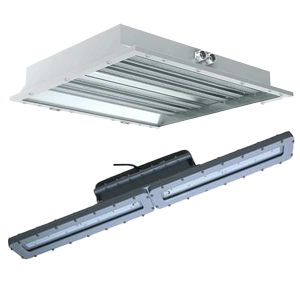
Our LED Paint Booth Lights include explosion proof linear fixtures, panels, high bays, and task or inspection lighting for spray and finishing areas. Available models vary by hazardous-location classification, voltage, color temperature, CRI, optics, controls, lens material, and mounting configuration.
These fixtures are commonly used in spray booths, finishing booths, prep areas, paint mix rooms, inspection zones, automotive booths, truck booths, equipment booths, aircraft finishing areas, and industrial production finishing spaces.


What Are LED Paint Booth Lights?
LED paint booth lights are lighting fixtures used in spray booths, finishing booths, prep areas, paint mix rooms, and inspection zones where visibility, color quality, fixture placement, and safety ratings matter. Because paint booths may contain flammable vapors, solvents, overspray, and volatile organic compounds, the selected fixture and installation must match the documented area classification and applicable requirements.
Paint booths and related spaces may require hazardous-location LED lighting where classified conditions are present. Explosionproof construction is one protection method; the required fixture type depends on the established Class, Division or Zone, Group, temperature code, ambient conditions, and installation location. Standard commercial fixtures, standard vapor-tight fixtures, or general industrial lights are not substitutes where a hazardous-location listing is required.
Start by confirming the booth classification and fixture location. Then select fixtures based on booth size, required foot-candle levels, color rendering, mounting method, optics, lens material, cleaning access, voltage, controls, and airflow. A fixture-specific photometric lighting layout is recommended before ordering because poor fixture placement can create shadows, glare, hot spots, color-matching issues, or inspection problems.

Selection and Installation Note: Product specifications, hazardous-location ratings, voltage, controls, certifications, mounting options, lens materials, color temperature, CRI, IP rating, and warranty coverage vary by model. Confirm the selected product specification before ordering. For paint booths, spray finishing areas, paint mix rooms, solvent handling areas, hazardous-location applications, or safety-critical projects, verify the area classification and installation requirements with the AHJ, a licensed electrical professional, or other qualified project authority.
When Hazardous-Location Paint Booth Lighting Is Required
Paint booth lighting should be reviewed as a hazardous-location application whenever flammable vapors, solvents, coatings, or combustible materials may be present. The correct fixture classification depends on the booth design, spray process, ventilation, location of the fixture, and applicable electrical and fire-code requirements.
| Use Properly Rated Paint Booth Fixtures When | Do Not Use Standard Fixtures When |
|---|---|
| Spray painting or finishing creates flammable vapors during normal operation or as identified in the documented area classification. | The fixture does not match the required Class, Division or Zone, Group, temperature code, and ambient rating for the installation area. |
| Fixtures are installed within a classified paint booth, spray area, paint mix room, or solvent handling area. | The product is only vapor-tight or wet-location rated and is not listed for the required hazardous-location classification. |
| Inspection, color matching, or finish quality depends on high-quality uniform lighting. | The fixture placement creates shadows, glare, overspray buildup, or interferes with the approved booth configuration. |
| Overspray, cleaning, lens contamination, or maintenance access must be planned into the layout. | Cleaning access, lens material, gasket compatibility, or chemical exposure has not been reviewed. |
| The booth is used for automotive, industrial, truck, equipment, aircraft, or production finishing work. | The installation has not been reviewed for applicable classified-location and spray-finishing requirements. |
Recommended Foot-Candles for LED Paint Booth Lighting
Paint booth lighting levels vary by task. General spraying may need less light than precision detail work, final inspection, color matching, or large-equipment finishing. Use the tool below for application-specific starting foot-candle ranges.
Foot-candle guidance helps estimate illuminance needs, but it does not determine fixture count, booth classification, fixture listing, electrical compliance, mounting location, airflow clearance, lens cleaning access, color rendering, glare control, or final inspection requirements. Lumens alone do not establish delivered foot-candles; fixture optics, mounting location, surface reflectance, and photometric distribution affect light at the work surface. For paint booth projects, a lighting plan is recommended before ordering.
Choosing LED Paint Booth Lights by Classification, CRI, Beam Angle, and Fixture Location
The first step is confirming the required hazardous-location classification. Once the classification is known, fixture selection should account for booth dimensions, mounting height, sidewall placement, ceiling placement, optics, lens material, color temperature, CRI, voltage, controls, and cleaning access.
Planning Checklist
| Planning Factor | What to Confirm |
|---|---|
| Hazardous-location classification | Confirm whether the fixture location requires Class 1 Division 1, Class 1 Division 2, Zone-rated, or another hazardous-location rating. Required ratings must match the documented area classification. |
| Booth type | Confirm whether the project involves an automotive booth, industrial spray booth, truck booth, equipment booth, aircraft finishing area, prep area, inspection area, paint mix room, or solvent storage support space. |
| Fixture location | Confirm whether fixtures are mounted on the ceiling, sidewall, outside the booth behind an approved transparent panel, in a service cavity, or in another approved location. A fixture outside a classified boundary may have different requirements than one installed within it. |
| Foot-candle target | Confirm light levels for general spraying, precision painting, color matching, inspection, sanding, masking, and quality-control tasks. |
| CRI and color temperature | Use higher CRI where color matching, finish inspection, and defect detection are important. CCT describes the apparent warm or cool appearance of white light; many paint applications use 4000K or 5000K depending on preference and process requirements. |
| Uniformity and shadows | Confirm fixture spacing, side lighting, vertical illumination, booth length, vehicle size, and work-surface visibility to reduce dark areas and hot spots. |
| Beam angle and optics | Match fixture optics to booth dimensions, mounting height, and fixture placement using fixture-specific photometric data. Wider distributions may suit some lower booths, while taller or narrower applications may require more controlled distribution. |
| Lens and cleaning access | Confirm lens material, overspray exposure, cleaning method, gasket compatibility, and whether the fixture can be maintained without compromising the booth. An IP rating addresses dust and water ingress; it does not by itself establish chemical, solvent, or overspray resistance. |
| Ventilation coordination | Confirm fixture placement does not interfere with booth airflow, filters, ductwork, exhaust, intake plenums, or spray patterns. Lighting does not replace required booth ventilation or contaminant-control systems. |
| Voltage and wiring | Confirm 120-277V, 277-480V, conduit, fittings, disconnects, switches, controls, and electrical installation requirements before ordering. |
| Mounting method | Confirm surface, pendant, bracket, panel, recessed, or wall-mount installation method and whether mounting hardware is suitable for the environment and installation requirements. |
| Emergency and service access | Confirm emergency lighting, disconnect location, service access, lens cleaning, filter access, and maintenance procedures. |
Class 1 Division 1 vs Class 1 Division 2 Paint Booth Lighting
Class I Division 1 and Class I Division 2 describe different hazardous-location conditions involving flammable gases or vapors. The correct rating depends on how often ignitable vapor concentrations may be present and where the fixture is installed relative to the spray area, ventilation, and booth construction.
| Classification | General Meaning |
|---|---|
| Class I Division 1 | Used where ignitable concentrations of flammable gases or vapors can exist under normal operating conditions, or may exist frequently because of maintenance, repair, or leakage. Active spray areas and certain interior booth locations may be classified this way depending on the applicable requirements and installation. |
| Class I Division 2 | Used where flammable gases or vapors are not normally present in ignitable concentrations but could appear under abnormal conditions, such as an accidental release or equipment failure. It may apply to some surrounding or support areas depending on the documented classification plan. |
Do not choose between Class I Division 1 and Class I Division 2 based on cost alone. Confirm the booth classification, fixture location, installation method, Group, temperature code, ambient rating, and inspection requirements before selecting fixtures.
Best LED Fixture Types for Paint Booths and Spray Finishing Areas
Paint booth lighting may use hazardous-location LED fixtures where required by the established classification. The appropriate fixture type depends on booth classification, booth size, mounting location, color-quality needs, lens exposure, and maintenance access.
| Fixture Type | Best Used For |
|---|---|
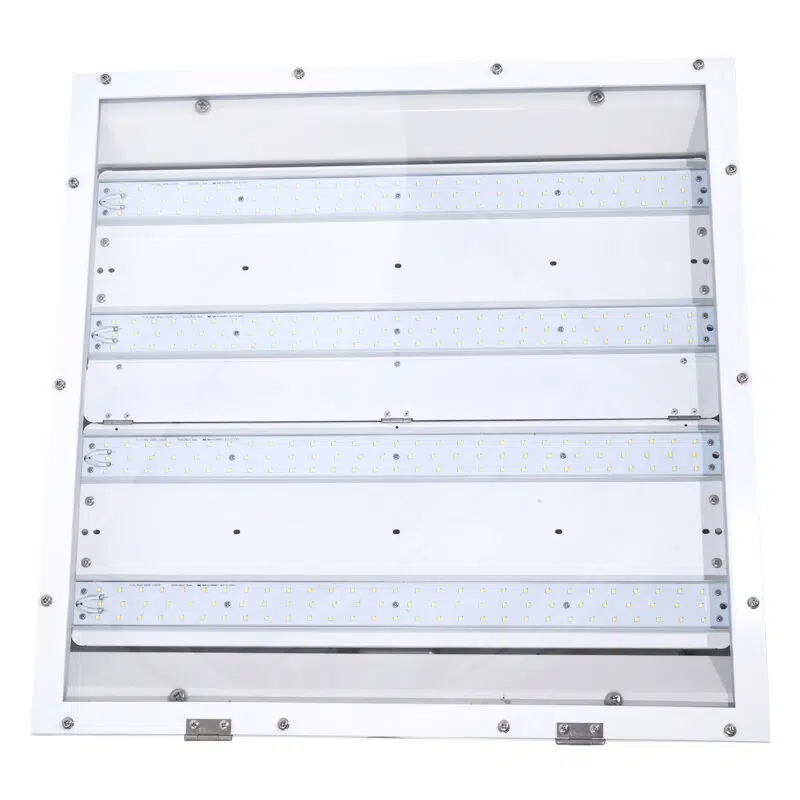
| Explosion Proof LED Linear Fixtures | General spray booths, industrial finishing booths, paint mix rooms, sidewall lighting, and classified areas where linear distribution is useful and the selected model matches the required classification. |
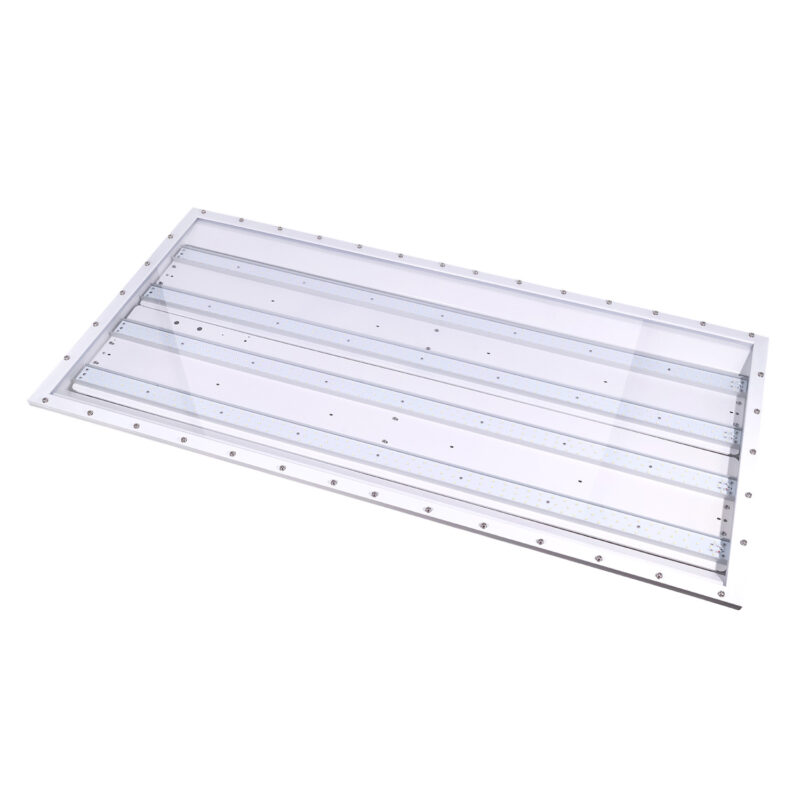
| Explosion Proof LED Panels | Booths or finishing areas where broad, even illumination is needed and the selected fixture is properly listed for the installation. |
| Explosion Proof LED High Bays | Larger booths, truck booths, equipment booths, industrial finishing spaces, and higher mounting locations where the photometric plan supports their use. |
| Hazardous-Location Task or Inspection Lighting | Inspection, color matching, detail work, and quality-control tasks where supplemental lighting is permitted, properly located, and rated for the applicable area. |
| Vapor Tight or Wet-Location Fixtures | Prep or support areas only where hazardous-location ratings are not required. Do not use these as substitutes for hazardous-location fixtures in classified paint booth areas. |
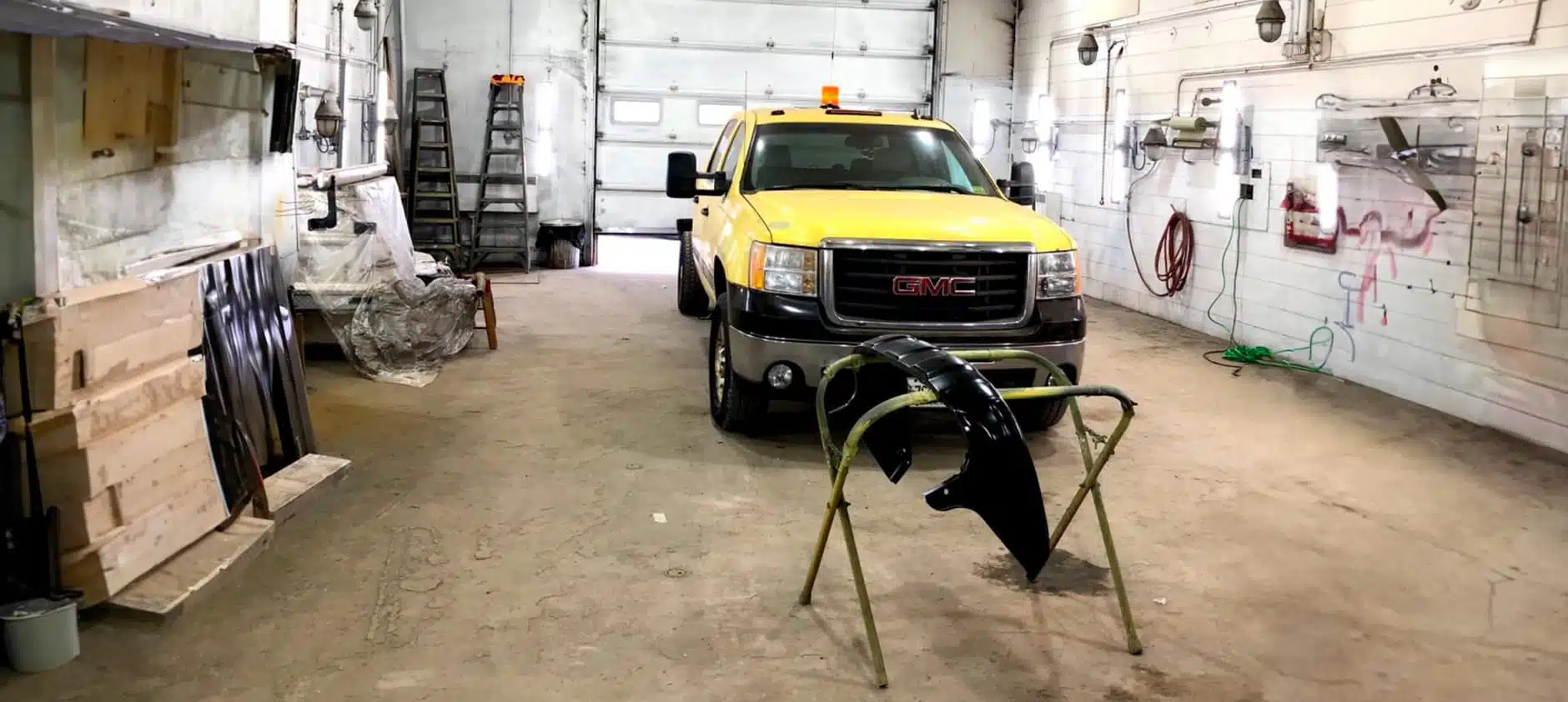
Paint Booth Lighting Project Example
Paint booth projects depend on booth length, width, ceiling height, spray process, fixture placement, classification, and inspection needs. A fixture-specific lighting plan helps identify fixture count, placement, beam spread, sidewall coverage, glare control, and estimated light levels before ordering.
Barrette Outdoor Living’s Explosion Proof Lighting Case Study
The Backstory
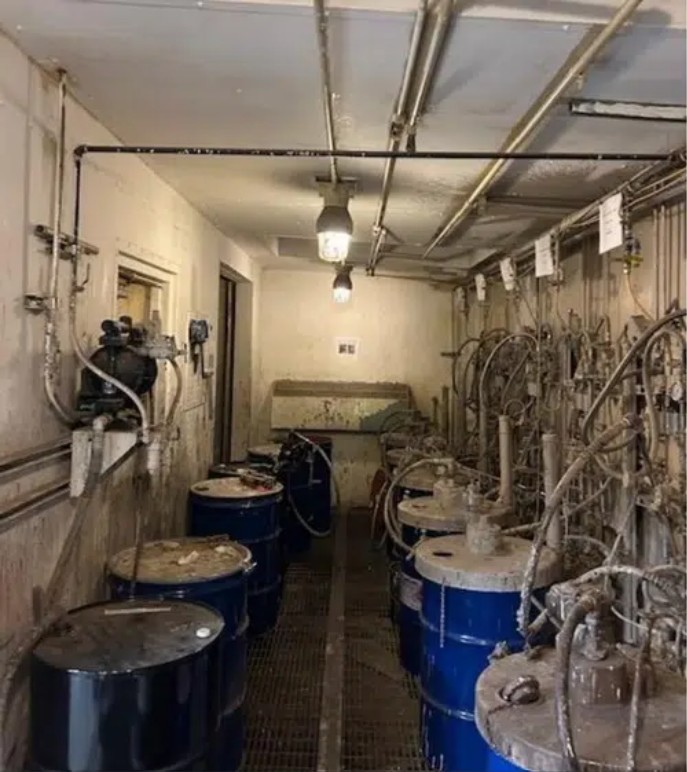
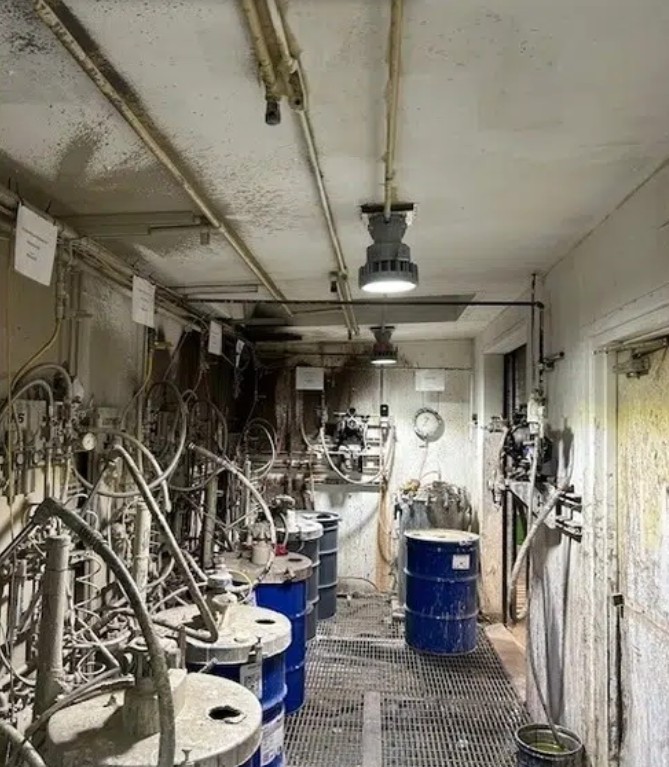
Barrette Outdoor Living, an Oldcastle APG brand, struggled to properly illuminate an existing paint booth with inadequate, exposed fluorescent lighting, leading to a remodel. The Operations Manager, Brandon Hiller, sought LED Lighting Supply's Product Specialist, Joe Hawkins, for expert guidance on the LED lighting upgrade.
The Customer Challenge
The customer needed support in selecting the proper lighting solution for their demanding environment. Barrette Outdoor Living required fixtures for an area that frequently contains flammable paint chemicals and sprays such as lacquers and gelcoat. Additionally, the customer was renovating parts of the booth, including pulling down the ceiling, reframing the walls, and rewiring, while leaving the sprinkler system in place. Due to the intended use of the property, the flammable paint chemical exposure in the environment was not only a concern but also required specialized lighting specifications to comply with local standards. Our team understood that upgrading lighting in hazardous locations involves more complex planning than traditional spaces. The goal was to achieve brighter, safer lighting with minimal shadowing.
Lighting Plan We Created for the Customer
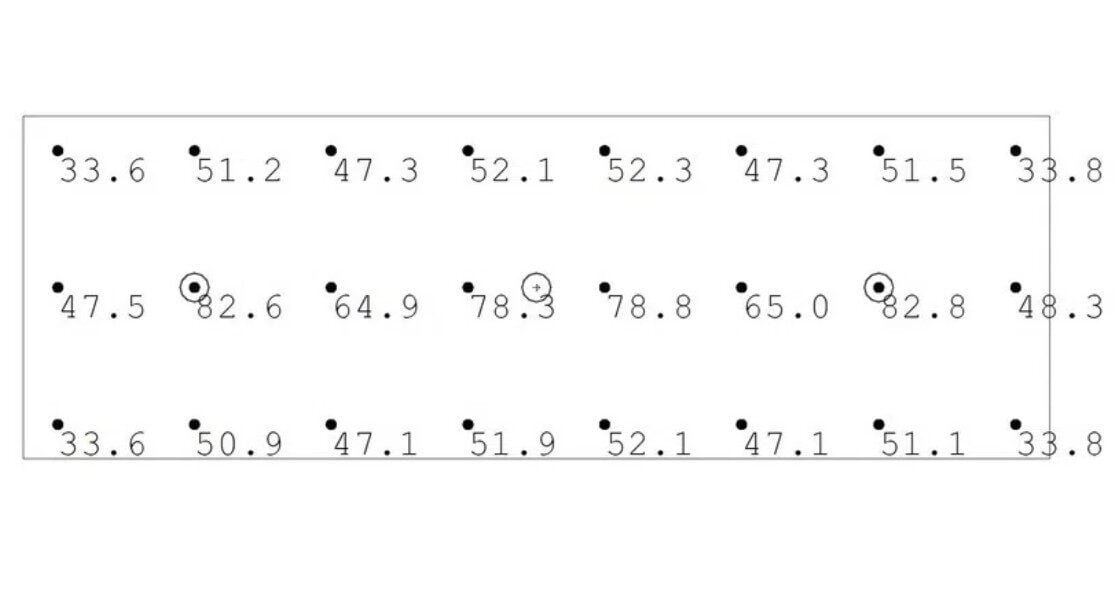

Lighting Plan Metrics:
- Mounting Height: 10 ft
- Fixture Used: 50 Watt Round Explosion Proof LED Light
- Average Foot Candles Achieved: 53
- Product(s) Used: MLLG-E-EXPLS2-150-50-C1D1
Paint Booth Lighting Certifications and Warranty Support
LED paint booth lights available from LED Lighting Supply may carry safety certifications or listings from organizations such as UL, Intertek/ETL, or CSA, depending on the model and required market. Available product ratings may include hazardous-location classifications, Class I Division 1, Class I Division 2, IP ratings, and impact ratings. Confirm the exact listing, classification, Group, temperature code, voltage, ambient-temperature rating, and installation suitability on the selected product specification before ordering.
DLC or DLC Premium qualification may apply to selected LED products for efficiency and rebate eligibility, depending on the model and utility program. DLC qualification is not an electrical safety certification and does not establish hazardous-location suitability. Paint booth fixture selection should start with the required hazardous-location rating where applicable.
Warranty terms vary by product. Many LED paint booth lighting fixtures may include a 5-year warranty, while coverage, exclusions, and duration vary by model and application. Confirm warranty coverage, hazardous-location suitability, installation requirements, voltage, controls compatibility, ambient temperature, mounting method, lens exposure, cleaning process, and application restrictions on the selected product specification before ordering.
Common LED Paint Booth Lighting Mistakes
Beyond the initial lighting plan, these purchasing and ownership issues can affect long-term paint booth performance, maintenance costs, and inspection readiness.
- Assuming “paint booth light” means every model is hazardous-location listed: Product names and appearance do not establish suitability. Review the actual certification marking and specification sheet for the required Class, Division or Zone, Group, temperature code, and ambient rating.
- Specifying only wattage or fixture lumens: Higher wattage or lumen output does not guarantee better booth illumination. Compare fixture photometry, distribution, vertical illumination, and estimated foot-candles at the surfaces being painted or inspected.
- Selecting CCT without evaluating color rendering: A 5000K fixture may look cooler than a 4000K fixture, but CCT does not describe color-rendering performance. Review CRI and, where color-critical work is involved, evaluate the fixture against the facility's color-matching process.
- Assuming an IP rating proves chemical or solvent resistance: IP ratings address protection against solids and water ingress. Verify lens, housing, gasket, finish, and hardware compatibility separately for overspray, solvents, cleaners, and corrosive exposure.
- Choosing fixtures that cannot be serviced efficiently: A fixture may meet the initial lighting requirement but create excessive downtime if lens cleaning, driver replacement, or access requires disrupting booth panels, filters, or production schedules.
- Adding replacement fixtures without rechecking the layout: LED replacements can have different output, optics, dimensions, heat characteristics, mounting points, and electrical requirements than the original equipment. Review the complete replacement plan rather than matching wattage alone.
- Overlooking fixture location outside the booth: Fixtures behind glass, in service cavities, or outside the spray area may have different classification and construction requirements than fixtures inside the classified boundary. Confirm the actual installation location with the project authority.
- Treating rebate qualification as the primary selection criterion: Utility incentives may be useful, but they do not replace the required safety listing, hazardous-location rating, photometric performance, or application suitability.
- Ordering before documenting the electrical details: Confirm supply voltage, branch-circuit requirements, wiring method, fittings, controls, emergency-lighting needs, and approved mounting arrangement before the product is released for installation.
- Expecting a lighting supplier to establish the area classification: LED Lighting Supply can help compare published fixture ratings and prepare photometric plans, but the AHJ, licensed electrical professional, and qualified project authorities determine applicable classification and installation requirements.
Request a paint booth lighting plan, and our Product Specialists can help review booth dimensions, established classification, fixture placement, foot-candle targets, CRI, voltage, controls, hazardous-location ratings, and product specifications for your paint booth lighting project.
LED Paint Booth Lighting FAQs
How Should I Choose The Required Hazardous-Location Rating For Paint Booth Lighting?
Choose a fixture rating that matches the booth classification and fixture location. Confirm whether the location requires Class 1 Division 1, Class 1 Division 2, Zone-rated, or another hazardous-location rating before ordering.
What Is The Difference Between Class 1 Division 1 And Class 1 Division 2 Paint Booth Lighting?
Class 1 Division 1 is used where ignitable concentrations of flammable gases or vapors may exist under normal operating conditions, while Class 1 Division 2 is used where they are not normally present in ignitable concentrations but may appear under abnormal conditions. The correct rating depends on the classification plan, fixture location, spray area, ventilation, and booth construction.
Can Vapor Tight Fixtures Be Used In A Classified Paint Booth Area?
No, vapor tight or wet-location fixtures should not be used as substitutes where explosion proof or hazardous-location ratings are required. The fixture must match the required Class, Division, Zone, Group, and temperature code for the installation area.
How Can I Plan Fixture Quantity And Placement For A Paint Booth?
A lighting plan can identify fixture count, placement, beam spread, sidewall coverage, glare control, and light levels before ordering. Booth dimensions, mounting height, fixture location, target foot-candles, beam angle, vehicle or work surface visibility, and inspection needs should be considered.
Why Is Sidewall Lighting Important In A Paint Booth?
Sidewall lighting can help provide strong, even vertical light for vehicle panels, equipment sides, and other vertical surfaces. Fixture spacing, side lighting, vertical illumination, booth length, and work surface visibility should be reviewed to reduce dark areas and hot spots.
What CRI And Color Temperature Considerations Apply To Paint Booth Lighting?
Use higher CRI where color matching, finish inspection, and defect detection are important. Many paint applications use 4000K or 5000K, depending on preference and process requirements.
What Should Be Reviewed Before Selecting Paint Booth Light Mounting And Lens Options?
Review the mounting method, fixture location, lens material, overspray exposure, cleaning method, gasket compatibility, and service access before selecting fixtures. Mounting hardware should also be rated for the environment.
What Product Details Should Be Confirmed Before Ordering Paint Booth Lights?
Confirm the selected product's hazardous-location rating, listing, voltage, temperature code, installation suitability, controls compatibility, mounting method, lens exposure, cleaning process, and application restrictions before ordering. Product specifications, certifications, and warranty coverage vary by model.