Menu
Search Icon

Class 1 Div 2 Lighting

  • ETL, UL & DLC Premium Listed for the highest quality performance
  • All of our products come with a hassle free 5-year warranty
  • Trusted by Contractors with over 500 5-star reviews
Class 1 Div 2 Lighting
DLC Certification UL Certification ETL Certification 5 Year Warranty
Our commitment to quality Our products are held to the highest standards for performance & reliability LED Lighting Supply Certification Stamp
Get Your Custom Lighting Plan With Product Recommendations
  • Blue Check Mark Professionally Designed Lighting Layout
  • Blue Check Mark Fixture Count & Recommendation
  • Blue Check Mark Improved Energy Efficiency & Reduced Maintenance
Lighting Plan Image Lighting Plan Image Heat Map
Request Your Free Lighting Plan

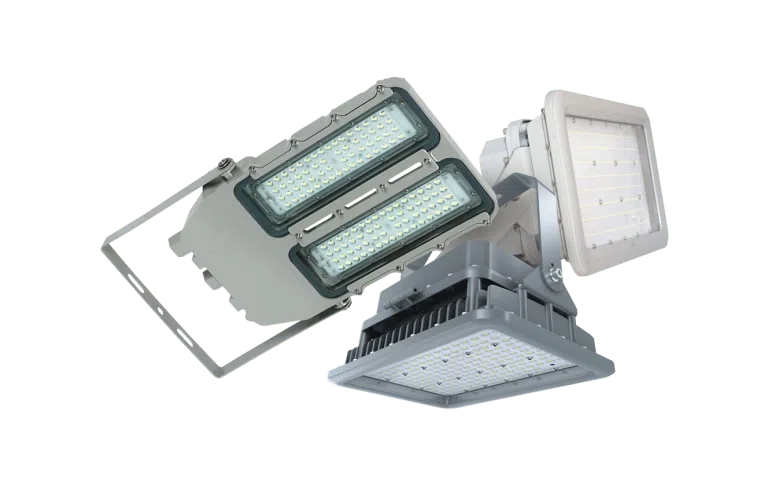
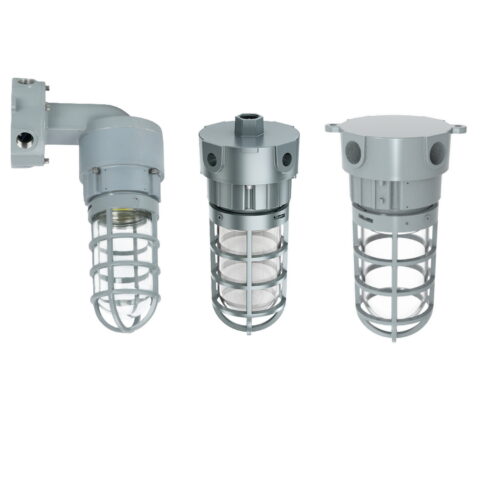
LED Class 1 Division 2 lighting includes specialized LED fixtures built for installation in industrial settings where flammable gases or vapors may be present only under abnormal conditions. These fixtures are commonly found in areas such as equipment rooms, storage zones, loading docks, chemical processing spaces, and fuel handling sites. Typical form factors include low-profile linear fixtures, round or rectangular ceiling-mounted units, and pendant-mounted luminaires, each selected to fit the physical layout of hazardous locations.

This category is part of the Commercial & Industrial Lighting Solutions offering, with products installed throughout facilities like oil and gas refineries, marine terminals, aircraft maintenance hangars, and chemical tank farms. Fixtures are positioned above open work floors, along walkways, or mounted near process equipment, supporting site layouts where code-compliant hazardous location lighting is required. These luminaires are engineered for environments where safety standards and regulatory compliance dictate fixture placement and construction.

View More
Find Faster - Try Filters!

Selected Filters

Explosion Rating

Watts

Lumens

Voltage

Color Temperature

Metal Halide Equivalent

Certifications

Features

Fixture Color

IP Rating

IK Rating

Operating Temperature

Dimming

Fixture Length

Mounting Options

Housing

Whip Length

Indoor / Outdoor

SHOW FILTERS

Selected Filters

Explosion Rating

Watts

Lumens

Voltage

Color Temperature

Metal Halide Equivalent

Certifications

Features

Fixture Color

IP Rating

IK Rating

Operating Temperature

Dimming

Fixture Length

Mounting Options

Housing

Whip Length

Indoor / Outdoor

Showing 46–60 of 71 results

What is Class I Division 2 LED Lighting for Hazardous Locations

LED Lighting Supply specifies and supplies Class I, Division 2 LED lighting fixtures for industrial environments where flammable gases or vapors are not normally present, but may occur under abnormal operating conditions such as equipment failure, container leakage, or system malfunction.

With more than 15 years of experience in hazardous location and explosion-proof lighting, our product specialists work directly with engineers, safety managers, and contractors to help ensure fixture selection aligns with code requirements, inspection expectations, and real-world operating conditions.

Our expertise in hazardous location LED lighting helps facilities maintain compliance and safety in challenging environments. Class I, Division 2 locations are defined by the National Electrical Code (NEC), NFPA 70, and are regulated in conjunction with OSHA hazardous location guidance.

In these environments, luminaires must be designed to prevent ignition during abnormal events while maintaining safe operation during normal conditions. Improper fixture selection can result in failed inspections, insurance conflicts, and elevated ignition risk, making compliance-driven product selection critical.

For these reasons, Class 1 Div 2 LED fixtures are a preferred choice for many industrial applications. All Class I, Division 2 LED luminaires supplied by LED Lighting Supply are certified by nationally recognized testing laboratories (NRTLs) and evaluated in accordance with applicable NEC, UL, and CSA standards.

Fixtures are selected based on the specific gas or vapor group classification - Groups A, B, C, or D - and are engineered to meet the ignition prevention requirements associated with each material's combustion characteristics.

Our explosion proof LED lights are designed to meet these rigorous standards for safety and reliability.

Important Safety and Compliance Notice: Information provided regarding Class I, Division 2 hazardous location lighting is intended for general guidance only and does not replace applicable codes, standards, or site-specific engineering judgment. Final equipment selection must be verified by a qualified professional and approved by the authority having jurisdiction (AHJ) in accordance with the National Electrical Code (NFPA 70), OSHA regulations, and all applicable local requirements.

LED Explosion Proof Light Installed

Defining Class 1 Div 2 Hazardous Area Classifications

Class I hazardous locations are classified by the type of flammable gas or vapor that may be present. The material group matters because each gas or vapor has different ignition characteristics and protection requirements.

Hazardous Group Common Materials Key Considerations
Group A Acetylene Presents the greatest danger due to extremely low ignition energy requirements.
Group B Hydrogen and similar gases Requires protection for gases with dangerous flame speeds and ignition characteristics.
Group C Ethylene, cyclopropane, and similar vapors Commonly encountered in chemical processing and industrial manufacturing facilities.
Group D Propane, butane, methane, gasoline, benzene, and similar vapors The most frequently encountered Class I vapor group in many industrial and fuel-handling applications.

Selecting the right Class 1 Division 2 lighting is essential for each group to ensure safety and compliance. Division classification depends on hazardous atmosphere exposure frequency.

Division When It Applies Typical Examples
Division 1 Ignitable concentrations are present continuously, frequently, or during normal operation. Paint mixing rooms, tank interiors, process vessels, and other areas where hazardous atmospheres may exist during regular operations.
Division 2 Hazardous atmospheres are not normally present, but may occur during abnormal conditions. Storage areas, loading docks, equipment rooms, and areas where releases may occur due to leakage, maintenance, or system malfunction.

Using the correct hazardous location lighting fixtures is critical in these environments to reduce ignition risk and support compliance.

The National Fire Protection Association's NFPA 70, also known as the National Electrical Code, provides comprehensive requirements for electrical installations in hazardous locations. NFPA 70 Article 500 series defines installation requirements and equipment standards intended to keep electrical systems safe in environments where flammable gases and vapors may be present.

We engineer solutions that address Division 2 requirements for storage areas, loading docks, and equipment rooms where proper ventilation normally prevents vapor accumulation. Division 1 fixtures become necessary in paint mixing rooms, tank interiors, and process vessels where hazardous atmospheres exist during regular operations.

Our Class 1 Div 2 lighting solutions are tailored for these specific applications.

Lighting Case Study: Lighting a New Explosion-Proof Workspace at Arizona Algae Products

The Backstory

Arizona Algae Products LLC was moving its warehouse operation to a newly constructed building and needed lighting for the center section of the space, which included two platforms, a walkway, and equipment that could create shadowing issues. They initially had only a rough estimate of what they might need and were seeking guidance on lighting for hazardous locations, wattage, fixture count, placement, and overall layout. The Director of Facilities and Maintenance, Christopher Knizeski, reached out to LED Lighting Supply and was paired up with Product Specialist Jake Hoffman for expert support in these areas.

The Customer Challenge

The customer knew they needed Class 1 Division 2 (C1D2) rated lighting for the area. This means flammable gases, vapors, or liquids could be present under abnormal conditions, such as equipment leaks or ventilation failures. Due to these factors, the area required an explosion-proof lighting solution. The fixtures needed to meet the safety demands of the environment while delivering strong, uniform illumination for a functional work area.

As the conversation developed, it became clear this wasn't a simple fixture installation. The customer needed to light a new warehouse workspace in a building that was still being constructed. The section being lit was obstructed by equipment and piping, all of which created the potential for shadowing and dark spots. The customer needed an expert's guidance to ensure the final lighting plan would support visibility, safety, and day-to-day work in the warehouse.

Completed Project Photos

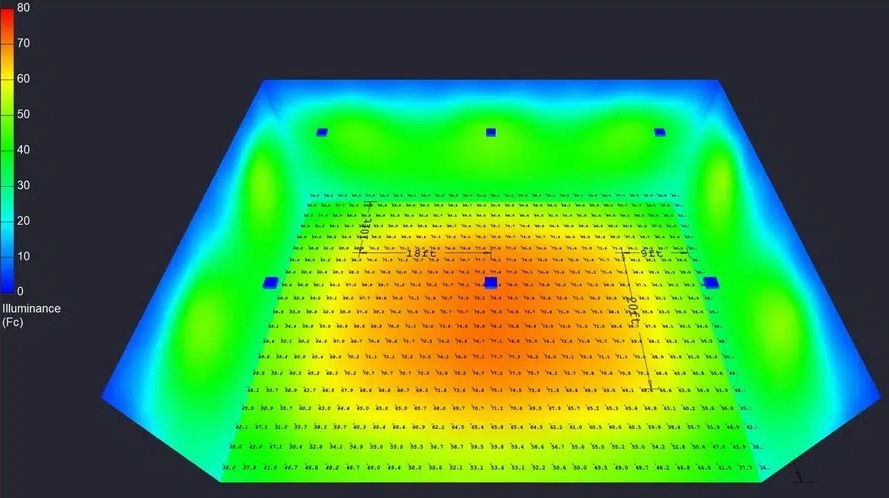
Lighting Plan We Created for the Customer
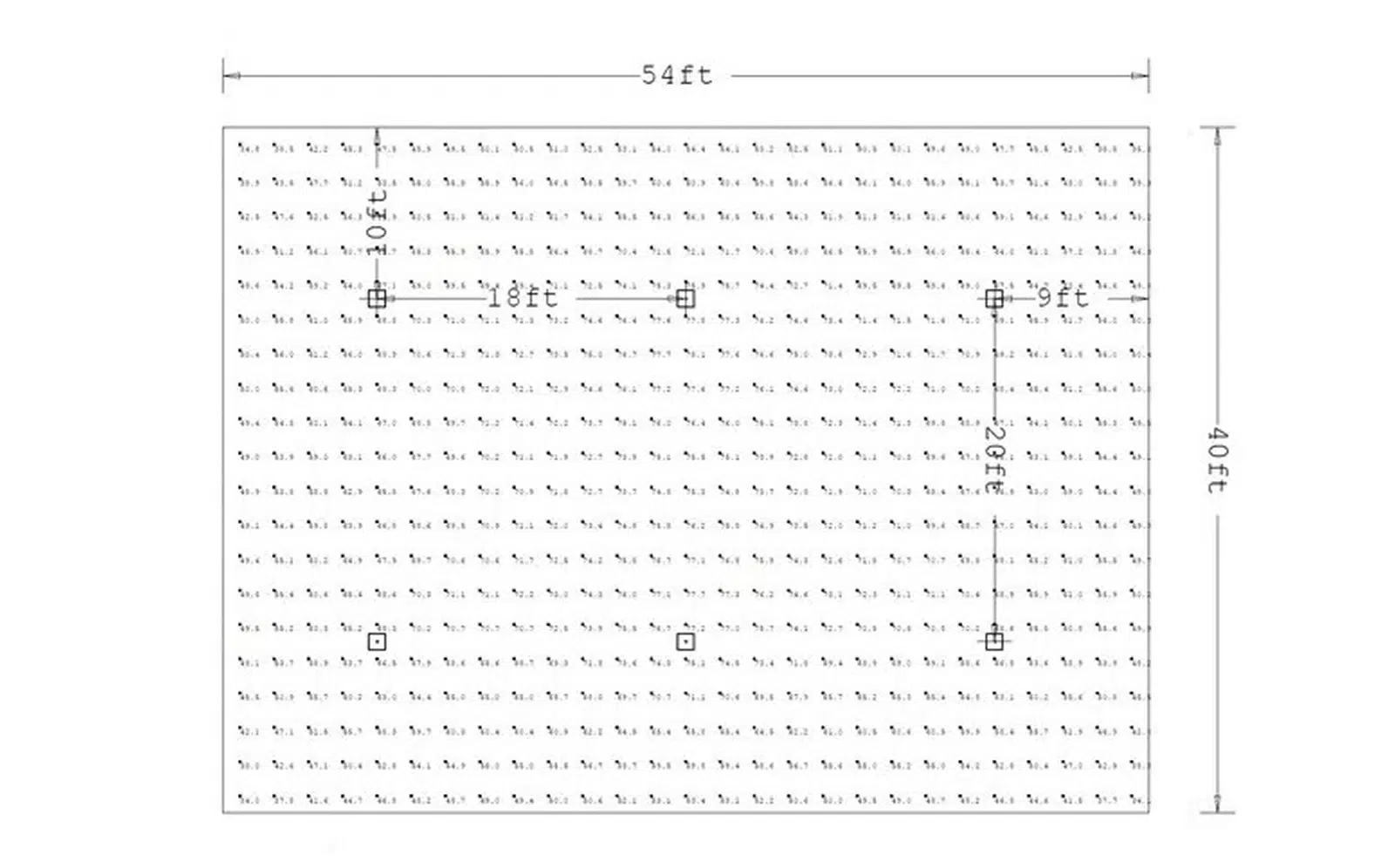
Lighting Plan
Lighting Plan
Heat Map
Heat Map

Lighting Plan Metrics

Read the full case study

Use When / Don't Use When

Class I Division 2 fixtures are appropriate only when the area classification, hazardous group, temperature rating, and installation method match the actual site conditions. The table below outlines common decision boundaries.

Use Class I Division 2 LED Fixtures When Do Not Use Class I Division 2 LED Fixtures When
Hazardous atmospheres occur only during abnormal conditions.
Examples include equipment failure, container leakage, system malfunction, or accidental release scenarios.
Hazardous atmospheres exist during normal operations.
Paint mixing rooms, tank interiors, and process vessels may require Division 1 protection.
Normal operations properly contain flammable materials.
Common examples include storage areas, loading docks, and equipment rooms with adequate ventilation.
The area is classified for combustible dust.
Class II environments, such as grain facilities, require dust-ignition-proof equipment rather than gas/vapor ratings.
You need energy savings without Division 1 over-specification.
Properly selected LED fixtures can reduce energy use while still meeting applicable safety requirements.
Temperature ratings do not match the application.
Fixture T-ratings must remain below the ignition temperature of the specific materials present.
Maintenance access is restricted.
Long-life LED fixtures help reduce fixture service needs in classified areas.
The installation lacks the required hazardous-location wiring system.
Improper fittings, missing seals, or standard conduit practices can create ignition paths.
Instant illumination is critical.
LED fixtures provide immediate light output without metal halide warm-up delays.
Fixtures are not certified for the specific hazardous group.
Group A acetylene environments require different protection than Group D gasoline or propane environments.

What We Verify Before You Order

Verification Item Why It Matters
Hazardous material group classification Confirms whether Group A, B, C, or D certification is required.
Required temperature rating Helps ensure fixture surface temperature remains appropriate for the materials present.
Ambient operating conditions Accounts for heat, cold, moisture, corrosion, vibration, and other site-specific conditions.
Mounting requirements Supports safe fixture placement, proper installation, and future maintenance access.
Electrical system voltage and controls Ensures compatibility with facility voltage, dimming, control, and emergency lighting requirements.

If We Provide a Lighting Plan

Deliverable How It Helps
Fixture placement recommendations Supports safe illumination levels while considering classified areas and maintenance access.
Energy savings calculations Shows estimated operating cost reduction and projected return on investment.
Specification documentation Provides fixture data needed for review by engineers, contractors, inspectors, or safety teams.

Note: Guidance is general planning information. Final selection should be validated with a photometric plan and confirmed by a licensed professional when required for code- or safety-critical areas.

Quick Selection Guide

Use this quick guide as a starting point when evaluating Class I Division 2 LED lighting. Final selection should always be confirmed against the site's hazardous classification, material group, temperature requirements, and applicable code requirements.

Step What to Confirm Why It Matters
1 Confirm hazardous material group: A, B, C, or D. Group A acetylene requires the most restrictive protection, while Group D materials such as propane, gasoline, and methane are more common.
2 Verify that Division 2 classification applies. Division 2 is used when hazardous atmospheres occur only during abnormal conditions such as leaks, equipment failure, or maintenance events.
3 Check temperature rating requirements. The fixture's T-rating must be suitable for the ignition temperature of the specific materials present.
4 Select UL844-certified fixtures only. Fixtures should be UL Listed or ETL Listed with specific Class I Division 2 markings.
5 Plan conduit, fittings, and sealing requirements. Connections must maintain the required hazardous-location protection method.
6 Consider maintenance accessibility. Fixture placement should reduce service difficulty and avoid unnecessary work near potential leak points.

Tip: Do not assume all Group D fixtures work for every Group D material. Some chemicals may require special corrosion protection or other site-specific considerations even within the same classification.

Optimal Applications for Explosion Proof Fixtures

Class I Division 2 lighting is commonly used in facilities where flammable gases or vapors are normally contained but could be released under abnormal operating conditions. The right fixture depends on the material group, temperature classification, mounting method, corrosion exposure, and maintenance requirements.

Application Common Lighting Requirements
Aircraft Maintenance Hangars LED aircraft hangar lights may require explosion-proof ratings for jet fuel vapors, along with wide beam distribution for detailed mechanical inspection across large aircraft surfaces.
Covered Fueling Operations Group D certified fixtures may be required for gasoline vapors while providing reliable illumination for continuous fueling and service operations.
Automotive Paint Booths Fully sealed enclosures help prevent solvent infiltration, while CRI 80+ performance supports accurate color evaluation in spray environments.
Marine Drilling Platforms Marine-grade powder-coated housings and shock-resistant construction help fixtures withstand saltwater exposure and vibration from drilling equipment.
Chemical Tank Farms Low-profile fixtures with pendant or surface mounting options can reduce interference with piping while supporting safe ground-level visibility.
Vessel Cargo Holds Compact fixture designs help provide usable illumination in tight spaces for cargo inspection, loading, and maintenance tasks.
Oil & Gas Refineries Multi-group rated fixtures may be needed for harsh refinery environments where ambient conditions, vapor groups, and temperature requirements vary by area.
Bulk Fuel Storage Terminals Weatherproof enclosures and 120-277V universal drivers support compatibility across varied electrical systems used in large fuel storage facilities.
Agricultural Grain Facilities These environments may involve combustible dust hazards and require equipment rated for the specific dust classification, not simply Class I gas/vapor protection.

LED Explosion Proof Class 1 Div 2 Applications

Proven Benefits of Explosion Proof LED Solutions

Properly specified explosion-proof LED fixtures can reduce energy use, improve visibility, and lower maintenance demands in classified areas. The benefits depend on fixture selection, operating conditions, installation quality, and the legacy system being replaced.

Benefit Operational Impact
Extended Operational Reliability Fixtures can provide 50,000+ hour operation, reducing maintenance work in classified areas where service may require permits, shutdowns, or continuous gas monitoring.
Immediate Energy Cost Reduction LED fixtures can reduce electricity consumption compared to metal halide or fluorescent systems, model dependent. Lower wattage may also reduce heat load in enclosed hazardous environments.
Advanced Heat Management Properly specified LED systems operate more efficiently than many legacy technologies, helping reduce excess heat in chemical storage, process, or industrial areas.
Enhanced Safety Visibility Consistent illumination supports inspections, monitoring, maintenance, and safe movement through classified areas.
Instant Full-Power Operation LED fixtures can provide immediate light output, depending on model, without metal halide warm-up or restrike delays.
Simplified Retrofit Installation Universal 120-277V drivers and suitable mounting options can simplify upgrades while maintaining hazardous-location sealing and installation requirements.

According to the U.S. Department of Energy's solid-state lighting research, LED technology in industrial applications can achieve significant energy savings while maintaining strong light quality and operational reliability. The DOE's industrial LED lighting guidance demonstrates how facilities can reduce maintenance costs and improve safety through proper LED fixture selection, particularly in hazardous locations where maintenance access is restricted and safety protocols are critical.

Safety Listings, Rebates, and Warranty Support

LED Lighting Supply's fixtures carry essential certifications, including UL Listed and ETL Listed for electrical safety and compliance. Many models are DLC Premium listed for energy efficiency and rebate eligibility. These certifications support safety, performance reliability, and utility rebate qualification.

Most Class I Division 2 LED fixtures include a 5-year warranty unless otherwise specified, with USA-based warranty support. Before ordering, confirm the selected fixture’s hazardous group certification, temperature rating, voltage, and whether it fits the site’s specific conditions.

Comprehensive 5-Year Warranty with USA-Based Support

All our fixtures include a comprehensive 5-year warranty backed by experienced support teams based in the USA. We take customer support seriously, recognizing that keeping your safety lighting operational is critical to personnel protection and regulatory compliance.

Our warranty support team understands the importance of maintaining continuous lighting operation and works quickly to resolve performance issues. We stand behind our hazardous location LED lighting solutions with responsive service and technical expertise.

With over 15 years of experience in hazardous location applications, we engineer solutions that help protect your facility while delivering energy savings and operational reliability.

Request a quote from our hazardous location specialists to ensure your Class 1 Division 2 lighting meets exact safety requirements while maximizing long-term value.

Expert Specification Support for Your Hazardous Location Project

LED Lighting Supply's experienced Product Specialists provide complimentary custom lighting layouts specifically designed for your Class 1 Division 2 facility.

Our team analyzes your hazardous material groups, ambient conditions, and mounting requirements to recommend fixture placement and wattage selections. We also provide energy savings calculations showing current energy costs versus projected LED operating expenses.

Our experience with hazardous location lighting fixtures ensures your project is supported from design through product selection.

Talk to an expert: Not sure what to choose Contact us or give us a call at 888-423-3191.

Common Mistakes and How to Avoid Them

After working on hundreds of hazardous location installations, we often see the same critical mistakes that can compromise safety, delay approvals, or create expensive compliance failures.

Common Mistake Why It Matters How to Avoid It
Using standard industrial fixtures in Class I Division 2 areas Standard fixtures are not designed or certified to provide hazardous-location ignition protection. Use fixtures specifically marked and certified for the required Class, Division, Group, and temperature rating.
Mixing up temperature classifications during specification A fixture with the wrong T-rating may exceed allowable surface temperature limits for the materials present. Confirm the required T-rating against the ignition temperature of the site-specific gas or vapor.
Installing threaded rigid conduit without proper hazardous-location fittings Improper joints and fittings can create ignition paths and compromise the protection method. Use fittings and installation methods appropriate for the classified area and verify requirements with a qualified professional.
Mounting fixtures where maintenance creates unnecessary safety complications Poor placement can require shutdowns, permits, or work near potential leak points during service. Plan fixture locations for safe access, adequate illumination, and reduced maintenance exposure.
Skipping required conduit seals Missing seals can allow vapors to migrate through the conduit system and defeat the protection scheme. Confirm sealing requirements during design and installation with the electrical professional responsible for the project.
Using non-approved connection methods inside hazardous-location enclosures Improper connections may compromise enclosure integrity under fault conditions. Use only approved connection methods and components compatible with the enclosure and hazardous-location requirements.

Class 1 Div 2 Lighting Frequently Asked Questions

What Is Class I Division 2 LED Lighting

Class I Division 2 LED lighting is designed for industrial areas where flammable gases or vapors are not typically present but may appear during abnormal conditions like equipment failure. These fixtures are engineered to prevent ignition during such events while ensuring safe operation under normal conditions. Selecting the right fixture is crucial to avoid inspection failures and safety risks.

How Do I Choose the Right Class I Division 2 Lighting

To choose the right Class I Division 2 lighting, confirm the specific gas or vapor group classification (A, B, C, or D) and ensure the fixture meets the ignition prevention requirements for that group. Verify that the fixture is certified by a nationally recognized testing laboratory and complies with NEC, UL, and CSA standards. Consider the environment's temperature rating and ensure the fixture's T-rating is appropriate.

When Should I Use Class I Division 2 LED Fixtures

Use Class I Division 2 LED fixtures in environments where hazardous atmospheres occur only during abnormal conditions, such as equipment failure or system malfunctions. These fixtures are suitable for areas like storage rooms and loading docks where proper ventilation prevents vapor accumulation during normal operations.

When Should I Avoid Using Class I Division 2 LED Fixtures

Avoid using Class I Division 2 LED fixtures in areas where hazardous atmospheres exist during normal operations, such as paint mixing rooms or tank interiors. These environments require Division 1 protection. Also, do not use them in Class II environments where combustible dust is present, as these require dust-ignition-proof equipment.

What Are the Key Safety and Compliance Considerations for Class I Division 2 Lighting

Key safety and compliance considerations include ensuring fixtures are certified for the specific hazardous group and have the correct temperature rating for the materials present. Proper installation with explosion-proof conduit systems and fittings is essential to prevent ignition paths. Always verify compliance with NEC, OSHA, and local regulations.

What Are the Benefits of Using Class I Division 2 LED Lighting

Class I Division 2 LED lighting offers benefits such as extended operational reliability with over 50,000 hours of operation, immediate energy cost reduction, and advanced heat management. These fixtures provide consistent illumination, reducing shadows where vapor leaks may go unnoticed, and reach full brightness instantly, enhancing safety during emergencies.

How Can I Ensure My Class I Division 2 Lighting Installation Is Compliant

Ensure compliance by selecting fixtures that are UL or ETL listed with specific Class I Division 2 markings. Plan for proper conduit and seal requirements, and confirm that all connections use explosion-proof fittings. Validate your installation with a photometric plan and consult a licensed professional for code-critical areas.


//