480 Volt LED Parking Lot Lights
- Designed for 277-480V commercial and industrial electrical systems
- Multiple optic distributions available for varied pole layouts
- Lighting plans available to evaluate coverage and uniformity


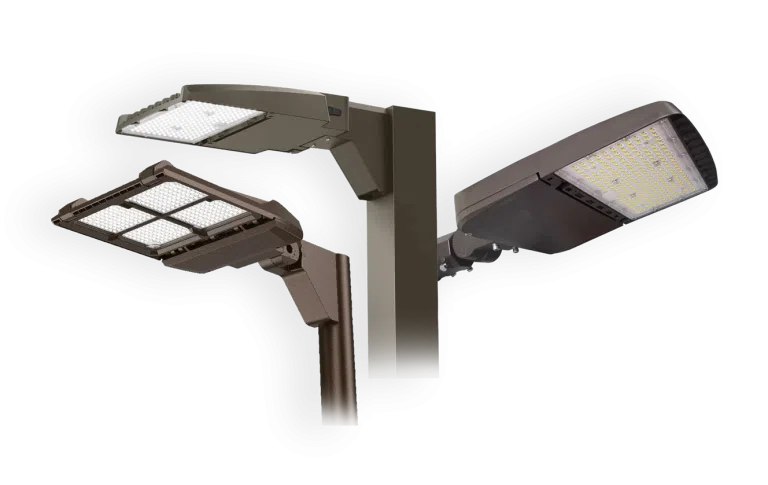

Get Your Custom Lighting Plan With Product Recommendations
- Layout designed around pole placement, mounting height, and beam distribution for uniform parking lot coverage
- Fixture count and optics matched to target foot-candle levels with 277-480V input options
- LED fixtures can reduce energy use and extend maintenance intervals compared with legacy HID lighting


Our 480 Volt LED Parking Lot Lights include pole-mounted fixtures with 277-480V LED drivers for 277V, 347V, and 480V systems. Available models vary by lumen output, optic distribution, mounting configuration, and control compatibility.
These fixtures are commonly used at industrial and manufacturing properties, warehouses, distribution centers, truck yards, transportation facilities, utilities, treatment facilities, substations, ports, rail yards, and large commercial sites.
-
 Starting At $309.00


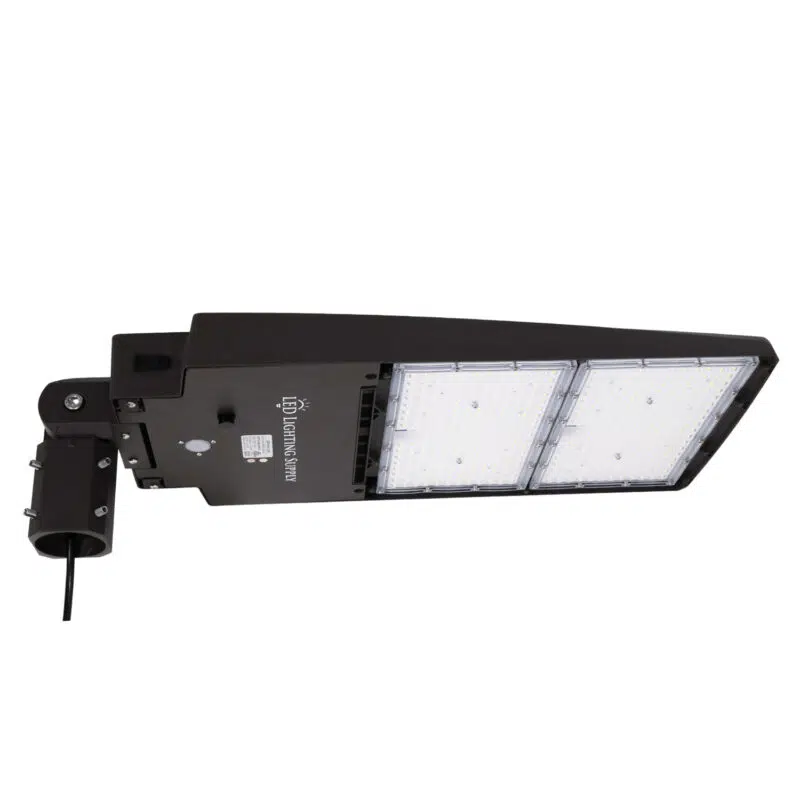
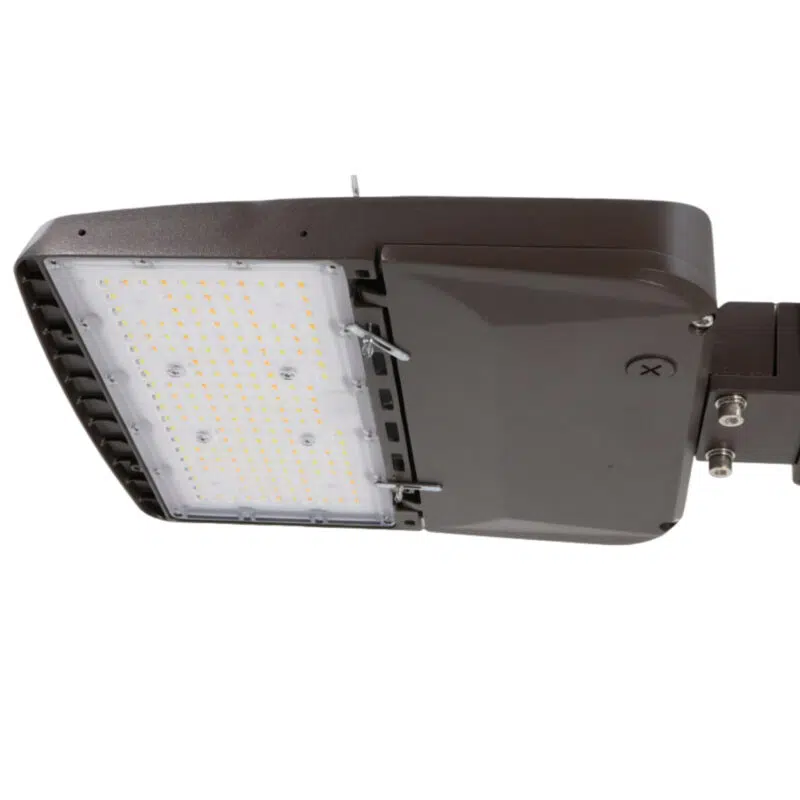

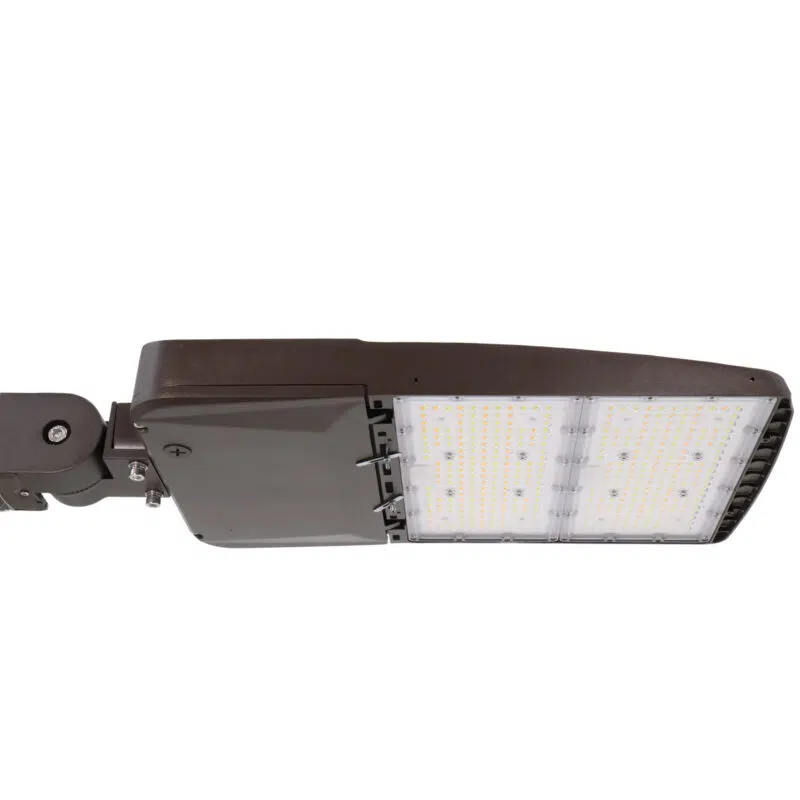

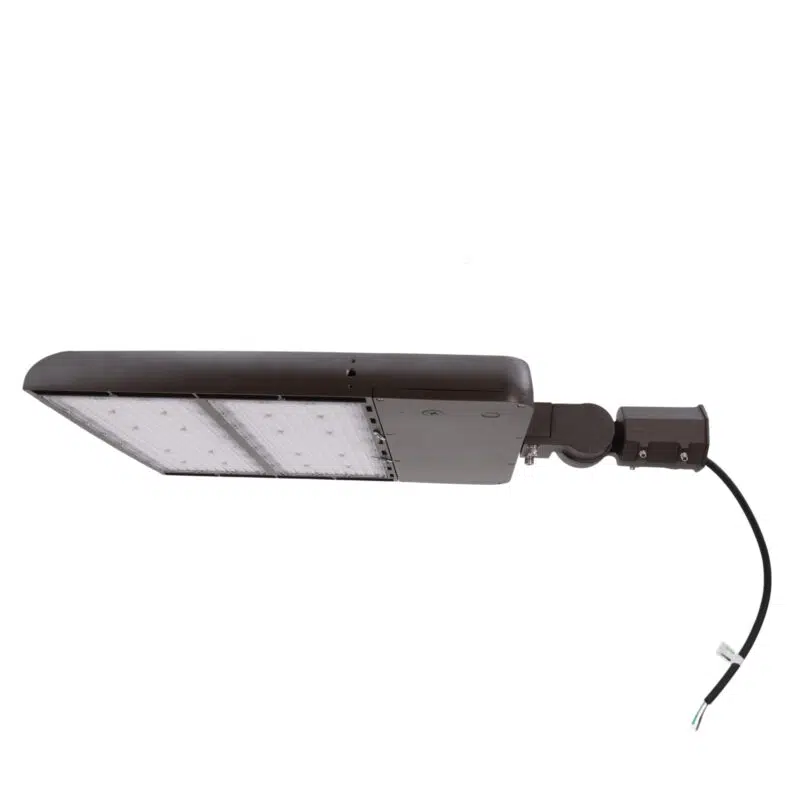

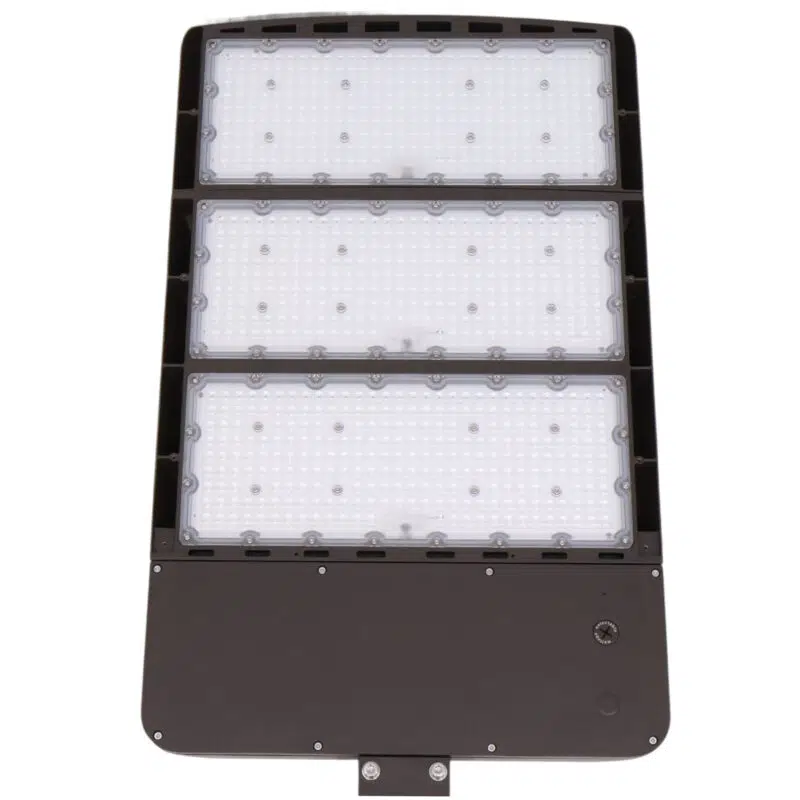


Selecting 480 Volt LED Parking Lot Lights
Voltage is only one part of fixture selection. The right parking lot light also depends on pole height, pole spacing, optic distribution, lumen output, mounting method, controls, surge protection, wind exposure, and the required foot-candle and uniformity levels.
Confirm that the selected fixture's published input-voltage range supports the actual supply voltage. Fixtures with 277-480V LED drivers may operate on 277V, 347V, and 480V systems when the exact product configuration and electrical specifications support those voltages.
For projects that do not specifically require higher-voltage fixtures, see our complete selection of LED parking lot lights.
What to Confirm Before Ordering 480 Volt Parking Lot Lights
| Selection Factor | What to Check |
|---|---|
| Input voltage | Confirm the actual circuit voltage and verify that the selected fixture uses a 277-480V driver suitable for the site's electrical system. |
| Pole height and spacing | Mounting height and pole spacing affect lumen requirements, optic selection, fixture quantity, glare, and uniformity. |
| Optic distribution | Use the optic that fits the fixture position and lot geometry. Perimeter poles often need forward-throw distributions, while interior poles may require more symmetrical coverage. |
| Lumen output | Select output according to pole height, spacing, target foot-candles, uniformity, and site conditions rather than replacing an HID fixture by wattage alone. |
| Mounting method | Confirm compatibility with the existing pole, arm, tenon, wall mount, or bracket before ordering. Existing hardware should not be assumed to fit the replacement fixture. Review available tenon adapters for light poles when fixture and pole mounting dimensions differ. |
| Controls | Photocells, motion sensors, dimming, and scheduled controls must be compatible with the selected fixture, driver, voltage, and site strategy. |
| Surge protection | Outdoor pole-mounted fixtures are exposed to electrical disturbances. Review fixture-level and site-level surge protection before installation. |
| Pole and wind conditions | Review pole condition, foundation, fixture weight, EPA, tenon size, and applicable wind-load requirements when replacing existing fixtures. For new installations, evaluate appropriately engineered parking lot light poles. |
480V Does Not Determine Parking Lot Light Output
A 480V parking lot light is not automatically brighter or more powerful than a lower-voltage fixture. Voltage describes the electrical supply the LED driver can accept. Lumen output, optic distribution, mounting height, pole spacing, and fixture placement determine the actual lighting performance.
Two parking lot fixtures using 277-480V drivers can produce very different results if they have different lumen packages or optical distributions. Existing metal halide or high-pressure sodium wattage can be useful as a starting reference, but the LED replacement should ultimately be selected by delivered light levels and photometric performance.
Optics, Pole Locations, and Uniformity
Parking lot lighting depends heavily on where the fixture is mounted and how its optical distribution directs light across the site. The same 480V fixture may perform well at one pole location and poorly at another if the optic does not match the layout.
Perimeter poles often use forward-throw distributions to place more light into the lot, while interior poles may use broader or more symmetrical distributions. Pole height, fixture setback, neighboring properties, drive lanes, pedestrian areas, and building locations should all be considered when selecting optics.
Uniformity is also important. A parking lot can meet an average foot-candle target and still have dark areas or excessively bright zones if fixture spacing and optics are poorly matched.
480V Parking Lot Retrofits
Many 480V parking lot projects involve replacing older metal halide, high-pressure sodium, or other HID fixtures. Before selecting the replacement, confirm the existing circuit voltage, pole height, mounting hardware, fixture condition, pole spacing, and current light levels.
Do not match HID wattage directly to LED wattage. LED replacements should be selected using lumen output, optic distribution, mounting height, spacing, and required foot-candle levels.
If the existing fixture housing will be retained, determine whether an LED parking lot retrofit kit is appropriate for the housing, thermal conditions, voltage, and installation requirements.
Installation, Certifications, and Electrical Considerations
480V parking lot lighting should be installed by qualified electrical professionals familiar with commercial and industrial outdoor lighting systems. Confirm the branch circuit, conductors, grounding, overcurrent protection, fixture wiring, controls, disconnects, mounting hardware, and other applicable electrical-code requirements before installation.
Safety and Performance Certifications: Listings and qualifications are model-specific. Depending on the fixture, products may be listed by an NRTL such as UL or ETL and may carry DLC or DLC Premium qualification where applicable. DLC qualification is an efficiency and performance program, not an electrical-safety certification. Review the exact product specification for voltage, wet-location suitability, surge protection, environmental ratings, controls, mounting, and certification information.
Lighting Design and Warranty Support
Parking lots with multiple poles, large spacing, irregular layouts, perimeter property lines, pedestrian areas, or defined glare and light-trespass limits should be reviewed with a lighting plan before fixtures are ordered. LED Lighting Supply can provide a parking lot lighting plan to evaluate fixture quantity, pole height, spacing, optic distribution, foot-candles, uniformity, and light spill.
Warranty and Warranty Support: Warranty coverage varies by fixture and manufacturer, with many commercial LED parking lot lights offering a 5-year warranty. Confirm the exact fixture's 277-480V input range, lumen package, optics, controls, surge protection, mounting requirements, certifications, and warranty terms before ordering.
480 Volt LED Parking Lot Lights FAQs
How Do I Confirm A Parking Lot Light Will Work On A 480V Circuit?
Confirm the actual circuit voltage and verify that the selected fixture uses a 277-480V driver suitable for the site's electrical system. Exact product configurations may support 277V, 347V, and 480V systems.
Does A 480V Parking Lot Light Determine How Bright The Lighting Will Be?
No. Voltage describes the electrical supply the LED driver can accept, while lumen output, optic distribution, mounting height, pole spacing, and fixture placement determine lighting performance.
How Should I Select Lumen Output For A 480V Parking Lot Light?
Select lumen output based on pole height, pole spacing, target foot-candles, uniformity, and site conditions. HID wattage can be a starting reference, but replacement fixtures should be selected by delivered light levels and photometric performance rather than wattage alone.
How Do Pole Locations Affect Optic Selection?
Optic selection should fit the fixture position and lot geometry. Perimeter poles often need forward-throw distributions to place more light into the lot, while interior poles may require broader or more symmetrical coverage.
What Should Be Checked Before Replacing Existing 480V Parking Lot Fixtures?
Before selecting a replacement, confirm the existing circuit voltage, pole height, mounting hardware, fixture condition, pole spacing, and current light levels. Also confirm compatibility with the existing pole, arm, tenon, wall mount, or bracket, because existing hardware should not be assumed to fit the replacement fixture.
When Should A Parking Lot Lighting Plan Be Reviewed Before Ordering?
Projects with multiple poles, large spacing, irregular layouts, perimeter property lines, pedestrian areas, or defined glare and light-trespass limits should be reviewed with a lighting plan before fixtures are ordered. A parking lot lighting plan can evaluate fixture quantity, pole height, spacing, optic distribution, foot-candles, uniformity, and light spill.
Are Controls And Certifications The Same For Every 480V Parking Lot Light?
No. Controls must be compatible with the selected fixture, driver, voltage, and site strategy, and listings and qualifications are model-specific. Confirm the exact fixture's controls, voltage range, wet-location suitability, surge protection, environmental ratings, mounting, certifications, and warranty terms before ordering.