Motion Sensor LED Parking Lot Lights
- Dims automatically during low-traffic periods to reduce energy use
- Options available for various mounting heights and detection patterns
- Most models include 5-year warranty with DLC-listed options available


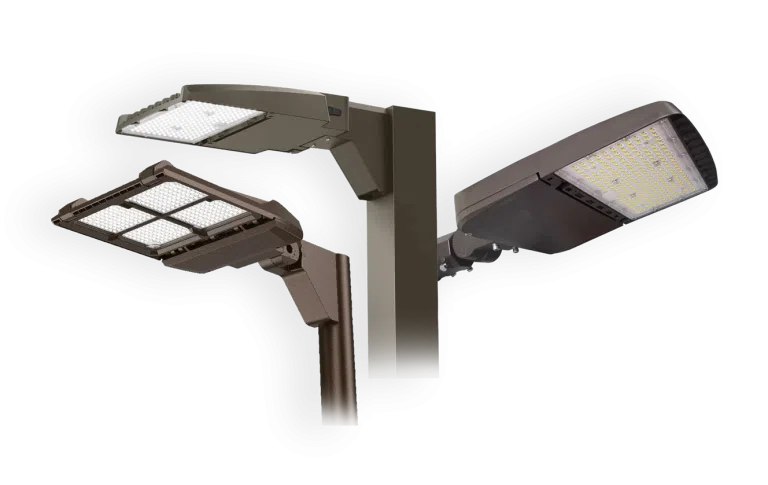

Get Your Custom Lighting Plan With Product Recommendations
- Fixture placement and spacing planned around detection zones, pole height, and target foot-candle levels for coverage during active and standby modes
- Fixture count, optics, and lumen output matched to mounting height with 0-10V or 1-10V dimming compatibility confirmed for motion control
- Dimming during low-traffic periods can help reduce energy use while maintaining background illumination for site visibility


Our Motion Sensor LED Parking Lot Lights include commercial exterior fixtures with 0-10V or 1-10V dimmable driver compatibility and programmable standby or shutoff settings. Available control configurations can operate at full output during detected vehicle or pedestrian activity, then dim to a standby level or turn off after a programmed delay. Models may also be combined with photocells for nighttime operation.
These fixtures are commonly used in parking lots and exterior areas at warehouses, industrial properties, apartment complexes, schools, churches, dealerships, employee lots, storage facilities, and perimeter areas.


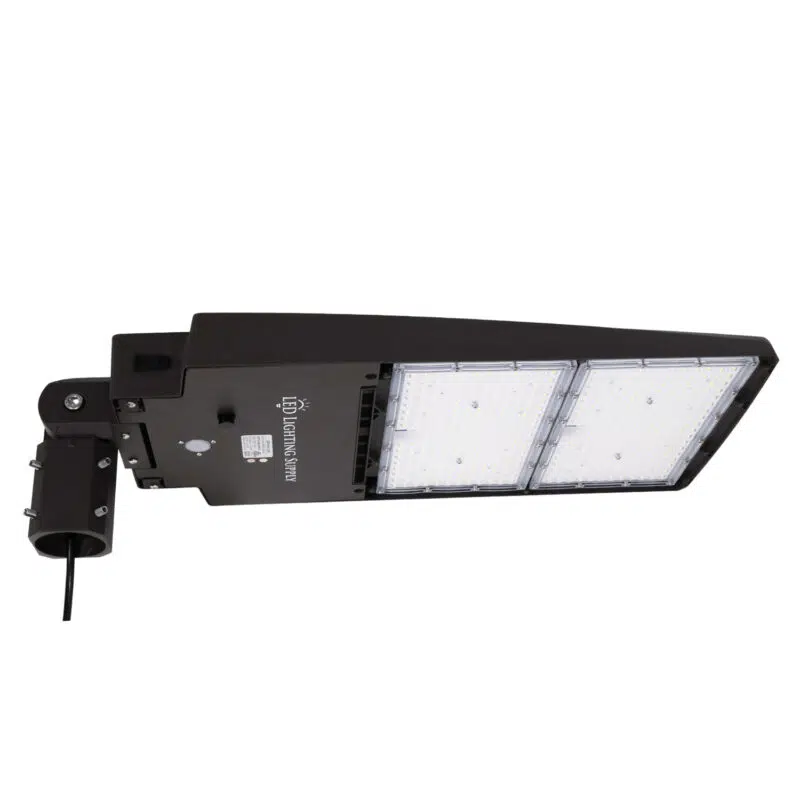
Motion Sensor LED Parking Lot Lights
Motion sensor LED parking lot lights automatically increase illumination when vehicles or pedestrians enter the detection area. After activity stops, the fixture can return to a lower standby level or turn off following a programmed delay, depending on the sensor, driver, and selected settings. These fixtures are well suited to parking lots and exterior areas with intermittent nighttime activity, including warehouses, industrial properties, apartment complexes, schools, churches, dealerships, employee lots, storage facilities, and perimeter areas. Sites that remain continuously busy may have fewer opportunities to benefit from motion-based dimming. Select the fixture's lumen output and light distribution for the site first, then verify sensor coverage, mounting height, dimming compatibility, standby settings, voltage, and photocell operation.
How Motion Sensor Parking Lot Lights Operate
Many commercial parking lot lights use a motion sensor connected to a compatible 0-10V or 1-10V dimmable driver. Depending on the fixture and control configuration, the light can be programmed to:
- Operate at full output while motion is detected
- Dim to a selected standby level after the area becomes vacant
- Remain at the standby level for a programmed period
- Turn off after an additional delay when supported by the fixture and sensor
Reducing output during low-traffic periods can lower energy use while maintaining background illumination for navigation, security cameras, and general site visibility. Actual savings depend on fixture wattage, nighttime traffic, standby level, hold time, shutoff settings, and operating schedule. Motion controls are often combined with a photocell. The photocell limits fixture operation to nighttime hours, while the motion sensor adjusts light output according to activity.
0-10V and 1-10V Motion Sensor Compatibility
Both 0-10V and 1-10V systems use low-voltage control wiring to adjust fixture output, but they do not always operate identically. A 0-10V system may allow the fixture to dim to a very low level or switch off when properly configured. A 1-10V system typically dims to a minimum output level and may require separate switching to turn the fixture completely off. Do not assume a motion sensor designed for one control method will operate correctly with the other. Before ordering, confirm that the fixture driver, motion sensor, dimming protocol, control wiring, and desired operating sequence are compatible. Available dimming ranges and shutoff capabilities vary by model.
Choosing the Right Motion Sensor Parking Lot Light
Sensor performance depends on more than fixture wattage. Pole height, detection pattern, mounting position, traffic direction, site layout, and nearby obstructions all affect how quickly and reliably the light responds. Before ordering, confirm:
- Mounting height: Verify that the sensor is rated for the installed pole height. A sensor intended for lower mounting may not provide reliable coverage from a tall parking lot light pole.
- Detection pattern: Match the sensor's coverage area to parking spaces, drive lanes, entrances, walkways, loading areas, or perimeter zones.
- Type of activity: Confirm that the sensor is suitable for detecting vehicles, pedestrians, or both at the required distance.
- Direction of travel: Sensors may respond differently to movement across the detection zone than to movement directly toward the fixture.
- Dimming protocol: Verify whether the fixture and sensor use 0-10V or 1-10V control.
- Standby level: Select the reduced output needed for background visibility when the area is vacant.
- Hold time: Choose how long the fixture remains at full output after motion is no longer detected.
- Shutoff sequence: Determine whether the light should remain dimmed throughout the night or turn off after an extended vacant period.
- Photocell operation: Confirm whether dusk-to-dawn control is included, optional, or handled by a separate photocell.
- Voltage: Match the fixture, driver, and sensor to the available electrical circuit.
- Outdoor rating: Confirm wet-location, operating-temperature, and environmental ratings for the complete fixture and sensor assembly.
Sensor Placement and Commissioning
The sensor should detect vehicles or pedestrians before they fully enter the primary illuminated area. Trees, signs, parked trucks, buildings, landscaping, and other obstructions can block detection or create unwanted activation. Settings should be tested after installation under normal nighttime conditions. Sensitivity, standby output, hold time, daylight threshold, and shutoff delay may need to be adjusted to prevent missed detection, rapid cycling, or activation caused by traffic outside the intended coverage zone. For properties with multiple poles, sensor zones should be planned so occupants are not forced to enter a dark area before the next fixture responds. Depending on the control system, neighboring fixtures may operate independently or communicate as a group.
Motion Sensors vs Photocells
A motion sensor changes fixture output when activity is detected. A photocell responds to ambient daylight and enables nighttime operation. They perform different functions and are often used together.
- Photocell only: Turns the parking lot light on at dusk and off after daylight returns.
- Motion sensor only: Changes output based on activity but may require another control to prevent daytime operation.
- Photocell and motion sensor: Enables the fixture at night and adjusts its output according to vehicle or pedestrian activity.
Fixture Selection, Certifications, and Warranty
The motion sensor controls how the fixture operates, but it does not determine the required lumen output or light distribution. Select the parking lot light according to pole height, pole spacing, optic type, mounting method, voltage, target foot-candle levels, uniformity, glare, and light-trespass requirements. Confirm that the selected fixture carries a recognized safety listing such as UL or ETL and verify DLC or DLC Premium status when utility rebates are expected. Sensor type, detection range, 0-10V or 1-10V compatibility, standby settings, voltage, surge protection, environmental ratings, and warranty coverage vary by model. Most LED Lighting Supply parking lot lights include a 5-year warranty unless otherwise specified. Installation and control wiring should be completed by a qualified electrical professional according to the fixture, driver, and sensor manufacturers' instructions. Need help selecting a motion sensor parking lot light? Provide the pole height, pole spacing, voltage, mounting method, site layout, expected vehicle and pedestrian activity, desired standby level, and whether photocell operation is required. LED Lighting Supply's Product Specialists can help identify a compatible fixture, driver, and sensor configuration.
Motion Sensor LED Parking Lot Lights FAQs
How Do Motion Sensor LED Parking Lot Lights Operate?
Motion sensor LED parking lot lights can operate at full output when motion is detected, then dim to a selected standby level or turn off after programmed delays, depending on the fixture, sensor, driver, and settings.
How Do I Confirm Motion Sensor And Driver Compatibility?
Confirm that the fixture driver, motion sensor, dimming protocol, control wiring, and desired operating sequence are compatible before ordering. A motion sensor designed for 0-10V control may not operate correctly with a 1-10V system, and dimming ranges and shutoff capabilities vary by model.
What Should I Consider When Selecting A Motion Sensor Parking Lot Light?
Select the sensor configuration based on mounting height, detection pattern, mounting position, traffic direction, site layout, nearby obstructions, standby level, hold time, shutoff sequence, photocell operation, voltage, and outdoor ratings. Also confirm that the sensor is suitable for detecting vehicles, pedestrians, or both at the required distance.
How Should Motion Sensor Coverage Be Planned Across Multiple Poles?
Sensor zones should be planned so occupants are not forced to enter a dark area before the next fixture responds. Depending on the control system, neighboring fixtures may operate independently or communicate as a group.
What Is The Difference Between A Motion Sensor And A Photocell?
A motion sensor changes fixture output when activity is detected, while a photocell responds to ambient daylight and enables nighttime operation. They are often used together so the fixture operates at night and adjusts output according to vehicle or pedestrian activity.
Does A Motion Sensor Determine The Required Light Output For A Parking Lot Fixture?
No, the motion sensor controls how the fixture operates but does not determine required lumen output or light distribution. Select the parking lot light according to pole height, pole spacing, optic type, mounting method, voltage, target foot-candle levels, uniformity, glare, and light-trespass requirements.
What Information Is Needed To Select A Compatible Motion Sensor Parking Lot Light?
Provide the pole height, pole spacing, voltage, mounting method, site layout, expected vehicle and pedestrian activity, desired standby level, and whether photocell operation is required. This information can help identify a compatible fixture, driver, and sensor configuration.