


LED Volleyball Court Lighting
- Indoor and outdoor fixture options for various court setups
- Most models include five-year warranty with USA-based support
- Product specialists available to help with fixture selection


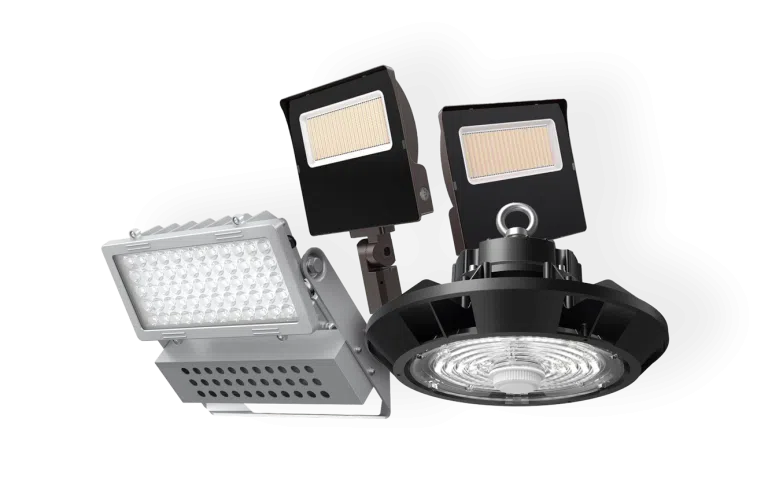

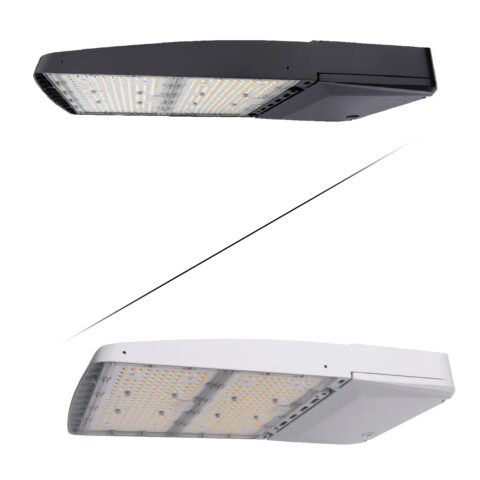
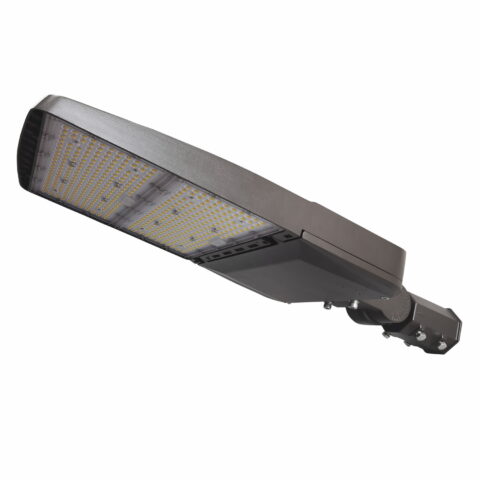
Our Volleyball Court Lights include indoor high bays, linear high bays, gymnasium fixtures, and outdoor pole-mounted area and sports lights. Available models vary by wattage, lumen output, voltage, optics, mounting method, color temperature, dimming, and control options. Recreational outdoor court installations may also use LED shoebox lights.
These fixtures are commonly used on indoor and outdoor volleyball courts at school gyms, recreation centers, multipurpose sports facilities, public parks, field houses, and competitive volleyball facilities.
-
 Starting At $309.00
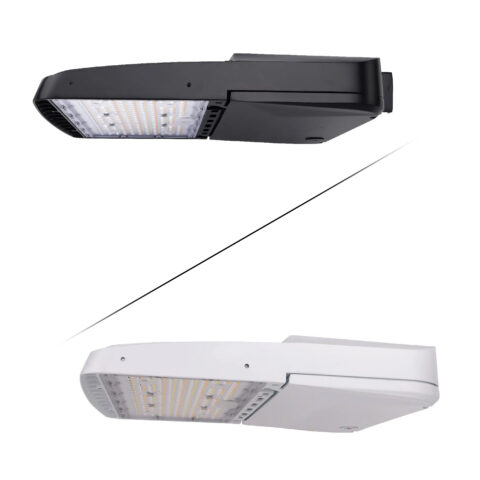


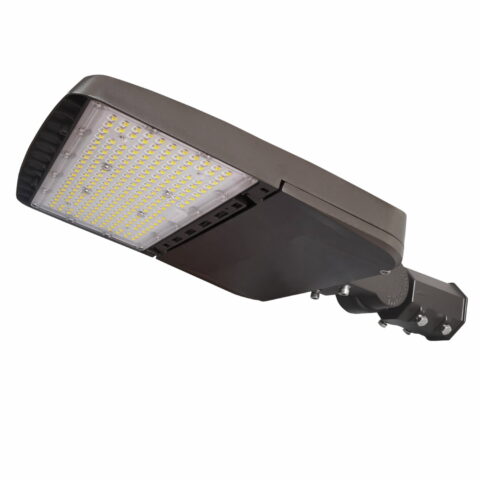

What Are LED Volleyball Court Lights?
LED volleyball court lights are indoor or outdoor sports lighting fixtures used to provide even illumination across the playing surface, net area, sidelines, and player movement zones. Volleyball lighting should help players track the ball at height, react quickly, and see clearly from multiple court positions without excessive glare.
Indoor volleyball courts typically use ceiling-mounted high bay fixtures, linear high bays, or gymnasium lighting depending on ceiling height, court layout, and fixture spacing. Outdoor volleyball courts usually use pole-mounted area lights or sports lights placed around the court perimeter. Pole height, optics, aiming, glare control, and fixture placement all affect how well the light reaches the center of the court.
LED volleyball court lighting can replace older metal halide or fluorescent systems when the selected fixture, voltage, mounting method, controls, and wiring conditions are compatible. Many projects use 4000K or 5000K color temperature depending on facility preference and surrounding lighting. Confirm voltage, wattage, lumen output, optics, mounting height, controls, certifications, and warranty coverage before ordering.
Case Study:Outdoor Volleyball Lighting with LED Lighting Supply 200 Watt LED Area Flood Light in Sherwood, OR
|
After: 200 Watt LED Area Flood Light | 28000 Lumens |
 |
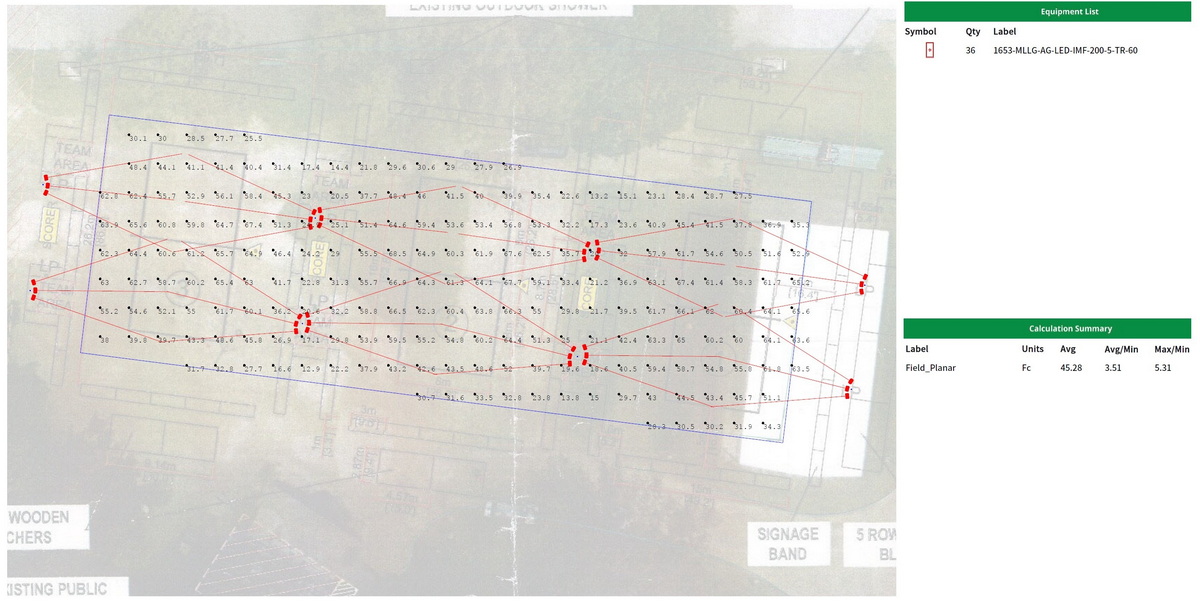
Lighting Plan We Created for the Customer
| Lighting Plan | Heat Map |
 |
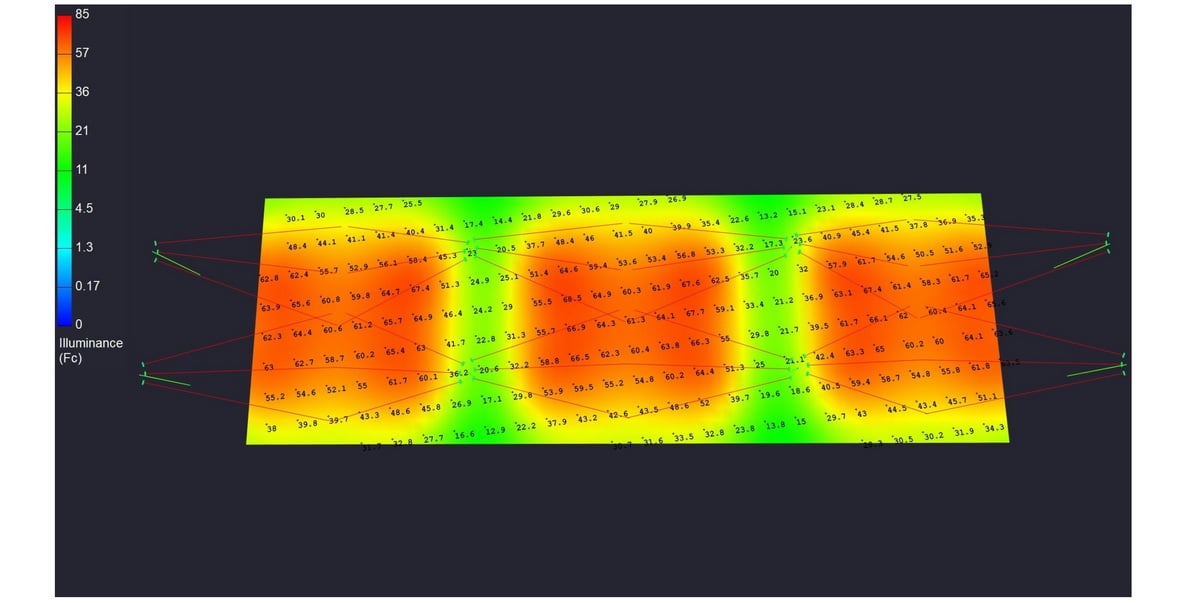 |
Volleyball Court Lighting Installation Plan Metrics
- Mounting height: 24 ft
- Fixture Used: MLLG-AG-LED-IMF-200-5-[Optic]-TR-[V]: 200 Watt LED Area Flood Light | 28000 Lumens | 5000K | 100V-277V or 277V-480V | Optional Marine Grade Finish
- FC achieved:45.28 fc average
- Uniformity (Avg/Min): 3.51
Selection and Installation Note: Product specifications, wattage, lumen output, optics, beam angle, color temperature, CRI, voltage, dimming, controls, mounting method, pole height, certifications, and warranty coverage vary by model. Confirm the selected product specification before ordering. For volleyball courts, schools, recreation centers, public parks, competitive facilities, or code-sensitive applications, verify requirements with the facility team, project specifier, local inspector, or a licensed electrical professional.
Best Types of LED Lighting for Volleyball Courts
Indoor Volleyball Courts
Indoor volleyball courts commonly use ceiling-mounted high bays, linear high bays, or gymnasium fixtures. The goal is to provide even light across the court while reducing shadows, glare, and dark spots near the net, sidelines, and backcourt. LED gymnasium lights are often used in school gyms, recreation centers, and multipurpose sports facilities.
Outdoor Volleyball Courts
Outdoor volleyball courts commonly use pole-mounted fixtures placed around the court perimeter. LED shoebox lights may be used for recreational or small outdoor courts when the optics, pole height, aiming, and fixture spacing are appropriate. Higher-level outdoor courts may need sports lighting fixtures with tighter glare control and more precise beam distribution.
How to Choose Volleyball Court Lighting
| Selection Factor | What to Confirm |
|---|---|
| Indoor vs. outdoor court | Indoor courts usually use ceiling-mounted fixtures. Outdoor courts usually use pole-mounted area or sports lights. |
| Mounting height | Confirm ceiling height, pole height, fixture spacing, aiming, and maintenance access. For outdoor installations, review available volleyball court light poles. |
| Glare control | Review fixture placement and optics so players are not looking directly into harsh light during serves, sets, or overhead play. |
| Uniformity | Confirm even coverage across the full court, including the net, sidelines, backcourt, and player approach areas. |
| Ball visibility | Review fixture placement, CRI, glare control, and vertical illuminance so players can track the ball at height. |
| Controls | Confirm compatibility with dimming, occupancy sensors, timers, scheduling, or facility controls where needed. |
| Outdoor conditions | For outdoor courts, confirm wet-location rating, IP rating where relevant, wind exposure, pole requirements, glare toward nearby properties, and local lighting restrictions. |
Recommended Foot-Candles for Volleyball Courts
Recommended volleyball court light levels vary by indoor or outdoor use, level of play, mounting height, court layout, glare control, uniformity, and whether the facility supports recreational, school, competitive, or broadcast play. Use the widget below for early planning. Final fixture count, placement, and light levels should be confirmed for the specific court and level of play.

Common Volleyball Court Lighting Mistakes
- Choosing wattage instead of evaluating the layout: Volleyball lighting depends on delivered light, fixture placement, mounting height, optics, glare control, and uniformity - not wattage alone.
- Ignoring vertical visibility: Players need to track the ball above eye level, near the ceiling, and across the net.
- Using parking-lot optics for outdoor courts without review: Outdoor court lighting may need different beam control than general area lighting.
- Creating glare near the net or service area: Poorly aimed fixtures can interfere with serves, sets, and overhead play.
- Mixing color temperatures: Inconsistent color temperature can make the court look uneven and may affect visual comfort.
- Skipping control compatibility: Dimming, sensors, or scheduling should be confirmed for the selected fixture and facility controls.
- Overlooking outdoor spill light: Outdoor volleyball courts should be reviewed for glare toward nearby properties, walkways, parking areas, or roads.

Volleyball Court Lighting Certifications and Warranty Support
Selected LED volleyball court light models from LED Lighting Supply carry safety certifications or listings from organizations such as UL, ETL, or CSA, depending on the product. Selected models may also be DLC or DLC Premium listed for utility rebate support where available. DLC qualification is an efficiency and performance program, not an electrical safety certification. Rebate requirements vary by utility, region, and product listing, so confirm eligibility on the selected product specification before ordering.
Warranty coverage varies by product, with many models offering a 5-year warranty unless otherwise specified. USA-based warranty support is available. Before purchase, confirm certifications, DLC status, voltage, controls compatibility, mounting method, environmental rating, warranty coverage, and whether the fixture is right for the court layout and surrounding conditions.
Need Help Choosing Volleyball Court Lighting?
Choosing the right volleyball court lighting depends on indoor or outdoor use, ceiling height or pole height, fixture placement, optics, foot-candle target, glare control, controls, and level of play. LED Lighting Supply Product Specialists can help review your court layout and recommend fixture options for your project.
LED Volleyball Court Lighting FAQs
How Do I Choose Between Indoor And Outdoor Volleyball Court Lighting?
Indoor volleyball courts commonly use ceiling-mounted high bays, linear high bays, or gymnasium fixtures, while outdoor courts commonly use pole-mounted area lights or sports lights around the court perimeter. Confirm mounting height, fixture spacing, optics, aiming, glare control, and court layout for the selected installation.
What Should Be Considered When Planning Volleyball Court Light Levels?
Volleyball court light levels vary by indoor or outdoor use, level of play, mounting height, court layout, glare control, and uniformity. Final fixture count, placement, and light levels should be confirmed for the specific court and level of play.
Why Is Glare Control Important For Volleyball Court Lighting?
Glare control is important because players need to track the ball at height and should not be looking directly into harsh light during serves, sets, or overhead play. Review fixture placement and optics for glare near the net, service area, and other player movement zones.
What Areas Of A Volleyball Court Need Even Lighting?
Volleyball court lighting should provide even coverage across the playing surface, net area, sidelines, backcourt, and player approach areas. Indoor lighting goals also include reducing shadows, glare, and dark spots near these areas.
Can LED Volleyball Court Lights Replace Older Metal Halide Or Fluorescent Systems?
LED volleyball court lighting can replace older metal halide or fluorescent systems when the selected fixture, voltage, mounting method, controls, and wiring conditions are compatible. Confirm the selected product specification before ordering because these factors vary by model.
What Controls Can Be Used With LED Volleyball Court Lights?
Many LED fixtures can support dimming, occupancy sensors, timers, or facility controls depending on the model. Confirm compatibility with the selected fixture and existing facility controls where needed.
What Should Be Confirmed For Outdoor Volleyball Court Lighting?
For outdoor volleyball courts, confirm wet-location rating, IP rating, wind exposure, pole requirements, glare toward nearby properties, and local lighting restrictions. Optics, pole height, aiming, and fixture spacing should also be appropriate for the court.
Do LED Volleyball Court Lights Include Certifications And Warranty Coverage?
LED volleyball court lights from LED Lighting Supply carry a safety listing such as UL, ETL, or CSA depending on product, and many models are DLC or DLC Premium listed for utility rebate support where available. Most LED volleyball court lights include a 5-year warranty unless otherwise specified.
