LED Explosion Proof Lighting
- Fixtures rated for Class I, II, or III hazardous locations available
- Options for Division 1 and Division 2 classified areas
- USA-based support for hazardous location fixture selection


Get Your Custom Lighting Plan With Product Recommendations
- Layout designed around classified-area fixture placement, mounting height, and foot-candle targets for task visibility
- Fixture selection matched to Class, Division, Group, temperature code, and ambient requirements for the application
- LED options can help reduce energy use and extend maintenance intervals compared with legacy HID systems


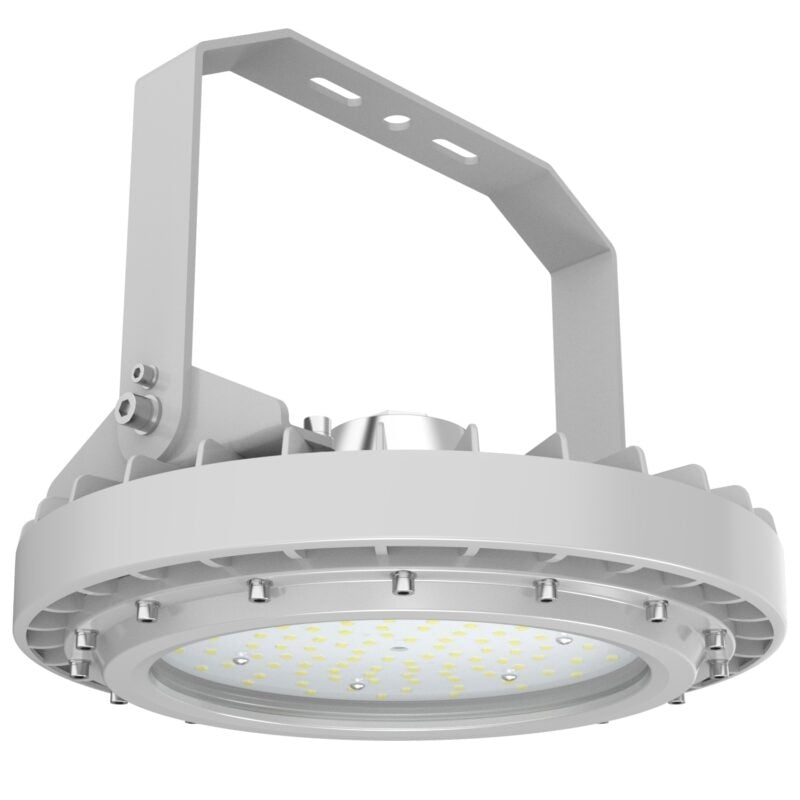
Our LED Explosion Proof Lights for Hazardous Locations include round and square high bays, linear fixtures, flood lights, jelly jars, panel lights, emergency and exit lights, junction boxes, and mounting accessories. Available models vary by fixture style, lumen output, beam angle, voltage, controls, and pendant, ceiling, wall, yoke, pole, bracket, and surface mounting configurations. These fixtures are commonly used in chemical processing, paint and finishing areas, oil and gas facilities, fuel handling zones, food and grain processing plants, wastewater treatment facilities, battery storage areas, textile and paper operations, mining areas, and material handling facilities.


What Are Explosion Proof / Hazardous Location Lights?
Explosion proof and hazardous location lights are designed for areas where flammable gases, vapors, liquids, combustible dusts, ignitable fibers, or flyings may create a fire or explosion risk. These fixtures are used in classified industrial environments where ordinary electrical equipment may become an ignition source. The correct fixture depends on the hazardous location classification for the exact area where the light will be installed.
Before ordering, confirm the required Class, Division, Group, temperature rating or maximum surface temperature, certification, voltage, mounting method, ambient temperature rating, and environmental conditions. The area classification should be based on the materials present, release sources, ventilation, process conditions, housekeeping, and applicable site documentation or code requirements.
Class I locations involve flammable gases or vapors. In these environments, explosion proof fixtures are designed to contain an internal ignition if gas enters the enclosure and is ignited, then prevent that ignition from spreading to the surrounding atmosphere.
Class II locations involve combustible dusts, while Class III locations involve ignitable fibers or flyings. In these environments, the concern is different from Class I gas protection. Properly rated fixtures help reduce ignition risk by limiting dust, fiber, or flying entry and accumulation, controlling surface temperatures, and preventing arcs, sparks, or hot surfaces from igniting combustible material when properly rated, installed, and maintained.
Selection and Installation Note: Product specifications, hazardous-location markings, ratings, controls, certifications, and warranty coverage vary by model. Confirm the selected product specification before ordering. For code-sensitive, electrical, emergency, hazardous-location, or safety-critical applications, verify requirements with your local inspector, facility safety team, project specifier, or a licensed electrical professional.
Recommended Foot-Candles for Explosion Proof and Hazardous Location Lighting
Use the tool below for general starting foot-candle ranges by application. Foot-candle guidance helps estimate light levels for work tasks, inspection areas, process spaces, paint shops, distilleries, foundries, and classified industrial areas. It does not determine whether a fixture is suitable for a hazardous classified location. Fixture selection must still be verified against the marked hazardous-location rating, temperature code or maximum surface temperature, ambient rating, environmental exposure, and installation requirements.
Step 1: Find your foot candle levels
Step 2: Estimate your fixture count and space
Explosion Proof Lighting Layout Estimator
Use this estimator to calculate approximate fixture count, spacing, and average foot-candles for hazardous locations, industrial facilities, chemical areas, and classified spaces using explosion proof LED fixtures. Enter your room dimensions, mounting height, target foot-candles, light loss factor, and room/layout condition to generate a preliminary lighting layout. When IES photometry is available, workplane height and room reflectance controls are shown.
Project Inputs
Estimated Results
Estimated average foot-candles are preliminary and should be verified with a lighting plan for project-critical applications.
Room / Layout Condition: This field is used only when usable IES photometry is not available. In fallback mode, it acts as a simplified room utilization factor for reflectance, fixture distribution, racking, obstructions, and how much fixture light reaches the work area. Open / light-colored spaces use 0.90, typical warehouses or shops use 0.75, racked or obstructed spaces use 0.60, and dark or complex spaces use 0.45. When IES photometry is active, this field is hidden and the estimator uses the selected workplane height, LLF, and simplified reflectance adjustment instead.
Photometry / Simulation Note: When usable IES photometry is available for the selected fixture, this estimator uses the fixture’s IES candela data, selected workplane height, light loss factor, and simplified reflectance adjustment to estimate fixture count, average foot-candles, and visual light distribution. The reflectance adjustment is a conservative approximation and is not a full zonal-cavity, radiosity, or professional photometric room calculation. When IES photometry is not available, the estimator uses a simulated beam model based on lumens, mounting height, room/layout condition, light loss factor, and beam angle.
Preliminary Estimate Only: This estimator is intended for simple square or rectangular spaces and should be used as a planning aid, not a final photometric lighting plan. Actual light levels may vary based on fixture optics, selected IES file, mounting conditions, workplane height, ceiling height, surface reflectance, obstructions, controls, voltage, installation conditions, and site-specific requirements. Project-critical applications should be verified with a formal lighting plan.
This estimate is a starting point. Warehouses, industrial facilities, hazardous locations, sports areas, schools, healthcare spaces, public areas, and code-sensitive projects may require a reviewed lighting layout before purchase or installation.
Explosion Proof Lighting Selector
Use the selector below as a starting point to narrow hazardous location lighting options by application and fixture type. Before ordering, match the fixture’s marked rating to the area classification, material present, ambient temperature, mounting method, and installation environment.
Explosion Proof / Hazardous Location Lighting Selector
Shop by Fixture Type
Browse explosion proof and hazardous location lighting by fixture style:
- High Bay Lights: Round and square styles
- Linear Lights
- Flood Lights
- Jelly Jar Lights
- Emergency and Exit Lights
- Panel Lights
Related accessories: Junction boxes and mounting brackets.
Explosion proof and hazardous location lighting is commonly used in classified areas within chemical processing, paint and finishing, oil and gas, fuel handling, food and grain processing, wastewater treatment, battery storage, hydrogen, textile, paper, certain mining or material handling areas, and other industrial facilities. Mining applications may require MSHA or mine-specific approval requirements. The industry alone does not determine the required fixture rating.
Classification depends on the materials present, release sources, ventilation, process conditions, equipment layout, housekeeping, and how often hazardous gases, vapors, dusts, fibers, or flyings may be present. For a deeper explanation of classifications and example environments, see our Hazardous Location Lighting Buyer’s Guide.
When Explosion Proof Lights Are Required
Explosion proof or hazardous location lighting may be required where flammable gases, vapors, liquids, combustible dusts, ignitable fibers, or flyings are present and the area has been classified under applicable electrical codes. The fixture should not be selected only by brightness or fixture style. It must be suitable for the specific classified location.
| Use Explosion Proof Lights When | Do Not Use Them as a Shortcut When |
|---|---|
| The area is classified as hazardous because flammable gases, vapors, combustible dusts, or ignitable fibers may be present. | The area has not been assessed and the required fixture rating is unknown. |
| The facility requires equipment suitable for Class I, Class II, or Class III locations based on the material present and exposure likelihood. | The space is only wet, dusty, or dirty but is not a classified hazardous location. A vapor tight or industrial fixture may be more appropriate. |
| The fixture must be listed for the hazardous location and matched to the installation environment, voltage, mounting, ambient temperature, and applicable temperature requirements. | The fixture is being selected only because it is rugged without confirming the actual hazardous location requirement. |
| Maintenance access is difficult or safety-sensitive and long-life LED operation may reduce service frequency when the fixture is properly rated, operated within its marked ambient range, and maintained according to manufacturer instructions. | The installation budget does not include qualified labor, approved wiring methods, fittings, seals, boxes, cable glands where permitted, or other required hazardous location components. |
| The site requires lighting for process areas, paint booths, chemical handling, fuel transfer, grain dust, wastewater, certain mining or material handling areas, or similar classified spaces. Mining applications may require MSHA or mine-specific approval requirements. | The classification is assumed from the industry alone. Actual classification depends on materials, release sources, ventilation, process conditions, housekeeping, equipment layout, and exposure likelihood. |
How to Choose Explosion Proof Lights
The most important buying decision is not the wattage. The fixture must first match the hazardous location classification. That classification may be documented through a facility hazardous area assessment, area classification drawings, electrical design documents, or AHJ requirements.
Once the classification is confirmed, fixture style, lumen output, beam angle, mounting method, voltage, controls, corrosion resistance, temperature suitability, and foot-candle requirements can be selected.
Depending on the facility and jurisdiction, hazardous area classification may reference standards or guidance such as the NEC, NFPA 497, NFPA 499, NFPA 30, NFPA 33, API guidance, IEC 60079 standards, or other project-specific requirements. These references help determine whether gases, vapors, dusts, fibers, or flyings are present often enough to require classified electrical equipment.
Some projects use the NEC Class/Division system, while others may use a Zone system such as NEC Article 505 for gases and vapors, NEC Article 506 for combustible dusts, or international Zone 0, Zone 1, Zone 2, Zone 20, Zone 21, and Zone 22 classifications. Confirm which classification system applies before matching a fixture to the project.
Toyota Motor Manufacturing Indiana Upgrades to Explosion-Proof LED Lighting Case Study
The Backstory of Toyota Indiana's Relationship With LED Lighting Supply
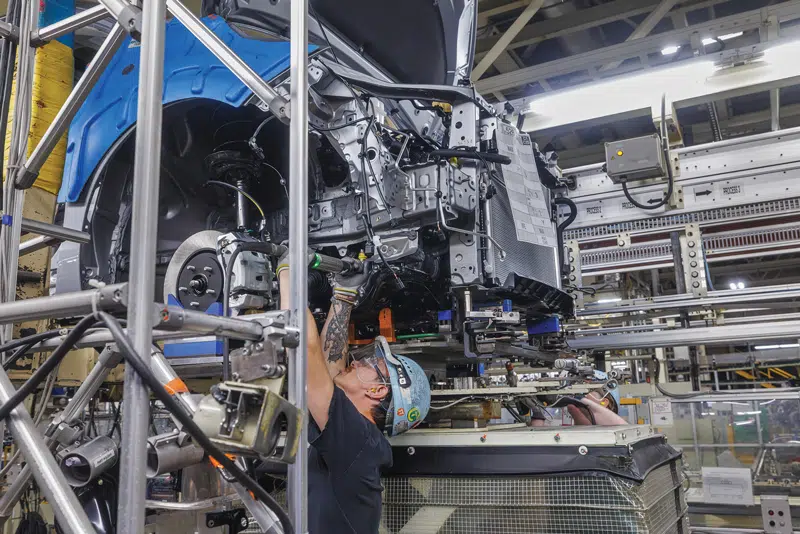
The project began when Toyota Motor Manufacturing Indiana's (TMMI) Environmental Engineer, Lisa Harmon, reached out to LED Lighting Supply. Lisa needed support in upgrading the company’s Princeton, Indiana auto assembly plant paint booth lights. A contractor working on a separate project at the plant had previously installed our explosion proof fixtures. Their team wanted to order additional replacement fixtures for an area outside of the paint booth. As the project progressed, the purchasing process was handled through Toyota’s distributor, C & E Advanced Technologies. The purchasing channel transferred from Toyota directly to the distributor, while we continued our role as the lighting supplier for the project.
The Challenge of the Hazardous Location Project
The TMMI plant paints vehicle materials, builds automotive bodies, welds panels, and assembles entire vehicles. Heavy-duty work like this creates an environment where flammable vapors may be present during normal operations. Every light fixture in a hazardous area is subject to classification. The legacy fluorescent lighting serving those spaces had reached the end of its useful life and was producing uneven light levels across the work area. The lighting solution needed to raise illumination levels while meeting the safety requirements for high-level assembly work.
Lighting plan metrics:
- Product(s) Used: MLLG-E-LED-EXPLC-150-50-[V]-C1D1
Blue Origin Explosion Proof LED Lighting Case Study
The Backstory of Our Collaboration With Blue Origin
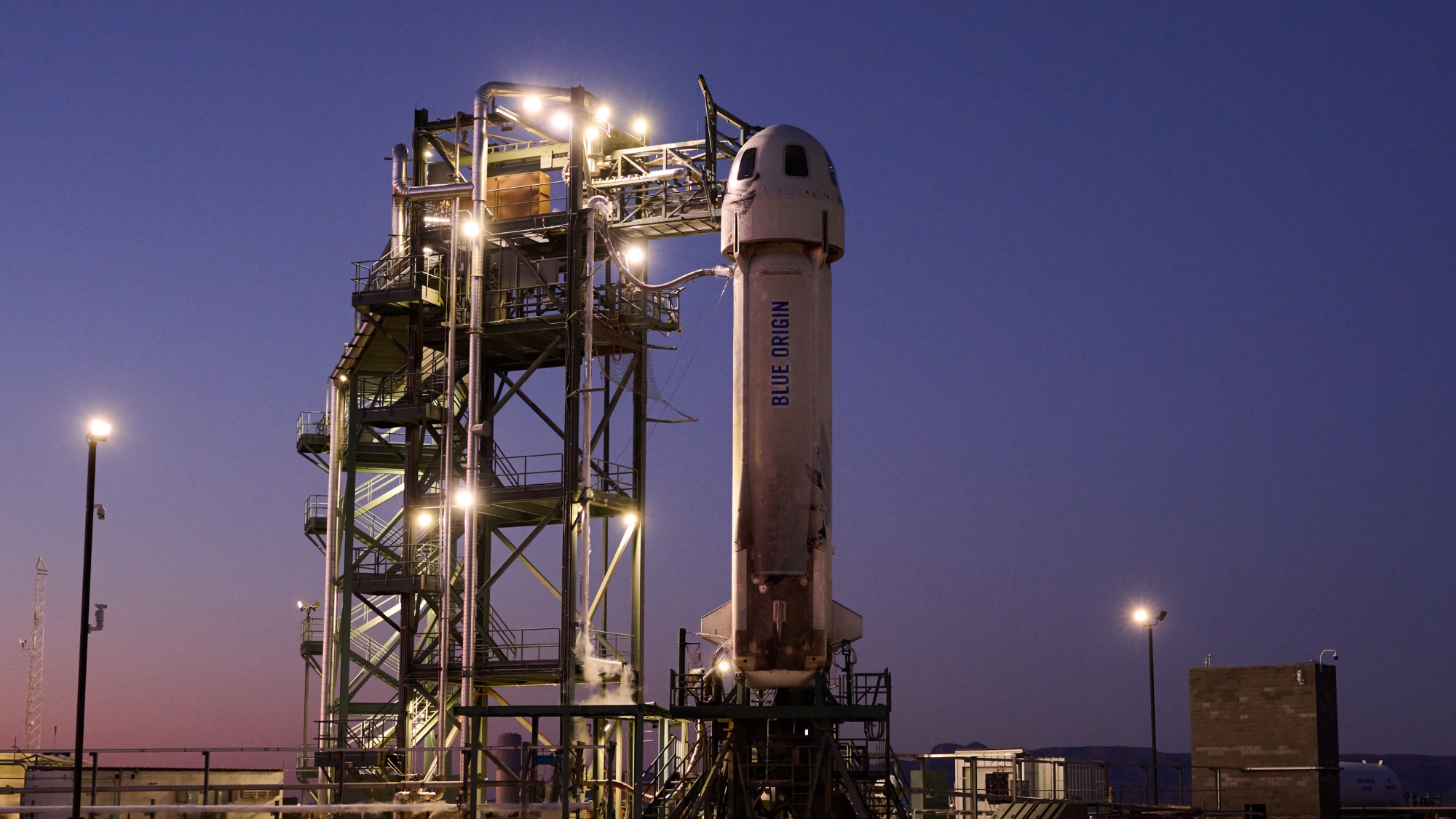
LED Lighting Supply’s collaboration with Blue Origin started when Control Engineer Matthew Vanderploeg reached out in 2023. His team was seeking support on an explosion proof LED lighting upgrade for their rocket engine testing station in Huntsville, Alabama. Blue Origin is an aerospace company that develops and launches reusable rocket systems and space technologies. Their Alabama team was reconfiguring the historic Apollo-era Test Stand 4670 at NASA’s Marshall Space Flight Center near their production factory. The environment supported hot-fire certification and development testing of rocket engines, making it a hazardous location.
The 1000-watt metal halide system used in the old configuration produced uneven light levels. The inconsistent lighting caused operational concerns in the Class I, Division 2 (C1D2) rated environment. For an aerospace engineering operation, lighting is not a background concern. Engineers rely on recorded visual details to evaluate engine performance, and inconsistent illumination compromises the footage. Crews working around pressurized equipment need to see clearly at all times to ensure safety. The lighting upgrade had to improve overall visibility in the space while complying with hazardous location lighting requirements.
The Challenge of the Aerospace Explosion Proof Project
The following requirements shaped the project conversation right away. The light fixtures needed a C1D2 rating for the hazardous testing environment. The lighting solution needed to perform under high-speed camera recordings at 6,000 frames per second without flickering. LED fixtures can produce a flicker that the human eye does not see, but a high-speed camera captures it as brightness flashing across frames. With video footage meant to document engine behavior during the hot fire, that kind of detail contaminates the record.
The team had not yet determined how much light the cameras would require. The first order needed to function as a test run across multiple output levels rather than a final specification. The reconfiguration schedule was already underway, so Blue Origin required a lighting partner with readily available light fixtures rated for hazardous environments.
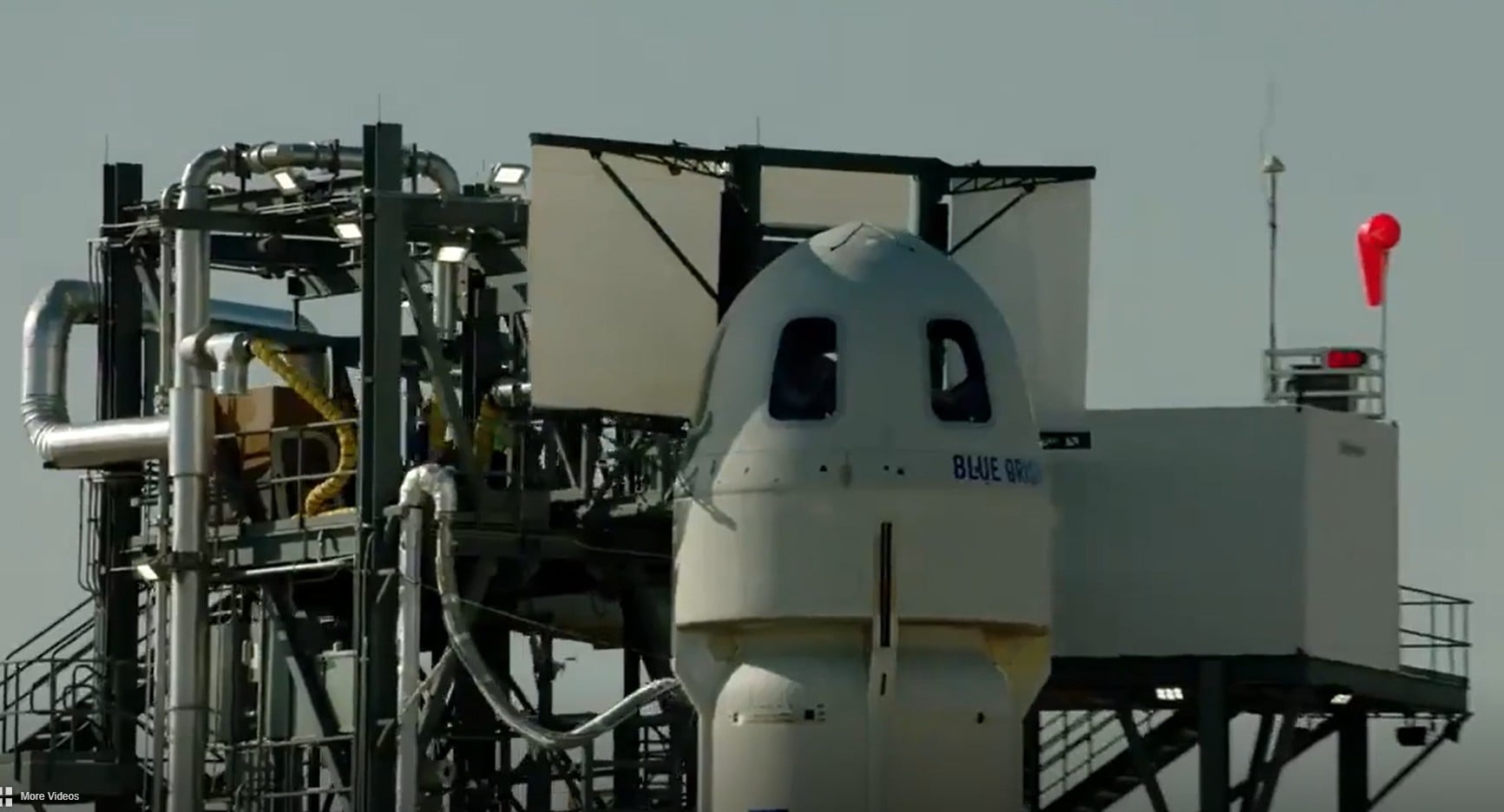
Lighting plan metrics:
- Product(s) Used: MLLG-E-LED-EXPLA-400-50-[V]-C1D2
Barrette Outdoor Living’s Explosion Proof Lighting Case Study
The Backstory
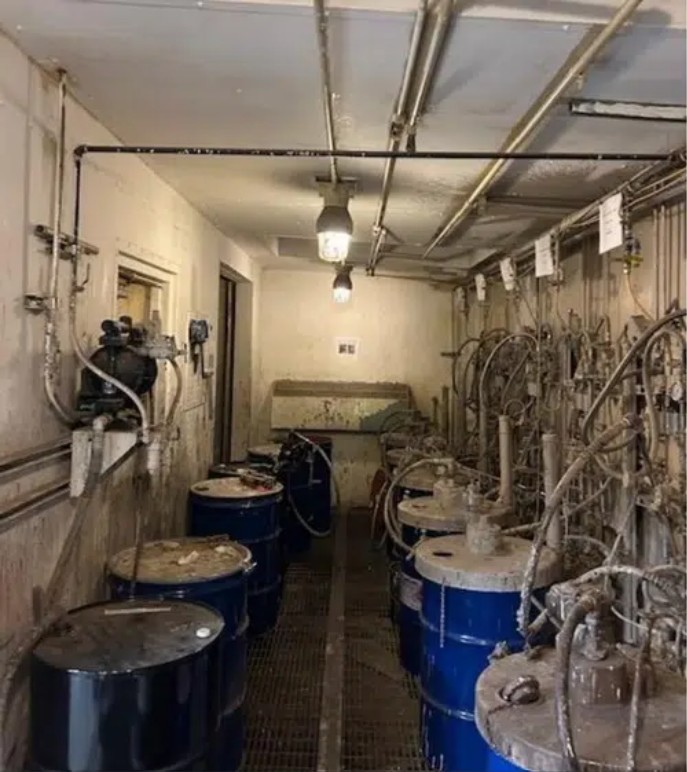
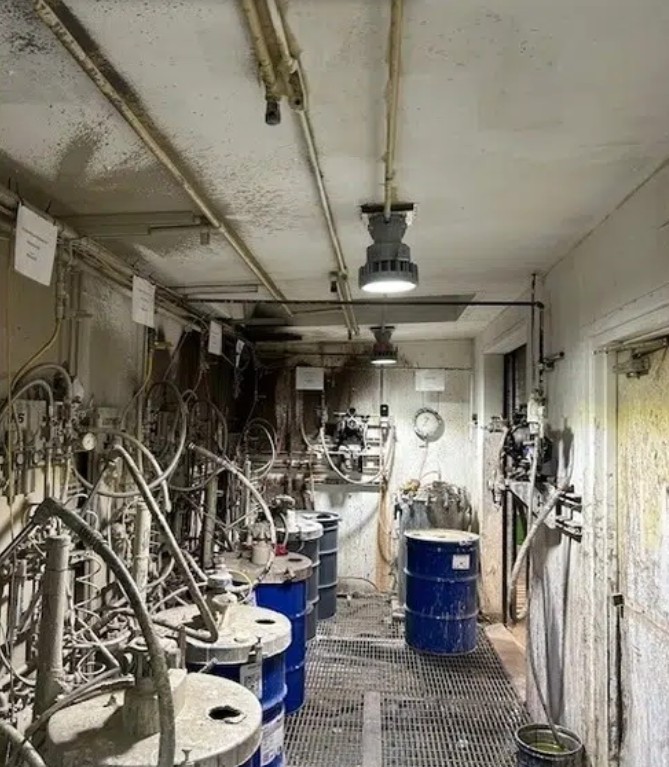
Barrette Outdoor Living, an Oldcastle APG brand, struggled to properly illuminate an existing paint booth with inadequate, exposed fluorescent lighting, leading to a remodel. The Operations Manager, Brandon Hiller, sought LED Lighting Supply's Product Specialist, Joe Hawkins, for expert guidance on the LED lighting upgrade.
The Customer Challenge
The customer needed support in selecting the proper lighting solution for their demanding environment. Barrette Outdoor Living required fixtures for an area that frequently contains flammable paint chemicals and sprays such as lacquers and gelcoat. Additionally, the customer was renovating parts of the booth, including pulling down the ceiling, reframing the walls, and rewiring, while leaving the sprinkler system in place. Due to the intended use of the property, the flammable paint chemical exposure in the environment was not only a concern but also required specialized lighting specifications to comply with local standards. Our team understood that upgrading lighting in hazardous locations involves more complex planning than traditional spaces. The goal was to achieve brighter, safer lighting with minimal shadowing.
Lighting Plan We Created for the Customer
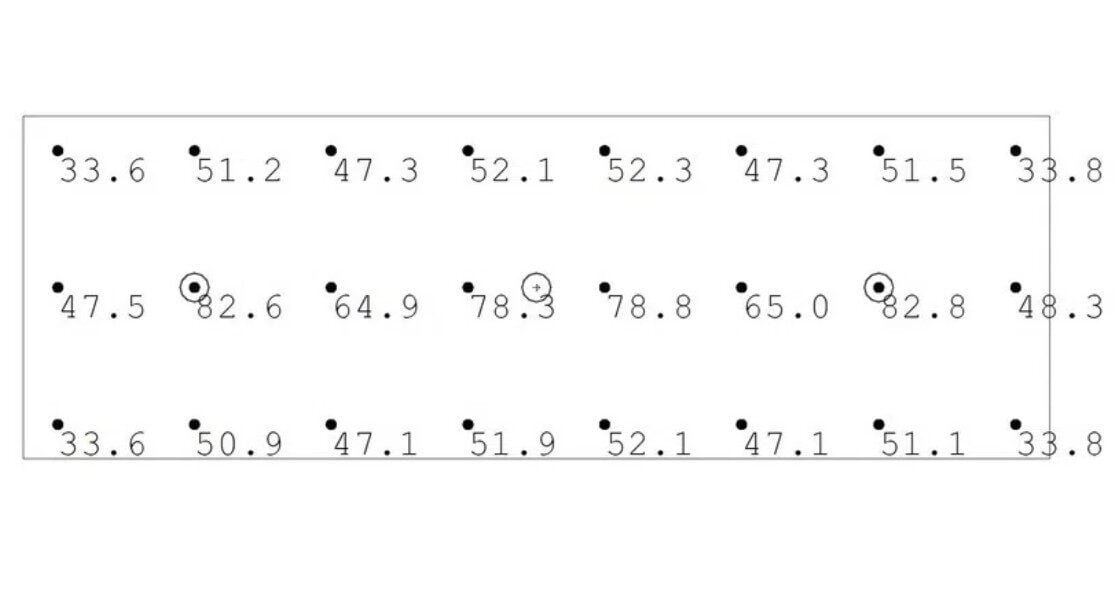

Lighting Plan Metrics:
- Mounting Height: 10 ft
- Fixture Used: 50 Watt Round Explosion Proof LED Light
- Average Foot Candles Achieved: 53
- Product(s) Used: MLLG-E-EXPLS2-150-50-C1D1
Class, Division, and Group Classification
Hazardous-location lighting must be approved for the specific Class, Division, and Group assigned to the installation area. The Class identifies the general type of hazardous material, the Division indicates how likely the material is to be present in an ignitable concentration, and the Group identifies materials with similar ignition and explosion characteristics.
The examples below are common references, but they are not a substitute for the facility's documented area classification. Always confirm the exact gas, vapor, dust, fiber, or flying material present before selecting a fixture.
| Classification | What It Means for Fixture Selection |
|---|---|
| Class I | Applies where flammable gases, flammable-liquid vapors, or combustible-liquid vapors may create an ignitable atmosphere. Common applications may include petroleum processing, fuel storage and transfer, paint and solvent operations, chemical processing, gas-handling facilities, spray finishing areas, and certain aircraft maintenance locations. |
| Class II | Applies where combustible dust may be present in quantities capable of creating a fire or explosion hazard. Common applications may include grain elevators, flour mills, feed plants, coal-handling facilities, woodworking operations, plastic processing plants, chemical manufacturing areas, and facilities that process combustible metals. |
| Class III | Applies where ignitable fibers or flyings are handled, manufactured, or used. Examples may include cotton fibers, textile fibers, lint, wood shavings, and similar larger combustible particles. These materials are generally not suspended in the air in the same manner as Class II dust, but they may collect around equipment and create a fire hazard. |
| Division 1 | The hazardous material may be present in ignitable concentrations during normal operation, routine maintenance, repair, leakage, or frequent process conditions. Fixtures must be specifically approved for Division 1 and for the applicable Class and Group. |
| Division 2 | The hazardous material is not normally expected to be present in ignitable concentrations during normal operation. It may become present following a leak, container rupture, equipment failure, ventilation failure, process upset, or another abnormal condition. Division 2 approval does not make a fixture suitable for a Division 1 location. |
Class I Gas and Vapor Groups
Class I Groups A through D categorize flammable gases and vapors according to characteristics such as ignition energy, explosion pressure, and the ability of flame to travel through enclosure openings. A fixture must be marked for the specific group present or for a broader group combination that includes it.
| Class I Group | Typical Gases and Vapors |
|---|---|
| Group A | Acetylene. Group A is reserved for acetylene atmospheres. A fixture approved for Groups B, C, and D should not be assumed to carry Group A approval. Confirm that Group A is specifically included on the fixture's certification label. |
| Group B | Hydrogen and materials with similar ignition characteristics. Examples may include hydrogen, gases containing substantial concentrations of hydrogen, butadiene, ethylene oxide, propylene oxide, and acrolein. Exact classifications should be verified because some materials may be assigned differently depending on concentration or use conditions. |
| Group C | Ethylene and materials with similar ignition characteristics. Examples may include ethylene, cyclopropane, ethyl ether, and certain process gases or vapors with comparable hazardous properties. |
| Group D | Propane and many commonly encountered industrial gases and vapors. Examples may include propane, methane, natural gas, gasoline vapors, butane, acetone, ammonia, benzene, ethanol, methanol, naphtha, and certain paint or solvent vapors. The specific substance must still be verified because not every industrial solvent or fuel vapor belongs to Group D. |
Class II Combustible Dust Groups
Class II Groups E through G categorize combustible dust according to properties such as electrical conductivity, thermal characteristics, particle composition, and explosion severity. Dust that settles on a fixture may also interfere with heat dissipation, so the fixture's dust-group approval, enclosure rating, installation conditions, and maximum surface temperature should all be confirmed.
| Class II Group | Typical Combustible Dusts |
|---|---|
| Group E | Electrically conductive combustible metal dust. Examples may include aluminum, magnesium, and their commercial alloys, along with other combustible metal dusts having similar conductive and abrasive characteristics. Under the traditional Class/Division system, Group E is associated with Class II, Division 1 locations. Metal-dust classifications should be verified by a qualified professional because particle size, composition, and process conditions can materially affect the hazard. |
| Group F | Carbonaceous combustible dust. Examples may include coal, carbon black, charcoal, and coke dust. These materials may create an explosion hazard when dispersed in the air and may also accumulate on fixtures and electrical equipment. |
| Group G | Other nonconductive combustible dust. Examples may include grain, flour, starch, sugar, cocoa, spices, wood flour, sawdust, plastic, rubber, pharmaceutical, and chemical dust. A material is not automatically Group G simply because it is organic or nonmetallic. Its combustible-dust characteristics and documented classification must be confirmed. |
How to Read a Complete Hazardous-Location Classification
A classification such as Class I, Division 1, Groups C and D indicates that flammable gases or vapors may be present during normal operating conditions and that the fixture is approved only for the gas groups shown on its certification.
A fixture marked Class I, Division 2, Groups A, B, C, and D may cover more gas groups, but its Division 2 approval would not make it suitable for a Division 1 installation. Class, Division, and Group must be evaluated together. Approval for the correct Class alone is not sufficient, and a general description such as “explosion proof” does not establish suitability for every hazardous location.
Also verify the fixture's temperature code or marked maximum surface temperature, ambient temperature range, voltage, mounting orientation, environmental ratings, and any restrictions stated in the listing documentation. Conduit, seals, junction boxes, controls, emergency components, wiring methods, and other components may also need hazardous-location approval.
Hazardous-area classification and electrical equipment selection should be completed or verified by a qualified engineer, electrician, safety professional, or other person familiar with the facility's processes, material properties, applicable electrical code, and authority having jurisdiction.
T Rating and Maximum Surface Temperature
The T Rating, also called the temperature code or temperature class, identifies the maximum surface temperature the fixture is permitted to reach under the conditions covered by its listing. A fixture may have the correct Class, Division, and Group but still be unsuitable if its marked maximum surface temperature is too high for the hazardous material or accumulation conditions present.
Some hazardous-location fixtures are marked with broad temperature classes such as T3, T4, T5, or T6. Others may include lettered sub-codes such as T3A, T3B, T3C, or T4A. These lettered codes provide more specific maximum surface-temperature limits under the NEC Class/Division system.
| T-Code | Maximum Surface Temperature | How to Interpret It |
|---|---|---|
| T1 | 450°C / 842°F | Highest maximum surface temperature listed here. For Class I gas or vapor applications, confirm that the marked temperature is suitable for the ignition characteristics of the specific material. |
| T2 | 300°C / 572°F | Lower maximum surface temperature than T1. |
| T2A | 280°C / 536°F | More restrictive than T2, but less restrictive than T2B. |
| T2B | 260°C / 500°F | More restrictive than T2A, but less restrictive than T2C. |
| T2C | 230°C / 446°F | More restrictive than T2B, but less restrictive than T2D. |
| T2D | 215°C / 419°F | Most restrictive T2 sub-code before T3. |
| T3 | 200°C / 392°F | Lower maximum surface temperature than all T2 codes. |
| T3A | 180°C / 356°F | More restrictive than T3, but less restrictive than T3B. |
| T3B | 165°C / 329°F | More restrictive than T3A, but less restrictive than T3C. |
| T3C | 160°C / 320°F | Most restrictive T3 sub-code before T4. |
| T4 | 135°C / 275°F | Lower maximum surface temperature than T3C. |
| T4A | 120°C / 248°F | More restrictive than T4, but less restrictive than T5. |
| T5 | 100°C / 212°F | Lower maximum surface temperature than T4A. |
| T6 | 85°C / 185°F | Lowest maximum surface temperature listed here. |
Higher T-code numbers generally indicate lower maximum surface temperatures. Lettered sub-codes sit between the main T-code numbers. For example, T4A has a lower maximum surface temperature than T4 but a higher maximum surface temperature than T5.
Class I Gas and Vapor Temperature Selection
For Class I gases and vapors, compare the fixture's marked maximum surface temperature or temperature code with the ignition characteristics of the specific gas or vapor identified in the project classification. The fixture temperature marking must be suitable for that material and for the ambient-temperature range shown in the fixture listing.
Class II Combustible Dust Temperature Selection
For Class II combustible dust, do not select a fixture from a generic gas-style auto-ignition comparison alone. Dust hazards require consideration of the fixture's listed maximum surface temperature together with the ignition characteristics of the specific combustible dust and the conditions under which that dust may accumulate.
Important Class II factors include:
- Dust cloud ignition temperature: The minimum temperature at which a dispersed combustible dust cloud can ignite under the applicable test conditions.
- Dust layer ignition temperature: Accumulated dust on a hot surface can ignite at a different, and often lower, temperature than the same material dispersed as a cloud.
- Layer thickness: Thick dust deposits can retain heat and may require a lower allowable equipment surface temperature.
- Organic dust carbonization or dehydration: Organic materials may be damaged, dehydrated, or carbonized at temperatures below their cloud ignition temperature, and applicable electrical requirements may impose additional temperature limits.
- Dust accumulation on the fixture: Accumulation can reduce heat dissipation and raise equipment temperature.
- Dust composition and particle characteristics: Particle size, moisture, composition, and processing conditions can affect ignition behavior.
- Ambient temperature: The fixture's hazardous-location temperature marking is valid only within its listed ambient-temperature range.
The project engineer, EHS team, or other qualified professional should use the specific dust's documented test data, including applicable cloud and layer ignition characteristics, together with the electrical classification and fixture listing to determine acceptable equipment surface temperature.
Class III Fibers and Flyings Temperature Selection
For Class III ignitable fibers and flyings, temperature selection also should not be based solely on a generic material auto-ignition value. Fibers and flyings can accumulate on electrical equipment and may be heated, dehydrated, carbonized, or ignited by hot surfaces.
Applicable Class III requirements impose surface-temperature limits intended to reduce the risk of ignition or damaging accumulated fibers and flyings. The allowable temperature depends on the equipment and applicable code requirements, so confirm the fixture's marked temperature suitability rather than applying the Class I gas/vapor selection method directly.
Important: Temperature suitability is independent from Class, Division, Group, and environmental ratings. A fixture can have the correct Class and Division but still be unsuitable because of its maximum surface temperature, ambient-temperature range, dust accumulation conditions, or material-specific ignition characteristics.
Other Selection Factors
| Selection Factor | Why It Matters |
|---|---|
| Fixture type | High bays, linear fixtures, flood lights, jelly jars, panels, emergency lights, and accessories serve different mounting heights, coverage areas, and tasks. |
| Mounting method | Pendant, ceiling, wall, yoke, pole, bracket, and surface mounting options vary by fixture. Confirm mounting compatibility before ordering. |
| Lumen output and beam angle | Light level should be selected based on the work task, mounting height, room size, fixture spacing, and required foot-candle range. |
| Voltage | Confirm whether the project requires 120V, 208V, 240V, 277V, 347V, 480V, or another voltage supported by the selected model. |
| Ambient temperature rating | High-temperature, cold-temperature, or outdoor environments may require model-specific ambient temperature ratings. Ambient limits can also affect the validity of hazardous-location temperature markings. |
| Environmental exposure | Moisture, washdown, corrosion, chemicals, dust, vibration, impact, and outdoor exposure may require additional fixture ratings or materials. |
| Controls | Dimming, occupancy sensing, emergency backup, and control compatibility vary by fixture and may be limited in hazardous locations. |
| Fixture layout | Fixture count, mounting height, spacing, expected foot-candles, and uniformity should be reviewed before fixtures are ordered, especially in task areas, walkways, process spaces, and inspection zones. |
Important: This guide helps buyers understand hazardous location lighting terminology. It is not a substitute for a hazardous location assessment, area classification drawing, engineering review, or AHJ approval. Before purchasing or installing explosion proof lighting, confirm the fixture rating, installation method, temperature suitability, and site requirements with a qualified professional and applicable electrical code requirements.
 Our customer replaced explosion proof fluorescent fixtures with our 100 Watt 4 Foot Explosion Proof Linear LED Light | 16000 Lumens linear fixtures to improve light quality and reduce maintenance compared with the previous fluorescent system.
Explosion Proof Lighting Compared with Other Industrial Fixtures
Explosion proof lighting is often confused with other industrial lighting categories. Some fixtures may look similar from the outside, but they are designed for different environments, safety requirements, and electrical classifications.
| Comparison | What to Know |
|---|---|
| Explosion proof vs hazardous location lighting | Hazardous location lighting is the broader category. Explosion proof lighting is one type of hazardous location lighting commonly used where a fixture must contain an internal ignition and prevent ignition of the surrounding atmosphere. Other hazardous-location fixtures may use different protection methods depending on the classification, listing, and code system. |
| Explosion proof vs intrinsically safe equipment | Explosion proof fixtures contain an internal ignition within the enclosure. Intrinsically safe equipment limits electrical and thermal energy so ignition cannot occur under specified conditions. Intrinsically safe designs are more common for sensors, controls, handheld devices, communications equipment, and portable lighting. |
| Explosion proof vs vapor tight fixtures | Vapor tight fixtures resist moisture, dust, dirt, and contaminants, but they are not automatically approved for hazardous classified locations. |
| Explosion proof vs standard industrial LED lighting | Standard industrial LED fixtures are used in warehouses, manufacturing plants, gymnasiums, distribution centers, and commercial facilities where hazardous materials are not present. Classified areas require properly rated hazardous location lighting. |
Certifications, Listings, and Compliance
Explosion proof and hazardous location lighting must be selected based on the specific classification of the area where the fixture will be installed. The required certification depends on the applicable code system, hazardous material, exposure likelihood, material group, temperature requirements, ambient temperature, installation environment, and AHJ or project requirements.
LED Lighting Supply offers selected explosion proof and hazardous location lighting fixtures with certifications and ratings for classified industrial environments. Always verify the fixture's listing, marked rating, maximum surface temperature or temperature code, ambient temperature range, voltage, mounting method, and environmental ratings before ordering or installing.
- UL 844 listed models available: UL 844 applies to luminaires for hazardous classified locations, including many Class/Division applications when the fixture is marked for the specific classification. Depending on the country, jurisdiction, and project, cUL, CSA, ETL, ATEX, IECEx, or other approvals may also be required.
- Class/Division ratings: North American hazardous locations commonly use Class I, II, or III; Division 1 or 2; and applicable Groups A-G depending on the gas, vapor, dust, fiber, or flying material present.
- Zone-based ratings: Some projects use Zone classifications, including Zone 0, Zone 1, and Zone 2 for gases and vapors or Zone 20, Zone 21, and Zone 22 for combustible dusts. Zone-based projects should be matched to the applicable NEC, IEC, ATEX, IECEx, regional code, and hazardous area requirements.
- ATEX and IECEx options available: For international or zone-based projects, selected fixtures may be available with ATEX or IECEx certifications. These systems use zone-based classifications and should be matched to the project's regional code and hazardous area requirements.
- T Rating / Maximum Surface Temperature: A fixture may have the correct Class and Division but still be unsuitable if its marked maximum surface temperature is too high for the hazardous material or accumulation conditions present. Class II and Class III applications require material-specific temperature review rather than applying only the Class I gas/vapor method.
- Environmental ratings: Confirm wet-location suitability, IP rating, corrosion resistance, impact resistance, vibration resistance, and ambient temperature limits where applicable.
- Installation system compatibility: Conduit, fittings, junction boxes, seals, switches, and other components must also be suitable for the classified area.
LED Explosion Proof Lighting FAQs
How Do I Choose Explosion Proof Lighting For A Classified Area?
Start by confirming the hazardous location classification for the exact installation area, then match the fixture to the required Class, Division, Group, T Rating, certification, voltage, mounting method, ambient temperature rating, and environmental conditions. After classification is confirmed, select fixture style, lumen output, beam angle, controls, corrosion resistance, and foot-candle requirements.
Does A Hazardous Location Fixture Need To Match More Than The Class Rating?
Yes, hazardous location fixtures must be approved for the specific Class, Division, and Group assigned to the installation area, and the T Rating must also be suitable for the material present. Approval for the correct Class alone is not sufficient, and a Division 2 approval does not make a fixture suitable for a Division 1 location.
Why Is The T Rating Important When Selecting Explosion Proof Lighting?
The T Rating identifies the maximum surface temperature a fixture is rated to reach under the conditions covered by its listing. A fixture may have the correct Class, Division, and Group but still be unsuitable if its surface temperature rating is too high for the hazardous material present.
Can Vapor Tight Fixtures Be Used In Hazardous Classified Locations?
Vapor tight fixtures are not automatically approved for hazardous classified locations. They resist moisture, dust, dirt, and contaminants, but classified areas require properly rated hazardous location lighting.
How Should I Plan Fixture Count And Light Levels?
Fixture count and lighting performance should be reviewed using mounting height, spacing, lumen output, beam angle, required foot-candle range, and uniformity. Foot-candle guidance can provide general starting ranges by application, but it does not determine whether a fixture is suitable for a hazardous classified location.
Which Explosion Proof Fixture Type Fits My Application?
The appropriate fixture type depends on the classified area, mounting height, work task, required light level, installation environment, and fixture listing. Round high bays are commonly used in open industrial areas and high ceilings, linear fixtures are used for lower ceilings and areas needing long, even light distribution, and flood lights are used for wide-area or directional hazardous location lighting.
What Should Be Verified Before Ordering Explosion Proof Lighting?
Verify the selected fixture's listing, marked hazardous-location rating, T Rating, ambient temperature range, voltage, mounting method, environmental ratings, controls compatibility, and warranty terms before ordering. Product specifications, hazardous-location markings, ratings, controls, certifications, and warranty coverage vary by model.
What Else Must Be Suitable For A Hazardous Location Lighting Installation?
The wiring method, conduit or cable system, junction boxes, sealing fittings, cable glands where permitted, boundary seals where required, switches, grounding, bonding, and other electrical components must be suitable for the classified area. Explosion proof lighting should only be installed by qualified electricians experienced with hazardous classified locations.