


Explosion Proof Lighting
- UL844 certified explosion proof LED fixtures prevent ignitions in hazardous environments
- 50-70% energy savings compared to traditional metal halide lighting systems
- 50,000+ hour LED lifespan eliminates frequent hazardous area maintenance


-
 Professional Hazardous Location Layout Ensuring Code Compliance & Safety Zone Coverage
-
Precise Fixture Count & Classification Requirements for Your Specific Hazardous Environment
-
Maximize Safety Compliance While Reducing Energy Costs & Explosion-Proof Maintenance Expenses


LED explosion proof lights are specialized fixtures built with robust housings and sealed enclosures for installation in hazardous locations where flammable gases, vapors, or combustible dusts may be present. These lights are commonly found in environments such as chemical processing plants, oil refineries, paint spray booths, grain handling facilities, wastewater treatment plants, and battery storage sites. Typical form factors include linear fixtures mounted along production lines, round or jelly jar styles installed above work areas, and compact units positioned in confined spaces or on equipment.
This category features Commercial & Industrial Lighting Solutions suited for classified areas that require certified hazardous location lighting. Fixtures are installed over open floors, along catwalks, inside storage tanks, and within process enclosures—wherever regulated safety standards call for explosion proof construction. Real-world applications include manufacturing zones with solvent use, grain elevators with airborne dust, and utility sites with methane or hydrogen exposure.
Color Adjustable / Wattage Adjustable LED Explosion Proof Lights


LED Class 1 Division 1 Lighting

LED Class 1 Division 2 Lighting

LED Class 2 Division 1 Lighting

LED Class 2 Division 2 Lighting

Round Explosion Proof Lights

Square Explosion Proof Lighting

Explosion Proof LED Panel Lights

LED Explosion Proof Flood Lights

Explosion Proof LED Linear Lights

Explosion Proof LED Jelly Jar Lights

Explosion Proof LED Emergency Exit Lights
Showing 97–108 of 110 results
 SKU:MLLG-E-EXPL-WALL-90-JB | Web ID:1992Availability: 138 In Stock Ships 3-5 Days
- IP Rating: IP67
- Operating Temp: -76°F to 140°F
- Dimensions (in): 5.6 x 5.6 x 4.2
- Warranty: 5 years
Starting At$207.08

- SKU:MLLG-E-EXPL-SM25 | Web ID:1989Availability: 74 In Stock Ships 3-5 Days
- Dimensions (in): 5.6 x 5.6 x 4.2
- Warranty: 5 years
Starting At$194.55 - SKU:MLLG-E-EXPL-SM-90 | Web ID:1990Availability: 118 In Stock Ships 3-5 Days
- Dimensions (in): 5.6 x 5.6 x 4.2
- Warranty: 5 years
Starting At$194.55 - SKU:MLLG-E-EXPL-Wall-ARM | Web ID:1995Availability: 246 In Stock Ships 3-5 Days
- Dimensions (in): 5.6 x 5.6 x 4.2
Starting At$106.73 - SKU:MLLG-E-EXPL-HK-ADAPTER | Web ID:1993Availability: 119 In Stock Ships 3-5 Days
- Dimensions (in): 5.6 x 5.6 x 4.2
- Warranty: 5 years
Starting At$46.67 - Starting At$87.19
- SKU:MLLG-E-MS-C1D1-JB | Web ID:2364Built to Order 8 Weeks
- IP Rating: IP65
- Operating Temp: -76°F to 140°F
- Dimensions (in): 5.6 x 5.6 x 4.2
- Warranty: 5 years
Starting At$567.64
- SKU:MLLG-E-MS-C1D2-JB | Web ID:2055Built to Order 6 Weeks
- IP Rating: IP65
- Voltage: 100V-277V
- Operating Temp: -76°F to 140°F
- Rated Life: 50,000 hours
- Dimensions (in): 5.6 x 5.6 x 4.2
- Warranty: 5 years
Starting At$494.91 - SKU:MLLG-E-PC-C1D2-JB | Web ID:2063Built to Order 6 Weeks
- IP Rating: IP65
- Operating Temp: -76°F to 140°F
- Dimensions (in): 5.6 x 5.6 x 4.2
- Warranty: 5 years
Starting At$541.82 - SKU:MLLG-E-PC-C1D2-KO | Web ID:2054Built to Order 6 Weeks
- IP Rating: IP65
- Voltage: 100V-277V
- Operating Temp: -22°F to 122°F
- Dimensions (in): 5.6 X 5.6 X 4.2
- Warranty: 5 years
Starting At$527.64 - SKU:MLLG-E-LED-EXPLB-80-50-C1D2-HT | Web ID:2302Built to Order 8 Weeks
- Watts: 80
- Lumens: 8000
- Lumens/Watt: 100
- Replaces: 250 Watt Metal Halide
- Color Temp: 5000K
- CRI: 70+
- IP Rating: IP66
- IK Rating: IK10
- Voltage: 120V
- Surge Protection: 10kV
- Operating Temp: -40°F to 194°F
- Rated Life: 50,000 (L70) hours
- Dimmable: No
- Beam Angle (Std): 120°
- Optics: Tempered Glass Lens
- Fixture Color: Gray
- Mount: Yoke | 3/4 in NPT Pendant
- Dimensions (in): 9.1 X 8.7 in
- Weight (lbs): 15 lbs
- Warranty: 5 years
Starting At$880.70 - SKU:MLLG-E-LED-EXPLB-100-50-C1D2-HT | Web ID:2303Built to Order 8 Weeks
- Watts: 100
- Lumens: 10000
- Lumens/Watt: 100
- Replaces: 400 Watt Metal Halide
- Color Temp: 5000K
- CRI: 70+
- IP Rating: IP66
- IK Rating: IK10
- Voltage: 120V
- Surge Protection: 10kV
- Operating Temp: -40°F to 194°F
- Rated Life: 50,000 (L70) hours
- Dimmable: No
- Beam Angle (Std): 120°
- Beam Angle (Opt): 40° | 60° | 90°
- Optics: Tempered Glass Lens
- Fixture Color: Gray
- Mount: Yoke | 3/4 in NPT Pendant
- Dimensions (in): 14 in D X 11.3 in H
- Weight (lbs): 26 lbs
- Warranty: 5 years
Starting At$965.40


What Are Explosion Proof Lights
Explosion proof and hazardous location lights are designed for areas where flammable gases, vapors, liquids, combustible dusts, ignitable fibers, or flyings may create a fire or explosion risk. These fixtures are used in classified industrial environments where ordinary electrical equipment may become an ignition source.
The correct fixture depends on the hazardous location classification. Buyers should confirm the required Class, Division, Group, T Rating, certification, voltage, mounting method, ambient temperature rating, and environmental conditions before ordering.
Class I locations involve flammable gases or vapors. In these environments, explosion proof fixtures are designed to contain an internal ignition if gas enters the enclosure and is ignited, then prevent that ignition from spreading to the surrounding atmosphere.
Class II locations involve combustible dusts, while Class III locations involve ignitable fibers or flyings. In these environments, the concern is different from Class I gas protection. Properly rated fixtures help reduce ignition risk by limiting dust, fiber, or flying entry and accumulation, controlling surface temperatures, and preventing arcs, sparks, or hot surfaces from igniting combustible material when properly rated, installed, and maintained.
Selection and Installation Note: Product specifications, ratings, controls, certifications, and warranty coverage vary by model. Confirm the selected product specification before ordering. For code-sensitive, electrical, emergency, hazardous-location, or safety-critical applications, verify requirements with your local inspector or a licensed electrical professional.
Explosion Proof Lighting Selector
Use the selector below as a starting point to narrow explosion proof and hazardous location lighting options by application and fixture type. Final fixture selection should be confirmed against the required Class, Division, Group where applicable, T Rating, certification, voltage, mounting method, environmental conditions, and installation requirements.
Explosion Proof / Hazardous Location Lighting Selector
When Explosion Proof Lights Are Required
Explosion proof or hazardous location lighting may be required where flammable gases, vapors, liquids, combustible dusts, ignitable fibers, or flyings are present and the area has been classified under applicable electrical codes. The fixture should not be selected only by brightness or fixture style. It must be suitable for the specific classified location.
| Use Explosion Proof Lights When | Do Not Use Them as a Shortcut When |
|---|---|
| The area is classified as hazardous because flammable gases, vapors, combustible dusts, or ignitable fibers may be present. | The area has not been assessed and the required Class, Division, Group, or T Rating is unknown. |
| The facility requires equipment suitable for Class I, Class II, or Class III locations based on the material present and exposure likelihood. | The space is only wet, dusty, or dirty but is not a classified hazardous location. A vapor tight or industrial fixture may be more appropriate. |
| The fixture must be listed for the hazardous location and matched to the installation environment, voltage, mounting, and ambient temperature. | The fixture is being selected only because it is rugged without confirming the actual hazardous location requirement. |
| Maintenance access is difficult or safety-sensitive and long-life LED operation can reduce service frequency when the fixture is properly rated. | The installation budget does not include qualified labor, approved wiring methods, fittings, seals, boxes, or other required hazardous location components. |
| The site requires lighting for process areas, paint booths, chemical handling, fuel transfer, grain dust, wastewater, mining, or similar classified spaces. | The classification is assumed from the industry alone. Actual classification depends on materials, ventilation, process conditions, and exposure likelihood. |
Choosing Explosion Proof Lights by Class, Division, Group, T Rating, Fixture Type, and Environment
The most important buying decision is not the wattage. The fixture must first match the hazardous location classification. Once the classification is confirmed, fixture style, lumen output, beam angle, mounting method, voltage, controls, corrosion resistance, and foot-candle requirements can be selected.
Class, Division, Group, and T Rating
| Requirement | What It Means for Fixture Selection |
|---|---|
| Class I | Used where flammable gases, vapors, or liquids may be present. Common examples include gasoline vapors, methane, hydrogen, propane, ethylene, alcohol vapors, and solvent vapors. |
| Class II | Used where combustible dusts may be present. Common examples include grain dust, flour dust, coal dust, metal dust, plastic dust, wood dust, and chemical dust. |
| Class III | Used where ignitable fibers or flyings may be present. Common examples include cotton fibers, textile fibers, lint, and other larger combustible particles. |
| Division 1 | The hazard may be present during normal operating conditions. This is generally the higher-risk division. |
| Division 2 | The hazard is not normally present, but may appear under abnormal conditions such as leaks, equipment failure, container rupture, ventilation failure, or poor housekeeping. |
| Groups A, B, C, and D | Used for Class I gases and vapors. Examples include acetylene, hydrogen, ethylene, propane, gasoline vapors, methane, and similar materials depending on group. |
| Groups E, F, and G | Used for Class II combustible dusts. Examples include metal dusts, carbonaceous dusts, grain, flour, starch, plastic, wood, and similar dusts depending on group. |
| T Rating / Temperature Class | The maximum surface temperature the fixture is rated to reach. The selected fixture must have a T Rating suitable for the hazardous material present. |
T Rating Reference
The T Rating, also called the temperature code or temperature class, identifies the maximum surface temperature the fixture is rated to reach under the conditions covered by its listing. A fixture may have the correct Class, Division, and Group but still be unsuitable if its surface temperature rating is too high for the hazardous material present.
Some hazardous location fixtures are marked with broad temperature classes such as T3, T4, T5, or T6. Others may include lettered sub-codes such as T3A, T3B, T3C, or T4A. These lettered codes provide more specific maximum surface temperature limits under the NEC Class/Division system.
| T-Code | Maximum Surface Temperature | How to Interpret It |
|---|---|---|
| T1 | 450°C / 842°F | Highest surface temperature class. Suitable only where the hazardous material has an auto-ignition temperature above this limit. |
| T2 | 300°C / 572°F | Lower maximum surface temperature than T1. |
| T2A | 280°C / 536°F | More restrictive than T2, but less restrictive than T2B. |
| T2B | 260°C / 500°F | More restrictive than T2A, but less restrictive than T2C. |
| T2C | 230°C / 446°F | More restrictive than T2B, but less restrictive than T2D. |
| T2D | 215°C / 419°F | Most restrictive T2 sub-code before T3. |
| T3 | 200°C / 392°F | Lower maximum surface temperature than all T2 codes. |
| T3A | 180°C / 356°F | More restrictive than T3, but less restrictive than T3B. |
| T3B | 165°C / 329°F | More restrictive than T3A, but less restrictive than T3C. |
| T3C | 160°C / 320°F | Most restrictive T3 sub-code before T4. |
| T4 | 135°C / 275°F | Common hazardous-location fixture temperature class. Lower surface temperature than T3C. |
| T4A | 120°C / 248°F | More restrictive than T4, but less restrictive than T5. A fixture marked T4A has a lower maximum surface temperature than one marked T4. |
| T5 | 100°C / 212°F | Lower maximum surface temperature than T4A. |
| T6 | 85°C / 185°F | Lowest maximum surface temperature listed here. |
Higher T-code numbers generally indicate lower maximum surface temperatures. Lettered sub-codes sit between the main T-code numbers. For example, T4A is cooler than T4, but not as cool as T5.
The selected fixture's T-code must be suitable for the auto-ignition temperature of the gas, vapor, dust, fiber, or flying material present in the classified area. Temperature classification is independent from Class, Division, and Group. A fixture can match the required Class, Division, and Group but still be unsuitable if the T-code is not appropriate for the hazardous material or ambient temperature.
Also confirm the fixture's marked ambient temperature range. Some equipment is rated at a standard ambient temperature, while other equipment may be marked for a higher or lower ambient range. If the fixture will be installed in a hot, cold, enclosed, or high-temperature environment, the ambient temperature rating can affect whether the T-code is valid for the installation.
Other Selection Factors
| Selection Factor | Why It Matters |
|---|---|
| Fixture type | High bays, linear fixtures, flood lights, jelly jars, panels, emergency lights, and accessories serve different mounting heights, coverage areas, and tasks. |
| Mounting method | Pendant, ceiling, wall, yoke, pole, bracket, and surface mounting options vary by fixture. Confirm mounting compatibility before ordering. |
| Lumen output and beam angle | Light level should be selected based on the work task, mounting height, room size, fixture spacing, and photometric results. |
| Voltage | Confirm whether the project requires 120V, 208V, 240V, 277V, 347V, 480V, or another voltage supported by the selected model. |
| Ambient temperature rating | High-temperature, cold-temperature, or outdoor environments may require model-specific ambient temperature ratings. |
| Environmental exposure | Moisture, washdown, corrosion, chemicals, dust, vibration, impact, and outdoor exposure may require additional fixture ratings or materials. |
| Controls | Dimming, occupancy sensing, emergency backup, and control compatibility vary by fixture and may be limited in hazardous locations. |
| Photometric plan | A lighting plan can help confirm fixture count, mounting height, spacing, expected foot-candles, and uniformity before fixtures are ordered. |
Important: This guide is intended to help buyers understand hazardous location lighting terminology. It is not a substitute for a formal hazardous location assessment. Before purchasing or installing explosion proof lighting, confirm the required Class, Division, Group, T Rating, ambient temperature rating, voltage, mounting, and environmental protection with a qualified professional and applicable electrical code requirements.
Explosion Proof Fixture Types
Explosion proof and hazardous location fixtures are available in several styles. The correct choice depends on the classified area, mounting height, work task, required light level, installation environment, and fixture listing.
| Fixture Type | Common Applications |
|---|---|
| Explosion Proof Round High Bay Lights | Commonly used where a compact, high-output fixture is preferred for open industrial areas, high ceilings, production spaces, and classified work zones. |
| Explosion Proof Square High Bay Lights | Used where a broader fixture footprint or different mounting/configuration style is preferred for classified industrial spaces. |
| Explosion Proof Linear Lights | Used for lower ceilings, equipment rooms, walkways, paint booths, inspection areas, and production lines where long, even light distribution is needed. |
| Explosion Proof Flood Lights | Used for wide-area illumination, tank farms, loading areas, outdoor process areas, fuel handling zones, and industrial yards requiring directional hazardous location lighting. |
| Explosion Proof Jelly Jar Lights | Used for stairwells, corridors, small rooms, equipment access points, maintenance areas, and compact classified spaces. |
| Explosion Proof Emergency and Exit Lights | Used where emergency egress lighting is required in classified areas. Confirm hazardous location rating, battery backup requirements, and local code requirements. |
| Explosion Proof Panel Lights | Used in paint spray booths, finishing areas, inspection spaces, and classified rooms where a low-profile hazardous location fixture or panel-style light distribution is required. |
| Explosion Proof Junction Boxes and Accessories | Used to protect electrical connections, splices, and terminations in hazardous classified areas. Selection should match the required Class, Division, Group, environmental rating, conduit or cable system, and installation requirements. |
Explosion Proof Lighting Compared with Other Industrial Fixtures
Explosion proof lighting is often confused with other industrial lighting categories. Some fixtures may look similar from the outside, but they are designed for different environments, safety requirements, and electrical classifications.
| Comparison | What to Know |
|---|---|
| Explosion proof vs hazardous location lighting | Hazardous location lighting is the broader category. Explosion proof lighting is one type of hazardous location lighting commonly used where a fixture must contain an internal ignition and prevent ignition of the surrounding atmosphere. |
| Explosion proof vs intrinsically safe equipment | Explosion proof fixtures contain an internal ignition within the enclosure. Intrinsically safe equipment limits electrical and thermal energy so ignition cannot occur under specified conditions. Intrinsically safe designs are more common for sensors, controls, handheld devices, communications equipment, and portable lighting. |
| Explosion proof vs vapor tight fixtures | Vapor tight fixtures resist moisture, dust, dirt, and contaminants, but they are not automatically approved for hazardous classified locations. A fixture must carry the required hazardous location rating if gases, vapors, combustible dusts, fibers, or flyings may be present. |
| Explosion proof vs standard industrial LED lighting | Standard industrial LED fixtures are used in warehouses, manufacturing plants, gymnasiums, distribution centers, and commercial facilities where hazardous materials are not present. Classified areas require properly rated hazardous location lighting. |
Recommended Foot-Candles for Explosion Proof and Hazardous Location Lighting
Use the tool below for general starting foot-candle ranges by application. Foot-candle guidance helps estimate light levels for work tasks, inspection areas, process spaces, paint shops, distilleries, foundries, and classified industrial areas. It does not determine whether a fixture is suitable for a hazardous classified location.
Fixture selection must still be verified against the required Class, Division, Group, T Rating, certification, voltage, mounting method, ambient temperature rating, environmental exposure, and installation requirements.
Explosion proof and hazardous location lighting is commonly used in classified areas within chemical processing, paint and finishing, oil and gas, fuel handling, food and grain processing, wastewater treatment, mining, battery storage, hydrogen, textile, paper, and other industrial facilities. The industry alone does not determine the required fixture rating. Classification depends on the materials present, ventilation, process conditions, equipment layout, housekeeping, and how often hazardous gases, vapors, dusts, fibers, or flyings may be present.
For a deeper explanation of classifications and example environments, see our Hazardous Location Lighting Buyer’s Guide.
Certifications, Listings, and Compliance
Explosion proof and hazardous location lighting must be selected based on the specific classification of the area where the fixture will be installed. The required certification depends on the applicable code system, hazardous material, exposure likelihood, material group, T Rating, ambient temperature, voltage, mounting, and installation environment.
LED Lighting Supply offers selected explosion proof and hazardous location lighting fixtures with certifications and ratings for classified industrial environments. Always verify the fixture's listing, Class, Division, Group, T Rating, ambient temperature rating, voltage, mounting method, and environmental ratings before ordering or installing.
- UL 844 listed models available: UL 844 applies to luminaires for hazardous classified locations, including many North American Class/Division applications when the fixture is marked for the specific classification.
- Class/Division ratings: North American hazardous locations commonly use Class I, II, or III; Division 1 or 2; and applicable Groups A-G depending on the gas, vapor, dust, fiber, or flying material present.
- ATEX and IECEx options available: For international or zone-based projects, selected fixtures may be available with ATEX or IECEx certifications. These systems use zone-based classifications and should be matched to the project's regional code and hazardous area requirements.
- T Rating / Temperature Class: A fixture may have the correct Class and Division but still be unsuitable if its maximum surface temperature is too high for the hazardous material in the area.
- Environmental ratings: Confirm wet-location suitability, IP rating, corrosion resistance, impact resistance, vibration resistance, and ambient temperature limits where applicable.
- Installation system compatibility: Conduit, fittings, junction boxes, seals, switches, and other components must also be suitable for the classified area.


Installation and Safety Planning
Explosion proof lighting should only be installed by qualified electricians experienced with hazardous classified locations. These installations are not the same as standard commercial or industrial lighting projects. The fixture, wiring method, conduit or cable system, junction boxes, seals, fittings, switches, grounding, bonding, and other electrical components must be approved for the specific hazardous location classification and installed according to the applicable electrical code, product listing, manufacturer instructions, and local code requirements.
| Planning Step | What to Confirm |
|---|---|
| Classification | Confirm the required Class, Division, Group where applicable, and T Rating before selecting fixtures. |
| Fixture listing | Verify the selected model is marked and listed for the required hazardous location classification. |
| Electrical system | Confirm voltage, wiring method, conduit or cable system, sealing requirements, grounding, bonding, and circuit requirements. |
| Environment | Review ambient temperature, moisture, corrosion, dust, washdown, impact, vibration, and chemical exposure. |
| Lighting performance | Confirm fixture count, mounting height, spacing, lumen output, beam angle, foot-candle levels, and uniformity. |
| Documentation | Keep fixture ratings, product listings, installation instructions, and project documentation available for inspection, maintenance, and future replacement. |
Important: This information is for planning purposes only and is not an installation guide. Final installation requirements must be determined by a qualified electrician, engineer, facility safety professional, or local electrical code authority.
Explosion Proof Lighting Case Studies
Real project examples can help show how properly rated hazardous location fixtures improve visibility, reduce maintenance, and support safer work environments when selected for the correct classification and application.
Lighting Case Study: Lighting a New Explosion-Proof Workspace at Arizona Algae Products
The Backstory
Arizona Algae Products LLC was moving its warehouse operation to a newly constructed building and needed lighting for the center section of the space, which included two platforms, a walkway, and equipment that could create shadowing issues. They initially had only a rough estimate of what they might need and were seeking guidance on lighting for hazardous locations, wattage, fixture count, placement, and overall layout. The Director of Facilities and Maintenance, Christopher Knizeski, reached out to LED Lighting Supply and was paired up with Product Specialist Jake Hoffman for expert support in these areas.
The Customer Challenge
The customer knew they needed Class 1 Division 2 (C1D2) rated lighting for the area. This means flammable gases, vapors, or liquids could be present under abnormal conditions, such as equipment leaks or ventilation failures. Due to these factors, the area required an explosion-proof lighting solution. The fixtures needed to meet the safety demands of the environment while delivering strong, uniform illumination for a functional work area.
As the conversation developed, it became clear this wasn't a simple fixture installation. The customer needed to light a new warehouse workspace in a building that was still being constructed. The section being lit was obstructed by equipment and piping, all of which created the potential for shadowing and dark spots. The customer needed an expert's guidance to ensure the final lighting plan would support visibility, safety, and day-to-day work in the warehouse.


Lighting Plan We Created for the Customer
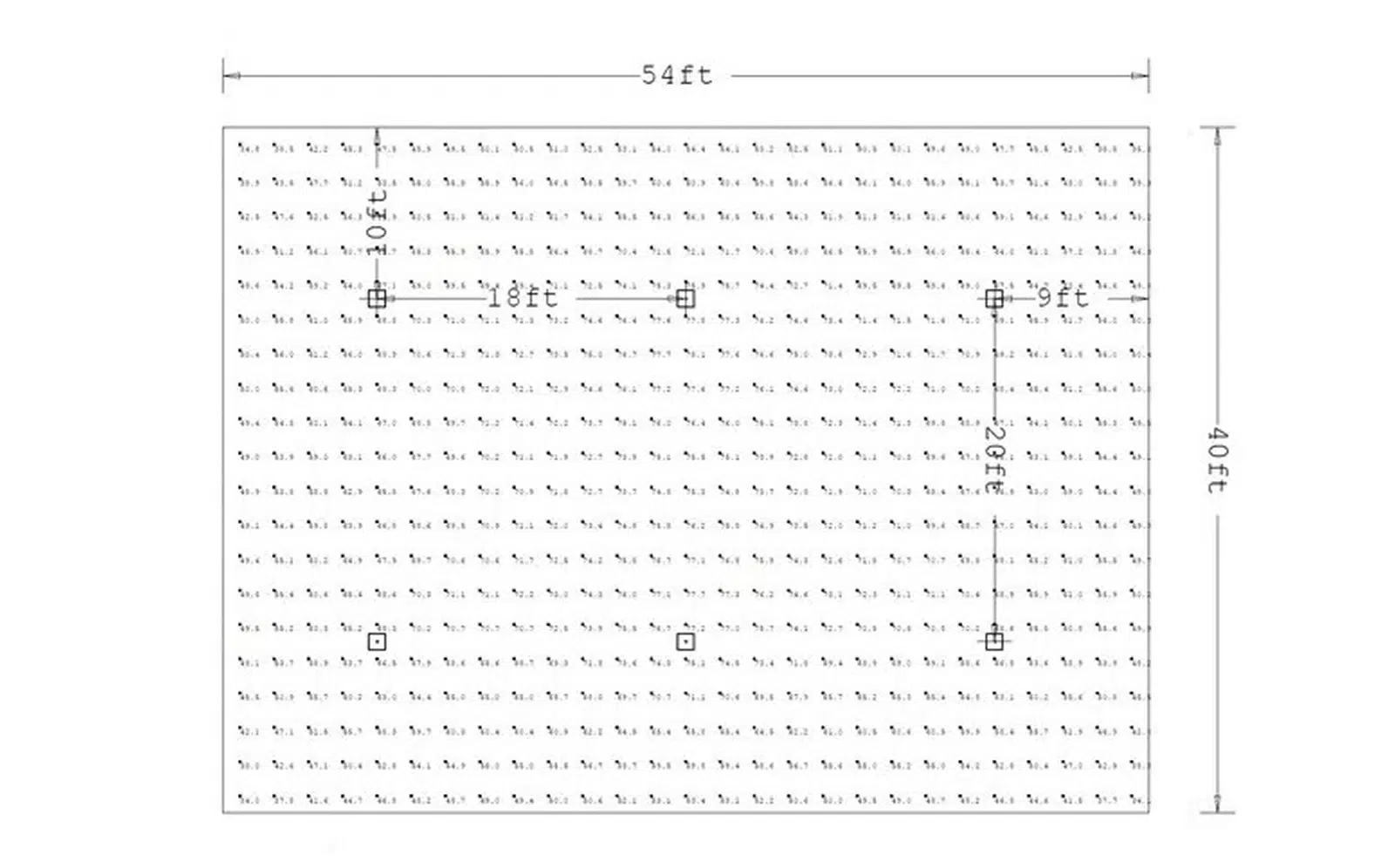
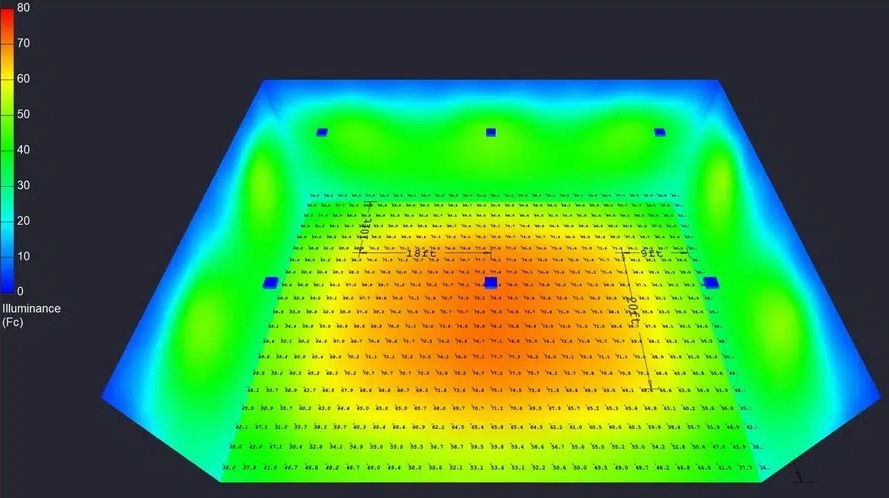
Lighting Plan Metrics
- Mounting Height: 20 ft
- Foot Candles Achieved: 62 average
- Product(s) Used: MLLG-E-LED-EXPLA-200-50-[V]-C1D2
Barrette Outdoor Living Paint Booth Upgrades to LED Fixtures & Saves $7K+
The Backstory
Barrette Outdoor Living, an Oldcastle APG brand, struggled to properly illuminate an existing paint booth with inadequate, exposed fluorescent lighting, leading to a remodel. The Operations Manager, Brandon Hiller, sought LED Lighting Supply's Product Specialist, Joe Hawkins, for expert guidance on the LED lighting upgrade.
The Customer Challenge
The customer needed support in selecting the proper lighting solution for their demanding environment. Barrette Outdoor Living required fixtures for an area that frequently contains flammable paint chemicals and sprays such as lacquers and gelcoat. Additionally, the customer was renovating parts of the booth, including pulling down the ceiling, reframing the walls, and rewiring, while leaving the sprinkler system in place. Due to the intended use of the property, the flammable paint chemical exposure in the environment was not only a concern but also required specialized lighting specifications to comply with local standards. Our team understood that upgrading lighting in hazardous locations involves more complex planning than traditional spaces. The goal was to achieve brighter, safer lighting with minimal shadowing.
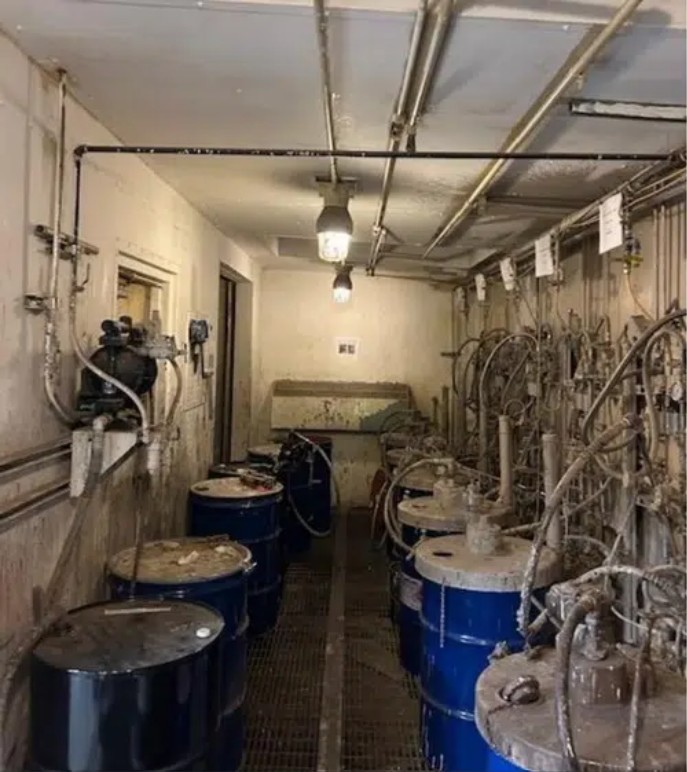
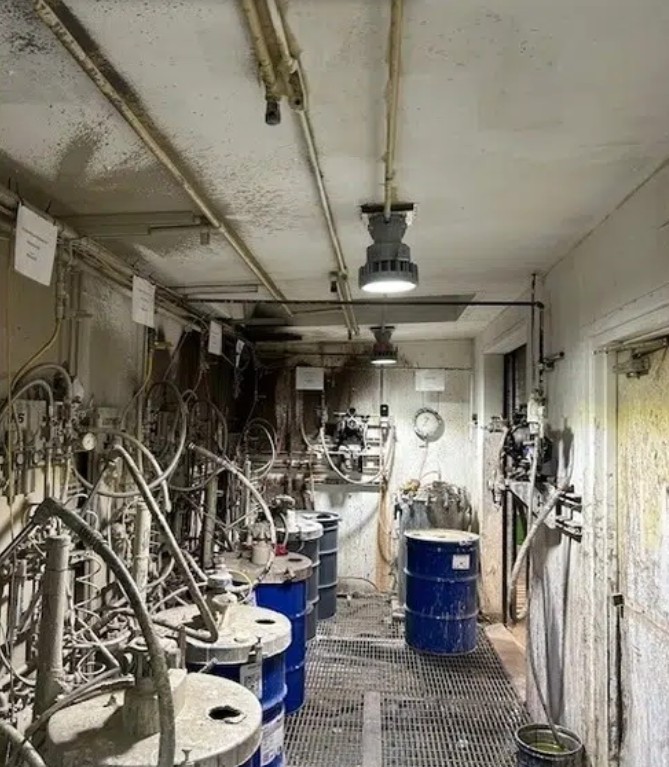
Lighting Plan We Created for the Customer
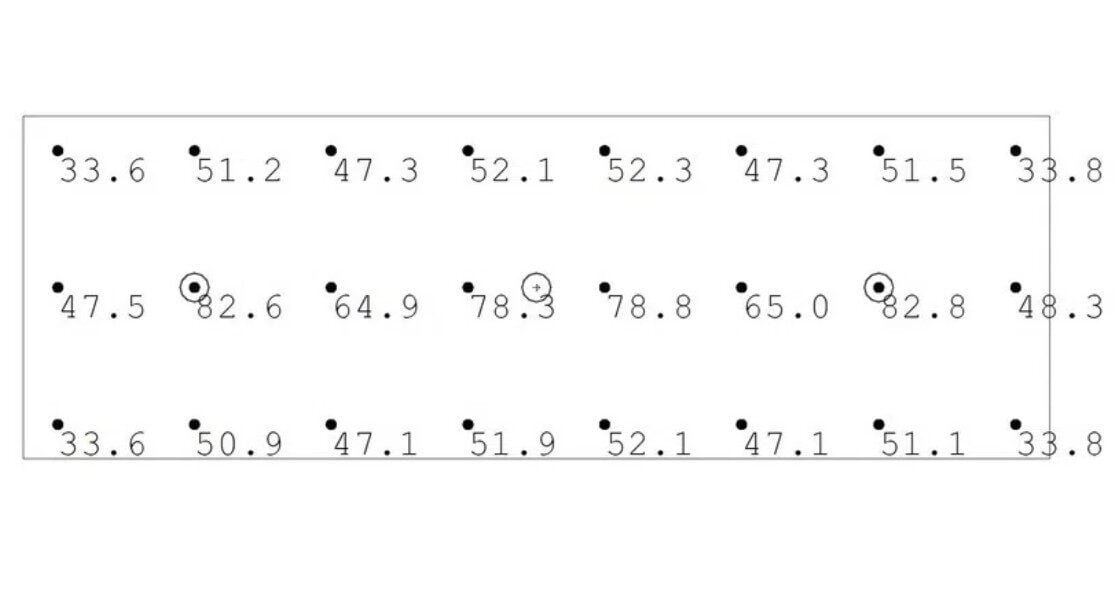

Lighting Plan Metrics:
- Mounting Height: 10 ft
- Fixture Used: 50 Watt Round Explosion Proof LED Light
- Average Foot Candles Achieved: 53
- Product(s) Used: MLLG-E-EXPLS2-150-50-C1D1

Our customer replaced explosion proof fluorescent fixtures with our 100 Watt 4 Foot Explosion Proof Linear LED Light | 16000 Lumens linear fixtures and saw a significant improvement in light quality after converting to LED.
Warranty and Warranty Support
Many explosion proof and hazardous location LED fixtures include a 5-year warranty backed by US-based support. Warranty terms, coverage, and claim requirements vary by model, fixture type, classification, and application, so confirm the selected product specification before ordering. Our support team can help with documentation, warranty questions, and replacement support if an issue occurs.
Common Mistakes When Buying Explosion Proof Lights
Explosion proof lighting mistakes are usually caused by selecting a fixture before the hazardous location requirements are confirmed. In classified areas, the wrong fixture can create serious safety and compliance problems.
- Assuming “explosion proof” is one universal rating: Fixtures must be matched to the required Class, Division, Group where applicable, and T Rating.
- Ignoring the T Rating: A fixture can have the correct Class and Division but still be unsuitable if the maximum surface temperature is too high for the hazardous material present.
- Using vapor tight lights in a classified area: Vapor tight fixtures may resist moisture and dirt, but they are not automatically approved for hazardous locations.
- Selecting by wattage alone: Lumen output, beam angle, mounting height, fixture spacing, task type, and photometric results should guide lighting performance.
- Forgetting the rest of the electrical system: Boxes, fittings, conduit, cable systems, seals, switches, and other components must also be suitable for the classified location.
- Overlooking ambient temperature: Hot, cold, or outdoor environments may require fixture-specific ambient temperature ratings.
- Not confirming corrosion or washdown exposure: Chemical processing, food production, wastewater, offshore, and outdoor sites may need additional environmental protection.
- Skipping documentation: Fixture listings, ratings, installation instructions, and classification documentation should be available for inspection and maintenance.
- Assuming the industry determines the classification: Classification depends on materials, ventilation, process conditions, equipment layout, and exposure likelihood.
- Waiting until after purchase to involve a qualified professional: Classification, installation method, and final approval should be confirmed before fixtures are ordered.
Get help choosing explosion proof lights and our Product Specialists can help review fixture type, classification requirements, mounting, light levels, and product specifications for your hazardous location project.
This Content Was Professionally Reviewed By:

Dwayne Kula
Founder, President & CTO
LED Lighting Supply
- 17+ years in LED lighting systems
- B.Sc. in Software Engineering
- Specializes in industrial & commercial lighting
This content was reviewed for technical accuracy, real-world application, and clarity based on over 17 years of experience working with LED lighting systems.
Explosion Proof Lighting Frequently Asked Questions
What Are Explosion Proof Lights
Explosion proof lights are specialized fixtures designed to prevent internal ignitions from causing explosions in hazardous environments. They are essential in areas where flammable gases, vapors, or combustible dusts are present, ensuring safety and compliance with safety standards.
Why Does My Facility Need Explosion Proof Lighting
If your facility operates in environments with flammable materials, explosion proof lighting is crucial for safety and regulatory compliance. These fixtures are engineered to contain potential ignitions, reducing the risk of explosions and ensuring safe operations.
How Do I Determine If My Location Requires Explosion Proof Lighting
Evaluate your facility using the NEC hazardous location classification system. Areas with flammable gases, vapors, or dusts typically require explosion proof lighting. Consult a professional to assess your specific needs and ensure compliance with safety standards.
What Are the Key Considerations When Selecting Explosion Proof Lighting
Consider the hazardous classification of your location, environmental conditions, and specific application needs. Ensure fixtures are certified for your environment and provide adequate illumination for safety and efficiency.
Can I Use Division 2 Fixtures in Division 1 Areas
No, Division 2 fixtures should not be used in Division 1 areas. Division 1 fixtures are designed for continuous exposure to hazardous conditions, while Division 2 fixtures are for areas where hazards are present only under abnormal conditions.
What Certifications Should Explosion Proof Lights Have
Explosion proof lights should have UL844 certification for North American applications. For international use, ATEX and IECEx certifications may be required. Verify that all fixtures meet the necessary safety standards for your specific environment.
How Do Explosion Proof Lights Enhance Safety
Explosion proof lights are designed to prevent ignitions from escaping the fixture, reducing the risk of explosions in hazardous environments. They are tested and certified to meet stringent safety standards, ensuring reliable performance in demanding conditions.
What Are the Installation Requirements for Explosion Proof Lights
Installation must be performed by qualified electricians familiar with hazardous-location work. Use explosion rated conduit systems and ensure all components are properly rated for the environment. Follow NEC guidelines for safe and compliant installations.
What Are the Benefits of LED Explosion Proof Lights
LED explosion proof lights offer energy efficiency, durability, and long fixture life. They reduce energy consumption by up to 75% compared to traditional lighting and are designed to withstand extreme conditions, minimizing maintenance and operational costs.
What Industries Commonly Use Explosion Proof Lighting
Industries such as chemical processing, oil and gas, food and beverage, and mining commonly require explosion proof lighting due to the presence of flammable materials. These fixtures ensure safety and compliance in high-risk environments.