Class 2 Division 1 LED Lights
- Fixtures available for Class II Division 1 combustible dust locations
- Options for dust Groups E, F, and G, depending on model
- USA-based support for hazardous-location fixture selection


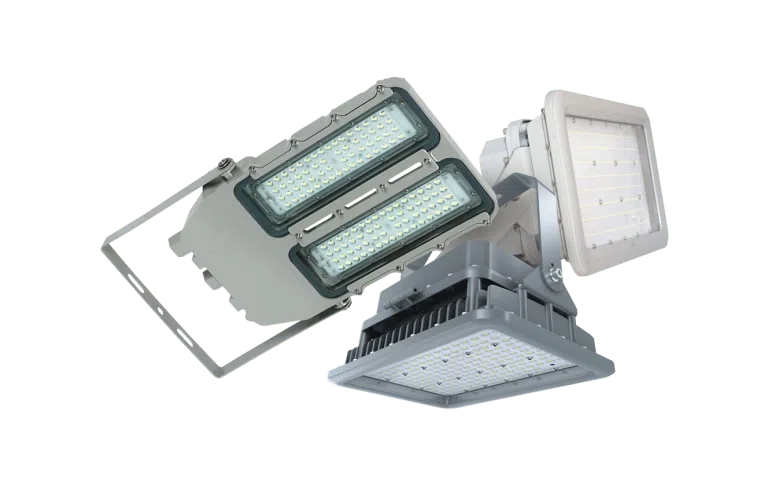
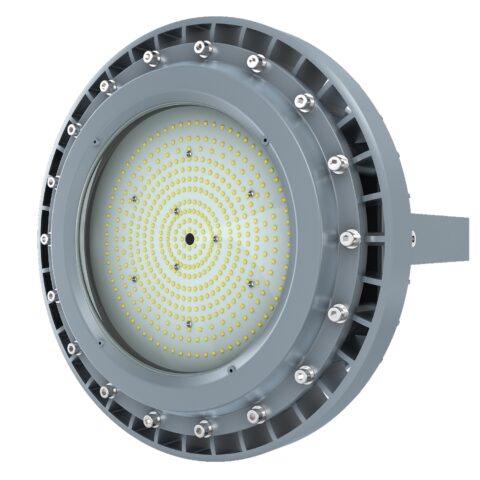
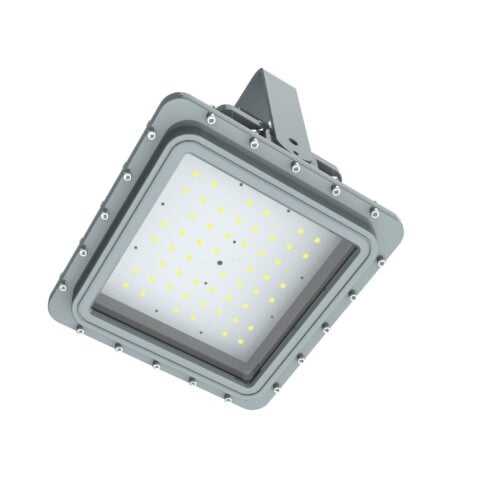
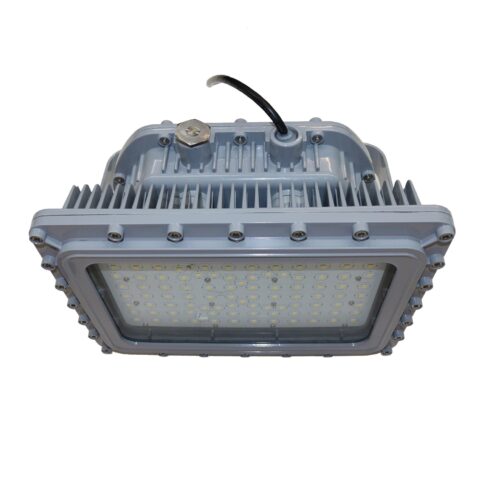
Our Class 2 Division 1 LED Lights for Combustible Dust Areas include LED fixtures for classified locations with combustible dust. Available products are intended for Class II Division 1 applications involving Groups E, F, and G dust classifications. These fixtures are used in classified areas of grain and feed handling facilities, flour and food processing operations, coal handling sites, woodworking facilities, plastics manufacturing plants, and metal processing operations.


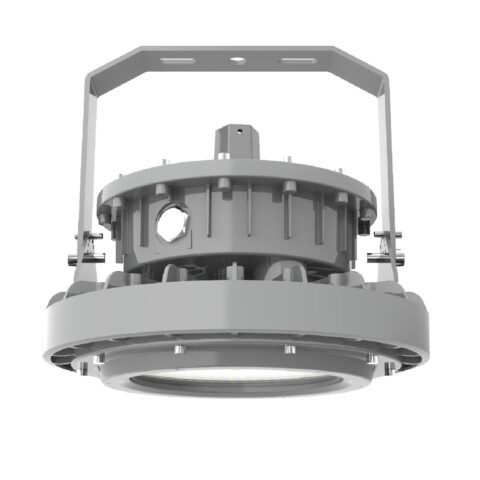





What Is Class II Division 1 LED Lighting?
Class II Division 1, or C2D1, applies to hazardous locations involving combustible dust where hazardous dust conditions may exist during normal operation or where other Division 1 conditions are present. This can include areas where combustible dust may be suspended in the air in ignitable concentrations during normal processing, as well as locations where mechanical failure or abnormal operation of equipment could produce an ignitable dust mixture and also provide a source of ignition.
Locations where electrically conductive combustible dust may be present in hazardous quantities can also meet Division 1 requirements. Class II should not be confused with Class III. Class II addresses combustible dust; Class III addresses ignitable fibers and flyings. Use the classification established for the exact installation area. Once that information is known, LED Lighting Supply can help match it to fixture markings, operating conditions, mounting requirements, and required light levels.
Dust Groups E, F, and G
| Dust Group | Examples |
|---|---|
| Group E | Combustible metal dusts such as aluminum and magnesium, and other combustible dusts with similar conductivity, particle, or abrasive characteristics |
| Group F | Qualifying carbonaceous dusts such as coal, carbon black, charcoal, and coke, depending on their properties and classification |
| Group G | Other combustible dusts such as grain, flour, starch, wood, plastic, chemicals, and similar materials depending on classification |
The required Group comes from the material present and the site's hazardous-location classification documentation. A general “dust rated” description is not a substitute for checking the fixture's actual Class II markings. Group E dusts require particular attention because electrically conductive combustible dust can create additional electrical hazards. Where Group E dust is present in hazardous quantities, Division 1 requirements may apply.
Maximum Surface Temperature and Combustible Dust
Temperature suitability is especially important in Class II locations because combustible dust can ignite from a hot surface and accumulated dust can insulate electrical equipment, reducing heat dissipation and increasing surface temperature. For this reason, fixture selection should not be based only on a generic T-code such as T4, T5, or T6.
For Class II Division 1 equipment, review the marked maximum operating or surface temperature of the exact fixture and compare it with the ignition characteristics of the specific combustible dust present. Equipment may be marked with a temperature class, commonly called a T-code, an operating temperature in degrees Celsius, or other temperature information permitted by the applicable listing and certification system.
The important selection criterion is the actual temperature limitation established for the dust and installation, not simply whether one fixture has a numerically higher T-code than another. The facility's combustible-dust hazard assessment, material test data, engineering documentation, and applicable electrical requirements should be used to establish the allowable equipment surface temperature.
Dust Cloud and Dust Layer Ignition Temperatures
Combustible dust can behave differently when suspended in the air than when accumulated as a layer on equipment. A material may therefore have both a dust cloud ignition temperature and a dust layer ignition temperature. These values can be different, and the lower applicable temperature can affect equipment selection.
Dust layers deserve particular attention because accumulated material can trap heat around a luminaire or other electrical equipment. Layer ignition temperature can also change with dust-layer thickness and material characteristics. A temperature value derived from one dust sample, particle size, moisture condition, or layer thickness should not automatically be assumed to apply to every process condition.
For organic dusts that may dehydrate or carbonize when heated, additional temperature restrictions may apply. Qualified professionals should use the applicable electrical code requirements together with representative dust test data and the fixture's marked operating conditions when determining suitability.
How T-Codes Relate to Class II Lighting
T-codes provide a standardized way to identify maximum equipment surface temperatures, but they should be used as a reference rather than as the sole Class II selection method.
| T-Rating | Maximum Surface Temperature |
|---|---|
| T1 | 450°C / 842°F |
| T2 | 300°C / 572°F |
| T3 | 200°C / 392°F |
| T4 | 135°C / 275°F |
| T5 | 100°C / 212°F |
| T6 | 85°C / 185°F |
A higher T-number corresponds to a lower maximum surface temperature. For example, equipment marked T6 has a lower maximum surface temperature than equipment marked T4. However, a higher T-number is not automatically required or better for every Class II application. The equipment must have a temperature marking that is acceptable for the specific combustible dust, dust-layer conditions, ambient temperature, and installation requirements.
The table above also shows only the primary T1 through T6 categories. Hazardous-location equipment may use intermediate temperature classes such as T2A, T2B, T2C, T2D, T3A, T3B, T3C, and T4A. Always use the actual temperature marking on the fixture rather than attempting to infer suitability from a simplified T-code table.
Dust Accumulation and Ambient Temperature
For Class II Division 1 locations, dust accumulation on the luminaire is a critical design consideration. Hazardous-location equipment is evaluated and marked under specified operating conditions, and temperature performance can be affected by dust blanketing the equipment. Housekeeping practices do not eliminate the need to select equipment appropriate for the classified location.
Ambient temperature must also be checked. A fixture's Class II approval and temperature marking apply within its marked ambient operating range. A luminaire that is appropriate at a 40°C ambient condition may not necessarily retain the same permitted temperature classification at a higher ambient temperature unless it is specifically evaluated and marked for that condition.
Applications with elevated ambient temperatures therefore require additional review. Where appropriate, consider high-temperature hazardous-location LED lights and verify that the exact model carries the required Class II Division 1, dust Group, maximum operating temperature, and ambient ratings.
Selecting Lighting for a Dust Hazard
Start with the documented Class II Division 1 classification and required dust Group. Then identify the combustible material and obtain applicable dust-characteristic information, including the temperature criteria used by the facility or engineer for equipment selection. Verify the exact fixture's Class II Division 1 marking, Group suitability, maximum operating or surface temperature, ambient range, and installation limitations.
A fixture described only as dust-tight, dust-resistant, IP-rated, or NEMA-rated is not automatically suitable for a Division 1 hazardous location. Likewise, a fixture carrying a Class I gas or vapor rating does not automatically carry the necessary Class II combustible-dust approval.
After those hazardous-location requirements are satisfied, evaluate dust accumulation, washdown, moisture, corrosion, chemicals, vibration, impact, voltage, wiring method, controls, and mounting configuration to determine which fixture is practical for the site. For lighting performance, use mounting height, lumen output, optics, fixture spacing, foot-candles, and uniformity rather than wattage alone.
A hazardous-area photometric plan can help determine fixture quantity and placement after the hazardous-location requirements are known. C2D1 locations may occur in classified portions of grain and feed handling, flour or food processing, coal handling, woodworking, plastics manufacturing, metal processing, and other operations that generate combustible dust. The presence of dust in an industry does not by itself establish Division 1; use the documented classification for the exact installation area.
Installation and Safety Certifications
The luminaire is only one component of the classified electrical system. Wiring methods, conduit or approved cable systems, boxes, fittings, seals where required, grounding, bonding, switches, controls and junction boxes, and other components must also be appropriate for the classified location. Qualified electrical professionals experienced with hazardous locations should install equipment in accordance with applicable codes, product listings, manufacturer instructions, and local requirements.
Avoid modifications, openings, replacement components, or connection methods that are not permitted by the fixture's listing and manufacturer instructions. Modifying a hazardous-location fixture can affect the conditions under which it was evaluated and listed.
Safety and Performance Certifications: Product markings and listings vary by model. Depending on the fixture and project, products may carry UL, ETL, CSA, or other applicable certifications or listings. Review the exact model for Class II Division 1 suitability, dust Group, maximum operating temperature or T-code, ambient range, environmental ratings, voltage, mounting, wiring requirements, and controls. A standard IP or NEMA enclosure rating alone does not establish that a luminaire is approved for a Class II Division 1 hazardous location.
Warranty and Project Support
Many Class II Division 1 LED fixtures include a 5-year warranty unless otherwise specified, with warranty support based in the USA. Review the warranty for the exact model selected.
LED Lighting Supply can help match documented C2D1 requirements to available hazardous-location lighting options and provide a hazardous-area lighting design for fixture placement, quantity, foot-candles, and uniformity.
Some fixtures carry ratings for more than one hazardous Class, but a Class I Division 1 gas/vapor rating does not automatically provide a Class II dust rating. Use the hazardous-location markings, maximum operating temperature, ambient rating, and listing of the exact model being considered.
This Content on Class II Division 1 combustible dust lighting guidance, dust Groups, maximum surface temperature and T-code guidance, dust cloud and layer ignition considerations, hazardous location requirements, and fixture selection content Was Professionally Reviewed By:

Jamie Popp, Professional Electrical Engineer (PE)
Multi-State Licensed Professional Engineer
Master of Science in Engineering
Master of Science in Project Management
Jamie has spent over 15 years working directly with industrial energy systems and facility operations. In his engineering design work, he focuses on comprehensive lighting designs, complex power distribution engineering, technical hazardous area classifications, and design-level construction support.
He applies these specialized design skills across demanding environments, including petrochemical, nuclear, mining, pulp and paper, and manufacturing facilities.
This content was reviewed for technical accuracy, engineering relevance, real-world application, and clarity for the stated lighting topic.
Class 2 Division 1 LED Lights FAQs
How Do I Confirm A Fixture Is Suitable For A Class II Division 1 Area?
Use the documented classification for the exact installation area and verify the exact fixture's Class II Division 1 markings, dust Group, temperature marking, ambient range, environmental ratings, voltage, mounting, and controls. A general "dust rated" description is not a substitute for checking actual Class II markings.
What Is The Difference Between Class II And Class III Locations?
Class II addresses combustible dust, while Class III addresses ignitible fibers and flyings. Class II Division 1 applies where hazardous dust conditions may exist during normal operation or where other Division 1 conditions are present.
How Do Dust Groups E, F, And G Affect Fixture Selection?
The required dust Group comes from the material present and the site's classification documentation. Group E includes combustible metal dusts and similar conductive dusts, Group F includes carbonaceous dusts, and Group G includes nonconductive combustible dusts such as grain, flour, starch, wood, plastic, and chemical dusts depending on classification.
Why Are Surface Temperature And Ambient Limits Important For Combustible Dust Lighting?
Surface-temperature and ambient limits must meet the application because dust accumulation can affect heat dissipation and can become an ignition concern. A fixture with the correct Class, Division, and Group can still be unsuitable if its marked surface-temperature or ambient limits do not meet the application.
How Should I Plan Fixture Quantity And Placement For A C2D1 Area?
Plan lighting performance using mounting height, lumen output, optics, fixture spacing, foot-candles, and uniformity rather than wattage alone. A hazardous-area photometric plan can help determine fixture quantity and placement after hazardous-location requirements are known.
Does Dust In A Facility Automatically Mean The Area Is Class II Division 1?
No. The presence of dust in an industry does not by itself establish Division 1; use the documented classification for the installation area.
Can A Class I Division 1 Fixture Also Be Used For Class II Division 1 Dust Locations?
A Class I Division 1 gas/vapor rating does not automatically provide a Class II dust rating. Use the markings of the exact model being considered.
What Should Be Considered Beyond The Hazardous Location Classification?
Fixture selection should also consider dust accumulation, washdown, moisture, corrosion, chemicals, vibration, impact, ambient temperature, voltage, and mounting. The luminaire is only one component of the classified electrical system.