


LED Lighting Solutions for Gas Stations, Canopies & Fueling Areas
- 15+ years expertise designing nationwide gas station lighting systems
- 65-75% energy savings with 100,000+ hour rated LED fixtures
- DLC Premium certified fixtures qualify for maximum utility rebates


-
 Professional Canopy Layout Design for Optimal Brand Visibility & Customer Safety
-
Precise Fixture Count & Photometric Analysis for Uniform Illumination Coverage
-
24/7 Energy Savings with Reduced Maintenance for Round-the-Clock Operations


LED gas station lighting includes a range of fixture types suited for fuel station environments, such as canopy lights mounted above pump islands, pole-mounted parking lot lights, wall packs installed along building exteriors, and flood lights positioned around car wash bays or signage. These products are typically found across fuel pump canopies, parking areas, walkways, and convenience store interiors, with form factors designed for surface, recessed, or pole mounting depending on the area. Inside the convenience store, flat panel lights are commonly recessed into drop ceilings to create a consistent layout above retail spaces.
This category supports the needs of fueling stations, service plazas, and travel centers, where Commercial & Industrial Lighting Solutions are integrated throughout exterior and interior zones. Installations often include canopy lighting over fueling lanes, perimeter lighting along building walls, and parking lot fixtures arranged to cover vehicle lanes and pedestrian paths. Applications extend to car wash bays, monument signs, and retail store interiors, reflecting the diverse physical layouts found at modern gas stations.

LED Panel Lighting for Offices, Schools & Indoor Applications


LED Explosion Proof Lighting for Hazardous Locations & Industrial Applications

LED Flood Lighting for Commercial & Industrial Applications
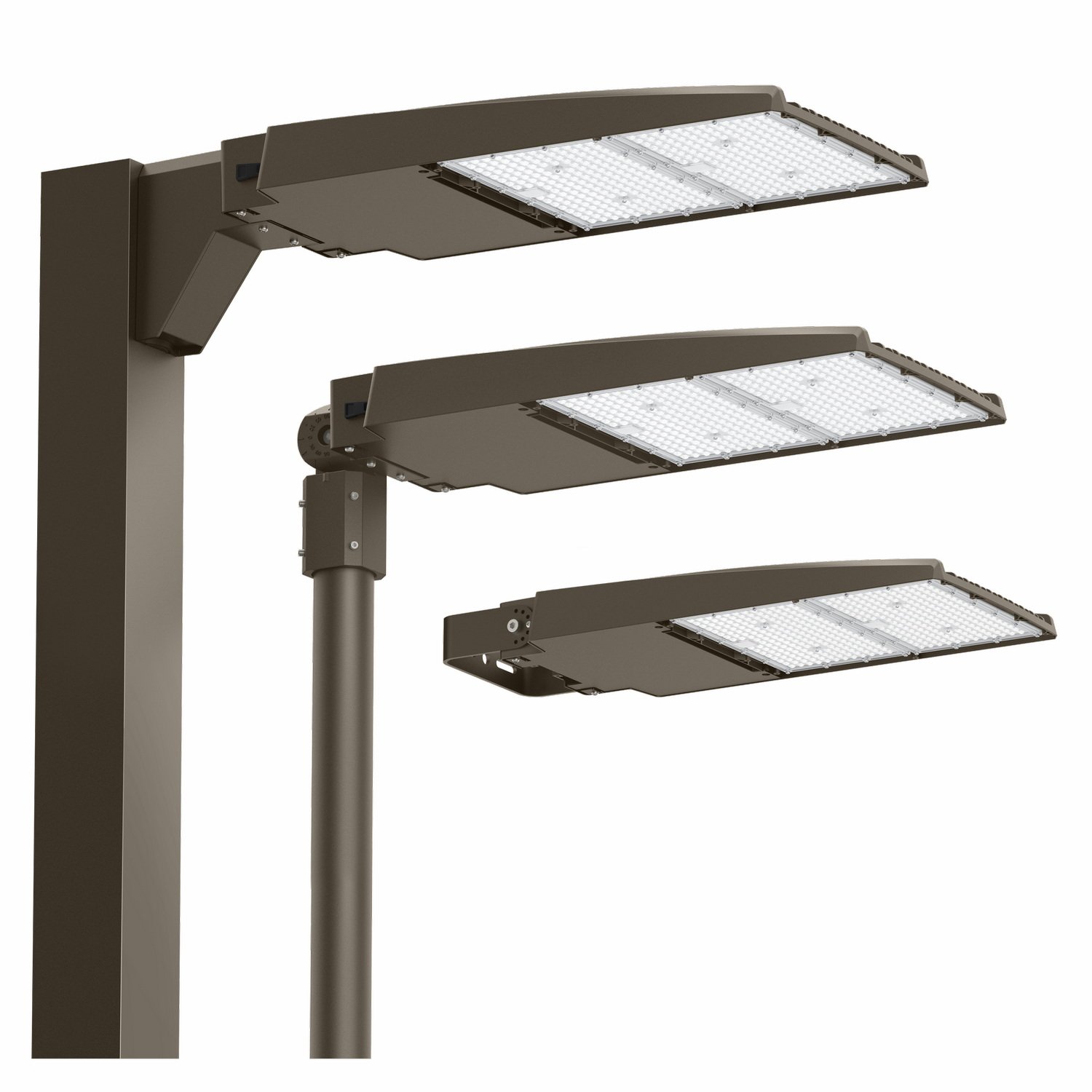
LED Shoebox Lighting for Parking Lots & Commercial Applications

LED Wall Pack Lighting for Commercial Buildings & Outdoor Applications
Showing all 12 results
 SKU:LLS-X-CPS-63A-CC-[C] | Web ID:2478Bronze:579 In StockShips 3-5 DaysWhite:936 In StockShips 3-5 Days
- Watts: 30 | 45 | 63
- Lumens: 4000 | 6000 | 8500
- Lumens/Watt: 135
- Replaces: 250 Watt Metal Halide
- Color Temp: 4000K | 5000K
- CRI: 80+
- IP Rating: IP65
- Voltage: 100V-277V
- Operating Temp: -40°F to 113°F
- Rated Life: 50,000 (L70) hours
- Dimmable: No
- Beam Angle (Std): 140°
- Optics: Polycarbonate Lens
- Housing: Die-Cast Aluminum
- Fixture Color: Bronze | White
- Mount: Pendant | Surface
- Dimensions (in): 9.5 L X 9.5 W X 3.5 H
- Weight (lbs): 3.7
- Warranty: 5 years
Starting At$98.30


- SKU:MLLG-LED-CANLBR-100-CC | Web ID:2121Availability: 282 In Stock Ships 2-3 Days
- Watts: 30 | 50 | 75 | 100
- Lumens: 4200 | 7000 | 10500 | 14000
- Lumens/Watt: 140
- Replaces: 250 | 400 Watt Metal Halide
- Color Temp: 3000K | 4000K | 5000K
- CRI: 70+
- IP Rating: IP65
- IK Rating: IK08
- Voltage: 100V-277V
- Surge Protection: 10kV
- Operating Temp: -22°F to 113°F
- Rated Life: 100,000 (L70) hours
- Dimmable: No
- Beam Angle (Std): 120°
- Optics: Polycarbonate Lens
- Fixture Color: White
- Mount: Pendant | Surface
- Dimensions (in): 12.7 W X 3.5 H
- Weight (lbs): 6
- Warranty: 5 years
Starting At$127.78
- SKU:LLS-YA-CANLB-70-50 | Web ID:2656Availability: 273 In Stock Ships 3-5 Days
- Watts: 70
- Lumens: 9100
- Lumens/Watt: 130
- Replaces: 250 Watt Metal Halide
- Color Temp: 5000K
- CRI: 70+
- IP Rating: IP65
- Voltage: 100V-277V
- Operating Temp: -40°F to 113°F
- Rated Life: 50,000 hours - driver
- Dimmable: 0-10V
- Beam Angle (Std): 140°
- Optics: Polycarbonate Lens
- Housing: Die-Cast Aluminum
- Fixture Color: White
- Mount: Pendant | Surface
- Dimensions (in): 9.1 L X 9.1 W X 3.9 H
- Weight (lbs): 6.25
- Warranty: 5 years
Starting At$113.46 - SKU:LLS-YA-CANLB-100-50 | Web ID:2653Availability: 82 In Stock Ships 3-5 Days
- Watts: 100
- Lumens: 13100
- Lumens/Watt: 131
- Replaces: 250 Watt Metal Halide
- Color Temp: 5000K
- CRI: 70+
- IP Rating: IP65
- Voltage: 100V-277V
- Operating Temp: -40°F to 113°F
- Rated Life: 50,000 hours - driver
- Dimmable: 0-10V
- Beam Angle (Std): 140°
- Optics: Polycarbonate Lens
- Fixture Color: White
- Mount: Pendant | Surface
- Dimensions (in): 10.8 L X 10.8 W X 4.3 H
- Weight (lbs): 7.2
- Warranty: 5 years
Starting At$130.77 - SKU:MLLG-LN-LED-CANS-55A-CC | Web ID:1473Availability: 204 In Stock Ships 3-5 Days
- Watts: 30 | 40 | 55
- Lumens: 3900 | 5200 | 7150
- Lumens/Watt: 130
- Replaces: 250 Watt Metal Halide
- Color Temp: 3500K | 4000K | 5000K
- CRI: 75+
- IP Rating: IP65
- Voltage: 100V-277V
- Operating Temp: -4°F to 113°F
- Rated Life: 50,000 (L70) hours
- Dimmable: No
- Beam Angle (Std): 140°
- Optics: Polycarbonate Lens
- Fixture Color: White
- Mount: Pendant | Surface
- Dimensions (in): 9 L X 9 W X 4.5 H
- Cord Length: None
- Weight (lbs): 5
- Warranty: 5 years
Starting At$105.77 30 / 40 / 60 Watt Adjustable Canopy Gas Station Light | 3900 / 5200 / 7800 Lumens | 5000K | 100-277V
SKU:MLLG-LN-LED-CANR-60-50-[MS] | Web ID:1563No Motion Sensor:601 In StockShips 3-5 DaysMotion Sensor:634 In StockShips 3-5 Days- Watts: 30 | 40 | 60
- Lumens: 3900 | 5200 | 7800
- Lumens/Watt: 130
- Replaces: 250 Watt Metal Halide
- Color Temp: 5000K
- CRI: 70+
- IP Rating: IP65
- Voltage: 100V-277V
- Operating Temp: -40°F to 113°F
- Rated Life: 50,000 (L70) hours
- Dimmable: No
- Beam Angle (Std): 140°
- Fixture Color: White
- Mount: Pendant | Surface
- Dimensions (in): 12.2 W X 5.5 H
- Weight (lbs): 6.5
- Warranty: 5 years
Starting At$109.09- SKU:MLLG-AL-LED-CAN-45-CC | Web ID:2152Availability: 472 In Stock Ships 2-3 Days
- Watts: 45
- Lumens: 6900
- Lumens/Watt: 153
- Replaces: 250 Watt Metal Halide
- Color Temp: 3000K | 4000K | 5000K
- CRI: 70+
- IP Rating: IP65
- Voltage: 100V-277V
- Surge Protection: 6kV
- Operating Temp: -4°F to 122°F
- Rated Life: 150,000 (L70) hours
- Dimmable: 1-10V
- Beam Angle (Std): 90°
- Optics: Polycarbonate Lens
- Fixture Color: Black
- Mount: Pendant | Surface
- Dimensions (in): 10 L X 10 W X 3 H
- Weight (lbs): 5
- Warranty: 5 years
Starting At$106.21 - SKU:MLLG-AL-LED-CAN-70-CC | Web ID:2151Availability: 1600 In Stock Ships 2-3 Days
- Watts: 70
- Lumens: 9330
- Lumens/Watt: 133
- Replaces: 250 Watt Metal Halide
- Color Temp: 3000K | 4000K | 5000K
- CRI: 70+
- IP Rating: IP65
- Voltage: 100V-277V
- Surge Protection: 6kV
- Operating Temp: -4°F to 122°F
- Rated Life: 150,000 (L70) hours
- Dimmable: 1-10V
- Beam Angle (Std): 90°
- Optics: Polycarbonate Lens
- Fixture Color: Black
- Mount: Pendant | Surface
- Dimensions (in): 10 L X 10 W X 3 H
- Weight (lbs): 5
- Warranty: 5 years
Starting At$127.55 - SKU:MLLG-AL-LED-CAN-45-CC-EMB | Web ID:2153Availability: 436 In Stock Ships 2-3 Days
- Watts: 45
- Lumens: 6900
- Lumens/Watt: 153
- Replaces: 250 Watt Metal Halide
- Color Temp: 3000K | 4000K | 5000K
- CRI: 70+
- IP Rating: IP65
- Voltage: 100V-277V
- Surge Protection: 6kV
- Operating Temp: -4°F to 122°F
- Rated Life: 150,000 (L70) hours
- Dimmable: 1-10V
- Beam Angle (Std): 90°
- Optics: Polycarbonate Lens
- Fixture Color: Black
- Mount: Pendant | Surface
- Dimensions (in): 10 L X 10 W X 3 H
- Weight (lbs): 6
- Warranty: 5 years
Starting At$231.77 - SKU:MLLG-LN-LED-CAN-150-50 | Web ID:1560Availability: 2471 In Stock Ships 3-5 Days
- Watts: 150
- Lumens: 19500
- Lumens/Watt: 130
- Replaces: 400 Watt Metal Halide
- Color Temp: 5000K
- CRI: 80+
- IP Rating: IP65
- Voltage: 100V-277V
- Operating Temp: -4°F to 113°F
- Rated Life: 50,000 (L70) hours
- Dimmable: No
- Beam Angle (Std): 120°
- Fixture Color: White
- Mount: Pendant | Recessed
- Dimensions (in): 15 L X 15 W X 3 H
- Weight (lbs): 14
- Warranty: 5 years
Starting At$158.18 - SKU:MLLG-WD-LED-CANG-95-50 | Web ID:1971Availability: 299 In Stock Ships 3-5 Days
- Watts: 95
- Lumens: 12721
- Lumens/Watt: 134
- Replaces: 250 Watt Metal Halide
- Color Temp: 5000K
- CRI: 70+
- IP Rating: IP65
- Voltage: 100V-277V
- Operating Temp: -22°F to 113°F
- Rated Life: 50,000 (L70) hours
- Dimmable: 1-10V
- Beam Angle (Std): 110°
- Fixture Color: White
- Mount: Surface
- Dimensions (in): 17.1 L X 17.1 W X x 4.1 H
- Weight (lbs): 9
- Warranty: 5 years
Starting At$196.36 - SKU:MLLG-WD-LED-CANG-120-50 | Web ID:1972Availability: 76 In Stock Ships 3-5 Days
- Watts: 120
- Lumens: 16086
- Lumens/Watt: 134
- Replaces: 400 Watt Metal Halide
- Color Temp: 5000K
- CRI: 70+
- IP Rating: IP65
- Voltage: 100V-277V
- Operating Temp: -22°F to 113°F
- Rated Life: 50,000 (L70) hours
- Dimmable: 1-10V
- Beam Angle (Std): 110°
- Fixture Color: White
- Mount: Surface
- Dimensions (in): 17.1 L X 17.1 W X x 4.1 H
- Weight (lbs): 9
- Warranty: 5 years
Starting At$209.09


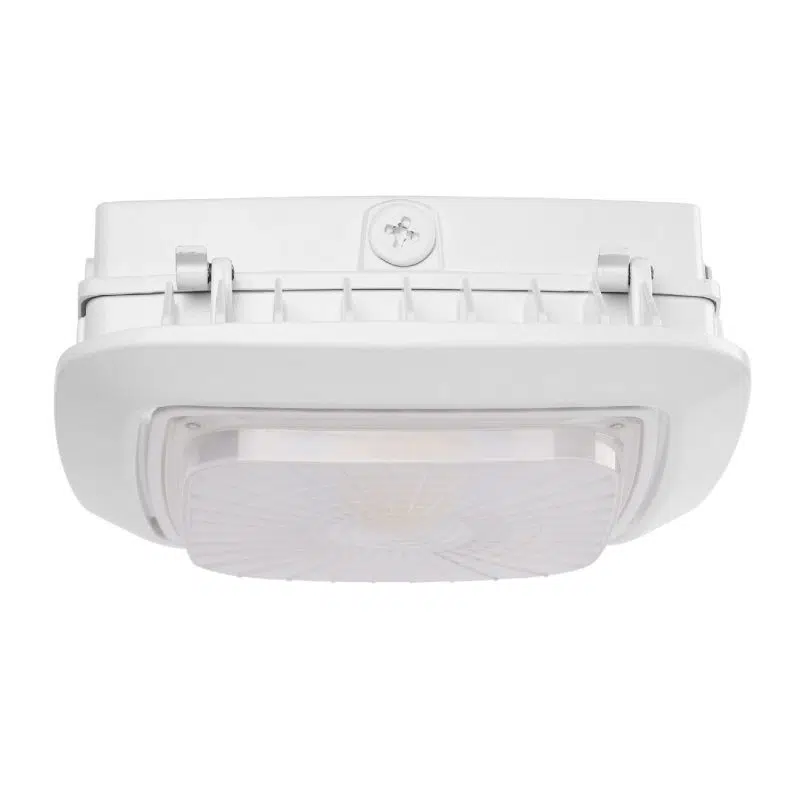


What are the Types of LED Lights Commonly Used at a Gas Service Station?
Creating an effective gas station lighting system for service stations requires strategic placement of multiple fixture types to ensure safety and operational efficiency. LED Lighting Supply has over 15+ years of experience designing fuel station lighting systems nationwide. Our Product Specialists know that proper illumination can reduce crime, increase customer confidence, and support higher fuel sales and store traffic.
Exterior Lighting Fixtures
| Gas Station Canopy Lights | Commercial LED canopy lights are the main illumination for fuel islands. 100W-150W fixtures with wide beam angles provide uniform light and eliminate shadows between pump islands, addressing a key safety concern. Available in surface-mount and recessed-mount options for gas station lights. |
| Parking Lot Lights | Outdoor parking lot lighting for gas stations offers perimeter visibility and helps with customer navigation. 200W-400W fixtures on 20-30 ft poles cover vehicle lanes, support pedestrian safety, and enhance security camera performance when specified correctly, including in parking garages and LED gas station lights applications. |
| Wall Packs | LED Wall packs provide targeted lighting for entrances, ATMs, walkways, and areas needing focused control. 50W-100W models deliver effective perimeter lighting with strong forward throw, making them ideal for LED lighting for gas station safety and security. |
| Flood Lights | LED flood lights are used for car wash bays, monument signs, and loading docks. High-intensity directional output ensures safe operation where strong, focused light is needed, especially in LED gas station canopy lights installations. |
Interior Lighting Fixtures
| Interior Panel Lights | 2x2 and 2x4 LED panel lights fit standard drop ceilings with recessed mounting. Our Product Specialists typically specify 40W-50W panels with 4000K-5000K color temperatures to improve merchandise visibility and create a bright retail environment, supporting LED gas station lighting needs. |
What are the Benefits of Using LED Canopy Light Fixtures in Gas Stations?
- Substantial Energy Cost Reduction: Replacing 400W metal halide fixtures with 100W-150W LED canopy lights can cut energy use by 65%-75% while improving brightness and uniformity; results vary by installation.
- Eliminate Costly Maintenance Disruptions: LED fixtures remove the need for lamps and ballasts, reducing maintenance expenses by 80% or more over the fixture lifespan.
- Intelligent Control Integration: Photocells enable dusk-to-dawn operation, and occupancy sensors allow smart dimming during low-traffic periods, providing an additional 20-30% energy reduction while maintaining security lighting.
- Exceptional Service Life: Premium LED canopy fixtures with L70 ratings beyond 100,000 hours typically provide 12-15 years of service in 24/7 fuel station environments, model dependent.
- Instant Full Illumination: LEDs reach 100% brightness instantly, eliminating the 3-5 minute warm-up delay of metal halide systems, which is important for safety and emergencies.
- Advanced Dimming Capabilities: 0-10V dimming compatibility lets operators adjust light levels by time or activity, optimizing energy use while maintaining OSHA-compliant visibility.
- Superior Light Performance: High-efficiency optics provide uniform light with minimal glare. CRI 80+ ratings ensure accurate color rendering and improve security camera clarity.
What are the Recommended Footcandle Requirements for Lighting in Gas Stations?
Proper illumination levels support customer safety and regulatory compliance. Based on ANSI and local code requirements, we recommend these minimum footcandle levels, subject to local requirements:
| Fuel Pump Canopy | 30-50 fc (critical for transaction safety) |
| Parking Areas | 5-10 fc (adequate for vehicle navigation) |
| Walkways and Entrances | 10-20 fc (pedestrian safety priority) |
| Convenience Store Interior | 30-50 fc (merchandise visibility) |
| Display Areas | 50-75 fc (impulse purchase optimization) |
| Car Wash (Interior) | 20-30 fc (operational safety) |
| Car Wash (Exterior) | 10-20 fc (customer approach safety) |
| Outdoor Perimeter Lighting | 1-5 fc (security surveillance support) |
Wattage and Voltage Requirements for Gas Station Applications
LED Lighting Supply helps select optimal fixtures for your site. For canopies, we typically recommend 100W to 200W fixtures, depending on mounting height and coverage needs for LED gas station lights. Standard 12 to 16-foot canopy installations work well with 120W to 150W fixtures using Type III distribution patterns, depending on site conditions. Our fixtures use universal voltage LED drivers that adapt to 120V, 208V, 240V, or 277V, simplifying installation for your electrical contractor. For parking lots, fixture selection ranges from 150W to 400W based on pole height and spacing. 200W to 250W fixtures on 20-foot poles with standard spacing provide good coverage and uniformity while controlling costs when specified properly.
Color Selection for Different Gas Station Areas
We recommend 4000K to 5000K color temperature for most gas station applications. This range provides crisp, white light for visibility and a clean, modern look that attracts customers and supports LED lighting for gas station environments. Canopy areas perform best with 4000K fixtures, offering excellent visibility for transactions without harshness. Interior store lighting benefits from 4000K to 5000K to highlight merchandise and encourage purchases. Parking and perimeter areas use 5000K fixtures for maximum visibility and security camera performance. This cooler color temperature helps customer alertness and provides strong contrast for surveillance, important for 24-hour operations.
Safety and Performance Certifications
All our fixtures carry key safety and performance certifications: UL Listed and ETL Listed for electrical safety, and DLC Premium for energy efficiency and rebate eligibility. These certifications help with regulatory compliance, performance, and qualifying for utility rebates and tax incentives that may offset 30-50% of initial costs, subject to local requirements.


Comprehensive Warranty and USA-Based Support
All fixtures include a minimum 5-year comprehensive warranty backed by our USA-based support team, model dependent. Our warranty specialists work quickly to resolve any issues and minimize downtime for your facility.
Partner with LED Lighting Experts for Your Gas Station Project
Lighting for gas stations requires balancing safety codes, energy efficiency, security, and customer attraction while managing costs and compliance. Our Product Specialists have designed lighting systems for hundreds of fuel retail locations and understand the challenges of 24-hour operations, code variations, and rebate maximization. Share your project details with our team for expert recommendations on fixture selection, placement, and controls tailored to your site. We offer complimentary lighting design services to ensure proper illumination, minimize energy costs, and maximize utility incentives. Request a consultation with our gas station lighting specialists to see how the right lighting can enhance safety, attract customers, and improve your bottom line.
LED Lighting Solutions for Gas Stations, Canopies & Fueling Areas Frequently Asked Questions
What Types of LED Lights Are Best for Gas Stations?
For gas stations, a combination of LED canopy lights, parking lot lights, wall packs, and flood lights is recommended. Canopy lights, typically 100W-150W, provide uniform illumination for fuel islands. Parking lot lights, ranging from 200W-400W, enhance perimeter visibility and security. Wall packs, at 50W-100W, are ideal for entrances and walkways. Flood lights offer focused lighting for areas like car wash bays and signage.
Why Choose LED Canopy Lights for Gas Stations?
LED canopy lights offer substantial energy savings, reducing consumption by 65%-75% compared to traditional fixtures. They also minimize maintenance costs by up to 80% and provide instant full illumination without warm-up delays. With advanced dimming and control options, they optimize energy use while maintaining safety and visibility.
What Are the Recommended Footcandle Levels for Gas Stations?
Footcandle levels vary by area to ensure safety and compliance. For fuel pump canopies, aim for 30-50 fc. Parking areas should have 5-10 fc, while walkways and entrances need 10-20 fc. Interior store areas benefit from 30-50 fc for merchandise visibility.
What Wattage and Voltage Are Suitable for Gas Station Lighting?
For canopy lighting, 100W to 200W fixtures are recommended, depending on mounting height. Standard installations use 120W to 150W fixtures with Type III distribution. Our fixtures support 120V, 208V, 240V, or 277V, simplifying installation. Parking lot lights range from 150W to 400W based on pole height and spacing.
What Color Temperature Is Best for Gas Station Lighting?
We recommend a 4000K to 5000K color temperature for most areas. Canopy areas benefit from 4000K for clear visibility, while interior store lighting uses 4000K to 5000K to enhance merchandise appeal. Parking and perimeter areas should use 5000K for maximum visibility and security.
What Certifications Should Gas Station Lighting Have?
Ensure fixtures are UL Listed or ETL Listed for safety and DLC Premium for energy efficiency. These certifications support compliance and may qualify for utility rebates, potentially offsetting 30-50% of initial costs.
What Warranty and Support Are Available for LED Lighting?
Our fixtures come with a minimum 5-year comprehensive warranty, supported by our USA-based team. This ensures quick resolution of issues and minimizes downtime, enhancing reliability and performance for your facility.