Wood Light Poles
- Southern Yellow Pine and Ponderosa Pine options available
- Direct-burial installation avoids anchor-bolt foundations
- Selection support for height, class, and fixture mounting


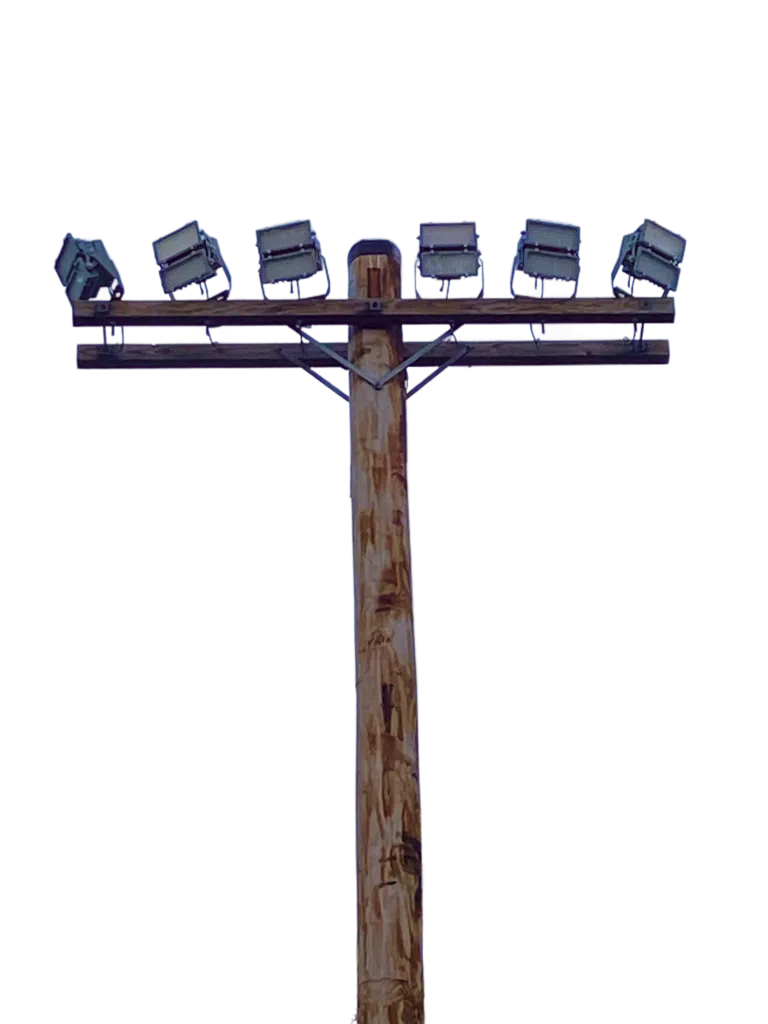

Our Wood Light Poles include direct-burial Southern Yellow Pine and Ponderosa Pine poles for lighting, security cameras, and utility-style equipment. Available poles vary by species, pole class, total length, above-grade height, circumference, taper, and preservative treatment. Products can support fixtures, crossarms, brackets, cameras, signs, and other pole-mounted accessories.
These poles are commonly used along private roads, commercial properties, agricultural sites, perimeter security areas, parks, remote facilities, and other outdoor lighting projects.
-
 Starting At $1,563.64
-
Starting At $1,472.73
-
Starting At $2,354.55
-
Starting At $2,045.45
-
Starting At $1,774.55
-
Starting At $1,725.45
-
Starting At $3,181.82
-
Starting At $2,472.73
-
Starting At $2,245.45
-
Starting At $3,709.09
-
Starting At $3,492.73
-
Starting At $3,263.64



Select wood light poles based on the complete project requirements, including required above-grade height, total pole length, pole class, preservative treatment, fixture and accessory load, mounting hardware, wind criteria, soil conditions, and installation details. Wood species is one selection factor, but it does not by itself determine whether a pole is suitable.
Selection Note: Confirm the exact pole class, dimensions, treatment, fixture and accessory loading, drilling requirements, embedment, site conditions, and manufacturer specifications before ordering.
Southern Yellow Pine Versus Ponderosa Pine Light Poles
Southern Yellow Pine and Ponderosa Pine can both be used for treated wood poles, but their typical material properties and available pole configurations differ. Final selection should be based on the structural rating and treatment of the actual pole rather than species averages alone.
| Wood Species | General Selection Considerations |
|---|---|
| Southern Yellow Pine Light Poles | Southern Yellow Pine is generally denser and is commonly available in pole classes suited to heavier loading and demanding utility-style applications. Confirm the exact class, length, treatment, circumference, fixture load, and mounting configuration. |
| Ponderosa Pine Light Poles | Ponderosa Pine is generally lighter and lower in density. It may be suitable for lighting and equipment applications when the specified pole class, dimensions, treatment, and structural capacity support the proposed load. |
Southern Yellow Pine should not automatically be selected solely because it is generally denser, and Ponderosa Pine should not be treated as a light-duty pole without reviewing its class and specifications. A properly classified pole of either species may be suitable when it meets the project requirements.
What Is a Treated Wood Light Pole?
Wood poles are manufactured from selected trees that meet requirements for length, taper, straightness, grain, knots, splits, and other characteristics. The poles are peeled, shaped, inspected, classified, conditioned, and pressure treated with a preservative system intended for the specified use.
Preservative treatment helps protect the wood from decay, fungi, and insects. Treatment type, penetration, retention, ground-contact suitability, and environmental limitations vary by product. Field cuts, drilling, and damaged areas may require treatment according to the pole manufacturer’s instructions.
Service life depends on species, treatment, ground-line exposure, drainage, soil chemistry, installation quality, loading, inspection, and maintenance. No single lifespan applies to every treated wood pole or installation.
How Wood Pole Classes Work
Wood poles may be assigned a pole class based on applicable dimensional and structural requirements. Within the applicable classification system, lower class numbers generally identify poles with greater required strength. Pole length and class must be considered together.
A class designation does not by itself confirm suitability for a lighting project. Fixture weight, fixture EPA, crossarms, cameras, brackets, signs, wind requirements, drilling patterns, and mounting height must also be reviewed.
| Classification Factor | Why It Matters |
|---|---|
| Pole class | Identifies structural requirements within the applicable pole standard. Do not compare class numbers without also considering pole length and species. |
| Total pole length | Includes both the above-grade portion and the section embedded below grade. |
| Above-grade height | Determines the approximate fixture mounting height after the required portion of the pole is embedded. |
| Circumference and taper | Dimensions vary by class, length, species, and product specifications and affect mounting and structural performance. |
| Treatment | Confirm the preservative system, retention, intended exposure, ground-contact suitability, and handling requirements. |
How to Select a Wood Light Pole
| Selection Factor | What to Confirm |
|---|---|
| Project location | Provide the installation address so available options can be compared with known wind exposure, frost conditions, soil, moisture, and other project details. Confirm the required preservative treatment and governing criteria with the appropriate manufacturer, project professional, or local authority. |
| Required mounting height | Confirm the desired above-grade fixture height and select a total pole length that includes the required embedded section. |
| Species and availability | Compare Southern Yellow Pine and Ponderosa Pine using the actual pole class, treatment, dimensions, loading capacity, availability, and project requirements. |
| Pole class | Select a class that supports the complete lighting and accessory load at the specified pole length and project conditions. |
| Fixture and accessory load | Confirm the weight and EPA of fixtures, crossarms, brackets, cameras, signs, and all other mounted components. |
| Drilling and mounting | Confirm hole size, spacing, orientation, through-bolts, brackets, crossarms, cable entry, and hardware requirements before the pole is modified. |
| Preservative treatment | Verify treatment for ground contact and the expected exposure to moisture, insects, fungi, chemicals, and soil conditions. |
| Embedment and soil | Confirm embedment depth, hole diameter, backfill, compaction, drainage, frost conditions, groundwater, and site-specific installation requirements. |
| Wind requirements | Review the complete mounted load, pole class, length, mounting height, accessories, and project wind criteria. |
| Inspection access | Allow access to the ground line and pole surface so treatment condition, decay, impact damage, hardware, and attachments can be inspected. |
Direct-Burial Installation for Wood Poles
Wood light poles are commonly installed by embedding a specified portion of the pole below grade. Direct burial avoids a base plate and anchor-bolt foundation, but it does not eliminate excavation, backfill, compaction, drainage, alignment, or structural review.
Embedment depth and installation details depend on total pole length, pole class, loading, soil conditions, frost depth, groundwater, drainage, and project requirements. There is no universal embedment depth that applies to every wood pole.
For a broader comparison of embedded steel, fiberglass, and wood options, visit our direct-burial light poles page.
Mounting Lights, Cameras, and Accessories on Wood Poles
Wood poles may support LED fixtures, crossarms, brackets, security cameras, utility-style equipment, and other light pole accessories when the pole and attachment details are suitable for the complete load.
Before drilling or mounting equipment, confirm:
- Fixture and accessory weight
- Fixture and accessory EPA
- Pole class and total length
- Mounting height and bracket extension
- Hole diameter, spacing, and edge clearance
- Through-bolt, washer, and hardware requirements
- Cable routing and service access
- Field-treatment requirements for cuts or drilled holes
Do not assume that hardware intended for steel or fiberglass poles can be installed on wood without modification or manufacturer approval.
Wood Versus Steel and Fiberglass Light Poles
| Selection Factor | General Difference |
|---|---|
| Installation | Wood poles are commonly direct buried. Steel and fiberglass are available in both direct-burial and anchor-base configurations depending on the product. |
| Material behavior | Wood has natural variation in grain, knots, taper, and dimensions. Steel and fiberglass are manufactured with more uniform cross sections and published model-specific data. |
| Corrosion and decay | Wood does not rust but requires preservative treatment against decay and insects. Steel light poles require corrosion protection. Fiberglass light poles do not rust but still require review for ultraviolet exposure, impact, and approved mounting methods. |
| Electrical considerations | Steel is electrically conductive. Dry wood and fiberglass pole shafts may have different electrical characteristics, but moisture, preservative treatment, fixtures, wiring, fasteners, and hardware affect the complete installed system. Pole material is not a substitute for required grounding, bonding, or electrical safety measures. |
| Appearance | Wood provides a traditional, utility-style appearance. Steel and fiberglass offer more uniform shapes, finishes, and architectural profiles. |
| Final selection | Compare pole class or structural capacity, height, fixture load, wind requirements, installation method, treatment or finish, environment, maintenance, and manufacturer documentation. |
Wind Load and Pole-Mounted Equipment
Wood species alone does not determine wind suitability. Pole class, length, above-grade height, fixture quantity, crossarms, brackets, cameras, signs, and other mounted components all affect structural loading.
Effective Projected Area, or EPA, represents the wind-exposed area of fixtures and accessories. Wood pole selection should account for the complete mounted system and the required project wind criteria.
For coastal, hurricane-prone, open-exposure, or other severe-wind sites, review our high-wind rated light poles and confirm whether wood, steel, or fiberglass provides the appropriate project-specific configuration.
Common Wood Light Pole Selection and Installation Mistakes
- Selecting by species alone: Southern Yellow Pine and Ponderosa Pine must still be evaluated by class, length, treatment, dimensions, loading, and project requirements.
- Confusing total length with mounting height: A portion of a direct-burial wood pole remains below grade.
- Using a generic embedment depth: Embedment depends on the pole, loading, soil, frost, drainage, and project conditions.
- Ignoring mounted accessories: Crossarms, brackets, cameras, signs, and other equipment add weight and wind-exposed area.
- Using incompatible hardware: Confirm through-bolts, washers, brackets, hole spacing, and corrosion protection for wood-pole installation.
- Leaving field cuts untreated: Drilled holes, cuts, and damaged treated surfaces should be handled according to manufacturer instructions.
- Overlooking ground-line exposure: Moisture, standing water, soil chemistry, vegetation, and poor drainage can affect long-term pole condition.
- Installing the pole out of alignment: Hold the pole plumb and orient crossarms, fixtures, cameras, holes, and cable access before backfill is placed and compacted.
- Skipping periodic inspection: Check the ground line, pole surface, treatment condition, hardware, cracks, decay, insect activity, and mounted equipment as appropriate for the installation.
Need Help Selecting Wood Light Poles?
LED Lighting Supply can help narrow wood pole options using the project location, desired mounting height, species, pole class, fixture model, mounting hardware, wind requirements, treatment, and installation conditions.
Contact us about wood light poles and provide the project address, desired above-grade height, fixture quantity, fixture model, mounting arrangement, preferred wood species, and any available soil or installation information. Final structural, embedment, electrical, installation, and code requirements should be confirmed by the appropriate qualified professionals for the project.
Wood Light Poles FAQs
How Do I Choose Between Southern Yellow Pine And Ponderosa Pine Light Poles?
Choose between Southern Yellow Pine and Ponderosa Pine using the actual pole class, treatment, dimensions, loading capacity, availability, and project requirements. Southern Yellow Pine is generally denser and commonly available in classes suited to heavier loading and demanding utility-style applications, while Ponderosa Pine may be suitable when its specified class, dimensions, treatment, and structural capacity support the proposed load.
What Information Is Needed To Select A Wood Light Pole?
Wood light pole selection requires the project location, desired above-grade height, species, pole class, fixture and accessory load, mounting details, treatment, embedment conditions, and wind requirements. Confirm the exact pole class, dimensions, treatment, fixture and accessory loading, drilling requirements, embedment, site conditions, and manufacturer specifications before ordering.
Does Pole Class Alone Confirm That A Wood Pole Is Suitable?
No, pole class alone does not confirm that a wood pole is suitable for a lighting project. Pole length, fixture weight and EPA, crossarms, cameras, brackets, signs, wind requirements, drilling patterns, and mounting height must also be reviewed.
How Does Total Pole Length Relate To Fixture Mounting Height?
Total pole length includes both the above-grade portion and the section embedded below grade, while above-grade height determines the approximate fixture mounting height. Select a total pole length that includes the required embedded section as well as the desired above-grade fixture height.
How Is Embedment Depth Determined For A Wood Light Pole?
Embedment depth depends on total pole length, pole class, loading, soil conditions, frost depth, groundwater, drainage, and project requirements. There is no universal embedment depth that applies to every wood pole.
Can Wood Light Poles Support Lights, Cameras, And Other Accessories?
Wood poles may support LED fixtures, crossarms, brackets, security cameras, utility-style equipment, and other accessories when the pole and attachment details are suitable for the complete load. Before drilling or mounting equipment, confirm component weight and EPA, pole class and length, mounting height, hole details, hardware requirements, cable routing, and field-treatment requirements.
How Do Wind Requirements Affect Wood Pole Selection?
Wood pole selection for wind requirements should account for the complete mounted system and the required project wind criteria. Pole class, length, above-grade height, fixture quantity, crossarms, brackets, cameras, signs, and other mounted components all affect structural loading, and EPA represents the wind-exposed area of fixtures and accessories.
What Should Be Considered Before Drilling A Treated Wood Pole?
Before modifying a treated wood pole, confirm hole size, spacing, orientation, through-bolts, brackets, crossarms, cable entry, and hardware requirements. Field cuts, drilling, and damaged areas may require treatment according to the pole manufacturer's instructions.