Class 1 Wood Poles
- Higher-capacity class for demanding utility and lighting applications
- Multiple heights, species, and treatment options available
- Product specialists provide selection and compatibility guidance


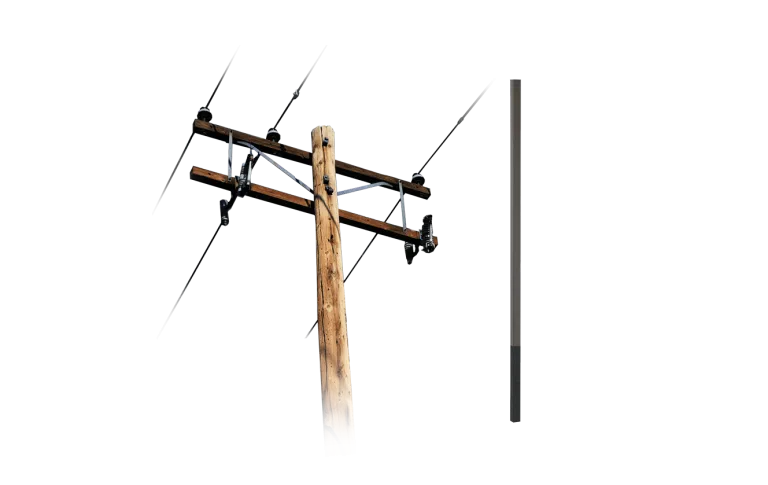

Our Class 1 Wood Poles include direct-embedment wood poles in multiple heights and species for utility, communications, lighting, and infrastructure projects. Available poles have an approximately 27-inch minimum top circumference, with butt circumference varying by pole length and species.
These poles are used for electrical distribution systems, telecommunications and broadband infrastructure, roadway and parking area lighting, sports field lighting, large-site lighting, and utility equipment support.
-
 Starting At $418.18

-
Starting At $536.36
-
Starting At $781.82
-
Starting At $909.09
-
Starting At $1,127.27
-
 Starting At $1,393.47
 -
Starting At $1,363.64
-
Starting At $1,651.69
-
Starting At $1,800.00
-
Starting At $1,945.45
-
Starting At $2,354.55
-
Starting At $3,181.82
-
Starting At $3,709.09

What Is a Class 1 Wood Pole?
Class 1 wood poles are among the larger standard wood pole classes used for projects with higher structural demands than Classes 2 through 10. They may be specified for utility distribution, communications equipment, large-area lighting, and infrastructure applications where pole height, span length, attachments, or environmental loading require greater capacity.
Wood pole class is determined by more than overall height. Species, top circumference, circumference measured six feet from the butt, taper, fiber strength, and allowable loading all contribute to the classification. A Class 1 designation should therefore be treated as a structural specification rather than simply a description of pole size.
Before selecting a Class 1 wood pole, confirm the required height, species, embedment, attachments, and complete loading conditions. For lighting, utility, and communications projects, the final pole class should be based on the supported equipment, span or mounting requirements, environmental loading, and project specifications rather than height alone.
LED Lighting Supply offers wood light poles and wood utility poles in multiple heights and classes. Pole class, height, species, embedment, and attachment requirements should be confirmed for the project before ordering.
When Should a Class 1 Wood Pole Be Considered?
A Class 1 pole may be appropriate when a smaller pole class cannot accommodate the proposed loads. Conditions that can increase pole requirements include taller mounting heights, longer conductor spans, multiple luminaires, larger crossarms, communications equipment, line angles, and elevated wind or ice loading.
Class 1 poles may be considered for:
- Electrical distribution systems with substantial span or equipment loads
- Telecommunications and broadband infrastructure
- Roadway, parking area, sports field, and large-site lighting
- Utility equipment and infrastructure support
- Projects where a utility, engineer, or project specification requires a Class 1 pole
Choosing a larger class does not automatically make a pole suitable for every project. The complete installation and loading conditions must still be reviewed.
Understanding ANSI O5.1 Class 1 Requirements
ANSI O5.1 establishes dimensional and quality requirements for wood poles used as single-pole utility structures. Pole classifications account for species, length, minimum dimensions, taper, and associated strength characteristics.
A Class 1 wood pole generally has a minimum top circumference of approximately 27 inches. The required circumference six feet from the butt is larger and varies according to pole length and species, so one measurement does not apply to every Class 1 pole.
Use LED Lighting Supply's wood pole dimension estimation calculator to review estimated dimensions by class and height. Calculator results are intended for preliminary planning. Confirm final dimensions against the selected product specifications and project requirements.
Typical Class 1 Pole Characteristics
- Minimum top circumference: Approximately 27 inches, subject to species and applicable specifications
- Circumference six feet from the butt: Varies by pole length and species
- Relative capacity: Greater than Classes 2 through 10 for comparable lengths and species
- Wood species: May include Southern Yellow Pine, Douglas Fir, Red Pine, and other species recognized for pole use
- Installation: Typically direct embedded, subject to soil and foundation requirements
Heavy-duty H-class poles are available above Class 1 for projects requiring additional capacity. Available classes, species, and lengths should be confirmed before purchase.
Wood Species and Preservative Treatment
Wood species influence pole strength, taper, dimensions, treatment performance, and availability. Southern Yellow Pine is commonly used because of its strength and ability to accept preservative treatment. Other species may be specified based on regional availability, utility standards, or project requirements.
Many wood poles are pressure treated with chromated copper arsenate, commonly called CCA. This treatment helps protect the wood against fungal decay, termites, and other wood-destroying organisms. Treatment type, penetration, and preservative retention should be appropriate for the intended application and applicable American Wood Protection Association requirements.
Before ordering, confirm:
- Wood species
- Pole class and length
- Preservative type and retention level
- Intended use and exposure conditions
- Required branding, inspection, or quality documentation
- Utility, municipality, or project-specific specifications
Choosing the Correct Pole Height and Quantity
The correct pole height and quantity depend on the system being supported and the overall site design.
For lighting projects, selection may be influenced by:
- Required foot-candle levels and uniformity
- Fixture wattage, optics, and distribution
- Mounting height and fixture EPA
- Site dimensions, setbacks, and obstructions
- Wind speed and exposure category
- Spill-light or property-line requirements
For utility and communications projects, the design may also need to account for conductor size, span length, line angles, crossarms, transformers, communications equipment, guying, wind, and ice loading.
LED Lighting Supply's Product Specialists can help identify available heights, classes, species, treatment options, minimum order quantities, and shipping requirements. Structural loading, embedment, attachment design, and code compliance should be verified by the qualified professional responsible for the project.
How Are Class 1 Wood Poles Installed?
Class 1 wood poles are typically installed using direct embedment. A portion of the pole is placed below grade, and the excavated area is backfilled and compacted according to the approved installation design.
Embedment depth and foundation requirements can be affected by soil bearing capacity, groundwater, frost depth, slope, pole loading, and local construction requirements. Engineered backfill, crushed stone, concrete, or other stabilization methods may be specified where site conditions require additional support.
Installation requirements should be established by the project engineer, utility, or qualified pole installer. Poles should also be inspected before installation for damage or conditions that could affect structural performance.
Class 1 Wood Pole Standards and Documentation
Available documentation varies by manufacturer, species, treatment process, and project requirements. Confirm whether the project requires documentation related to:
- ANSI O5.1 dimensional and quality requirements
- Applicable AWPA preservative treatment standards
- Species and pole-class identification
- Preservative retention and penetration
- Plant inspection or quality-control records
- Utility, municipal, state, or federal purchasing requirements
A Class 1 designation alone does not establish approval for a particular utility, municipality, or public project. Submit the applicable product documentation to the approving authority before purchase.
Class 1 Wood Pole Warranty
Warranty terms vary by manufacturer, species, preservative treatment, application, and installation conditions. Before ordering, confirm the warranty duration, covered conditions, inspection requirements, and exclusions related to handling, storage, field modification, installation, or environmental exposure.
Keep purchase records, product identification marks, treatment documentation, and installation records in case they are required for a warranty claim.
Explore Poles by Height
- 10 to 15 Foot Light Poles
- 20 to 25 Foot Light Poles
- 30 to 35 Foot Light Poles
- 40 to 45 Foot Light Poles
- 50 to 55 Foot Light Poles
- 60 to 65 Foot Light Poles
- 70 Foot Light Poles
Compare Other Wood Pole Classes
A smaller pole class may be appropriate when the required height and structural loads do not call for Class 1. Compare the available classes below, then confirm the final selection based on the project design.
Class 1 Wood Poles FAQs
When Should I Consider A Class 1 Wood Pole?
A Class 1 wood pole may be appropriate when a smaller pole class cannot accommodate proposed loads, such as taller mounting heights, longer conductor spans, multiple luminaires, larger crossarms, communications equipment, line angles, or elevated wind or ice loading. The complete installation and loading conditions must still be reviewed.
How Is A Class 1 Wood Pole Different From Smaller Pole Classes?
For comparable lengths and species, Class 1 wood poles have greater relative capacity than Classes 2 through 10. Pole class is a structural specification based on factors including species, dimensions, taper, fiber strength, and allowable loading, not simply pole height.
What Dimensions Define A Class 1 Wood Pole?
A Class 1 wood pole generally has a minimum top circumference of approximately 27 inches, subject to species and applicable specifications. Its circumference measured six feet from the butt varies by pole length and species.
How Do I Select The Correct Class 1 Pole Height And Quantity For Lighting?
Class 1 pole height and quantity for lighting depend on the required foot-candle levels and uniformity, fixture wattage, optics, distribution, mounting height, fixture EPA, site dimensions, setbacks, obstructions, wind speed, exposure category, and spill-light or property-line requirements. LED Lighting Supply Product Specialists can help identify available heights, classes, species, treatment options, minimum order quantities, and shipping requirements.
What Should Be Verified Before Ordering A Class 1 Wood Pole?
Before ordering, confirm the wood species, pole class and length, preservative type and retention level, intended use and exposure conditions, required branding or documentation, and utility, municipality, or project-specific specifications. Pole class, height, species, embedment, and attachment requirements should be confirmed for the project before ordering.
How Are Class 1 Wood Poles Typically Installed?
Class 1 wood poles are typically installed by direct embedment, with a portion of the pole placed below grade and the excavated area backfilled and compacted according to the approved installation design. Embedment depth and foundation requirements can be affected by soil bearing capacity, groundwater, frost depth, slope, pole loading, and local construction requirements.
Does A Class 1 Designation Establish Project Approval?
No. A Class 1 designation alone does not establish approval for a particular utility, municipality, or public project; applicable product documentation should be submitted to the approving authority before purchase.