2700K vs 3000K vs 4000K vs 5000K vs 6500K: Best Color Temperature For Your Space
When lighting a commercial, industrial, or sports space, color temperature affects the visual appearance and character of the light. It influences whether a space feels warmer, more neutral, or cooler, but it does not by itself determine brightness, energy efficiency, color-rendering quality, glare, or visual performance.
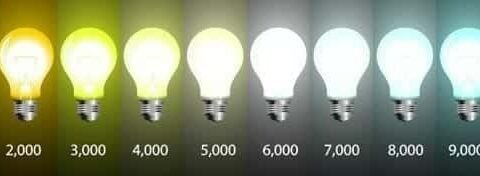
Correlated color temperature, or CCT, is measured in Kelvin (K). Lower CCT values generally appear warmer and more yellow or amber, while higher CCT values generally appear cooler and more blue-white. Common commercial and industrial options range from approximately 2700K to 6500K.
When selecting CCT, consider the visual environment, application, user preference, surrounding finishes, task requirements, existing lighting, and project specifications. Brightness and visibility should be evaluated separately using fixture lumen output, photometric distribution, mounting height, spacing, illuminance, glare, and uniformity. Color-rendering performance should be evaluated with metrics such as CRI and, where relevant, more detailed spectral information.
Quick Recap of Color Temperature
Color temperature describes the apparent color of white light. Lower values such as 2700K appear warmer, while values such as 4000K appear more neutral and values such as 5000K or 6500K appear progressively cooler or more blue-white.
CCT does not tell you how bright a fixture is. Two fixtures can both be 5000K and have very different lumen output. Likewise, a 6500K fixture can produce fewer lumens than a 4000K fixture.
CCT also does not determine CRI. A 3000K fixture can have excellent color rendering, and a 5000K or 6500K fixture can have lower color-rendering performance depending on the LED package and spectral design.

CCT can affect how a space is perceived aesthetically. Warmer light may create a more relaxed or traditional appearance, while cooler light can create a more neutral or crisp visual impression. Those preferences vary by application and user.
For commercial and industrial projects, choose CCT together with other fixture characteristics such as lumen output, CRI, optics, glare control, controls, environmental rating, and photometric performance.
2700K vs 3000K
2700K and 3000K are both warm-white color temperatures. The difference is primarily visual appearance rather than brightness.
2700K has a warmer, more yellow or amber appearance. It is commonly considered where a softer visual environment or reduced blue content is preferred.
3000K is slightly less warm and can appear more neutral while still maintaining a warm-white character.
Either CCT may be used for outdoor, hospitality, residential-style commercial, pedestrian, decorative, or specialty applications depending on project requirements.

2700K vs 4000K
2700K appears warm, while 4000K appears more neutral-white.
2700K may be selected where a warmer appearance is desired.
4000K is widely used in commercial, warehouse, industrial, parking, office, and institutional environments because many users find its neutral-white appearance practical and comfortable.
Neither CCT is inherently safer, brighter, or more energy efficient. Those characteristics depend on the fixture and lighting design.

2700K vs 5000K
The visual difference between 2700K and 5000K is substantial. 2700K appears distinctly warm, while 5000K appears cooler and more blue-white.
2700K may suit areas where a warm appearance is preferred.
5000K is commonly selected for industrial, warehouse, outdoor, sports, workshop, and task-oriented applications where a cooler white appearance is desired.
5000K should not be described as inherently brighter or more accurate. Lumen output, CRI, spectral distribution, fixture optics, and illuminance determine those performance characteristics.

3000K vs 5000K
3000K provides a warm-white appearance, while 5000K provides a cooler, more blue-white appearance.
3000K is often used where a warmer visual character is preferred, such as hospitality, retail, decorative, office, or mixed-use spaces.
5000K is often used in workshops, warehouses, manufacturing areas, sports facilities, and outdoor applications where a cooler appearance is preferred.
The choice between 3000K and 5000K should not be based on the assumption that 5000K is automatically brighter or more productive. If brightness is important, compare actual lumen output and photometric results. If color accuracy matters, compare CRI and other relevant color-rendering data.

4000K vs 6500K
4000K is generally perceived as neutral-white, while 6500K has a distinctly cooler, blue-white appearance.
4000K is widely used in factories, parking areas, warehouses, offices, schools, and other commercial environments.
6500K may be selected for specialized applications where a very cool-white appearance is preferred, but it is not inherently brighter or more precise than 4000K.
For environments such as laboratories, healthcare spaces, cleanrooms, inspection areas, or precision workstations, CCT should be selected together with required illuminance, CRI, spectral characteristics, glare control, cleanliness requirements, and project standards.

5000K vs 6500K
5000K and 6500K are both cool-white color temperatures. The primary difference is visual appearance: 6500K generally appears more blue-white than 5000K.
6500K is not automatically brighter than 5000K. Brightness depends on fixture lumen output, optical distribution, mounting height, spacing, and the resulting illuminance.
5000K is not automatically better for color rendering. Color-rendering performance depends on CRI and the fixture’s spectral characteristics, not CCT alone.
Choose between 5000K and 6500K based on visual preference, project specification, surrounding environment, and application requirements rather than assuming one provides greater brightness or color accuracy.

A Visual Overview of Color Temperatures
The scale below illustrates the general visual progression from warm-white to cool-white light. It should be used as an appearance guide, not as a brightness or color-rendering scale.

Best Color Temperature by Application
The recommendations below are common starting points, not universal requirements. Many applications can use more than one CCT successfully depending on owner preference, project standards, existing lighting, fixture availability, CRI, and visual objectives.
Commercial Lighting
- LED office lights: 3500K-4000K is commonly used for a neutral-white appearance. LED panel lights are one common office fixture type.
- Retail Stores: 3000K-4000K depending on merchandise, branding, and desired ambiance. Verify CRI separately where product colors are important.
- Showrooms: 3000K-5000K depending on the products displayed and desired appearance. High color rendering requires suitable CRI and spectral performance, not a particular CCT.
- Restaurants: 2700K-3000K is commonly used where a warm atmosphere is preferred.
- Hotels: 2700K-3500K depending on the space and design intent.
- LED lights for schools: 3500K-5000K depending on classroom, corridor, gym, laboratory, and district standards.
- Libraries: 3500K-4000K is common, with actual visual comfort dependent on illuminance and glare control.
- Conference Rooms: 3500K-4000K is common. Glare is controlled by fixture optics and layout, not CCT.
- Lobbies: 3000K-4000K depending on architectural design and ambiance.
- LED lights for hospitals and health care facilities: CCT varies significantly by clinical area, patient room, corridor, treatment space, and project standard.
- LED lights for supermarkets: 3500K-5000K depending on department and product presentation. CRI should be reviewed separately.
- LED lights for car dealerships: 4000K-5000K is common, but accurate vehicle color presentation depends on CRI and spectral quality.
- LED lights for fitness centers: 4000K-5000K is commonly used where a neutral or cooler appearance is preferred.
- Churches: 2700K-3500K depending on architecture and desired atmosphere.
- Corridors & Hallways: 3000K-4000K depending on building type and adjacent spaces.
- Cleanrooms: CCT should follow project and process requirements. Do not assume 6500K is required solely because the space is a cleanroom.
- Laboratories: CCT varies by task and project standard. Required illuminance and color-rendering performance should be specified separately.
Industrial Lighting
- Warehouses: 4000K-5000K is common.
- Manufacturing Floors: 4000K-5000K is common. Color-sensitive work should also specify CRI or other color-rendering requirements.
- Machine Shops: 4000K-5000K depending on task and facility preference.
- Assembly Lines: 4000K-5000K depending on the work being performed.
- LED NSF food processing lights: 4000K-5000K is common, but sanitation certification and fixture construction are separate from CCT.
- LED lights for cold storage: 4000K-5000K is commonly used depending on product and facility preference.
- LED lights for power plants: 4000K-5000K is common for many work areas.
- Maintenance Bays: 4000K-5000K depending on task requirements.
- Logistics Centers: 4000K-5000K is common. Depth perception depends on lighting distribution, shadows, contrast, and illuminance, not CCT alone.
- LED parking garage lights: 3500K-5000K depending on project preference and local requirements.
- Loading Docks: 4000K-5000K is common.
- LED aircraft hangar lights: 4000K-5000K is common; coverage and visibility depend primarily on photometric design.
- Oil & Gas Facilities: 4000K-5000K may be used depending on facility standards. Hazard awareness depends on illuminance, distribution, contrast, and task conditions rather than CCT alone.
- Textile Plants: CCT may vary. If color matching is important, specify CRI and other relevant color-quality requirements separately.
- Foundries: 4000K-5000K may be used depending on process and facility preference.
Sports Lighting
- LED outdoor field lights: 4000K-5700K is commonly available depending on fixture and project requirements.
- LED baseball field lights: 4000K-5700K depending on project, broadcast requirements, and fixture availability.
- LED football field lights: 4000K-5700K depending on project requirements.
- LED soccer field lights: 4000K-5700K depending on project requirements. Color accuracy depends on CRI and spectral performance.
- LED tennis court lights: 4000K-5700K depending on venue and project criteria. Ball tracking depends on contrast, illuminance, uniformity, glare, and background conditions rather than CCT alone.
- LED basketball court lights: 4000K-5700K depending on venue requirements. Uniform brightness is a photometric-design issue, not a CCT characteristic.
- LED pickleball court lights: 4000K-5700K depending on venue and fixture availability.
- LED hockey and ice rink lighting: 4000K-5700K depending on venue, broadcast, and visual requirements.
- Swimming Pools: 3500K-5000K depending on indoor or outdoor environment, finishes, and desired appearance.
- Indoor Gyms: 4000K-5000K is common.
- Recreational Centers: 3500K-5000K depending on space type.
- LED lights for track & field areas: 4000K-5700K depending on venue and project criteria. Wide coverage depends on fixture optics and layout, not CCT.
- LED lights for golf and driving ranges: 4000K-5700K depending on project requirements. Long-distance visibility depends on illuminance, contrast, glare, aiming, and atmospheric conditions.
- Rodeo Arenas: 4000K-5700K depending on venue and fixture requirements.
- Sports Complexes: 4000K-5700K is common depending on venue, broadcast requirements, and desired appearance.
Color Temperature vs. Brightness
Color temperature and brightness are separate lighting characteristics.
- CCT: Describes whether white light appears warmer or cooler.
- Lumens: Measure total visible light output.
- Foot-candles or lux: Measure illuminance reaching a surface.
- Fixture optics: Determine how the light is distributed.
A 4000K fixture producing 30,000 lumens can provide more light than a 6500K fixture producing 15,000 lumens. CCT alone cannot tell you which fixture is brighter.
Color Temperature vs. CRI
CCT and CRI also describe different properties.
- CCT: Describes the apparent warm-to-cool color of the light.
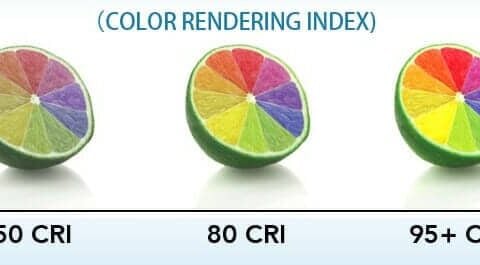
- CRI: Describes how accurately colors appear under the light compared with an appropriate reference source.
A 3000K fixture can have CRI 90+, while a 5000K fixture might have CRI 70 or 80. Conversely, high-CRI 5000K fixtures are also available. You must check the actual CRI specification rather than inferring color accuracy from Kelvin temperature.
For color-critical applications, CRI alone may not tell the complete story. Review the fixture’s available color-quality data and project requirements.
How to Choose the Right Color Temperature
When selecting CCT, consider:
- Desired visual appearance
- Existing lighting
- Interior or exterior finishes
- Application and task
- User preference
- Neighboring spaces
- Local regulations or project standards
- Fixture availability
- CRI and other color-quality requirements
- Light-level and photometric requirements
Do not use CCT as a substitute for lumen output, CRI, glare control, fixture efficacy, environmental rating, or photometric design.
Final Thoughts: Your Space and Color Temperature
Color temperature is primarily about the visual character of white light. Warmer CCTs create a more yellow or amber appearance, while cooler CCTs create a more neutral or blue-white appearance.
No CCT is universally brighter, safer, more accurate, or more productive than another. Those outcomes depend on the complete lighting system, including lumen output, fixture optics, mounting, spacing, glare, uniformity, CRI, spectrum, controls, and the requirements of the space.
For many commercial and industrial projects, 4000K and 5000K are common options, while warmer or cooler values may be preferred for specific applications. Select the CCT that best fits the visual environment and project requirements, then verify the fixture’s actual lighting performance separately.
Expert Lighting Design Support From LED Lighting Supply
LED Lighting Supply Product Specialists can help compare color temperature together with lumen output, CRI, fixture distribution, mounting height, controls, environmental ratings, and other project requirements.
Our complimentary lighting plans use fixture-specific photometric data to show predicted light levels, fixture placement, and coverage before you order. These calculations evaluate actual fixture performance rather than assuming that a higher color temperature automatically provides greater brightness or better visibility.
For projects where color accuracy matters, we can also help identify fixtures with appropriate CRI and available color-quality specifications in addition to the desired CCT.