Basketball Court Light Poles
- Steel and composite fiberglass pole options available
- Direct-burial and anchor-base installation methods offered
- Selection support for court dimensions and fixture mounting



Our Basketball Court Light Poles include steel and composite fiberglass poles for outdoor court lighting installations. Available configurations include direct-burial and anchor-base models, with compatible tenons, bullhorns, crossarms, side-mount brackets, and other approved mounting assemblies.
These poles are used for full courts, half courts, school facilities, municipal parks, recreation areas, private courts, and multi-court basketball complexes.
-
 Starting At $1,299.35
-
Starting At $1,370.21
-
Starting At $1,593.00
-
Starting At $563.64
-
Starting At $481.82
-
Starting At $2,920.00
-
Starting At $2,920.00







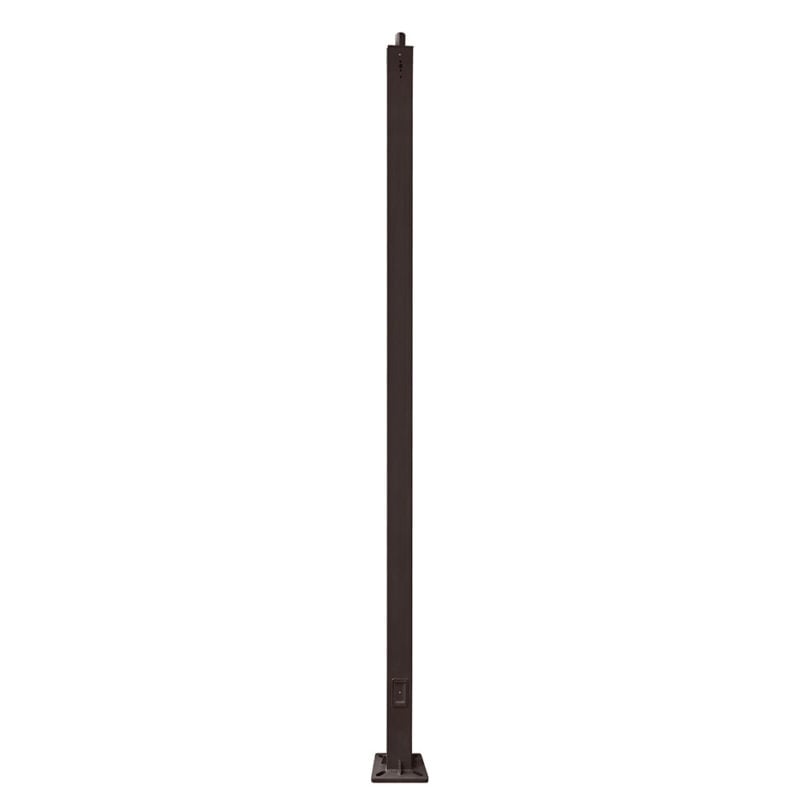
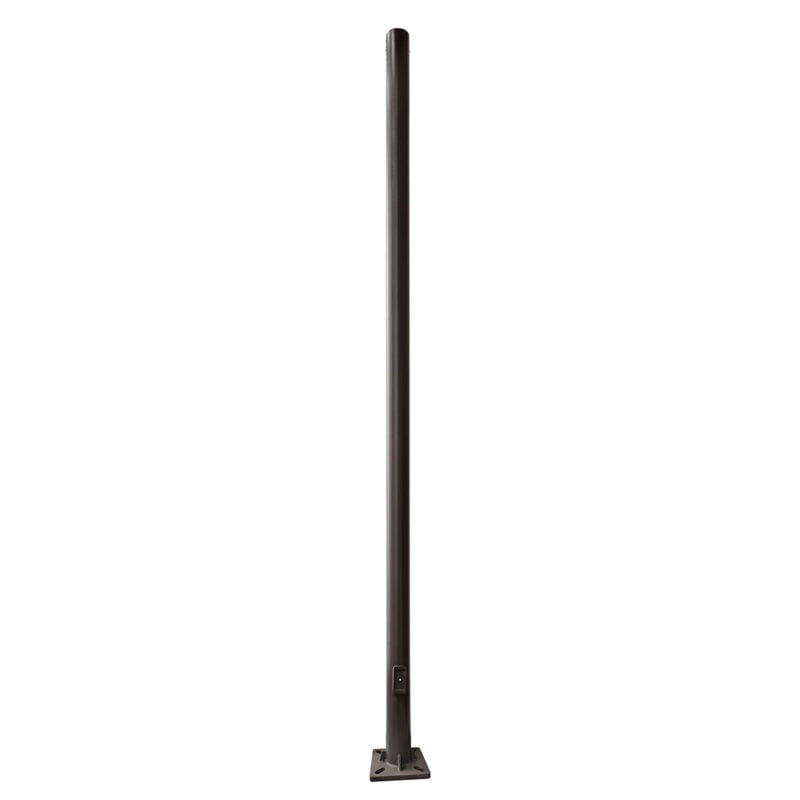
Basketball court light poles support the fixtures, mounting brackets, wiring, and related components used to illuminate outdoor full courts, half courts, school facilities, municipal parks, recreation areas, and private courts. The correct pole system depends on the court dimensions, pole setbacks, mounting height, fixture arrangement, wind requirements, soil conditions, installation method, surrounding properties, and lighting plan.
Available options include steel basketball court light poles and composite fiberglass basketball court light poles. Each material has different structural, installation, corrosion, maintenance, and mounting considerations.
Selection Note: Start with the court dimensions, pole locations and setbacks, intended fixture arrangement, and lighting plan. Then evaluate pole material, mounting height, fixture quantity, allowable EPA, foundation or embedment, wind requirements, soil conditions, fixture aiming, and surrounding properties as one coordinated system. Do not select a basketball court pole using height or material alone.
Basketball Court Light Pole Material Options
| Pole Material | General Selection Considerations |
|---|---|
| Steel Basketball Court Light Poles | Steel provides structural stiffness and broad compatibility with tenons, brackets, bullhorns, and multi-fixture mounting systems. Review the exact pole height, wall construction, finish, allowable EPA, corrosion exposure, foundation or embedment, and base configuration. |
| Composite Fiberglass Basketball Court Light Poles | Composite fiberglass does not rust and may be useful where irrigation, persistent moisture, fertilizers, or other site conditions increase corrosion concerns. Confirm deflection, approved fixture attachments, ultraviolet exposure, base or embedment design, and published structural data. |
Material alone does not determine whether a pole is suitable. Compare the exact pole model, above-grade height, fixture quantity, total mounted weight, allowable EPA, wind criteria, mounting configuration, installation details, and maintenance requirements.
How to Select Basketball Court Light Poles
| Selection Factor | What to Confirm |
|---|---|
| Court dimensions | Provide the court length and width, full-court or half-court configuration, playing-surface boundaries, fencing, sidelines, baselines, seating, buildings, and surrounding property limits. |
| Facility use | Identify whether the court is used for private recreation, community play, school activities, organized competition, tournaments, or facilities with defined lighting requirements. Confirm any required criteria with the facility owner, school, league, municipality, or other governing organization. |
| Project location | Provide the installation address so available pole options can be compared with known wind exposure, frost conditions, terrain, soil, moisture, and other site details. Confirm governing requirements with the appropriate local or project authority. |
| Pole locations | Confirm proposed or existing pole positions, setbacks from the playing surface, player clearances, fencing, gates, pedestrian routes, utilities, seating, and neighboring properties. |
| Mounting height | Select above-grade height using court dimensions, pole setback, fixture output, optics, aiming, glare goals, maintenance access, and photometric results. |
| Fixture arrangement | Confirm fixture quantity per pole, mounting position, tenons, brackets, bullhorns, aiming range, wiring requirements, and whether additional fixtures may be installed later. |
| Weight and EPA | Include all fixtures, brackets, bullhorns, tenon adapters, and other approved mounted components in the total weight and wind-exposed area. |
| Installation method | Determine whether the project requires direct-burial poles, anchor-base poles, or another manufacturer-approved structural configuration. |
| Foundation or embedment | Confirm soil conditions, drainage, frost depth, groundwater, foundation design, anchor-bolt pattern, embedment, backfill, compaction, and installation-equipment access. |
| Maintenance access | Consider how fixtures, drivers, wiring, brackets, and pole-mounted components will be reached for inspection, aiming, repair, or replacement. |
Basketball Court Pole Height and Placement
There is no single pole height or layout that works for every basketball court. Required mounting height and pole placement depend on court dimensions, pole setbacks, fixture output, optics, target light levels, uniformity goals, glare concerns, surrounding properties, and intended use.
Lower mounting heights may reduce installation complexity but can increase glare, shadows, brightness near the perimeter, and the number of fixtures or poles needed. Taller poles may improve aiming geometry and coverage across longer distances, but they require suitable structural capacity, foundations or embedment, lifting equipment, and fixture output.
Corner, sideline, and centerline arrangements may all be possible depending on the site, but none should be treated as a universal layout. The final configuration should be based on the actual court, fixture selection, setbacks, and photometric results.
Full-Court Versus Half-Court Pole Layouts
A full basketball court generally requires lighting from multiple directions to support player visibility, ball tracking, and balanced illumination across both halves of the playing surface. Pole positions should be coordinated with sidelines, baselines, fencing, seating, adjacent courts, and access routes.
A half court may use fewer poles, but a smaller playing area does not automatically make pole placement simple. Limited space can place fixtures closer to common sight lines, increasing the importance of mounting height, fixture tilt, optical control, and glare evaluation.
For multiple adjacent courts, a shared-pole arrangement may be possible when the poles, fixtures, mounting assemblies, and lighting plan are designed for the complete court complex. Shared poles can carry more fixtures and create higher weight and EPA demands than poles serving one court.
Existing Basketball Court Pole Assessment
Existing poles may sometimes be reused during an LED lighting upgrade, but they should not be assumed suitable based on appearance or prior fixture use. Replacement LED fixtures may have different weights, EPA values, mounting patterns, aiming requirements, and bracket loads than the equipment they replace.
An existing-pole review should consider:
- Pole material, age, height, location, and original design
- Corrosion, cracking, impact damage, leaning, movement, or other deterioration
- Base plate, anchor bolts, foundation, or embedded section
- Existing fixture quantity, weight, EPA, and mounting configuration
- Proposed fixture, bracket, and adapter loads
- Handholes, covers, wiring, conduit, grounding, bonding, and electrical capacity
- Access for installation and future maintenance
Reusing suitable poles can reduce excavation and site disruption, but structural compatibility and condition should be verified before fixtures or mounting hardware are replaced. A one-for-one fixture conversion may improve efficiency without correcting poor pole placement, excessive glare, shadows, spill light, or uneven coverage.
Fixture Mounting and Allowable EPA
Basketball court poles may support one or more fixtures using tenons, bullhorns, crossarms, side-mount brackets, or other approved mounting assemblies. The pole, brackets, adapters, fasteners, foundation or embedment, and fixtures must be compatible as one structural system.
Effective Projected Area, or EPA, represents the wind-exposed area of fixtures and mounting components. The complete fixture and mounting configuration must remain within the pole manufacturer’s published loading limits for the applicable wind criteria and mounting arrangement.
Fixture quantity alone does not establish pole capacity. Fixtures with different sizes, shapes, weights, mounting positions, and distances from the pole can create different loads. Adding fixtures or replacing a mounting assembly later can increase the structural demand on the pole, foundation, anchor bolts, or embedded section.
Compatible mounting components may include steel light pole bullhorns, tenon adapters, and other light pole accessories. Confirm compatibility with the exact pole and fixture before ordering.
Direct-Burial Versus Anchor-Base Basketball Court Poles
| Installation Method | Basketball Court Considerations |
|---|---|
| Direct Burial | A portion of the pole is embedded below grade. This method is available for selected steel and composite fiberglass poles. Embedment, backfill, drainage, soil, ground-line exposure, and alignment must be reviewed for the exact pole and site. |
| Anchor Base | The pole mounts to a concrete foundation using a base plate and anchor bolts. Foundation and anchor-bolt details must match the pole manufacturer’s requirements and applicable project engineering. This method may simplify future pole replacement when the foundation and anchor-bolt system remain suitable. |
Neither installation method is automatically stronger, easier, or better for every basketball court. Selection depends on pole material, height, loading, soil, drainage, construction access, foundation requirements, and future replacement plans.
Photometric Planning for Basketball Court Poles
A photometric plan helps coordinate pole locations, mounting heights, fixture quantities, optics, and aiming before poles and fixtures are ordered. It can also identify inadequate coverage, excessive contrast, shadows, direct glare, spill light, and bright areas near the court perimeter.
For fixture selection, light levels, optics, color temperature, controls, and detailed court-lighting guidance, visit our LED basketball court lighting page.
A basketball court lighting plan may evaluate:
- Illumination across the full playing surface
- Uniformity and transitions between brighter and darker areas
- Player and spectator sight lines
- Ball visibility during passes, rebounds, and shots
- Fixture aiming and direct-glare concerns
- Shadows near baskets and along sidelines
- Spill light toward homes, roads, parking areas, and neighboring courts
- Pole setbacks, mounting heights, and fixture locations
- Fixture quantity, output, optics, and mounting arrangement
- Controls, scheduling, dimming, and practice modes when supported
Fixture wattage, distribution, beam angle, pole spacing, pole count, and mounting height should be selected from the complete plan rather than applied as fixed rules.
Glare and Neighboring Properties
Outdoor basketball courts are often located near homes, schools, parking areas, sidewalks, or other recreational facilities. Pole placement and fixture aiming should support visibility on the court without creating unnecessary glare for players or excessive spill light outside the intended area.
Glare cannot be evaluated from pole height or fixture wattage alone. Fixture optics, tilt, mounting position, aiming direction, brightness, pole setback, and the number of lighting directions all affect how players and surrounding properties experience the installation.
Local zoning rules, operating-hour restrictions, curfews, property-line limits, or outdoor-lighting ordinances may apply. Confirm applicable requirements before finalizing the pole and fixture layout.
Wind, Weather, and Court Conditions
Basketball court poles are commonly installed in open recreational areas where wind exposure can be significant. Pole suitability depends on the exact material, height, shape, wall construction, fixture arrangement, mounting hardware, foundation or embedment, and project wind criteria.
For open-terrain, hurricane-prone, or other severe-wind locations, review our high-wind rated light poles and verify the complete pole, fixture, mounting assembly, foundation, and site configuration.
Irrigation, standing water, fertilizers, deicing products, soil chemistry, damaged coatings, and moisture around the base or ground line can affect long-term pole condition. Material and finish should be selected for the actual court environment.
For an initial review of fixture EPA and wind exposure, use our pole wind load calculator. Calculator results are preliminary and do not replace manufacturer structural data or project-specific engineering when required.
Electrical and Installation Considerations
Basketball court pole installation may involve excavation, concrete foundations, anchor bolts, lifting equipment, underground conduit, branch circuits, grounding, bonding, controls, permits, and inspections. The work should be coordinated with the pole manufacturer’s instructions and the applicable project requirements.
Steel is electrically conductive. Composite fiberglass pole shafts may have different electrical characteristics, but fixtures, wiring, fasteners, moisture, mounting hardware, and other components affect the complete installed system. Pole material is not a substitute for required grounding, bonding, overcurrent protection, or electrical safety measures.
Final structural, foundation, electrical, installation, and code requirements should be confirmed by the appropriate qualified professionals for the project.
Inspecting and Maintaining Basketball Court Light Poles
Inspect poles and mounting components periodically and after severe weather, impacts, visible movement, or changes to the fixture configuration. The appropriate inspection interval depends on pole material, manufacturer guidance, environmental exposure, facility use, and local maintenance practices.
Inspection may include:
- Fixture brackets, adapters, bullhorns, and fasteners
- Base plates, anchor bolts, foundations, or embedded sections
- Corrosion, coating damage, cracking, leaning, or impact damage
- Handholes, covers, wiring, conduit, grounding, and bonding
- Fixture aiming and movement
- Drainage, standing water, soil erosion, and ground-line conditions
- Changes in fixture quantity, weight, or mounting configuration
Follow the pole and fixture manufacturers’ inspection, cleaning, repair, and coating instructions. Do not add fixtures, brackets, or other components without reviewing the resulting weight, EPA, and structural loading.
Need Help Selecting Basketball Court Light Poles?
LED Lighting Supply can help narrow basketball court pole options and coordinate the pole system with the proposed lighting layout. Useful project information includes court dimensions, full-court or half-court configuration, installation address, facility use, desired light levels or facility requirements if known, existing or proposed pole locations, mounting heights, fixture quantity, mounting arrangement, existing electrical service, and surrounding site conditions.
Contact us about basketball court light poles and include a site plan, court drawing, sketch, aerial image, or existing pole information when available. Final structural, foundation, embedment, electrical, installation, and code requirements should be confirmed by the appropriate qualified professionals for the project.
Basketball Court Light Poles FAQs
How Should I Select Basketball Court Light Poles?
Basketball court light poles should be selected by evaluating pole material, mounting height, fixture quantity, allowable EPA, foundation or embedment, pole placement, fixture aiming, and the lighting plan together. Court dimensions, setbacks, wind requirements, soil conditions, installation method, and surrounding properties also affect the correct pole system.
Should I Choose Steel Or Composite Fiberglass Basketball Court Poles?
Steel and composite fiberglass poles should be compared using the exact pole model, height, loading, environment, installation method, and structural data rather than material alone. Steel provides structural stiffness and broad compatibility with multi-fixture mounting systems, while composite fiberglass does not rust and may be useful where site conditions increase corrosion concerns.
How Do Pole Height And Placement Affect A Basketball Court Lighting Plan?
Required pole height and placement depend on court dimensions, pole setbacks, fixture output, optics, target light levels, uniformity goals, glare concerns, surrounding properties, and intended use. The final configuration should be based on the actual court, fixture selection, setbacks, and photometric results.
Can Existing Basketball Court Poles Be Reused For An LED Upgrade?
Existing basketball court poles may sometimes be reused, but their suitability should be verified before fixtures or mounting hardware are replaced. Replacement LED fixtures may have different weights, EPA values, mounting patterns, aiming requirements, and bracket loads than the equipment they replace.
What Does Allowable EPA Mean For Basketball Court Light Poles?
Effective Projected Area, or EPA, represents the wind-exposed area of fixtures and mounting components, and the combined EPA must remain within the pole manufacturer's published capacity at the required wind speed. All fixtures, brackets, bullhorns, tenon adapters, and other approved mounted components should be included in total weight and wind-exposed area.
Should I Use Direct-Burial Or Anchor-Base Basketball Court Poles?
Neither direct-burial nor anchor-base poles are automatically stronger, easier, or better for every basketball court. Selection depends on pole material, height, loading, soil, drainage, construction access, foundation requirements, and future replacement plans.
Why Is A Photometric Plan Important Before Ordering Basketball Court Poles?
A photometric plan helps coordinate pole locations, mounting heights, fixture quantities, optics, and aiming before poles and fixtures are ordered. It can also identify inadequate coverage, excessive contrast, shadows, direct glare, spill light, and bright areas near the court perimeter.
What Project Information Helps Narrow Basketball Court Pole Options?
Useful project information includes court dimensions, court configuration, installation address, facility use, desired light levels or facility requirements if known, pole locations, mounting heights, fixture quantity, mounting arrangement, electrical service, and surrounding site conditions. A site plan, court drawing, sketch, aerial image, or existing pole information can also be included when available.