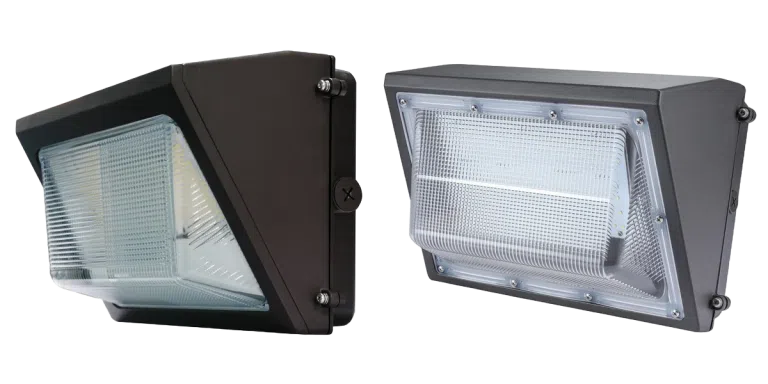
Forward Throw LED Wall Packs
- Projects light outward toward parking, walkways, and perimeter areas
- Photocell, motion sensor, and dimming options on select models
- DLC-listed options available for utility rebate eligibility


Get Your Custom Lighting Plan With Product Recommendations
- Fixture placement and aiming designed to project light forward onto walkways, entries, and building perimeters
- Optics and lumen output matched to mounting height and desired coverage for walls, sidewalks, and parking areas
- LED options can reduce energy use and extend maintenance intervals compared with legacy HID wall packs


Our Forward Throw LED Wall Packs include wall-mounted outdoor fixtures with outward-projecting optics for wide exterior coverage. Available models vary by wattage, lumen output, beam distribution, voltage, photocell compatibility, motion sensor options, 0-10V dimming, and selectable wattage.
These fixtures are commonly used in parking areas near buildings, drive aisles, loading areas, dock aprons, building perimeters, service doors, side yards, walkways, entrances, and exterior security zones.
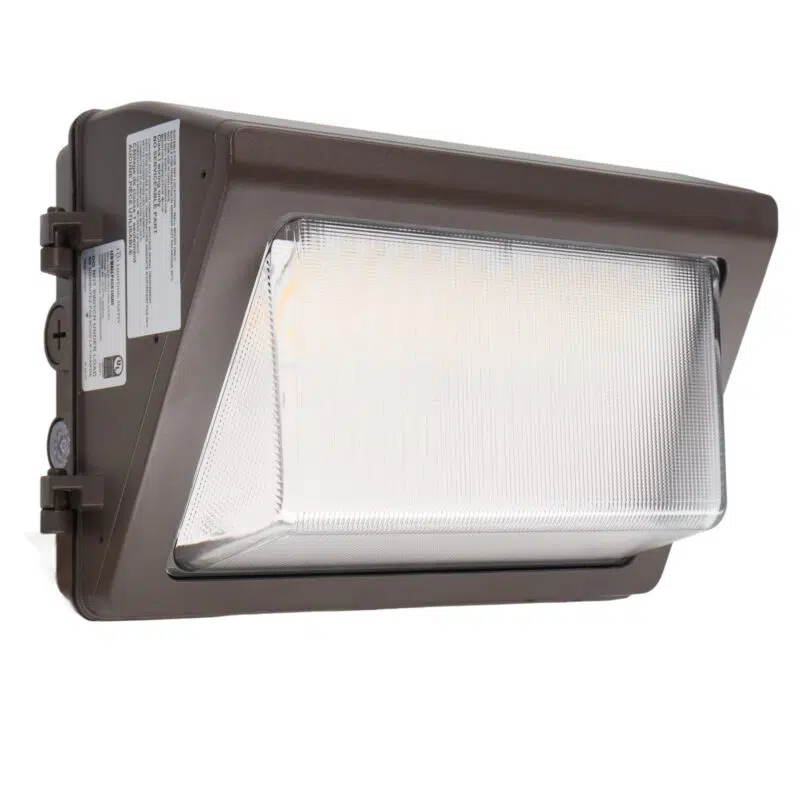



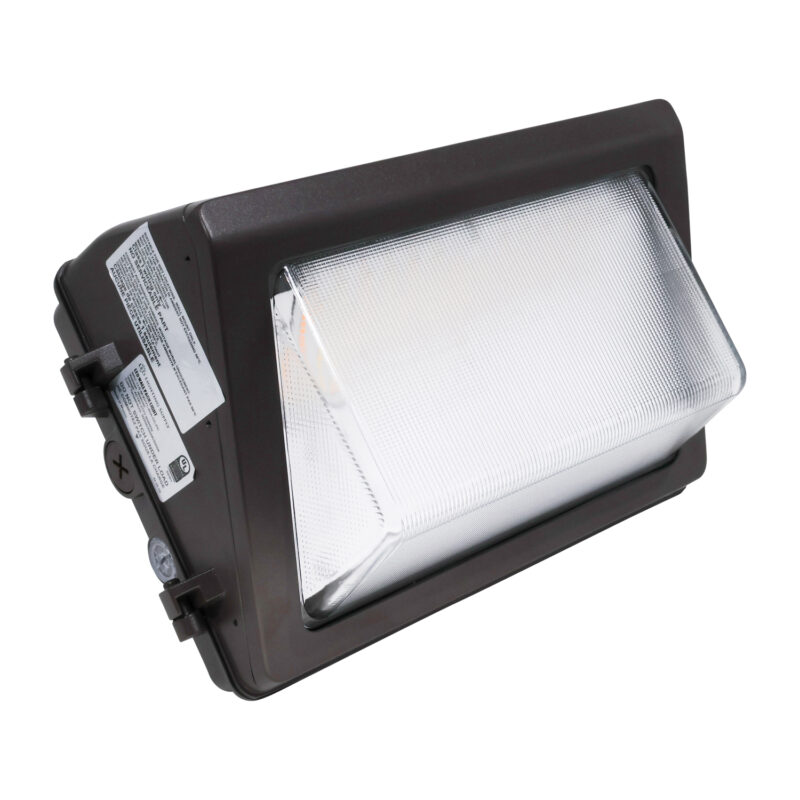


LED Forward Throw Wall Packs for Wide Exterior Coverage
LED forward throw wall packs are wall-mounted outdoor fixtures designed to project light outward from a building. They are commonly used along parking areas, drive aisles, building perimeters, loading areas, walkways, and exterior security zones where light needs to reach farther away from the wall.
Unlike traditional LED wall pack lights that may place a large amount of light directly below the fixture or back onto the building, forward throw wall packs use optics that push light outward across the site. This makes them useful when the fixture must be mounted on a wall, but the coverage area is several feet or more away from the building.
Forward throw wall packs are also sometimes called flood wall packs because they provide broader outward coverage than many full cutoff or standard wall pack styles. Start by confirming that outward projection is needed, then select the fixture based on mounting height, fixture spacing, beam distribution, lumen output, voltage, controls, and how far the light needs to project from the building.
Selection and Installation Note: Product specifications, wattage, lumen output, beam angle, forward throw distribution, voltage, photocell compatibility, motion sensor options, dimming, IP rating, IK rating, certifications, and warranty coverage vary by model. Confirm the selected product specification before ordering. For exterior wall-mounted lighting, electrical upgrades, parking areas, security lighting, code-sensitive applications, or safety-critical spaces, verify requirements with your local inspector or a licensed electrical professional.
Where Forward Throw Wall Packs Work Best
Forward throw wall packs are a good fit when the building wall is the best available mounting location and the goal is to illuminate an area in front of the building. They are often used where poles are not available, not practical, or not desired.
| Application | Why Forward Throw Helps |
|---|---|
| Parking areas near buildings | Projects light outward from the wall toward parked vehicles, pedestrian routes, and drive aisles. |
| Loading areas | Helps illuminate truck approaches, dock aprons, staging areas, and exterior work zones. |
| Building perimeters | Supports visibility around exterior walls, service doors, side yards, and access routes. |
| Security lighting | Can improve visibility for cameras, staff movement, and after-hours activity around the building. |
| Walkways and entrances | Provides outward coverage where pedestrians move away from the building line. |
Forward Throw vs Standard Wall Packs
Forward throw wall packs are not the right choice for every wall-mounted lighting project. If the goal is to light the area directly below the fixture or limit uplight and outward spill, another wall pack style may be a better fit.
| Fixture Style | Best Used When |
|---|---|
| Forward throw wall pack | You need light projected outward from the building toward parking, drive aisles, yards, or perimeter areas. |
| Standard wall pack | You need general wall-mounted exterior lighting around doors, walls, service areas, or smaller exterior zones. |
| Full cutoff wall pack | You need more controlled downward light with reduced uplight and better light-trespass control. |
| Semi-cutoff wall pack | You need a balance of downward and outward light where strict cutoff is not required. |
How to Choose a Forward Throw Wall Pack
First confirm that the project needs light projected outward rather than controlled downward light. Then choose a fixture based on the distance and width of the area you need to cover. Wattage is only one part of the decision; mounting height, lumen output, beam distribution, fixture spacing, glare, and controls all affect the result.
- Mounting height: Lower mounting heights usually need lower output and wider distribution. Higher mounting heights may require more lumens and careful aiming.
- Coverage distance: Confirm how far the light must project from the wall and whether the area is a walkway, parking area, drive aisle, or security zone.
- Fixture spacing: Spacing affects uniformity. Too few fixtures can create bright spots near each unit and dark gaps between them.
- Beam distribution: Wider distributions can cover broader areas, while more focused optics may be better for long, narrow spaces. Review the fixture's photometric data to evaluate coverage, glare, and potential spill light at property lines or adjacent buildings.
- Color temperature: 4000K is often a balanced choice for commercial exterior lighting. 5000K may be used where a cooler, higher-contrast appearance is preferred.
- Controls: Photocells, motion sensors, and dimming may be available depending on model and operating needs.
- Environment: Confirm wet-location rating, IP rating, corrosion exposure, impact rating, and fixture construction before ordering. IP ratings address dust and water ingress; verify materials, finishes, seals, and hardware separately where corrosive or chemical exposure is a concern.
Controls for Forward Throw Wall Packs
Controls can help reduce energy use and simplify exterior lighting operation. The right control option depends on whether the fixture needs to run all night, respond to motion, dim during low-traffic periods, or turn on automatically at dusk.
| Control Option | Best Used When |
|---|---|
| Photocell | The light should turn on at dusk and off at dawn automatically. |
| Motion sensor | The area has lower traffic and can operate at reduced output until activity is detected. |
| 0-10V dimming | The fixture needs to connect with timers, controls, or building automation where compatible. |
| Selectable wattage | The site may need output adjustment after installation without replacing the fixture. |
Confirm control compatibility before ordering. Not every forward throw wall pack supports every photocell, sensor, dimming method, or control configuration.
Certifications, Rebates, and Warranty Support
Safety certifications vary by product. Selected LED forward throw wall packs may carry a listing or certification from an organization such as UL, ETL, or CSA; verify the exact product listing and intended installation conditions before ordering. Some models may be DLC or DLC Premium listed, which can support utility-rebate eligibility where available. DLC qualification is a performance program, not an electrical safety certification.
Rebate requirements vary by utility, region, project, and product listing, so confirm eligibility with the applicable utility and selected product specification before ordering. Warranty terms also vary by model; review the selected product warranty, voltage, controls compatibility, mounting method, wet-location rating, and suitability for the building exterior, security goals, and surrounding site conditions before purchase.
Contact us about forward throw wall packs, and our Product Specialists can help review mounting height, coverage area, beam distribution, lumen output, controls, voltage, environmental rating, and product specifications.
Forward Throw LED Wall Packs FAQs
When Should I Choose A Forward Throw Wall Pack Instead Of A Standard Wall Pack?
Choose a forward throw wall pack when light needs to project outward from the building toward parking areas, drive aisles, yards, or perimeter areas. A standard wall pack is better suited to general wall-mounted exterior lighting around doors, walls, service areas, or smaller exterior zones.
When Is A Full Cutoff Wall Pack A Better Choice?
A full cutoff wall pack may be a better choice when more controlled downward light, reduced uplight, and better light-trespass control are the priority. Forward throw wall packs are designed to project light outward from the building.
What Factors Should I Use To Select A Forward Throw Wall Pack?
Select a forward throw wall pack based on the distance and width of the area to be covered, along with mounting height, lumen output, beam distribution, fixture spacing, glare, and controls. Confirm how far light must project from the wall and whether the area is a walkway, parking area, drive aisle, or security zone.
How Does Fixture Spacing Affect Forward Throw Wall Pack Coverage?
Fixture spacing affects lighting uniformity across the area. Too few fixtures can create bright spots near each unit and dark gaps between fixtures.
Which Controls Are Available For Forward Throw Wall Packs?
Photocells, motion sensors, 0-10V dimming, and selectable wattage may be available depending on the model. Confirm control compatibility before ordering because not every forward throw wall pack supports every photocell, sensor, dimming method, or control configuration.
How Should I Verify A Forward Throw Wall Pack For Exterior Use?
Confirm the selected fixture's wet-location rating, IP rating, corrosion exposure, impact rating, construction, voltage, controls compatibility, mounting method, and product specifications before ordering. Exterior wall packs must be rated for outdoor exposure and wet locations where required.
Are Forward Throw Wall Packs Eligible For Utility Rebates?
Many LED forward throw wall pack models are DLC or DLC Premium listed for utility rebate support where available. Rebate requirements vary by utility, region, and product listing, so confirm eligibility on the selected product specification before ordering.
What Warranty Is Included With LED Forward Throw Wall Packs?
Most LED forward throw wall packs include a 5-year warranty unless otherwise specified, with USA-based warranty support. Confirm the selected product's warranty coverage before purchase.