


LED Lighting for Refineries, Oil Rigs and Oil Fields
- UL 844 certified explosion-proof fixtures for safe hazardous location operation
- 50,000+ hour lifespan eliminates maintenance in remote drilling locations
- 75% energy reduction delivers 2-4 year payback on investment


-
 Hazardous Location Layout Design Meeting Class I Division 1 & 2 Requirements
-
Explosion-Proof Fixture Count & Specifications for Zone Classification Compliance
-
Enhanced Safety & Reliability While Reducing Maintenance in Hazardous Environments


LED oil rig lighting includes specialized fixtures built for installation in hazardous areas across oil rigs, refineries, and petrochemical plants. These products feature robust housings and are available in form factors such as linear, round, and jelly jar styles, with many models rated for Class 1 Division 1 or Division 2 locations. Fixtures are commonly mounted along catwalks, above processing equipment, in control rooms, and throughout exterior walkways and platforms. In addition to explosion-proof options for hazardous zones, the category also covers standard industrial lighting for non-classified areas, including high bays for indoor workspaces, wall packs for building perimeters, and flood lights for open yards.
This offering of Commercial & Industrial Lighting Solutions addresses the unique installation needs found throughout oil production and processing sites. Typical applications include lighting for drilling platforms, pump stations, storage tank areas, service bays, and parking lots within refinery and petrochemical complexes. Fixtures are selected to match the physical layout and environmental demands of each area, from marine-exposed decks to enclosed maintenance shops.


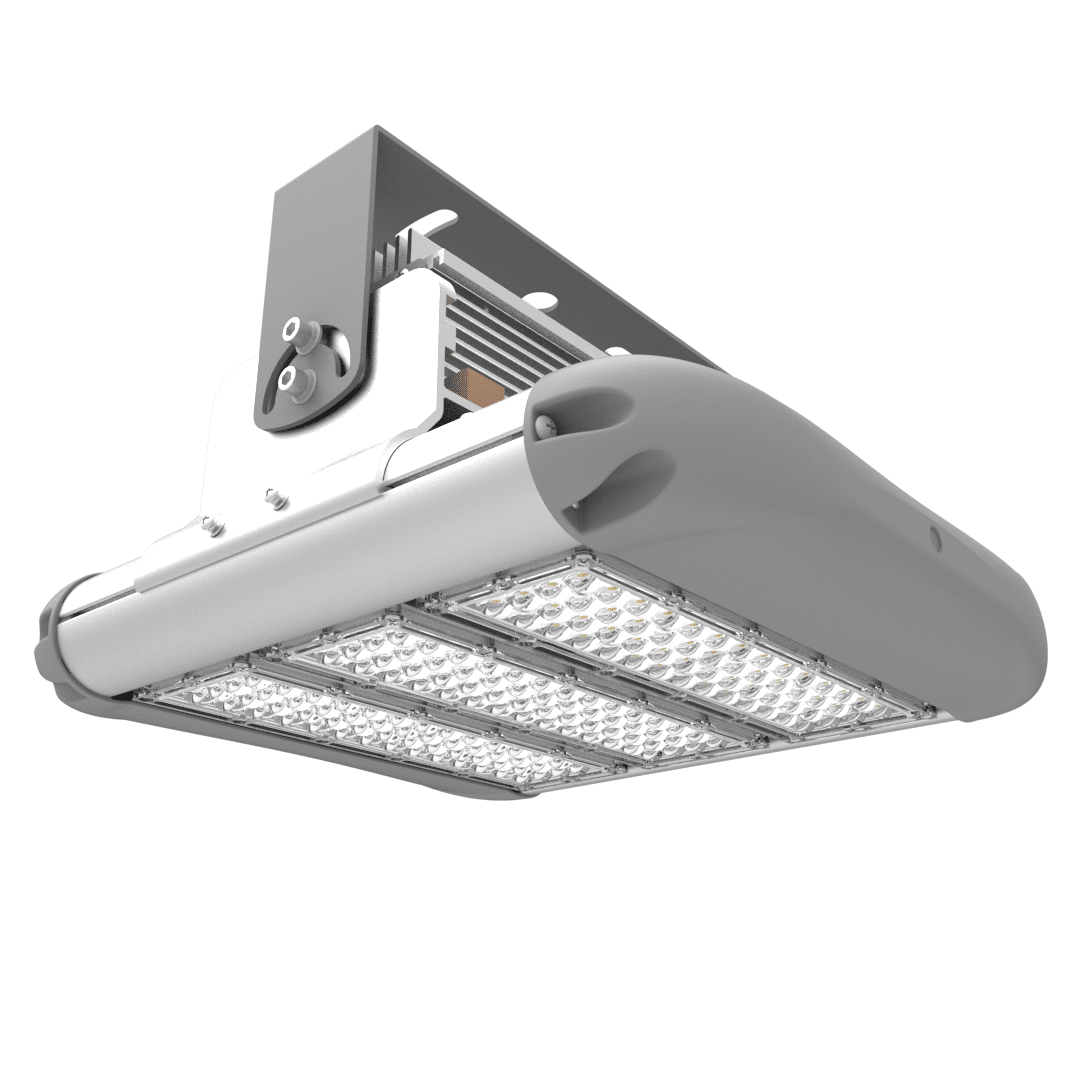

Showing 16–24 of 24 results
 SKU:MLLG-E-LED-EXPLC-80-50-[V]-C1D1 | Web ID:1746100V-277V:315 In StockShips 3-5 Days277V-480V:Built to Order 6 Weeks
- Lumens: 11200
- Replaces: 250 Watt Metal Halide
- Color Temp: 5000K
- CRI: 70+
- IP Rating: IP66
- Rated Life: 50,000 (L70) hours
- Dimmable: 1-10V
- Beam Angle (Std): 120°
- Mount: Yoke | 3/4 in NPT Pendant
- Dimensions (in): 16 in D x 13.5 in H
- Weight (lbs): 39
Starting At$780.00


- SKU:MLLG-E-LED-EXPLC-200-50-[V]-C1D1 | Web ID:2175100V-277V:17 In StockShips 3-5 Days277V-480V:Built to Order 6 Weeks
- Lumens: 28000
- Replaces: 400 Watt Metal Halide
- Color Temp: 5000K
- CRI: 70+
- IP Rating: IP66
- Rated Life: 50,000 (L70) hours
- Dimmable: 1-10V
- Beam Angle (Std): 120°
- Mount: Yoke | 3/4 in NPT Pendant
- Dimensions (in): 16 x 13.5
- Weight (lbs): 39
Starting At$1,150.00 - SKU:MLLG-E-LED-EXPLD-100-50-[V]-C1D1 | Web ID:1281100V-277V:107 In StockShips 3-5 Days277V-480V:Built to Order 6 Weeks
- Lumens: 14000
- Replaces: 200 Watt Metal Halide
- Color Temp: 5000K
- CRI: 70+
- IP Rating: IP66
- Rated Life: 50,000 (L70) hours
- Dimmable: 1-10V
- Beam Angle (Std): 120°
- Beam Angle (Opt): 40° | 60° | 90°
- Mount: Yoke
- Dimensions (in): 15.7 X 11.2 X 9.96
- Weight (lbs): 26.9
Starting At$1,150.00 - SKU:MLLG-E-LED-EXPLD-150-50-[V]-C1D1 | Web ID:1282100V-277V:205 In StockShips 3-5 Days277V-480V:41 In StockShips 3-5 Days
- Lumens: 21000
- Replaces: 400 Watt Metal Halide
- Color Temp: 5000K
- CRI: 70+
- IP Rating: IP66
- Rated Life: 50,000 (L70) hours
- Dimmable: 1-10V
- Beam Angle (Std): 120°
- Beam Angle (Opt): 40° | 60° | 90°
- Mount: Yoke
- Dimensions (in): 15.7 X 11.2 X 9.96
- Weight (lbs): 26.9
Starting At$1,200.00 - SKU:MLLG-E-LED-EXPLI-100-50-[V]-C1D1 | Web ID:1927100V-277V:174 In StockShips 3-5 Days277V-480V:Built to Order 6 Weeks
- Lumens: 14000
- Replaces: 400 Watt Metal Halide
- Color Temp: 5000K
- CRI: 70+
- IP Rating: IP66
- Rated Life: 50,000 (L70) hours
- Dimmable: 1-10V
- Beam Angle (Std): 120°
- Mount: Yoke | 3/4 in NPT Pendant
- Dimensions (in): 47 X 5.5 X 8.1
- Weight (lbs): 26
Starting At$1,340.00 - SKU:MLLG-E-LED-EXPLG-30-50-C1D1 | Web ID:1286Availability: 218 In Stock Ships 3-5 Days
- Lumens: 3900
- Replaces: 100 Watt Metal Halide
- Color Temp: 5000K
- CRI: 70+
- IP Rating: IP66
- Rated Life: 50,000 (L70) hours
- Dimmable: 1-10V
- Beam Angle (Std): 360°
- Mount: 3/4 in NPT Pendant
- Dimensions (in): 12.5 X 8.8
- Weight (lbs): 14
Starting At$520.00 - SKU:MLLG-E-LED-EXPLWL-20-50-C1D1 | Web ID:1820Availability: 40 In Stock Ships 3-5 Days
- Lumens: 1600
- Color Temp: 5000K
- IP Rating: IP66
- Rated Life: 50,000 (L70) hours
- Dimmable: No
- Beam Angle (Std): 120°
Starting At$1,430.00
- SKU:LLS-EXPLFL-240-50-C1D2 | Web ID:1861Availability: 28 In Stock Ships 2-3 Days
- Lumens: 36000
- Replaces: 1000 Watt Metal Halide
- Color Temp: 5000K
- CRI: 70+
- IP Rating: IP66
- Rated Life: 150,000 (L70) hours
- Dimmable: No
- Beam Angle (Std): 120°
- Mount: Yoke
- Mount (Opt): Slip Fitter
- Dimensions (in): 22.3 L X 18.6 W X 3.1 H
- Weight (lbs): 28.6
Starting At$905.56 - SKU:MLLG-E-LED-EXPLB-100-50-C1D2-HT | Web ID:2303Built to Order 8 Weeks
- Lumens: 10000
- Replaces: 400 Watt Metal Halide
- Color Temp: 5000K
- CRI: 70+
- IP Rating: IP66
- Rated Life: 50,000 (L70) hours
- Dimmable: No
- Beam Angle (Std): 120°
- Beam Angle (Opt): 40° | 60° | 90°
- Mount: Yoke | 3/4 in NPT Pendant
- Dimensions (in): 14 in D X 11.3 in H
- Weight (lbs): 26 lbs
Starting At$965.40


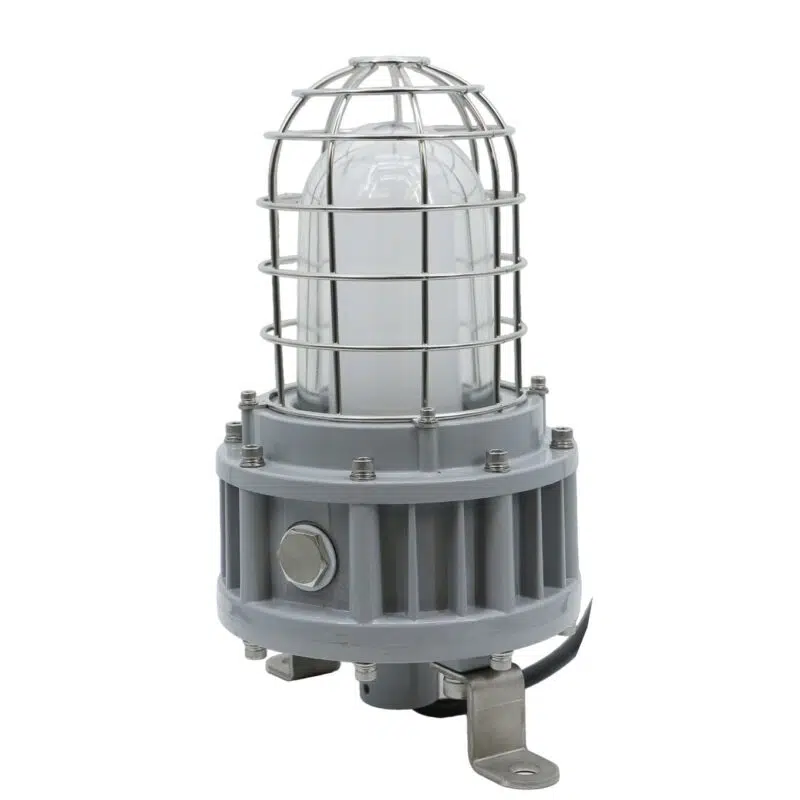
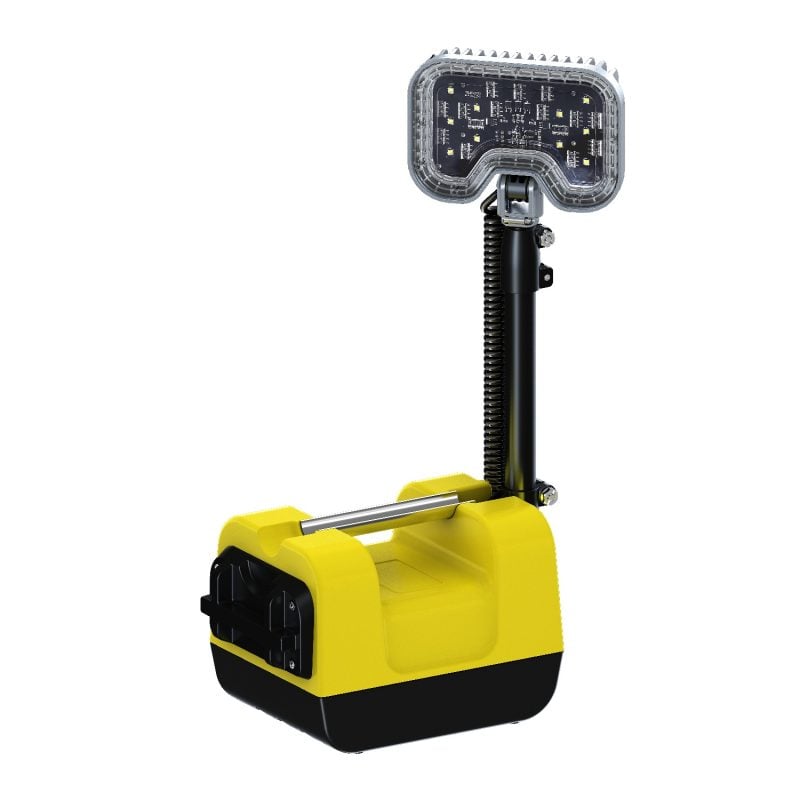


What Are LED Oil, Gas, Refinery, and Petrochemical Lighting Fixtures
LED oil, gas, refinery, and petrochemical lighting fixtures are industrial lighting products used in hazardous, corrosive, high-vibration, high-temperature, marine, outdoor, and mission-critical petroleum environments. These applications may include refineries, petrochemical plants, drilling rigs, offshore platforms, pipeline stations, compressor stations, pump stations, tank farms, loading racks, marine terminals, LNG facilities, chemical processing areas, and industrial support buildings.
Many oil and gas facilities require explosion proof lighting or other properly rated hazardous-location fixtures because flammable gases, vapors, liquids, dusts, or chemical materials may be present. Other areas may require marine-grade lighting, corrosion-resistant fixtures, high-temperature lighting, vibration-resistant mounting, emergency lighting, high mast lighting, or standard industrial fixtures depending on the exact location and classification.
The right fixture depends on the application area, Class/Division or Zone classification, mounting height, corrosion exposure, temperature, vibration, wind, voltage, controls, emergency power, required light levels, and maintenance access. A refinery process unit, offshore deck, drilling rig floor, loading rack, tank farm, pipeline station, control room, and parking area should not be treated as the same lighting project.

Selection and Installation Note: Product specifications, hazardous-location ratings, temperature ratings, voltage, controls, certifications, corrosion resistance, marine suitability, mounting hardware, emergency options, and warranty coverage vary by model. Confirm the selected product specification before ordering. For refinery, petrochemical, oilfield, drilling rig, offshore platform, pipeline, tank farm, marine terminal, fuel, chemical, emergency, or safety-critical applications, verify classification and installation requirements with your local inspector or a licensed electrical professional.
Choose Oil and Gas Lighting by Facility Area
Oil and gas lighting should be selected by application zone. Hazardous-location requirements, corrosion exposure, vibration, maintenance access, and required light levels vary significantly between process units, tank farms, loading racks, offshore platforms, drilling rigs, control rooms, and support buildings.
| Facility Area | Best Fixture Starting Point |
|---|---|
| Refinery and Petrochemical Process Areas | Explosion proof or hazardous-location LED fixtures are commonly used around process units, pipe racks, vessels, valves, pumps, and areas where flammable vapors or gases may be present. |
| Drilling Rig Floors and Derrick Areas | Explosion proof flood lights, hazardous-location high bays, vibration-resistant fixtures, and rugged mounting hardware may be required for drilling work zones. |
| Offshore Platforms | Marine-grade hazardous-location fixtures, corrosion-resistant housings, IP-rated fixtures, and vibration-resistant mounting should be reviewed for decks, walkways, process areas, and exterior access routes. |
| Tank Farms and Storage Areas | Hazardous-location flood lights, area lights, or high mast lighting may be used depending on tank layout, classified boundaries, security needs, and inspection routes. |
| Loading Racks, Terminals, and Transfer Areas | Explosion proof canopy lights, hazardous-location flood lights, and linear fixtures may be used around truck loading racks, rail loading, marine transfer, hose connections, and product transfer points. |
| Pipeline, Pump, and Compressor Stations | Hazardous-location area lights, flood lights, and vibration-resistant fixtures may be needed for remote equipment pads, valve stations, pump skids, and compressor buildings. |
| Control Rooms, MCC Rooms, and Administrative Areas | LED panels, troffers, linear fixtures, or industrial interior fixtures may be used where classified-location ratings are not required. Confirm room classification before selecting fixtures. |
| Warehouses, Shops, and Industrial Support Buildings | LED high bays, linear high bays, vapor tight fixtures, or hazardous-location fixtures may be used depending on the work area and classification. |
| Parking, Security, and Perimeter Areas | LED area lights, flood lights, high mast lights, wall packs, and security lighting may be used where hazardous-location ratings are not required. |
| Marine Docks, Piers, and Ship Loading Areas | Marine-grade hazardous-location lights, corrosion-resistant flood lights, and IP-rated fixtures may be required for saltwater, vessel loading, dock, pier, and terminal environments. |
Recommended Foot-Candles for Oil, Gas, Refinery, and Petrochemical Lighting
Oil and gas lighting levels vary by task and area. A refinery process area, drill floor, valve station, offshore walkway, tank farm, loading rack, control room, maintenance platform, and emergency route all have different lighting needs. Use the tool below for application-specific starting foot-candle ranges.
Foot-candle guidance helps estimate brightness needs, but it does not determine hazardous-location classification, fixture certification, final compliance, fixture count, pole spacing, corrosion resistance, vibration rating, emergency lighting, glare control, vertical illumination, or installation requirements. For oil, gas, refinery, petrochemical, drilling, and offshore projects, a photometric plan is recommended before ordering.
Planning Checklist for Oil and Gas Lighting Projects
Lighting for oilfields, drilling rigs, refineries, offshore platforms, and petrochemical facilities should start with classification and application review. Fixture wattage alone is not enough to determine the correct product.
| Planning Factor | What to Confirm |
|---|---|
| Application area | Confirm whether the project involves refinery process units, drilling rigs, offshore platforms, tank farms, loading racks, pipeline stations, compressor stations, control rooms, warehouses, marine docks, or exterior security areas. |
| Hazardous-location classification | Confirm Class, Division, Zone, Group, and temperature code requirements before selecting fixtures. Standard industrial lights are not substitutes for certified hazardous-location fixtures where those ratings are required. |
| Foot-candle target | Confirm required light levels by task and area, including process access, maintenance work, gauge reading, loading, inspection, emergency egress, and security coverage. |
| Corrosion and marine exposure | Confirm salt spray, offshore exposure, coastal air, chemical exposure, wastewater, coatings, stainless hardware, gasket materials, and lens compatibility. |
| Temperature rating | Confirm ambient temperature near process equipment, hot work areas, desert locations, high-heat zones, and enclosed industrial spaces. |
| Vibration and shock | Drilling rigs, platforms, compressors, pumps, and rotating equipment may require vibration-resistant fixtures, mounting hardware, and wiring methods. |
| IP and wet-location rating | Confirm rain, washdown, marine spray, dust, mud, oil, and water exposure before selecting enclosure ratings. |
| Mounting method | Confirm pole, bracket, pendant, surface, wall, high mast, handrail, platform, or structural mounting requirements. |
| Voltage and power | Confirm 120-277V, 347-480V, generator power, emergency power, surge protection, controls, and remote site electrical requirements. |
| Controls and monitoring | Review photocells, timers, dimming, occupancy controls, remote monitoring, emergency override, and whether controls are permitted in the classified area. |
| Emergency lighting | Confirm egress paths, stairs, muster routes, evacuation areas, emergency battery backup, emergency circuits, and hazardous-location requirements. |
| Photometric plan | Confirm fixture placement, mounting height, beam spread, light levels, uniformity, glare, vertical illumination, and shadowing from pipes, vessels, platforms, tanks, and structures. |
Class 1 Division 1 vs Class 1 Division 2 in Oil and Gas Lighting
Class 1 Division 1 and Class 1 Division 2 describe different hazardous-location conditions. The correct rating depends on the facility classification, the type of flammable material present, how often ignitable concentrations may exist, ventilation, equipment layout, and the exact fixture location.
| Classification | General Meaning |
|---|---|
| Class 1 Division 1 | Used where ignitable concentrations of flammable gases or vapors may exist under normal operating conditions or may frequently exist because of repair, maintenance, or leakage. Fixtures must be certified for the required classification. |
| Class 1 Division 2 | Used where flammable gases or vapors are not normally present in ignitable concentrations but may appear under abnormal conditions, such as accidental rupture, failure, or ventilation problems. Fixtures must match the required classification. |
Do not choose C1D1 or C1D2 fixtures by cost alone. Confirm the site classification, fixture location, temperature code, installation requirements, and inspection requirements before ordering.
Best LED Fixture Types for Oilfields, Refineries, Drilling Rigs, and Offshore Platforms
Many oil and gas lighting projects require more than one fixture type. A refinery may need explosion proof linear fixtures in classified process areas, high mast lighting at tank farms, marine-grade fixtures at docks, LED panels in control rooms, and high bays in maintenance shops.
| Fixture Type | Best Used For |
|---|---|
| Explosion Proof LED Lights | Classified refinery, petrochemical, fuel, chemical, tank, loading, drilling, offshore, or pipeline areas where hazardous-location ratings are required. |
| Explosion Proof Linear Fixtures | Platforms, walkways, process areas, valve stations, pump rooms, and lower-mounting-height classified locations. |
| Explosion Proof Flood Lights | Drilling rigs, loading racks, tank farms, offshore decks, exterior classified areas, and larger work zones requiring directional coverage. |
| Explosion Proof High Bays | High-ceiling classified shops, compressor buildings, process buildings, and industrial support spaces. |
| High Temperature LED Lights | Hot process areas, desert sites, enclosed equipment spaces, and locations near elevated ambient temperatures. Confirm the rated ambient temperature by model. |
| Marine Grade LED Lights | Offshore platforms, coastal refineries, docks, piers, ship loading areas, saltwater exposure, and corrosive marine environments. |
| LED High Mast Lights | Large tank farms, terminals, yards, parking, perimeter security, and exterior areas where tall mounting heights and wide coverage are needed. |
| LED Area and Shoebox Lights | Parking lots, roadways, non-classified exterior areas, support buildings, and general circulation zones where hazardous-location ratings are not required. |
| LED Panels, Troffers, and Interior Fixtures | Control rooms, offices, MCC rooms, electrical rooms, laboratories, and administrative areas where classified-location ratings may not be required. |

Oil and Gas Lighting Project Examples
Oil and gas lighting projects vary by facility type, classification, environmental exposure, mounting height, and maintenance access. A lighting plan can help confirm fixture type, fixture count, placement, hazardous-location ratings, light levels, glare control, and uniformity before ordering.


Certifications, Rebates, and Warranty Support
LED oil, gas, refinery, and petrochemical lighting fixtures from LED Lighting Supply carry safety listings such as UL, ETL, or CSA, depending on the product. Available certifications and ratings may include UL 844, hazardous-location ratings, Class 1 Division 1 and 2 ratings, Zone ratings, IP ratings, IK impact ratings, high-temperature ratings, corrosion-resistant construction, and marine-grade construction. Confirm the required listing, rating, voltage, temperature code, and installation suitability on the selected product specification before ordering.
DLC or DLC Premium may apply to some LED products for efficiency and rebate eligibility, depending on the model and utility program. However, oil and gas lighting selection should start with the required hazardous-location rating, environmental exposure, and application requirements rather than rebate eligibility.
Most LED oil, gas, refinery, and petrochemical lighting fixtures include a 5-year warranty unless otherwise specified, with USA-based warranty support. Confirm warranty coverage, hazardous-location suitability, installation requirements, voltage, surge protection, controls compatibility, ambient temperature, vibration exposure, corrosion exposure, mounting method, marine suitability, emergency backup options, and application restrictions on the selected product specification before ordering.
Common Oil, Gas, Refinery, and Petrochemical Lighting Mistakes
Oil and gas lighting projects can create safety, inspection, maintenance, or performance problems when fixtures are selected without confirming classification, environment, mounting conditions, light levels, and installation requirements.
- Using C1D2 fixtures where C1D1 is required: Confirm the classified area, operating conditions, and fixture location before selecting fixtures.
- Using standard industrial fixtures in classified areas: Standard high bays, flood lights, area lights, or panels are not substitutes for certified hazardous-location fixtures.
- Ignoring temperature code and ambient temperature: Confirm temperature code, fixture ambient temperature rating, and proximity to hot equipment or process areas.
- Skipping corrosion review: Offshore platforms, coastal refineries, marine terminals, docks, wastewater exposure, and chemical areas may require corrosion-resistant construction.
- Overlooking vibration: Drilling rigs, compressors, pumps, platforms, and rotating equipment may require vibration-resistant mounting and wiring methods.
- Choosing fixtures by wattage alone: Lumens, optics, mounting height, classification, voltage, beam distribution, and photometric results matter more than wattage.
- Creating dark areas around valves or gauges: General area lighting may not provide enough visibility for instrument reading, hose connections, sampling, inspection, or maintenance tasks.
- Not coordinating emergency lighting: Stairs, exits, platforms, muster routes, and evacuation paths may require emergency lighting suitable for the environment.
- Ignoring access and maintenance: Fixture placement should account for lifts, platforms, shutdown windows, lens cleaning, corrosion checks, and safe replacement access.
- Skipping a photometric plan: Pipe racks, vessels, platforms, tanks, loading areas, and offshore structures can block light and create shadows if fixture placement is guessed.
Request an oil and gas lighting plan, and our Product Specialists can help review site classification, fixture type, mounting height, light levels, corrosion exposure, vibration, voltage, controls, hazardous-location ratings, and product specifications for your project.
LED Lighting for Refineries, Oil Rigs and Oil Fields Frequently Asked Questions
What Are LED Oil Rig, Refinery, and Petrochemical Lighting Fixtures
These fixtures are designed for hazardous industrial environments like oil rigs and refineries, requiring explosion-proof lighting certified for Class 1 Div 1 and Class 1 Div 2 areas. They ensure safety and compliance by meeting strict standards for environments where flammable vapors may be present.
What Are Recommended LED Lighting Supply Fixtures for Oil Platforms and Rigs
For continuous hazardous conditions, use Class 1 Division 1 (C1D1) fixtures. For intermittent hazards, Class 1 Division 2 (C1D2) fixtures are suitable. Always confirm the classification with local authorities before specifying fixtures to ensure compliance and safety.
What Are the Considerations for Using LED Lights in Oil Refineries Lighting Design
Effective lighting design in refineries must address structural and operational challenges to ensure safety. Adequate illumination around storage tanks and flammable areas is crucial for minimizing explosion risks and supporting regulatory compliance. Custom lighting plans can optimize coverage and safety.
What Are the Recommended Foot Candle Requirements for Oil Rigs and Refineries
General area lighting should provide 5 to 10 foot candles, task lighting requires 20 to 50 foot candles, and emergency lighting should offer 0.1 to 1 foot candle. These levels help ensure worker safety and energy efficiency in petroleum processing environments.
What Are the Benefits of Using LED Lighting Fixtures for Oil Rigs and Refineries
LED fixtures are UL844 certified for hazardous locations, offering 50,000+ operational hours and reducing energy use by 50-75% compared to traditional lighting. They provide substantial cost savings, require minimal maintenance, and integrate with smart controls for optimized energy usage.