LED Sport Court Lights
- Options for indoor high bays or outdoor pole-mounted fixtures
- Lighting plans available to evaluate coverage and uniformity
- USA-based support for fixture selection and specifications


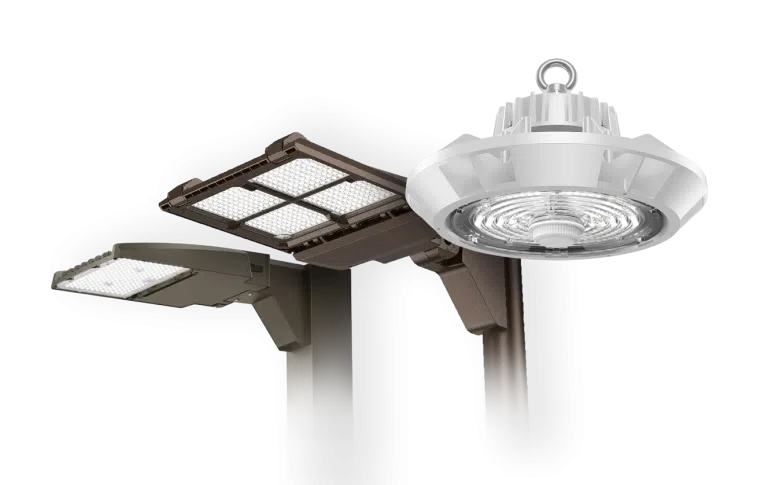
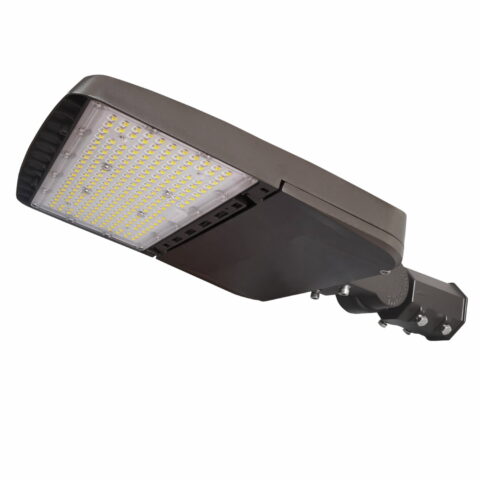
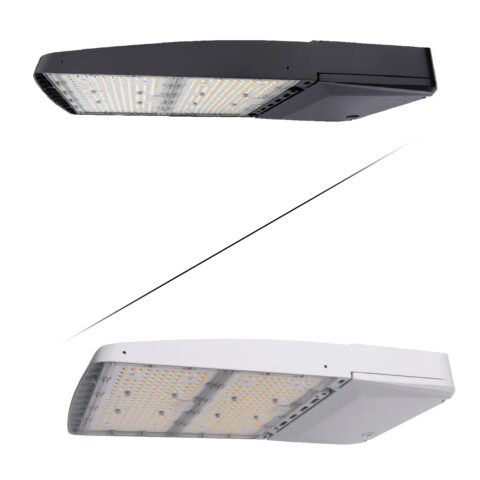
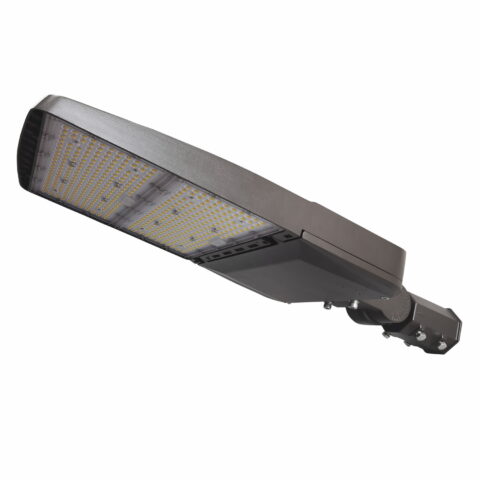
Our Sport Court Lighting includes indoor high bays, linear high bays, indirect lighting, LED shoebox lights, flood lights, and sports field lights for indoor and outdoor courts. Available fixtures vary by lumen output, optics, beam angle, voltage, dimming, sensors, mounting method, and impact exposure. Outdoor options include pole-mounted configurations and adjustable flood lighting.
These products are commonly used for basketball, volleyball, futsal, badminton, handball, tennis, pickleball, and general recreation courts in schools, parks, gyms, recreation centers, churches, apartment communities, private clubs, and public athletic facilities.
-
 Starting At $309.00


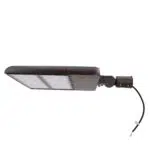

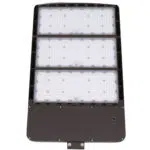
LED Sport Court Lights for Indoor and Outdoor Courts
LED sport court lights are used for indoor and outdoor courts that support more than one activity, including basketball, volleyball, futsal, badminton, handball, tennis, pickleball, and general recreation. These courts are common in schools, parks, gyms, recreation centers, churches, apartment communities, private clubs, and public athletic facilities.
Good court lighting is not just about making the surface bright. Players need to see the ball, court lines, nets, hoops, goals, walls, fencing, teammates, and opponents without distracting glare or harsh shadows. A court used for casual recreation may need a different lighting layout than one used for school athletics, club play, leagues, tournaments, or recorded events.
Start with the court location, the sport with the most demanding visibility needs, the target light level, and the available mounting height and fixture locations. Indoor sport courts typically use LED high bays, linear high bays, low-glare fixtures, or indirect lighting systems, while outdoor courts usually use pole-mounted LED area lights, sports field lights, or adjustable flood lights. Then confirm that the fixture optics, placement, controls, voltage, and impact or environmental exposure fit the court size, mounting layout, and single- or multi-sport use.
Selection and Installation Note: Product specifications, wattage, lumen output, beam angle, mounting hardware, voltage, controls, dimming, motion sensors, surge protection, impact rating, certifications, and warranty coverage vary by model. Confirm the selected product specification before ordering. For public courts, schools, parks, pole-mounted lighting, electrical upgrades, structural mounting review, emergency lighting, code-sensitive applications, or safety-critical projects, verify requirements with your local inspector, structural professional, or licensed electrical professional.
Why Multi-Sport Court Lighting Needs Careful Planning
Multi-sport courts create different sightline challenges because each sport uses the space differently. Basketball players look toward the rim and across the floor. Volleyball and badminton players often look upward. Futsal and indoor soccer require quick visibility across a wider playing area. Racquet sports need clear ball tracking near the net, along boundaries, and during overhead play.
Because of those differences, fixture placement should be reviewed from the player’s point of view. Lights that look acceptable from the sideline can still create glare during overhead shots, shadows near walls, dark corners, or bright spots near center court. This is especially important in gyms with multiple painted court lines, divider curtains, wall padding, retractable hoops, portable nets, or shared-use layouts.
Indoor vs Outdoor LED Sport Court Lighting
Indoor courts are usually limited by ceiling height, fixture spacing, glare, ceiling reflectance, ball-strike exposure, and access for maintenance. Lower-ceiling gyms may need extra attention to glare and impact resistance. Higher-ceiling facilities may need stronger output, tighter fixture spacing, or a different beam angle to maintain uniform light across the full court.
Outdoor courts depend more on pole height, pole setback, fixture aiming, weather exposure, and spill-light control. Courts near homes, roads, parking areas, walking paths, or neighboring properties may need shielded fixtures, controlled optics, or tighter aiming. Multi-court layouts also need careful planning so fixtures serving one court do not create glare on another.
Recommended Foot-Candles for Sport Court Lighting
Sport court lighting levels vary by sport, court use, indoor or outdoor location, and level of play. Recreational courts may require lower light levels than school, club, or competition courts. Because this category covers many court types, use recommended foot-candle levels as a starting point only.
A photometric plan should confirm fixture count, mounting height, fixture spacing, beam angle, light levels, uniformity, glare control, spill light, controls, and electrical requirements before ordering.
Step 1: Find your foot candle levels
Step 2: Estimate your fixture count and spacing
Shoebox Lighting Layout Estimator
Use this estimator to calculate approximate fixture count, pole placement, spacing, and average foot-candles for parking lots, exterior areas, and outdoor sport court applications using LED shoebox fixtures. Enter the area size, mounting height, target foot-candles, light loss factor, and outdoor light use factor to generate a preliminary layout.
Project Inputs
Estimated Results
Estimated average foot-candles are preliminary. The visual heat map is normalized to the estimated average and is intended to show approximate coverage behavior, not a verified lighting plan.
Parking Lot / Exterior Area Mode: Fixtures are placed on poles along the longest edges of the area. Edge fixtures are modeled as level / down-facing shoebox fixtures with the optic directed inward. For wider parking areas, a center row can be added.
Sport Court Mode: Poles are placed on the long edges of the court. Fixtures are modeled as level / down-facing and directed toward court coverage zones instead of being tilted toward one center point.
Photometry / Simulation Note: When usable IES photometry is available for the selected fixture, this estimator uses the fixture’s IES candela data to improve the visual ground-level light distribution. When IES photometry is not available, the estimator uses a simulated Type 3 or Type 5 optic model based on lumens, mounting height, outdoor light use factor, light loss factor, and fixture direction.
Outdoor Light Use Factor: Suggested starting points: open rectangular paved area 0.60–0.70, typical parking lot 0.45–0.60, areas with setbacks or edge losses 0.35–0.50, complex outdoor sites 0.25–0.40.
Preliminary Estimate Only: This estimator is intended for simple rectangular outdoor areas. Actual light levels may vary based on fixture optics, pole setbacks, mounting height, fixture orientation, distribution type, surface reflectance, obstructions, voltage, installation conditions, spill light requirements, and site-specific requirements.
This estimate is a starting point. Parking lots, roadways, sport courts, public areas, campuses, vehicle areas, and code-sensitive exterior projects should be reviewed with a lighting plan before purchase or installation.
What to Confirm Before Selecting LED Sport Court Lights
| Selection Factor | What to Check |
|---|---|
| Primary sports | Plan around the activity with the most demanding visibility needs, not only the easiest sport to light. |
| Light levels | Confirm the target foot-candles for recreation, school, club, league, or competition use. |
| Uniformity | Light should be consistent across the court so players do not move between bright and dark areas. |
| Glare control | Review player sightlines, especially where players look upward, across the court, or toward boundaries. |
| Mounting height | Ceiling height or pole height affects fixture output, beam spread, glare, fixture count, and maintenance access. |
| Optics and beam angle | The optic package should fit the court shape, mounting location, pole setback, and spill-light limits. |
| Voltage and controls | Confirm voltage, dimming, timers, photocells, motion sensors, court-bank switching, and control compatibility. |
| Impact and environment | Review ball-strike exposure indoors and wet-location rating, IP rating, surge protection, and corrosion resistance outdoors. |
Request a sport court lighting plan to confirm fixture count, court coverage, mounting layout, target foot-candle levels, glare control, spill light, voltage, controls, and product specifications before ordering.
Choosing Indoor LED Sport Court Lights
Indoor courts may use LED high bays, linear high bays, direct court fixtures, or indirect lighting. The best choice depends on ceiling height, court layout, fixture spacing, ceiling reflectance, impact exposure, and how the space is used. A recreation gym may need durable fixtures with simple controls. A school gym may also need spectator visibility, emergency lighting coordination, and impact-resistant construction. A club or training facility may prioritize glare reduction, uniformity, color quality, and dimming.
Do not select indoor sport court lights by wattage alone. A higher-wattage fixture can still perform poorly if the beam angle, spacing, mounting height, or glare control is wrong for the court. Review lumen output, optics, CCT, mounting method, controls, and ball-strike exposure before selecting a fixture.
Choosing Outdoor LED Sport Court Lights
Outdoor sport courts usually use pole-mounted fixtures around the court perimeter. Common options include LED shoebox lights, LED flood lights, and higher-output LED sports field lights. The best choice depends on court size, number of courts, pole height, pole setback, surrounding property, required light levels, and how tightly the light needs to be controlled.
Outdoor courts should be reviewed for glare and spill light before installation. Poor aiming can send light into nearby homes, roads, parking areas, sidewalks, or adjacent courts. Sport court light poles should be placed outside activity and safety zones, and fixtures should be aimed to light the court surface without creating unnecessary glare for players or neighbors.
Common Sport Court Lighting Mistakes
- Choosing by wattage alone: Lumens, optics, mounting height, beam angle, aiming, voltage, and photometric results matter more than wattage.
- Ignoring the hardest sport to light: A multi-sport court should be planned around the activity with the toughest visibility and glare-control needs.
- Mounting fixtures too low: Low fixtures can create glare, shadows, ball-strike exposure, and uncomfortable brightness.
- Using generic area lighting: Sport courts need court-specific layout review, not general parking-lot style coverage.
- Ignoring uniformity: Bright centers and darker edges can make court lines, balls, and players harder to see.
- Skipping impact review indoors: Fixtures in active gyms should be reviewed for ball-strike exposure and fixture durability.
- Using the wrong outdoor optics: Rectangular courts usually need controlled distribution that fits the court layout and reduces spill light.
- Skipping a photometric plan: Guessing fixture count or placement can create glare, dark spots, uneven coverage, and expensive rework.
Sport Court Lighting Certifications and Warranty Support
LED sport court lights from LED Lighting Supply carry a safety listing such as UL, ETL, or CSA, depending on product. Many models are DLC or DLC Premium listed for utility rebate support where available. Rebate requirements vary by utility, region, and product listing, so confirm eligibility on the selected product specification before ordering.
Most LED sport court lights include a 5-year warranty unless otherwise specified, with USA-based warranty support. Before purchase, confirm certifications, DLC status, voltage, controls compatibility, mounting method, environmental exposure, impact exposure, surge protection, and whether the fixture is right for the court layout and surrounding conditions.
Get Help Choosing LED Sport Court Lights
LED Lighting Supply can help review your court dimensions, sport types, indoor or outdoor mounting, target foot-candle levels, fixture options, pole placement, ceiling height, glare control, spill light, voltage, controls, and product specifications. A sport court lighting plan can help confirm the right fixture count and layout before you order.
LED Sport Court Lights FAQs
How Should I Plan Lighting For A Multi-Sport Court?
Plan a multi-sport court around the activity with the most demanding visibility and glare-control needs. Review fixture placement from the player's point of view because different sports require players to look upward, across the court, near nets, or toward goals and rims.
What Should Be Included In A Sport Court Lighting Plan?
A sport court lighting plan should confirm fixture count, mounting height, fixture spacing, beam angle, light levels, uniformity, glare control, spill light, controls, and electrical requirements before ordering. It can also confirm court coverage, mounting layout, voltage, and product specifications.
How Do Indoor And Outdoor Sport Court Lighting Needs Differ?
Indoor court lighting is usually influenced by ceiling height, fixture spacing, glare, ceiling reflectance, ball-strike exposure, and maintenance access, while outdoor lighting depends more on pole height, pole setback, fixture aiming, weather exposure, and spill-light control. Indoor courts typically use high bays, linear high bays, low-glare fixtures, or indirect lighting systems, while outdoor courts usually use pole-mounted area lights, sports field lights, or adjustable flood lights.
Should I Choose Indoor Sport Court Lights By Wattage Alone?
No, indoor sport court lights should not be selected by wattage alone because a higher-wattage fixture can still perform poorly when beam angle, spacing, mounting height, or glare control is wrong for the court. Review lumen output, optics, CCT, mounting method, controls, and ball-strike exposure before selecting a fixture.
How Can Outdoor Sport Court Lighting Reduce Glare And Spill Light?
Outdoor sport courts should be reviewed for glare and spill light before installation, with fixtures aimed to light the court surface without creating unnecessary glare for players or neighbors. Courts near homes, roads, parking areas, walking paths, or neighboring properties may need shielded fixtures, controlled optics, or tighter aiming.
What Factors Affect Sport Court Fixture Count And Spacing?
Fixture count and spacing depend on target foot-candle levels, mounting height, fixture spacing, beam angle, light levels, uniformity, glare control, spill light, controls, and electrical requirements. Court size, layout, pole setback, ceiling height, and the primary sports also affect planning.
How Should I Set Target Foot-Candle Levels For A Sport Court?
Set target foot-candle levels based on the sport, court use, indoor or outdoor location, and level of play. Recreational courts may require lower light levels than school, club, or competition courts, and recommended levels should be used as a starting point only.
What Warranty And Certification Details Should I Confirm Before Ordering?
Confirm certifications, DLC status, voltage, controls compatibility, mounting method, environmental exposure, impact exposure, surge protection, and product suitability for the court layout and surrounding conditions. LED sport court lights carry a safety listing such as UL, ETL, or CSA depending on product, and most include a 5-year warranty unless otherwise specified.