


LED Battery Energy Storage System Lighting
- Hazardous-location and industrial fixture options for classified and unclassified areas
- Application support for matching fixtures to documented area classifications
- Weather-resistant outdoor options available for utility-scale installations


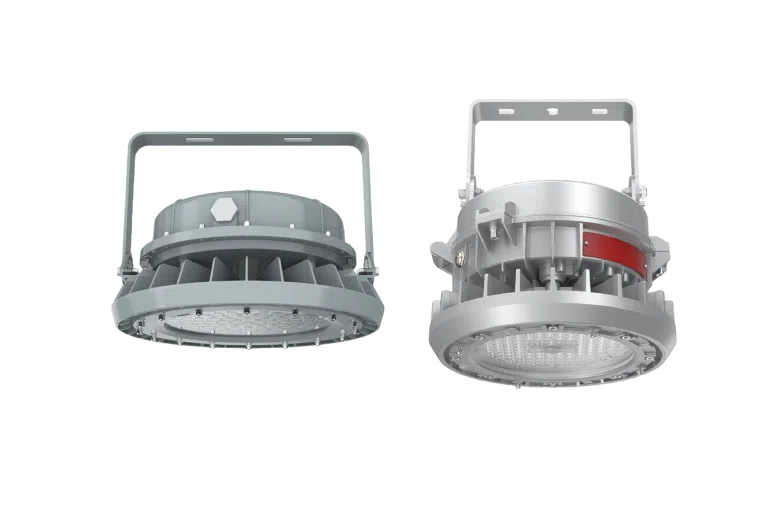

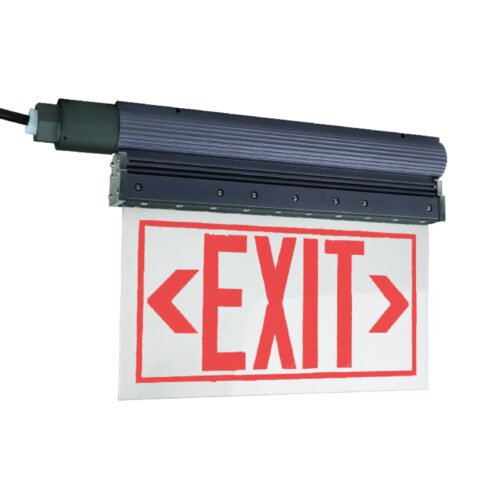
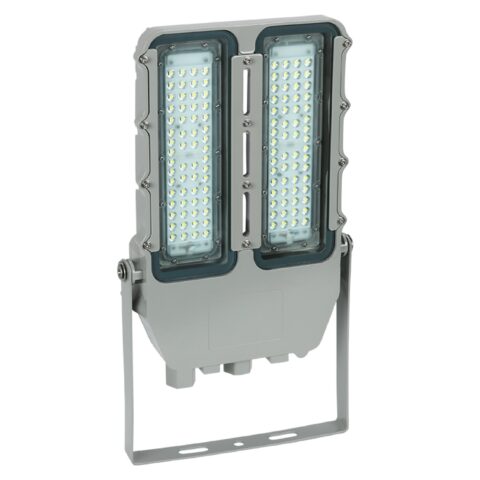
Our BESS Lighting for Battery Energy Storage Facilities includes Class I Division 2 fixtures, industrial LED fixtures, and outdoor LED lighting for battery storage environments. Available products include weather-resistant, vibration-resistant, and emergency backup-compatible models.
These fixtures are used in battery storage rooms, containerized BESS systems, battery charging areas, inverter and electrical equipment rooms, maintenance walkways, and utility-scale energy storage sites.
-
 Starting At $1,224.00
-
Starting At $2,048.00


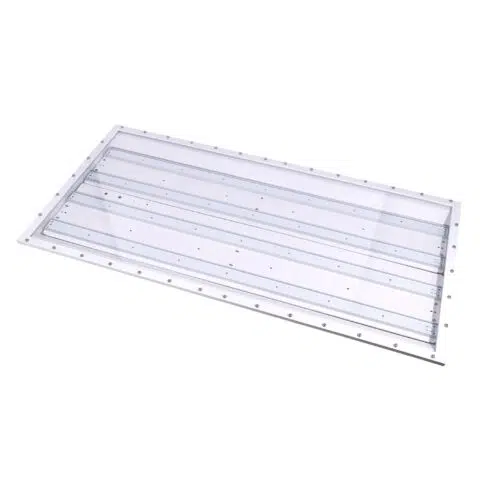
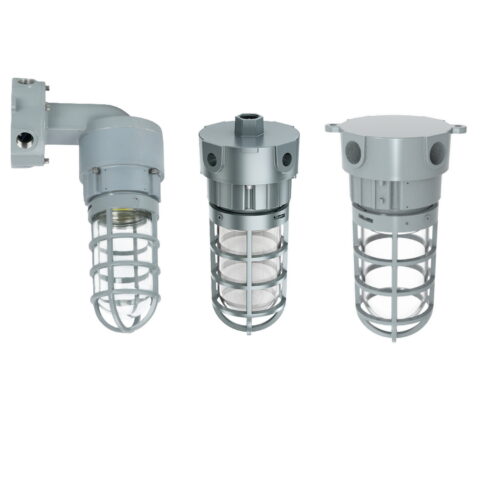


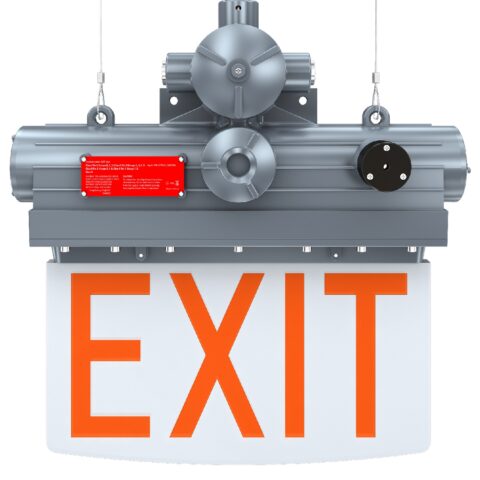


Lighting Requirements for Battery Energy Storage Systems
Start BESS lighting selection by determining whether each installation area is an ordinary location or has been formally identified as a hazardous classified location. That determination can depend on battery chemistry, normal and abnormal gas-release scenarios, ventilation design, enclosure configuration, gas detection, thermal-runaway analysis, equipment arrangement, and the facility's engineered hazard assessment.
Some battery storage or charging environments may require hazardous-location lighting where ignitable gases or vapors can accumulate. Other BESS areas may use standard industrial lighting when no hazardous electrical classification applies. Do not assign Class I Division 1 or Class I Division 2 solely from battery chemistry or the presence of a venting system. The actual electrical area classification should be established by the project engineer, safety professional, or other qualified party responsible for the facility design.
After the electrical classification is established, confirm indoor or outdoor conditions, ambient temperature, corrosion exposure, maintenance-access needs, emergency-lighting requirements, voltage, fixture mounting, controls, and environmental ratings.
Typical Lighting Applications in BESS Facilities
| Battery Storage Rooms | May use standard industrial lighting or hazardous-location fixtures depending on the battery technology, gas-release characteristics, ventilation system, enclosure design, and documented area classification. |
| Containerized BESS Systems | Industrial LED fixtures are commonly used for maintenance access, inspection, and operational visibility when the interior is not classified as hazardous. Classified equipment should be used where the engineered area classification requires it. |
| Battery Charging Areas | Lead-acid and other battery-charging applications can release hydrogen. The required electrical classification, if any, depends on expected gas generation, ventilation, room geometry, charging conditions, and the engineered hazard assessment. |
| Inverter and Electrical Equipment Rooms | Many inverter and electrical rooms use standard industrial LED lighting when they are outside any designated hazardous classified area. |
| Utility-Scale Energy Storage Sites | Outdoor installations may require weather-resistant outdoor LED lighting suitable for utility infrastructure, environmental exposure, maintenance access, and the site's electrical classification. |
When Hazardous Location Lighting May Be Required in BESS Facilities
Hazardous-location lighting may be required where the facility's electrical area classification identifies the potential for ignitable concentrations of flammable gases or vapors. Factors that may be considered in that analysis include:
- Battery chemistry and cell construction
- Normal and abnormal gas-release scenarios
- Hydrogen generation during charging
- Thermal-runaway gas composition and release characteristics
- Ventilation capacity and reliability
- Gas detection and control systems
- Room or enclosure geometry
- Battery quantity and arrangement
- Equipment failure scenarios
- UL 9540A or other applicable fire and gas-release test data
- Facility engineering and fire-protection design
- Applicable electrical, fire, and building requirements
- Authority Having Jurisdiction requirements
Hazardous classification should be performed for the actual room, enclosure, or area rather than assumed for an entire BESS facility. Different portions of the same project may have different classifications or may be unclassified.
Class I Division 1 vs Class I Division 2 in Battery Environments
The distinction between Class I Division 1 lighting and Class I Division 2 lighting depends on how likely an ignitable gas or vapor concentration is to be present.
| Classification | General Consideration |
|---|---|
| Class I Division 1 | May apply where ignitable concentrations of flammable gases or vapors can exist under normal operating conditions, occur frequently during maintenance or leakage, or where equipment failure could release an ignitable concentration while also creating an ignition hazard. |
| Class I Division 2 | May apply where flammable gases or vapors are normally confined, or where adequate mechanical ventilation normally prevents an ignitable concentration, and the hazard would arise primarily from abnormal operation, leakage, failure, or loss of ventilation. |
These are general distinctions only. They should not be used to independently classify a battery room or BESS enclosure. The quantity of gas that may be released, ventilation performance, enclosure volume, release frequency, equipment arrangement, and other project-specific factors all affect the classification and the extent of the classified area.
Hydrogen and Lead-Acid Battery Areas
Lead-acid batteries can generate hydrogen during charging. Ventilation is commonly used to prevent hydrogen from accumulating to hazardous concentrations. OSHA's industrial-truck battery-charging provisions require ventilation for dispersal of fumes from gassing batteries; applicable ventilation and safety requirements for a BESS project should be confirmed for the specific installation.
The presence of hydrogen does not automatically make every battery-charging room Class I Division 2. Likewise, an area near a hydrogen release is not automatically Division 2. Depending on whether hydrogen can be present during normal operation, the release rate, ventilation effectiveness, equipment arrangement, and the engineered classification, an area may be unclassified, Class I Division 1, Class I Division 2, or classified only within a defined boundary around specific equipment.
Where hydrogen is part of the hazard, also confirm the required gas group and fixture certification. Do not assume that every Class I fixture is suitable for every hydrogen-classified installation.
Lithium-Ion BESS and Thermal Runaway
Lithium-ion batteries can release flammable gases during thermal runaway. UL 9540A is a test method used to evaluate thermal-runaway fire propagation in battery energy storage systems. Depending on the test level and system configuration, test results may provide information relevant to heat release, fire propagation, gas release, gas flammability, deflagration, or re-ignition hazards.
However, a lithium-ion system's ability to produce flammable gases during an abnormal thermal-runaway event does not automatically mean that the surrounding electrical area should be classified as Class I Division 2. Electrical area classification should reflect the expected release scenarios, system design, ventilation, gas detection, enclosure configuration, applicable test data, and the project's engineered hazard analysis.
Where the facility design identifies a hazardous classified area, select lighting and electrical equipment for the exact Class, Division or Zone, gas group, temperature requirement, and environmental conditions specified by the project.
Recommended Lighting Fixtures for BESS Facilities
Hazardous-Location Fixtures
Where the project documents identify a Class I hazardous location, use lighting specifically certified for the required classification. Do not select explosion proof lighting only because batteries are present.
If the area is classified Class I Division 2, fixtures rated for the applicable Class, Division, gas group, temperature requirement, ambient temperature, and environment should be selected. If the area is Class I Division 1, use equipment specifically suitable for Division 1 rather than assuming Division 2 equipment is adequate.
Potential applications can include:
- Battery rooms with a documented hazardous electrical classification
- Defined areas around hydrogen-release points when identified by the project classification
- Battery-charging installations where the engineered analysis establishes a hazardous classified area
- Specific BESS enclosures or equipment areas identified as hazardous by the facility design
Industrial LED Fixtures
Where no hazardous electrical classification applies, industrial-grade LED fixtures may be used based on the operating environment and maintenance requirements.
- Inverter rooms
- Electrical equipment areas
- Outdoor utility infrastructure
- Maintenance walkways
- Control rooms
- Unclassified portions of containerized energy storage systems
Ambient Temperature and Environmental Conditions
BESS enclosures and electrical rooms can have operating temperatures that differ significantly from normal indoor environments. Heat from batteries, power-conversion equipment, HVAC operation, solar exposure, enclosure configuration, and abnormal operating conditions can affect fixture temperature.
Confirm the luminaire's rated ambient-temperature range against the expected operating environment. Where temperatures exceed normal fixture limits, evaluate appropriately rated high-temperature LED lights.
Outdoor BESS installations should also be reviewed for rain, condensation, dust, snow, temperature cycling, corrosion, salt exposure, and other environmental conditions. Select the wet-location listing, IP rating, housing material, seals, hardware, and finish for the actual environment. An IP rating addresses protection against solids and water ingress; it does not by itself establish corrosion resistance, chemical resistance, or hazardous-location suitability.
Emergency and Egress Lighting
Emergency-lighting requirements depend on the facility layout, occupancy, egress arrangement, building design, and applicable life-safety requirements. BESS facilities should not automatically be assumed to require battery backup on every luminaire.
Where emergency lighting is required, selected fixtures may use integral emergency drivers, remote battery systems, generators, inverters, or other emergency-power systems. The emergency system must provide the required illumination along applicable egress paths and occupied areas for the required duration.
An emergency battery accessory by itself does not establish code compliance. Emergency-mode light output, fixture placement, mounting height, controls, duration, and applicable life-safety requirements should be reviewed for the specific project.
How We Help Specify BESS Lighting Systems
LED Lighting Supply can help select lighting after the facility's electrical classifications and design requirements have been established. Our role can include reviewing:
- Specified hazardous-location classification
- Required Class, Division or Zone and gas group
- Fixture layout and spacing
- Target light levels and uniformity
- Indoor and outdoor fixture options
- Industrial and hazardous-location fixture availability
- Ambient-temperature requirements
- Environmental and ingress-protection ratings
- Voltage and controls compatibility
- Emergency-lighting product options
We can help match fixtures to a classification that has already been established, but we should not be used as the party responsible for determining whether a BESS area is Class I Division 1, Class I Division 2, another hazardous classification, or unclassified. Final hazardous-area classification, fire-protection design, electrical requirements, and code compliance should be established by the qualified project professionals and authority having jurisdiction.
Common Mistakes and How to Avoid Them
Battery energy storage lighting projects can involve utility infrastructure, enclosed equipment spaces, flammable-gas hazards, electrical equipment, fire-protection systems, and maintenance environments that require careful coordination.
- Assuming all BESS areas require explosion proof lighting: Many BESS areas may be unclassified and use standard industrial fixtures. Use hazardous-location lighting only where the documented area classification requires it.
- Assuming hydrogen areas are always Class I Division 2: Hydrogen release frequency, concentration, ventilation, enclosure geometry, and operating conditions can result in different classifications. Areas where ignitable concentrations may occur under normal operating conditions can require Division 1 treatment.
- Assuming lithium-ion thermal-runaway risk automatically creates a Class I Division 2 area: Thermal runaway can generate flammable gases, but electrical area classification requires a project-specific hazard analysis rather than a blanket battery-chemistry rule.
- Using Division 2 equipment in a Division 1 area: Confirm the exact classification before selecting fixtures. Division 1 requirements are more stringent and should not be replaced by Division 2 equipment unless specifically permitted by the applicable rules.
- Ignoring gas group and temperature requirements: A fixture marked Class I Division 1 or Division 2 still needs to be suitable for the specified gas group, temperature requirements, ambient rating, and environment.
- Using fixtures that cannot withstand enclosure temperatures: Heat buildup inside containerized systems can shorten fixture and driver life if ambient-temperature ratings are not verified.
- Installing high-glare fixtures in maintenance areas: Appropriate optics, mounting, and uniform illumination can improve technician visibility around batteries, racks, switchgear, and electrical equipment.
- Assuming every BESS fixture needs emergency backup: Emergency lighting should be provided where required by the facility's egress and life-safety design rather than added based solely on the presence of batteries.
- Ignoring environmental ratings outdoors: Utility-scale BESS installations can expose fixtures to moisture, dust, corrosion, temperature swings, snow, and other harsh conditions. Verify materials, coatings, seals, and hardware in addition to any IP or wet-location rating.
BESS Lighting Certifications and Warranty Support
LED lighting used in BESS facilities may carry a safety listing such as UL, ETL, or CSA, depending on the product. Where hazardous-location lighting is required, confirm the exact fixture marking for the specified Class, Division or Zone, gas group, temperature classification or marked maximum temperature, ambient-temperature range, and environmental conditions.
Many standard industrial fixtures may also be DLC or DLC Premium qualified where applicable. DLC qualification relates to energy-performance requirements and does not establish hazardous-location suitability.
Warranty coverage varies by fixture and manufacturer. Before ordering, confirm the selected fixture's electrical safety listing, hazardous-location rating where required, voltage, controls compatibility, ambient-temperature rating, environmental rating, mounting method, and warranty conditions.
For BESS projects, final hazardous-area classifications and fire, electrical, life-safety, and code requirements should always be confirmed by the qualified engineers, fire-protection professionals, safety personnel, and authority having jurisdiction responsible for the project.
LED Battery Energy Storage System Lighting FAQs
How Should I Start Selecting Lighting For A BESS Facility?
Start by determining whether each installation area is an ordinary location or a formally identified hazardous classified location. After classification is established, confirm indoor or outdoor conditions, ambient temperature, corrosion exposure, maintenance access, emergency-lighting requirements, voltage, mounting, controls, and environmental ratings.
Do All Battery Energy Storage System Areas Require Hazardous-Location Lighting?
No. Many BESS areas may be unclassified and use standard industrial fixtures, while hazardous-location lighting should be used only where the documented area classification requires it.
Can Battery Chemistry Alone Determine Whether A BESS Area Is Classified?
No. Electrical area classification should not be assigned solely from battery chemistry or the presence of a venting system. Classification depends on project-specific factors including gas-release scenarios, ventilation, enclosure configuration, gas detection, equipment arrangement, and the engineered hazard assessment.
How Do Class I Division 1 And Class I Division 2 Differ In Battery Environments?
Class I Division 1 may apply where ignitable concentrations of flammable gases or vapors can exist during normal operation, occur frequently during maintenance or leakage, or result from equipment failure that also creates an ignition hazard. Class I Division 2 may apply where gases or vapors are normally confined or adequate mechanical ventilation normally prevents an ignitable concentration, with the hazard arising primarily from abnormal operation, leakage, failure, or loss of ventilation.
What Should Be Verified When Selecting Hazardous-Location Fixtures For A BESS Project?
Select hazardous-location fixtures for the exact Class, Division or Zone, gas group, temperature requirement, ambient temperature, and environmental conditions specified by the project. A fixture marked for Class I Division 1 or Division 2 must still be suitable for the specified gas group, temperature requirements, ambient rating, and environment.
What Environmental Conditions Should Be Considered For Outdoor BESS Lighting?
Outdoor BESS lighting should be reviewed for rain, condensation, dust, snow, temperature cycling, corrosion, salt exposure, and other environmental conditions. Select wet-location listing, IP rating, housing material, seals, hardware, and finish for the actual environment, because an IP rating alone does not establish corrosion resistance, chemical resistance, or hazardous-location suitability.
Does Every BESS Luminaire Need Emergency Battery Backup?
No. Emergency-lighting requirements depend on the facility layout, occupancy, egress arrangement, building design, and applicable life-safety requirements. Where emergency lighting is required, the emergency system must provide required illumination along applicable egress paths and occupied areas for the required duration.
What Information Should Be Confirmed Before Ordering BESS Lighting Fixtures?
Before ordering, confirm the selected fixture's electrical safety listing, hazardous-location rating where required, voltage, controls compatibility, ambient-temperature rating, environmental rating, mounting method, and warranty conditions. Hazardous-location fixtures should also be confirmed for the specified Class, Division or Zone, gas group, temperature classification or marked maximum temperature, and environmental conditions.
