LED Wall Packs with Photocell
- Integrated photocell enables automatic dusk-to-dawn operation
- Multiple distribution types available for different coverage needs
- Wet-location-rated options designed for outdoor building exteriors


Get Your Custom Lighting Plan With Product Recommendations
- Fixture placement and spacing designed around building perimeter coverage, mounting height, and distribution type
- Fixture count and output matched to coverage area, with photocell options for dusk-to-dawn operation
- LED options can reduce energy use and maintenance compared with legacy metal halide or HPS wall packs


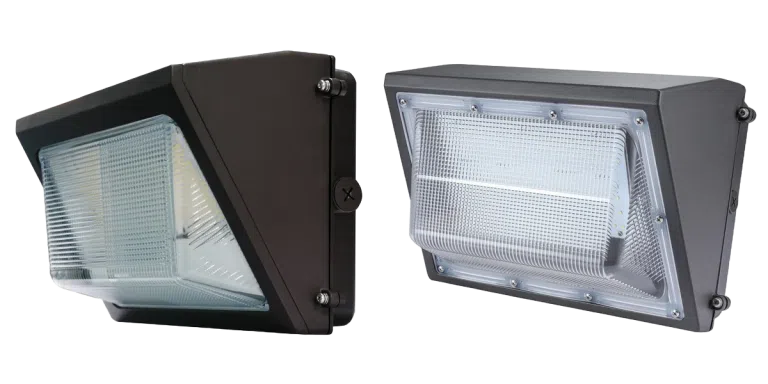
Our LED Wall Packs with Photocells include wall-mounted outdoor fixtures with automatic dusk-to-dawn operation for commercial and industrial exteriors. Available models vary by wattage, lumen output, voltage, color temperature, and controls, with adjustable wattage and selectable color temperature options on many fixtures.
These fixtures are commonly used for building perimeters, entrances, walkways, loading docks, service doors, storage facilities, exterior work zones, warehouses, offices, manufacturing facilities, distribution centers, retail shopping centers, schools, and healthcare campuses.


Choosing the Best LED Wall Pack for Your Application
LED wall packs are wall-mounted outdoor lighting fixtures used for commercial and industrial building exteriors, entrances, walkways, loading docks, service doors, storage facilities, parking perimeters, and exterior work zones. They are commonly installed on warehouses, offices, schools, retail buildings, manufacturing facilities, distribution centers, and other commercial properties that need dependable nighttime visibility around the building. For LED wall packs with photocells, first confirm whether automatic dusk-to-dawn operation is needed and whether the building circuit already uses a photocell, timer, or automation system before selecting an integrated photocell.
The right LED wall pack also depends on the mounting height, wall location, coverage area, light distribution, fixture output, voltage, controls, local glare or light-trespass requirements, and whether the fixture needs to replace an existing metal halide or high-pressure sodium wall pack. A full cutoff wall pack, semi-cutoff wall pack, forward-throw wall pack, or photocell wall pack may each be appropriate in different applications. Unlike residential outdoor wall lights, commercial LED wall pack lights are available in configurations intended for outdoor use, including wet-location-rated models. Many models also offer adjustable wattage, selectable color temperature, photocells, motion sensors, or dimming options, depending on the fixture.
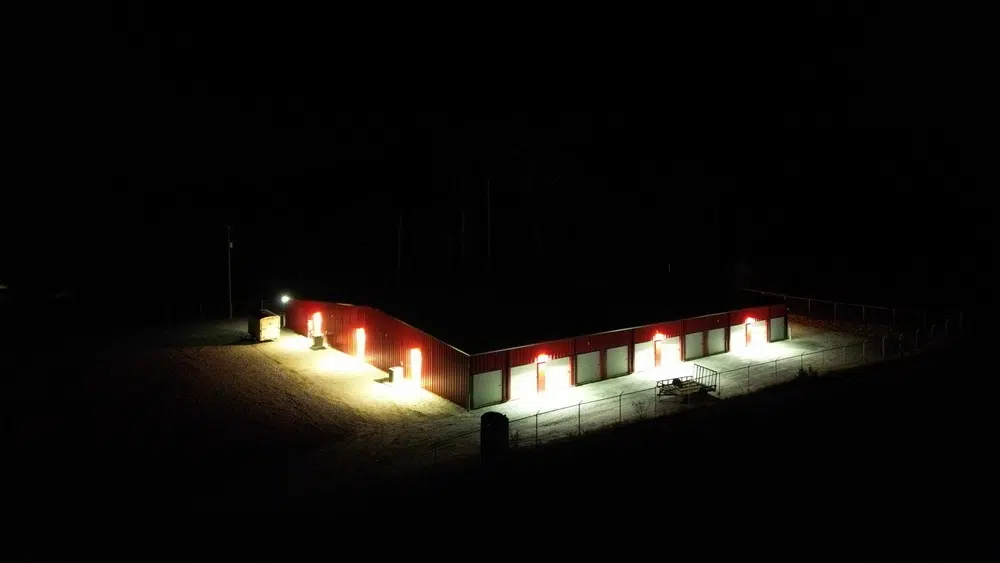
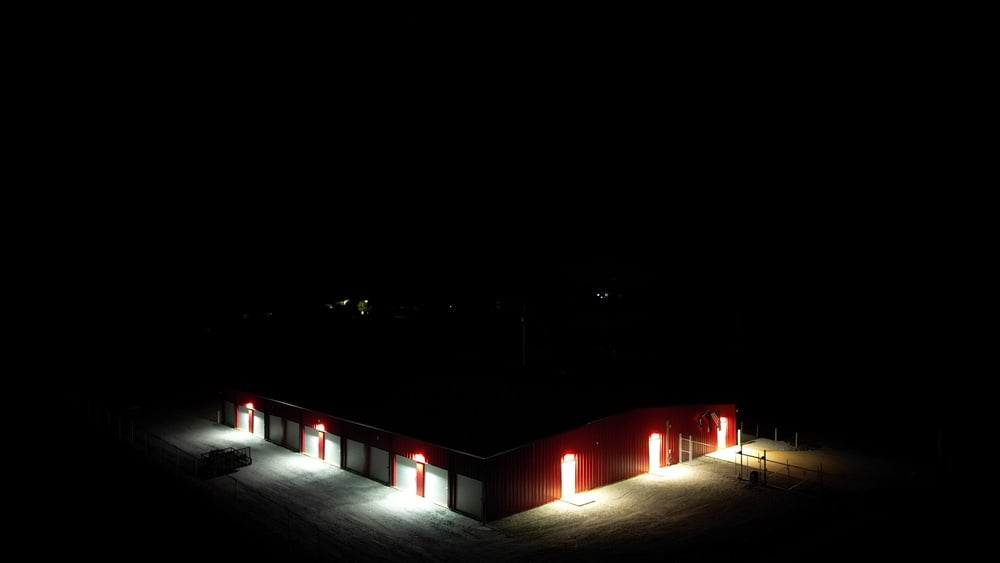
Case Study: Outdoor Wall Pack Perimeter Security Lighting in Hartwell, GA
|
After: 12 / 18 / 24 / 30 Watt Adjustable Full Cutoff Architectural LED Wall Pack |
After: 12 / 18 / 24 / 30 Watt Adjustable Full Cutoff Architectural LED Wall Pack |
 |
 |
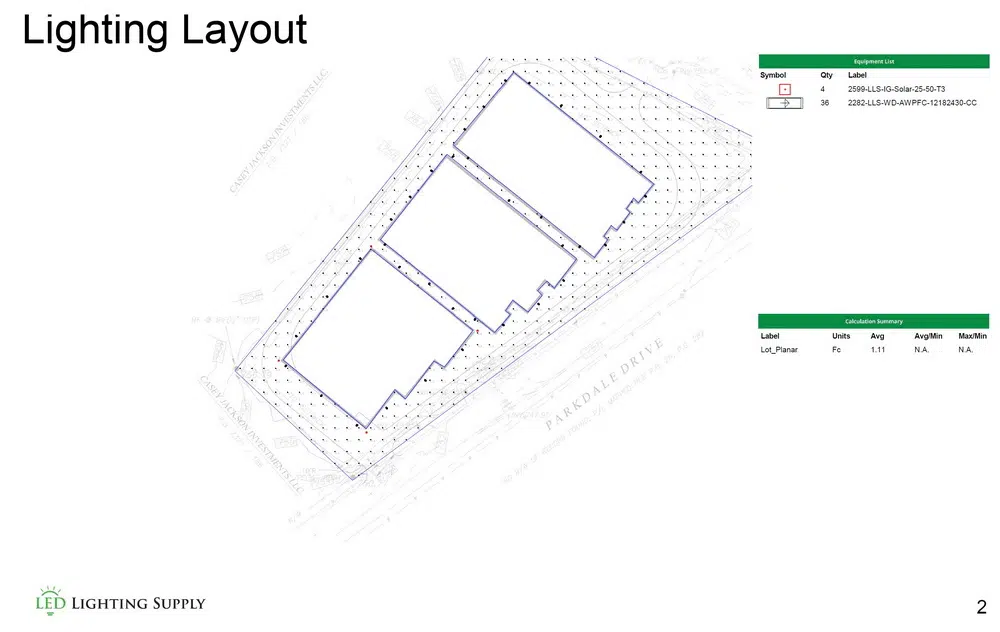
Lighting Plan We Created for the Customer
|
Lighting Plan |
Heat Map |
 |
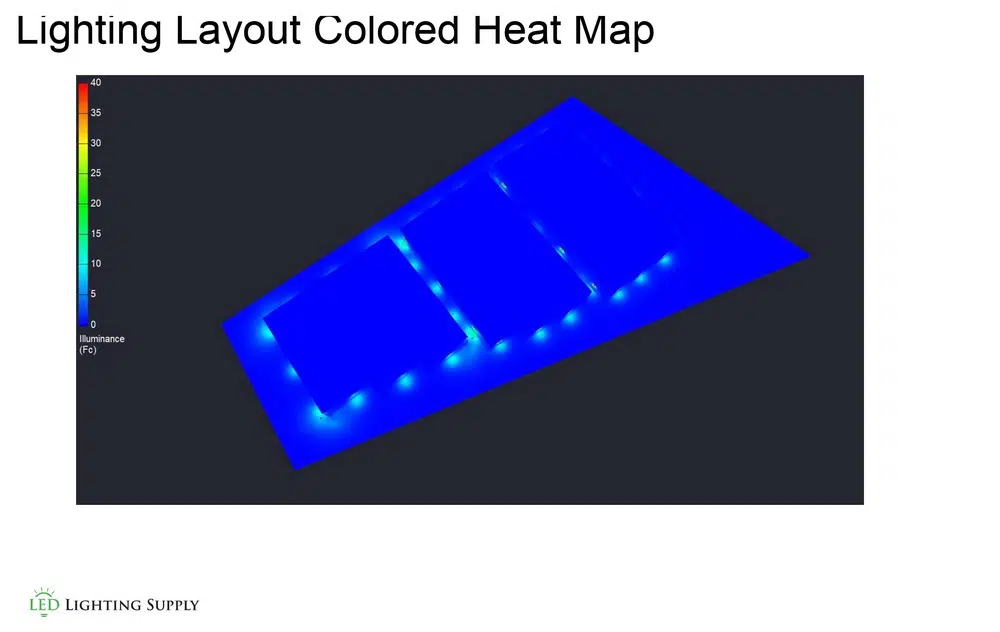 |
Outdoor Wall Pack Security Lighting Installation Plan Metrics
- Mounting height: 9 ft
- Fixture Used: LLS-WD-AWPFC-12/18/24/30-CC-PC: 12 / 18 / 24 / 30 Watt Adjustable Full Cutoff Architectural LED Wall Pack | 1584 to 3960 Lumens | 3000K / 4000K / 5000K Adjustable | 100-277V | Built-In Photocell
- FC achieved: 1.11 average
- Uniformity (Avg/Min): N/A
Selection and Installation Note: Product specifications, wattage, lumen output, distribution pattern, color temperature, voltage, controls, mounting method, wet-location rating, certifications, and warranty coverage vary by model. Confirm the selected product specification before ordering. For commercial exterior lighting, security lighting, loading docks, parking areas, electrical upgrades, or code-sensitive applications, verify requirements with the facility team, project specifier, local inspector, or a licensed electrical professional.
Shop LED Wall Packs by Type
Start with the fixture style that matches the building location and lighting objective. A loading dock, walkway, property line, service entrance, and parking perimeter may each need a different wall pack distribution or control option.
| Wall Pack Type | Best Used For |
|---|---|
| Full Flood / Forward Throw LED Wall Packs | Building perimeter security, loading docks, outdoor work areas, and locations where stronger down-and-outward light coverage is needed. |
| Semi-Cutoff LED Wall Packs | Exterior areas that need a balance of downward light and forward throw while reducing glare and uplight compared with traditional flood-style wall packs. |
| Full Cutoff LED Wall Packs | Entrances, walkways, building perimeters, and dark-sky-sensitive areas where light should be directed downward with minimal uplight. |
| LED Wall Packs with Photocell | Automatic dusk-to-dawn operation for building security, storage facilities, commercial exteriors, and perimeter lighting. |
| 400 Watt Metal Halide Equivalent LED Wall Packs | Replacing older 400W metal halide or HID wall packs with LED fixtures that can reduce energy use and maintenance. |
LED Wall Packs Compared with Other Outdoor Fixtures
LED wall packs are often compared with flood lights, shoebox lights, canopy lights, and older HID wall packs. The best choice depends on where the fixture mounts and what area needs to be illuminated.
| Comparison | What to Know |
|---|---|
| Wall packs vs. flood lights | Wall packs mount directly to exterior walls for entrances, docks, walkways, and building perimeters. Flood lights are adjustable directional fixtures used for signs, yards, facades, equipment areas, and other targeted outdoor locations. |
| Wall packs vs. shoebox lights | Wall packs are building-mounted fixtures for nearby ground areas and exterior walls. Shoebox lights are pole-mounted area lights for parking lots, campuses, roadways, dealership lots, and larger open spaces. |
| Wall packs vs. canopy lights | Wall packs mount vertically on exterior walls. Canopy lights mount overhead under covered structures such as gas station canopies, parking garages, covered walkways, and drive-through lanes. |
| LED wall packs vs. metal halide wall packs | LED wall packs offer instant-on operation, reduced maintenance, lower energy use, and more control options compared with many older metal halide or high-pressure sodium fixtures. |
When LED Wall Packs Are the Right Fit
Wall packs are a good choice when the building itself is the mounting surface and the goal is to illuminate the area near that wall. They are not a substitute for pole-mounted area lights, adjustable flood lights, or hazardous-location fixtures.
| Use LED Wall Packs When | Review Another Fixture Type When |
|---|---|
| Building perimeter security is needed around doors, walkways, docks, storage areas, and exterior walls. | Large open parking lots need pole-mounted area lighting. Use LED shoebox or area lights instead. |
| Wall-mounted lighting is preferred over pole-mounted fixtures or adjustable flood lights. | Precise directional aiming is required for signs, fields, yards, or long-throw coverage. Use LED flood lights instead. |
| Existing metal halide or HPS wall packs need to be replaced with LED fixtures. | The area has an established hazardous-location classification. Use a fixture certified for the documented Class, Division or Zone, Group, temperature rating, and ambient conditions, such as properly selected hazardous-location fixtures. |
| Automatic dusk-to-dawn operation, motion sensing, or dimming is needed. | Local dark-sky or light-trespass requirements prohibit the selected distribution type. |
| Outdoor durability is required and the selected model has the appropriate wet-location rating and construction. | Architectural appearance is more important than security, utility, or work-zone lighting performance. |
How to Choose the Right LED Wall Pack
The best wall pack is not selected by wattage alone. Fixture distribution, mounting height, lumen output, wall location, controls, and nearby property conditions all affect the result.
| Selection Factor | What to Confirm |
|---|---|
| Lighting objective | Security, entrances, pathways, docks, service areas, storage facilities, and perimeter lighting may require different output levels and optics. |
| Distribution type | Choose full cutoff for downward light, semi-cutoff for balanced coverage, or forward throw where wider security coverage is needed. Review fixture-specific photometric data where glare, spill light, or coverage is important. |
| Lumen output | Compare lumens, mounting height, coverage area, and existing light levels instead of choosing only by wattage. |
| Mounting height | Many wall packs are mounted around 12-16 feet, but the correct height depends on fixture output, distribution, mounting location, and coverage goals. |
| Voltage | Confirm 120-277V, 347V, 480V, or other voltage requirements before ordering. |
| Controls | Confirm whether the project needs a photocell, motion sensor, dimming, timer, or building automation compatibility. |
| Glare and light trespass | Review fixture distribution and placement near property lines, windows, roads, walkways, and neighboring buildings. |
| Outdoor rating | Confirm wet-location rating, IP rating, operating temperature, impact rating, and corrosion exposure for the site. IP ratings address ingress protection and do not by themselves establish chemical or corrosion resistance. |
Tip: If light trespass, glare, dark-sky requirements, camera visibility, or large exterior coverage matters, review fixture photometrics before ordering. 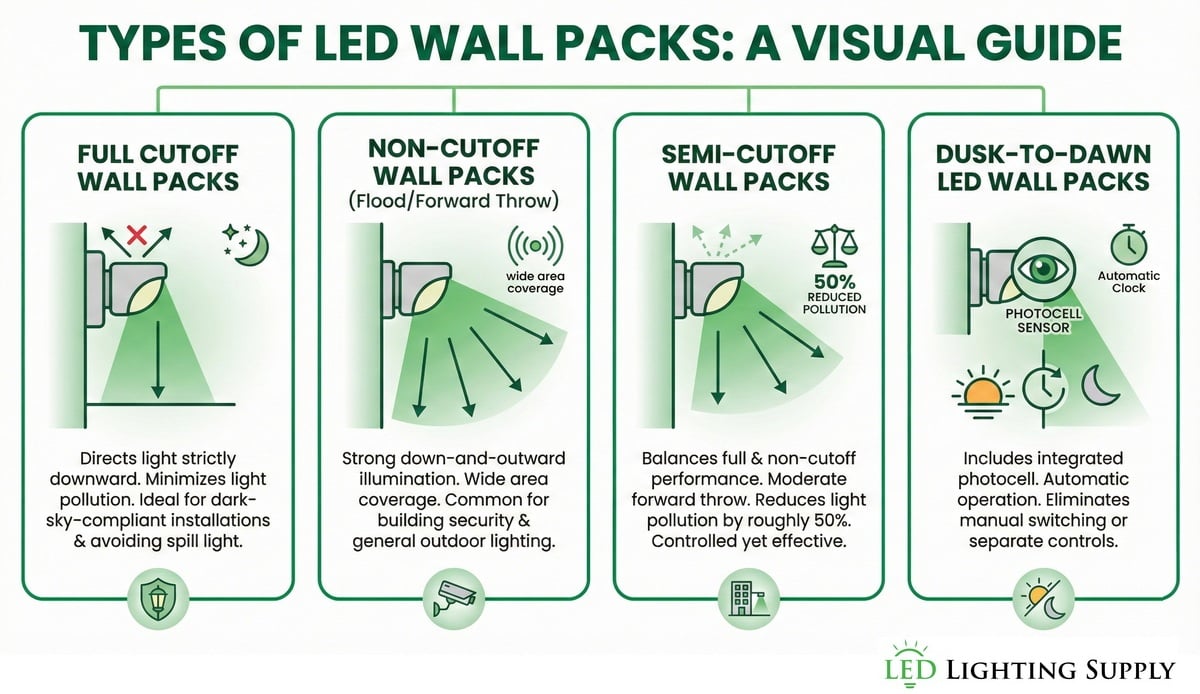
Best Applications for LED Wall Packs
LED wall packs are used where building-mounted outdoor lighting needs to improve visibility, access, and security around the property.
| Application | Why Wall Packs Work Well |
|---|---|
| Outdoor storage facilities | Provide perimeter and unit lighting that improves nighttime visibility around doors, lanes, and building exteriors. |
| Commercial warehouses and offices | Improve visibility around entrances, walkways, dock areas, employee doors, and building perimeters. |
| Building facades and pathways | Support exterior visibility around access points, sidewalks, walkways, and entrances. |
| Parking lots and garages | Support building-mounted perimeter lighting around parking areas, garage entrances, and nearby pedestrian routes. |
| Loading docks and industrial zones | Provide light for shipping, receiving, truck movement, dock doors, and outdoor work areas. |
| Manufacturing facilities | Illuminate equipment access points, service doors, exterior work zones, and security areas. |
| Distribution centers | Improve visibility for trailer movement, employee access, building perimeters, and nighttime operations. |
| Retail shopping centers | Support storefront visibility, service doors, customer walkways, and exterior service areas. |
| Hospitals and healthcare campuses | Provide light around entrances, emergency routes, walkways, service areas, and building exteriors. |
| Schools and universities | Illuminate campus walkways, entrances, exterior doors, building perimeters, and service areas. |
Commercial and industrial outdoor lighting should support safe visibility, security, and applicable workplace requirements. Review local electrical codes, light trespass rules, and workplace safety requirements where applicable. 
This bank chose full cutoff wall packs to provide pathway and building-mounted exterior lighting.
Our customer installed 60 Watt LED Wall Packs | 7928 Lumens on the front of their workshop.
Voltage, Photocells, Motion Sensors, and Controls
Wall pack voltage and controls should be confirmed before ordering, especially when replacing existing HID fixtures or connecting to an existing photocell, timer, or building control system.
| Option | What to Confirm |
|---|---|
| 120-277V | Common for many commercial buildings, warehouses, offices, retail centers, schools, and exterior security lighting. |
| 347V | Common in some Canadian and commercial applications. Verify fixture driver compatibility before ordering. |
| 480V | Used in some industrial facilities and high-voltage commercial electrical systems. Verify the fixture is rated for 480V before ordering. |
| Photocell wall packs | Automatically turn lights on at dusk and off at dawn. Check whether the building circuit already uses a photocell, timer, or automation system. |
| Motion sensor wall packs | May increase light output when motion is detected and reduce output when areas are inactive, depending on fixture and sensor configuration. |
| 0-10V dimming | Allows compatible wall packs to integrate with lighting controls, timers, energy management systems, or advanced control strategies. |
Specifications and Available Options
LED wall packs are available in multiple wattages and lumen packages, with many models offering wattage and color-temperature adjustability. This allows the installer or facility manager to tune light output after installation, depending on the fixture.
| Specification | What to Review |
|---|---|
| Wattage and lumens | Models range from lower-output entry lighting to high-output security lighting. Compare lumen output and photometric performance, not just wattage. |
| Color temperature | 5000K is commonly selected for commercial exterior and metal halide replacement applications. 4000K may be preferred for some commercial properties. Color temperature describes the apparent warm or cool appearance of white light, not brightness. |
| Mounting | Wall packs are designed for exterior wall mounting and are often used to replace existing HID wall pack footprints. |
| Outdoor rating | Select a wet-location-rated fixture appropriate for the exposure. An IP rating addresses protection against solids and water ingress; verify materials, finishes, seals, and hardware separately where corrosion or chemicals are present. |
| Electrical load | LED fixtures typically reduce amp draw compared with traditional HID wall packs, but site voltage and electrical conditions should be verified before installation. |

Our commercial customer installed wattage-adjustable wall packs to light an outdoor court area.
When a Wall Pack Lighting Layout Helps
A wall pack lighting layout can be helpful when the project involves multiple fixtures, long building perimeters, loading docks, parking areas near the building, security-sensitive zones, strict light-level targets, glare concerns, or property-line spill light. Simple one-for-one replacements may only need product selection support, but larger exterior projects should review fixture placement, mounting height, light distribution, and expected coverage. Request a wall pack lighting layout if the project needs fixture placement, spacing, expected light levels, or coverage review before ordering.
Energy Savings and Return on Investment
LED wall packs can reduce operating costs through lower energy use and reduced maintenance compared with many older HID systems. For example, replacing traditional 400-watt metal halide fixtures with lower-wattage LED wall packs can produce meaningful annual savings, depending on the number of fixtures, local electricity rate, operating hours, rebates, and maintenance costs. Actual payback depends on fixture quantity, wattage reduction, utility rate, rebates, operating hours, controls, labor cost, and the condition of the existing lighting system. 
Our customer replaced high-pressure sodium wall packs with forward throw wall packs to add exterior security lighting.
LED Wall Pack Certifications, Rebates, and Warranty Support
Selected LED wall packs with photocells from LED Lighting Supply carry a safety listing, such as UL or ETL, depending on the model. Many models may be DLC or DLC Premium listed where utility rebate support is available. DLC qualification is an energy-efficiency and performance program, not an electrical safety certification. Rebate requirements vary by utility, region, and product listing, so confirm eligibility on the selected product specification before ordering. Warranty coverage varies by model. Before purchase, review the selected product specification to confirm certifications, DLC status, warranty terms, voltage, lumen output, color temperature, controls compatibility, wet-location rating, and whether the fixture is right for the building exterior, mounting height, and surrounding site conditions.
Retrofit Verification Before Ordering
For a one-for-one replacement, verify that the new wall pack can be installed on the existing building surface and electrical connection. A fixture that meets the lighting objective may still require an adapter plate, surface repair, conduit changes, or other installation work if the existing mounting arrangement differs.
| Junction box and mounting pattern | Confirm the existing junction box location, bolt pattern, mounting surface, and whether the new fixture includes hardware or an adapter suitable for the installation. |
| Fixture dimensions and footprint | Compare the new fixture's backplate dimensions with the existing wall pack footprint. A smaller fixture may leave unfinished paint, siding, masonry, or mounting holes visible. |
| Conduit entry | Check whether wiring enters from the rear, top, side, or through surface-mounted conduit and confirm that the selected fixture supports the required entry method. |
| Wall condition | Inspect the mounting surface for corrosion, water damage, loose masonry, damaged siding, or other conditions that should be addressed before installation. |
| Photocell location | Position and orient photocell-equipped fixtures so the sensor is not excessively affected by nearby building light, signage, awnings, or other light sources that can affect switching behavior. |
Contact us about your LED wall pack project, and our Product Specialists can help review fixture type, mounting height, light distribution, voltage, controls, environmental rating, and product specifications.
LED Wall Packs with Photocell FAQs
How Do I Determine Whether An Integrated Photocell Is Needed?
Select an integrated photocell when automatic dusk-to-dawn operation is needed, and first confirm whether the building circuit already uses a photocell, timer, or automation system.
When Are LED Wall Packs With Photocells A Good Fit?
LED wall packs with photocells are suited for automatic dusk-to-dawn operation at building security areas, storage facilities, commercial exteriors, and perimeter lighting locations.
How Should I Choose The Right Light Distribution?
Choose full cutoff for downward light, semi-cutoff for balanced coverage, or forward throw where wider security coverage is needed. Review fixture-specific photometric data when glare, spill light, or coverage is important.
What Should I Compare Besides Wattage?
Compare lumen output, mounting height, coverage area, wall location, distribution, voltage, controls, and existing light levels instead of choosing a wall pack by wattage alone.
When Should A Wall Pack Lighting Layout Be Reviewed?
A wall pack lighting layout can help with multiple fixtures, long building perimeters, loading docks, parking areas near the building, security-sensitive zones, strict light-level targets, glare concerns, or property-line spill light. Larger exterior projects should review fixture placement, mounting height, light distribution, and expected coverage before ordering.
What Should Be Verified For A One-For-One Wall Pack Replacement?
Verify that the new wall pack can be installed on the existing building surface and electrical connection. Confirm the junction box location, mounting pattern, fixture footprint, conduit entry method, and whether hardware or an adapter is suitable for the installation.
How Should A Photocell-Equipped Wall Pack Be Positioned?
Position and orient a photocell-equipped wall pack so its sensor is not excessively affected by nearby building light, signage, awnings, or other light sources that can affect switching behavior.