


Horse Arena Light Poles
- LED flood lights and pole packages for outdoor arenas
- Photometric analysis included to evaluate coverage and uniformity
- Steel, aluminum, and composite pole options available



Our Arena Light Poles | Wood, Steel and Fiberglass include pole systems for outdoor horse arenas and equestrian lighting installations. Available pole heights range from 20 to 60 feet, with corner-mounted and sideline configurations for LED flood light fixtures.
These poles are used in outdoor horse arenas, recreational arenas, competition venues, warm-up areas, smaller riding rings, and equestrian facilities.
-
 Starting At $912.44
-
Starting At $654.55
-
Starting At $706.07
-
Starting At $1,363.64
-
Starting At $1,651.69
-
Starting At $1,527.18
-
Starting At $1,200.00
-
Starting At $1,063.64
-
Starting At $1,277.71
-
Starting At $1,094.69
-
Starting At $927.27
-
Starting At $1,800.00
-
Starting At $1,681.82
-
Starting At $1,409.09
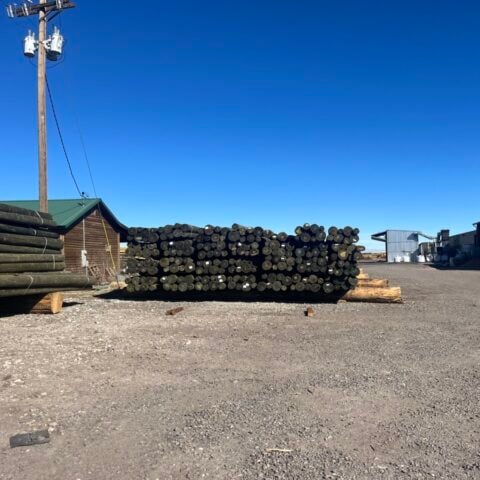



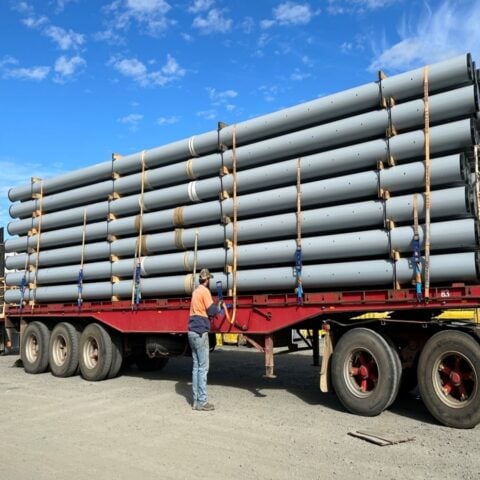


Outdoor horse arenas require lighting that provides dependable visibility for riders, horses, instructors, judges, and spectators while controlling glare, shadows, and spill light. With more than 15 years in commercial lighting, LED Lighting Supply provides arena lighting systems that combine high-output LED fixtures with pole options and photometric planning. When properly designed, horse arena lighting can improve visibility across the riding surface while reducing distracting dark areas and excessive glare.
Professional Arena Lighting Solutions
Start with arena size and intended use, then coordinate pole height, fixture output, optics, aiming, and layout to control shadows, glare, and spill light. Depending on arena size, mounting height, target light levels, and fixture performance, outdoor arena projects may use high-output LED flood lights or sports lights across a range of wattages and beam distributions.
Fixture wattage alone should not determine the design. Pole height, fixture quantity, lumen output, beam distribution, aiming, arena dimensions, surrounding properties, and required light levels should be evaluated together through a photometric plan.
Before ordering, also verify that the selected fixture's input voltage matches the facility's electrical system. Commercial outdoor lighting fixtures are available in common voltage ranges such as 120-277V and higher-voltage configurations such as 347-480V, depending on the model. Voltage compatibility should be confirmed from the exact fixture specification rather than assumed from the fixture category.
Color temperature should also be selected for the application. 4000K is commonly used for outdoor recreational and equestrian lighting because it provides a neutral-white appearance, while 5000K may be preferred where brighter visual contrast, competition use, or spectator visibility is important. Final color temperature should reflect rider preference, facility requirements, neighboring properties, and the visual task.
Strategic Pole Selection and Placement
Proper pole selection starts with the arena dimensions, target light levels, fixture optics, wind exposure, and available installation locations. A standard riding arena may use perimeter or corner-mounted poles, while larger or competition facilities may require additional poles to improve uniformity and reduce shadows.
For arenas around 200 ft x 100 ft, poles in the approximate 30-40 ft range are commonly considered as a starting point, but actual mounting height should be determined from the photometric layout, fixture performance, site conditions, and desired spill-light control. Larger arenas may benefit from taller poles or additional pole locations.
Lower-height poles, including 20-25 ft light poles, may work for smaller rings, warm-up areas, or sites where taller structures are impractical. Lower mounting heights generally require careful fixture selection and aiming because glare and hot spots can become more noticeable when luminaires are closer to rider sight lines.
Outdoor pole selection must also account for wind loading. Pole height, fixture quantity, fixture EPA, brackets, flagging or accessories, local design wind speed, exposure category, and site conditions should be reviewed together. Foundation and structural requirements should be confirmed from the selected pole manufacturer's data and, where required, by the appropriate qualified professional.
Arena Light Pole Investment Considerations
Choose pole material based on site conditions, corrosion exposure, structural requirements, maintenance expectations, and budget. Pole height and fixture capacity should be evaluated together because taller poles and multi-fixture configurations can increase wind load, weight, foundation requirements, equipment needs, and installation cost.
- Steel poles are commonly used for commercial and sports-lighting applications where strength, height, and fixture capacity are important. Corrosion protection and coating should be matched to the environment.
- Wood poles are commonly used for horse arenas, farms, rural properties, and utility-style installations. They can be a practical option where the project allows direct-burial construction, but pole class, species, preservative treatment, embedment depth, fixture loading, wind exposure, and soil conditions should be confirmed before selection.
- Composite poles provide corrosion resistance and may be useful in coastal, wet, or chemically aggressive environments when properly rated for the required load.
- Aluminum poles are lighter than comparable steel poles and resist rust, but wind rating, EPA capacity, fatigue, galvanic corrosion, and site conditions should still be reviewed.
Pole height affects total project cost, but taller is not automatically better. Taller poles can improve distribution and reduce steep aiming angles in some designs, while also increasing structural and installation requirements. In some projects, greater mounting height can reduce the number of poles or fixtures needed; in others, additional poles may provide better uniformity or spill-light control.
Multi-fixture poles can reduce the total number of pole locations, but the pole, tenon, brackets, anchor system, and foundation must be selected for the combined fixture weight and effective projected area. For horse arena lights, the final pole and fixture combination should be based on both photometric and structural requirements.
Complete Equestrian Lighting Packages
Our arena lighting approach uses photometric planning to estimate fixture placement, light levels, uniformity, and spill-light performance before equipment is ordered. This helps compare different pole heights, fixture outputs, beam patterns, and layouts for the specific arena.
Lighting recommendations should be based on the facility's intended use rather than assuming one universal light-level standard for every horse arena. Recreational riding, training, lessons, competition, spectator events, and video or broadcast use can require different lighting performance.
Typical package components may include:
- High-output LED flood or sports fixtures selected by lumen output, optics, mounting height, and required coverage rather than wattage alone
- Multiple optical distributions or beam patterns selected to match pole location and throw distance
- Higher-output options for larger arenas, higher mounting heights, competition facilities, or more demanding light-level requirements
- Electrical compatibility review for the selected fixture voltage, controls, and available facility power
- Lighting controls for scheduling, zoning, dimming, or energy management where compatible with the selected fixtures
Existing electrical infrastructure can often be incorporated into an upgrade, but available voltage, branch circuits, panel capacity, wiring, controls, disconnects, and other electrical conditions should be reviewed by a qualified electrical professional.
Optimal Pole Spacing and Configuration
Four-pole corner or perimeter layouts may work for many recreational arenas, while larger or more demanding facilities may use six or more pole locations to improve uniformity, control shadows, or reduce fixture aiming angles. The correct configuration depends on arena dimensions, pole height, optics, target light levels, surrounding properties, and site restrictions.
Rather than using a fixed pole-spacing rule, spacing should be established through photometric modeling. Pole spacing in the approximate 100-150 ft range may occur in some arena designs, but it should be treated only as a starting reference. Larger arenas or lower mounting heights may require intermediate poles, while taller poles and different optics may allow greater spacing.
Uniformity is also project-specific. A 3:1 average-to-minimum or maximum-to-minimum ratio may be used as a design target in some recreational applications, depending on how the ratio is defined, but it should not be presented as a universal equestrian requirement. The appropriate uniformity target should be established for the intended use of the facility and verified in the photometric plan.
Height Requirements and Beam Angle Coordination
Mounting height and optics should be coordinated rather than selected independently. Lower poles generally require wider distributions, lower fixture output, more pole locations, or careful aiming to prevent hot spots and glare. Taller poles may use narrower optics to project light farther across the arena.
For 20-30 ft poles, fixtures with wider beam distributions may be useful in some layouts, but a specific 60-90 degree beam should not be assumed to be correct without reviewing fixture photometry and pole spacing.
For 40-60 ft poles, narrower optics may be useful for longer throw distances and better spill-light control. Beam angles in the approximate 25-40 degree range are available on many sports and flood fixtures, but actual optics should be chosen from the photometric model rather than by mounting height alone.
Higher mounting can sometimes reduce direct glare and improve light distribution because fixtures can be positioned farther above normal rider sight lines and aimed more directly downward toward the arena surface. However, glare performance still depends on fixture optics, shielding, pole location, aiming, lumen output, and the viewing positions of riders, horses, spectators, and neighboring properties. Increased mounting height also requires sufficient fixture output and appropriate optics to maintain the desired illumination at the riding surface.
Glare, Shadows, and Spill-Light Control
Glare control is especially important in equestrian facilities because both riders and horses move through changing viewing angles. Poor fixture placement or aggressive aiming can create bright sources within the rider's field of view, strong shadows, or rapid transitions between bright and dark areas.
Fixture optics, shielding, pole location, mounting height, aiming angle, and lumen output should be coordinated to provide useful light on the arena while limiting direct view of bright LED sources where practical.
Spill light should also be reviewed when arenas are near homes, roadways, neighboring properties, barns, paddocks, or other sensitive areas. A photometric plan can estimate light at property boundaries and help compare different fixture locations, optics, shields, and aiming strategies.
Outdoor Fixture Performance
Outdoor arena fixtures should be selected for the actual weather and environmental conditions at the site. Confirm the fixture's wet-location listing, ingress-protection rating, operating-temperature range, corrosion resistance, driver rating, surge protection, and mounting requirements.
Many commercial outdoor LED fixtures are rated IP65 or higher, but the required rating should be based on the actual exposure. IP ratings describe resistance to dust and water ingress under defined test conditions and do not by themselves establish suitability for every weather, corrosion, or cleaning environment.
Rated LED life should also be evaluated from the specific product data. Many commercial LED fixtures publish lumen-maintenance ratings such as L70, L80, or L90 at a stated number of operating hours. Avoid assuming that every arena fixture will provide 100,000+ hours of useful life unless that performance is supported by the selected fixture's published test data and operating conditions.
Electrical and Surge Protection Considerations
Outdoor sports-lighting systems can involve long wiring runs, tall poles, exposed locations, and electrical environments where surge protection is important. Review fixture surge-protection ratings, grounding, bonding, branch-circuit protection, disconnect requirements, and any additional surge-protection strategy with the project electrician.
Voltage should be confirmed for the exact fixture model before ordering. Fixtures may be offered in 120-277V, 347-480V, or other input configurations depending on the manufacturer. A high-voltage fixture option should not be assumed to be interchangeable with a low-voltage model.
Emergency and Backup Lighting Considerations
Whether an outdoor horse arena requires emergency or backup lighting depends on the facility, occupancy, egress arrangement, local requirements, and intended operation during a power outage. Recreational outdoor arenas do not automatically require battery-backed sports fixtures simply because they are used after dark.
Where emergency lighting is required, it should be designed as a life-safety system for the applicable egress routes and occupied areas. Battery backup, generators, inverters, or other emergency-power systems may be used depending on the project. A standard sports-lighting fixture with an emergency accessory does not by itself establish compliance.
Competition facilities, spectator venues, public buildings, and other higher-occupancy properties should have emergency-lighting requirements reviewed by the appropriate qualified professional and authority having jurisdiction.
Pole Foundation and Structural Considerations
Light-pole foundations are site-specific. Foundation design can depend on pole height, pole type, fixture quantity, fixture EPA, wind loading, soil conditions, groundwater, frost depth, anchor-bolt configuration, and local requirements.
Manufacturer foundation guidance can provide useful starting information, but generic foundation dimensions should not be assumed to work at every site. Poor soil, fill, high groundwater, coastal exposure, high wind, unusually tall poles, or heavily loaded pole tops may require additional structural or geotechnical review.
For projects requiring engineered foundations, stamped calculations, or site-specific structural verification, final requirements should be established by the appropriate qualified engineer or project professional.
Expert Support and Custom Facility Planning
LED Lighting Supply provides custom photometric plans that can model fixture placement, pole height, expected horizontal light levels, uniformity, and spill light for the proposed arena layout. These plans can also help compare fixture and pole options before equipment is purchased.
We can help review arena dimensions, intended use, pole locations, fixture output, optics, color temperature, voltage options, controls, and available pole configurations. We can also provide manufacturer pole data, fixture photometrics, electrical specifications, and product information needed for project planning.
Photometric plans are lighting-design tools and should not be treated as structural, foundation, electrical, permitting, or code approval. Final pole loading, foundation design, electrical work, permitting requirements, and other site-specific engineering should be verified by the appropriate qualified professional.
Horse Arena Light Poles FAQs
How Should Horse Arena Light Pole Height And Fixture Selection Be Planned?
Horse arena light pole height, fixture output, optics, aiming, and layout should be planned together based on arena size, intended use, target light levels, site conditions, and spill-light control. Fixture wattage alone should not determine the design; a photometric plan can evaluate these factors together.
How Many Light Poles Does A Horse Arena Need?
Horse arena pole quantity depends on arena dimensions, pole height, optics, target light levels, surrounding properties, and site restrictions. Four-pole corner or perimeter layouts may work for many recreational arenas, while larger or more demanding facilities may use six or more pole locations to improve uniformity, control shadows, or reduce fixture aiming angles.
What Pole Heights Are Commonly Considered For A Horse Arena?
For arenas around 200 ft x 100 ft, poles in the approximate 30-40 ft range are commonly considered as a starting point, while 20-25 ft poles may work for smaller rings, warm-up areas, or sites where taller structures are impractical. Actual mounting height should be determined from the photometric layout, fixture performance, site conditions, and desired spill-light control.
How Should Pole Spacing Be Determined For A Horse Arena?
Horse arena pole spacing should be established through photometric modeling rather than a fixed spacing rule. Spacing in the approximate 100-150 ft range may occur in some designs, but larger arenas, lower mounting heights, taller poles, and different optics can change the required spacing.
How Can A Horse Arena Lighting Plan Help Control Glare, Shadows, And Spill Light?
A photometric plan can compare fixture locations, optics, shields, and aiming strategies to estimate light levels, uniformity, and light at property boundaries. Fixture optics, shielding, pole location, mounting height, aiming angle, and lumen output should be coordinated to provide useful arena lighting while limiting direct view of bright LED sources where practical.
Which Pole Material Should Be Chosen For A Horse Arena?
Pole material should be selected based on site conditions, corrosion exposure, structural requirements, maintenance expectations, and budget. Steel poles are commonly used where strength, height, and fixture capacity are important; composite poles provide corrosion resistance; and aluminum poles are lighter than comparable steel poles and resist rust, but their wind rating, EPA capacity, fatigue, galvanic corrosion, and site conditions should still be reviewed.
What Voltage Should Horse Arena Lighting Fixtures Use?
The selected fixture input voltage must match the facility's electrical system and should be confirmed from the exact fixture specification before ordering. Commercial outdoor fixtures may be available in 120-277V, 347-480V, or other input configurations depending on the model, and a high-voltage option should not be assumed interchangeable with a low-voltage model.
What Should Be Verified Before Selecting A Horse Arena Light Pole Foundation?
Horse arena light pole foundations should be evaluated for pole height and type, fixture quantity and EPA, wind loading, soil conditions, groundwater, frost depth, anchor-bolt configuration, and local requirements. Manufacturer guidance can be a starting point, but site-specific structural or geotechnical review may be needed for conditions such as poor soil, high groundwater, coastal exposure, high wind, tall poles, or heavily loaded pole tops.
