LED Water Treatment Plants and Wastewater Facility Lighting
- Vapor tight and hazardous-location fixture options available
- Corrosion-resistant options for chemical and moisture exposure
- Application support for pump rooms, wet wells, and process areas


Our Water Treatment Plant Lighting includes industrial fixtures, vapor tight fixtures, hazardous-location fixtures, high bays, panels, wall packs, flood lights, and outdoor area lights. Available models vary by wattage, lumen output, voltage, optics, color temperature, controls, mounting method, and environmental configuration.
These fixtures are used in pump rooms, wet wells, headworks, digesters, sludge processing areas, chemical rooms, control rooms, laboratories, maintenance shops, walkways, platforms, stairs, basins, tanks, outdoor process areas, security perimeters, and site access routes.
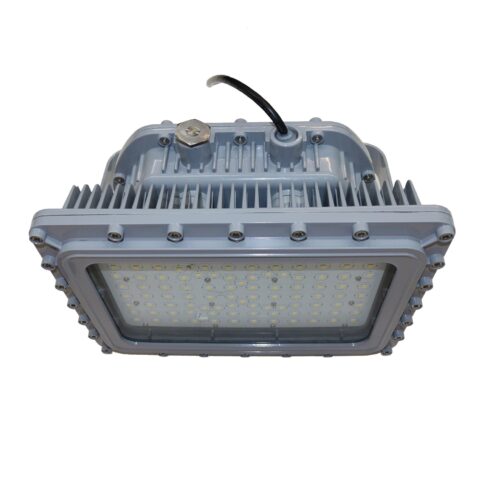


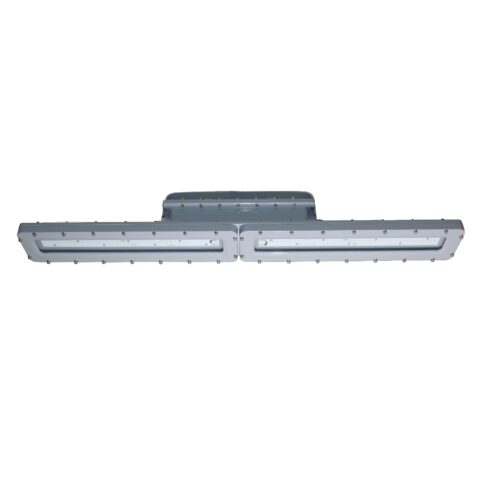
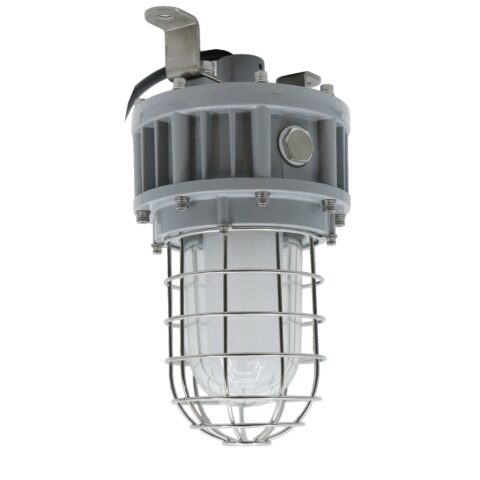
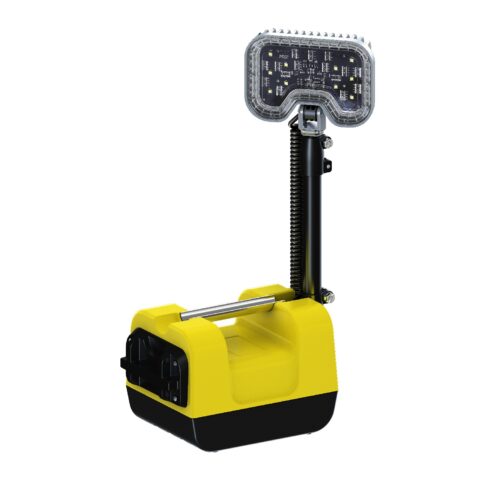


LED Water and Wastewater Treatment Plant Lighting for Industrial Process Areas
Water and wastewater treatment facilities can expose lighting equipment to moisture, corrosion, hydrogen sulfide, methane, chlorine, chemical vapors, wet surfaces, confined access, vibration, and, in certain documented areas, hazardous-location requirements. Lighting should be selected for the specific process area, environmental exposure, task, mounting conditions, and maintenance access.
Not every part of a treatment plant needs explosion-proof lighting. Some areas may use standard industrial high bays, vapor tight fixtures, wall packs, panels, or outdoor area lights. Other areas may require hazardous-location-rated fixtures when the facility’s established area classification requires them.
Start by identifying each area’s environment and classification, then match the fixture to moisture and corrosion exposure, task visibility, mounting and maintenance access, glare, controls, and emergency operation. Detailed guidance on plant areas, environmental conditions, hazardous locations, and lighting layouts appears below.
Selection and Installation Note: Product specifications, wattage, lumen output, optics, color temperature, CRI, voltage, dimming, controls, mounting method, hazardous-location rating, corrosion resistance, wet-location rating, IP rating, impact rating, certifications, and warranty coverage vary by model. Confirm the selected product specification before ordering. For water treatment plants, wastewater treatment plants, wet wells, digesters, headworks, pump rooms, chemical storage, chlorine or chemical feed systems, classified areas, confined-access locations, or safety-sensitive industrial spaces, verify requirements with the facility team, EHS team, project specifier, local inspector, fire protection professional where applicable, and a licensed electrical professional.
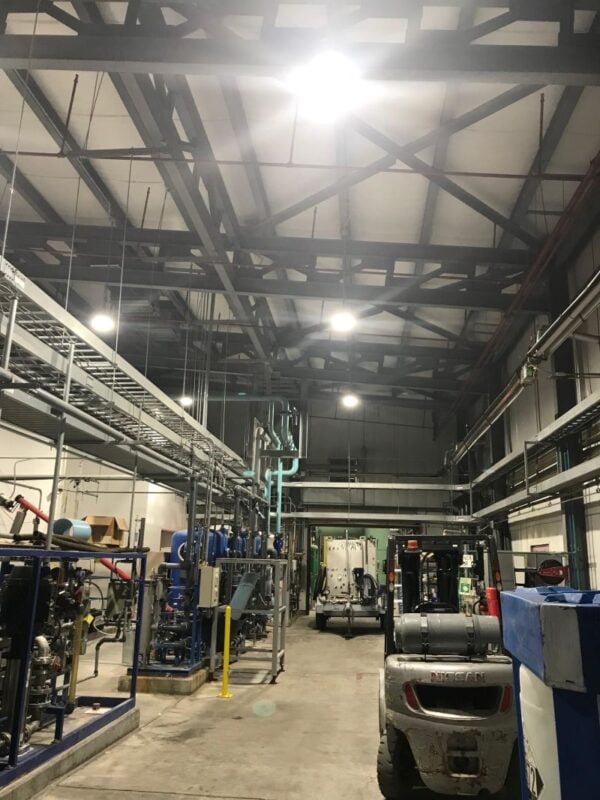
Recommended Foot-Candles for Water Treatment Plant Lighting
Water and wastewater treatment plant light levels vary by task, process area, fixture height, corrosion exposure, wet surfaces, confined access, hazardous classification, and emergency operation. The ranges below are general planning values. Final fixture selection should confirm environmental rating, hazardous-location classification, corrosion resistance, glare, controls, emergency lighting, and selected product specifications.
Water Treatment Plant Lighting by Area
Treatment plants usually need several fixture families in the same facility. A control room, pump room, wet well, chemical room, lab, exterior basin, and digester area should not automatically use the same fixture type.
| Plant Area | Lighting Priorities |
|---|---|
| General work areas | Use industrial LED fixtures, vapor tight fixtures, or linear fixtures where moisture, corrosion, and classification requirements allow. |
| Pump rooms | Review moisture, vibration, equipment access, possible gas exposure, ventilation, emergency lighting, and maintenance access. |
| Wet wells and headworks | Confirm methane, hydrogen sulfide, corrosion, confined access, hazardous-location classification, conduit seals, and wet-location requirements. |
| Digesters and sludge processing | Review methane risk, classified boundaries, corrosion, mounting access, fixture listing, gas monitoring, and temperature code. |
| Chemical storage and handling | Confirm chemical inventory, chlorine or chemical feed systems, corrosion, ventilation, spill exposure, and whether hazardous-location lighting is required. |
| Control rooms | Use low-glare lighting for screens, panels, operators, monitoring stations, paperwork, and continuous supervision. |
| Laboratories and sample areas | Use higher task lighting with good color quality for testing, sampling, labels, instruments, and documentation. |
| Maintenance shops | Provide higher light levels for repair work, tools, pumps, motors, parts, and detailed equipment service. |
| Walkways, platforms, and stairs | Support safe movement around wet surfaces, railings, stairs, ladders, grating, and outdoor access points. |
| Basins, tanks, and outdoor process areas | Use outdoor-rated fixtures with controlled glare around water surfaces, inspection points, equipment, and access routes. |
How to Choose LED Lighting for Water and Wastewater Treatment Plants
Fixture selection should start with the environment. Determine whether the area is ordinary, wet, corrosive, classified, outdoor, confined-access, inspection-critical, or emergency-related before choosing wattage or fixture type.
| Selection Factor | What to Confirm |
|---|---|
| Hazardous-location classification | Confirm whether methane, flammable gases, vapors, combustible dust, or other hazards require Class I Division 1, Class I Division 2, Class II, or Zone-rated electrical equipment. Do not assume every area is classified, and do not use a non-rated fixture in a classified area. |
| Corrosive exposure | Hydrogen sulfide, chlorine, ammonia, cleaning chemicals, and moisture can affect housings, lenses, gaskets, fasteners, and conduit systems. Confirm material compatibility. |
| Wet-location and IP rating | Wet wells, washdown-adjacent zones, pump rooms, outdoor basins, and damp rooms may need wet-location or IP-rated fixtures. IP ratings address solids and water ingress; they do not by themselves establish chemical resistance or hazardous-location suitability. |
| Confined access and maintenance | Review whether fixtures can be serviced from walkways, platforms, or safe access points. Avoid placing fixtures where service requires unnecessary confined-space entry. |
| Glare and water reflections | Wet concrete, standing water, tanks, basins, and metal grating can reflect light. Confirm fixture distribution, aiming, and lens style to reduce glare. |
| Emergency operation | Confirm whether egress lighting, generator-backed circuits, emergency battery backup, or central inverter systems are required. |
| Controls | Motion sensors, schedules, dimming, and switching zones may be useful, but controls must maintain required visibility for safety, security, and operations. |
| Gas detection and safety systems | Coordinate fixture placement and electrical work with facility safety systems, ventilation, gas monitoring, alarms, and classified-area requirements. |
Where Hazardous-Location Lighting May Be Used in Wastewater Treatment Plants
Hazardous-location lighting may be required where flammable gases or vapors, or in some applications combustible dust, can be present. In wastewater facilities, this may include reviewing wet wells, headworks, digesters, sludge processing, pump rooms, chemical areas, and enclosed spaces where gases may accumulate. The exact fixture rating depends on the facility’s documented classification, material group, temperature code, ambient temperature, ventilation, and whether the hazard is present during normal or abnormal conditions.
| Area | What to Review |
|---|---|
| Wet wells | Review methane, hydrogen sulfide, ventilation, confined access, classified boundaries, conduit seals, corrosion, and maintenance access. |
| Headworks | Confirm gas exposure, screenings, moisture, odor control, corrosion, and area classification. |
| Digesters | Confirm methane risk, classified-area boundaries, gas monitoring, fixture listing, conduit/fittings, and temperature code. |
| Sludge processing | Review gas or combustible-dust risk where applicable, equipment layout, moisture, corrosion, and maintenance access. |
| Chemical storage and feed systems | Confirm chemical type, vapor risk, corrosion, ventilation, spill exposure, fixture material compatibility, and local requirements. Chlorine exposure can be highly corrosive but does not alone establish a flammable-gas classification. |
Buying guidance: Do not select hazardous-location fixtures by wattage alone. Confirm the required Class, Division or Zone, Group, temperature code, ambient rating, voltage, mounting method, conduit/fittings, corrosion resistance, and environmental rating before ordering. Explosionproof construction is one protection method; the required protection method must match the established area classification.
Corrosion, Moisture, and Chemical Exposure
Water and wastewater treatment facilities can be hard on lighting equipment even when the area is not classified. Moisture, chlorine, hydrogen sulfide, ammonia, cleaning chemicals, and outdoor exposure can shorten fixture life if the wrong housing, gasket, lens, or fastener material is selected. Review available harsh-environment lighting against the specific exposure and project requirements.
| Condition | Fixture Consideration |
|---|---|
| Damp or wet rooms | Use vapor tight, wet-location, or IP-rated fixtures when the selected model is suitable for the exposure. |
| Chlorine or chemical feed areas | Review corrosion resistance, chemical compatibility, ventilation, and gasket/lens material. |
| Outdoor basins and tanks | Use outdoor-rated fixtures and review glare from water surfaces, wind exposure, corrosion, and mounting. |
| Washdown-adjacent areas | Confirm whether fixtures require higher IP ratings or sealed construction. Do not assume every wet-location fixture is suitable for washdown. |
| Confined or hard-access areas | Choose fixture locations and models that reduce unnecessary maintenance exposure and can be serviced safely. |
When a Lighting Layout Helps
A lighting layout can help in large plants, outdoor basins, tank areas, walkways, platforms, pump rooms, maintenance shops, and areas with structural obstructions. Using fixture-specific photometric data, it can estimate fixture placement, calculated foot-candles, spacing, and areas where shadows or glare may occur.
A layout does not replace hazardous-location classification, chemical compatibility review, conduit/fitting requirements, emergency lighting review, gas detection coordination, structural review, or local electrical approval. Classified areas and safety-sensitive areas should be reviewed by the facility team and qualified professionals before ordering.
Request a water treatment plant lighting review
Why Upgrade to LED Lighting in Water Treatment Plants?
An LED upgrade can be a practical choice when an existing HID or fluorescent system has high energy use, frequent lamp or ballast service needs, slow restart times, inadequate task visibility, or difficult maintenance access. The value of an upgrade depends on the selected fixture, operating schedule, utility rates, controls, environmental conditions, and the cost and safety implications of servicing the existing system.
- Potential energy reduction: LED fixtures can use less energy than older HID or fluorescent systems when comparable lighting levels and suitable optics are provided. Actual savings depend on existing wattage, operating hours, controls, and the replacement design.
- Potentially fewer routine service events: LED luminaires can eliminate routine lamp and ballast replacement associated with legacy systems, which may be especially valuable where access is wet, corrosive, elevated, classified, or otherwise difficult.
- Fast restart: LEDs typically reach full output quickly, avoiding the warm-up and restrike delays associated with many HID systems.
- Better targeted light distribution: Fixture-specific optics and photometric planning can direct light to walkways, equipment, work surfaces, platforms, and inspection areas instead of relying on a one-for-one wattage replacement.
- Controls options: Selected compatible fixtures can support dimming, occupancy sensing, scheduling, or facility control systems where controls will not compromise safety, security, or operational visibility.
- Application-specific product choices: LED options include vapor tight, wet-location, corrosion-resistant, outdoor, and hazardous-location models. The selected model must match the documented environmental exposure and area classification.
Information to Prepare Before Requesting Water Treatment Plant Lighting
Providing complete application information helps narrow fixture options and supports a more useful lighting layout or product review. For larger projects, identify the specific area for each fixture rather than treating the entire facility as one environment.
- Area names and use: Identify locations such as wet wells, digesters, pump rooms, labs, control rooms, walkways, basins, maintenance areas, and exterior access routes.
- Established area classification: Provide the documented Class, Division or Zone, Group, temperature code, ambient temperature, and classified boundary where applicable.
- Existing fixture information: Share photos, fixture wattage, mounting height, mounting type, voltage, controls, and approximate fixture count when available.
- Dimensions and obstructions: Include room dimensions, ceiling heights, platform elevations, pipe racks, cranes, tanks, equipment, and maintenance clearances for photometric planning.
- Environmental exposure: Identify moisture, washdown, chemical vapors, chlorine, hydrogen sulfide, outdoor weather, corrosion concerns, and cleaning practices.
- Lighting objectives: Note whether the priority is improved task visibility, reduced maintenance, energy reduction, security, emergency coverage, glare control, or replacement of an existing system.
- Electrical and mounting details: Confirm available voltage, wiring method, mounting location, bracket or pendant requirements, and any limitations on access or fixture weight.
- Project requirements: Provide drawings, fixture schedules, specifications, bid requirements, required listings, controls requirements, and utility-rebate criteria when available.
Water Treatment Plant Lighting Certifications and Warranty Support
Selected LED water and wastewater treatment plant lights from LED Lighting Supply may carry safety certifications or listings from recognized testing organizations such as UL, ETL, or CSA, depending on the product and application. Selected models may also be DLC or DLC Premium qualified for utility rebate programs where applicable. DLC qualification is an efficiency and performance program and is not an electrical safety certification. Warranty terms vary by product; many commercial fixtures offer 5-year coverage, but confirm the exact warranty before ordering.
Before ordering, confirm the selected product’s hazardous-location rating, corrosion resistance, voltage, controls compatibility, mounting method, environmental rating, moisture and chemical exposure, emergency operation, and whether the fixture is right for the plant area and safety requirements.
LED Water Treatment Plants and Wastewater Facility Lighting FAQs
How Should I Choose Lighting For Different Water And Wastewater Treatment Plant Areas?
Choose lighting by first determining whether the area is ordinary, wet, corrosive, classified, outdoor, confined-access, inspection-critical, or emergency-related. A control room, pump room, wet well, chemical room, lab, exterior basin, and digester area should not automatically use the same fixture type.
Does Every Treatment Plant Area Need Explosion-Proof Lighting?
No, not every treatment plant area needs explosion-proof lighting. Hazardous-location-rated fixtures may be required in areas such as digesters, wet wells, headworks, fuel or chemical areas, and classified rooms after the facility's area classification has been confirmed.
What Should Be Confirmed Before Selecting Hazardous-Location Lighting?
Confirm the required Class, Division, Zone, Group, temperature code, voltage, mounting method, conduit/fittings, corrosion resistance, and environmental rating before ordering hazardous-location fixtures. The exact fixture rating depends on the facility's classification, gas type, ventilation, temperature code, and whether the hazard is present during normal or abnormal conditions.
How Should Moisture, Corrosion, And Chemical Exposure Affect Fixture Selection?
Review the selected fixture's material compatibility, corrosion resistance, wet-location rating, IP rating, and suitability for the specific exposure. Moisture, chlorine, hydrogen sulfide, ammonia, cleaning chemicals, and outdoor exposure can affect housings, lenses, gaskets, fasteners, and conduit systems.
What Should Be Considered When Lighting Wet Wells, Headworks, And Digesters?
Wet wells, headworks, and digesters should be reviewed for gas exposure, corrosion, confined access, hazardous-location classification, ventilation, maintenance access, and wet-location requirements. Digesters also require review of classified boundaries, gas monitoring, fixture listing, and temperature code.
When Can A Lighting Layout Help A Water Treatment Plant Project?
A lighting layout can help estimate fixture placement, calculated foot-candles, spacing, and areas where shadows or glare may occur. It can be useful in large plants, outdoor basins, tank areas, walkways, platforms, pump rooms, maintenance shops, and areas with structural obstructions.
What Should Be Reviewed Before Ordering LED Treatment Plant Lighting?
Confirm the selected product's hazardous-location rating, corrosion resistance, voltage, controls compatibility, mounting method, environmental rating, moisture and chemical exposure, emergency operation, and suitability for the plant area and safety requirements. Product specifications, ratings, controls, mounting, certifications, and warranty coverage vary by model.
Are Controls Available For Water And Wastewater Treatment Plant Lighting?
Some fixtures support dimming, occupancy sensors, schedules, or facility controls depending on model and driver compatibility. Controls must maintain required visibility for safety, security, and operations.