Indoor Commercial LED Lights
- Options for warehouses, offices, shops, and specialty environments
- DLC listed models available for utility rebate eligibility
- Product selection support for ceiling height and application


Get Your Custom Lighting Plan With Product Recommendations
- Tell us where you're installing indoor LED lighting, and a product specialist can help you decide which fixtures to use, how many you need, and where to place them.


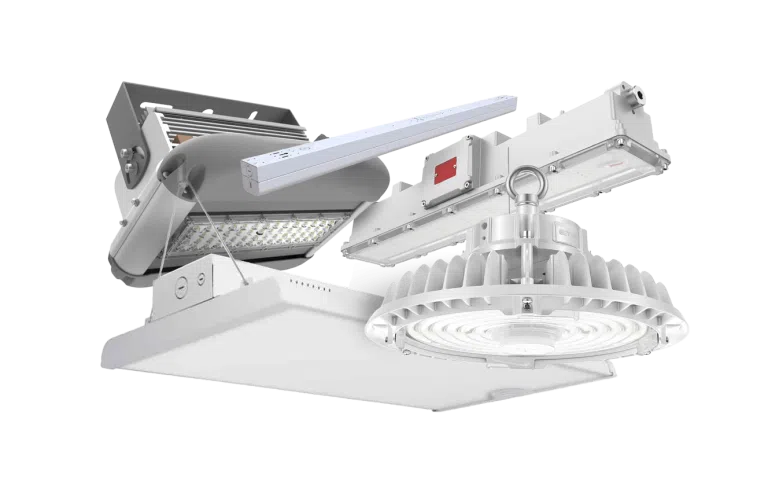
Our Indoor LED Lighting includes high bay and low bay fixtures, panels, troffers, ceiling lights, shop lights, linear fixtures, vapor tight lights, and specialty indoor lighting. Available models include 2×2, 2×4, and 1×4 ceiling-grid fixtures, with options that vary by output, voltage, color temperature, dimming, sensors, controls, and mounting configuration.
These fixtures are commonly used in offices, warehouses, distribution centers, schools, gyms, retail spaces, workshops, manufacturing areas, utility rooms, service bays, corridors, lobbies, food processing areas, and specialized industrial environments.
Commercial Indoor LED Lighting for Workspaces, Warehouses, Shops, and Facilities
Commercial indoor LED lighting includes the fixtures used inside offices, warehouses, schools, gyms, retail spaces, workshops, manufacturing areas, utility rooms, and specialized industrial environments. Because this is a broad category, the best place to start is with the type of space you are lighting.
Indoor fixtures are not all designed for the same job. A high bay for a 30-foot warehouse ceiling is very different from a 2x4 panel for an office ceiling grid, a shop light for a workbench area, or a vapor tight fixture for a damp utility space. The right choice depends on ceiling height, mounting method, room use, voltage, controls, color temperature, environmental exposure, and any required safety or performance ratings.
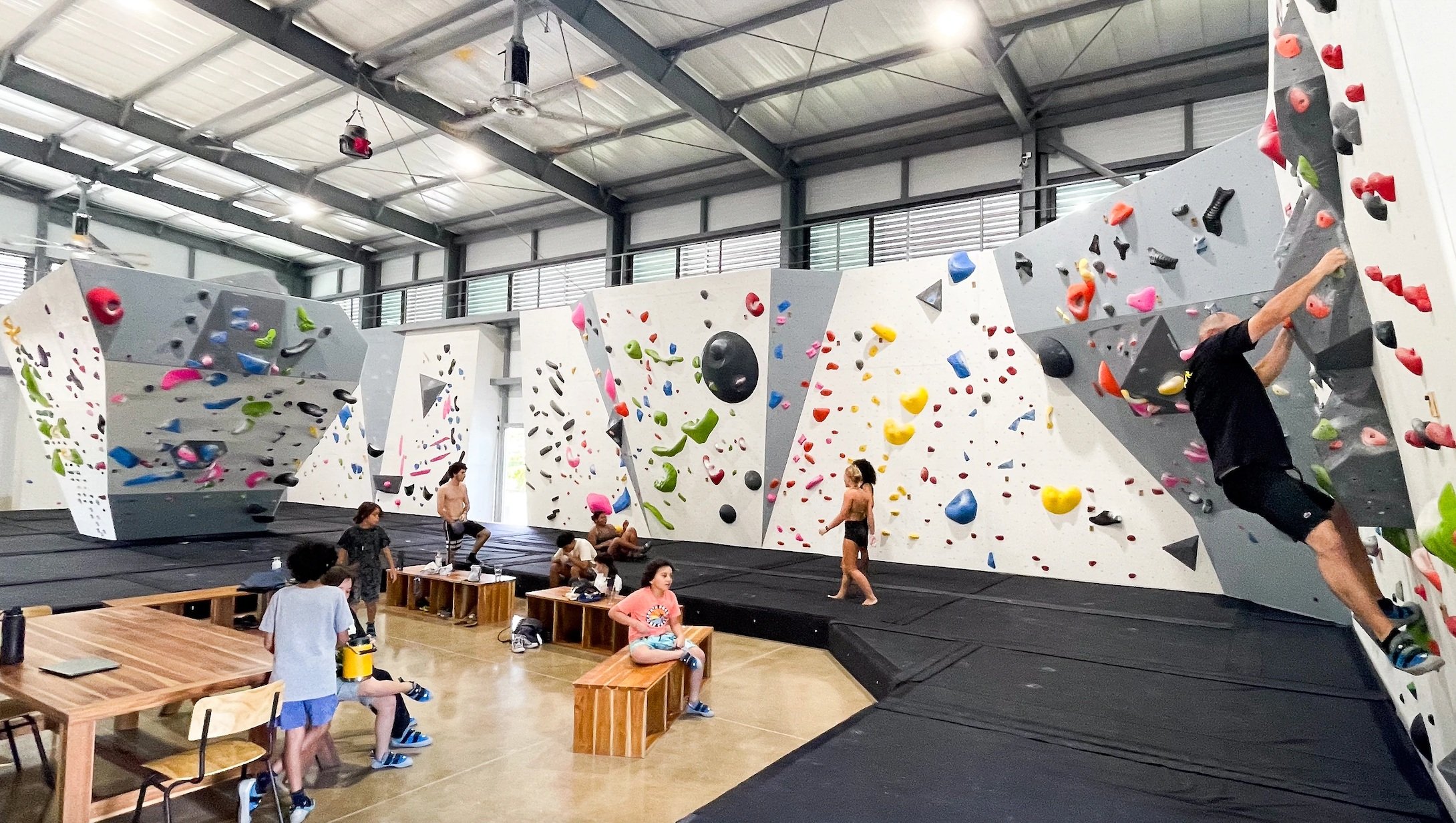
Case Study: Installation of 12 200 Watt LED UFO High Bays into Tamarock Rock Climbing Gym in Tamarindo, Costa Rica
| After: 100 / 120 / 150 / 200 Watt Adjustable LED UFO High Bay | 15000 to 30000 Lumens | 5000K | 100-277V | White Housing |
 |
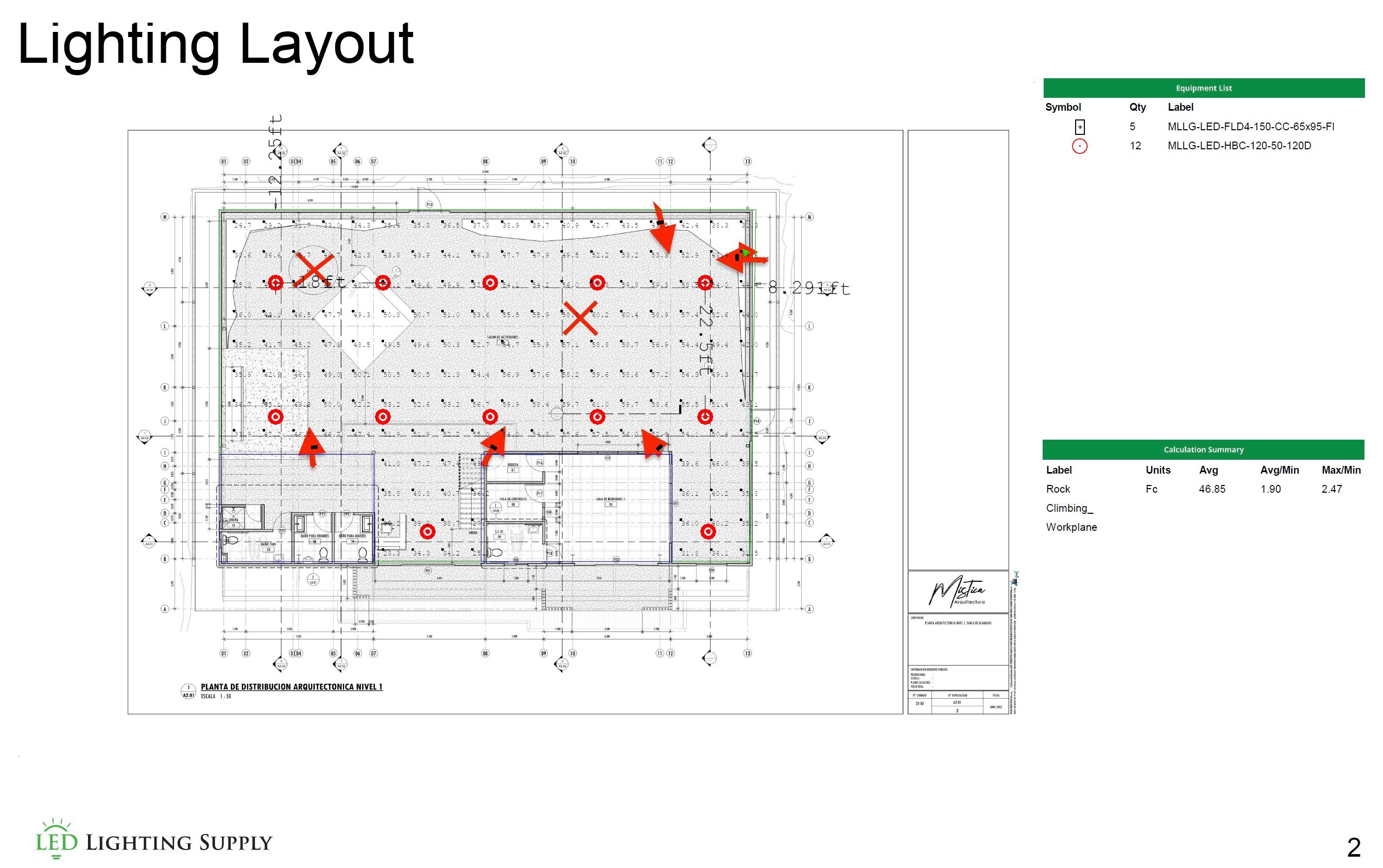
Lighting Plan We Created for the Customer
|
Lighting Plan |
Heat Map |
 |
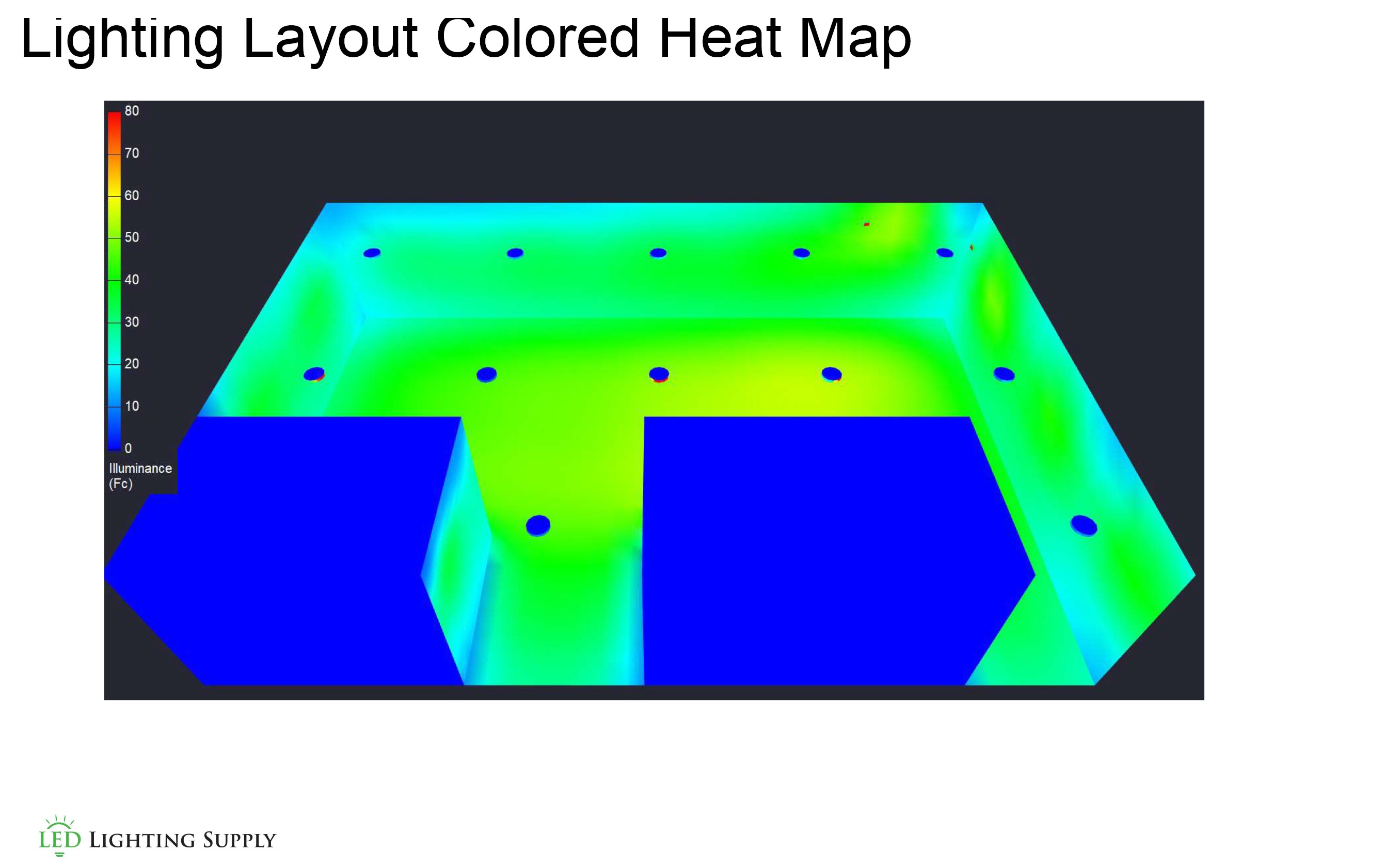 |
Climbing Gym Lighting Installation Plan Metrics
- Mounting height: 20 ft
- Fixture Used: MLLG-LED-HBC-200-5-120: 100 / 120 / 150 / 200 Watt Adjustable LED UFO High Bay | 15000 to 30000 Lumens | 5000K | 100-277V | White Housing
- FC achieved: 46.85 FC average
- Uniformity (Avg/Min): 1.90
Selection and Installation Note: Product specifications, wattage, lumen output, beam angle, color temperature, voltage, dimming, controls, mounting hardware, certifications, environmental ratings, emergency options, and warranty coverage vary by model. Confirm the selected product specification before ordering. For commercial buildings, electrical upgrades, emergency lighting, high-temperature spaces, hazardous locations, food processing areas, damp spaces, code-sensitive applications, or safety-critical environments, verify requirements with your local inspector or a licensed electrical professional.
Start with the Indoor Space You Need to Light
The fastest way to narrow your fixture options is to identify the space type first. Ceiling height, room layout, activity level, and environmental conditions usually determine the fixture family.
| Indoor Space | Common Fixture Choices |
|---|---|
| Warehouses and distribution centers | LED high bays, linear high bays, and high-output fixtures for taller ceilings, aisles, storage areas, and open floor spaces. |
| Lower-ceiling production and work areas | LED low bay lights, linear fixtures, or shop lights for spaces where high bays would be too intense or mounted too low. |
| Offices, schools, and finished interiors | LED panels and troffers for 2x2, 2x4, and 1x4 ceiling grids, along with recessed or surface-mounted ceiling fixtures where appropriate. |
| Workshops, maintenance rooms, and service areas | LED shop lights, linear fixtures, and task-focused lighting for benches, tools, service bays, and repair areas. |
| Gyms and recreation spaces | Gym lighting may use high bays, linear fixtures, or guarded fixtures depending on ceiling height, activity type, and impact exposure. |
| Damp, dusty, or utility areas | Vapor tight lights or sealed industrial fixtures for moisture, dust, utility spaces, covered service areas, and washdown-adjacent environments where rated. |
| Food processing and sanitary areas | NSF food grade lights or other fixtures specifically rated for sanitation, cleanability, and the required environment. |
| High-temperature spaces | High temperature LED lights for areas where elevated ambient heat can damage standard drivers or fixtures. |
| Hazardous locations | Hazardous-location LED lights, including explosionproof models where applicable, for areas with an established classification requiring properly listed or certified fixtures. |
| Emergency and egress areas | LED exit signs, emergency lights, and battery backup options where required by code or project specification. |
| Lobbies, corridors, and common areas | Indoor wall sconces, panels, recessed lights, ceiling lights, or decorative fixtures depending on the space and appearance goals. |
How to Choose Commercial Indoor LED Lights
Once you know the type of space, compare fixtures by application fit rather than wattage alone. First confirm whether the environment requires a specialty-rated fixture, then match the fixture to ceiling height and mounting method before comparing lumen output, distribution, voltage, and controls.
A lower-wattage fixture with the correct distribution may outperform a higher-wattage fixture that sends light in the wrong direction.
| Selection Factor | What to Confirm |
|---|---|
| Ceiling height | High ceilings may need high bays or narrower optics. Lower ceilings may need panels, low bays, linear fixtures, or shop lights. |
| Ceiling type | Confirm whether the space uses open structure, drywall, acoustic ceiling grid, suspended mounting, surface mounting, or recessed fixtures. |
| Room activity | Storage, office work, assembly, inspection, service work, recreation, and production all have different lighting needs. |
| Lumen output | Compare fixture output, not just replacement wattage. Existing systems may be over-lit, under-lit, or poorly distributed. |
| Beam angle or distribution | Wide distribution can help lower mounting heights. Narrower optics may be useful for taller ceilings or aisles. |
| Color temperature | 4000K is commonly used for offices, schools, and general commercial spaces. 5000K may be preferred for shops, warehouses, or task-focused work areas seeking a cooler white appearance. |
| Controls | Review dimming, occupancy sensors, daylight controls, switching zones, and building-control compatibility before ordering. |
| Voltage | Confirm site voltage and driver compatibility. Commercial and industrial buildings may use different voltage configurations. |
| Environment | Dust, moisture, heat, vibration, food processing, and hazardous-location requirements can change the fixture category entirely. |
| Certifications | Confirm applicable electrical safety certification, DLC qualification, NSF listing, emergency function, wet-location suitability, hazardous-location certification, or high-temperature rating where required. These ratings vary by model. |
Indoor Fixture Categories
Commercial indoor lighting is easier to navigate when fixture families are grouped by ceiling height, ceiling type, and environment.
High Bay and Low Bay Lighting
High bay and low bay fixtures are used in taller indoor spaces such as warehouses, gyms, shops, production areas, pole barns, and industrial facilities. High bays are typically used where ceilings are taller and more output is needed. Low bays are used where the mounting height is lower and a wider, less intense distribution is preferred.
Before choosing high bay or low bay fixtures, confirm ceiling height, mounting method, beam angle, fixture spacing, voltage, controls, and whether the area has dust, moisture, vibration, or elevated temperatures.
Panels, Troffers, and Ceiling Lights
LED panels, troffers, and commercial ceiling lights are commonly used in offices, classrooms, healthcare areas, retail spaces, corridors, and finished interiors. These fixtures are often selected for clean appearance, visual comfort, and compatibility with drop ceilings or finished ceiling systems.
Before ordering, confirm grid size, fixture dimensions, color temperature, dimming, emergency backup options, fire-rating needs where applicable, and compatibility with the existing ceiling system.
Shop Lights and Linear Fixtures
Shop lights and linear fixtures are commonly used in work areas, utility rooms, service bays, storage spaces, and maintenance areas. They can provide practical, task-focused illumination without the output level of a high bay.
Review mounting height, fixture length, row spacing, task type, wiring method, controls, and whether the fixture needs to be rated for dust, dampness, or impact.
Specialty Indoor Fixtures
Some indoor spaces require more than a standard commercial fixture. Food processing rooms, classified hazardous locations, foundries, high-temperature spaces, damp areas, and washdown-adjacent spaces may require fixtures with specific listings or environmental ratings.
For these spaces, confirm the application first. A general-purpose indoor fixture should not be used in food processing, classified hazardous, high-temperature, wet, or corrosive environments unless the selected model is rated for that use. An IP rating addresses ingress protection and does not by itself establish chemical resistance, sanitation suitability, or hazardous-location approval.
Color Temperature and Controls
Color temperature affects the apparent warm or cool character of white light; it does not determine lumen output or brightness. Many offices, schools, and customer-facing spaces use 4000K for a neutral appearance. Warehouses, workshops, service areas, and task-focused environments may use 5000K where a cooler white appearance is preferred.
Controls can also affect fixture selection. Occupancy sensors may be useful in warehouses, storage rooms, restrooms, utility spaces, and intermittently used areas. Dimming may be useful in offices, classrooms, gyms, conference rooms, and spaces with changing light needs. Confirm sensor, dimming, and control compatibility on the selected fixture before ordering.
When to Use a Specialty Fixture Instead of a Standard Indoor Light
Some indoor applications look ordinary at first but require specialty-rated fixtures. Choosing a standard indoor light in these spaces can lead to premature failure, safety issues, or inspection problems.
- Use high-temperature fixtures where ambient heat can exceed standard fixture ratings.
- Use vapor tight fixtures where moisture, dust, or sealed construction is needed.
- Use NSF-rated fixtures where sanitation and cleanability requirements apply.
- Use hazardous-location fixtures that match the documented Class, Division or Zone, Group, temperature code, ambient rating, and certification requirements. Explosionproof construction is one protection method and is not required for every classified location.
- Use emergency or exit lighting where egress requirements apply.
- Use impact-resistant or protected fixtures where the fixture may be exposed to ball strikes, equipment impact, or abuse.

Indoor Lighting Certifications, Rebates, and Warranty Support
Selected LED indoor lights from LED Lighting Supply may carry a UL, ETL, CSA, or other applicable certification mark, depending on the product. UL and ETL are examples of Nationally Recognized Testing Laboratory certification marks; confirm the exact listing or certification required for the project. Many models may also be DLC or DLC Premium qualified for utility rebate programs where available. DLC qualification is a performance and efficiency program, not an electrical safety certification. Rebate requirements vary by utility, region, and product listing, so confirm eligibility on the selected product specification before ordering.
Warranty coverage varies by product, with many indoor LED fixtures offering a 5-year warranty unless otherwise specified. Review the selected product specification before purchase to confirm warranty terms, certifications, DLC status, voltage, controls compatibility, mounting method, environmental ratings, and suitability for your space.
Commercial Indoor Lighting Project Considerations
- Document existing conditions: Record mounting heights, ceiling construction, circuit voltage, fixture locations, available mounting points, and access limitations before selecting replacement fixtures.
- Plan the layout with photometric data: For warehouses, production areas, aisles, gyms, and other larger spaces, use fixture-specific IES photometric data to evaluate delivered light levels and uniformity rather than relying on a fixture count or wattage comparison.
- Review installation details early: Confirm mounting brackets, pendants, aircraft cable, junction boxes, cord options, whips, and any field-wiring requirements before fixtures arrive on site.
- Coordinate controls with the electrical plan: Sensors, dimming drivers, control voltage, wireless controls, and switching zones should be coordinated with the intended control system and installer.
- Check maintenance access: Consider lift access, fixture location, cleaning needs, driver replacement strategy, and whether the selected fixture can be safely serviced in the installed location.
- Verify specialty-area documentation: Projects involving food processing, elevated heat, moisture, washdown, corrosive exposure, emergency systems, or classified locations should verify the exact manufacturer documentation and project requirements before purchase.
- Keep submittals organized: Retain cut sheets, installation instructions, photometric files, certification information, and warranty documentation for project review, installation, and future maintenance.
Contact us about indoor commercial LED lighting, and our Product Specialists can help review fixture type, ceiling height, ceiling type, lumen output, color temperature, voltage, controls, environmental requirements, certifications, and product specifications.
Indoor Commercial LED Lights FAQs
How Should I Choose Indoor Commercial LED Lights For My Space?
Start with the space type, then match the fixture to environmental requirements, ceiling height, and mounting method before comparing lumen output, distribution, voltage, and controls. The right fixture also depends on room use, color temperature, required ratings, and exposure to conditions such as dust, moisture, heat, or vibration.
When Should I Choose High Bay Instead Of Low Bay Lighting?
High bays are typically used where ceilings are taller and more output is needed, while low bays are used at lower mounting heights where a wider, less intense distribution is preferred. Confirm ceiling height, mounting method, beam angle, fixture spacing, voltage, controls, and environmental conditions before selecting either fixture type.
How Should I Plan Fixture Quantity And Layout For A Large Indoor Area?
For warehouses, production areas, aisles, gyms, and other larger spaces, use fixture-specific IES photometric data to evaluate delivered light levels and uniformity rather than relying on fixture count or wattage comparison. Layout planning should also account for mounting heights, fixture locations, available mounting points, and access limitations.
What Should I Confirm Before Ordering Replacement Indoor Fixtures?
Confirm the selected fixture's specification, including voltage, mounting method, lumen output, controls compatibility, environmental ratings, certifications, warranty terms, and suitability for the space. Existing systems may be over-lit, under-lit, or poorly distributed, so compare fixture output rather than replacement wattage alone.
When Is A Specialty-Rated Indoor Fixture Needed?
A specialty-rated fixture is needed when the application involves conditions such as elevated heat, moisture, dust, sanitation requirements, hazardous locations, egress requirements, or potential impact exposure. A general-purpose indoor fixture should not be used in food processing, classified hazardous, high-temperature, wet, or corrosive environments unless the selected model is rated for that use.
How Should I Choose Color Temperature For Commercial Indoor Lighting?
Many offices, schools, and customer-facing spaces use 4000K for a neutral appearance, while warehouses, workshops, service areas, and task-focused environments may use 5000K where a cooler white appearance is preferred. Color temperature affects the apparent warm or cool character of white light and does not determine lumen output or brightness.
What Controls Should Be Reviewed Before Buying Indoor LED Fixtures?
Review dimming, occupancy sensors, daylight controls, switching zones, and building-control compatibility before ordering. Occupancy sensors may be useful in warehouses, storage rooms, restrooms, utility spaces, and intermittently used areas, while dimming may be useful in offices, classrooms, gyms, conference rooms, and spaces with changing light needs.
Can Indoor LED Fixtures Qualify For Rebates Or Include Certifications?
Selected indoor LED lights may carry UL, ETL, CSA, or other applicable certification marks, and many models may also be DLC or DLC Premium qualified for utility rebate programs where available. Certifications, DLC status, and rebate eligibility vary by product, utility, region, and listing, so confirm the selected product specification before ordering.