


LED Paper Mill Lights
- 15+ years industrial lighting expertise with explosion-proof fixtures
- 50-80% energy savings with 50,000+ hour lifespan reduces maintenance
- Instant full brightness and hazardous location safety ratings


-
 Corrosion-Resistant Layout Design for High-Humidity & Chemical-Exposure Mill Environments
-
Precise Lumen Output & IP Rating Calculations for Harsh Industrial Conditions
-
Minimize Downtime & Safety Risks with Explosion-Proof Fixtures & Extended Lifespans


LED lights for paper mills include a range of industrial-grade fixtures built for installation in demanding production, processing, and storage environments. This category features form factors such as high bay lights for mounting over open floors and racking systems, linear fixtures for placement above aisles and workstations, and explosion-proof models suited for hazardous zones with combustible dust or chemical vapors. High-temperature rated LEDs are commonly installed near processing equipment, while standard high bays and vapor-tight fixtures are found in warehousing and maintenance areas.
These products are selected for use throughout pulp and paper facilities, including raw material storage, production lines, quality control stations, chemical storage rooms, and administrative offices. Commercial & Industrial Lighting Solutions are integrated into these environments to address the unique layout and installation needs of paper mills, supporting consistent lighting coverage from production floors to control rooms.
Showing 16–23 of 23 results
 SKU:MLLG-E-LED-EXPLC-80-50-[V]-C1D1 | Web ID:1746100V-277V:295 In StockShips 3-5 Days277V-480V:Built to Order 6 Weeks
- Lumens: 11200
- Replaces: 250 Watt Metal Halide
- Color Temp: 5000K
- CRI: 70+
- IP Rating: IP66
- Rated Life: 50,000 (L70) hours
- Dimmable: 1-10V
- Beam Angle (Std): 120°
- Mount: Yoke | 3/4 in NPT Pendant
- Dimensions (in): 16 D x 13.5 H
- Weight (lbs): 39
Starting At$780.00


- SKU:MLLG-E-LED-EXPLC-200-50-[V]-C1D1 | Web ID:2175100V-277V:113 In StockShips 3-5 Days277V-480V:Built to Order 6 Weeks
- Lumens: 28000
- Replaces: 400 Watt Metal Halide
- Color Temp: 5000K
- CRI: 70+
- IP Rating: IP66
- Rated Life: 50,000 (L70) hours
- Dimmable: 1-10V
- Beam Angle (Std): 120°
- Mount: Yoke | 3/4 in NPT Pendant
- Dimensions (in): 16 x 13.5
- Weight (lbs): 39
Starting At$1,150.00 - SKU:MLLG-E-LED-EXPLD-100-50-[V]-C1D1 | Web ID:1281100V-277V:107 In StockShips 3-5 Days277V-480V:Built to Order 6 Weeks
- Lumens: 14000
- Replaces: 200 Watt Metal Halide
- Color Temp: 5000K
- CRI: 70+
- IP Rating: IP66
- Rated Life: 50,000 (L70) hours
- Dimmable: 1-10V
- Beam Angle (Std): 120°
- Beam Angle (Opt): 40° | 60° | 90°
- Mount: Yoke
- Dimensions (in): 15.7 X 11.2 X 9.96
- Weight (lbs): 26.9
Starting At$1,150.00 - SKU:MLLG-E-LED-EXPLD-150-50-[V]-C1D1 | Web ID:1282100V-277V:196 In StockShips 3-5 Days277V-480V:41 In StockShips 3-5 Days
- Lumens: 21000
- Replaces: 400 Watt Metal Halide
- Color Temp: 5000K
- CRI: 70+
- IP Rating: IP66
- Rated Life: 50,000 (L70) hours
- Dimmable: 1-10V
- Beam Angle (Std): 120°
- Beam Angle (Opt): 40° | 60° | 90°
- Mount: Yoke
- Dimensions (in): 15.7 X 11.2 X 9.96
- Weight (lbs): 26.9
Starting At$1,200.00 - SKU:MLLG-E-LED-EXPLI-100-50-[V]-C1D1 | Web ID:1927100V-277V:210 In StockShips 3-5 Days277V-480V:Built to Order 6 Weeks
- Lumens: 14000
- Replaces: 400 Watt Metal Halide
- Color Temp: 5000K
- CRI: 70+
- IP Rating: IP66
- Rated Life: 50,000 (L70) hours
- Dimmable: 1-10V
- Beam Angle (Std): 120°
- Mount: Yoke | 3/4 in NPT Pendant
- Dimensions (in): 47 X 5.5 X 8.1
- Weight (lbs): 26
Starting At$1,340.00 - SKU:MLLG-E-LED-EXPLG-30-50-C1D1 | Web ID:1286Availability: 217 In Stock Ships 3-5 Days
- Lumens: 3900
- Replaces: 100 Watt Metal Halide
- Color Temp: 5000K
- CRI: 70+
- IP Rating: IP66
- Rated Life: 50,000 (L70) hours
- Dimmable: 1-10V
- Beam Angle (Std): 360°
- Mount: 3/4 in NPT Pendant
- Dimensions (in): 12.5 X 8.8
- Weight (lbs): 14
Starting At$520.00 - SKU:LLS-EXPLFL-240-50-C1D2 | Web ID:1861Availability: 28 In Stock Ships 2-3 Days
- Lumens: 36000
- Replaces: 1000 Watt Metal Halide
- Color Temp: 5000K
- CRI: 70+
- IP Rating: IP66
- Rated Life: 150,000 (L70) hours
- Dimmable: No
- Beam Angle (Std): 120°
- Mount: Yoke
- Mount (Opt): Slip Fitter
- Dimensions (in): 22.3 L X 18.6 W X 3.1 H
- Weight (lbs): 28.6
Starting At$905.56
- SKU:MLLG-E-LED-EXPLB-100-50-C1D2-HT | Web ID:2303Built to Order 8 Weeks
- Lumens: 10000
- Replaces: 400 Watt Metal Halide
- Color Temp: 5000K
- CRI: 70+
- IP Rating: IP66
- Rated Life: 50,000 (L70) hours
- Dimmable: No
- Beam Angle (Std): 120°
- Beam Angle (Opt): 40° | 60° | 90°
- Mount: Yoke | 3/4 in NPT Pendant
- Dimensions (in): 14 D X 11.3 H
- Weight (lbs): 26 lbs
Starting At$965.40


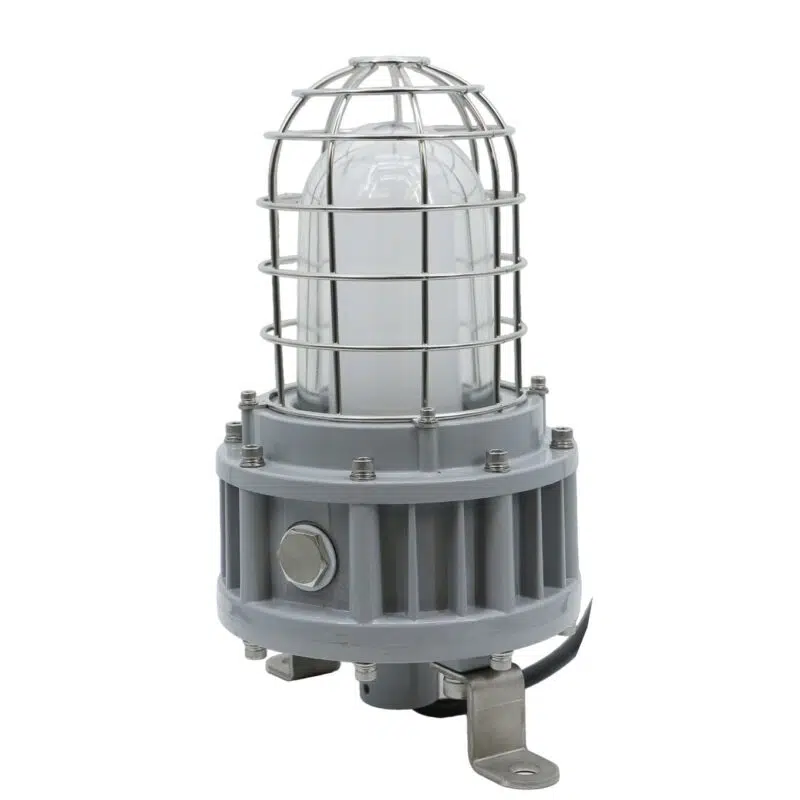


LED Paper Mill Lighting for Pulp, Paper, Processing, Storage, and Support Areas
LED paper mill lighting is used in pulp preparation areas, paper machine areas, dryer sections, press sections, wet-end areas, processing lines, quality control stations, maintenance shops, control rooms, chemical storage areas, dust collection areas, warehouses, and administrative spaces. These environments can expose fixtures to heat, steam, humidity, vibration, paper dust, wood fiber, chemical vapors, corrosion, and difficult maintenance access.
Paper mill lighting should be selected by area and hazard, not by wattage alone. A standard warehouse high bay may work in raw material or finished goods storage, but it may not be suitable near dryers, wet-end equipment, chemical systems, dust collection, or classified areas. The fixture type should match the actual environment at the mounting location.
Selection and Installation Note: Product specifications, wattage, lumen output, optics, color temperature, CRI, voltage, dimming, controls, mounting method, hazardous-location rating, high-temperature rating, IP rating, IK rating, corrosion resistance, certifications, and warranty coverage vary by model. Confirm the selected product specification before ordering. For paper mills, pulp processing areas, paper machine areas, dryer sections, chemical storage, dust collection, combustible dust areas, high-temperature areas, wet-end areas, classified locations, or safety-sensitive industrial spaces, verify requirements with the facility team, EHS team, project specifier, local inspector, fire protection professional where applicable, and a licensed electrical professional.
Recommended Foot-Candles for Paper Mill Lighting
Paper mill light levels vary by task, process area, ceiling height, equipment layout, inspection needs, dust, steam, moisture, surface reflectance, and maintenance access. The ranges below are general planning values only. Final fixture selection should account for the area classification, ambient temperature, moisture exposure, dust exposure, fixture rating, and selected product specifications.
Paper Mill Lighting by Area
Paper mills often need several fixture families in the same facility. Use the table below to identify which lighting category should be reviewed for each area.
| Paper Mill Area | Lighting Priorities |
|---|---|
| Raw material and finished goods storage | Standard industrial LED high bays or linear high bays may be suitable where the area is not classified and does not have excessive heat, moisture, or dust exposure. |
| Processing and production areas | Review task visibility, equipment movement, vibration, dust, steam, mounting height, and whether high-temperature LED fixtures or sealed fixtures are required. |
| Paper machine dryer sections | Confirm ambient temperature at fixture height, driver location, steam exposure, maintenance access, and whether high-temperature fixtures are required. |
| Wet-end and press sections | Review moisture, steam, corrosion, chemical residue, IP rating, wet-location suitability, and whether vapor tight LED fixtures are needed. |
| Chemical storage and handling | Confirm chemical inventory, ventilation, vapors, classified boundaries, temperature code, conduit/fittings, and whether explosion-proof lighting is required. |
| Dust collection and baghouse areas | Paper dust, wood fiber, and process dust may require combustible dust review. Confirm Class II or Class III requirements where applicable before selecting fixtures. |
| Inspection and quality control | Use higher light levels, good color quality, controlled glare, and proper fixture placement for defect detection, color variation, web inspection, and detailed review. |
| Maintenance areas and repair shops | Provide practical task lighting for repair work, tools, lifts, machinery, and inspection, while confirming oils, solvents, impact, and any classified-area requirements. |
| Control rooms and offices | Use lower-glare panels, troffers, or linear fixtures selected for screens, paperwork, operator comfort, dimming, and emergency lighting needs. |
How to Choose LED Paper Mill Lighting
Paper mill lighting should begin with the site condition. Determine whether the area is ordinary, wet, dusty, high-temperature, corrosive, classified, or inspection-critical before selecting a fixture type.
| Selection Factor | What to Confirm |
|---|---|
| Area classification | Confirm whether combustible dust, fibers, flyings, vapors, solvents, or chemicals create a hazardous-location requirement. Do not assume every paper mill area is ordinary or that every classified area is Class I. |
| Combustible dust and fiber exposure | Review dust collection, baghouses, wood processing, paper dust, housekeeping, enclosed conveyors, and dust layers. Fixture selection should follow the facility’s dust hazard assessment and area classification. |
| Chemical vapors and solvents | Coating, printing, adhesive, chemical feed, tank farm, and storage areas may require hazardous-location-rated fixtures depending on the chemical and ventilation. |
| Ambient temperature | Measure or estimate temperature at the fixture mounting height, especially near dryer sections, boiler rooms, steam systems, evaporators, and ceiling pockets. |
| Moisture, steam, and corrosion | Wet-end areas, press sections, washdown areas, and chemical zones may require vapor tight, corrosion-resistant, or IP-rated fixtures. |
| Impact and vibration | Heavy machinery, conveyors, maintenance activity, forklifts, and paper machine vibration can affect fixture mounting and durability. |
| Inspection and color quality | Quality control areas may need higher light levels, good CRI, controlled glare, and consistent color temperature for defect detection and review tasks. |
| Voltage and controls | Confirm available voltage, fixture driver compatibility, dimming, emergency circuits, occupancy sensors, and integration with facility controls. |
| Maintenance access | Review lift access, equipment obstructions, heat exposure, production downtime, and whether remote drivers or lower-maintenance fixtures are appropriate. |
Where Explosion-Proof Lighting May Be Used in Paper Mills
Explosion-proof or hazardous-location lighting may be required where flammable vapors, combustible dust, combustible fibers, or classified atmospheres are present. Paper mills can include several different hazard types, so the correct fixture rating depends on the facility’s area classification, materials, ventilation, and operating conditions.
| Area | What to Review |
|---|---|
| Chemical storage and handling | Confirm whether flammable liquids, solvents, or vapors require Class I Division 1, Class I Division 2, Zone-rated, or other hazardous-location fixtures. |
| Coating, printing, and finishing lines | Solvent-based coatings, inks, adhesives, and finishing chemicals may create classified areas. Confirm the required classification before selecting fixtures. |
| Dust collection and baghouse areas | Paper dust, wood fiber, and process dust may require Class II or Class III review. Confirm dust type, accumulation, enclosure, and housekeeping conditions. |
| Pulp preparation and wood processing | Areas with airborne wood fiber, sawdust, or combustible particulates may need dust-rated or hazardous-location fixtures depending on the assessment. |
| Tank farms and chemical feed systems | Outdoor or indoor tanks, pumps, valves, and transfer points should be reviewed for classified boundaries and fixture ratings. |
Buying guidance: Do not select explosion-proof fixtures by wattage alone. Confirm the required Class, Division, Zone, Group, temperature code, mounting method, voltage, conduit/fittings, and environmental rating before ordering. A fixture rated for one classified area may not be suitable for another.
Where High-Temperature Lighting May Be Used in Paper Mills
High-temperature lighting may be needed near dryer sections, paper machines, boiler rooms, steam systems, recovery areas, evaporator areas, and poorly ventilated ceiling spaces. The key number is the ambient temperature at the fixture, not the general room temperature.
| Area | What to Review |
|---|---|
| Paper machine dryer sections | Confirm actual heat exposure at fixture height, driver location, IP rating, steam exposure, and access for service. |
| Boiler rooms and steam generation areas | Review heat, vibration, steam, moisture, mounting height, and whether high-temperature vapor tight fixtures are needed. |
| Recovery boiler and evaporator areas | These spaces can combine heat, moisture, chemical exposure, and difficult access. Confirm fixture rating and corrosion resistance. |
| Press sections and wet-end areas | Review moisture, steam, chemical residue, corrosion, and whether IP-rated or high-temperature fixtures are required. |
| Ceiling cavities and poorly ventilated production areas | Heat can accumulate near ceilings. Confirm ambient temperature at the actual mounting location before selecting the fixture. |
Buying guidance: For high-temperature areas, verify the fixture’s maximum ambient temperature rating, lumen output at temperature, driver location, IP rating, mounting height, and warranty conditions. A standard warehouse fixture may fail early even when the lumen output appears correct.
Benefits of LED Lighting in Paper Mills
- Application-specific fixture choices: Paper mills can use high bay, high-temperature, vapor tight, explosion-proof, linear, panel, and task lighting depending on the area.
- Improved visibility: Properly selected LED fixtures can support production work, maintenance, storage, inspection, quality control, and movement around equipment.
- Energy efficiency: LED fixtures can reduce energy use compared with older HID or fluorescent systems, with actual savings depending on wattage, operating hours, controls, and existing conditions.
- Reduced maintenance: LED systems eliminate routine lamp and ballast replacement, which can reduce service exposure in hard-to-access, hot, wet, or classified areas.
- Instant on operation: LEDs reach full output quickly without HID warm-up time.
- Controls compatibility: Some models support dimming, occupancy sensors, switching zones, or building controls, depending on fixture and driver selection.
- Harsh-environment options: High-temperature, sealed, IP-rated, corrosion-resistant, and hazardous-location fixtures are available when the environment requires them.
Common Paper Mill Lighting Mistakes
- Using standard high bays in hazardous areas: Chemical vapors, combustible dust, or fibers may require hazardous-location-rated fixtures and fittings.
- Assuming every hazardous area is Class I: Dust and fiber areas may require Class II or Class III review rather than the same fixture used for vapor areas.
- Ignoring ambient temperature at fixture height: Dryer sections and ceiling cavities may be hotter than the general work area.
- Skipping IP and corrosion review: Wet-end areas, steam zones, and chemical areas can damage fixtures not built for moisture or corrosion.
- Choosing wattage before fixture type: The first decision should be rating and environment. Wattage and beam angle come after the fixture family is confirmed.
- Under-lighting inspection stations: Quality control areas may need higher light levels, better CRI, and more controlled glare than general production areas.
- Overlooking controls by area: Storage and maintenance areas may benefit from occupancy sensors, while production and inspection areas may need different switching strategies.
- Not reviewing maintenance access: Fixture service in dryer sections, above paper machines, or near chemical systems can be difficult and may affect fixture choice.
Paper Mill Lighting Certifications, Rebates, and Warranty Support
LED paper mill lights from LED Lighting Supply carry a safety listing such as UL, ETL, or CSA, depending on product. Many models are DLC or DLC Premium listed for utility rebate support where available. Rebate requirements vary by utility, region, and product listing, so confirm eligibility on the selected product specification before ordering.
Most LED paper mill lights include a 5-year warranty unless otherwise specified, with USA-based warranty support. Before purchase, review the selected product specification to confirm certifications, DLC status, hazardous-location rating, high-temperature rating, voltage, controls compatibility, mounting method, environmental rating, and whether the fixture is right for the paper mill environment.
Contact us about LED paper mill lighting, and our Product Specialists can help review process area, fixture type, area classification, temperature exposure, moisture exposure, ceiling height, voltage, controls, and product specifications.
LED Paper Mill Lights Frequently Asked Questions
What Are the Best LED Lights for a Paper Mill
For paper mills, selecting the right LED lighting depends on the specific environment. Areas with sawdust, wood particles, or explosive chemicals require Class 1 Division 1 or Division 2 lighting. Division 1 is for continuous hazardous conditions, while Division 2 is for abnormal conditions. Confirm classifications with local authorities. In warehousing areas, 150W to 240W high bays are effective for 20-30 foot ceilings. For high-temperature areas, choose LEDs rated for up to 140F to ensure reliability and reduce maintenance.
Where Is Explosion Proof Lighting Used in Paper Mills
Explosion proof lighting is essential in areas with combustible dust, flammable vapors, or volatile chemicals. In paper mills, this includes chemical storage, coating processes, solvent handling, dust collection, and wood fiber processing. The fixture rating should match the facility's hazardous area classification and environmental conditions. Always verify the required Class, Division, and environmental ratings before purchasing.
Where Is High Temperature Lighting Used in Paper Mills
High temperature lighting is crucial in areas with elevated heat, steam, and humidity, such as dryer sections, boiler rooms, and recovery areas. These environments demand fixtures with verified ambient temperature ratings and robust thermal management. Ensure the fixture's rating matches the actual ambient temperature at the mounting location to prevent premature failure.
What Are the Benefits of LED Industrial Lighting in Paper Mills
LED lighting offers significant benefits in paper mills, including 50% to 80% energy savings, reduced maintenance with 100,000-hour lifespan, and instant full brightness. LEDs are compatible with motion sensors, enhancing energy efficiency. Explosion-proof models meet NEC standards, and IP65-rated housings protect against moisture and dust, ensuring durability in harsh environments.
What Foot Candles Are Needed Inside a Pulp and Paper Processing Mill
Lighting requirements vary by area: General work areas need 30 to 50 fc, processing areas require 50 to 75 fc, and inspection zones need 50 to 100 fc. For quality control, a 5000K color temperature is recommended for accurate color rendering, while 4000K suits general production spaces.
What Are the Dimming and Control Options for LED Lighting
Our LED fixtures support 0-10V dimming and integrate with building automation systems, allowing for energy reduction during low-activity periods. Motion sensors can further cut energy use by 30-40%. LEDs also facilitate emergency backup lighting, requiring less power than HID systems.
What Safety and Performance Certifications Do Your Fixtures Have
Our fixtures are certified for safety and performance, including DLC Premium for energy efficiency, UL Listed for electrical safety, and ETL Listed for product compliance. These certifications ensure reliability and access to utility rebates.
What Is the Warranty and Support for Your LED Lights
All our LED lights come with a 5-year warranty and USA-based support. Our team is dedicated to resolving any warranty issues promptly to maintain your lighting system's performance.