Architectural LED Flood Lights
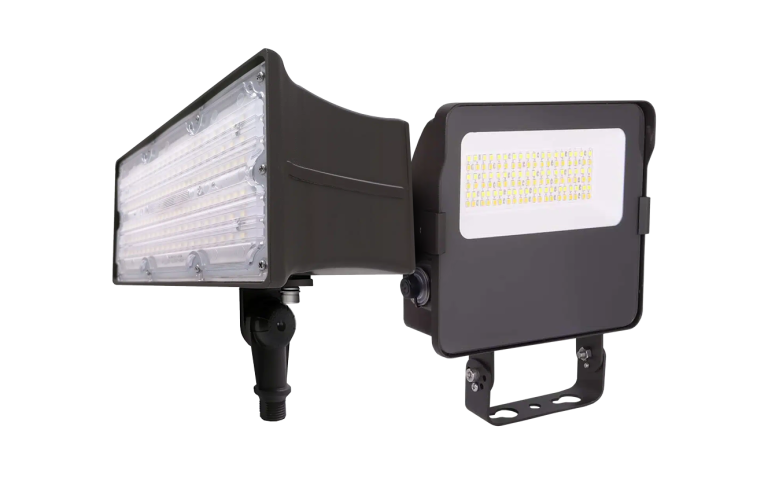
- Compact fixtures for signs, facades, and building accents
- Knuckle and trunnion mount options for flexible aiming
- Product specialists help match output and beam to target


Get Your Custom Lighting Plan With Product Recommendations
- Fixture placement and beam angles matched to building details, signs, and accent targets
- Lumen output and optics selected for target size, mounting distance, and glare control
- LED options can reduce energy use and extend maintenance intervals compared with legacy fixtures


Our Architectural LED Flood Lights for Building Accents and Signs include compact, lower-output fixtures with knuckle and trunnion or yoke mounting options. Available models vary by wattage, lumen output, beam angle, color temperature, voltage, finish, dimming, controls, and mounting hardware.
These fixtures are commonly used for building details, facades, columns, stonework, rooflines, entrances, signs, monuments, commercial landscape features, courtyards, and pedestrian areas.


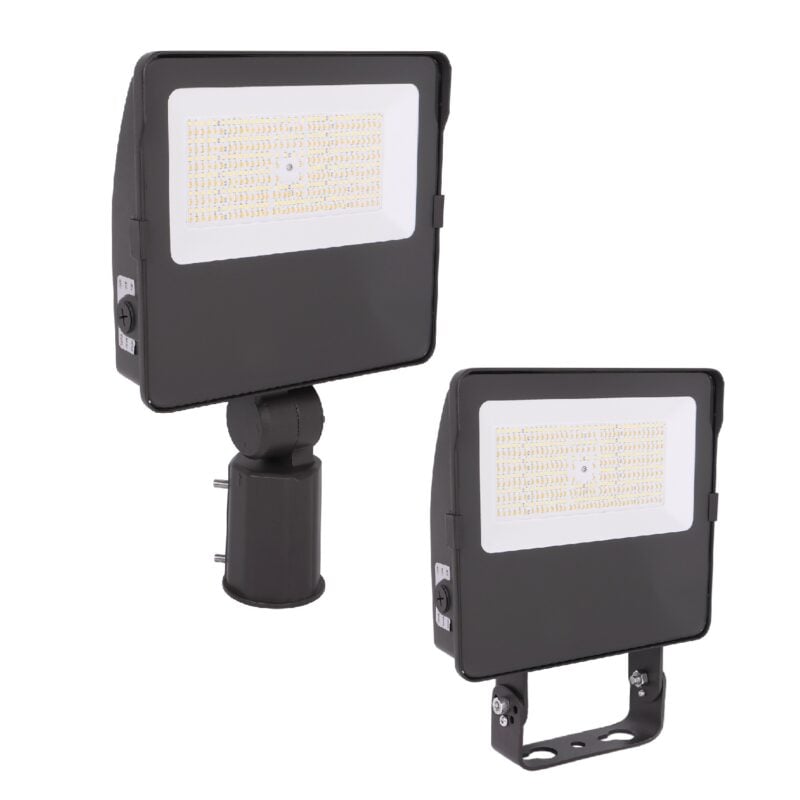
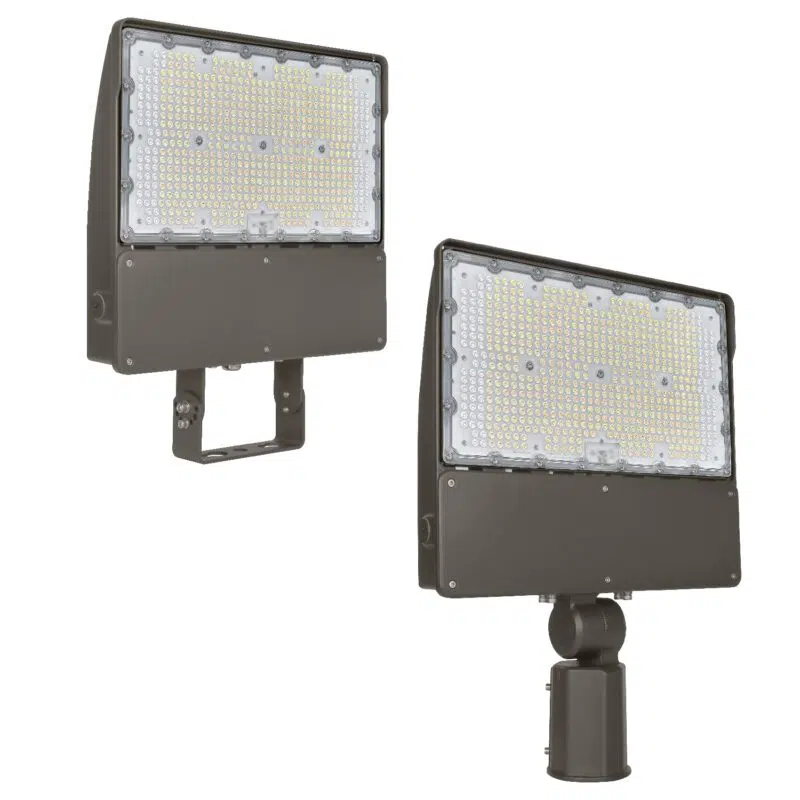
Architectural LED flood lights provide focused outdoor illumination for building details, signs, entrances, commercial landscape features, monuments, and other small-scale accent applications. These fixtures are generally more compact and lower output than many commercial yard, sports, and long-throw flood lights. They are selected for controlled aiming, fixture appearance, and how the finished installation fits the property.
Available architectural flood light models may use an adjustable knuckle mount or trunnion / yoke mount. Knuckle-mounted fixtures can work well for compact installations on junction boxes, walls, signs, and landscape structures. Trunnion or yoke-mounted fixtures use an adjustable bracket that can suit walls, roofs, ledges, and other compatible structural mounting points. Confirm the mounting method, hardware, fixture weight, and manufacturer installation instructions for the selected model.
Selection Note: Choose architectural flood lights by first matching the beam angle and lumen output to the target size and mounting distance, then selecting a knuckle or trunnion / yoke mount that fits the installation location. Before ordering, confirm the exact product voltage, color temperature, finish, dimming, controls, mounting hardware, wet-location rating, approved mounting position, and warranty coverage.
Choosing Knuckle or Trunnion Mount Architectural Flood Lights
| Mounting Style | Best Used For |
|---|---|
| Knuckle Mount Flood Lights | Small signs, building details, entry features, commercial landscape accents, and compact wall or junction-box installations that need directional adjustment. |
| Trunnion / Yoke Mount Flood Lights | Walls, roofs, ledges, facades, monuments, and larger architectural features where a compatible adjustable bracket and controlled aiming are needed. |
Common Architectural Flood Light Applications
| Application | What to Review |
|---|---|
| Building accents | Use controlled output and aiming to highlight columns, stonework, rooflines, entrances, and facade details without washing the entire building in light. |
| Signs and monuments | Match the beam spread to the sign dimensions and mounting distance so the face is evenly illuminated without bright spots or spill light. |
| Commercial landscape features | Select compact fixtures and appropriate beam angles for monument signs, masonry walls, sculptures, mature trees, and managed courtyard features. |
| Entrances and hospitality areas | Review glare, fixture visibility, color temperature, finish, and how the flood lighting works with nearby architectural wall sconces. |
| Courtyards and pedestrian areas | Use low or moderate output carefully so accent lighting does not create uncomfortable glare for people walking or gathering nearby. |
What to Review Before Selecting a Fixture
Architectural flood lights should be selected by the size, shape, reflectance, and distance of the target, not wattage alone. A small fixture mounted close to a sign or building detail may need a wide beam and modest lumen output, while a more distant mounting position may require different optics, output, or multiple fixtures. Fixture-specific photometric data can help confirm coverage and illuminance.
| Selection Factor | Why It Matters |
|---|---|
| Target size and distance | The dimensions of the sign, wall, feature, or facade and the fixture’s mounting distance affect the required output and beam spread. |
| Beam angle | Narrower beams can emphasize smaller or more distant features. Wider beams can cover nearby walls, signs, and broader architectural details when the mounting geometry supports that distribution. |
| Mounting location | Confirm whether the fixture will attach to a junction box, wall, roof, ledge, sign structure, or commercial landscape element. |
| Mounting orientation | Confirm that the selected fixture is approved for the intended mounting surface and aiming position, especially for upward-facing or near-horizontal installations. |
| Aiming and glare | Fixtures should be aimed so occupants, drivers, pedestrians, and neighboring properties are not exposed to direct glare or unnecessary light spill. |
| Color temperature | Color temperature describes the apparent warm or cool appearance of white light. Warmer color temperatures often complement hospitality, masonry, landscape, and residential-style architecture, while neutral light may suit commercial signs and modern facades. |
| Finish and fixture size | Compact housings and coordinated finishes can help the fixture blend into the building or landscape instead of becoming the visual focus. |
| Outdoor exposure | Confirm wet-location suitability, mounting hardware, and environmental compatibility. An IP rating addresses protection against solids and water ingress; verify materials, coatings, seals, and manufacturer documentation separately where corrosion or chemical exposure is a concern. |
Architectural Flood Lights Versus Commercial Flood Lights
Architectural flood lights are best for smaller, visually sensitive applications where compact size, controlled output, finish, and precise aiming matter. They may not be the appropriate choice for large yards, tall poles, ports, sports areas, or long-throw security lighting, which often require higher-output fixtures and application-specific photometric planning.
For larger outdoor areas or higher mounting heights, review our broader selection of commercial flood lights. For wall-mounted perimeter lighting that does not require adjustable aiming, consider commercial wall packs.
When to Use More Than One Architectural Flood Light
A single fixture may be appropriate for a compact, symmetrical target, but larger, irregular, or highly visible features often benefit from multiple fixtures placed and aimed to provide more even coverage. For example, a long monument sign, broad facade, or feature with deep architectural texture may need lighting from more than one direction to reduce dark areas and harsh shadows.
Use fixture-specific photometric information to evaluate coverage, glare, and spill light before finalizing fixture quantity and placement. Local lighting ordinances, property requirements, and the installation environment may also affect allowable aiming, shielding, and operating controls.
Need Help Choosing Architectural Flood Lights?
Contact us about architectural LED flood lights, and our Product Specialists can help review the target area, mounting location, fixture size, knuckle or trunnion / yoke mount, lumen output, beam angle, color temperature, voltage, finish, approved aiming position, and outdoor exposure.
Architectural LED Flood Lights FAQs
How Do Architectural LED Flood Lights Differ From Commercial Flood Lights?
Architectural LED flood lights are intended for smaller, visually sensitive applications where compact size, controlled output, finish, and precise aiming matter. They are not intended to replace higher-output commercial flood lights used for large yards, tall poles, ports, sports areas, or long-throw security lighting.
Should I Choose A Knuckle Mount Or Trunnion / Yoke Mount?
Choose a knuckle mount for small signs, building details, entry features, commercial landscape accents, and compact wall or junction-box installations needing directional adjustment. Choose a trunnion or yoke mount for walls, roofs, ledges, facades, monuments, and larger architectural features that need a secure adjustable bracket and more precise aiming.
How Should I Select Beam Angle And Output For An Architectural Feature?
Select beam angle and output based on the target size and mounting distance, not wattage alone. A small fixture close to a sign or building detail may need a wide beam and modest lumen output, while a higher or more distant mounting position may require a narrower distribution.
What Should I Consider When Lighting A Sign Or Monument?
Match the beam spread to the sign dimensions and mounting distance so the face is evenly illuminated without bright spots or spill light. Also confirm the mounting location, fixture appearance, approved aiming position, and outdoor exposure for the selected model.
Can Architectural Flood Lights Be Used For Building Accents And Entrances?
Architectural flood lights can highlight building details, signs, entrances, commercial landscape features, monuments, and other small-scale accent applications. For entrances and hospitality areas, review glare, fixture visibility, color temperature, finish, and how the flood lighting works with nearby architectural wall sconces.
How Can I Avoid Glare And Spill Light With Architectural Flood Lights?
Aim fixtures so occupants, drivers, pedestrians, and neighboring properties are not exposed to direct glare. Avoid excessive output and select a beam angle that does not leave the target unevenly lit or send light beyond the intended feature.
What Product Details Should I Confirm Before Ordering?
Confirm the exact product specifications, approved mounting position, and installation conditions before ordering. Wattage, lumen output, beam angle, color temperature, voltage, finish, dimming, controls, mounting hardware, wet-location rating, and warranty coverage vary by model.