Selecting the Best LED Lighting for Different Types of Sports Venues
Many professional teams across major American sports leagues (NHL, NBA, MLB, and NFL) have upgraded their arenas and stadiums with LED sports lighting, replacing older metal halide systems. When properly designed for the venue, LED technology can provide meaningful benefits for players, fans, and facility operations staff.
- Athletes can benefit from appropriate illuminance, uniformity, and glare control for the sport being played
- Fans can experience improved visibility when lighting is designed to limit objectionable glare
- Facility staff can benefit from reduced maintenance needs and the controllability available with compatible LED systems
LED lighting can provide energy-efficient, controllable illumination for the demanding requirements of modern sports venues.
Why High-Quality LED Lighting Is Essential for Sports Venues
Each sport requires lighting designed around its playing surface, visual tasks, participant speeds, viewing distances, and applicable competition requirements:
- Athletes need appropriate illuminance, uniformity, color rendering, and glare control to see the ball, playing surface, teammates, and opponents
- Spectators benefit from clear visibility with lighting designed to minimize objectionable glare from seating areas
- Broadcasted events may require additional horizontal and vertical illuminance, uniformity, flicker performance, color quality, and camera-direction considerations
Professional and televised competitions may have detailed lighting criteria established by the applicable league, governing body, broadcaster, or venue authority. The Illuminating Engineering Society (IES) publishes sports and recreational-area lighting guidance addressing illuminance, uniformity, glare, color quality, and related design considerations.
Understanding Sports Lighting Requirements
Lighting needs vary significantly by sport, level of play, venue geometry, ball speed, viewing distance, and whether the facility supports video recording or broadcast. Fast-moving sports or sports involving small objects may require more demanding lighting performance than recreational activities with less stringent visual tasks.
Classes of Play and Lighting Guidelines:
- Higher-level competition: Professional, elite, and broadcast events may require higher illuminance, tighter uniformity, glare control, color-quality criteria, and vertical-lighting considerations.
- Competitive and community play: Regional, school, club, and organized competition commonly use sport-specific recommended targets appropriate to the facility and level of play.
- Recreational play and training: Practice and recreational facilities may use lower target light levels when appropriate for the activity and site conditions.
IES class designations and recommended targets must be applied using the applicable sport-specific guidance; they are not one universal set of foot-candle minimums for every venue. Similarly, FIFA and other soccer governing bodies use criteria that can vary by competition category, broadcast expectations, horizontal and vertical measurement locations, uniformity, glare, and other project requirements. A lighting plan should therefore be based on the governing body’s current requirements and fixture-specific photometric data rather than a single universal foot-candle figure.
Lighting designers must also address camera placement, scoreboards, reflective surfaces, neighboring properties, and applicable local light-trespass or outdoor-lighting ordinances.
LED Lighting for Specific Sports
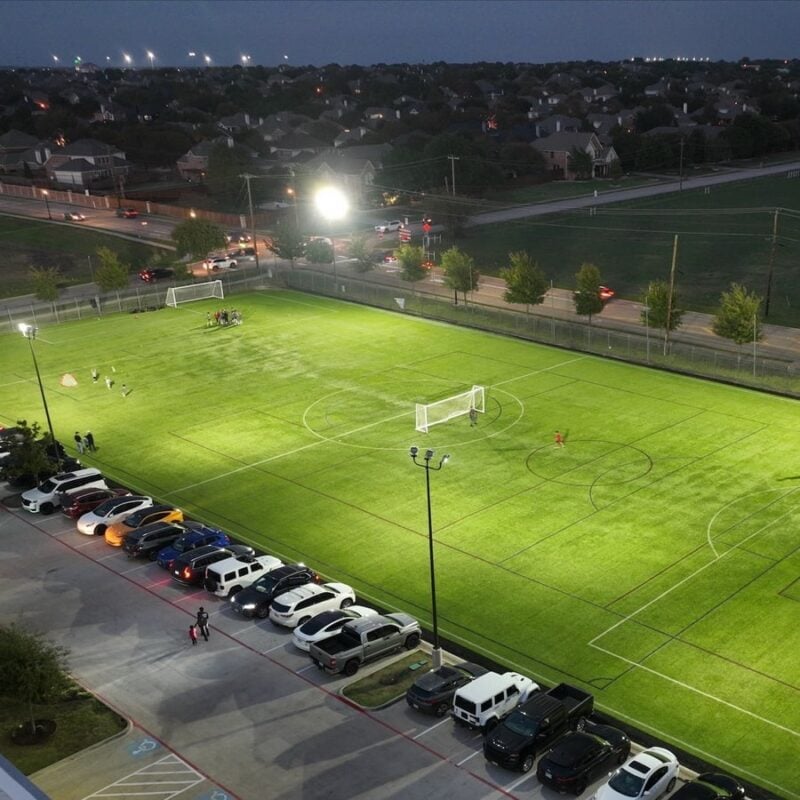
- LED soccer field lights: Recreational, competitive, and professional soccer facilities require different illuminance, uniformity, glare, and spill-light performance. Confirm the applicable league, federation, and broadcast criteria for the project.
- LED tennis court lights: Prioritize uniformity, glare control, and ball visibility throughout play, with targets selected for the court type and level of competition.
- Rugby Fields: Require lighting designed for consistent visibility across the playing area while controlling glare for players, officials, and spectators.
- LED field hockey lights: Fast-paced play can require robust illuminance, uniformity, glare control, and color-rendering performance. Select CCT based on project preferences and applicable requirements; CCT describes the apparent color of white light, not brightness or color-rendering quality.
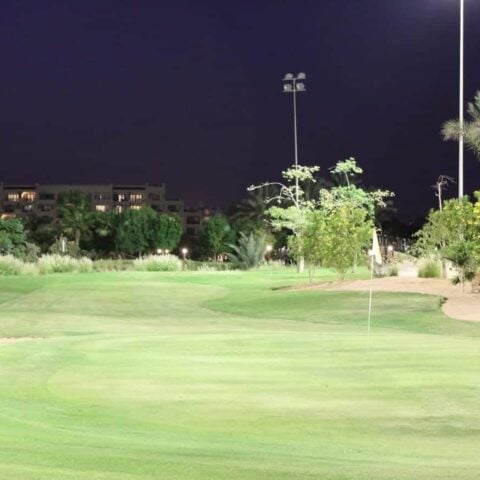
- LED lights for golf courses and driving ranges: Focus lighting on tee areas, targets, pathways, or driving-range landing areas as required, while managing glare, shadows, and spill light.
- LED softball field lights / LED baseball field lights: Infield and outfield targets should be established from the level of play, governing guidance, field geometry, and ball-visibility requirements rather than assumed fixed values.
- LED sport field lights: Multi-sport lighting systems can be designed with fixture-specific optics and compatible controls to support different activities and operating schedules.

Benefits of LED Sports Lighting
- Energy Efficiency: LED systems can reduce energy use compared with older metal halide systems, although actual savings depend on the existing equipment, operating hours, controls, and final lighting design.
- Instant Operation: LED luminaires generally reach full output without the warm-up and restrike delays associated with many metal halide systems.
- Color Quality: Appropriate CRI and spectral characteristics can support color recognition for players, spectators, and cameras. Verify color-rendering requirements for broadcast applications.
- Maintenance Planning: Long-life LED luminaires can reduce relamping frequency. Selected systems may offer remote-driver configurations, but fixture weight, driver location, wiring, and pole loading must be evaluated for the specific installation.
- Light Control: Fixture-specific optics can direct light toward the playing surface and help reduce glare, spill light, and sky glow when properly designed and aimed.
- Advanced Controls: Compatible dimming, scheduling, scene control, and occupancy features can provide operating flexibility and may reduce energy use.
Customizing Your LED Sports Lighting Solution
Every sports facility has unique requirements based on layout, usage, governing-body criteria, surrounding properties, and local regulations. We provide lighting-product guidance and photometric planning support based on your project information.
- Professional Lighting Design: Our team can prepare custom photometric plans using fixture-specific IES data and industry-standard software to evaluate target illuminance, uniformity, and light distribution.
- Precision Optics: Available optical distributions and aiming strategies help direct light where it is needed while helping manage spill light and glare.
- Fixture Selection: Choose from available wattages, optical distributions, mounting options, and compatible controls to match facility requirements and budget.
This systematic approach reduces guesswork and helps evaluate lighting performance for your specific venue. Final compliance with applicable electrical, building, league, broadcast, and local requirements should be confirmed by the qualified professionals and authorities responsible for the project.
How LED Lighting Enhances Fan Experience
Quality LED lighting systems can improve the spectator experience while supporting facility operations:
- Viewing Conditions: Properly designed systems can provide clear visibility of game action while managing glare from seating and viewing areas.
- Site Visibility: Lighting for pathways, parking areas, and entry points can support visibility and accessibility when designed in accordance with the site’s applicable requirements.
- Facility Appearance: Clean, consistent illumination can enhance the appearance of a sports facility.
Well-designed LED lighting can support a positive event experience while addressing the practical needs of the venue.
Why Choose LED Lighting for Your Sports Facility?
LED technology can provide sports venues with controllable lighting, lower energy use than many older lighting systems, and reduced maintenance demands. With fixture-specific photometric design and suitable optics, facilities can evaluate illumination, uniformity, glare, spill light, and operating costs for the sports and events they host.
From player visibility and fan experience to broadcast considerations and energy management, a properly designed LED system can offer important advantages for modern sports facilities.
Important Note: Sports lighting systems should be installed by qualified electrical professionals. Confirm applicable electrical codes, local ordinances, structural requirements, and governing-body criteria with the responsible professionals and authorities having jurisdiction.
Ready to upgrade your facility? Contact our lighting specialists for a professional photometric analysis and customized LED solutions based on your stadium or sports venue requirements.