


LED Flood Lights for Marine Environments
- 50,000+ hour LED life with corrosion-resistant finishes and steel hardware
- 60-70% energy savings versus metal halide with instant full brightness
- IP67 water protection withstands saltwater spray and submersion conditions


-
 Professional Marine Layout Designed for Saltwater Corrosion Resistance & Weather Exposure
-
Precise Fixture Count, IP Rating & Mounting Specifications for Maritime Applications
-
Maximize Visibility Safety & Minimize Harsh Environment Replacement Costs


LED marine flood lights are robust fixtures built with corrosion-resistant finishes and stainless steel hardware, specifically constructed for use in saltwater environments. These lights are typically housed in die-cast aluminum with specialized powder coat or epoxy coatings, and are available in form factors suited for mounting on decks, masts, superstructures, and poles. Common installation sites include commercial fishing vessels, harbor docks, offshore platforms, shipping terminals, and coastal facilities where exposure to salt spray and humidity is constant.
This category features Commercial & Industrial Lighting Solutions engineered for maritime and waterfront settings. LED marine flood lights are frequently positioned along vessel perimeters, above working decks, on cranes, and around exterior walkways in port facilities. Their construction and mounting options make them well-suited for demanding applications such as shipboard deck lighting, dock illumination, and lighting for offshore rigs and container yards within the salt air zone.
Showing all 5 results
 SKU:MLLG-AG-LED-IMF-200-5-[Optic]-TR-[V] | Web ID:1653100V-277V:99 In StockShips 2-3 Days277V-480V:Built to Order 8 Weeks
- Lumens: 28000
- Replaces: 400 Watt Metal Halide
- Color Temp: 4000K | 5000K
- CRI: 70+
- IP Rating: IP66
- Rated Life: 176,000 (L70) hours
- Dimmable: 1-10V
- Beam Angle (Std): 60°
- Beam Angle (Opt): 10° | 15° | 30° | 45° | 40*100°
- Mount: Slip Fitter | Trunnion
- EPA Rating: 1.36
- Dimensions (in): 12 W X 12.7 H X 4.7 D
- Weight (lbs): 13
Starting At$311.82


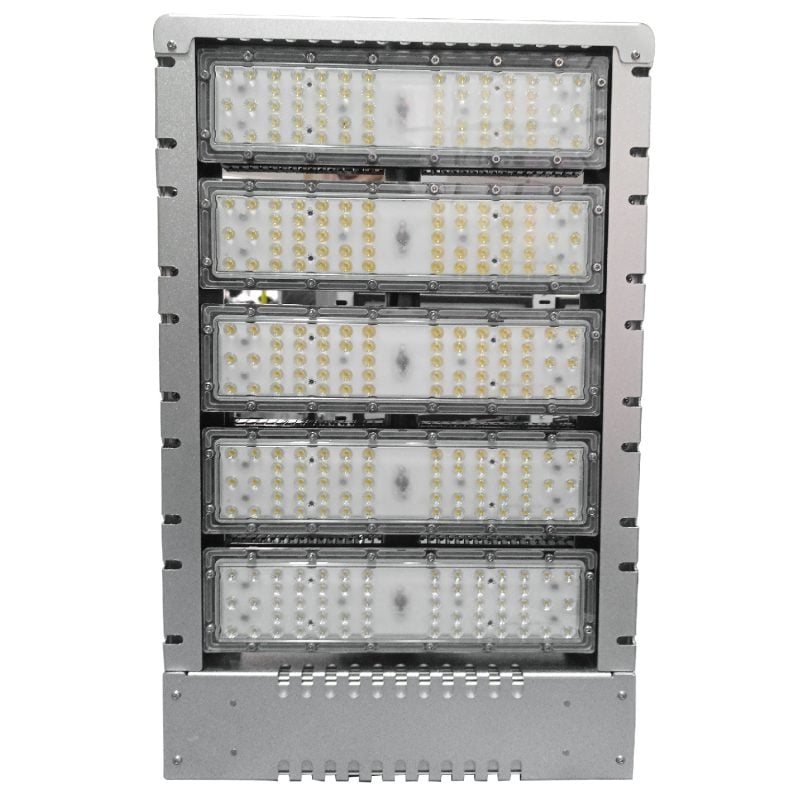
- SKU:MLLG-AG-LED-IMF-400-5-[Optic]-TR-[V] | Web ID:1654100V-277V:104 In StockShips 2-3 Days277V-480V:77 In StockShips 2-3 Days
- Lumens: 56000
- Replaces: 1000 Watt Metal Halide
- Color Temp: 4000K | 5000K
- CRI: 70+
- IP Rating: IP66
- Rated Life: 176,000 (L70) hours
- Dimmable: 1-10V
- Beam Angle (Std): 60°
- Beam Angle (Opt): 10° | 15° | 30° | 45°
- Mount: Trunnion
- Mount (Opt): Slip Fitter
- EPA Rating: 1.89
- Dimensions (in): 13.25 W X 17.4 H X 6.3 D
- Weight (lbs): 24
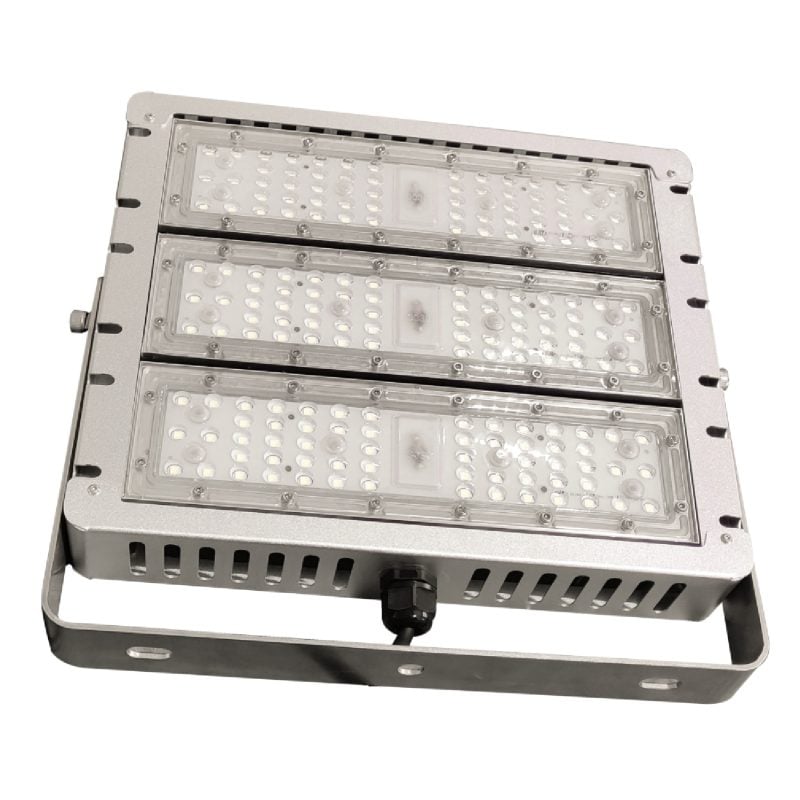
Starting At$564.42 - SKU:MLLG-LED-HPSL-600-57-60-[V] | Web ID:2093100V-277V:122 In StockShips 2-3 Days277V-480V:196 In StockShips 2-3 Days
- Lumens: 90000
- Replaces: 1500 Watt Metal Halide
- Color Temp: 3000K | 4000K | 5700K
- CRI: 80+
- IP Rating: IP66
- Rated Life: 200,000 (L70) hours
- Dimmable: 0-10V
- Beam Angle (Std): 60°
- Beam Angle (Opt): 10° | 30° | 45° | Type 3
- Mount: Yoke
- Mount (Opt): Slip Fitter
- EPA Rating: 1.35
- Dimensions (in): 18.8 W X 11.2 H X 7.3 D
- Weight (lbs): Fixture body 17.2 lbs Driver Box 10.4
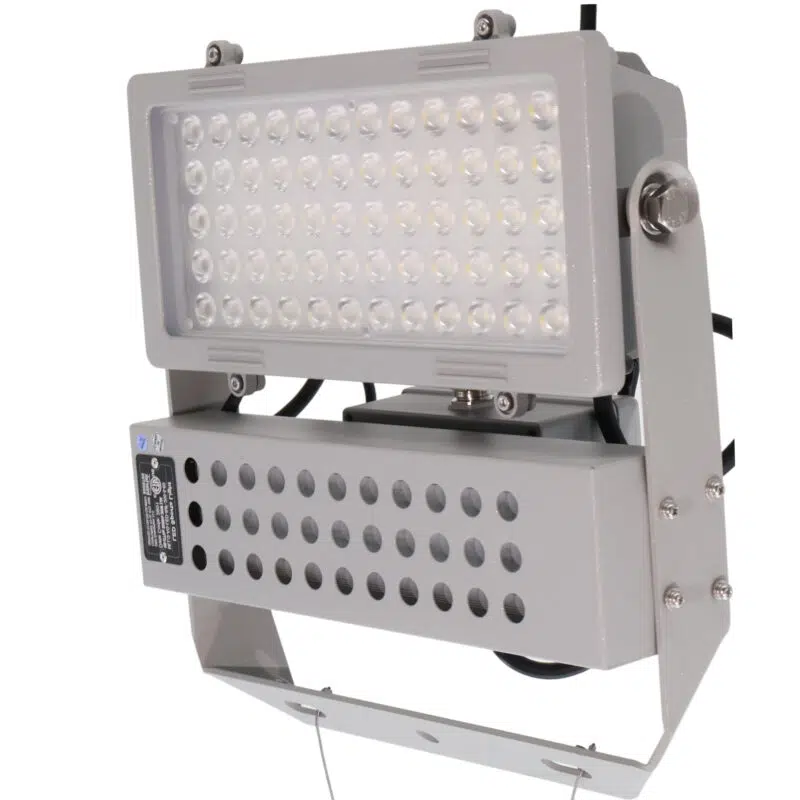
Starting At$668.54 - SKU:LLS-MAR-FLD-200-50 | Web ID:2722Built to Order 6 Weeks
- Lumens: 30,000
- Replaces: 400 Watt Metal Halide
- Color Temp: 5000K
- CRI: 75+
- IP Rating: IP68
- Beam Angle (Std): 90°
- Beam Angle (Opt): 10° | 25° | 60°
- Mount: Yoke
- Dimensions (in): 11.9 in W X 12.5 in H X 2.5 in H
- Weight (lbs): 10
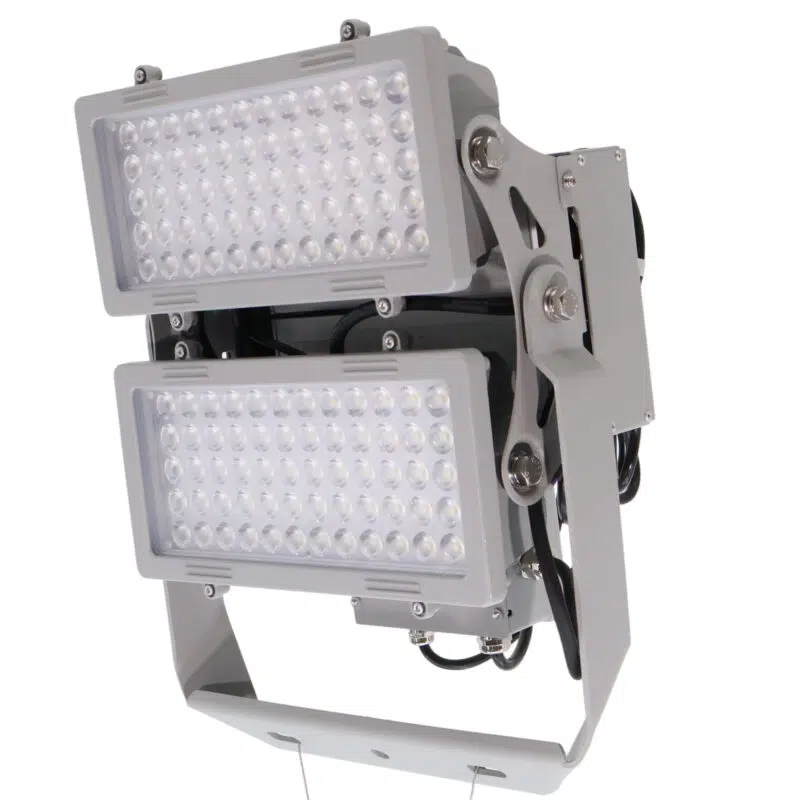
Starting At$1,211.22 - SKU:LLS-MAR-FLD-400-50 | Web ID:2723Built to Order 6 Weeks
- Lumens: 60,000
- Replaces: 1000 Watt Metal Halide
- Color Temp: 5000K
- CRI: 75+
- IP Rating: IP68
- Beam Angle (Std): 90°
- Beam Angle (Opt): 10° | 25° | 60°
- Mount: Yoke
- Dimensions (in): 12 in W X 19 in H X 3.5 in H
- Weight (lbs): 15.5
Starting At$1,873.44


LED Marine Flood Lights for Saltwater and Coastal Environments
LED marine flood lights are designed for vessels, docks, marinas, ports, shipyards, offshore platforms, commercial fishing boats, and coastal facilities where standard outdoor flood lights may not hold up to salt spray, humidity, moisture, vibration, and corrosive air.
Marine flood lights are selected differently than standard outdoor fixtures. The right fixture depends on saltwater exposure, mounting location, beam angle, voltage, IP rating, housing finish, stainless steel hardware, wiring protection, and whether the fixture will be used on a vessel, dock, pier, marina, port, or coastal industrial site.
Selection and Installation Note: Product specifications, wattage, lumen output, beam angle, color temperature, voltage, dimming, mounting method, housing finish, stainless steel hardware, IP rating, wet-location rating, marine listing, certifications, and warranty coverage vary by model. Confirm the selected product specification before ordering. For marine flood lights, vessel lighting, dock lighting, marina lighting, offshore lighting, saltwater environments, electrical upgrades, code-sensitive applications, or safety-critical spaces, verify requirements with your local inspector, facility team, marine electrician, project specifier, vessel owner, or a licensed electrical professional.
What Makes a Flood Light Marine Grade?
“Marine grade” is commonly used to describe fixtures designed for saltwater or coastal conditions, but it should not be treated as a certification by itself. A marine-suitable flood light should be reviewed by its construction, finish, hardware, ingress protection, mounting method, and listed ratings.
Marine flood lights may include corrosion-resistant powder coat or epoxy finishes, die-cast aluminum housings, sealed lenses, gasketed construction, IP-rated protection, and stainless steel external hardware. These details help the fixture survive salt spray, humid salt air, and moisture exposure better than standard outdoor flood lights.
Where Marine Flood Lights Are Used
| Application | Fixture Selection Considerations |
|---|---|
| Commercial fishing vessels | Deck lighting, work lighting, equipment areas, and night operations may need corrosion-resistant housings, sealed construction, vibration resistance, and AC or DC voltage options. |
| Docks and piers | Fixtures should be selected for salt spray, moisture exposure, glare control, mounting height, wiring protection, and proximity to water. |
| Marinas and boatyards | Lighting may need corrosion-resistant construction, sealed wiring connections, appropriate voltage, and fixture placement that supports movement and work areas. |
| Ports and shipyards | High-output marine flood lights may be used for work zones, loading areas, cranes, docks, vessel service areas, and coastal industrial spaces. |
| Offshore platforms and coastal industrial sites | Fixture selection should consider salt air, vibration, wet locations, corrosive exposure, mounting hardware, voltage, and any hazardous-location requirements. |
| Coastal buildings and security areas | Facilities near saltwater may benefit from marine-grade finishes and stainless steel hardware even when the fixture is not mounted directly over water. |

Can Marine Flood Lights Be Used on Commercial Fishing Vessels?
Marine flood lights are commonly used on commercial fishing vessels for deck lighting, equipment lighting, work areas, loading areas, docking, and general nighttime visibility. Vessel lighting should be selected for the electrical system, mounting location, saltwater exposure, vibration, beam angle, and fixture protection level.
Wide beam angles can help illuminate decks and work areas, while narrower beam angles may be used for longer-distance visibility or focused lighting. Before ordering, confirm whether the vessel uses AC or DC power, the available voltage, fixture mounting location, wiring method, corrosion exposure, and whether the fixture may be exposed to heavy spray or temporary submersion.
Salt Spray, Humidity, and Corrosion Resistance
Saltwater environments are hard on lighting equipment. Salt spray, humid air, and coastal exposure can corrode housings, fasteners, brackets, wiring connections, and lens hardware. Standard outdoor flood lights may not be suitable for long-term use in these conditions.
For marine and coastal applications, look for corrosion-resistant finishes, sealed construction, and stainless steel hardware. For more severe environments, confirm whether the fixture includes marine-specific construction or listings, such as UL 1598A where required by the application.
Choosing the Right Beam Angle
The best beam angle depends on how the fixture will be used. A wide flood beam can support deck, dock, or general work-area lighting. A narrow beam can help with longer-distance visibility, spotting, or focused illumination.
| Beam Type | Typical Use |
|---|---|
| Narrow beam | Used for longer throw, focused visibility, spotting, security, or directional lighting. |
| Medium beam | Used for balanced coverage where the fixture needs both reach and spread. |
| Wide flood beam | Used for decks, docks, work areas, loading areas, and broad-area illumination. |
Beam angle should be selected with mounting height, aiming, glare, fixture distance, and work area size in mind. A very wide beam mounted too low may create glare, while a narrow beam may leave dark areas between fixtures.
Voltage Options for Marine Flood Lights
Marine lighting projects may require different voltage options depending on the vessel, dock, facility, or industrial site. Some fixtures are designed for standard AC voltage ranges, while others are available for DC systems used on smaller vessels, marine equipment, and off-grid applications.
Before ordering, confirm whether the project requires 120V, 208V, 240V, 277V, 480V, 12V DC, 24V DC, 48V DC, or another electrical configuration. Also confirm dimming, controls, surge protection, generator power, and voltage drop on longer cable runs.
Materials and Construction
Marine flood lights commonly use die-cast aluminum housings to support heat dissipation while keeping fixture weight manageable. The housing finish and external hardware are especially important in saltwater applications.
For saltwater and coastal use, review the product specification for corrosion-resistant coatings, gasketed construction, sealed lenses, stainless steel fasteners, mounting bracket material, and compatibility with the environment. In many marine applications, 316 stainless steel hardware is preferred over standard steel or zinc-plated components.
Mounting Options for Marine Flood Lights
Marine flood lights may be mounted to poles, masts, walls, brackets, decks, docks, superstructures, cranes, or equipment frames. Mounting selection should allow the fixture to be aimed correctly and secured for the environment.
| Mounting Type | Application Notes |
|---|---|
| Trunnion mount | Provides adjustable aiming for deck, dock, platform, and security lighting applications. |
| Yoke mount | Allows adjustable positioning on walls, frames, structures, and equipment-mounted locations. |
| Slip fitter mount | Used with compatible poles, masts, or tenons where fixture aiming and pole mounting are required. |
| Bracket or surface mount | Used for docks, walls, vessel structures, piers, and other fixed mounting surfaces. |
Do Marine Flood Lights Need Special Wiring?
Marine and coastal environments require careful wiring protection. Salt spray and moisture can enter poorly sealed connections and cause corrosion, voltage drop, nuisance failures, or electrical hazards.
Use wiring methods, junction boxes, conduit, strain relief, grounding, and connection protection suitable for the application. Vessel and marina installations may have different requirements than building-mounted flood lights. Confirm wiring methods with the project electrician, marine electrician, facility team, or local inspector before installation.
IP Ratings for Marine Flood Lights
IP ratings indicate protection against dust and water. Many marine flood lights are IP65 or higher, but the correct rating depends on where the fixture is mounted and how much water exposure it will receive.
| IP Rating | Application Notes |
|---|---|
| IP65 | Dust tight and protected against water jets. Often used for outdoor and coastal applications where direct submersion is not expected. |
| IP66 / IP67 | Provides higher water protection for heavy spray, wash-down, or more exposed conditions, depending on the model. |
| IP68 | Used where temporary or continuous submersion may be part of the application. Confirm the manufacturer’s submersion limits before ordering. |

Benefits of LED Marine Flood Lights
- Corrosion-resistant construction: Marine-suitable finishes and stainless steel hardware help fixtures withstand salt spray and coastal exposure.
- Instant full brightness: LED flood lights turn on quickly without the warm-up delays common with older HID lighting.
- Reduced maintenance: LED fixtures eliminate routine lamp and ballast replacement common with metal halide flood lights.
- Selectable optics: Narrow, medium, and wide beam options help match the fixture to deck, dock, security, or work-area lighting needs.
- Voltage flexibility: AC and DC options may be available depending on the model and project requirements.
- Energy efficiency: LED flood lights often reduce energy use compared with older HID systems, with actual savings depending on wattage, operating hours, controls, and electrical costs.
- Better durability in harsh locations: Properly selected marine flood lights can perform better than standard outdoor fixtures in saltwater and coastal environments.

Common Marine Flood Light Mistakes
- Using standard outdoor flood lights near saltwater: Standard fixtures may not have the coatings, seals, or stainless steel hardware needed for salt spray exposure.
- Assuming “marine grade” means certified: Review the actual product specification, construction, IP rating, hardware, and listings before ordering.
- Choosing the wrong IP rating: IP65 may be suitable for some locations, but heavy spray, wave exposure, wash-down, or submersion may require a higher rating.
- Using the wrong hardware: Galvanized or zinc-plated hardware may corrode quickly in saltwater environments and can contribute to galvanic corrosion.
- Selecting beam angles without considering mounting location: Wide beams can create glare when mounted too low, while narrow beams can leave dark areas between fixtures.
- Ignoring voltage drop: Long cable runs to mast-mounted, dock-mounted, or remote fixtures should be reviewed for voltage drop and driver compatibility.
- Skipping surge protection: Generator power, shore power, and exposed marine electrical systems may require surge protection depending on the installation.
- Not protecting wiring connections: Many failures start at unsealed or poorly protected junctions, splices, and entry points.
Marine Flood Light Certifications and Warranty Support
LED marine flood lights from LED Lighting Supply carry safety listings such as UL, ETL, or UL 1598A, depending on the model. Many models are DLC or DLC Premium listed where utility rebate support is available. Most LED marine flood lights include a 5-year warranty unless otherwise specified, with USA-based warranty support.
Before ordering, confirm the selected product’s certifications, voltage, controls compatibility, IP rating, wet-location suitability, marine suitability, housing finish, hardware material, mounting method, environmental exposure, and whether the fixture is right for the marine application.
Need Help Choosing Marine Flood Lights?
Contact us about LED marine flood lights, and our Product Specialists can help review saltwater exposure, mounting location, fixture wattage, beam angle, voltage, AC or DC power requirements, IP rating, housing finish, stainless steel hardware, wiring protection, corrosion resistance, and product specifications.
LED Flood Lights for Marine Environments Frequently Asked Questions
What Are LED Marine Flood Lights?
LED marine flood lights are designed for maritime environments, featuring corrosion-resistant finishes and stainless steel hardware to withstand saltwater exposure. These fixtures offer enhanced durability and energy efficiency, making them ideal for harsh conditions. Unlike standard outdoor lights, marine-grade models use powder coat or epoxy finishes and are available in multiple colors for navigation compliance and visibility, improving operational safety on the water.
Can You Use LED Marine Flood Lights on Commercial Fishing Vessels?
Yes, LED marine flood lights are well-suited for commercial fishing vessels, providing reliable illumination for safety and efficiency during nighttime operations. They feature wide 90-120 degree beam angles for deck lighting and narrow 15-30 degree beams for navigation, ensuring visibility in fog and adverse weather. With IP67 water protection and marine-grade finishes, these lights are engineered to handle the rigors of commercial fishing environments.
Are Marine Grade Flood Lights Protected from Salt Spray and Humidity?
Marine-grade flood lights are specifically engineered to withstand salt spray and humidity, using epoxy powder coatings and stainless steel hardware for maximum protection. These fixtures maintain performance in challenging environments like harbors and offshore platforms, where standard outdoor lighting often fails. They are ideal for coastal installations and applications within the salt air zone.
What Is the Best Flood Light for Marine Use?
The best marine flood light depends on your specific application needs. For general deck lighting, 60-90 degree beam angles are common, while 15-30 degree narrow beams are preferred for navigation. A 400W fixture is often recommended for commercial applications, balancing coverage and power consumption. Our lighting design services can help optimize fixture selection and placement for your specific requirements.
What Voltages Are Available for LED Marine Grade Flood Lights?
LED marine-grade flood lights are available with universal voltage drivers that operate across 100-277V AC or 277-480V AC ranges. We also offer models for 12V, 24V, and 48V DC systems, suitable for smaller vessels and specialized offshore equipment. This flexibility ensures compatibility with diverse marine electrical systems.
What Are Your Marine Grade Flood Lights Made Of?
Our marine-grade flood lights are constructed from die-cast aluminum for optimal heat dissipation and corrosion resistance. They feature UL Marine certification (UL1598A) and use 316 stainless steel fasteners for all external hardware, ensuring durability in marine environments. These materials support high-power LED arrays efficiently while maintaining lightweight characteristics.
What Are the Mounting Options Available for Marine Grade Lights?
Marine-grade lights offer various mounting options, including trunnion mounts for precise aiming, slip fitter mounts for standard poles and masts, and yoke mounting systems for versatile positioning on decks and superstructures. These options provide flexibility for different marine applications.
Do You Need Special Wiring for LED Marine-Grade Flood Lights?
Yes, marine environments require enhanced wiring protection. We recommend using marine-grade conduit systems and weatherproof junction boxes to protect electrical connections from salt spray and moisture. Proper wiring protection is crucial to extending fixture life and preventing corrosion at connection points.