Commercial LED Area Lighting
- Multiple fixture types available for varied outdoor applications
- Photometric plans help evaluate spacing and light levels
- Selection support for optics, mounting, and controls
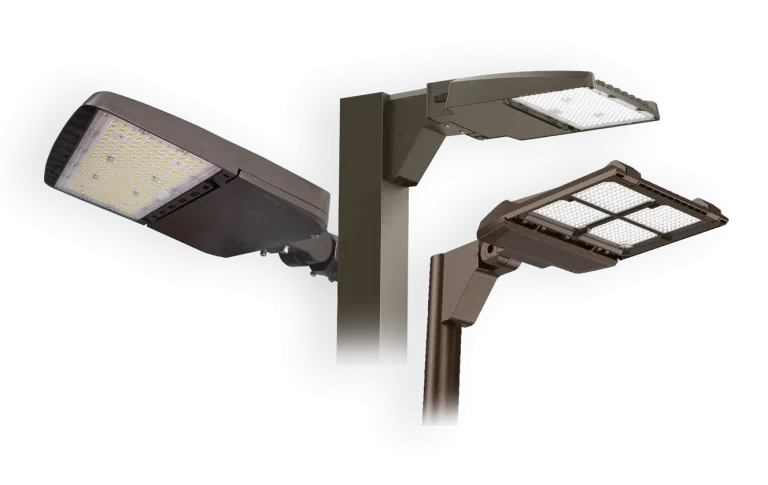


Our Commercial LED Area Lights include outdoor fixtures with pole-mounted, wall-mounted, and structure-mounted configurations for large exterior spaces. Available models vary by lumen output, optic distribution, voltage, color temperature, mounting hardware, and controls, including photocells, motion sensors, timers, and 0-10V dimming.
These fixtures are commonly used in parking lots, industrial yards, distribution centers, campuses, roadways, building perimeters, loading areas, sports facilities, drive lanes, and other open commercial properties.



What Are LED Area Lights
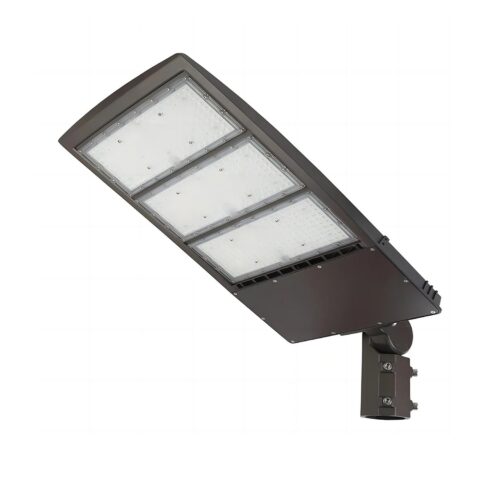
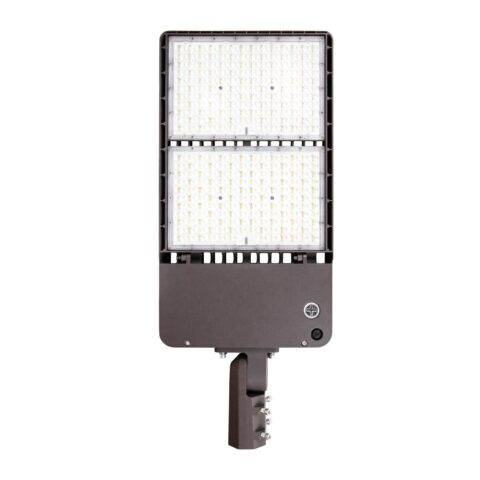
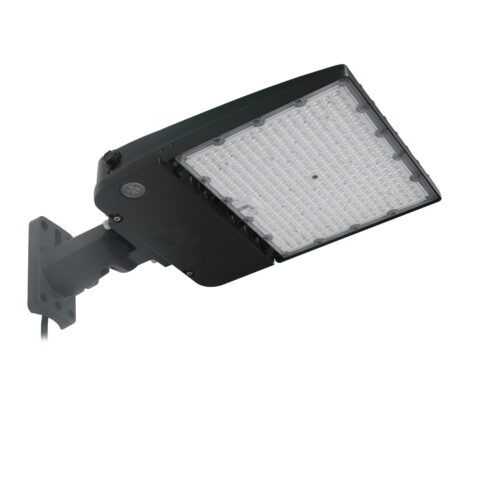
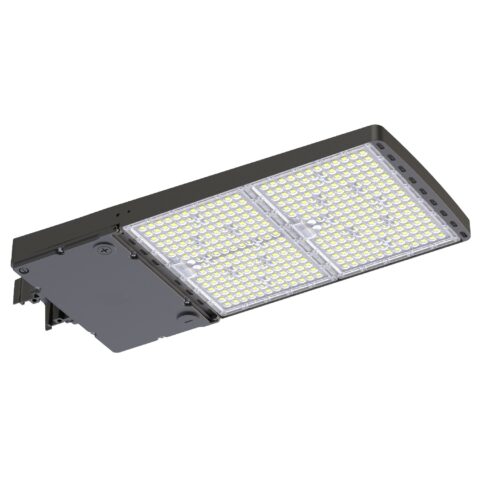
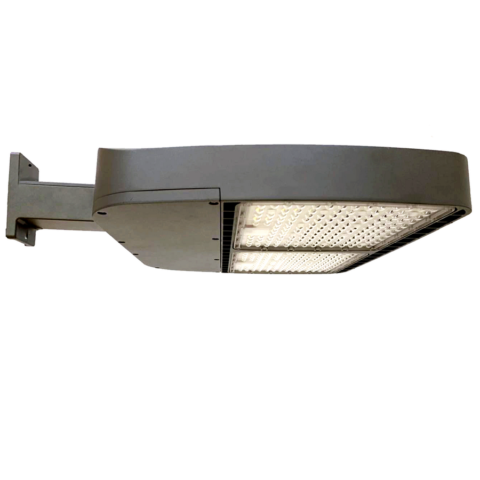
Commercial LED area lights are outdoor fixtures used to illuminate large exterior spaces such as parking lots, industrial yards, distribution centers, campuses, roadways, building perimeters, loading areas, sports facilities, and other open commercial properties. They are designed to provide high lumen output, controlled light distribution, and reliable performance from pole-mounted, wall-mounted, or structure-mounted locations.
Area lighting is a broad category. Start by matching the fixture type to the application and mounting location: shoebox lights for broad pole-mounted coverage, flood lights for directional lighting, high mast lights for very large sites and high mounting heights, wall packs for building-mounted areas, post top lights for decorative pedestrian spaces, solar area lights where wiring is difficult, and stadium lights for sports facilities. Then confirm pole height, site layout, beam pattern, voltage, controls, and required light levels. The goal is not just to choose the highest wattage, but to match the fixture type and optic pattern to the area being lit.
Many LED area light projects involve replacing older metal halide or high-pressure sodium systems. LED fixtures can reduce energy use, improve visibility, support modern controls, and reduce lamp and ballast maintenance when properly selected. Most commercial outdoor projects use 4000K or 5000K color temperatures for visibility, security, and general outdoor performance, although requirements vary by site.

Selection and Installation Note: Product specifications, optics, mounting options, voltage, controls, certifications, surge protection, IP ratings, wind load requirements, and warranty coverage vary by model. Confirm the selected product specification before ordering. For code-sensitive, electrical, pole-mounted, dark-sky, roadway, parking, security, or safety-critical applications, verify requirements with your local inspector or a licensed electrical professional.
Choose LED Area Lights by Fixture Type or Outdoor Application
The right LED area light depends on the size of the space, pole height, mounting method, desired coverage pattern, light level requirements, local lighting codes, and whether the project is a new installation or a retrofit from HID lighting. Use the table below to choose the most appropriate starting category.
| Lighting Type | Best Used For |
|---|---|
| LED Shoebox Lights | Parking lots, commercial properties, roadways, drive lanes, and pole-mounted area lighting where wide, uniform coverage is needed from moderate mounting heights. |
| LED Flood Lights | Building facades, signs, equipment yards, loading areas, perimeter lighting, and irregular spaces where adjustable directional lighting is needed. |
| LED High Mast Lights | Ports, airports, rail yards, container yards, interchanges, large industrial sites, and very large outdoor spaces with high mounting heights. |
| LED Post Top / Pole Top Lights | Parks, walkways, campuses, HOAs, plazas, and decorative pedestrian-scale areas where fixture appearance and comfort matter. |
| Solar Area Lights | Remote areas, locations without electrical infrastructure, pathways, storage areas, and outdoor spaces where trenching or wiring is difficult. |
| LED Stadium Lights | Sports fields, athletic facilities, courts, stadiums, and large recreational areas that require high-output lighting and precise aiming. |
| LED Wall Packs | Building-mounted perimeter lighting, entrances, walkways, loading doors, service areas, and exterior wall security lighting. |
When Commercial LED Area Lights Are the Right Fit
LED area lights are a strong fit when a large outdoor space needs reliable visibility, improved energy efficiency, controlled light distribution, and reduced maintenance. They are not always the best choice when the project requires a more specialized fixture type, a decorative appearance, a classified-location fixture, or a detailed lighting layout that has not been reviewed.
| Use LED Area Lights When | Do Not Use LED Area Lights When |
|---|---|
| Large outdoor areas need broad illumination, including parking lots, yards, roadways, campuses, industrial sites, and commercial properties. | The project needs a more specialized fixture, such as post top lights for decorative pedestrian areas, wall packs for building-mounted lighting, or stadium lights for sports fields. |
| Older HID fixtures are being replaced and the goal is better efficiency, improved visibility, instant-on operation, and lower maintenance. | The existing poles or structures have not been reviewed for fixture weight, wind load, EPA, mounting compatibility, or structural condition. |
| Light distribution matters and the project requires Type I, Type II, Type III, Type IV, Type V, flood, or other optic patterns matched to site geometry. | Local lighting codes require cutoff, dark-sky, glare, or light trespass controls and the selected fixture does not meet those requirements. |
| Automated controls are desired, including photocells, occupancy sensors, timers, 0-10V dimming, or control system integration. | The selected fixture does not meet environmental, voltage, surge protection, control, or certification requirements for the site. |
| A lighting plan can confirm light levels and uniformity before installation, especially on larger or code-sensitive outdoor projects. | The design is based only on wattage conversion charts without checking mounting height, pole spacing, optics, uniformity, or required light levels. |
Choosing LED Area Lights by Pole Height, Optics, Lumens, Mounting, Voltage, and Controls
LED area lights should not be selected by wattage alone. The correct fixture depends on pole height, pole spacing, mounting method, optic distribution, lumen output, voltage, surge protection, controls, color temperature, local ordinances, and whether the installation is replacing existing HID fixtures or lighting a new site.
A photometric plan is recommended for parking lots, industrial yards, campuses, roadways, large outdoor areas, security-sensitive properties, and any project where fixture spacing, light levels, uniformity, glare, light trespass, or code requirements must be confirmed before ordering.
Planning Checklist
| Planning Factor | What to Confirm |
|---|---|
| Application | Parking lots, drive lanes, yards, roadways, perimeters, loading areas, sports fields, and pedestrian spaces may require different fixture types and light distribution patterns. |
| Pole height | Mounting height affects fixture output, optic selection, spacing, glare, and uniformity. Higher poles may require shoebox, high mast, or stadium fixtures instead of decorative or low-pole options. |
| Pole spacing | Existing pole spacing should be reviewed before selecting wattage or lumens. Wide spacing may require different optics, higher output, or a new layout. |
| Optic distribution | Type I, Type II, Type III, Type IV, Type V, flood, and narrow or wide beam patterns serve different layouts. Do not mix optic types unless the lighting plan calls for it. |
| Lumen output | Compare delivered lumens, fixture distribution, mounting height, and target light levels instead of matching metal halide wattage directly. |
| Mounting method | Confirm whether the fixture requires slip fitter, straight arm, adjustable arm, trunnion, yoke, wall mount, pole mount, or other mounting hardware. |
| Voltage | Confirm whether the site uses 120-277V, 347-480V, or another voltage before ordering. Long circuit runs should be reviewed for voltage drop. |
| Surge protection | Outdoor pole-mounted lights are exposed to lightning and power disturbances. Confirm fixture-level or panel-level surge protection where needed. |
| Controls | Confirm compatibility with photocells, motion sensors, astronomical timers, control systems, and 0-10V dimming before installation. |
| Color temperature | 4000K is often used for visual comfort and commercial outdoor visibility. 5000K may be preferred where brighter perceived visibility is needed. Local ordinances may restrict color temperature. |
| Cutoff and dark-sky requirements | Confirm local requirements for full cutoff, shielding, glare control, uplight, light trespass, and property-line spill before selecting fixtures. |
| Pole condition and wind load | Confirm pole condition, fixture weight, EPA, wind zone, mounting hardware, and structural suitability before replacing existing fixtures. |
LED Lumens for Replacing Metal Halide Area Lighting
Metal halide replacement should start with lumen output and distribution, not wattage alone. LED fixtures often use fewer watts than HID fixtures because they provide more controlled light distribution, instant-on operation, and less lumen loss over time. Actual requirements vary based on mounting height, pole spacing, optics, site layout, surface reflectance, and required light levels.
| Existing Metal Halide Fixture | Common LED Lumen Starting Point |
|---|---|
| 250-Watt Metal Halide | 9,000 - 12,000 LED lumens |
| 400-Watt Metal Halide | 15,000 - 25,000 LED lumens |
| 1000-Watt Metal Halide | 35,000 - 50,000 LED lumens |
| 1500-Watt+ Metal Halide | 50,000 - 90,000 LED lumens |
These ranges are only starting points. A lighting plan can confirm fixture quantity, spacing, distribution, average light levels, minimum light levels, uniformity, glare, and property-line spill before installation.
Area Lighting Project Examples
Outdoor area lighting projects vary widely depending on mounting height, pole spacing, existing infrastructure, fixture type, optics, and the size of the site. These examples show common area-lighting applications where layout and fixture selection affect visibility, coverage, and long-term performance.

Pole-mounted shoebox fixtures are commonly used for commercial parking lots, drive lanes, and large outdoor areas where broad, uniform coverage is required.
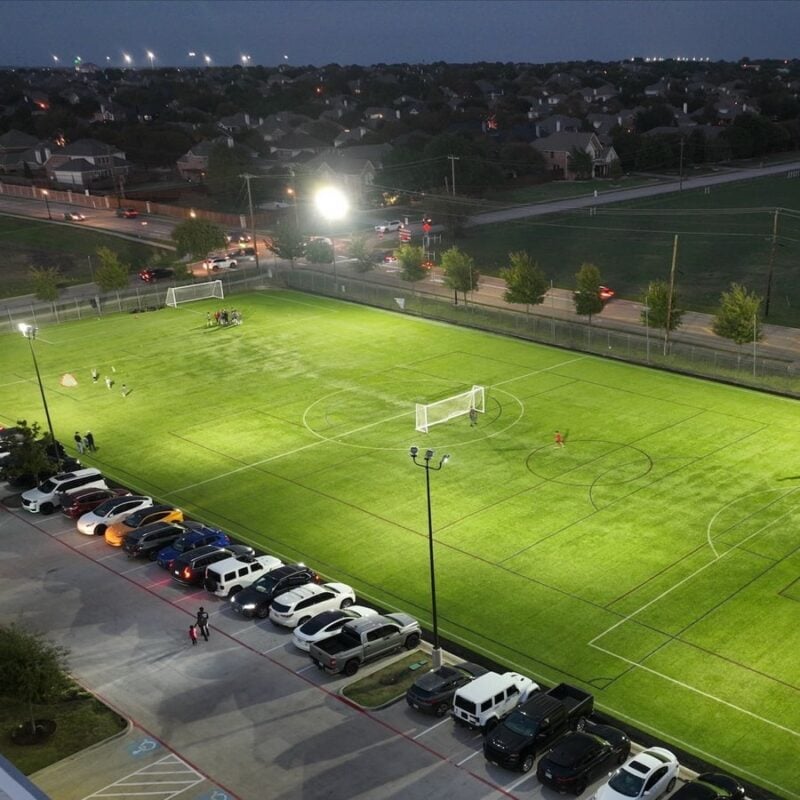
Sports and recreation areas may require higher-output area or stadium fixtures with more precise aiming, beam control, and light-level review.
Outdoor Lighting Certifications, Rebates, and Warranty Support
LED outdoor lights from LED Lighting Supply carry a safety listing such as UL, ETL, or CSA, depending on product. Many outdoor lighting models are DLC or DLC Premium listed for utility rebate support where available.
Most LED outdoor lights include a 5-year warranty unless otherwise specified, with USA-based warranty support. Before purchase, confirm rebate eligibility, voltage, controls compatibility, mounting method, wet-location or environmental rating, surge protection, and whether the fixture is right for the site layout and surrounding conditions.
Common LED Area Lighting Mistakes
LED area lighting projects go wrong when retrofits are treated like simple wattage swaps instead of lighting layouts. The most common issues involve optics, pole spacing, pole structure, voltage drop, dark-sky requirements, surge protection, and controls compatibility.
- Using HID conversion charts without reviewing light distribution: LED fixtures direct light differently than HID fixtures. Confirm lumens, optics, mounting height, and spacing with a lighting plan.
- Skipping pole structural review: Existing light poles may not be suitable for new fixture weight, wind load, EPA, or mounting hardware. Verify structural requirements with a qualified professional where needed.
- Mixing optic types without a plan: Type III, Type IV, Type V, flood, and narrow-beam distributions should be selected based on site geometry, not mixed randomly.
- Ignoring local lighting ordinances: Some municipalities require full cutoff optics, lower color temperatures, shielding, or limits on light trespass and uplight.
- Changing pole height without recalculating layout: Moving from one mounting height to another changes spacing, light levels, glare, and uniformity.
- Skipping surge protection: Pole-mounted outdoor lights are exposed to lightning and power disturbances. Confirm surge protection at the fixture, pole, or panel as needed.
- Selecting color temperature without considering the site: 5000K may appear brighter, while 4000K may offer better visual comfort. Local ordinances may also limit color temperature.
- Installing photocells in poor locations: Nearby fixtures, building lights, or adjacent properties can affect photocell operation. Remote photocells or astronomical timers may be better in some layouts.
- Ignoring voltage drop on long runs: Remote poles and long circuits may require wire sizing review to prevent flicker, dimming issues, or driver problems.
- Using the wrong fixture family: Shoebox, flood, wall pack, post top, high mast, solar, and stadium fixtures are not interchangeable. Match the fixture type to the application.
Request an area lighting plan and our Product Specialists can help review fixture type, mounting height, pole spacing, optics, lumen output, voltage, surge protection, controls, light levels, and product specifications for your outdoor LED area lighting project.
Commercial LED Area Lighting FAQs
How Do I Choose The Right Commercial LED Area Light Fixture Type?
Choose the fixture type based on the site application, pole height, mounting location, coverage pattern, voltage, controls, and required light levels. Shoebox lights, flood lights, high mast lights, wall packs, post top lights, solar area lights, and stadium lights serve different outdoor layouts and should not be treated as interchangeable.
Should Commercial LED Area Lights Be Selected By Wattage Alone?
No. Commercial LED area lights should be selected using pole height, pole spacing, mounting method, optic distribution, lumen output, voltage, surge protection, controls, color temperature, local ordinances, and site layout rather than wattage alone.
What Should Be Reviewed Before Replacing Metal Halide Area Lights With LED?
Review delivered lumens, fixture distribution, mounting height, pole spacing, optics, site layout, surface reflectance, and required light levels before replacing metal halide fixtures. The listed LED lumen ranges are starting points only, and a lighting plan can confirm fixture quantity, spacing, distribution, light levels, uniformity, glare, and property-line spill.
When Is A Photometric Lighting Plan Recommended For An Outdoor Area Lighting Project?
A photometric plan is recommended for parking lots, industrial yards, campuses, roadways, large outdoor areas, security-sensitive properties, and projects where spacing, light levels, uniformity, glare, light trespass, or code requirements must be confirmed before ordering. A lighting plan can also confirm whether the selected fixture type, optics, lumen output, and layout fit the project.
What Optic Distribution Should I Select For Commercial LED Area Lighting?
Select optic distribution based on site geometry and the lighting layout. Type I, Type II, Type III, Type IV, Type V, flood, and narrow or wide beam patterns serve different layouts, and optic types should not be mixed unless the lighting plan calls for it.
What Mounting And Pole Factors Should Be Confirmed Before Ordering?
Confirm the required mounting method, including slip fitter, straight arm, adjustable arm, trunnion, yoke, wall mount, pole mount, or other hardware. Also confirm pole condition, fixture weight, EPA, wind zone, mounting hardware, and structural suitability before replacing existing fixtures.
How Should Voltage And Controls Be Verified For LED Area Lights?
Confirm whether the site uses 120-277V, 347-480V, or another voltage before ordering, and review long circuit runs for voltage drop. Also confirm compatibility with photocells, motion sensors, astronomical timers, control systems, and 0-10V dimming before installation.
What Color Temperature Is Commonly Used For Commercial Outdoor Area Lighting?
Most commercial outdoor projects use 4000K or 5000K color temperatures, although requirements vary by site. The page notes that 4000K is often used for visual comfort and commercial outdoor visibility, while 5000K may be preferred where brighter perceived visibility is needed; local ordinances may restrict color temperature.