


Color / Wattage Adjustable Explosion Proof Lights
- Field-selectable wattage and color temperature for Class I Division 2 areas
- One adjustable model can replace multiple fixed-output fixture variations
- Hazardous-area lighting design available to evaluate placement and output



Our Adjustable Wattage and Color Temperature Explosion-Proof LED Lights include Class I Division 2 fixtures with field-selectable wattage and color temperature settings. Available models use onboard toggle switches for selectable output and CCT configurations, with voltage, mounting method, and available settings varying by fixture. These fixtures are used in Class I Division 2 hazardous locations, including classified areas where flammable gases or vapors may be present under abnormal conditions such as leakage, equipment failure, closed-system rupture, or ventilation failure.


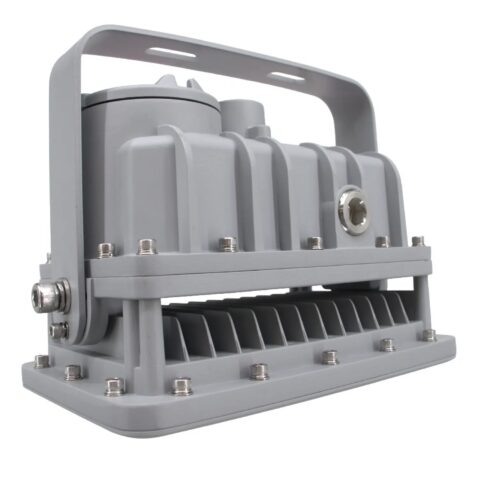


Color and Wattage Adjustable Explosion-Proof LED Lights
Color and wattage adjustable explosion-proof LED lights combine hazardous-location suitability with field-selectable light output and color temperature. Depending on the model, onboard toggle switches allow the installer to select from available wattage and CCT settings rather than ordering a separate fixed-output fixture for each lighting requirement.
Start by confirming that the fixture markings match the classified area, then select the available wattage setting for the required light levels and the available CCT setting for the application. Also verify the exact fixture's Gas Group, T-rating, ambient-temperature range, voltage, mounting method, and environmental ratings.
Fixtures currently available in this category are designed for Class I Division 2 hazardous locations. They are not automatically suitable for Class I Division 1 applications. For fixed-output fixtures or other hazardous-location classifications, see our complete selection of explosion-proof and hazardous-location lighting.
Why Use Adjustable Explosion-Proof Lighting?
Selectable wattage and color temperature provide additional flexibility when lighting requirements are not identical throughout a facility or when final light levels need to be fine-tuned during installation.
- Adjustable wattage: Select a lower or higher output setting from the options available on the exact fixture to better match mounting height, fixture spacing, and required light levels.
- Selectable color temperature: Choose from the CCT settings provided by the fixture to better match the work area, surrounding lighting, or facility standard.
- Fewer fixture variations: One adjustable model may cover multiple lighting requirements that would otherwise require different fixed-output fixtures.
- More flexibility during retrofits: Wattage can be selected based on actual site conditions rather than relying only on the wattage of the existing HID or fluorescent fixture.
- Easier standardization: Facilities with several classified areas may be able to use the same fixture family while selecting different output or CCT settings where appropriate.
What to Confirm Before Ordering
| Selection Factor | What to Check |
|---|---|
| Hazardous classification | Current adjustable models in this category are for Class I Division 2 applications. Confirm that the documented area classification matches the markings of the exact fixture. |
| Gas Group | Verify that the fixture is marked for the Group required by the gas or vapor present in the classified area. |
| T-rating | The fixture's temperature code must be suitable for the hazardous material present. Adjustable wattage or CCT does not replace the need to confirm the marked T-rating. |
| Wattage settings | Review the exact selectable wattage options and resulting lumen output. Available settings vary by model. |
| Color temperature settings | Confirm the available CCT selections on the exact product. Do not assume every adjustable fixture offers the same color-temperature range. |
| Voltage | Match the fixture's input-voltage range to the facility electrical system before ordering. |
| Ambient temperature | Confirm the marked operating-temperature range for the exact fixture, particularly in hot, cold, enclosed, or outdoor locations. For unusually hot classified areas, review suitable high-temperature explosion-proof LED lights. |
| Environment | Review moisture, corrosion, chemicals, dust, vibration, washdown, and outdoor exposure in addition to the hazardous-location rating. |
Adjustable Wattage for Different Light Levels
Selectable wattage allows one fixture to provide different lumen outputs within the limits of the product. This can be useful where mounting heights, fixture spacing, work tasks, or required light levels vary across classified areas. For example, a lower setting may be appropriate where fixtures are mounted closer to the work plane or spaced more closely, while a higher setting may be needed at greater mounting heights or where more illumination is required. Do not select the setting by wattage alone. Fixture spacing, mounting height, optics, lumen output, required foot-candles, and uniformity should determine the appropriate lighting level.
Selectable Color Temperature
Color-temperature adjustment allows the fixture's appearance to be matched more closely to the application or surrounding lighting. Available CCT settings vary by model. A facility may use one color temperature throughout a process area for visual consistency or select different settings where work tasks or existing lighting conditions differ. CCT selection affects the appearance of the light but does not change the fixture's hazardous-location classification.
Class I Division 2 Applications
Fixtures in this category are currently intended for Class I Division 2 locations where flammable gases or vapors are not normally present in ignitible concentrations during normal operation but may appear under abnormal conditions such as leakage, equipment failure, closed-system rupture, or ventilation failure. Adjustable output does not make a fixture suitable for a different hazardous classification. If the installation requires Class I Division 1 lighting, use a fixture specifically marked and listed for that classification.
Toggle Switches and Fixture Configuration
Wattage and color temperature are selected using the adjustment method provided on the exact fixture, such as onboard toggle switches. Switch location, available settings, and the procedure for changing them vary by model. Follow the manufacturer's instructions for configuring the fixture. In a hazardous classified location, do not assume an adjustment switch can be operated while energized or while a hazardous atmosphere may be present unless the product instructions and listing specifically allow it.
Installation, Listings, and Certifications
Adjustable explosion-proof lighting is only one part of the classified electrical installation. Wiring methods, conduit or permitted cable systems, junction boxes, fittings, seals where required, switches, grounding, bonding, and other electrical components must also be suitable for the classified area. Installation should be performed by qualified electrical professionals experienced with hazardous classified locations and in accordance with applicable codes, product listings, manufacturer instructions, and project requirements.
Safety and Performance Certifications: Hazardardous-location markings and certifications are model-specific. Review the exact product for its Class I Division 2 rating, Gas Group, T-rating, ambient-temperature range, voltage, environmental ratings, mounting method, selectable wattage settings, selectable CCT settings, and applicable listings.
Lighting Design and Warranty Support
LED Lighting Supply can help match an established Class I Division 2 requirement to available adjustable fixture options. We can also provide a hazardous-area lighting design to evaluate fixture quantity, mounting height, placement, selected output, foot-candles, and uniformity.
Warranty and Warranty Support: Many explosion-proof LED fixtures include a 5-year warranty unless otherwise specified, with warranty support based in the USA. Confirm the exact fixture's hazardous-location markings, wattage and CCT selections, voltage, T-rating, ambient range, environmental ratings, and warranty terms before ordering.
Color / Wattage Adjustable Explosion Proof Lights FAQs
Are Color And Wattage Adjustable Explosion-Proof LED Lights Suitable For Class I Division 1 Locations?
No. Fixtures currently available in this category are designed for Class I Division 2 hazardous locations and are not automatically suitable for Class I Division 1 applications. Use a fixture specifically marked and listed for Class I Division 1 if that classification is required.
How Should I Choose The Wattage Setting For An Adjustable Fixture?
Choose the wattage setting based on fixture spacing, mounting height, optics, lumen output, required foot-candles, and uniformity rather than wattage alone. Available wattage settings and resulting lumen output vary by model.
Can Adjustable Wattage Help When Retrofit Site Conditions Differ From Existing Fixtures?
Yes. Wattage can be selected based on actual site conditions rather than relying only on the wattage of the existing HID or fluorescent fixture. Selectable wattage can also help match different mounting heights, fixture spacing, work tasks, and required light levels.
Does Changing The Color Temperature Affect The Hazardous-Location Classification?
No. CCT selection affects the appearance of the light but does not change the fixture's hazardous-location classification. Available color-temperature settings vary by model.
What Hazardous-Location Details Should Be Confirmed Before Ordering?
Confirm the exact fixture's Class I Division 2 rating, Gas Group, T-rating, ambient-temperature range, voltage, mounting method, environmental ratings, selectable wattage range, and available color temperatures. The documented area classification should match the markings of the exact fixture.
Can The Wattage And CCT Switches Be Adjusted While The Fixture Is Energized?
Do not assume an adjustment switch can be operated while energized or while a hazardous atmosphere may be present unless the product instructions and listing specifically allow it. Switch location, available settings, and adjustment procedures vary by model.
Can LED Lighting Supply Help Plan Adjustable Hazardous-Area Lighting?
Yes. LED Lighting Supply can help match an established Class I Division 2 requirement to available adjustable fixture options and can provide a hazardous-area lighting design to evaluate fixture quantity, mounting height, placement, selected output, foot-candles, and uniformity.
