LED Auditorium Lighting
- Zone-specific fixtures support seating, stage, aisles, and lobby areas
- Dimmable options available for presentations and event transitions
- Product specialists help match fixtures to ceiling height and use


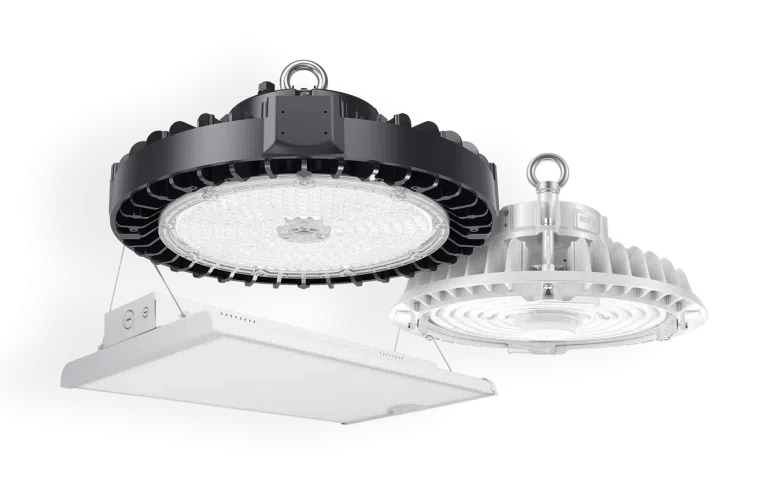
Our LED Auditorium Lighting includes high bays, low bays, recessed lights, panels, directional and flood fixtures, and step, wall, and aisle lighting. Available fixtures vary by output, color temperature, dimming, controls, mounting method, and beam spread.
These products are used in audience seating areas, stages, presentation zones, lecterns, aisles, steps, lobbies, backstage rooms, control booths, school auditoriums, lecture halls, worship spaces, and multipurpose assembly areas.


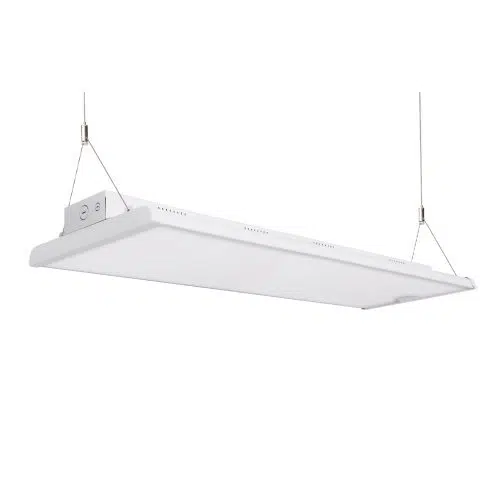
LED Auditorium Lighting for Seating, Stage, and Presentation Areas
LED auditorium lighting supports several different zones inside one space. Audience seating, aisles, stages, presentation areas, lobbies, backstage rooms, and control booths may all need different fixture types, light levels, controls, and color temperatures.
Start by identifying each zone and its required light level, then select fixtures based on ceiling height, mounting method, beam spread, glare control, spacing, and room use. Plan separate controls where seating, stage, aisles, lobby, and backstage areas need different settings. Most auditorium projects are not just about making the room brighter. The goal is to support visibility, comfort, dimming, presentations, cleaning, maintenance, and safe movement before, during, and after events. Controls, emergency requirements, and fixture placement should also match whether the space is used for lectures, school events, worship, meetings, performances, or multipurpose gatherings.
Selection and Installation Note: Product specifications, wattage, lumen output, beam angle, color temperature, dimming, flicker performance, controls, mounting hardware, emergency options, certifications, and warranty coverage vary by model. Confirm the selected product specification before ordering. For auditoriums, stages, aisles, public assembly spaces, emergency lighting, electrical upgrades, code-sensitive applications, or safety-critical spaces, verify requirements with your local inspector, facility team, project specifier, or a licensed electrical professional.
Auditorium Lighting by Zone
Auditoriums usually need more than one lighting approach. Seating areas may need dimmable general light. Stage or presentation zones may need brighter, more focused light with stronger control over aiming, glare, dimming, and flicker. Aisles and steps may need low-level visibility for safe movement. Lobbies and backstage areas may use more standard commercial fixtures.
| Auditorium Area | Fixture Selection Guidance |
|---|---|
| Audience seating | Recessed lights, high bays, low bays, or dimmable overhead fixtures may be used depending on ceiling height, room geometry, glare control, and controls requirements. |
| Stage or presentation area | Stage, theatrical, directional, or other focused fixtures may be used for speakers, school events, meetings, worship, or general presentation visibility. If a flood-style fixture is considered, confirm that the exact model is suitable for the application and provides the required beam control, aiming, glare control, dimming performance, flicker performance, color quality, and control-system compatibility. Standard outdoor flood lights should not be assumed to be appropriate for auditorium stages or camera-facing presentation areas. |
| Lectern or podium | Directional or focused fixtures may help illuminate presenters without over-lighting screens or the audience. Review aiming, glare, facial illumination, dimming, and camera performance where applicable. |
| Aisles and steps | Step and stairwell lights, wall lights, recessed fixtures, or low-level lighting may support movement during entry, exit, and dimmed events. |
| Lobby or foyer | Panels, recessed lights, architectural interior fixtures, or ceiling lights may be used for gathering, wayfinding, and visitor circulation. |
| Backstage and preparation areas | Linear lights, low bays, vapor tight fixtures, or utility fixtures may support setup, storage, and service access. |
| Control booth and AV areas | Dimmable task or overhead fixtures should provide visibility without creating glare on monitors or control surfaces. |
Recommended Foot-Candles for Auditorium Lighting
Auditorium light levels vary by zone and by how the space is used. A lecture hall, school auditorium, worship space, performance room, and multipurpose assembly space may all need different settings. Use these ranges as a starting point, then confirm the selected fixtures, controls, and installation requirements for the actual room.
Fixture Types Used in Auditoriums
Auditorium fixture selection usually starts with ceiling height and room function. A high-ceiling auditorium may use high bays or recessed high-output fixtures. A lower-ceiling room may use low bays, panels, recessed lights, or architectural fixtures. Stage and presenter areas usually need more controlled and focused lighting than the audience seating area.
| Fixture Type | Best Used When |
|---|---|
| LED high bays | The auditorium has taller ceilings and needs broad overhead illumination for seating or multipurpose use. |
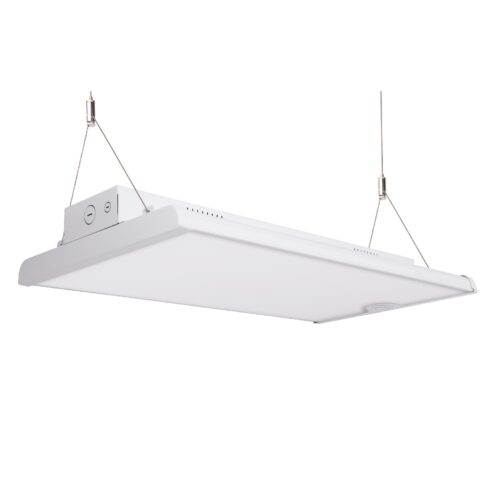
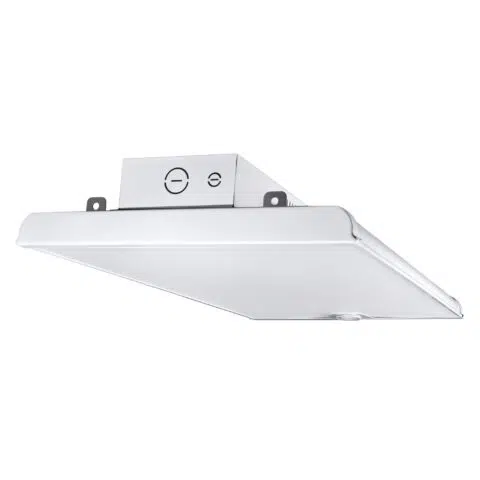
| LED low bays | The mounting height is lower and a wider, less intense distribution is needed. |
| LED recessed lights | The ceiling design calls for a cleaner look or replacement of existing recessed fixtures. |
| LED panels or ceiling lights | The auditorium includes classrooms, meeting rooms, backstage areas, or support spaces with lower ceilings. |
| Stage, theatrical, or directional fixtures | The stage, lectern, podium, or presentation zone needs controlled, focused illumination. Confirm beam distribution, aiming range, glare control, dimming quality, flicker performance, color rendering, color temperature, and compatibility with the auditorium's lighting controls before selecting the fixture. |
| Step, wall, or aisle lighting | The space needs low-level visibility for movement during dimmed events or room transitions. |
Color Temperature for Auditorium Lighting
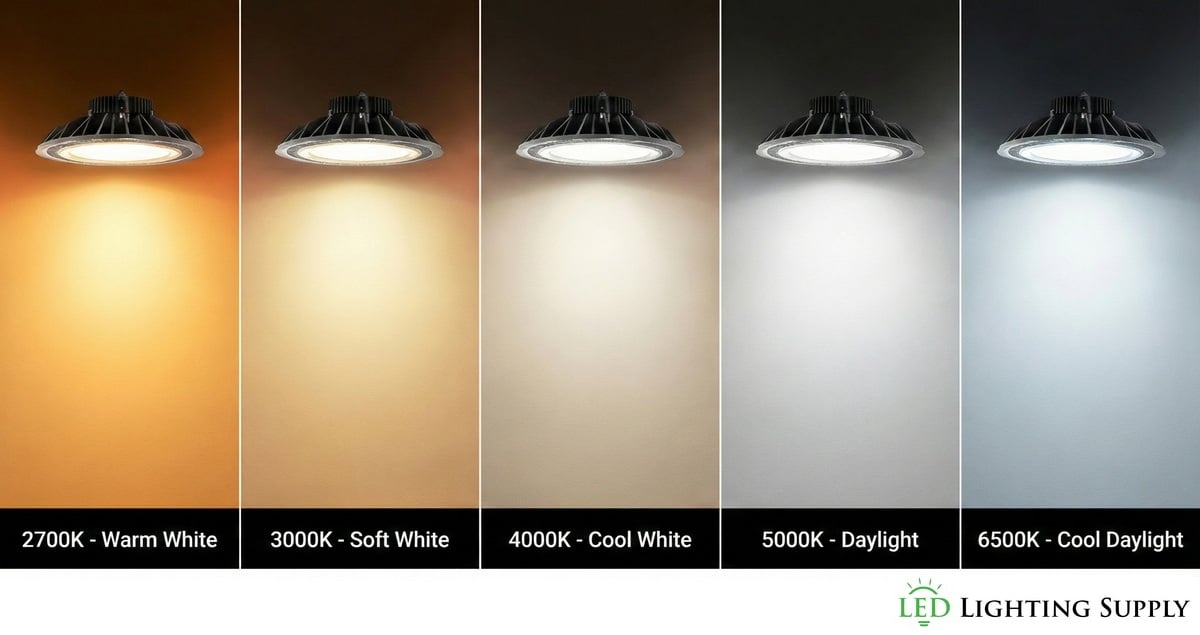
Color temperature should match how the auditorium is used. A school auditorium or lecture hall may use 4000K for a neutral, alert appearance. A worship space, community room, or performance-oriented venue may prefer warmer 3000K to 3500K lighting for comfort. Task-focused backstage or maintenance areas may use 4000K or 5000K depending on visibility needs.
If the auditorium uses projectors, screens, cameras, or video conferencing, review color temperature, color quality, glare, dimming, flicker performance, and fixture placement before ordering. Selectable CCT fixtures may be useful in some multipurpose rooms, but available settings and adjustment methods vary by model and should be confirmed on the selected product specification.
Dimming and Controls
Dimming is often more important in auditoriums than in standard commercial rooms. The same space may need full output for cleaning, moderate light for lectures, low light for presentations, and controlled lighting during performances or events.
Before ordering fixtures, confirm dimming type, dimming range, low-end performance, control compatibility, switching zones, emergency lighting needs, and how the room will be operated. Seating areas, stage areas, aisles, lobby areas, and backstage spaces may need separate controls. Not every fixture supports every dimming system or control package.
Where smooth fades or low-level dimming are important, confirm the fixture and driver can provide acceptable performance throughout the required dimming range. A fixture that is technically dimmable may not necessarily provide the smooth transitions or low-output stability expected in a performance or presentation environment.
Stage, Screen, and Presenter Visibility
Stage and presenter lighting should support visibility without creating uncomfortable glare for the audience, harsh shadows on presenters, or excessive light on projection screens. A lectern, podium, speaker area, performance zone, or camera-facing stage may need dedicated fixtures and separate controls from the general audience lighting.
Do not assume that a general-purpose outdoor flood light is suitable simply because it produces a directional beam. Stage and presentation lighting can require different optical and control characteristics than exterior area lighting. Before selecting a fixture, review:
- Beam control and aiming: Confirm that the fixture can be positioned and aimed to illuminate presenters or stage areas without excessive spill onto screens, audience seating, walls, or adjacent surfaces.
- Glare control: Review fixture position, shielding, beam angle, and source brightness from audience, presenter, and camera viewing positions.
- Dimming performance: Auditorium and performance spaces may require smooth fades and stable output at low dimming levels. Confirm the fixture and driver are compatible with the selected dimming or theatrical control system.
- Flicker performance: For spaces using cameras, video recording, streaming, or video conferencing, confirm the fixture's temporal light modulation or camera-flicker performance at full output and throughout the intended dimming range.
- Color quality: Review CRI, color temperature, and any additional color-quality requirements for presenters, scenery, cameras, or recorded content.
- Control compatibility: Confirm whether the fixture works with the auditorium's 0-10V, phase-control, DMX, DALI, networked, or other control system as applicable.
- Acoustics: In quiet auditoriums or performance venues, review driver, fan, transformer, or electronic noise where fixtures are located close to the audience or stage.
For rooms with projectors or screens, fixture placement and aiming should also limit light directed onto the projection surface because excessive ambient light can reduce image contrast. For camera-facing stages, verify flicker performance before specifying fixtures for recording, streaming, or broadcast use.
Stage Lighting vs General Auditorium Lighting
General auditorium lighting and stage lighting serve different purposes. Audience lighting typically focuses on comfortable general illumination, safe movement, dimming, and room transitions. Stage lighting may need tighter optical control, more precise aiming, stronger color quality, smoother dimming, lower flicker, and compatibility with dedicated presentation or theatrical controls.
A fixture that performs well as a general overhead auditorium light may therefore be a poor choice for lighting presenters or performances. Likewise, a standard outdoor flood fixture should not be treated as a stage-lighting product solely because it has a narrow or adjustable beam.
For school stages, worship spaces, lecture platforms, meeting rooms, multipurpose halls, or presentation areas that do not require full theatrical lighting, a commercial directional fixture may still be appropriate when its exact specifications satisfy the project's optical, control, flicker, color, and glare requirements.
Lighting for Cameras, Streaming, and Video Conferencing
Auditoriums increasingly support live streaming, recorded presentations, video conferencing, school events, worship broadcasts, and hybrid meetings. Camera requirements should be considered during fixture selection rather than after the lighting system is installed.
Important camera-related considerations include:
- Flicker: Verify fixture performance with the frame rates and shutter settings expected for the application.
- Facial illumination: Provide sufficient light on presenters' faces rather than relying only on overhead light.
- Contrast: Avoid excessively bright backgrounds or screens that can make presenters appear too dark on camera.
- Color consistency: Keep fixture color temperature and color rendering consistent across camera-facing areas.
- Dimming: Confirm that dimmed operation does not introduce objectionable flicker, color shift, or unstable output.
- Reflections: Review glossy podiums, projection screens, displays, glass, instruments, and other reflective surfaces.
Installation and Maintenance Considerations
Auditoriums often have tall ceilings, sloped floors, seating layouts, catwalks, balconies, projectors, speakers, rigging, curtains, and HVAC equipment that can affect fixture placement. Installation should be performed by a licensed electrician, and maintenance access should be considered before selecting fixtures.
For retrofit projects, review existing fixture openings, mounting points, wiring, voltage, ceiling access, dimming controls, emergency lighting requirements, and control-system compatibility. Fixtures in high or hard-to-reach areas should be selected with long service life and practical maintenance access in mind.
Stage and directional fixtures also need suitable mounting hardware and aiming access. Confirm that the mounting method can support the fixture and maintain the intended aiming position over time.
Auditorium Lighting Certifications, Rebates, and Warranty Support
LED auditorium lights from LED Lighting Supply carry a safety listing such as UL, ETL, or CSA, depending on product. Many general commercial models may be DLC or DLC Premium listed for utility rebate support where available. Rebate requirements vary by utility, region, product type, and listing, so confirm eligibility on the selected product specification before ordering.
Safety listings or DLC qualification do not by themselves establish that a fixture is suitable for stage, theatrical, camera, or presentation lighting. For stage-facing applications, separately confirm dimming performance, flicker performance, optical control, aiming capability, color quality, acoustic performance, and control compatibility.
Most LED auditorium lights include a 5-year warranty unless otherwise specified, with USA-based warranty support. Before purchase, review the selected product specification to confirm certifications, DLC status, voltage, dimming, controls compatibility, mounting method, emergency options, stage or camera requirements where applicable, and whether the fixture is right for the auditorium layout and usage.
Common Auditorium Lighting Mistakes
- Using one fixture type for every zone: Seating, stage, aisles, lobby, backstage, and control areas often need different fixture types or controls.
- Using general outdoor flood lights as stage lights without reviewing performance: A directional beam alone does not make a fixture appropriate for an auditorium stage. Confirm model-specific dimming, flicker, glare, aiming, color quality, acoustic performance, and control compatibility before using a flood-style fixture in a stage or presentation application.
- Ignoring dimming compatibility: Auditorium lights often need to dim smoothly for presentations, events, and room transitions. Confirm the actual dimming protocol and low-end performance.
- Ignoring flicker for camera use: A fixture that appears steady to the eye can still create visible banding or flicker on cameras, especially when dimmed.
- Over-lighting the screen area: Too much light near a projector screen can reduce image contrast and make presentations harder to see.
- Creating presenter glare: Poorly aimed or overly bright fixtures can create discomfort for speakers and performers or make it difficult for them to see the audience.
- Forgetting aisle and step visibility: Low-level circulation lighting can be important when the main room lights are dimmed.
- Choosing by wattage alone: Beam angle, lumen output, mounting height, glare, fixture spacing, aiming, and controls affect performance more than wattage alone.
- Mixing color temperatures: Inconsistent CCT between seating, stage, lobby, and support areas can make the space look uneven and can be more noticeable on camera.
- Not planning maintenance access: Tall ceilings, seating, balconies, catwalks, and sloped floors can make fixture service more difficult.
- Assuming every certification applies: UL, ETL, DLC, DLC Premium, emergency, dimming, flicker, and sensor compatibility vary by model.
Contact us about auditorium lighting, and our Product Specialists can help review fixture type, ceiling height, dimming, controls, color temperature, stage visibility, camera use, audience seating, emergency requirements, and product specifications.
LED Auditorium Lighting FAQs
How Should Auditorium Lighting Be Planned By Zone?
Auditorium lighting should be planned by zone because seating, aisles, stages, presentation areas, lobbies, backstage rooms, and control booths may need different fixture types, light levels, controls, and color temperatures. Seating areas may need dimmable general light, while stage and presentation zones may need brighter, more focused lighting.
How Do I Choose Fixture Types For Different Ceiling Heights?
Fixture selection should start with ceiling height and room function. High-ceiling auditoriums may use high bays or recessed high-output fixtures, while lower-ceiling rooms may use low bays, panels, recessed lights, or architectural fixtures.
What Should Be Considered When Lighting A Stage Or Presentation Area?
Stage and presenter lighting should support visibility without creating audience glare or washing out projection screens. A lectern, podium, or speaker area may need a more focused fixture or a separate control zone from general seating lights.
Why Are Separate Dimming And Control Zones Important In An Auditorium?
Separate control zones may be needed because seating, stage, aisles, lobby areas, and backstage spaces can have different operating needs. Before ordering, confirm dimming type, control compatibility, switching zones, emergency lighting needs, and how the room will be operated.
What Color Temperature Should Be Used For Auditorium Lighting?
Color temperature should match how the auditorium is used: school auditoriums or lecture halls may use 4000K, while worship spaces, community rooms, or performance-oriented venues may prefer warmer 3000K to 3500K lighting. Backstage or maintenance areas may use 4000K or 5000K depending on visibility needs.
What Should Be Reviewed Before Retrofitting Auditorium Lighting?
Retrofit projects should review existing fixture openings, mounting points, wiring, voltage, ceiling access, dimming controls, and emergency lighting requirements. Fixture placement can also be affected by tall ceilings, sloped floors, seating layouts, catwalks, balconies, projectors, speakers, and HVAC equipment.
How Can Buyers Confirm Certifications, Rebates, And Warranty Coverage?
Confirm certifications, DLC status, rebate eligibility, and warranty coverage on the selected product specification before ordering because these details vary by model. LED auditorium lights from LED Lighting Supply carry a safety listing such as UL, ETL, or CSA depending on product, and most include a 5-year warranty unless otherwise specified.