Detention Grade Lighting vs Vandal Resistant Lighting in Correctional Facilities, Prisons and Jails
When specifying lighting for a prison or jail, one of the most common mistakes is treating detention grade LED lights and vandal resistant lighting as if they are the same thing. They are not. Both fixture types can be built for durability, but they address different risks and may be appropriate in different parts of a correctional facility. At LED Lighting Supply, we help commercial and industrial customers identify lighting products that match the application, environment, and stated project requirements. In correctional settings, that distinction matters even more.
The wrong fixture in the wrong location can create maintenance issues, security risks, and long-term performance problems. Detention-grade lighting is generally intended for spaces where occupants may have direct access to the fixture and may intentionally try to damage, tamper with, or misuse it. Vandal-resistant lighting is generally intended for areas where fixtures may be struck, hit, or attacked, but where the security threat and facility requirements differ.
Standard commercial fixtures such as high bays and shoebox lights also have a place in correctional facilities, but only in appropriate locations. This article explains the difference between detention-grade lighting and vandal-resistant lighting, where each may be used inside a prison or jail, and where standard fixtures may still be the correct choice.
Why This Distinction Matters in Correctional Lighting
Correctional lighting is not just about putting light on the ground. It can support security, visibility, camera performance, supervision, and safe daily operations. A failed or damaged fixture can create dark areas, reduce sightlines, and force maintenance staff into controlled spaces where access is difficult and costly. In many cases, a simple fixture replacement is not simple at all. It may require escorts, restricted access, scheduling around inmate movement, and disruptions to normal operations.
That is why correctional lighting should be specified with the actual environment in mind. A fixture that performs well in a parking garage or school walkway may still be the wrong choice inside an inmate housing unit. Likewise, a detention-grade fixture may be unnecessary in staff-only work areas where a commercial fixture can meet the facility’s requirements at a lower cost.
What Are LED Detention Grade Lights?
LED detention-grade lights are products designed specifically for correctional facilities, jails, and other secure environments where impact resistance, tamper resistance, and reliable operation are important. These fixtures are intended for areas where lighting may be exposed to deliberate abuse. Unlike standard commercial lighting, detention-grade fixtures are commonly designed to limit access to internal components.
Depending on the model, they may use reinforced steel housings, sealed lens assemblies, security fasteners, and construction intended to reduce the chance of fixture damage, tampering, or misuse. In many correctional applications, the fixture may also need to minimize gaps, openings, or removable parts that could create opportunities for contraband concealment or fixture manipulation. Inside a prison or jail, lighting can be part of the security infrastructure. It can support observation by staff, improve camera coverage, and help maintain safe operations. That is why detention-grade lighting is often considered for inmate-accessible areas where the fixture itself could become a target.
How Detention Grade Fixtures Differ From Commercial Lighting
Standard commercial fixtures are typically designed for efficiency, light output, and accessible maintenance. In a warehouse, gym, or office, easy access to the driver or lens can be a benefit. In a correctional housing area, that same accessibility can become a liability. Detention-grade LED lighting differs because it emphasizes security-oriented construction. Depending on the model, these fixtures may include sealed enclosures, impact-resistant lenses, tamper-resistant hardware, and heavier-gauge housings.
Some models are designed for repeated abuse, demanding cleaning procedures, and long operating hours without exposing internal components. Standard commercial fixtures are not generally designed for the same security use case. A fixture that works well in a normal institutional setting may not be appropriate for a high-abuse correctional environment or meet the facility’s security requirements.
What Is LED Vandal Resistant Lighting?
LED vandal-resistant lighting uses durable fixture construction intended to help resist direct impact, attempted removal, and physical abuse in public or semi-public spaces. Depending on the model, these fixtures may use reinforced housings, polycarbonate lenses, tamper-resistant fasteners, and low-profile designs. Vandal-resistant fixtures are commonly used in schools, parking structures, public transit areas, tunnels, walkways, and other locations where someone may strike the fixture, throw objects at it, or attempt to damage it. In those environments, the goal is to help keep the light operating after physical abuse and reduce repair needs over time.
That can make vandal-resistant lighting a strong choice for many demanding applications. But it is not automatically the right choice for inmate-accessible interior spaces in prisons or jails. In correctional environments, the question is not only whether the fixture can survive a hit. The question is whether the fixture can resist tampering, limit access to internal parts, and support the facility’s security requirements.
Detention Grade vs Vandal Resistant Lighting: The Real Difference
The simplest way to explain the difference is this: vandal-resistant lighting is intended to resist abuse, while detention-grade lighting is intended to resist abuse while addressing correctional security concerns. A vandal-resistant fixture may be strong enough to survive a thrown object or repeated strikes. But that does not automatically mean it is appropriate for an inmate cell, secure housing unit, or detention shower area.
Detention-grade fixtures are typically designed with greater attention to sealed construction, security hardware, tamper resistance, and minimizing opportunities for access or concealment. In other words, detention-grade fixtures should be durable, but not every durable fixture is appropriate for detention use. There is no single universal “detention grade” certification, so the exact construction and suitability should be verified against the manufacturer’s current documentation and the facility’s requirements.
Common Specification Mistakes We See in Correctional Projects
One of the most common mistakes is assuming that an impact-resistant fixture is automatically suitable for inmate-accessible spaces. It is not. A fixture may have a strong housing and still fall short if the lens, fasteners, door construction, or service access make it easier to tamper with in a secure area.
Another mistake is over-specifying detention-grade fixtures in staff-only spaces where a standard commercial fixture would perform well and lower project cost. That can inflate fixture budgets without improving security. The best lighting plans match the fixture to the actual conditions, including who can access it, how high it is mounted, how often it operates, and how difficult maintenance access will be after installation.
We also recommend checking current spec sheets carefully instead of relying only on product category names. Terms such as vandal resistant, correctional, or heavy duty do not all mean the same thing from one manufacturer to another. Construction details, environmental rating, impact rating, mounting method, serviceability, and product listings all matter.
Where Detention Grade Lighting May Be Installed in a Prison or Jail
Detention-grade fixtures are commonly considered anywhere inmates can directly access the fixture or where facility security requirements call for higher tamper resistance and controlled construction. These are areas where fixture design can be part of overall risk management. Final requirements should be established by the facility, design professionals, and other qualified project authorities.
Inmate Cells
Inmate cells are a clear example of where detention-grade lighting is commonly specified. Fixtures in these spaces may need to withstand deliberate abuse, resist tampering, and limit access to internal components. Standard commercial lighting or general-purpose vandal-resistant fixtures may not meet the facility’s security requirements for these locations.
Housing Units and Day Rooms
Housing units and shared inmate areas often experience constant use and a higher risk of intentional damage. Detention-grade fixtures may be appropriate when mounted within inmate reach or when security protocols require that level of protection. Reliable lighting in housing spaces can also support supervision and camera visibility.
Secure Corridors and Inmate Movement Paths
Corridors used for inmate movement should be evaluated based on fixture accessibility, mounting height, supervision, and facility security standards. If inmates can access the fixture, detention-grade lighting may be appropriate to help reduce the risk of damage during movement, confrontation, or routine daily activity.
Intake, Holding, and Processing Areas
Intake and temporary holding spaces may see unpredictable behavior and higher-stress conditions. Lighting in these areas should be robust, secure, and difficult to tamper with when required by the facility. Detention-grade fixtures are commonly considered for these applications.
Interview Rooms and Secure Medical Areas
Any room where inmates may be present for extended periods and have visual or physical access to the fixture should be evaluated for detention-grade lighting. In many cases, the added security and durability can justify the specification.
Detention Showers and Wet Locations
Showers, wash areas, and other wet interior spaces require more than moisture resistance. In a correctional setting, the fixture may also need to be secure and difficult to tamper with. This is where detention-grade lighting with environmental protection appropriate to the actual exposure becomes important. IP ratings address dust and water ingress only; they do not independently establish correctional suitability, chemical resistance, or sanitation suitability. Verify materials, seals, hardware, and the manufacturer’s environmental documentation for the application. For these types of applications, start with products designed specifically for correctional environments at correctional lighting and detention grade LED lights.
Where Vandal Resistant Lighting May Be Installed in a Prison or Jail
Vandal-resistant lighting can have an important role in correctional facilities, particularly in areas where durability is more important than detention-level security. These are often public-facing, exterior, or transitional areas where fixtures may be exposed to abuse, impact, or attempted damage, but not direct inmate tampering in a secure housing setting.
Visitor Entrances and Waiting Areas
Public entry points, waiting areas, and visitor circulation spaces can benefit from vandal-resistant fixtures. These areas may need durable lighting, but they do not always require full detention-grade construction.
Public Restrooms and Transitional Spaces
Where a fixture may be exposed to rough treatment, tampering, or attempted damage by visitors or the general public, vandal-resistant lighting can be a practical choice.
Exterior Walls, Walkways, and Perimeter Building Areas
Exterior building-mounted fixtures can be exposed to impact, weather, and attempted damage. Vandal-resistant wall-mounted fixtures may be a strong fit for these applications, particularly when the goal is to improve durability and reduce maintenance. Confirm the required wet-location suitability and environmental rating for the actual installation conditions.
Parking Structures and Similar Shared Access Areas
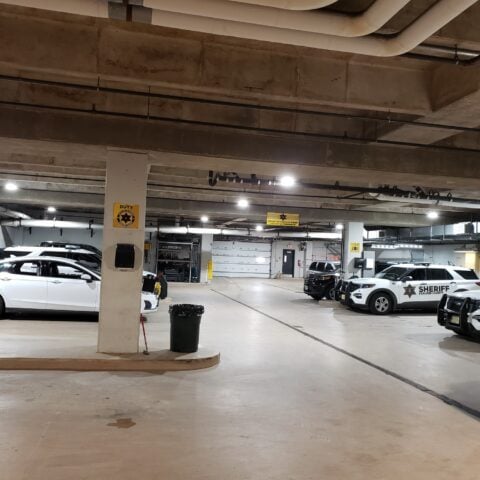
Parking structures, covered drop-off points, and similar locations often benefit from vandal-resistant fixtures because they are public-facing and may be exposed to direct abuse. In these areas, durability and tamper resistance matter, but the environment differs from an inmate housing area. For these applications, vandal resistant lighting may be the right product.
Where Standard Commercial Lighting Can Be Installed in a Prison or Jail
Not every part of a prison or jail needs detention-grade or vandal-resistant fixtures. Using specialized fixtures everywhere can increase project cost without adding meaningful value. In many staff-only or controlled-access areas, standard commercial lighting can be the correct and cost-effective choice.
Staff Only Warehouses and Storage Rooms
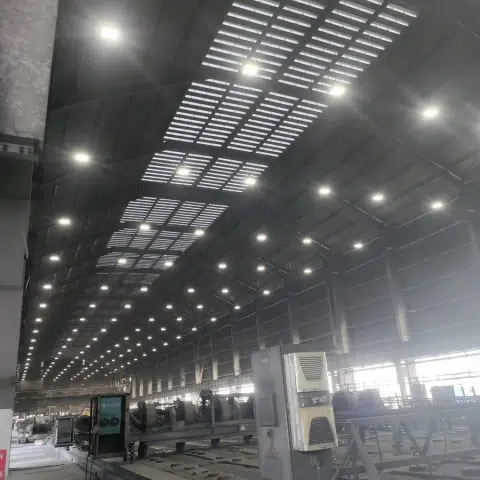
Warehouses, supply rooms, and storage spaces that are not inmate-accessible are often candidates for standard commercial lighting. In larger interior spaces, LED high bay lights may be used because they can provide efficient light output and reduced maintenance needs. Fixture quantity, mounting height, optics, and light levels should be determined using the selected fixture’s photometric data.
Maintenance Shops and Back of House Work Areas
Facility maintenance areas, workshops, and support spaces may not need the additional security features built into detention-grade fixtures. Commercial high bays and other industrial fixtures can be an appropriate fit when they meet the environmental, electrical, and task-lighting requirements.
Administrative Offices and Staff Areas
Office areas, conference rooms, and other staff-controlled spaces can generally use standard commercial lighting because the risk profile differs from inmate-occupied zones.
Parking Lots and Large Exterior Open Areas
Large exterior areas such as staff parking lots, service roads, and perimeter lots may call for standard outdoor area lighting rather than vandal-resistant fixtures. In these applications, LED shoebox lights are a common choice for broad-area illumination. Fixture selection, mounting height, spacing, optics, and delivered light levels should be evaluated with fixture-specific photometric data and applicable site requirements. If the area is controlled, not inmate-accessible, and not especially vulnerable to direct abuse, a standard commercial fixture may be the best specification.
Questions to Ask Before Approving a Fixture Schedule
- Can inmates physically reach or access the fixture after installation?
- Does the fixture construction limit tampering, concealment, or access to internal parts?
- Is the space wet, humid, washdown-exposed, or otherwise demanding from an environmental standpoint?
- Will maintenance require controlled access, escorts, or disruption to facility operations?
- Does the current spec sheet confirm the impact rating, ingress protection, mounting, electrical listing, and other requirements for the application?
These questions help move the conversation away from product labels and toward application fit. That is usually where better correctional lighting decisions are made.
How to Decide Which Fixture Type Belongs Where
When evaluating lighting in a correctional facility, ask three practical questions.
- Can an inmate access the fixture directly?
- Is the main risk intentional tampering and misuse, or general physical abuse and impact?
- Is this a staff-only or controlled area where a standard commercial fixture is appropriate?
If inmates can directly access the fixture, detention-grade lighting is often the appropriate starting point, subject to the facility’s requirements. If the area is exposed to impact, attempted damage, or public abuse without the same security concern, vandal-resistant lighting may be the better choice. If the space is controlled and low risk, standard commercial lighting is often the most practical specification.
Why LED Technology Matters in Secure Environments
LED lighting can offer important advantages in correctional applications. Properly selected LED fixtures can provide consistent illumination that supports visibility for staff and surveillance systems. Appropriate light levels and uniformity can help reduce shadowed areas and improve observation. LEDs may also reduce maintenance frequency compared with older lighting technologies, depending on product quality, operating conditions, controls, and maintenance practices. That can matter in prisons and jails because every maintenance visit into a secure zone takes time, coordination, and staff resources.
Longer rated life may help reduce disruptions and operating costs over time, but actual service life depends on the product and application. Color temperature also matters. Many correctional and security applications use 4000K or 5000K based on owner preference and visibility goals. CCT describes the apparent warm or cool color of white light; it does not by itself determine brightness, color rendering, productivity, or security performance. The right fixture layout, optics, light levels, and uniformity are just as important as fixture durability, which is why proper planning matters at the start of the project.
Responsible Specification for Correctional Facilities
Every correctional facility is different. Security protocols, fixture mounting height, inmate access, wet-location exposure, and authority requirements all affect the final specification. Fixture selection should be coordinated with the facility, design professionals, electrical professionals, and the authority having jurisdiction where required. It is also important to verify product details on the current spec sheet, including impact rating, environmental rating, voltage, mounting, and listing information.
Lighting should be properly matched to the application rather than selected based on appearance alone. The biggest takeaway is this: do not assume that a vandal-resistant fixture is suitable for an inmate cell just because it looks strong. And do not over-specify detention-grade fixtures in areas where standard commercial fixtures can meet the actual need. Good correctional lighting design is about matching the fixture to the actual risk and use case.
Final fixture selection should be reviewed against the current product spec sheet, site conditions, and facility requirements. Mounting height, lens construction, fastener type, wet-location exposure, voltage, and who can physically access the fixture all affect whether a product is suitable. Local code requirements, owner standards, and authority approval may also apply.
Who Should Be Involved in the Lighting Decision
In our experience, the best outcomes happen when correctional lighting is reviewed by more than one stakeholder. That often includes the facility team, electrical contractor, lighting supplier, design professional, and the authority having jurisdiction when required. In secure projects, the people responsible for operations and maintenance often catch practical issues that do not show up on a fixture schedule alone.
That kind of review is especially important in areas where security, access, and serviceability overlap. A fixture may look correct on paper but still create problems if it is difficult to maintain, mounted within reach, or not aligned with the facility’s operational standards.
Safety, Performance, and Product Certifications
Certifications, qualifications, and product features vary by fixture model. Depending on the product, available documentation may include an electrical safety listing from a Nationally Recognized Testing Laboratory, such as UL or Intertek ETL, as well as DLC qualification for eligible commercial lighting products. UL and ETL listings address compliance with the applicable product safety standard; DLC qualification is an energy-efficiency and performance program and is not an electrical safety certification.
DLC qualification, rebate availability, dimming, sensors, IP ratings, IK ratings, and warranty terms are model-specific. Utility rebate eligibility also depends on the utility program, project location, current program rules, and the exact product configuration. Always verify the current product specification sheet, listing information, DLC status where applicable, and utility requirements before purchase or installation.


Warranty and Warranty Support
Warranty terms vary by product model and manufacturer. Many products include a 5-year warranty, while other terms may apply depending on the fixture. Review the current product warranty documentation before purchase. LED Lighting Supply can assist customers with warranty support for eligible products and claims in accordance with the applicable warranty terms.
Final Thoughts
If you are lighting a prison or jail, the most important question is not which fixture looks strongest. The important question is which fixture is designed for the actual conditions in that specific space. Detention-grade lighting is commonly used in inmate-accessible secure areas. Vandal-resistant lighting can be appropriate in areas where impact resistance and tamper resistance matter, but detention-level security is not required.
Standard fixtures such as LED high bays and LED shoebox lights can still have an important place in staff-only and general support areas. Making the right choice can improve maintenance planning, support visibility, and help the facility operate more effectively over the long term.
For help selecting fixtures that match established project requirements, explore our correctional lighting, detention grade LED lights, vandal resistant lighting, LED shoebox lights, and LED high bay lights pages.