Correctional Facility LED Lighting: What to Consider for Every Indoor and Outdoor Area
Lighting in a prison or correctional facility is not a typical commercial project. Every fixture choice affects safety, security operations, staff performance, maintenance workload, and how well surveillance systems do their job. The wrong fixture can fail early, create blind spots, and force maintenance into controlled areas on someone else’s schedule.
At LED Lighting Supply, we have spent years helping facilities replace legacy lighting with LED systems designed for detention environments. The goal is straightforward: durable fixtures that hold up under abuse, maintain consistent output, and support security protocols without adding new risks. This guide is a master reference for specifying LED lights for a correctional facility. It is organized by location and focuses on the real challenges in each area, along with fixture types that may address them.
Why Correctional Lighting Is Different
Correctional facilities combine several conditions that can defeat standard commercial fixtures:
- Abuse and tampering: LED detention grade lights may provide reinforced housings, sealed lens assemblies, and tamper-resistant hardware. Verify the construction and ratings of the exact model.
- Security visibility: Uniform light distribution matters as much as lumen output. Shadows and glare can reduce effective observation and affect camera images.
- Restricted maintenance access: Every outage can become a logistics problem. Long-life LED systems may reduce service calls and security disruptions.
- Mixed environments: Dry offices, wet showers, high ceilings, outdoor weather exposure, and corrosive areas can exist within the same facility.
- Human factors: Glare, visible flicker, and audible driver noise can affect visual comfort. Select fixtures with suitable optical and driver performance for occupied areas.
LED Lighting Supply can help compare published fixture specifications, including vandal resistance, environmental ratings, optics, controls, and emergency options available on compatible models.
Outdoor Lighting Locations and Fixture Selection
Exterior lighting is about deterrence, safe movement, and camera-friendly visibility. Outdoor fixtures should be selected for the actual weather exposure, corrosion conditions, mounting arrangement, and required illumination. Photometric analysis using fixture-specific IES data helps reduce shadowing and excessive glare.
Perimeter Fencing and Security Zones
Main challenges: Long runs, large coverage areas, the need for consistent illumination, and minimizing dark pockets along fence lines.
- High Mast Lights: May suit wide perimeter zones and large open areas where broad coverage from a limited number of mounting points is needed.
- Flood Lights: May suit targeted perimeter reinforcement, directing light toward cameras, patrol routes, and identified security zones.
Why these work: High mast and flood lighting can be configured to balance coverage with control. The objective is not “more light everywhere,” but usable visibility with controlled glare and fewer hard shadows.
Yards, Recreation Fields, and Open Courts
Main challenges: Wide open spaces, high activity, potential impacts, and the need to avoid glare that interferes with supervision.
- LED High Mast Lights: Often used for large yards and multi-use recreation fields.
- LED Flood Lights: Useful at the edges for fill lighting and targeting specific zones.
Why these work: Appropriate optics and aiming can distribute light across the yard while limiting bright hotspots and deep surrounding shadows. Final fixture quantity, mounting height, and aiming should be based on a photometric plan.
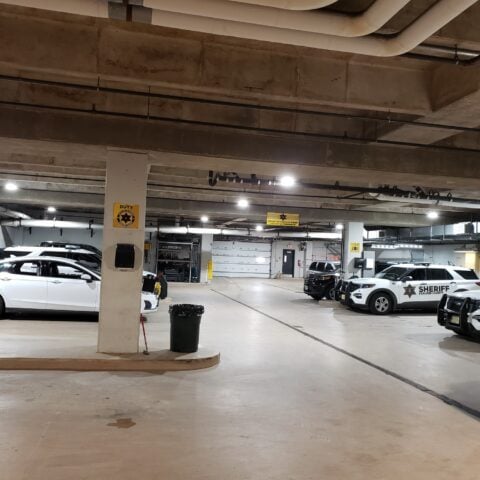
Sally Ports, Vehicle Gates, and Loading Areas
Main challenges: High contrast conditions, frequent vehicle movement, camera coverage needs, and security-critical operations.
- Flood Lights: Useful for directional lighting at gates, checkpoints, and sally port entries.
- LED Wall Packs: Useful for mounting directly on structures to reduce dark edges around doors and bays.
Why these work: These areas can benefit from layered lighting: a primary source plus wall-mounted illumination to reduce concealment zones near structures.
Building Perimeters, Walkways, and Service Corridors
Main challenges: Continuous night coverage, safe footing, staff movement, and consistent camera images along buildings.
- Wall Packs: Commonly used for perimeter walls, service corridors, and walkway coverage.
- LED Shoebox Lights: Often used on poles for internal roads, larger walk paths, and wider perimeter zones.
Why these work: Wall packs can provide near-building coverage, while shoebox fixtures can extend coverage across open travel routes and broader exterior areas.
Parking Lots and Staff Entrances
Main challenges: Uniform coverage for personal safety, clear visibility near entrances, and reliable nighttime operation.
- Shoebox Lights: Commonly used for parking areas and internal roadways.
- Wall Packs: Useful at entrances, stairwells, and door zones.
Why these work: Photocells and time-based controls can support consistent exterior operation when selected and commissioned for the facility’s security procedures.
Indoor Lighting Locations and Fixture Selection
Interior lighting must support supervision, reduce maintenance frequency, and limit tampering opportunities. The right fixture varies by area, but rugged construction, sealed optics, and predictable light distribution are common considerations.
Intake, Booking, and Processing Areas
Main challenges: High traffic, documentation and identification tasks, frequent cleaning, and heightened security risks.
- Detention-Grade LED Panel Lights: May suit secure processing spaces requiring uniform lighting with hardened housings and lens systems.
- Vandal-Resistant Surface Fixtures: Useful when ceiling conditions do not allow recessed installation.
Why these work: Uniform, glare-controlled illumination can support observation and paperwork, while sealed and tamper-resistant construction can reduce security exposure.
Secure Corridors and Movement Hallways
Main challenges: Continuous monitoring needs, long runs, and preventing fixture access.
- Vandal-Resistant Linear Fixtures: May suit long corridors where even distribution is important.
- Detention-Grade Panel Lights: Useful for corridor nodes, intersections, and lower-ceiling zones.
Why these work: Corridors may not be suitable for aggressive occupancy-control settings where facility procedures require continuous illumination for observation and movement control.
Day Rooms, Pods, and Common Areas
Main challenges: Congregation spaces, behavioral considerations, visibility for staff, and reducing harsh glare.
- LED Panel Lights: Can provide broad, even lighting; confirm the selected model is suitable for the security and mounting requirements of the space.
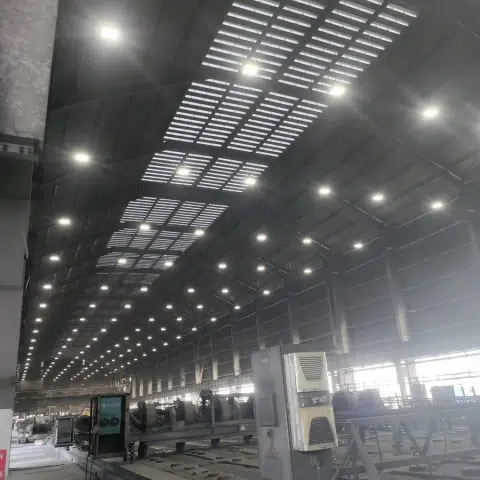
- LED High Bays: May suit high ceilings or open volumes requiring wider distribution.
Why these work: The goal in common areas is uniform visibility with fewer bright hotspots. Fixture selection and layout should be confirmed through photometric analysis and facility security requirements.
Dining Halls and Gymnasiums
Main challenges: Larger footprints, higher ceilings, durable performance under continuous use, and glare control for active spaces.
- LED High Bays: Often used for large indoor spaces with higher mounting heights.
Why these work: High bays can provide wide-area illumination while placing fixtures out of normal reach. Optics, mounting height, and layout affect glare and illuminance on floors and equipment surfaces.
Control Rooms, Monitoring Stations, and Security Offices
Main challenges: Screen-heavy work, long shifts, and the need for stable lighting suitable for task work.
- LED Panel Lights: Can provide uniform illumination for monitors and task work when appropriate optics and driver performance are selected.
Why these work: Low-glare lighting and drivers with appropriate flicker performance can support visual comfort in mission-critical spaces.
Medical, Mental Health, and Interview Rooms
Main challenges: Observation requirements, calm visual conditions, frequent cleaning, higher sensitivity to glare, and – in some rooms – self-harm risk.
- Detention-Grade LED Panel Lights: Appropriate where security hardening is required alongside uniform lighting.
- Vandal-Resistant Surface Fixtures: Useful when room layouts require more distributed light points.
- Ligature-Resistant Fixtures: Required only where identified by the facility’s documented risk assessment, healthcare design criteria, project specification, or applicable authority. Verify that the exact fixture is specifically listed or documented by its manufacturer as ligature resistant; detention-grade or vandal-resistant construction alone does not establish this feature.
Why these work: These rooms can benefit from clean, even illumination that supports observation without creating a harsh atmosphere. In behavioral-health or suicide-risk spaces, fixture selection should be coordinated with the facility’s clinical, security, and design authorities.
In-Cell Lighting and Housing Units
Main challenges: Direct occupant access, intentional impact, tampering, contraband concealment concerns, self-harm risk where applicable, and the need for controlled maintenance access.
- Detention-Grade Fixtures: Purpose-built fixtures may include sealed lens assemblies, reinforced housings, and tamper-resistant fasteners.
- Ligature-Resistant Detention Fixtures: Where required by the established housing-unit risk assessment or project specification, select fixtures specifically designed and documented for ligature resistance. This is a distinct design characteristic that must be verified for the exact fixture and installation configuration.
Why these work: Housing fixtures should be selected to limit unauthorized access to internal components and minimize concealment or tampering opportunities. The required level of detention, vandal, and ligature resistance depends on the specific housing classification, facility policies, and documented risk assessment; LED Lighting Supply can help match fixtures to established project requirements but does not determine those requirements.
Showers, Restrooms, and Wet Areas
Main challenges: Moisture exposure, harsh cleaning practices, and reliability in damp or wet environments.
- Wet-Location Rated Vandal-Resistant Fixtures: Sealed designs may be appropriate for shower and restroom conditions.
Why these work: Select a fixture with an environmental rating appropriate to the actual exposure. IP ratings address ingress of solids and water, not chemical resistance, corrosion resistance, sanitation suitability, or hazardous-location approval; verify materials, seals, hardware, and manufacturer documentation where cleaning chemicals or corrosive conditions are present.
Kitchens, Laundry, and Utility Rooms
Main challenges: Heat, humidity, grease or airborne particles, and frequent maintenance needs in hard-to-schedule areas.
- Vandal-Resistant Sealed Fixtures: Useful for utility spaces that also face abuse and demanding environmental conditions.
- LED Panels or Linear Fixtures: Good choices where uniform task lighting is needed and the selected model suits the environment.
Why these work: Sealed construction and appropriate driver, temperature, and environmental ratings can help reduce outages. Verify suitability for grease, washdown, chemicals, humidity, and ambient temperature rather than relying on an IP rating alone.
Storage Rooms, Electrical Rooms, and Low-Occupancy Areas
Main challenges: Intermittent use and unnecessary energy use if lights run constantly.
- LED Shop Lights: May be a practical option for motion- or occupancy-based control strategies where security and safety procedures do not require continuous lighting.
Why these work: Controls can reduce run time in suitable spaces without compromising required visibility.
Controls and Reliability: Where They Help and Where They Hurt
Lighting controls can reduce energy use, but correctional facilities cannot treat every room the same. The best approach is location-based:
- Good candidates for occupancy controls: Storage rooms, staff-only support areas, and certain utility spaces, where permitted by facility procedures and code requirements.
- Areas that may need constant illumination: Corridors, housing units, and security-critical zones where continuous visibility is part of established protocol.
- Exterior strategy: Photocells are commonly used for dusk-to-dawn operation to support consistent perimeter and exterior coverage.
- Emergency preparedness: Battery backup or emergency lighting should be selected and located based on applicable code, emergency-lighting design, and facility security procedures.
Safety and Performance Certifications
Correctional facility projects require fixtures that meet applicable safety and performance requirements. Look for a listing from an appropriate Nationally Recognized Testing Laboratory (NRTL), such as UL or Intertek/ETL, when required for the installation. Consider DLC qualification where applicable for efficiency validation and potential utility rebate eligibility; DLC qualification is not an electrical-safety certification. Always verify the exact fixture’s certifications, ratings, and local requirements with the authority having jurisdiction.


These features are available on selected models only. Verify the exact product specification for certification, DLC status, dimming, IP and IK ratings, sensors, and warranty coverage.
Warranty and Warranty Support
Warranty terms vary by product. Review the warranty for the selected fixture before purchase. LED Lighting Supply provides USA-based warranty support to help troubleshoot product issues and process eligible warranty claims.
Common Mistakes in Correctional Lighting Projects
- Specifying commercial fixtures in secure areas: A fixture not designed for the required level of abuse resistance can be unsuitable for the location.
- Assuming detention-grade means ligature resistant: Ligature resistance is a separate, model-specific design feature. Use it where the documented risk assessment or project requirements call for it.
- Choosing fixtures with accessible components: Removable covers and easy-to-open housings can create tampering risk.
- Ignoring wet-location needs: Showers, restrooms, kitchens, and similar areas require fixtures with environmental ratings suitable for actual exposure.
- Creating inconsistent lighting across zones: Mixed outputs and inconsistent color appearance can complicate observation and camera performance.
- Overusing occupancy controls: Controls belong in the right places. Security-critical areas may need constant illumination.
- Not planning secure maintenance access: Lower-maintenance fixtures can reduce service frequency, especially in controlled areas.
A Simple Planning Checklist Before You Buy
- Map the facility by zone (perimeter, yards, circulation, housing, staff, wet areas, utilities).
- Identify where fixtures must be detention-grade, vandal-resistant, ligature-resistant, or standard commercial-grade based on documented facility requirements.
- Confirm environmental needs (wet areas, corrosion exposure, temperature extremes, cleaning practices).
- Plan control strategies by area (photocells outside, occupancy where appropriate, constant lighting where required).
- Standardize fixtures where possible to simplify maintenance and stocking.
- Use a fixture-specific photometric lighting plan to confirm coverage, illuminance, glare control, and shadow reduction.
- Verify the selected model’s safety listing, environmental rating, impact rating, controls, emergency options, and warranty.
Expert Guidance for Your Correctional Facility Lighting Project
Correctional lighting benefits from careful product selection and lighting design. Our Product Specialists can help facilities compare fixture specifications, review application information, prepare photometric lighting plans, and identify products that match established security and environmental requirements.
Request your free lighting plan, and we will help you build a zone-by-zone lighting package for your facility, from perimeter security to detention-grade and, where specified, ligature-resistant in-cell fixtures.