HVLS Fans: A Comprehensive Buyers Guide
High temperatures, humidity, and inadequate air movement present significant challenges for industrial and commercial buildings. These structures typically feature high ceilings and open-concept floor plans that can make it difficult to maintain consistent conditions throughout the occupied space.
HVLS (High Volume Low Speed) fans can improve air movement and occupant comfort in large commercial spaces. They circulate and mix air, but they do not replace required exhaust ventilation, local source capture, makeup air, vapor removal, dust collection, or other contaminant-control systems.
Understanding the applications, operation principles, benefits, and sizing requirements helps facility managers and contractors select a fan system suited to their building’s airflow needs.
What Does HVLS Stand For?
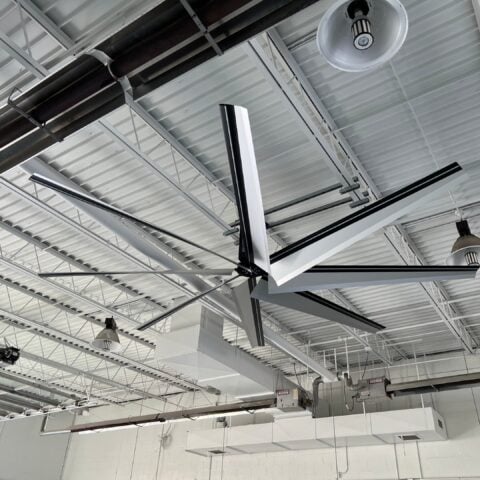
HVLS, or high volume low speed, describes fans designed for industrial and commercial applications requiring substantial airflow. Unlike smaller commercial fans, HVLS fans operate at relatively low rotational speeds for their size, often below 200 RPM depending on the model.
The slower rotation speed works effectively because HVLS fans have large diameters. These fans commonly range from approximately 7 to 20 or more feet in diameter, making them well suited to large open spaces.
The combination of large diameter and controlled rotation speed can move substantial air volumes while using fewer motors than an arrangement of multiple smaller fans. Actual airflow, power consumption, coverage, and performance vary by fan model, speed setting, mounting conditions, and layout.
Applications for HVLS Fans
HVLS fans are commonly used in industrial and commercial facilities with large, open spaces where improved air movement and destratification are desired. Common applications include:
- Manufacturing: Manufacturing facilities may contain machinery that generates heat. HVLS fans can help disperse heat buildup and improve worker comfort.
- Warehouses: The expansive, open design of warehouses can contribute to air stratification, which properly designed HVLS fan layouts can help reduce.
- Agricultural Buildings: HVLS fans can help improve air movement in barns and agricultural buildings for livestock and worker comfort when selected for the specific environment.
- Gyms and Athletic Facilities: Large athletic facilities such as basketball courts can benefit from the air circulation HVLS fans provide for occupant comfort.
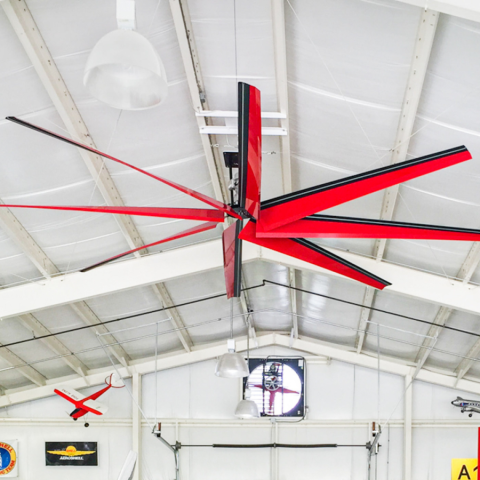
- Aviation Hangars and Equipment Garages: High-bay spaces housing aircraft, buses, and large vehicles can trap heat. Strategic fan placement can help improve air movement.
How HVLS Fans Work
HVLS fans can improve comfort through increased air movement and evaporation at the skin. Moving air can increase convective heat transfer from occupants and promote evaporation of perspiration, helping occupants feel cooler when environmental conditions permit.
HVLS fans can also support destratification by mixing warmer air near the ceiling with cooler air lower in the space. This mixing effect can be useful during heating seasons and in tall buildings where temperature differences develop between floor and ceiling levels.
Destratification
The natural tendency of warm air to rise creates stratification, or separation of air layers within enclosed spaces. HVLS fans circulate air to help blend these layers and reduce temperature differences throughout the space.


Air Columns and Horizontal Floor Jets

Ceiling-mounted fan blades create a downward column of moving air beneath the fan. When this airflow reaches the floor, it spreads outward horizontally, creating a floor-level air pattern often called a floor jet. When the airflow encounters walls or obstructions, it can move upward and recirculate through the space.
The concentrated airflow zone directly beneath and around a fan is not the same as the fan’s total planning coverage area. As a general visualization, the stronger floor-level air pattern may extend several fan diameters from the fan, but the usable coverage area for comfort or destratification depends on fan model, mounting height, fan speed, ceiling geometry, obstructions, adjacent fans, and the required air speed at occupied locations.
For example, a 12-foot fan may create its strongest direct airflow in a zone extending roughly several fan diameters from the fan, while a complete facility layout may assign a larger planning area to that fan based on the manufacturer’s published performance data and the project’s comfort objectives.
Technical Design Features
LED Lighting Supply’s HVLS fans incorporate design features intended to enhance air movement through optimized air columns and floor jets, including tapered blade designs and extended blade lengths on selected models.
Tapered Fan Blades
Because the outer edge of a fan blade travels faster than areas closer to the hub, blade profile and geometry affect airflow performance. Tapered blade designs can help manage airflow characteristics and may allow effective operation at relatively low RPM, depending on the fan design.
Lightweight blade construction can reduce rotating mass and may allow the use of smaller motors in some designs. Verify motor horsepower, airflow, sound, and power-consumption specifications for the exact fan model.
Extended Blade Design
The size and reach of the floor-level airflow pattern are influenced by fan diameter, blade design, mounting height, speed, and site conditions. Larger HVLS fans can often cover larger open areas than smaller fans, but fan selection and layout should be based on the selected model’s published airflow data and the application’s required air movement.
Benefits of HVLS Fan Installation
HVLS fans can improve air circulation in large spaces, particularly where air stratification occurs. Potential benefits include improved occupant comfort, better air mixing, and reduced reliance on mechanical heating or cooling under suitable operating conditions.

Interior Comfort
Improved air circulation can contribute to workplace comfort. Low-RPM operation may produce less noise than multiple smaller high-speed fans, although sound levels vary by model, speed, mounting method, and building acoustics. Comfortable conditions can support employee productivity and customer satisfaction.
Health and Safety Considerations
Proper climate control and air movement can support workplace comfort and heat-stress management. OSHA provides general guidance that cites 68-76°F and 20-60% relative humidity as commonly recommended comfort ranges for offices, though OSHA does not establish a general indoor-temperature standard for all workplaces and application-specific requirements may vary.
Humidity control can help preserve building materials and occupant comfort. Excessive moisture can contribute to mold and mildew development, which may affect building components and indoor air quality.
Important: HVLS fan installation involves electrical work and structural mounting that require professional assessment and installation in accordance with applicable building codes, electrical codes, manufacturer instructions, and local requirements.
Installation Considerations
Selected LED Lighting Supply HVLS fan models may include a NEMA 1 control cabinet that consolidates components such as disconnects, variable-speed drives, and terminal blocks. Verify the control enclosure rating, included components, and suitability for the intended installation environment for the exact model.
Energy Considerations
HVLS fans can use less power than operating multiple smaller fans for similar air-movement goals, depending on the equipment and layout. They may supplement HVAC systems or provide air circulation where HVAC is impractical, but they do not provide cooling, heating, ventilation, or dehumidification by themselves.
Potential Tax Considerations
The Inflation Reduction Act of 2022 modified the Section 179D deduction for qualifying energy-efficient commercial building property. Eligibility depends on the overall qualifying project, applicable energy-reduction requirements, certification, prevailing-wage and apprenticeship rules where applicable, and other tax-law requirements.
Important: Tax implications vary by project and taxpayer circumstances. Consult a qualified tax professional to determine whether an installation may qualify for a deduction or other incentive.
HVLS Fan Sizing Guidelines
Proper sizing is important for fan effectiveness and safe installation. Fan diameter alone does not determine coverage. Use the selected fan’s published airflow data, mounting requirements, electrical specifications, sound data, and manufacturer layout guidance when evaluating a project.
Physical Dimensions
Calculate available ceiling space and determine how many fans can be accommodated. Consider available fan sizes and follow the manufacturer’s clearance and spacing requirements for the exact fan model.
Mounting Height and Clearance
Larger fans can often be mounted higher while maintaining useful airflow, but acceptable mounting height depends on the selected fan, ceiling structure, blade diameter, and desired air movement at occupant level. Ensure adequate clearance from equipment such as forklifts, shelving, lifts, scaffolding, doors, sprinklers, lighting, and other building systems in accordance with manufacturer instructions and applicable codes.
Site-Specific Requirements
Building features can affect installation requirements. Sloped roofs may require extension mounts. Interior obstructions such as HVAC ductwork, lighting, sprinkler systems, and machinery must be considered. Focus airflow analysis on areas where people regularly work or gather.
Building Code Compliance
Applicable building, fire, and electrical codes may affect structural mounting, electrical supply, disconnecting means, clearances, and coordination with other building systems. Ventilation requirements are determined by the applicable code and occupancy; an HVLS fan does not by itself establish required outdoor-air ventilation or air-change compliance. A qualified installer and the authority having jurisdiction should confirm project requirements.
Coverage Area and Fan Quantity
Planning coverage and fan spacing must be determined for the specific fan model and application. A fan’s concentrated airflow zone beneath the blades is different from the larger area that may be assigned to the fan in a complete layout. Avoid using a universal square-footage rule for all fan sizes.
| Fan Size | Typical Planning Considerations | Layout Method |
|---|---|---|
| 8 ft. | May suit smaller open areas or lower mounting heights, depending on the model and required air speed. | Use manufacturer airflow and clearance data. |
| 12 ft. | Often considered for medium-to-large open areas; direct airflow reach and planning coverage are not the same measurement. | Use manufacturer airflow and clearance data. |
| 16 ft. | May be appropriate for larger open areas and higher ceilings when structural and clearance conditions permit. | Use manufacturer airflow and clearance data. |
| 20 ft. | May be appropriate for very large open spaces with suitable mounting height, structure, and clearances. | Use manufacturer airflow and clearance data. |
Coverage, spacing, mounting height, and fan quantity depend on the selected model, desired air speed, ceiling height, obstructions, occupancy areas, and adjacent fans. A fixture-specific layout using published manufacturer data is recommended.
Integration with Climate Control Systems
HVLS fans can supplement existing HVAC systems or provide air circulation where appropriate. Consider your facility’s goals:
- Reducing HVAC runtime where conditions allow
- Supplementing existing climate control
- Providing air circulation where HVAC is impractical
Identifying these objectives helps determine appropriate fan quantity, size, controls, and layout.
Additional Features and Components
LED Lighting Supply offers options to customize selected HVLS installations for specific facility needs:
Color Options
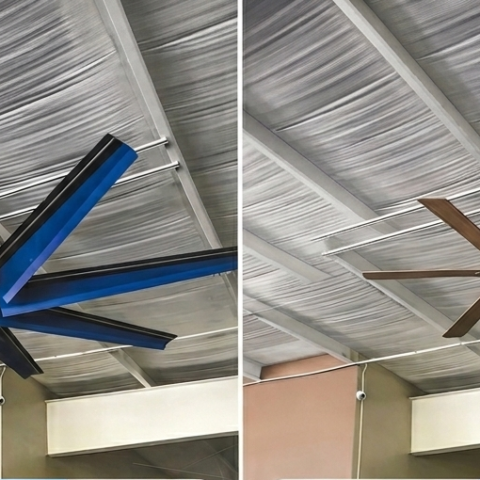
Selected models are available in stock color options including black, white, green, yellow, brushed aluminum, blue, and red. Verify available finishes for the exact fan model.
Mounting Solutions
Multiple mounting options may accommodate different structural conditions, including standard I-beam, Z-purlin, and open-joist mounts. Extension mounts may be available for high-ceiling applications. A qualified professional should verify that the complete structure, mounting system, fan, and accessories are suitable for the proposed loading and site conditions.
Control Systems
Control options vary by model and may include single-fan controls, multi-fan controllers, remote controls, and lockout-capable units. Available voltage and phase configurations vary by product; verify electrical requirements and compatibility before ordering.
Safety Features
For facilities exposed to wind or other demanding conditions, optional tether systems may be available for selected installations. Tethers do not replace proper structural design, mounting, inspection, or compliance with manufacturer instructions.
HVLS Fan Maintenance Guidelines
Regular maintenance helps preserve fan performance and longevity. Maintenance requirements vary by fan model, drive system, operating environment, and manufacturer instructions.
Safety Notice: All maintenance should be performed by qualified technicians following lockout/tagout procedures, manufacturer instructions, and appropriate safety precautions for electrical and rotating equipment.
Recommended maintenance activities include:
- Visual Inspections: Regular visual checks can identify visible damage such as housing cracks, blade damage, or loose components.
- Hardware Inspections: Qualified inspection of fasteners and mounting hardware helps confirm proper torque and secure installation.
- Electrical Inspections: Professional examination of wiring, controls, and connections can identify wear, damage, or improper connections.
- Cleaning and System Checks: Removing dust buildup and checking the fan and drive system in accordance with manufacturer guidance helps maintain performance.
Enhance Facility Airflow with LED Lighting Supply
High-volume low-speed fans can help industrial and commercial buildings improve air movement and destratification. A properly designed installation can support occupant comfort, potential energy savings, and more consistent air circulation.
LED Lighting Supply offers HVLS fans in multiple sizes and configurations for a range of facility requirements and applications.
HVLS fans, commercial fans, and commercial LED lighting solutions.
Contact us to discuss products suited to your application and request a layout based on the selected fan model and facility conditions.
Frequently Asked Questions
Do HVLS Fans Need a Local Disconnect?
Local disconnect requirements depend on the applicable electrical code, equipment listing and instructions, and local regulations. Consult a qualified electrician and the authority having jurisdiction for a code-compliant installation.
What Electrical Requirements Do HVLS Fans Have?
HVLS fans require electrical service appropriate for the motor, controller, and selected voltage and phase configuration. A qualified electrical professional should confirm available power, overcurrent protection, disconnecting means, wiring methods, and code compliance for the specific installation.
How Do You Prevent Light Strobing with HVLS Fans?
Minimize perceived strobing by coordinating fan and light locations during layout design. Increasing the distance between blades and light sources, avoiding direct overlap where practical, and reviewing the lighting and fan layout together can reduce the effect. Results depend on fan speed, fixture location, lighting distribution, and viewing position.
When Should an HVLS Fan Run in Reverse?
Rotation direction and reverse-operation capability vary by fan model. Some fans may use reverse operation for specific destratification or seasonal strategies, while others are intended to operate primarily in one direction. Follow the manufacturer’s instructions for the exact fan.
Can HVLS Fans Reduce Ceiling Moisture?
HVLS fans can improve air mixing and may reduce localized condensation risk in some conditions, but they do not remove moisture from the air. Persistent condensation or humidity problems may require dehumidification, insulation, ventilation, building-envelope improvements, or other moisture-control measures.
Are HVLS Fans Quiet?
HVLS fans often operate more quietly than multiple smaller high-speed fans because of their lower rotational speed, but noise levels vary by model, speed, installation, and building acoustics. Review the manufacturer’s published sound data when noise is a project consideration.
How Long is the Lead Time for HVLS Fans?
Lead times vary by model, voltage, finish, accessories, customization requirements, and current demand. Contact LED Lighting Supply for current availability and estimated delivery timing.