Best Applications for HVLS Fans in Commercial and Industrial Facilities
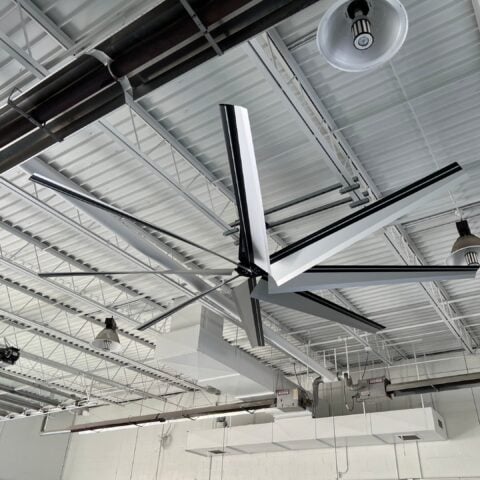
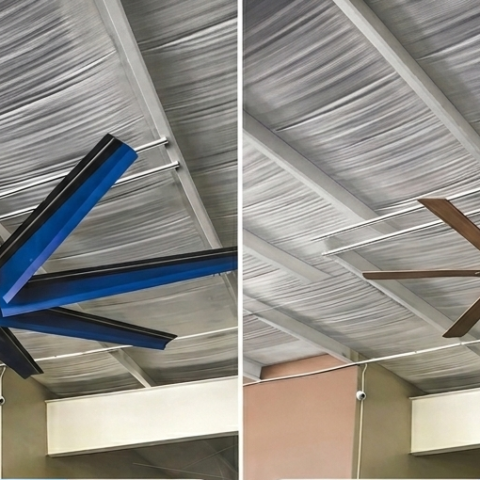
High-volume, low-speed (HVLS) fans can provide large-area air movement in commercial, industrial, agricultural, institutional, and recreation facilities. When properly selected and installed, they can support occupant comfort, destratification, and HVAC performance in spaces suited to their design.
HVLS fans are most effective in large, open areas with sufficient ceiling height and clearance. Their performance depends on room geometry, fan diameter, mounting height, obstructions, heat loads, HVAC airflow, controls, and operating conditions.
Important: HVLS fan performance and safety depend on proper sizing, structural review, electrical compatibility, clearances, and professional installation. This guide provides general application information only.
HVLS fans are air-circulation equipment, not a substitute for required ventilation. Where a building or process requires source capture, exhaust ventilation, makeup air, contaminant removal, flammable-vapor control, smoke control, or other code-required ventilation, those systems must be designed and operated separately. An HVLS fan may sometimes operate alongside a ventilation system when the design permits it, but circulating air does not replace contaminant removal or required exhaust.
Hazardous-location suitability must also be checked separately. Some industrial, automotive, aviation, chemical, fuel-handling, coating, or processing areas can contain classified locations because of flammable gases, vapors, combustible dust, or other hazards. Do not install a general-purpose HVLS fan in a classified area unless the exact fan, motor, controls, electrical components, and installation are approved for that classification.
Below, we break down common applications for HVLS fans, why they may work in each environment, and the potential operational benefits when properly applied.
Why HVLS Fans Are Application-Specific by Design
Unlike small ceiling or pedestal fans, HVLS fans operate as large-area air movement systems. Their performance depends on:
- Ceiling height and available mounting clearance
- Building structure and allowable mounting loads
- Open floor area and obstruction density
- Fan diameter and operating speed
- Heat loads from people, machinery, lighting, or processes
- Existing HVAC airflow patterns
- Required exhaust or ventilation systems
- Fire-protection systems and required clearances
- Hazardous-location classification where applicable
HVLS fans often provide the greatest benefit where thermal stratification, stagnant zones, uneven temperatures, or occupant comfort are persistent challenges and where the building layout provides sufficient open space for the fan’s airflow pattern.
Warehouses and Distribution Centers
Warehouses are a common HVLS application because many have high ceilings, large floor areas, and substantial temperature stratification.
Why They Can Work Well in Warehouses
- High ceilings can allow warm air to accumulate above the occupied zone
- Large footprints can make consistent HVAC distribution difficult
- Frequent dock-door openings can disrupt conditioned-air patterns
- Open floor areas may provide room for broad air circulation
Potential Benefits for Warehouse Environments
- Destratification may redistribute warmer ceiling air during heating season
- Air movement can help reduce hot and cold zones in occupied areas
- Air velocity over occupants can improve perceived comfort during warm conditions
- Air mixing may help reduce some condensation conditions when integrated with the building’s HVAC and moisture-control strategy
Storage racks, sprinklers, lighting, cranes, conveyors, and other equipment must be considered when selecting fan diameter and mounting position. Explore warehouse ceiling fans or contact our HVLS specialists for help reviewing warehouse-specific product and layout requirements.
Manufacturing Plants and Industrial Production Floors
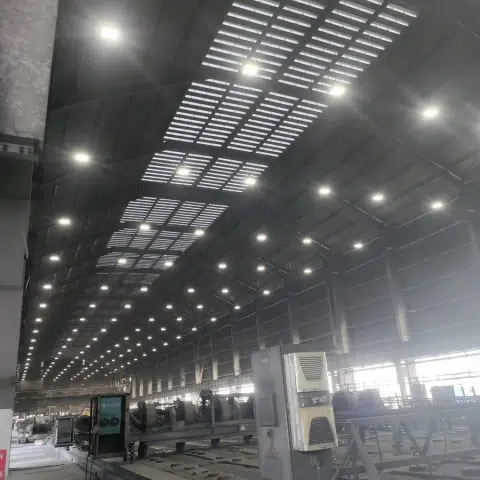
Manufacturing facilities can benefit from HVLS air movement where large open spaces, high ceilings, localized heat loads, and worker-comfort concerns are present.
Why HVLS Fans May Work in Manufacturing
- Machinery and processes can create localized heat loads
- Large floor areas can develop stagnant or uneven-temperature zones
- High ceilings may promote thermal stratification
- Open production areas can provide room for broad air movement
Potential Benefits for Manufacturing Facilities
- Air movement may improve worker comfort around heat-producing equipment
- Destratification can help reduce temperature differences in tall spaces
- HVLS fans may reduce dependence on multiple small circulation fans
- Air mixing may complement an HVAC or ventilation strategy when coordinated with the system design
Facilities evaluating air movement for production areas can also review HVLS and drum fans for manufacturing facilities.
Process ventilation remains separate. HVLS fans should not be used as a replacement for required welding-fume extraction, dust collection, solvent-vapor exhaust, process exhaust, local exhaust ventilation, or other contaminant-control systems.
Facilities with flammable gases, vapors, combustible dust, fibers, or other classified hazards require additional review before a fan is installed. The fan and electrical components must be suitable for the documented area classification if they are located within the classified boundary.
Cold Storage and Refrigerated Facilities
HVLS fans may be used in selected cold-storage, food-distribution, and refrigerated logistics spaces to help manage air stratification and temperature variation.
Why They May Work in Cold Storage
- Temperature differences can develop between floor and ceiling levels
- Large spaces may experience uneven air distribution
- Door openings can create localized temperature and moisture changes
- Open storage areas may benefit from controlled air mixing
Potential Benefits for Cold Storage Applications
- Controlled destratification may reduce vertical temperature gradients
- Air mixing may help support more uniform room temperatures
- Properly designed airflow may help manage some condensation conditions
- Air circulation may complement the refrigeration system’s distribution strategy
Fan selection, operating speed, motor temperature limits, controls, clearances, and moisture conditions should be reviewed for the exact cold-storage application. Excessive air velocity over products or evaporators can be undesirable in some facilities.
Food Processing and Packaging Facilities
Food facilities require careful coordination of temperature, humidity, sanitation, airflow, and process-control requirements.
Potential HVLS Applications in Food Facilities
- Warehousing and staging areas
- Packaging spaces
- Dry processing areas where fan use is permitted
- Non-washdown support areas
- High-ceiling spaces requiring destratification
Potential Benefits
- Air movement may improve occupant comfort
- Destratification can help reduce vertical temperature differences
- Air circulation may complement humidity-management strategies
- Controlled airflow may help reduce stagnant areas
Food-processing applications require additional review for sanitation, washdown exposure, product contamination, process airflow, and cleaning requirements. Fan construction and certification should be matched to the actual environment.
An HVLS fan should not be assumed to provide required exhaust ventilation, process-air control, or contaminant removal in a food-production area.
Agricultural Buildings and Livestock Facilities
Barns, livestock buildings, equestrian facilities, and other agricultural structures can use HVLS fans for large-area circulation and animal or occupant comfort when the building design supports their use.
Potential Benefits for Agricultural Applications
- Air movement may help reduce heat stress
- Circulation may improve perceived comfort for animals and workers
- Air mixing may help reduce stagnant zones
- Large fans may provide broad coverage compared with multiple small circulation fans
For livestock and barn applications, review available dairy and horse barn ceiling and drum fans.
HVLS circulation should not be confused with required building ventilation. Ammonia, moisture, combustion gases, dust, and other contaminants may require specific ventilation or exhaust rates that circulation fans alone cannot provide.
Agricultural processing involving grain, feed, milling, grinding, conveying, or other combustible-dust processes may also create hazardous classified areas. Confirm whether the proposed fan location has a documented classification before selecting equipment.
Gymnasiums, Sports Facilities, and Recreation Centers
Gymnasiums, field houses, indoor practice facilities, and recreation centers often have high ceilings and large open floor areas that can accommodate HVLS fans.
Potential Benefits for Athletic Facilities
- Broad air movement may improve perceived comfort
- Low-speed operation can provide circulation without the concentrated air stream of a small high-speed fan
- Destratification may help reduce vertical temperature differences
- Fan speed can be adjusted for occupancy and seasonal conditions
Buyers can explore gym and fitness center fans for these applications. Fan layout should account for sports equipment, retractable goals, nets, scoreboards, lighting, sprinklers, bleachers, and other overhead obstructions.
Aircraft Hangars and Aviation Maintenance Facilities
Aircraft hangars can have large open volumes and high ceilings that appear well suited to HVLS air circulation. However, aviation facilities require additional review because portions of an aircraft hangar or maintenance area may be classified for flammable-vapor hazards depending on fueling, maintenance activities, aircraft systems, ventilation, and the applicable codes.
Do not assume that an ordinary HVLS fan is suitable throughout an aircraft hangar. The actual hazardous-area classification and its boundaries should be established before selecting fan equipment. If a fan, motor, controller, disconnect, wiring, or other electrical equipment is located within a classified area, it must be suitable for that classification.
Potential Benefits in Appropriate Unclassified Areas
- Large-area circulation may reduce stagnant zones
- Air movement may improve comfort for maintenance crews
- Destratification may support HVAC performance in high-bay areas
- Controlled circulation may help manage temperature differences across large spaces
For appropriate unclassified spaces, see aircraft hangar fans.
HVLS fans do not replace required hangar ventilation or vapor-removal systems. Where mechanical ventilation, exhaust, or vapor removal is required for aircraft servicing, maintenance, painting, fueling-related operations, or other processes, those systems must be separately designed and installed for that purpose.
NFPA 409 distinguishes hangar HVAC from blower and exhaust systems used for vapor removal and directs such exhaust systems to applicable ventilation requirements. An HVLS circulation fan should therefore be treated as supplemental air movement, not as the required means of removing flammable vapors or process contaminants.
Fan selection should also account for aircraft clearances, tail height, wing positions, cranes, hangar doors, sprinkler systems, lighting, maintenance platforms, and other moving or fixed equipment.
Automotive Service Centers and Equipment Garages
Automotive service centers, fleet garages, and equipment-maintenance buildings can benefit from HVLS circulation in suitable areas, particularly where high ceilings and open service bays create comfort or stratification problems.
However, vehicle-service facilities can contain exhaust gases, fuel vapors, solvent vapors, battery-related hazards, pits, fuel-handling areas, or other conditions that require dedicated ventilation or hazardous-area classification.
Potential Benefits for Automotive Service Centers
- Air movement around service bays may improve worker comfort
- Circulation may help reduce localized heat buildup from engines and equipment
- Destratification may help reduce temperature differences in high-ceiling garages
- HVLS circulation may complement the building HVAC system where the design permits it
Suitable unclassified areas may also benefit from garage and workshop fans.
HVLS fans cannot replace vehicle-exhaust extraction or required mechanical exhaust ventilation. Engine exhaust, carbon monoxide, fuel vapors, solvent vapors, welding fumes, and other contaminants must be controlled using the ventilation or source-capture systems required for the operation.
For example, tailpipe extraction or another source-capture system removes exhaust near the point of generation. An HVLS fan only redistributes room air and can actually spread contaminants if used without an appropriate exhaust strategy.
Likewise, where flammable liquids or vapors create a hazardous classified area, the fan and all associated electrical equipment located within that boundary must be suitable for the classification. Pits and low areas require particular attention because heavier-than-air vapors can accumulate there.
Before adding HVLS fans to a service garage, coordinate the fan layout with:
- Vehicle exhaust systems
- General exhaust and makeup air
- Fuel-handling areas
- Service pits
- Welding or body-work areas
- Paint or solvent operations
- Carbon-monoxide monitoring where applicable
- Hazardous-area classifications
- Sprinklers and fire protection
- Lifts and other overhead equipment
Retail Warehouses and Big-Box Commercial Spaces
Large retail spaces and warehouse stores may use HVLS fans to improve occupant comfort and reduce temperature stratification.
Potential Benefits for Retail Spaces
- Broader circulation across large sales areas
- Improved perceived comfort during warm conditions
- Destratification during heating season
- Potential HVAC benefits depending on the building and controls strategy
Fan placement should account for shelving, displays, signage, sprinklers, lighting, mezzanines, and customer areas. For these environments, explore retail store and shopping mall fans.
Educational Facilities and Institutional Buildings
Schools, universities, and institutional buildings may use HVLS fans in gymnasiums, cafeterias, auditoriums, field houses, and multipurpose spaces.
Potential Benefits
- Air movement may improve comfort during assemblies and events
- Destratification may reduce temperature differences in tall spaces
- Variable fan speed can support different occupancy conditions
Fan selection and installation should be coordinated with occupancy requirements, acoustics, sprinklers, lighting, structural support, and other overhead equipment.
Event Centers, Convention Halls, and Assembly Spaces
Large event spaces may benefit from adjustable broad-area air movement because occupancy and internal heat loads can change significantly from one event to another.
Potential Benefits
- Adjustable air movement for changing occupancy levels
- Improved perceived comfort during high-density events
- Destratification in tall spaces
- Possible HVAC energy benefits depending on controls and building operation
For large assembly venues, consider convention center fans suited to broad-area circulation applications.
HVLS Fans and Required Ventilation: Know the Difference
This distinction is important in industrial and service applications.
| HVLS Air Circulation | Exhaust / Source-Capture Ventilation |
|---|---|
| Moves and mixes air within the occupied space | Removes contaminated air from the building or captures contaminants near their source |
| Can improve perceived comfort | Controls gases, vapors, fumes, dust, or other contaminants |
| Can reduce thermal stratification | Provides required air changes or process exhaust where specified |
| May complement HVAC operation | May include makeup air to replace exhausted air |
| Does not inherently remove contaminants | Discharges or filters contaminants according to the system design |
Air movement and ventilation are not interchangeable terms. If a facility has a code-required or process-required exhaust system, an HVLS fan should only be added after confirming that its airflow will not interfere with contaminant capture, exhaust patterns, pressure relationships, or hazardous-area controls.
HVLS Fans in Hazardous or Classified Areas
Some facilities listed in this guide may contain hazardous classified areas, but the entire facility should not be classified solely because of its industry type.
Areas should be evaluated individually based on the materials, processes, release points, ventilation, and applicable electrical code.
Examples of facilities that may contain classified areas include:
- Aircraft hangars
- Automotive and fleet service facilities
- Fuel dispensing or transfer areas
- Paint and solvent operations
- Chemical-processing facilities
- Grain and feed processing
- Woodworking or combustible-dust processes
- Oil and gas facilities
If an HVLS fan is proposed within a documented classified location, verify the exact:
- Class and Division or Zone
- Gas, vapor, dust, or fiber Group
- Temperature classification or permitted surface temperature
- Ambient-temperature range
- Fan motor rating
- Controller and disconnect rating
- Wiring method
- Certification or listing requirements
Do not assume that a fan described as industrial, sealed, washdown-rated, corrosion-resistant, or IP-rated is suitable for a hazardous location. Hazardous-location approval is a separate requirement. Where classified lighting is also required, review explosion-proof lighting options appropriate to the documented classification.
Key Considerations: Application Fit Determines Performance
HVLS fans often provide the greatest value in environments with:
- Large open floor areas
- Suitable ceiling and mounting height
- Adequate clearance from people, equipment, sprinklers, lighting, and structures
- Persistent thermal stratification
- Occupant-comfort concerns
- An HVAC strategy that can benefit from additional air circulation
- Adequate structural support for the selected fan
There is no universal minimum ceiling height that determines HVLS suitability. Fan diameter, mounting height, blade clearance, occupied-zone clearance, building configuration, manufacturer instructions, and applicable codes should all be considered.
Critical Requirements: Proper sizing, spacing, controls, structural review, electrical compatibility, clearances, fire-protection coordination, and site-specific safety review are important for HVLS installations.
Safety and Performance Standards
HVLS fans used in commercial and industrial facilities should be selected according to the applicable product certifications, manufacturer requirements, electrical code, building conditions, and project specifications.
Important Certification Considerations
- UL / ETL: Safety listings or certifications vary by fan model. Confirm the exact certification shown on the selected product rather than assuming every commercial HVLS fan carries the same listing.
- Hazardous-Location Ratings: Where a fan is installed inside a classified area, confirm that the fan and associated electrical equipment are specifically approved for that classification.
- Fire-Protection Coordination: Fan installation and operation should be coordinated with sprinkler systems and other fire-protection requirements applicable to the building.
- HVAC Coordination: Fan direction, speed, and location can affect supply-air distribution, returns, exhaust systems, pressure relationships, and source-capture performance.
Professional Review: HVLS installations should be reviewed for structural suitability, electrical requirements, clearances, site-specific safety conditions, and interaction with other building systems.
Warranty and Long-Term Support Considerations
HVLS fans are long-term mechanical and electrical equipment. Product durability, manufacturer support, replacement components, warranty terms, and serviceability should be considered along with airflow performance.
Support Factors to Consider
- Warranty Coverage: Terms vary by manufacturer and fan model. Confirm the exact coverage before ordering.
- Technical Support: Access to technical documentation, controls support, and replacement components can reduce downtime.
- Maintenance: Inspection and maintenance requirements vary by fan design, duty cycle, environment, mounting system, and manufacturer.
Work With HVLS Specialists Who Understand Your Application
LED Lighting Supply can help review HVLS fan size, fan diameter, mounting height, room dimensions, obstructions, controls, electrical requirements, environmental conditions, and integration with the building layout.
For projects involving hazardous locations, exhaust ventilation, source capture, process ventilation, structural design, or other code-sensitive conditions, the relevant classification and engineering requirements should be established by the facility engineer, mechanical engineer, electrical professional, structural professional, industrial hygienist, or authority responsible for the project.
If you are evaluating HVLS fans for your facility, our specialists can help determine where they may be appropriate and identify the product information needed for a complete project review.
Ready to get started? Browse our full selection of HVLS fans or contact our team for application-specific product guidance.