


Number of Lights:
45Total 5-Year Savings:
$49K+The Backstory of Our Relationship with Tussey Mountain
Night skiing only works if riders can see the slope in front of them. At Tussey Mountain in Boalsburg, Pennsylvania, one of the resort's busier intermediate runs sat in near darkness. The rest of the mountain ran on aging 1000-watt metal halide fixtures mounted to a pole line the resort had flagged for replacement.
The Mountain Manager, Ty Carts, placed a test order for one 400-watt LED flood light to see how it held up on one section of slope. A few weeks later, he reported back that the light was working well. He asked to see a plan and cost estimate for a bigger project.
The Challenge of Upgrading the Ski Slope Lighting
Tussey Mountain was managing two lighting problems at once. Each concern carried different risks.
A Blue Line Slope Running in the Dark
The Blue Line runs operated without any lighting for night riding. It's a popular slope that puts a mix of skill levels on the same terrain at speed with limited visual reference. Terrain changes, ice patches, moguls, boundary signage, and other riders get harder to read after dark.
Uneven Light Levels Across the Mountain
Mixing existing metal halide fixtures with new LED fixtures creates uneven light levels. A rider moving from a bright LED section into a dimmer metal halide section has to wait for their eyes to adjust.
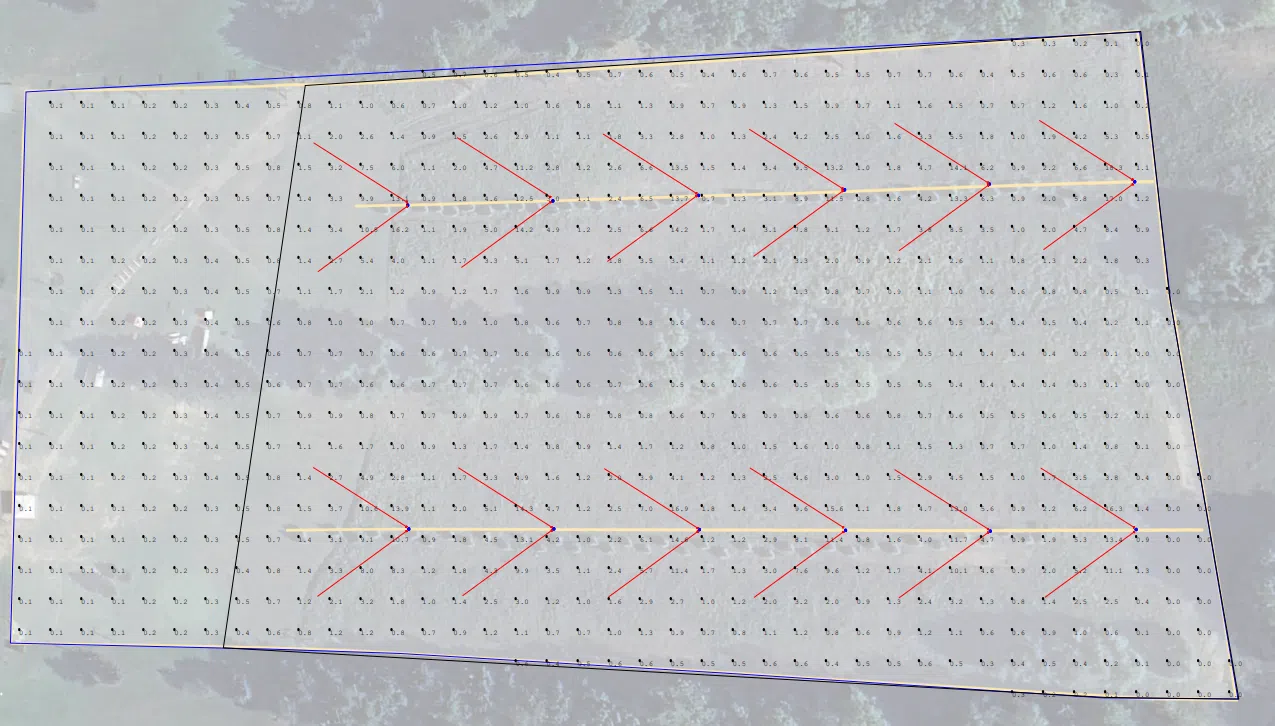
Lighting Plan Created for Tussey Mountain Blue Line Slopes
Lighting Plan Metrics
- Mounting Height: 25 ft (feet)
- Average Foot Candles (fc): 2 fc
- Product(s) Used: MLLG-POLE-WD-30-C3-T-SYP MLLG-AG-LED-IMF-400-5-[Optic]-TR-[V] MLLG-AG-LED-IMF-600-5-[Optic]-TR-[V]
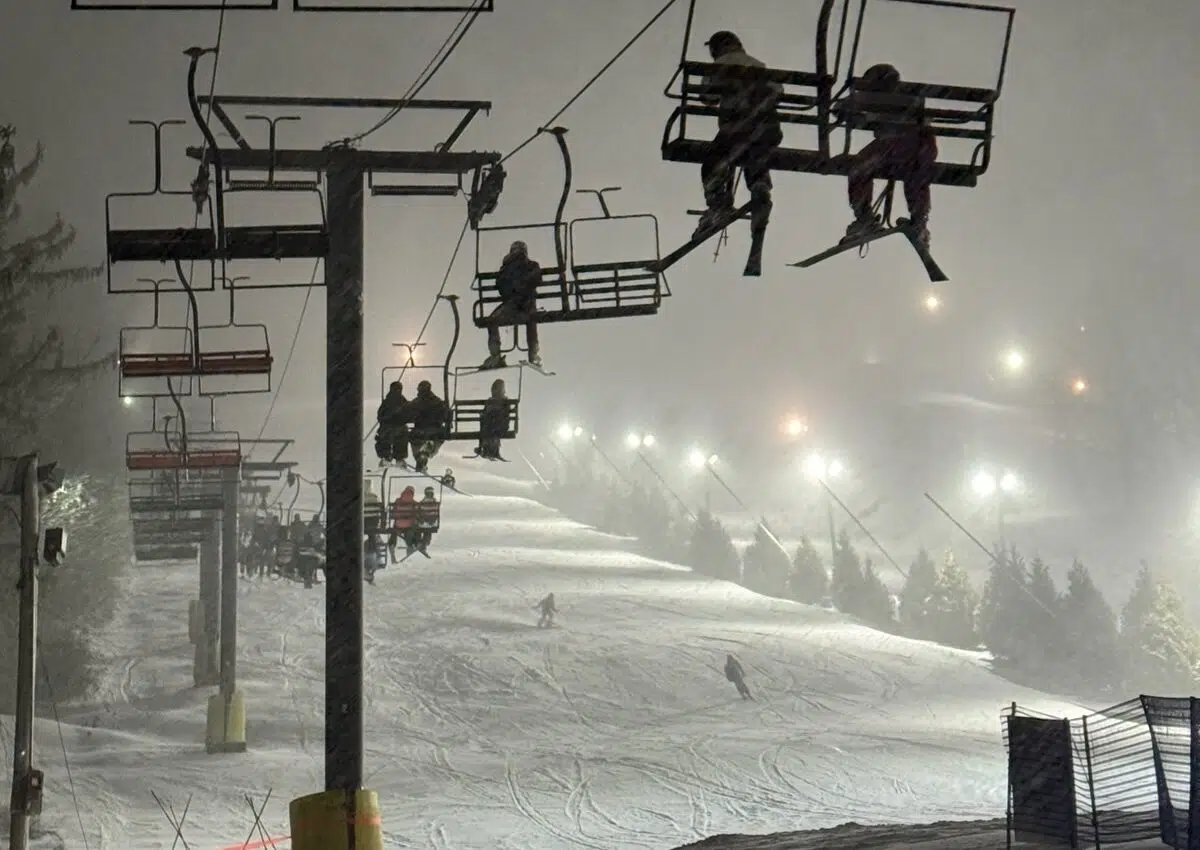
Tussey Mountain Blue Line Slope Illuminated With Our Lights and Poles During Night Skiing Operations
Dim slope lighting also creates operational risk for the people running the mountain.
- Ski patrol locating and reaching a fallen skier takes longer in poorly lit terrain
- Snow grooming operators work with reduced visibility on night and early morning passes
- Maintenance crews service fixtures at height, often near active lift equipment
- Patrol sweeps and evacuations happen in areas without reliable light coverage
The Budget and Site Constraints
The preference was clear from the first conversation. Ty wanted a slope-by-slope rollout rather than the full recommended scope in one purchase. Lighting the Blue Line slopes meant a new pole line, power run, and the trenching that comes with both.
The Strategy and Solution of a Phased Ski Slope Lighting Upgrade
LED Lighting Supply’s Product Specialist, Mike Redmond, worked directly with the Tussey Mountain team throughout the project. Our team turned the resort’s slope map and priorities into a photometric lighting plan to be executed in stages.
The Full Recommendation
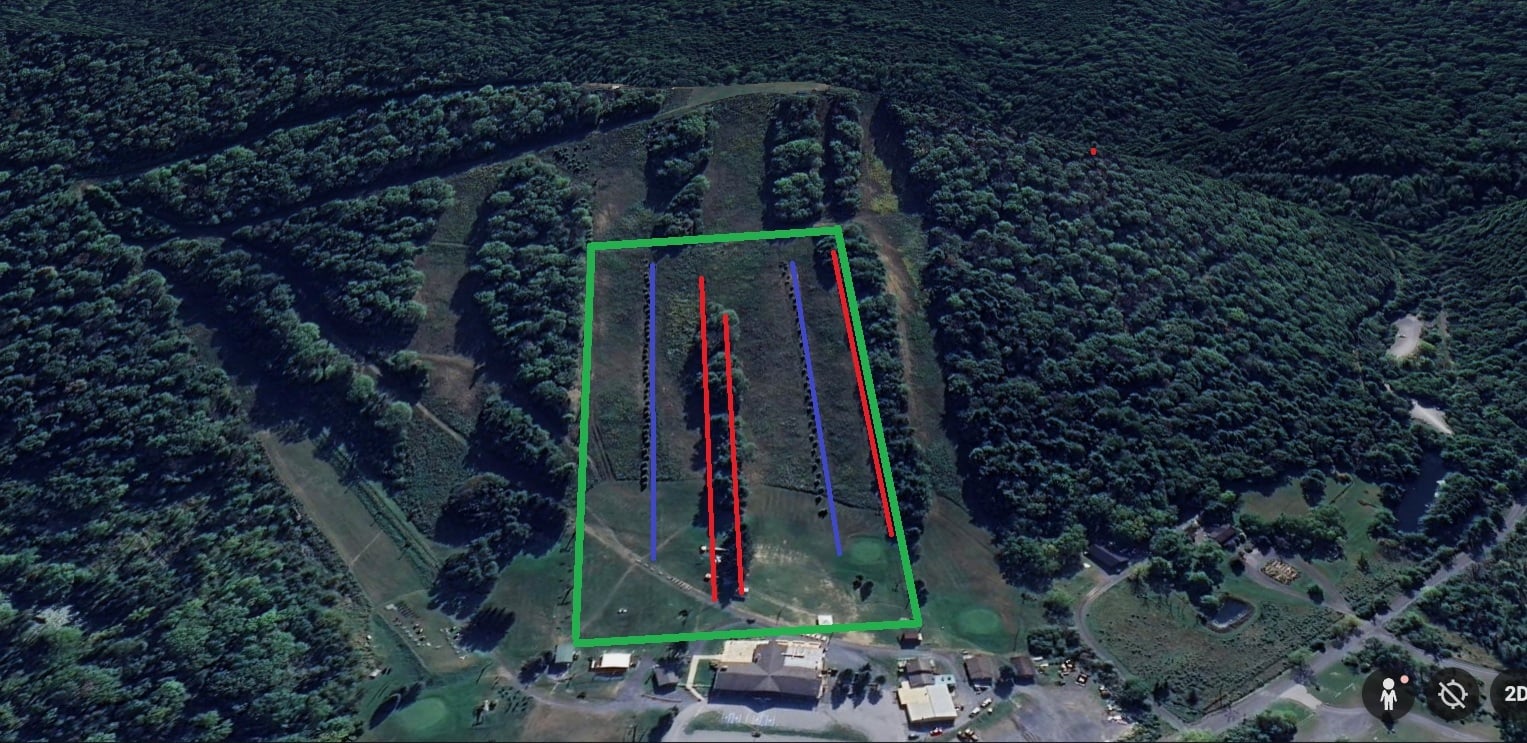
The original recommendation called for four 400-watt LED area flood light fixtures per pole. The lighting plan showed two light fixtures on each side of the trail, for 92 new fixtures across 23 new poles spanning four trails. That was the vision for the entire property before anything was broken into sections.
The Phased Plan
Tussey Mountain elected to start with the Blue Line slopes. The revised plan called for six new Class 3 wood pole locations, two fixtures per pole. Twelve 600-watt LED flood light fixtures were split between the two trails that make up the blue line runs.
A pole’s class comes from its species, length, minimum dimensions, taper, and strength rating. The EPA rating factors into how much fixture load it can support. Class 3 sits in the middle of the range, built for loads that need more capacity than Classes 4 through 10. It doesn’t require the larger dimensions of a Class 1 or Class 2 pole.
Pole Installation Note: A qualified engineer should verify structural calculations for pole loading, and local code requirements should always be confirmed before installation. LED Lighting Supply’s Product Specialists can help confirm fixture and pole compatibility before you order.
The light level target for the upgrade was 1 to 15 foot candles (fc), adjusted for snow reflection. Snow reflects a large share of the light that reaches it. A lighting plan that ignores this detail will overlight the slope.
The Results of Our Custom Lighting Recommendation
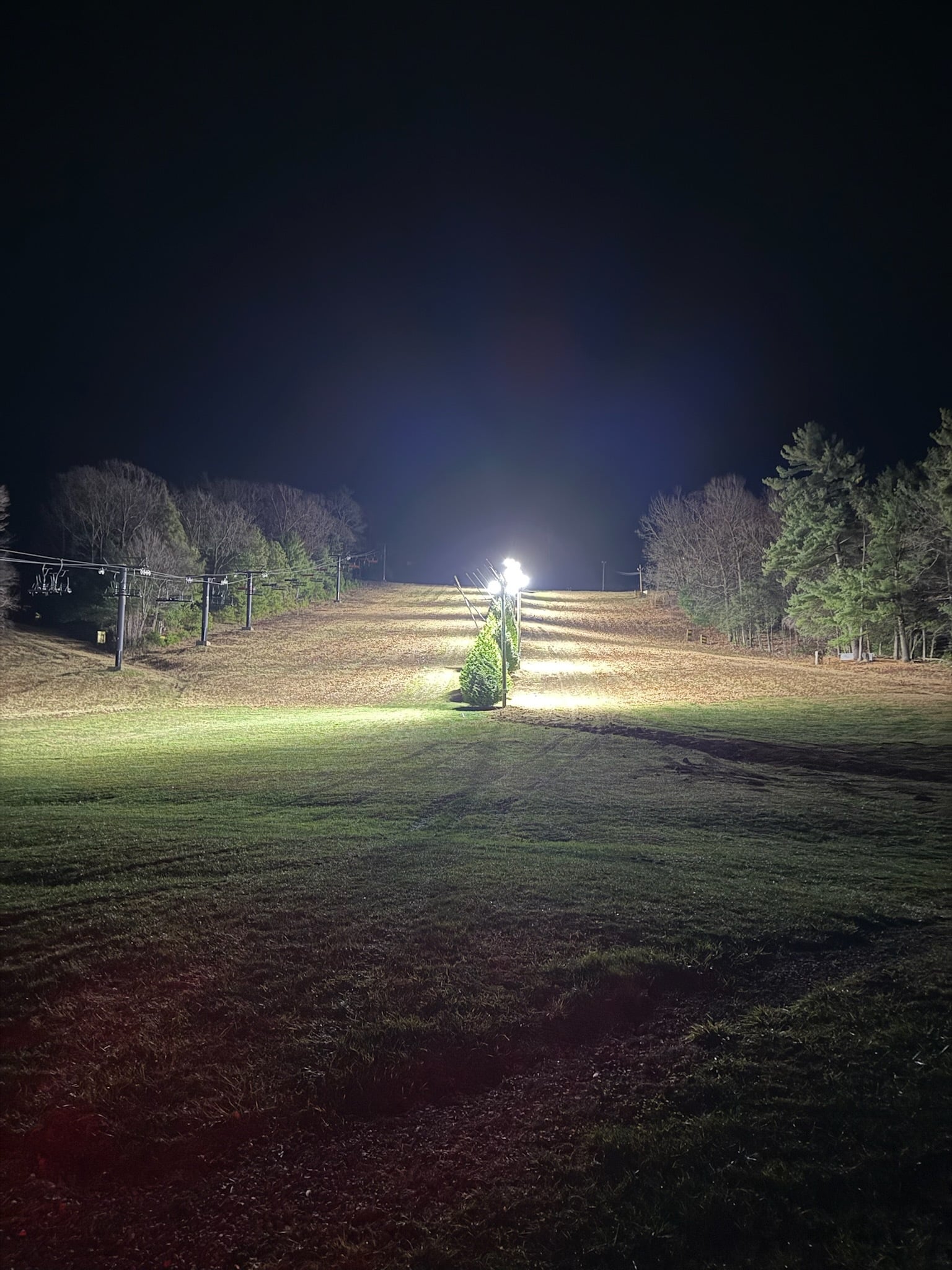
The blue line slopes now have a lighting system where it previously had none. Across the rest of the property, each phase replaces another group of 1000-watt metal halides. This steadily closes the uneven light level gap the resort started with.
Immediate Advantages of Our Recommended Solution
- A previously unlit high-traffic slope now has night lighting
- LEDs turn on instantly, with no warm-up or restrike delay after a power interruption
- Lighting plan designed to a 1 to 15 fc benchmark adjusted for snow reflection, rather than a generic foot-candle target
- Phased rollout let Tussey Mountain prioritize its highest-traffic unlit slope first, without a full-property capital commitment up front
The upgrade is projected to deliver $9,910 in combined energy and maintenance savings after the first year.
| Savings | Within 1 Year | Within 5 Years |
| Total Energy Savings | $9,460 | $47,300 |
| Maintenance Savings | $450 | $2,250 |
| Total Savings (Energy + Maintenance) | $9,910 | $49,550 |
Savings and Payback Note: Estimates are based on the local utility rate of $0.096 per kWh for commercial and industrial areas in Boalsburg, Pennsylvania, using our LED savings calculator. These are calculator-based estimates, not guaranteed figures.
To date, Tussey Mountain has installed 45 lights and 11 wood poles supplied by LED Lighting Supply. The relationship started with a single sample fixture and continued across seven separate orders.
