


Outdoor Padel Court Light Poles for Padel Court Lighting Systems
- Designed and certified for the highest quality performance
- All of our products come with a hassle free warranty
- Trusted by Contractors with over 500 5-star reviews


Padel courts require a carefully planned lighting approach to ensure consistent visibility across a compact playing surface surrounded by glass walls and fencing. Outdoor padel court light poles are designed to position fixtures at the proper height and angle to minimize glare while maintaining even light distribution. Because of the enclosed court design, improper pole placement or mounting height can create shadows, reflections, or uneven lighting that affects gameplay.
Most outdoor padel lighting systems use poles in the 20 to 30 foot range, depending on court layout and fixture selection. The goal is to provide uniform illumination without over-lighting the space or creating excessive brightness near the net or glass panels. Proper pole selection, combined with the right fixtures and layout, ensures a consistent playing environment for both recreational and competitive use.
Showing 1–12 of 19 results
 SKU:MLLG-WG-POLE-CP-18-4SQ-AB | Web ID:2563Minimum Order: 4Minimum Order Total: $3,483.16Built to Order 5 Weeks
- Pole Weight (lbs): 47
- Pole Width (in): 4
- Pole Color: Bronze | Black | White | Gray | Custom
- Pole Gauge: .205 in
- Warranty: 7 years
Starting At$870.79


- SKU:MLLG-WL-POLE-20-4RD-DB-BZ-TN | Web ID:2116Minimum Order: 2Minimum Order Total: $1,967.34Availability: 44 In Stock Ships 7-14 Days
- Height Above Grade (ft): 20
- Buried Depth Below Grade (ft): 5
- Pole Weight (lbs): 132
- Pole Color: Bronze
- Pole Gauge: 11
- Warranty: 1 year
Starting At$983.67 - SKU:LLS-LN-POLE-20FT-4.5-RD-BK | Web ID:2700Minimum Order: 2Minimum Order Total: $1,974.46Availability: 113 In Stock Ships 7-14 Days
- Pole Weight (lbs): 124
- Pole Color: Black
- Pole Gauge: 11
- Warranty: 1 year
Starting At$987.23 - SKU:MLLG-WL-POLE-20FT-4-SQ-[COLOR]-TN | Web ID:1912White:13 In StockShips 7-14 DaysBronze:228 In StockShips 7-14 Days
- Pole Weight (lbs): 169
- Pole Width (in): 4
- Pole Color: Bronze | White
- Pole Gauge: 11
- Warranty: 1 year
Starting At$773.47 - SKU:MLLG-WL-POLE-20FT-4-RD-BZ-TN | Web ID:1917Minimum Order: 2Minimum Order Total: $1,644.90Availability: 155 In Stock Ships 7-14 Days
- Pole Weight (lbs): 143
- Pole Color: Bronze
- Pole Gauge: 11
- Warranty: 1 year
Starting At$822.45 - SKU:MLLG-WG-POLE-CP-20-4SQ-DB | Web ID:2172Minimum Order: 4Minimum Order Total: $3,303.64Availability: 54 In Stock Ships 3-4 weeks
- Height Above Grade (ft): 20
- Buried Depth Below Grade (ft): 5
- Pole Weight (lbs): 68
- Pole Width (in): 4
- Pole Color: Bronze | Black | White | Gray | Custom
- Pole Gauge: .205 in
- Warranty: 7 years
Starting At$825.91 - SKU:MLLG-WG-POLE-CP-20-4SQ-AB | Web ID:2562Minimum Order: 4Minimum Order Total: $3,820.00Built to Order 5 Weeks
- Pole Weight (lbs): 52
- Pole Width (in): 4
- Pole Color: Bronze | Black | White | Gray | Custom
- Pole Gauge: .205 in
- Warranty: 7 years
Starting At$955.00 25 Foot Round Tapered Steel Light Pole | 6.5 Inch Base Diameter | Anchor Base | High Wind Zone Rated
SKU:MLLG-WL-POLE-25FT-65-TRD-BZ-T | Web ID:2170Minimum Order: 2Minimum Order Total: $2,016.00Availability: 19 In Stock Ships 7-14 Days- Pole Weight (lbs): 163
- Pole Color: Bronze
- Pole Gauge: 11
- Warranty: 1 year
Starting At$1,008.00- SKU:MLLG-WL-POLE-25FT-4-RD-BZ-TN | Web ID:1918Minimum Order: 2Minimum Order Total: $1,987.76Availability: 264 In Stock Ships 7-14 Days
- Pole Weight (lbs): 176
- Pole Color: Bronze
- Pole Gauge: 11
- Warranty: 1 year
Starting At$993.88 - SKU:MLLG-WL-POLE-25FT-4-SQ-[COLOR]-TN | Web ID:1916Bronze:186 In StockShips 7-14 DaysWhite:7 In StockShips 7-14 Days
- Pole Weight (lbs): 190
- Pole Width (in): 4
- Pole Color: Bronze | White
- Pole Gauge: 11
- Warranty: 1 year
Starting At$926.00 - SKU:MLLG-WG-POLE-CP-25-4SQ-DB | Web ID:2333Minimum Order: 4Minimum Order Total: $3,776.36Availability: 33 In Stock Ships 3-4 weeks
- Height Above Grade (ft): 25
- Buried Depth Below Grade (ft): 4.5
- Pole Weight (lbs): 80
- Pole Width (in): 4
- Pole Color: Bronze | Black | White | Gray | Custom
- Warranty: 7 years
Starting At$944.09 - SKU:MLLG-WG-POLE-CP-25-5SQ-AB | Web ID:2561Minimum Order: 4Minimum Order Total: $5,107.28Built to Order 5 Weeks
- Pole Weight (lbs): 103
- Pole Width (in): 5
- Pole Color: Bronze | Black | White | Gray | Custom
- Warranty: 7 years
Starting At$1,276.82






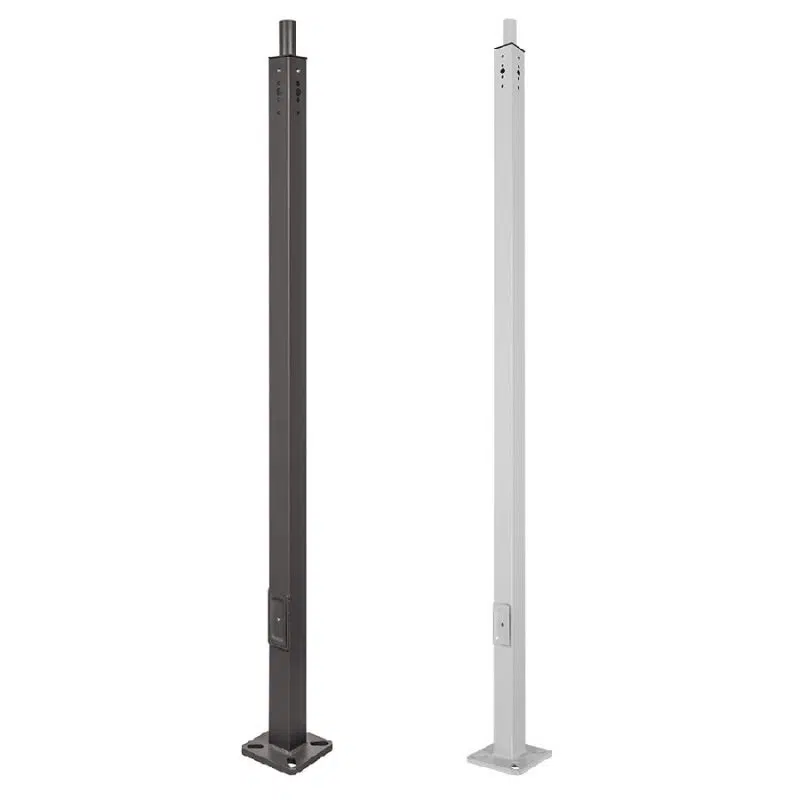


Outdoor Padel Court Light Pole Planning and Design
Outdoor padel court light poles play a central role in creating a reliable and consistent lighting system for one of the fastest-growing racket sports. Unlike larger field sports, padel is played on a smaller, enclosed court where lighting must be carefully controlled to avoid glare, reflections, and uneven coverage. Selecting the right pole system is not just about supporting fixtures; it directly impacts visibility, player comfort, and overall court usability.
Why Padel Court Lighting Requires Careful Pole Placement
Padel courts are typically surrounded by glass walls and metal fencing, which introduces unique lighting challenges. Light reflecting off glass surfaces can create distractions if fixtures are not properly positioned or shielded. This makes pole height, placement, and fixture aiming more important than in many other outdoor sports. A well-designed system uses pole locations that minimize direct glare into the playing area while still delivering adequate light levels across the entire court.
Recommended Pole Heights for Outdoor Padel Courts
Most outdoor padel installations use poles in the 20 to 30 foot range. This height allows fixtures to be mounted above the field of play while maintaining control over beam spread and intensity. Taller poles can improve light uniformity by widening the distribution pattern, but they must be matched with appropriate fixtures to avoid excessive brightness or spill light. Shorter poles may be used in residential or smaller recreational settings, but they require careful planning to prevent shadows and uneven illumination.
Pole Layout and Court Coverage
Pole placement is equally important. In many installations, poles are positioned at the corners of the court or along the perimeter fencing to provide balanced coverage. The number of poles and fixtures depends on the desired light level, which can vary between casual play and more competitive environments. Consistency is the primary goal. Players should be able to track the ball clearly from any position on the court without experiencing dark zones or overly bright areas.
Durability and Outdoor Performance
Durability is another key factor when selecting outdoor padel court light poles. These installations are exposed to weather, temperature changes, and regular use over time. Steel poles are commonly used because they provide the structural strength needed to support lighting fixtures while resisting wind loads and environmental stress. Proper finishes, such as galvanization or protective coatings, help prevent corrosion and extend the lifespan of the installation, especially in coastal or humid environments.
Wind Load and Structural Considerations
Wind load and structural integrity should not be overlooked. Even though padel courts are smaller than other sports facilities, the poles still need to support fixtures that can catch wind and create additional stress on the structure. Engineering considerations should include pole thickness, mounting hardware, and foundation design to ensure long-term stability. Proper installation reduces the risk of movement or failure and helps maintain consistent lighting performance.
Managing Glare and Light Spill
Another important consideration is light control. Because padel courts are often located in residential or mixed-use areas, minimizing light spill is critical. Well-designed pole and fixture combinations direct light onto the playing surface without affecting nearby properties. This is especially important for clubs or facilities that operate in the evening, where uncontrolled lighting can create complaints or compliance issues.
Maintenance and Long-Term Reliability
Maintenance should also be part of the planning process. While padel courts are relatively small, the lighting system still needs to be accessible for inspection and servicing. Choosing the right pole height and mounting configuration can simplify maintenance tasks and reduce long-term costs. Reliable pole systems paired with quality fixtures help minimize downtime and ensure consistent performance over time.
Choosing the Right Padel Court Light Pole System
Ultimately, outdoor padel court light poles are a foundational part of the overall lighting system. They determine how fixtures are positioned, how light is distributed, and how the system performs under real-world conditions. By selecting poles that match the specific requirements of padel courts, facility owners can create a lighting environment that supports clear visibility, player comfort, and long-term reliability.
Outdoor Padel Court Light Poles for Padel Court Lighting Systems Frequently Asked Questions
What Are the Key Factors to Consider When Selecting Light Poles for Padel Courts?
When selecting light poles for padel courts, consider pole height, placement, and fixture compatibility. Proper height ensures adequate light distribution without glare, while strategic placement minimizes reflections from glass walls. Ensure poles are compatible with fixtures to maintain consistent lighting across the court.
Why Is Pole Height Important for Padel Court Lighting?
Pole height is crucial because it affects light uniformity and glare control. Poles in the 20 to 30-foot range allow for optimal fixture positioning, enhancing visibility and player comfort by reducing shadows and preventing excessive brightness.
How Does Pole Placement Affect Lighting on Padel Courts?
Pole placement impacts light coverage and glare reduction. Positioning poles at court corners or along perimeter fencing ensures balanced illumination, helping players track the ball without encountering dark zones or overly bright areas.
What Materials Are Recommended for Padel Court Light Poles?
Steel poles are recommended due to their structural strength and durability. They withstand environmental stress and wind loads, especially when treated with protective coatings to prevent corrosion in coastal or humid areas.
How Do Wind Load and Structural Integrity Influence Pole Selection?
Wind load and structural integrity are critical for long-term stability. Consider pole thickness, mounting hardware, and foundation design to ensure poles can support fixtures without movement or failure, maintaining consistent lighting performance.
Why Is Managing Glare and Light Spill Important for Padel Courts?
Managing glare and light spill is essential to minimize impact on nearby properties, especially in residential areas. Proper pole and fixture combinations focus light on the court, preventing complaints and compliance issues for facilities operating in the evening.
What Maintenance Considerations Should Be Made for Padel Court Light Poles?
Maintenance considerations include accessibility and ease of servicing. Selecting the right pole height and mounting configuration simplifies maintenance tasks, reducing long-term costs and ensuring consistent lighting performance.