Airport Light Poles
- Options for apron, parking, roadway, and facility lighting applications
- Steel poles available for high-wind and demanding airport environments
- Photometric plans available for applicable facility and area lighting projects



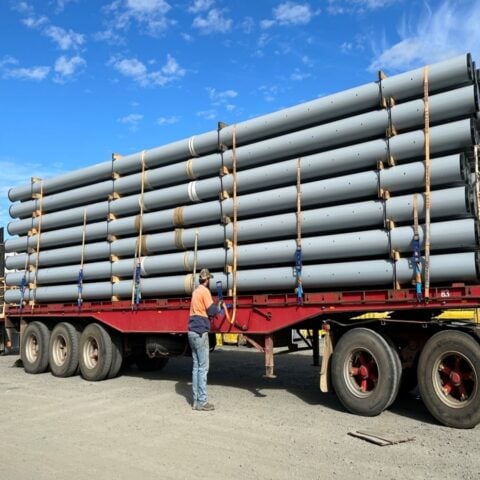
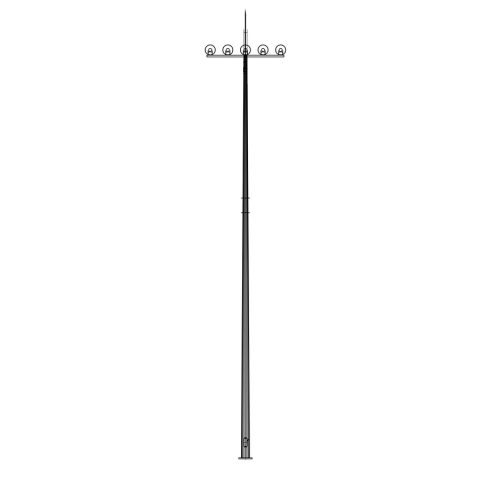
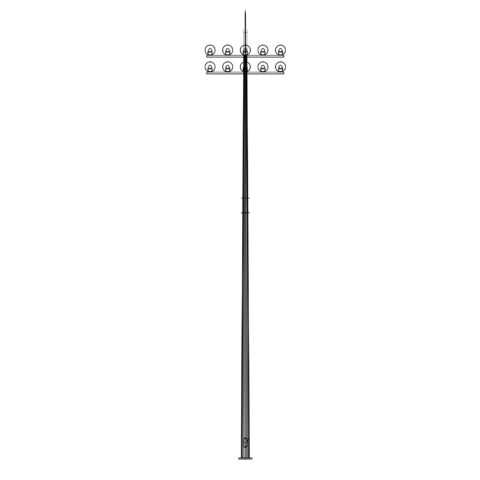
Our Airport Light Poles include steel high mast poles and lower-height pole systems for airside and landside lighting installations. High mast models are available in heights from 50 to over 100 feet and support multiple high-output luminaires. Available systems may include lowering mechanisms for ground-level fixture servicing.
These poles are used for aprons, maintenance ramps, cargo loading zones, parking lots, access roads, perimeter security zones, and airport support facilities.
-
 Starting At $8,391.11
-
Starting At $9,717.39
-
Starting At $10,506.38
-
Starting At $12,378.26




Understanding Airport Light Poles for Airfield and Facility Lighting
Airport light poles can support apron floodlighting, cargo and maintenance areas, parking lots, access roads, perimeter areas, and other airport facilities, but these applications should be distinguished from FAA-regulated runway, taxiway, approach, and other airfield visual-aid lighting systems. Start by identifying exactly where the pole will be installed and what it will illuminate. High mast floodlighting is commonly used for large apron, cargo, and maintenance areas, while lower pole-mounted lighting may be used for roadways, parking areas, and other landside facilities. Pole height, structural capacity, foundation requirements, fixture selection, photometric performance, glare, and compatibility with aircraft operations must all be reviewed for the specific location.
Lighting installed in or near aircraft operational areas may be subject to airport design criteria, FAA requirements, local airport authority standards, and aeronautical review beyond normal commercial outdoor-lighting requirements. Proposed poles and other structures may also require evaluation under FAA obstruction requirements, including 14 CFR Part 77, depending on their height and location. Airport owners, engineers, and other qualified aviation professionals should confirm applicable requirements before finalizing the pole and lighting system.
Airside Applications: Apron and High Mast Floodlighting
Large aircraft operating areas such as aprons, cargo ramps, aircraft parking positions, and maintenance ramps are often illuminated with high mast lighting systems. Depending on the project, these poles may range from approximately 50 feet to more than 100 feet and support multiple high-output luminaires designed to illuminate large areas from relatively few mounting locations.
High mast floodlighting can reduce the number of poles required across a large apron or ramp, but fewer poles do not automatically make a design acceptable for an airport environment. Pole locations, heights, fixture aiming, glare, light trespass, aircraft clearances, protected airspace, and compatibility with pilot and ground-crew visibility must be coordinated with the airport and project design team. A structurally acceptable pole with adequate foot-candle performance can still be inappropriate if its location or lighting distribution interferes with aircraft operations.
Where lowering devices are incorporated into high mast systems, luminaires can often be serviced closer to ground level rather than from elevated access equipment. Maintenance systems should be selected and engineered for the specific pole, fixture load, controls, electrical design, and airport operating environment.
Airport Floodlighting vs FAA Airfield Lighting
Apron and facility floodlighting should not be confused with FAA-regulated airfield visual-aid lighting. Runway edge lights, taxiway lights, approach lighting systems, precision approach path indicators, runway and taxiway signs, obstruction lights, and related aviation visual aids are specialized systems with FAA design, installation, and equipment requirements. Standard commercial LED floodlights and area lights should not be represented as substitutes for those systems unless the specific equipment and installation comply with the applicable FAA requirements.
The FAA maintains standards for airport lighting equipment and airport visual aids, including equipment certification requirements for certain federally funded airport projects. Obstruction lighting is also governed separately through FAA specifications and obstruction-marking guidance. The airport owner, engineer, or aviation consultant should determine which FAA advisory circulars, airport standards, and certification requirements apply to the project.
FAA Obstruction and Siting Considerations
High mast poles, light poles, buildings, antennas, cranes, and other structures near airports can affect navigable airspace. Depending on the proposed structure's height and location, notice to the FAA and an aeronautical study may be required under 14 CFR Part 77. The FAA's obstruction evaluation process reviews proposed construction that may affect air navigation, airport operations, navigation facilities, or airport capacity.
For this reason, pole height should not be selected solely from photometric requirements. A taller pole may improve lighting distribution or reduce fixture quantity but may also create airspace or obstruction concerns. Pole location and elevation should be coordinated with the airport owner and qualified aviation professionals early in the design process so structural and lighting decisions do not conflict with protected airspace or aircraft movement requirements.
Glare and Aircraft Operations
Glare control is particularly important when lighting is installed near aircraft operating areas. Fixture aiming should provide the required illumination on the working surface while limiting direct light toward pilots, control towers, approach and departure paths, taxi routes, and other sensitive viewing directions. Beam distribution, mounting height, fixture tilt, shielding, and pole placement should all be evaluated together rather than treating glare as a fixture specification alone.
Photometric modeling can help evaluate illumination levels and uniformity, but airport projects may require additional operational review. The final lighting design should be coordinated with the airport authority, lighting designer, engineer, and other aviation stakeholders as appropriate to verify that the proposed lighting does not create unacceptable glare or conflict with airport operations.
Structural and Engineering Considerations
Airport light poles must be designed for the structural requirements of the specific project. Large high mast poles are commonly constructed from steel and may support substantial fixture, crossarm, lowering-device, and electrical loads. Structural design should account for applicable wind speed, exposure, pole height, fixture EPA, mounted equipment, vibration, fatigue, and site environmental conditions.
Open airport environments can create demanding wind exposure because buildings, trees, and other natural wind barriers may be limited. The complete pole assembly, including luminaires and mounting hardware, should be evaluated rather than selecting a pole based only on nominal height or shaft size. Where wind conditions are significant, engineers may evaluate high-wind-rated light poles designed for the calculated project requirements.
Foundation design is equally important. High mast and other large airport poles typically require engineered foundations based on pole loading, soil conditions, groundwater conditions, frost depth where applicable, and other geotechnical and structural factors. Foundation dimensions should not be assumed from pole height alone. A qualified engineer should establish the foundation requirements for the specific site and pole system.
Lighting Performance and Photometric Design
Effective apron and airport-facility lighting depends on more than pole height or fixture wattage. Photometric design should evaluate required light levels, uniformity, fixture optics, mounting height, spacing, aiming, shadowing, and glare. Aprons, maintenance ramps, cargo areas, parking areas, and access roads can have substantially different lighting requirements and operating conditions.
High mast pole placement, fixture selection, and aiming angles should be coordinated through photometric modeling before equipment is ordered. Modeling can help determine whether the proposed design provides appropriate illumination across aircraft parking positions, service areas, vehicle routes, pedestrian work areas, and other relevant surfaces while limiting excessive spill and glare.
LED Lighting Supply can provide photometric lighting plans for applicable apron, facility, parking, roadway, and area-lighting projects. These plans should be treated as part of the overall project design and coordinated with airport engineering and aviation requirements where aircraft operations or regulated airfield areas are involved.
Landside Applications: Area and Facility Lighting
Airport light poles are also widely used outside aircraft operating areas. Landside applications can include passenger and employee parking lots, rental-car facilities, access roads, service roads, loading areas, perimeter zones, and support buildings. These installations may resemble other commercial outdoor-lighting projects, although airport-specific security, glare, operational, and structural requirements may still apply.
Dedicated parking lot light poles may be appropriate for passenger and employee parking areas, while commercial LED area lights can provide broad coverage for roadways, lots, and facility areas. Commercial LED street lighting may also be appropriate for access and service roads where the fixture, mounting, and project requirements are confirmed. Pole height, fixture optics, controls, voltage, required foot-candle levels, uniformity, and surveillance requirements should be confirmed for the specific application.
Material Selection and Durability
Steel is commonly used for large airport and high mast poles because of its structural capacity and ability to support substantial lighting loads. Corrosion protection may include galvanizing, protective coatings, or other specified finishes depending on the pole and project environment. Coastal locations, deicing chemicals, industrial contaminants, moisture, and other environmental conditions should be considered when selecting the pole finish and maintenance program.
Pole design should also consider fatigue and wind-induced vibration. Long-term performance depends on the complete engineered system, including the pole shaft, base or embedment design, foundation, fixtures, brackets, lowering system where applicable, and other attachments. Inspection and maintenance requirements should be established for the specific installation.
Maintenance and Lifecycle Considerations
Maintenance planning should begin during system design. Some high mast systems incorporate lowering mechanisms that allow luminaires and electrical components to be serviced closer to ground level, which may reduce the need for elevated access equipment. The suitability of a lowering system depends on the pole design, fixture load, site access, airport operating procedures, and maintenance requirements.
Regular inspections may include the pole structure, base and anchor hardware, foundation condition, lowering equipment, luminaires, electrical components, mounting hardware, corrosion protection, and other critical components. Inspection schedules and procedures should follow the pole and equipment manufacturers' requirements and any applicable airport maintenance standards.
Lifecycle cost should include more than initial pole and fixture pricing. Energy use, access requirements, fixture replacement, driver replacement, corrosion protection, lowering-system maintenance, inspections, and anticipated service life can all affect the total cost of ownership.
Project Planning and System Integration
Airport lighting projects require coordination between the pole system, luminaires, foundations, electrical system, photometric design, structural engineering, and airport operating environment. For projects near aircraft movement or approach areas, the design may also require FAA obstruction review, airport-authority approval, glare evaluation, and confirmation that the proposed structures are compatible with protected airspace and aviation operations.
Whether the project involves new construction or replacement of existing infrastructure, establish the application first: apron or facility floodlighting, landside area lighting, or regulated airfield visual-aid lighting. This distinction helps determine the appropriate equipment, engineering, approvals, and project team. LED Lighting Supply can assist with commercial and industrial poles, fixtures, mounting configurations, and photometric plans, while FAA-regulated airfield systems and aviation-safety determinations should be reviewed and approved by the airport authority and appropriately qualified aviation and engineering professionals.
Airport Light Poles FAQs
When Are High Mast Airport Light Poles Used?
High mast airport light poles are typically used in aircraft operations areas such as aprons, maintenance ramps, and cargo loading zones. They are commonly installed at heights from 50 to over 100 feet and support multiple high-output luminaires for broad, uniform illumination across large open areas.
How Do Airside And Landside Airport Light Pole Applications Differ?
Airside applications typically use high mast lighting systems, while landside airport light poles are used for parking lots, access roads, perimeter security zones, and support facilities. Landside poles are typically lower than airside installations and may support commercial LED area lighting fixtures with wide coverage and controlled light spill.
What Should Be Considered When Selecting Airport Light Pole Height And Placement?
Pole height and placement should be coordinated with fixture selection, aiming angles, structural capacity, site conditions, and lighting performance goals. Photometric modeling is typically used to simulate conditions and validate that light levels, uniformity, and glare control meet required standards.
Why Is Site-Specific Engineering Review Important For Airport Light Poles?
Site-specific engineering review is important because pole design must be matched to wind loads, mounted fixtures, soil conditions, frost depth, and load distribution. High mast poles require properly engineered concrete foundations, and failure to match the pole design to site conditions can lead to premature structural issues or safety risks.
What Materials Are Commonly Used For Airport Light Poles?
Steel is the most common material used for airport light poles because of its strength, durability, and ability to support heavy lighting loads. Poles are often galvanized or coated to resist corrosion in environments exposed to moisture, salt, or industrial pollutants.
Can High Mast Airport Light Poles Simplify Fixture Maintenance?
High mast airport light poles equipped with lowering mechanisms can allow fixtures to be serviced from ground level. This reduces the need for lifts or specialized access equipment and improves safety for maintenance personnel.
What Should Be Considered When Retrofitting Existing Airport Lighting Infrastructure?
Retrofit projects require coordination between pole design, lighting fixtures, structural capacity, and site conditions. The lighting system must be tailored to the airport's specific requirements so all components work together to achieve the desired performance.