Metal Halide vs LED Lighting: Energy Savings and Efficiency Comparison
Converting from metal halide (HID) lighting to LED lighting can reduce energy and maintenance costs when the LED system is properly selected for the application. LED stands for “light-emitting diode,” and LEDs produce light through a semiconductor.
The key question is: how much can you save, and why are LEDs often the better choice?
Important: Electrical lighting conversions should be performed by qualified electricians to help ensure safe installation and applicable code compliance.
Are Metal Halide Lamps Energy Efficient?
Metal halide lamps are more efficient than some older lighting technologies, but modern LED luminaires generally provide higher luminaire efficacy and can deliver light more effectively to the intended work area.
In many commercial applications, LED lights offer better efficiency plus additional benefits. Here’s a detailed breakdown of the key differences.

1. Lumen Efficiency Comparison
Let’s compare a typical 400-watt metal halide system with a 150-watt LED UFO high bay.
Metal halide lamps can experience substantial lumen depreciation over time. Quality LED luminaires are commonly rated using an L70 lifetime projection, meaning projected light output reaches 70% of its initial value under stated operating conditions.
400-Watt Metal Halide vs 150-Watt LED Comparison
- Initial Lamp/Luminaire Lumens: 400W metal halide lamp – approximately 36,000 lm | 150W LED high bay – approximately 27,000 lm, depending on model
- Source or Luminaire Efficacy: 400W metal halide lamp – approximately 70 – 90 lm/W at the lamp | 150W LED high bay – approximately 180 lm/W for the example fixture
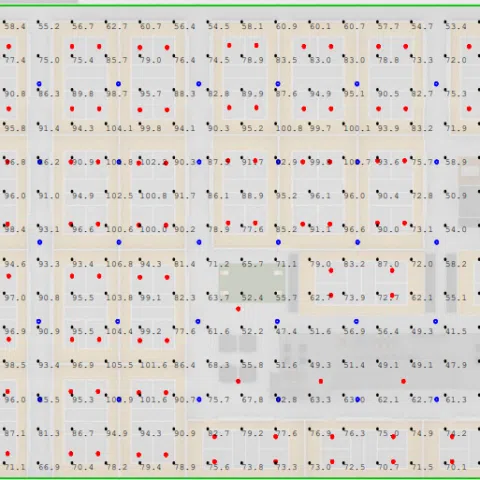
- Delivered Light: Actual light on the work plane depends on fixture optics, mounting height, spacing, room surfaces, and the photometric layout.
Key Considerations:
- Metal halide systems use ballasts, and total input wattage varies by lamp, ballast type, and operating condition.
- Reflector and optical losses reduce the amount of lamp light that leaves a traditional HID fixture.
- Metal halide lumen maintenance varies by lamp type, ballast, burn position, operating hours, and operating conditions.
- LED luminaires use purpose-designed optics that can direct light to the target area without relying on a large reflector.
Metal halide lamp output can decline substantially before the end of rated life, while the system continues to draw approximately its normal operating power. Compare fixture-specific photometric data and maintained illuminance – not initial lumens alone – when selecting a replacement.

2. Operating Life Advantages
Typical metal halide lamp rated life varies by lamp wattage, type, ballast, operating position, and switching frequency. Many commercial metal halide lamps are rated in the range of approximately 10,000 to 20,000 hours, but rated life does not mean the lamp will maintain its initial light output throughout that period.
The L70 method describes the point at which an LED product is projected to produce 70% of its initial light output. It is a lumen-maintenance measure, not a guarantee that every component will operate for that duration. Drivers, controls, thermal conditions, and operating environment also affect LED system life.
Many LED luminaires have longer published operating-life projections than metal halide lamps, which can reduce relamping frequency. Actual maintenance savings depend on the selected product, operating hours, access requirements, and site conditions.
3. Superior Efficacy (Lumens Per Watt)
Efficacy measures how efficiently a source or luminaire produces visible light per watt of electrical input. Higher luminaire efficacy can reduce energy use, but delivered illuminance must still be verified through a fixture-specific lighting design.
Calculation Method: Lumens ÷ watts consumed. For an HID system, use actual system input watts, including ballast losses. For LED, use published luminaire lumens and input watts.
A nominal 400-watt metal halide system may draw approximately 450 watts or more depending on the ballast and lamp. Metal halide lamps also require warm-up time to reach normal output, while most LED fixtures provide light immediately after energization.
Example Efficacy Comparison:
- 400W Metal Halide System: approximately 79 lm/W at the system level (36,000 lamp lumens ÷ 455 system watts). Fixture losses reduce luminaire output.
- 150W LED High Bay: approximately 180 lm/W at the luminaire (27,000 lumens ÷ 150 watts).
Higher Efficacy Can Mean Lower Energy Costs
4. Energy Savings Benefits
LED fixtures can produce comparable or improved maintained illumination while using less power than metal halide systems, provided the fixture output and distribution are appropriate for the space. Converting from metal halide to LED can reduce electrical costs and improve lighting consistency.
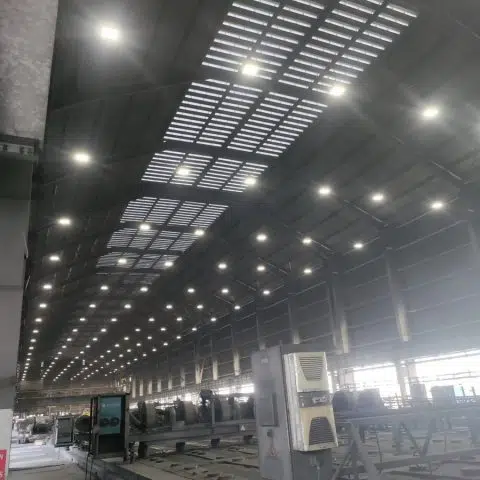
For warehouse applications, a 150W LED high bay producing approximately 27,000 lumens may be suitable for some layouts. For parking lots, 100W to 150W LED shoebox lights may suit some applications. Fixture quantity, wattage, optics, pole height, spacing, and target light levels should be determined using fixture-specific photometric data.
LED conversions can benefit many project types, including warehouses, parking lots, sports facilities, and marine lighting upgrades.

5. Reduced Maintenance Requirements
Beyond energy savings, LED luminaires can offer maintenance advantages. Depending on operating hours, product life, and site conditions, a metal halide installation may require multiple lamp replacements during the expected service period of an LED luminaire.
Replacement costs include:
- Bulb purchase costs
- Labor for installation, especially at elevated mounting heights
- Equipment rental for high-bay applications
- Productivity disruption during maintenance
For warehouse lighting and other large facilities, reduced relamping can lower maintenance costs and reduce disruption.

6. Light Quality and Color Rendering
Metal halide lamps emit visible light as well as some ultraviolet (UV) and infrared (IR) radiation. LEDs generally emit little UV and little forward IR compared with metal halide, although LED fixtures still generate heat that must be managed through their heat sinks.
Standard photometric light meters are spectrally weighted to approximate human photopic vision and measure visible-light quantities such as illuminance. They do not treat UV or IR radiation as visible illumination. Measuring UV or IR requires instruments designed and calibrated for those wavelength ranges.
Understanding Light Measurements:
- Lumens: Total visible luminous flux produced by a source or luminaire
- Foot-candles: Illuminance reaching a surface, measured in lumens per square foot
CRI (Color Rendering Index) describes how faithfully a light source renders colors compared with a reference source. LED products are available in a range of CRI values and correlated color temperatures (CCTs); verify the selected fixture specification because neither high CRI nor a particular CCT indicates brightness or lumen output. Appropriate illuminance, glare control, color quality, and fixture placement can support visual tasks.

7. Visual Performance (S/P Ratios)
S/P ratios compare a source’s scotopic and photopic output and can be useful when considering vision at lower light levels. The ratio depends on the source spectrum, including the specific LED CCT and the metal halide lamp type.
Some LED products may have higher S/P ratios than some metal halide products, but an S/P ratio does not by itself establish perceived brightness, adequate task illumination, or lighting quality. Use photometric calculations and the requirements of the visual task when evaluating a lighting upgrade.

8. Compatibility with Lighting Controls
LED fixtures can offer important advantages for control systems when the selected model and controls are compatible:
- Instant On/Off: Most LED fixtures provide light immediately after energization and can be switched off without a cool-down or restrike delay.
- Dimming Capability: Dimming is available on compatible dimmable fixtures, drivers, and controls.
These features can support motion sensors, photocells, daylight harvesting, scheduling, and other automated controls. Verify dimming method, control compatibility, minimum dim level, and sensor options for the exact fixture.
Metal halide systems have warm-up and restrike delays, which can make frequent switching or occupancy-based control less practical than with LED systems.
Controls can increase energy savings, but actual savings depend on operating schedules, occupancy, daylight availability, control settings, and dimming levels.
9. Dimming Performance
Metal halide dimming requires compatible lamps and ballasts and may affect lamp performance or life. Many commercial LED fixtures offer dimming when ordered with a compatible driver.
- 0-10V Dimming: A common low-voltage control method; dimming range and minimum output depend on the driver and control system.
- 1-10V Dimming: A related analog control method used in some systems; verify compatibility with the fixture driver and controls.
LED dimming performance and lifetime depend on the fixture, driver, thermal environment, and control system. Review the manufacturer’s specifications for the selected product.
10. UV and IR Considerations
Metal halide lamps can emit UV radiation and substantial radiant heat. Outer envelopes, fixture lenses, and filters may limit UV exposure depending on the lamp and fixture design.
LEDs generally emit little UV and little forward IR, which can be beneficial where UV-sensitive materials or radiant heat are concerns. Product selection should still consider the application, optical safety, heat management, and manufacturer documentation.
11. Heat Management
Metal halide systems convert a significant portion of input energy into heat, including radiant heat from the lamp. This can increase cooling loads in conditioned spaces and create hot surfaces during maintenance.
LED luminaires are generally more energy efficient, so they often add less heat to a space for comparable lighting results. However, LEDs still generate heat at the fixture, and proper thermal design is important to performance and service life. Indoor conversions may reduce HVAC cooling energy, but the actual result depends on the building, operating schedule, climate, and HVAC system.
12. Utility Rebate Opportunities
Many utility companies offer rebates for qualifying energy-efficient lighting upgrades. LED conversions may qualify, depending on the utility program, location, product, and project requirements.
Common Rebate Types:
- Prescriptive: Fixed rebates for products or measures meeting stated program requirements
- Custom: Case-by-case incentives for projects evaluated on projected energy savings
Some utility programs require Design Lights Consortium (DLC) qualified products, while others use different eligibility criteria. DLC qualification is an efficiency and performance program; it is not an electrical safety certification.
Important: Rebate availability, amounts, product requirements, preapproval rules, and installation requirements vary by utility and location. Confirm current program details with the utility or program administrator before purchasing equipment.
Ready to Start Your LED Conversion?
The best first step is requesting a lighting analysis. We provide free lighting plans for commercial and industrial customers to help compare LED fixture options for a facility.
LED lighting can offer meaningful energy, maintenance, and lighting-performance benefits for commercial buildings with large indoor spaces when fixtures are selected using the project’s target light levels, mounting conditions, and photometric requirements.
Contact us for your free lighting plan or product recommendation. We can review application information, fixture specifications, and photometric data to help identify suitable LED options. Final electrical installation and applicable code compliance should be confirmed by qualified project professionals and the authority having jurisdiction.