Commercial and Industrial Fans
- HVLS, ceiling, wall, and drum fan options available
- Application support for mounting and airflow goals
- Options for warehouses, manufacturing, and commercial spaces


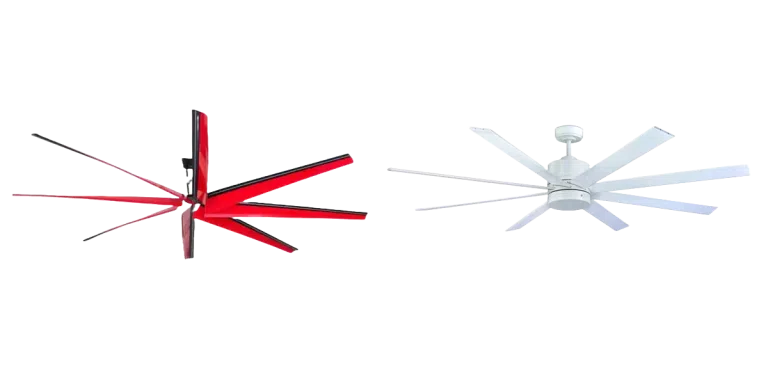

Our Commercial and Industrial Fans include HVLS fans, commercial ceiling fans, industrial wall fans, and portable drum fans for large facilities and localized airflow areas. Available models vary by fan diameter, motor type, voltage, speed settings, controls, reversible operation, and ceiling-mounted, wall-mounted, or portable configurations.
These fans are commonly used in warehouses, distribution centers, manufacturing plants, aircraft hangars, gyms, agricultural buildings, workshops, garages, retail spaces, production lines, loading areas, and maintenance bays.
-
 Starting At $6,000.00
-
Starting At $6,333.33
-
Starting At $6,333.33
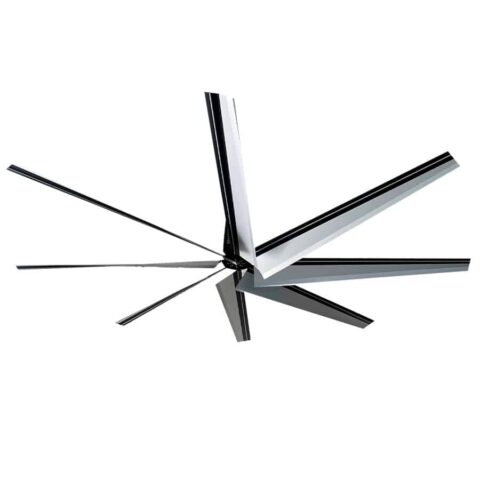


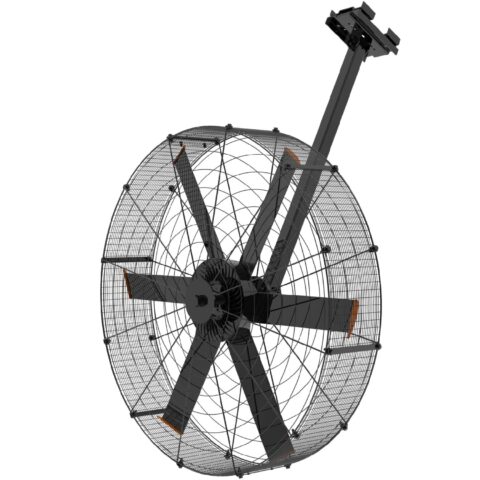


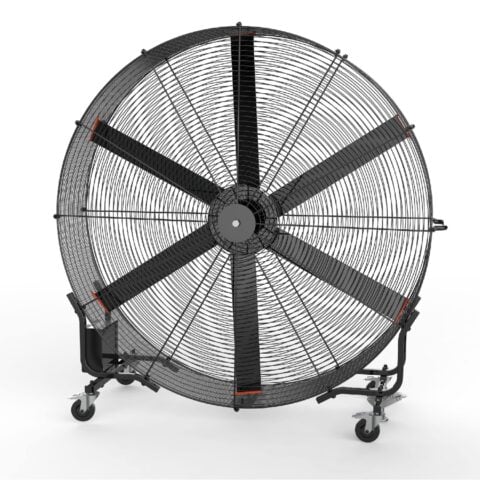
Commercial and industrial fans improve air movement in warehouses, manufacturing plants, workshops, gyms, retail spaces, agricultural buildings, and other large facilities. The right fan can reduce stagnant air, improve thermal comfort, support existing HVAC systems, and help distribute heated or conditioned air more evenly throughout the building.
Start by matching the fan type to the airflow goal and mounting location: use HVLS fans for broad circulation in large open spaces, commercial ceiling fans for overhead circulation in smaller areas, wall fans for directed airflow at work areas, and drum fans for portable or temporary airflow. Then review the size and height of the space, work areas, heat sources, existing HVAC airflow, electrical service, controls, mounting structure, and obstructions before ordering.
Selection Note: Circulation fans move and mix air within a space. They do not replace exhaust ventilation, makeup air, filtration, air conditioning, or other systems designed to remove contaminants or introduce fresh air. Confirm product specifications, mounting requirements, voltage, controls, clearances, and environmental ratings before ordering.
Choosing the Right Commercial or Industrial Fan
| Fan Type | Best Used For |
|---|---|
| HVLS Fans | Large warehouses, manufacturing plants, hangars, gyms, agricultural buildings, and other open spaces that need broad, low-speed air movement from a ceiling-mounted fan. |
| Commercial Ceiling Fans | Smaller commercial spaces, workshops, retail areas, garages, covered patios, and facilities that need overhead circulation without the size of an HVLS system. |
| Industrial Wall Fans | Production lines, workstations, loading areas, maintenance bays, and spaces where directed airflow is needed or ceiling mounting is not practical. |
| Industrial Drum Fans | Portable spot cooling, temporary airflow, equipment areas, service work, drying, and locations where fan placement may need to change. |
HVLS Fans for Large Facilities
High volume, low speed fans use large-diameter blades to move substantial amounts of air at relatively low rotational speeds. Instead of creating a narrow stream of high-velocity air, an HVLS fan produces broad air movement across a large floor area.
HVLS fans are commonly used in distribution centers, manufacturing plants, aircraft hangars, gyms, agricultural facilities, and other buildings with open floor plans and high ceilings. During warmer conditions, moving air across occupants can improve perceived comfort. During heating season, compatible models may help redistribute warm air that collects near the ceiling.
The correct fan diameter and placement depend on ceiling height, building dimensions, rack layouts, cranes, lighting, sprinklers, structural members, heat sources, and the number of fans used. Product diameter, motor type, voltage, controls, reversible operation, and environmental ratings vary by model.
Commercial Ceiling Fans
Commercial ceiling fans provide overhead air circulation in spaces that do not require a large HVLS system. They may be used in smaller warehouses, workshops, fitness facilities, retail spaces, garages, service areas, and covered commercial environments.
Available fan sizes, motor types, controls, voltages, speed settings, and reversible operation vary by product. Ceiling height, room size, mounting structure, required clearances, and the location of occupants or work areas should be reviewed before selecting a fan.
Industrial Wall Fans
Industrial wall fans provide directional airflow where ceiling-mounted equipment is not practical or where a specific work area needs additional air movement. They are commonly used near production lines, assembly stations, loading areas, maintenance bays, warehouses, and hot equipment zones.
Wall fans should be positioned so airflow reaches the intended area without interfering with work processes, loose materials, doors, cranes, vehicles, or existing HVAC patterns. Oscillating models can cover a wider area, while fixed-position fans provide more concentrated airflow.
Before installation, confirm wall construction, mounting hardware, electrical service, fan weight, vibration, required clearances, control access, and whether the product is suitable for surrounding dust, moisture, or temperature conditions.
Industrial Drum Fans
Industrial drum fans move air horizontally through a cylindrical housing and are commonly used for portable or temporary airflow. They are useful for spot cooling near machinery, service work, drying, loading areas, temporary projects, and locations where permanently mounted fans are not practical.
Drum fans work best when they can draw air freely from behind and discharge it toward an open path. Placing them tightly against walls, in blocked corners, or where racks and equipment interrupt the airflow can reduce their effectiveness.
When selecting a drum fan, review airflow rating, fan diameter, speed settings, noise, portability, wheel construction, cord length, voltage, motor enclosure, and suitability for dust, moisture, or industrial use. A portable fan should not be used in a hazardous classified location unless the exact product is approved for that environment.
Air Circulation Is Not the Same as Ventilation
Commercial and industrial fans are sometimes described as ventilation equipment, but most ceiling, wall, and drum fans primarily circulate air already inside the building. They can improve air mixing and occupant comfort, but they do not automatically remove heat, humidity, smoke, dust, fumes, or airborne contaminants.
| System | Primary Function |
|---|---|
| Circulation fan | Moves and mixes air within a room or building. |
| Exhaust fan | Removes air from the building and discharges it outdoors. |
| Makeup-air system | Introduces replacement air when indoor air is exhausted. |
| HVAC system | Heats, cools, filters, dehumidifies, or otherwise conditions the air. |
Facilities with process fumes, combustible dust, welding smoke, high humidity, chemical vapors, or regulated indoor-air requirements may need engineered exhaust, filtration, or makeup-air systems in addition to circulation fans.
What to Review Before Selecting a Fan
| Selection Factor | Why It Matters |
|---|---|
| Building dimensions | Floor area and ceiling height affect fan diameter, airflow coverage, mounting height, and the number of fans needed. |
| Airflow goal | Broad air mixing, localized worker comfort, equipment cooling, drying, and temporary or portable air movement require different fan types. |
| Heat sources | Machinery, ovens, process equipment, loading doors, roofing, and solar exposure can create localized heat that affects placement. |
| Existing HVAC airflow | Fans should support conditioned-air distribution rather than create conflicting air currents or bypass supply and return locations. |
| Structural mounting | Ceiling and wall structures must be capable of supporting the fan, mounting hardware, operating loads, and vibration. |
| Obstructions and clearances | Review racks, cranes, doors, lifts, lighting, sprinklers, ductwork, mezzanines, and other equipment before placement. |
| Electrical requirements | Confirm voltage, circuit capacity, disconnects, controls, conductor requirements, and installation location. |
| Controls | Speed controls, timers, thermostats, remote controls, building automation, and reversible operation vary by product. |
| Environmental exposure | Dust, moisture, washdown, corrosion, high temperatures, and outdoor conditions may require a model with specific ratings. |
| Noise and work activity | Offices, fitness spaces, assembly areas, and communication-sensitive work zones may require lower sound levels. |
Common Commercial and Industrial Fan Applications
| Application | Common Fan Options |
|---|---|
| Warehouses and distribution centers | HVLS fans for broad circulation, wall fans for loading or work areas, and drum fans for temporary airflow. |
| Manufacturing facilities | HVLS fans for open production areas, wall fans near workstations, and drum fans for maintenance or spot cooling. |
| Aircraft hangars and service buildings | HVLS fans where ceiling structure and clearance allow, with wall or drum fans for localized work zones. |
| Gyms and recreation facilities | Commercial ceiling fans or HVLS fans selected for ceiling height, occupant comfort, sound, and activity clearance. |
| Workshops and garages | Commercial ceiling fans, wall fans, and portable drum fans depending on mounting space and work area. |
| Agricultural buildings | HVLS, wall, or portable fans selected for building layout, moisture, dust, corrosion, animal areas, and compatibility with the facility’s separate ventilation system. |
| Retail and commercial spaces | Commercial ceiling fans where appearance, sound, ceiling height, and customer comfort are important. |
Common Fan Selection and Installation Mistakes
| Mistake | Why It Matters |
|---|---|
| Selecting only by square footage | Ceiling height, building volume, heat sources, airflow patterns, and obstructions also affect fan selection. |
| Ignoring structural requirements | Large ceiling fans and wall fans require mounting structures and hardware capable of supporting the installed equipment. |
| Placing fans near cranes or moving equipment | Fans must maintain clearances required by the fan manufacturer, equipment manufacturer, facility safety team, and project design. |
| Assuming more speed is always better | Excessive airflow can create drafts, disturb materials, increase noise, or interfere with work processes. |
| Blocking portable fan intake or discharge | Walls, racks, equipment, and corners can restrict airflow and cause recirculation around the fan. |
| Ignoring HVAC supply and return locations | Poor placement can work against conditioned-air distribution and reduce overall comfort. |
| Using improper electrical or mounting hardware | Fans should be installed using product-approved electrical components and mounting methods suitable for the fan weight and location. |
| Using a standard fan in a hazardous location | Classified areas may require specially listed equipment. A standard commercial or industrial fan is not automatically suitable. |
| Expecting circulation fans to remove contaminants | Air movement does not replace exhaust, filtration, makeup air, or an engineered ventilation system. |
Commercial and Industrial Fan Selection Support
LED Lighting Supply can help compare HVLS fans, commercial ceiling fans, industrial wall fans, and drum fans based on the building dimensions, ceiling height, mounting structure, work areas, heat sources, electrical service, controls, and required airflow pattern.
To help narrow the options, provide the building dimensions, ceiling height, photos or drawings, available mounting locations, nearby racks or equipment, electrical voltage, and the areas where additional airflow is needed.
Contact our Product Specialists about commercial and industrial fans for help reviewing the available options for your facility. Final structural, electrical, mechanical, ventilation, and installation requirements should be confirmed by the appropriate qualified professionals for the project.
Commercial and Industrial Fans FAQs
How Do I Choose Between HVLS, Ceiling, Wall, And Drum Fans?
Choose the fan type based on the airflow goal, mounting options, and work area. HVLS fans provide broad, low-speed air movement in large open spaces, commercial ceiling fans provide overhead circulation in smaller spaces, wall fans provide directed airflow, and drum fans support portable or temporary airflow.
What Factors Affect Fan Size, Placement, And Quantity?
Fan diameter, placement, and quantity depend on building dimensions, ceiling height, airflow goals, heat sources, HVAC airflow, mounting structure, and obstructions. Rack layouts, cranes, lighting, sprinklers, doors, ductwork, mezzanines, and work areas should also be reviewed before placement.
When Is An HVLS Fan A Suitable Option?
HVLS fans are commonly used in large open facilities with high ceilings, including warehouses, manufacturing plants, hangars, gyms, agricultural facilities, and distribution centers. The correct diameter and placement depend on ceiling height, building dimensions, layouts, structural members, heat sources, and the number of fans used.
How Should Industrial Wall Fans Be Positioned?
Industrial wall fans should be positioned so airflow reaches the intended area without interfering with work processes, loose materials, doors, cranes, vehicles, or existing HVAC patterns. Oscillating models can cover a wider area, while fixed-position fans provide more concentrated airflow.
How Can I Get Better Airflow From A Portable Drum Fan?
Industrial drum fans work best when they can draw air freely from behind and discharge toward an open path. Walls, blocked corners, racks, and equipment can restrict airflow or cause recirculation around the fan.
Can Commercial And Industrial Fans Replace Exhaust Ventilation?
No, circulation fans move and mix air within a building but do not replace exhaust ventilation, makeup air, filtration, air conditioning, or systems designed to remove contaminants or introduce fresh air. Facilities with process fumes, combustible dust, welding smoke, high humidity, chemical vapors, or regulated indoor-air requirements may need engineered exhaust, filtration, or makeup-air systems in addition to circulation fans.
What Should I Confirm Before Ordering A Commercial Or Industrial Fan?
Confirm product specifications, mounting requirements, voltage, controls, clearances, and environmental ratings before ordering. Review structural mounting capability, electrical service, work activity, noise needs, and exposure to dust, moisture, washdown, corrosion, high temperatures, or outdoor conditions.
What Information Helps Narrow Commercial And Industrial Fan Options?
Provide building dimensions, ceiling height, photos or drawings, available mounting locations, nearby racks or equipment, electrical voltage, and the areas where additional airflow is needed. LED Lighting Supply can help compare fan options based on these details, along with work areas, heat sources, controls, and required airflow pattern.