60 Inch to 84 Inch Fans
- Ceiling-mounted and wall-mounted options for flexible installation
- Multiple blade sizes available for varied coverage needs
- USA-based support for selection and compatibility guidance



Our 60 Inch to 84 Inch Commercial Fans include ceiling-mounted and wall-mounted models for commercial and industrial air circulation. Available fans range from 60 to 84 inches in diameter, with 120V or 240V options depending on the model. Controls may include wall controls, variable-speed controls, remotes, timers, and reversible operation.
These fans are commonly used in warehouses, distribution centers, manufacturing facilities, workshops, gyms, churches, retail spaces, loading areas, warehouse aisles, assembly lines, machine zones, and maintenance areas.
-
 Starting At $3,070.48
-
Starting At $6,333.33

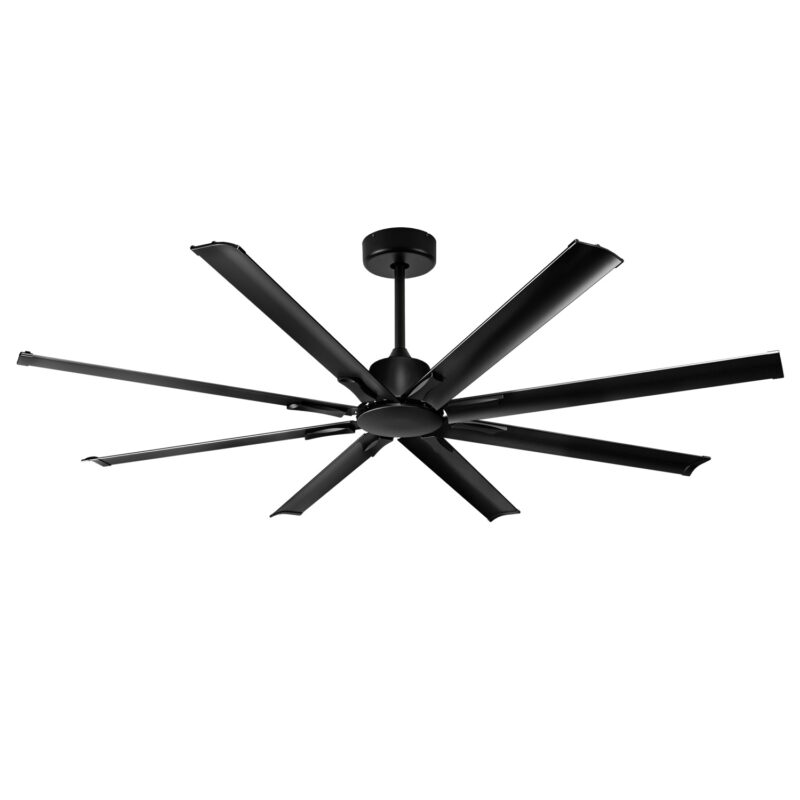


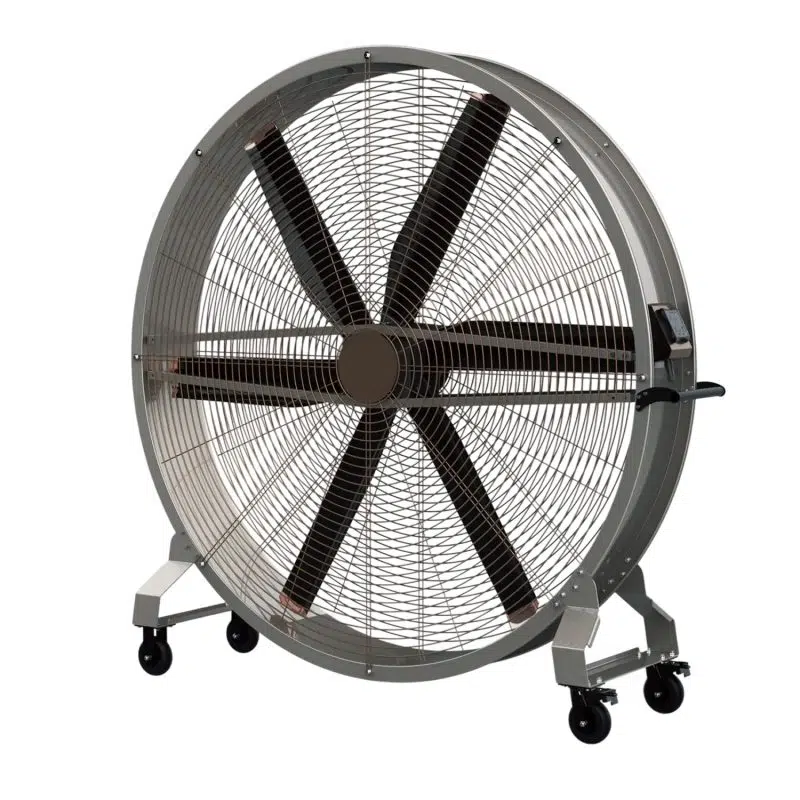




60-Inch to 84-Inch Commercial and Industrial Fans
60-inch to 84-inch fans are used in commercial and industrial spaces that require more airflow than standard fans can provide. This size range is common in warehouses, manufacturing areas, workshops, gyms, churches, retail spaces, loading areas, and other open facilities where stagnant air, heat & humidity buildup, and uneven temperatures affect worker comfort. These fans may be ceiling mounted or wall mounted, depending on the space.
Ceiling-mounted fans are typically selected for broad air circulation across large, open layouts. Wall-mounted fans are best suited for directional airflow, creating a consistent wind-chill effect in work zones, aisles, equipment areas, docks, and locations where ceiling mounting is impractical.
Start by choosing the mounting method based on whether the space needs broad circulation or targeted airflow. Then confirm the fan’s CFM rating, voltage, controls, clearances, environmental rating, and whether the structure can safely support the installation. For 60-inch to 84-inch ceiling-mounted fans, confirm the ceiling height, fan diameter, mounting method, downrod length, blade-to-floor clearance, and required clearance above and around the blades for the specific model. Do not assume that a 13- to 15-foot ceiling is required for every fan in this size range.
When Should You Choose a 60-Inch to 84-Inch Fan?
A 60-inch to 84-inch fan is a good fit when smaller commercial fans do not provide enough coverage and giant HVLS fans do not align with space requirements. A 60-inch fan can work well in moderate-sized commercial spaces, lower warehouse ceilings, workshops, and smaller gyms.
Fans in the 70-inch to 84-inch range are often better for larger rooms, higher ceilings, wider work zones, and applications where airflow needs to cover broader distances. For ceiling-mounted applications, fan diameter, blade design, mounting height, and downrod length should be matched to the ceiling height, room volume, and manufacturer clearance requirements.
For wall-mounted applications, placement is just as important as size. The fan should move air across the target area without creating uncomfortable direct drafts at fixed workstations or interfering with racks, doors, forklifts, equipment, or walkways.
Ceiling-Mounted vs Wall-Mounted Fans
Ceiling-mounted fans are used when the goal is general air circulation. They help move air across a larger occupied area, reduce dead air zones, and support HVAC performance. In warm conditions, downward airflow can create a cooling wind-chill effect that helps occupants feel more comfortable. In cooler conditions, reversible operation may help move warmer ceiling air back down toward the occupied space.
Wall-mounted fans are used when airflow needs to be aimed at a specific area. They are common in production zones, loading docks, machine areas, maintenance shops, warehouse aisles, and spaces with overhead obstructions. A wall-mounted fan can be a practical choice when ceiling structure, sprinkler systems, lighting, cranes, racks, or ductwork make ceiling installation difficult.
Common Applications for 60-Inch to 84-Inch Fans
- Warehouses and distribution centers: Larger warehouse ceiling fans can help move air through aisles, staging areas, packing stations, and open floor areas. Proper placement may reduce hot spots and improve comfort for employees working away from conditioned areas.
- Manufacturing and industrial facilities: Ceiling-mounted and wall-mounted fans can support air movement near assembly lines, machine zones, fabrication areas, and maintenance spaces. In facilities with heat-producing equipment, fan placement should be reviewed carefully so airflow does not interfere with process requirements, dust control, or safety systems.
- Gyms, churches, and multipurpose spaces: Commercial ceiling fans in this size range can reduce stagnant air in high-occupancy areas. For these spaces, noise level, appearance, control options, blade finish, and reversible operation may be just as important as airflow.
Key Factors to Review Before Selecting a Fan
| Factor | What to Review |
|---|---|
| Airflow and coverage | Fan size alone does not determine performance. Review CFM, blade design, speed settings, mounting height, and coverage area. A larger fan installed in the wrong location may perform worse than a smaller fan placed correctly. |
| Ceiling height and clearance | For ceiling-mounted fans, verify the manufacturer’s minimum blade-to-floor clearance, clearance above and around the blades, approved downrod lengths, and mounting requirements. Required dimensions vary by fan design and model. |
| Mounting method | Ceiling fans require a properly rated mounting point that can support the fan’s weight and operating loads. Wall-mounted fans require a suitable structural mounting surface, correct bracket support, and safe operating clearance. |
| Voltage and controls | Many commercial and industrial fans operate on 120V or 240V, depending on the model. Confirm voltage, circuit requirements, controller compatibility, and local code requirements before installation. Depending on the fan, available controls may include wall controls, variable-speed controls, remotes, timers, and reversible operation. |
| Environment | Dust, moisture, humidity, heat, washdown exposure, and outdoor air can affect fan selection. Review IP ratings, damp or wet location suitability, motor construction, blade material, guard design, and finish before choosing a fan for demanding environments. An IP rating addresses ingress protection; it does not by itself establish chemical resistance, corrosion resistance, or hazardous-location suitability. |
| Noise and comfort | Air movement should improve comfort without creating excessive noise or strong drafts. This is especially important in offices, churches, gyms, retail spaces, and areas where employees remain in one position for long periods. |
Energy and Comfort Benefits
Properly selected fans may help reduce reliance on HVAC systems by improving air circulation and perceived comfort. In warm conditions, air movement can help people feel cooler, which may allow higher thermostat settings where appropriate. In colder conditions, reversible ceiling fans may help reduce temperature layering by moving warmer air down from high ceilings.
Actual energy savings depend on the building layout, ceiling height, HVAC system, fan placement, operating schedule, utility rates, and controls. Fans should be selected as part of an overall comfort and ventilation plan. They are not a replacement for code-required ventilation, exhaust, make-up air, vapor removal, dust collection, or hazardous-location ventilation systems.
Common Mistakes to Avoid
- Measuring only the room: Measure the actual fan sweep area and identify doors, racks, lifts, cranes, sprinklers, lighting, ductwork, and other obstacles that may affect placement or required clearances.
- Planning controls after the fan is installed: Decide in advance who will operate the fan and from where. Confirm that the selected wall control, remote, timer, speed controller, or building-control interface is compatible with the exact fan model.
- Overlooking maintenance access: Choose a location that allows safe future access for cleaning, inspection, control service, and replacement without disrupting production equipment or storage layouts.
- Using circulation fans as ventilation equipment: Fans move and mix air, but they do not provide required outdoor-air ventilation, local exhaust, dust collection, or contaminant capture.
- Assuming a damp, outdoor, or IP-rated fan is approved for every environment: Verify the exact location rating and construction details for the exposure. In a classified area, the documented Class, Division or Zone, Group, temperature rating, and ambient conditions must match the fan’s hazardous-location certification.
- Ignoring changes to the facility layout: New racks, equipment, partitions, or workstations can alter airflow patterns and may create drafts or reduce the fan’s effective coverage.
- Buying without reviewing model documentation: Confirm the exact product’s dimensions, weight, mounting instructions, electrical requirements, controls, environmental ratings, and warranty before ordering.
Installation and Safety Considerations
Commercial and industrial fans should be installed by qualified professionals in accordance with local electrical and building codes and the manufacturer’s instructions. Before installation, verify the mounting structure, fan weight, operating-load requirements, electrical circuit, controls, blade-to-floor clearance, clearance above and around the fan, and access for future maintenance.
Do not mount fans where blades, guards, brackets, or moving components can interfere with people, forklifts, doors, racks, overhead equipment, lighting, conduit, or sprinkler systems. For wall-mounted fans, confirm the bracket location, fan guard, oscillation path if applicable, and safe working clearance. For ceiling-mounted fans, confirm the correct mounting hardware and downrod length and maintain the manufacturer-required clearance from the ceiling, floor, walls, and nearby objects.
Safety, Certifications, and Warranty Support
Commercial and industrial fans should be selected with the proper safety certification, voltage, mounting method, environmental rating, and installation requirements for the application. Depending on the model, products may be listed or certified by an OSHA-recognized Nationally Recognized Testing Laboratory (NRTL), such as UL Solutions, Intertek/ETL, or MET Laboratories. Verify the listing, marking, and intended-use information for the exact fan.
Most commercial fans include warranty coverage, with many models offering up to a 5-year warranty depending on the product. Warranty terms can vary by fan type, motor, controls, installation environment, and manufacturer requirements, so review the warranty details for the exact model before ordering.
LED Lighting Supply provides USA-based warranty support and can help review product fit, controls, mounting requirements, and replacement options if support is needed after purchase. For public spaces, schools, healthcare facilities, industrial facilities, hazardous areas, or code-sensitive applications, verify requirements with the qualified professional, engineer, electrical contractor, or authority having jurisdiction responsible for the project.
Get Help Choosing the Right 60-Inch to 84-Inch Fan
The best fan is not always the largest fan. LED Lighting Supply can help review your ceiling height, room dimensions, mounting options, voltage, controls, airflow goals, environmental conditions, and required clearances so you can choose a 60-inch to 84-inch fan that fits the space and performs as expected.
60 Inch to 84 Inch Fans FAQs
Should I Choose A Ceiling-Mounted Or Wall-Mounted 60-Inch To 84-Inch Fan?
Choose a ceiling-mounted fan for broad air circulation across large, open layouts, and choose a wall-mounted fan when airflow needs to be directed at a specific area. Wall-mounted fans can also be practical where ceiling structure, lighting, cranes, racks, ductwork, or other overhead obstructions make ceiling installation difficult.
How Do I Choose The Right Fan Size Within The 60-Inch To 84-Inch Range?
A 60-inch fan can work well in moderate-sized commercial spaces, lower warehouse ceilings, workshops, and smaller gyms, while 70-inch to 84-inch fans are often better for larger rooms, higher ceilings, wider work zones, and broader airflow distances. For ceiling-mounted applications, match fan diameter, blade design, and downrod length to ceiling height and room volume.
What Should I Review Besides Fan Diameter?
Review CFM, blade design, speed settings, mounting height, placement, voltage, controls, clearances, environmental rating, and structural support. Fan size alone does not determine performance, and a larger fan in the wrong location may perform worse than a smaller fan placed correctly.
What Voltage And Control Options Should I Confirm Before Ordering?
Many commercial and industrial fans operate on 120V or 240V, depending on the model, so confirm the fan matches the facility's electrical system before ordering. Depending on the fan, available controls may include wall controls, variable-speed controls, remotes, timers, and reversible operation.
Can A 60-Inch To 84-Inch Fan Be Used In Damp, Dusty, Or Outdoor Areas?
Fan selection for demanding environments should be based on the model's IP rating, damp or wet location suitability, motor construction, blade material, guard design, and finish. Dust, moisture, humidity, heat, washdown exposure, and outdoor air can affect the appropriate fan choice.
Can These Fans Replace Required Ventilation Or Exhaust Systems?
No, commercial and industrial fans are not a replacement for code-required ventilation, exhaust, make-up air, or hazardous-location ventilation systems. Properly selected fans may help improve air circulation and perceived comfort as part of an overall comfort and ventilation plan.
What Should Be Verified Before Installing A Commercial Or Industrial Fan?
Before installation, verify the mounting structure, fan weight, dynamic load requirements, electrical circuit, controls, blade clearance, guard clearance, and access for future maintenance. Commercial and industrial fans should be installed by qualified professionals in accordance with local electrical and building codes.